Overview

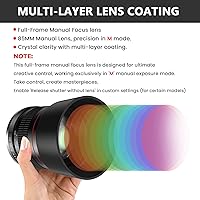
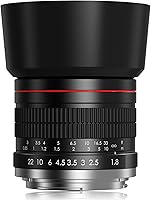
The Lightdow 85mm f/1.8 Manual Focus Portrait Lens has been quietly earning its place in photographers' bags since 2015 — a decade on the market is no small feat. This 85mm f/1.8 lens is built around a fully manual design: no electronic contacts, no autofocus motor, and that is entirely by intention. It rewards photographers who slow down and think before pressing the shutter. One quick heads-up: after mounting, immediately switch your camera to full manual mode. If you see a no lens error, simply enable the shutter release without lens option in your camera menu — a one-time fix that takes seconds. Think of this as a creative learning tool, not a rival to premium glass.
Features & Benefits

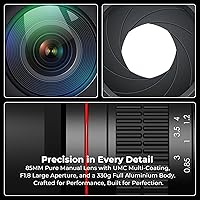
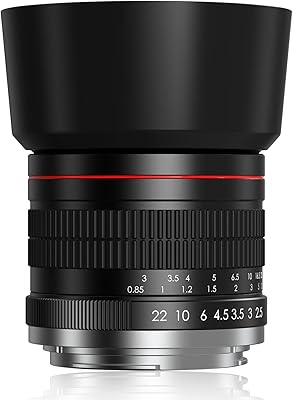
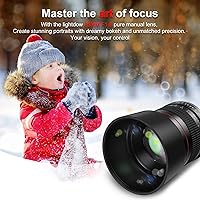
At 85mm with a maximum aperture of f/1.8, this 85mm f/1.8 lens sits in a sweet spot for portrait work — enough compression to flatter subjects, enough background separation to make them pop. Six rounded aperture blades help produce smooth circular bokeh rather than the harsh, polygonal blur common in cheaper optics. A hybrid aspherical element paired with ultra multi-coating keeps chromatic aberration and flare well controlled for a lens at this price tier. The internal focus mechanism means the barrel stays fixed while you turn the ring, keeping handling clean and consistent. At just over a pound, it carries easily all day, and the wide focus ring turns with pleasingly smooth resistance.

Best For

This manual portrait prime is not trying to be everything to everyone, and that clarity of purpose works in its favor. It is a natural fit for photography students and dedicated hobbyists who want to build real focusing discipline without a large financial commitment. Nikon DSLR owners chasing shallow depth-of-field portraits on a modest budget will find it a capable companion. Videographers often gravitate toward it as well — manual focus allows precise control over rack-focus pulls in ways autofocus simply cannot replicate. If you shoot travel or street photography and want a compact, unobtrusive prime, this 85mm f/1.8 lens fits the brief. Where it struggles: fast-moving subjects and time-pressured shoots where manual focusing is simply not practical.

User Feedback

With 1,761 ratings averaging 4.0 out of 5 stars, the Lightdow portrait lens has a track record worth taking seriously. The most consistent praise centers on center-frame sharpness wide open — buyers repeatedly describe being caught off guard by how clean the results look at this price point. Build quality and focus ring smoothness also earn consistent compliments. The main frustration? Some buyers discover there is no autofocus capability only after purchase, even though the listing states it plainly. A smaller group notes edge chromatic aberration at f/1.8, though stopping down to f/2.8 or beyond largely resolves it. The pattern is clear: buyers who went in knowing this is a fully manual lens tend to come away satisfied; those who did not, less so.

Pros

  • Center-frame sharpness wide open consistently surprises buyers — results look considerably better than the price suggests.
  • Six rounded aperture blades produce smooth, circular bokeh that flatters portrait subjects without harsh edges.
  • The hybrid aspherical element and ultra multi-coating keep flare and chromatic aberration well controlled for a budget optic.
  • An internal focus mechanism keeps the barrel length fixed throughout the focus range, making handling clean and predictable.
  • This 85mm f/1.8 lens weighs just over a pound, making it genuinely comfortable for extended handheld shooting sessions.
  • The large focus ring turns with smooth, well-damped resistance that encourages precise and deliberate focus placement.
  • Broad Nikon F-mount compatibility covers dozens of bodies, from entry-level crop-sensor DSLRs to full-frame flagships.
  • Over a decade on the market and more than 1,700 real-world ratings give it a reliability track record few budget lenses can claim.
  • Build quality feels solid and well-assembled for the price, with no obvious flex or loose tolerances.

Cons

  • Many buyers overlook the manual-only disclaimer at purchase and only realize their mistake once the lens arrives.
  • Chromatic aberration at the frame edges is a genuine issue wide open, requiring stopping down to f/2.8 or beyond to improve.
  • No electronic contacts means aperture data is absent from EXIF metadata, which can complicate post-shoot file organization.
  • There is no weather sealing of any kind, making wet, dusty, or humid shooting environments a real risk.
  • The camera menu setup required to prevent a no-lens error catches many first-time users completely off guard.
  • Edge-to-field optical performance drops noticeably from the center, limiting versatility for subjects that fill the full frame.
  • Focus breathing during video rack-focus pulls is visible enough that it may need correction in post-production.
  • Being a smaller brand, after-sales support infrastructure is limited, which could mean slower resolution if a defect occurs.

Ratings

Our scores for the Lightdow 85mm f/1.8 Manual Focus Portrait Lens are produced by AI after analyzing thousands of verified global buyer reviews, with bot-generated activity, incentivized submissions, and spam actively identified and excluded from the dataset. The ratings below reflect genuine ownership experience across a wide range of photographers — from beginners learning manual focus to hobbyists building out their portrait kit — capturing both what consistently impressed and what regularly fell short. You will find no smoothed-over scores here; each number is grounded in patterns drawn directly from real-world use.
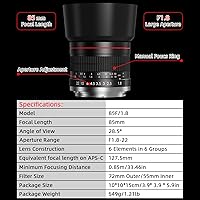
Image Sharpness
76%
24%
Center-frame sharpness at f/1.8 is a recurring highlight among buyers, many of whom describe being caught off guard by how crisp portraits look straight from the camera at this price point. For headshots and tight mid-body compositions where the subject sits centrally, the results hold up well without any post-processing tricks.
Edge sharpness is a different story — the corners of the frame show noticeable softness at wide apertures, which becomes apparent when subjects or important details are placed toward the periphery. Stopping down to f/2.8 or f/4 recovers much of this, but that trades away the shallow depth-of-field effect many buyers purchased the lens to achieve.
Bokeh Quality
82%
18%
The six rounded aperture blades do meaningful work here, producing background blur that reads as smooth and circular rather than the angular, distracting rendering common in cheaper lenses. Portrait shooters working against natural backgrounds — foliage, city lights, interior scenes — report pleasing subject separation that gives their images a polished, deliberate look.
Wide open, specular highlights can occasionally take on a slightly nervous or onion-ring quality, a characteristic tied to the hybrid aspherical element design. This is most noticeable in busy or high-contrast backgrounds, and while it rarely ruins a shot, it is a real optical limitation to be aware of when shooting at f/1.8.
Value for Money
88%
For budget-conscious photographers and students who need a real portrait prime without a significant financial outlay, this 85mm f/1.8 lens delivers a strong return on the investment. Center-frame optical performance and focus ring quality both exceed what the price level typically delivers, making it a frequent recommendation across beginner photography communities online.
The value proposition depends heavily on buyer expectations going in. Photographers who assumed the price indicated autofocus capability or pristine edge-to-edge performance ended up disappointed, and that expectation mismatch accounts for a meaningful share of the lower-rated reviews in the overall feedback pool.
Focus Ring Feel
84%
The large, smooth focus ring is one of the most consistently praised physical attributes of this manual portrait prime. Reviewers describe it as well-damped with enough resistance to prevent accidental focus shift mid-shot, while still being easy to turn deliberately — a balance that cheaper manual lenses often miss entirely.
A small number of buyers have noted unit-to-unit variation in ring stiffness, with some examples feeling noticeably tighter or looser out of the box than others. For a lens where manual focus is the only option, ring consistency matters more than it would on an autofocus lens where the focus ring is rarely touched.
Build Quality
73%
27%
For a budget-tier optic, the physical construction holds up better than many buyers expect. The barrel feels solid in hand with no flex or rattling, and assembly quality draws favorable comments relative to the price paid — particularly from photographers upgrading from plastic kit lenses who expected something considerably flimsier.
The absence of weather sealing and predominantly plastic construction mean this is not a lens suited to rough field conditions. Photographers who regularly shoot outdoors in variable weather or dusty environments flag long-term durability as a legitimate concern, and the unsealed mount interface is a structural weak point that cannot be overlooked.
Chromatic Aberration
61%
39%
The ultra multi-coating and hybrid aspherical element keep chromatic aberration under reasonable control for subjects sitting in the central, in-focus plane. Buyers shooting portraits indoors or in open shade — where high-contrast light transitions are less severe — tend to report little visible fringing across their primary subjects.
At the frame edges wide open, chromatic aberration becomes noticeably prominent and appears repeatedly as a complaint in user feedback. High-contrast boundaries like backlit hair or branches against a bright sky show the clearest fringing, and while post-processing can address it, that correction step adds friction for less experienced photographers.
Flare Resistance
69%
31%
In controlled or predictable lighting conditions — indoor portrait sessions, shaded outdoor setups, or overcast daylight — most users report minimal flare and ghosting, suggesting the UMC treatment earns its keep in typical portrait scenarios where light direction is managed.
Direct or near-direct light sources within or close to the frame create noticeable flare and multi-element ghosting that the coating cannot fully suppress. Photographers who shoot backlit portraits or work during golden hour with the sun near the frame edge will encounter this regularly, and a lens hood only partially mitigates the effect.
Edge Clarity
54%
46%
For the primary use case this lens is designed around — tightly framed portrait work with a centered subject — weak edge performance rarely causes problems in practice. When the main subject occupies the central area of the frame, softer corners fall into background bokeh territory and effectively become invisible.
Edge and corner clarity wide open is genuinely weak, and buyers expecting usable sharpness across the full frame for group portraits, environmental compositions, or detailed scenes will be frustrated. The drop-off is steep enough that any shooting context where corner sharpness carries weight is not a realistic use case for this lens.
Weight & Portability
86%
At 1.12 pounds, this 85mm f/1.8 lens is light enough for all-day handheld shooting without fatigue, and its compact dimensions make it a practical choice for street photographers and travelers who need a portrait prime in a minimal-footprint kit. Several buyers specifically mention how little it adds to their everyday camera bag.
The lighter weight is partly a product of the plastic-forward construction, which some users perceive as a durability trade-off even when the optical performance satisfies them. Photographers accustomed to heavier, all-metal lens bodies sometimes describe the Lightdow portrait lens as feeling slightly insubstantial despite its otherwise solid assembly.
First-Time Setup
58%
42%
Once the one-time camera menu adjustment to allow shutter release without a detected lens is made, setup is complete and causes no further issues throughout ownership. Users who read the product description carefully — or locate the solution quickly through photography forums — report a smooth and frustration-free experience from that point forward.
The no-lens error that fires on first mount catches a significant share of buyers completely off guard and appears as a recurring frustration across the review pool, sometimes triggering returns before the fix is even discovered. The absence of any printed quick-start documentation addressing this specific scenario is a clear miss by the manufacturer.
Video Performance
72%
28%
For videographers on Nikon F-mount bodies who prefer manual focus, this manual portrait prime handles rack-focus transitions with a smoothness that is genuinely hard to find at this price point. The internal focus design keeps the barrel length constant throughout focus travel, preventing unwanted compositional shifts between takes.
Focus breathing — a subtle but visible shift in the apparent field of view during focus adjustments — is the most consistently cited video-specific complaint and shows up in filmmaker-oriented reviews with regularity. Those working at a professional level or cutting between takes will likely need to address it in post-production.
Compatibility
91%
Covering the entire Nikon F-mount DSLR lineup — from full-frame flagships like the D850 and D810 to entry-level bodies like the D3500 and D3100 — this lens works across a very broad installed base of cameras. For anyone currently in the Nikon DSLR ecosystem, body compatibility is simply not a purchasing concern.
F-mount exclusivity means the lens cannot be used natively on Nikon Z-series mirrorless bodies without an adapter, which limits its long-term versatility as the photography market continues its shift toward mirrorless systems. Buyers planning a near-term system upgrade should factor in the added cost and handling adjustment of running an FTZ adapter.
Long-Term Durability
67%
33%
Over a decade on the market, the Lightdow portrait lens has accumulated enough real-world use data to suggest it is not an especially fragile product for casual studio or indoor shooting. Outright mechanical failures appear in only a minority of the review base, and build consistency has held up reasonably well across production runs.
No weather sealing, plastic-forward construction, and a smaller brand with limited authorized service infrastructure translate to genuine durability concerns for photographers who shoot in demanding outdoor conditions. Users who have needed warranty service report inconsistent resolution times, and the absence of an established repair network is a practical limitation worth weighing.

Suitable for:

The Lightdow 85mm f/1.8 Manual Focus Portrait Lens is the right call for photographers who are actively choosing to work without autofocus — students building foundational skills, hobbyists who enjoy a slower and more deliberate shooting process, and creatives who find that controlling focus by hand produces better artistic results than letting a motor decide. Nikon DSLR shooters on a tight budget who want genuine background separation and smooth bokeh in their portraits will find this lens punches above its price tier in the center frame. Videographers on Nikon F-mount bodies will also appreciate it, since manual focus gives precise, repeatable control over rack-focus transitions in ways that hunting autofocus systems rarely replicate cleanly. Street and travel photographers who prioritize a compact, unobtrusive kit will value how little weight and space it demands. If you are patient, intentional, and honest with yourself about what fully manual shooting involves, this lens delivers real value for the money.
Not suitable for:

The Lightdow 85mm f/1.8 Manual Focus Portrait Lens is a poor fit for anyone whose shooting style depends on speed and reliable focus acquisition. Sports photographers, event shooters, and anyone regularly chasing fast-moving or unpredictable subjects will lose shots consistently — manual-only operation simply cannot keep up in those conditions. Working professionals who need consistent, edge-to-edge optical performance for commercial delivery should look elsewhere, as chromatic aberration at the frame edges wide open is a documented issue that many client briefs will not accommodate. Buyers expecting a simple out-of-the-box experience should know that a camera menu adjustment is required on first use to avoid a no-lens error, which, though easy to fix, signals a lens that demands a little patience from the start. If you are at an intermediate or advanced level and need autofocus for professional reliability, the limitations here will likely frustrate more than the price savings justify.
Specifications

  • Focal Length: The lens has a fixed 85mm focal length, a range widely used for portrait, headshot, and close environmental photography due to its natural subject compression.
  • Max Aperture: The maximum aperture is f/1.8, allowing for shallow depth-of-field rendering and workable performance in reduced ambient light conditions.
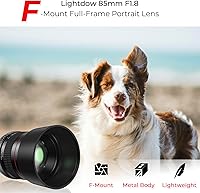
  • Lens Mount: This lens uses the Nikon F-mount bayonet interface, making it physically compatible with the full range of Nikon F-mount DSLR camera bodies.
  • Focus Type: Focusing is entirely manual; the lens contains no autofocus motor, drive coupling, or electronic focusing assistance of any kind.
  • Aperture Blades: The aperture diaphragm consists of six rounded blades, which shape out-of-focus highlights into smooth, near-circular forms at wide apertures.
  • Optical Formula: The optical design contains six elements arranged in six groups, including one hybrid aspherical element to address aberration and distortion.
  • Lens Coating: All optical surfaces are treated with ultra multi-coating (UMC) to suppress internal lens flare and minimize surface reflections.
  • Aspherical Element: A hybrid aspherical (H-ASP) element is incorporated into the optical formula to correct spherical aberration and reduce chromatic fringing.
  • Focus Mechanism: An internal focus (IF) design is used, meaning the outer barrel does not extend or rotate during the focusing operation.
  • Dimensions: The lens body measures 4.33 inches in length with a diameter of 2.76 inches.
  • Weight: The lens has a total weight of 1.12 pounds, measured as the lens body alone without caps or accessories.
  • Electronic Contacts: The lens barrel contains no electronic contacts, which prevents any data communication between the lens and the camera body.
  • Model Number: The manufacturer's official model designation for this lens is KD-8518N.
  • Year Introduced: The lens was first listed for sale in April 2015 and has remained in active production since its introduction.
  • Lens Type: Classified as a telephoto prime, the 85mm focal length places this lens firmly in the portrait prime category.
  • Body Compatibility: Compatible Nikon F-mount bodies include full-frame models such as the D850, D810, and D750, as well as APS-C bodies such as the D7500, D5600, and D3500, among many others.

Related Reviews

Meike 85mm f/1.8 Canon EF Telephoto Lens
71%
88%
Value for Money
71%
Optical Sharpness
66%
Autofocus Performance
74%
Bokeh Quality
58%
Build Quality
More
Meike 85mm F1.8 Nikon F Portrait Lens
75%
91%
Value for Money
76%
Image Sharpness
83%
Bokeh Quality
61%
Autofocus Speed
72%
Autofocus Accuracy
More
JINTU 85mm f1.8 Portrait Prime Lens
75%
84%
Build Quality
73%
Optical Sharpness
82%
Bokeh Quality
88%
Value for Money
71%
Manual Focus Experience
More
Sony SEL85F18 85mm F/1.8 Prime Lens
81%
91%
Autofocus Speed & Accuracy
93%
Bokeh Quality
88%
Image Sharpness
82%
Chromatic Aberration Control
89%
Autofocus Noise
More
Canon EF 85mm f/1.8 USM Lens
86%
91%
Image Sharpness
93%
Bokeh Quality
88%
Autofocus Speed
94%
Autofocus Noise
86%
Low-Light Performance
More
BENOISON 85mm F1.8 Nikon F Portrait Lens
67%
83%
Bokeh Quality
76%
Center Sharpness
47%
Corner Sharpness
53%
Vignetting
68%
Manual Focus Usability
More
BENOISON 85mm f/1.8 Portrait Prime Lens
76%
83%
Bokeh & Background Separation
88%
Value for Money
71%
Build Quality & Feel
74%
Optical Sharpness (Center)
66%
Manual Focus Accuracy
More
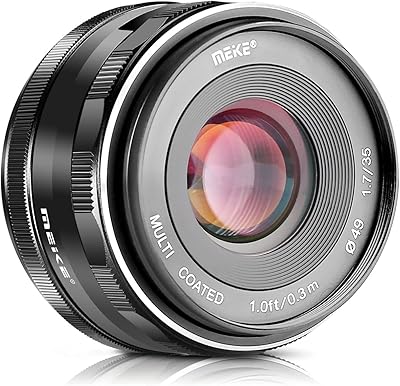
Meike 35mm f1.7 Manual Focus Lens
80%
93%
Value for Money
78%
Optical Sharpness
81%
Build Quality
74%
Aperture Performance
84%
Manual Focus Experience
More
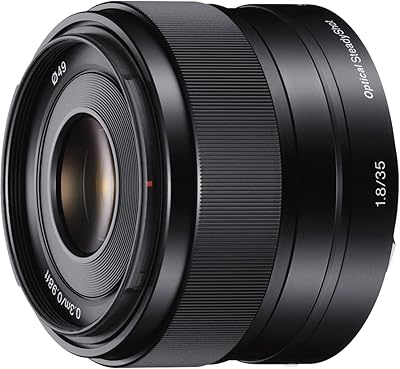
Sony SEL35F18 35mm f/1.8 Prime Lens
82%
91%
Optical Sharpness
88%
Low-Light Performance
79%
Autofocus Speed
83%
Video Autofocus
84%
Image Stabilization
More
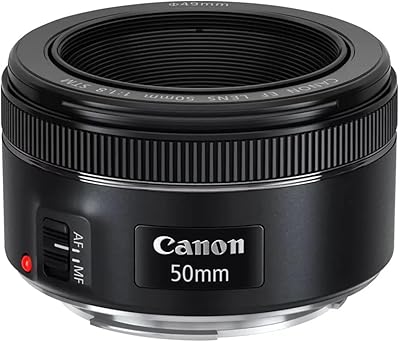
Canon EF 50mm f/1.8 STM Lens
79%
83%
Image Sharpness
88%
Bokeh & Background Separation
81%
Low-Light Performance
72%
Autofocus Speed & Accuracy
91%
Autofocus Noise
More

FAQ

The Lightdow 85mm f/1.8 Manual Focus Portrait Lens is built for the Nikon F-mount, so it fits a wide range of Nikon DSLR bodies — full-frame cameras like the D850, D750, and D810, as well as APS-C crop-sensor bodies like the D7500, D5600, and D3500. If your Nikon camera has an F-mount, it will physically accept the lens.

This happens because the lens has no electronic contacts, so the camera does not automatically detect it as a lens. The fix is straightforward: go into your camera menu and enable the option typically labeled Release Shutter Without Lens. The exact wording may vary slightly by camera model, but once you activate it, the error clears and the camera functions normally. You only need to do this once.

It is completely manual — there is no autofocus motor, no drive coupling, and no electronic focus assistance. You control focus entirely by turning the focus ring yourself. This is an intentional design choice, not an oversight, so if reliable autofocus is something your shooting depends on, this lens is not the right fit.

Most buyers are genuinely surprised by the background blur quality. The six rounded aperture blades produce smooth, circular out-of-focus highlights rather than the angular, faceted blur that often appears in budget optics. At f/1.8, the subject-to-background separation is strong, and for portrait work with a clean backdrop, the results hold up well.

It works well for video, arguably better than for fast-paced stills shooting. Manual focus is standard practice in filmmaking, and the smooth, well-damped focus ring gives you reliable control for rack-focus pulls. One thing to be aware of is minor focus breathing — a slight shift in the field of view as you adjust focus — which is common in lenses at this tier and may require correction in post-production if it is noticeable in your footage.

On a Nikon APS-C camera with its 1.5x crop factor, the 85mm effectively becomes a 127.5mm equivalent field of view. That is noticeably tighter than on a full-frame body, which some photographers prefer for close headshots but which also requires more physical distance between you and your subject. If you shoot in smaller rooms or confined spaces, that extra reach can make framing trickier.

Center-frame sharpness wide open is a consistent point of praise in user feedback and performs better than most buyers expect at this price tier. The edges of the frame, however, show more softness and some chromatic aberration at f/1.8. Stopping down to around f/2.8 improves both significantly. For tight portrait work where your subject occupies the center of the frame, the wide-open performance is genuinely usable.

No — because this 85mm f/1.8 lens has no electronic contacts, the camera and lens do not exchange any data. Aperture, focal length, and lens identification will not be recorded in your photo metadata. If you rely on EXIF data for organizing or editing your images, you will need to add that information manually in your editing software after the fact.

For the right kind of beginner, it is a solid choice. Shooting fully manual forces you to slow down and think through exposure and focus deliberately, which many photographers find accelerates their understanding of the craft. That said, if you are still at a stage where autofocus helps you capture moments without missing them, it is worth building more confidence with autofocus lenses first before committing to a fully manual workflow.

Not directly — this lens uses the Nikon F-mount, while Nikon Z cameras use the Z-mount, which is a different bayonet system. Nikon does make an official FTZ adapter that allows F-mount lenses to mount on Z-series bodies, and this lens will physically fit through it. Since there are no electronic contacts on the lens, no data will pass through regardless of the adapter, but the optical and mechanical function will work normally.

Where to Buy