Overview

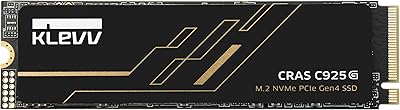
The KLEVV CRAS C910 4TB NVMe SSD comes from Essencore, a South Korean memory specialist that has quietly built a solid reputation among PC enthusiasts without the mainstream name recognition of Samsung or Western Digital. Launched in August 2024, this 4TB Gen4 drive lands in a competitive segment where capacity and speed both matter — and it distinguishes itself right out of the box by including an aluminum heatsink, something most bare M.2 drives simply skip. It currently sits at #28 in Internal SSDs on Amazon with nearly 1,000 ratings, which for a relatively new brand is a meaningful sign of real buyer confidence.
Features & Benefits

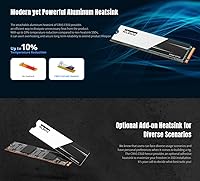
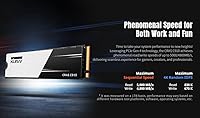
Running on a PCIe Gen4x4 interface, the CRAS C910 hits sequential read speeds of up to 5,200 MB/s and writes up to 4,800 MB/s — numbers that translate to noticeably faster boot times, quicker game loads, and snappier large-file transfers in daily use. The 3D TLC NAND flash strikes a practical balance between density and endurance, and intelligent SLC caching helps sustain write performance for typical workloads. The included heatsink is only 1mm thick, so it fits in most laptops and mini PCs without crowding neighboring slots. On top of that, AES 256-bit encryption and built-in S.M.A.R.T. monitoring are included at no extra setup cost — two features often overlooked until they actually matter.

Best For

This NVMe SSD is a natural fit for PC builders and gamers who want a single high-capacity drive that handles an entire library of modern titles without juggling multiple storage devices. Content creators working with large 4K or RAW video files will appreciate the fast sequential throughput, though it is worth noting that like most TLC drives, sustained writes over very long periods can slow once the SLC cache fills. That said, for the vast majority of use cases — gaming, media storage, daily creative work — it is more than capable. Compact system builders will find the slim optional heatsink particularly useful, and laptop upgraders benefit from the broad compatibility across both desktop and portable platforms.

User Feedback

With a 4.6-star average across nearly 1,000 reviews, buyer sentiment is clearly positive. The most common praise centers on straightforward installation and the convenience of having a heatsink included rather than sourced separately. Many users also report real-world speed improvements that are immediately noticeable after upgrading from older SATA or Gen3 drives. On the critical side, a handful of buyers have flagged that the heatsink thickness can be tight in certain ultra-slim laptops, so checking clearance beforehand is wise. A few heavy creative users noted some write speed reduction during very large sequential transfers — expected behavior for TLC-based storage. Given this drive only launched in mid-2024, long-term durability data is still building, but early indicators look solid.

Pros

  • 4TB of fast NVMe storage in a single M.2 slot eliminates the need for multiple drives in most builds.
  • Sequential read speeds up to 5,200 MB/s deliver noticeably faster boot times and large file transfers compared to Gen3 drives.
  • The included slim aluminum heatsink is a genuine convenience that most competing drives at this price point skip entirely.
  • At just 1mm thick, the heatsink fits in most laptops and mini PCs without crowding neighboring slots.
  • Hardware AES 256-bit encryption protects sensitive data without any software overhead or performance penalty.
  • Built-in S.M.A.R.T. monitoring gives users early warning of potential drive health issues before data loss occurs.
  • A 4.6-star rating across nearly 1,000 buyer reviews is a credible signal of consistent real-world satisfaction.
  • Installation is straightforward enough that even first-time builders report no issues getting up and running quickly.
  • Intelligent SLC caching keeps everyday performance snappy for the typical mix of reads and writes most users throw at it.
  • Broad compatibility across desktops, laptops, and mini PCs makes the CRAS C910 a versatile option for different build types.

Cons

  • Sustained write speeds can drop significantly once the SLC cache is exhausted during very large sequential write sessions.
  • KLEVV lacks the long-established brand track record of Samsung or WD, which may concern buyers prioritizing proven reliability history.
  • Long-term failure rate data is limited given the drive only launched in August 2024, so multi-year durability is still unproven.
  • The heatsink, while slim, can create clearance issues in certain ultra-thin laptop chassis — always check specs before buying.
  • Gen3 motherboard users will not come close to the advertised top speeds, making this drive a poor value match for older systems.
  • No software ecosystem or companion app is offered, unlike some competitors that include drive management utilities.
  • The 4TB capacity commands a higher upfront investment that may not be justified for users with modest storage needs.
  • Some buyers in compact builds have reported the heatsink can make reseating or swapping the drive slightly more fiddly than a bare M.2.

Ratings

The scores below are generated by AI after analyzing verified buyer reviews worldwide for the KLEVV CRAS C910 4TB NVMe SSD, with automated filtering applied to remove incentivized, duplicate, and bot-pattern submissions. Each category reflects the genuine distribution of praise and frustration found across the real user base — strengths are credited where earned, and recurring pain points are not glossed over. The result is a transparent snapshot of how this 4TB Gen4 drive actually performs in the hands of everyday builders, creators, and power users.

Sequential Read Speed
91%
Buyers consistently report that boot times and large game load screens feel noticeably faster after switching from Gen3 or SATA drives, with benchmark results closely matching the rated 5,200 MB/s ceiling in Gen4 systems. Gamers and creators alike cite moving large files across the drive as a genuinely quick experience in real daily use.
Users on Gen3 motherboards see roughly a 30 to 40 percent reduction in top throughput, which is a hardware ceiling issue rather than a drive flaw, but it does disappoint buyers who did not verify compatibility before purchasing.
Sequential Write Speed
84%
For typical workloads — importing camera footage, copying project archives, or installing large game updates — the rated 4,800 MB/s write ceiling holds well and translates to real time savings compared to older drives. Most desktop users report satisfying write performance in everyday mixed-use scenarios.
A meaningful subset of reviewers, particularly those doing prolonged video ingest or large backup operations, noticed write speeds falling back significantly once the SLC cache fills, a behavior inherent to TLC NAND at this capacity that KLEVV does not prominently disclose upfront.
Thermal Management
83%
The included aluminum heatsink earns consistent praise for being a thoughtful inclusion — buyers appreciate not having to source one separately, and several mini PC and small form factor builders specifically called out that temperatures stayed stable under sustained loads with it attached. The slim 1mm profile means it rarely causes clearance headaches in most builds.
A handful of laptop users found the heatsink pushed the drive just thick enough to conflict with their chassis thermal pad or lid clearance, requiring them to remove it entirely. Without the heatsink in passively cooled compact systems, some users reported mild thermal throttling during extended heavy workloads.
Value for Money
88%
Buyers repeatedly flag this 4TB Gen4 drive as one of the better-priced options in its capacity tier, especially given that the heatsink is bundled in rather than sold separately. Compared to similarly specced drives from bigger brands, the cost-per-gigabyte math works out favorably for budget-conscious builders who still want Gen4 performance.
A few reviewers feel the price premium over 2TB options is steep unless you genuinely need the full 4TB, and some note that during sales periods, competing drives from more established brands close the gap enough to make the decision less clear-cut.
Installation Experience
93%
This is one of the most consistently praised aspects across the review base — buyers of all experience levels, from first-time builders to seasoned enthusiasts, describe the installation process as fast and trouble-free. The heatsink attaches without tools, and the drive is detected immediately by both Windows and popular BIOS environments without any driver fuss.
A small number of users noted that the heatsink clips feel slightly fragile during initial attachment, and there is limited guidance in the packaging for first-time builders on whether to use the heatsink with or without the existing motherboard thermal pad.
Random Read/Write Performance
82%
18%
With 620K and 615K IOPS for random reads and writes respectively, the CRAS C910 handles multitasking, application switching, and OS responsiveness very well in day-to-day use. Users running busy workstations with multiple applications open simultaneously reported the drive rarely felt like a bottleneck.
In highly parallelized workloads or database-adjacent tasks that hammer the drive with thousands of tiny simultaneous requests, a small number of professional users noted the performance advantage over premium alternatives narrows more than the spec sheet suggests.
Build Quality
79%
21%
The drive itself feels solid and the PCB finish is clean, consistent with what you would expect from a purpose-built enthusiast component rather than a no-name white-label module. The heatsink, while lightweight, feels adequately rigid once clipped into place on the drive.
The heatsink clip mechanism feels slightly under-engineered compared to screw-mounted alternatives, and a few users who removed and reattached it multiple times reported the clips lost some of their holding tension over time, which is a minor but real concern for frequent builders.
Brand Reliability & Trust
71%
29%
KLEVV is backed by Essencore, a legitimate memory and storage manufacturer with an established presence in the industry, and the drive carries a five-year warranty that matches what Samsung and WD offer on their comparable products. The growing review volume with a 4.6-star average is a reasonable early confidence signal.
KLEVV simply does not yet have the multi-year failure rate data that makes Samsung or Western Digital easy recommendations for mission-critical storage, and some buyers express genuine hesitation about RMA support responsiveness given the brand’s smaller Western market footprint.
Sustained Write Endurance
67%
33%
For typical consumer workloads — gaming, general content consumption, moderate creative work — the TBW rating is more than sufficient and the drive is unlikely to reach its write limit within the warranty period for the vast majority of users. Early reviewers have not reported premature endurance failures.
Heavy professional users such as those running continuous backup targets, surveillance write streams, or full-day video ingest workflows should be cautious, as TLC NAND at high capacity is more susceptible to cache saturation and sustained speed drops than SLC or MLC alternatives would be in the same role.
Compatibility Range
86%
Desktop users across a wide range of AMD and Intel Gen4 platforms report clean plug-and-play detection with no compatibility surprises. The standard M.2 2280 footprint means it fits virtually every slot designed for that form factor, and PS5 compatibility with the included heatsink is a bonus for console upgraders.
Laptop compatibility is slightly more variable — while most modern notebooks accept it without issue, a non-trivial number of ultra-slim model owners have flagged heatsink clearance as a problem, and older laptops limited to PCIe Gen3 will not realize the drive’s performance potential.
Noise & Vibration
97%
As a solid-state drive with no moving parts, the CRAS C910 operates in complete silence under all conditions, which buyers transitioning from spinning hard drives consistently appreciate as an immediate quality-of-life improvement in quiet environments like home offices and bedrooms.
There is effectively nothing negative to report here from a user perspective — this is a non-issue for NVMe drives as a category, and no reviewer raised any concern related to acoustic performance.
Software & Ecosystem
54%
46%
The drive works immediately with standard OS tools including Windows Disk Management and the BIOS, and hardware encryption is accessible through BitLocker without any additional setup steps. No driver installation is required for basic operation on any supported platform.
KLEVV offers no proprietary companion software for health monitoring, firmware updates, or performance tuning, which puts it behind Samsung Magician and WD Dashboard in terms of user-friendly drive management. Buyers who want a one-stop dashboard for monitoring drive health will need to rely on third-party tools.
Packaging & Unboxing
76%
24%
The drive arrives in compact, functional packaging with the heatsink clearly separated and easy to attach. Buyers report the product feels well protected and properly presented for its market tier, with no reported transit damage issues in the review base.
The included documentation is minimal, and there is no quick-start guide specifically addressing heatsink installation decisions for different system types, which is an oversight given how frequently buyers ask about this in community forums.
Long-Term Reliability Outlook
69%
31%
Early reviewers who have been using the drive since its August 2024 launch have not surfaced patterns of premature failure, and the five-year warranty provides a meaningful safety net. The 3D TLC NAND and thermal throttle algorithms are reasonable foundations for longevity in typical use cases.
The drive is simply too new to carry a confident long-term reliability verdict — there is no multi-year field data yet, and buyers who prioritize proven durability over current price efficiency are right to factor this gap into their decision.

Suitable for:

The KLEVV CRAS C910 4TB NVMe SSD is a strong match for PC builders and gamers who want to consolidate their entire storage setup onto a single fast drive without the hassle of managing multiple devices. If you are running a mid-to-high-end desktop or laptop with a PCIe Gen4 slot and have been frustrated by constantly juggling space across several drives, this 4TB capacity genuinely solves that problem in one shot. Content creators who regularly move large batches of video, photography, or project files will benefit from the high sequential throughput in day-to-day transfers, even if they should temper expectations for marathon write sessions. Compact system builders — think mini PC enthusiasts or small form factor hobbyists — will appreciate that the included slim heatsink provides passive cooling without eating into adjacent slot clearance. It is also a practical pick for anyone who wants Gen4-tier performance paired with hardware-level encryption and health monitoring, without paying a premium for a more established brand name.

Not suitable for:

The KLEVV CRAS C910 4TB NVMe SSD is not the right tool for every situation, and it is worth being clear about where it falls short. Professional video editors or data pipeline workers who routinely write hundreds of gigabytes in a single uninterrupted session may run into the TLC NAND cache exhaustion wall, where write speeds drop noticeably until the drive catches up — this is a category-wide behavior, not unique to this drive, but it is a real consideration at this workload level. Buyers with ultra-slim laptops should verify physical clearance before purchasing, as the heatsink adds a few millimeters of height that some chassis simply cannot accommodate. If brand longevity and a decades-long track record are non-negotiable for mission-critical storage, established names with longer reliability histories may offer more peace of mind, since this drive only launched in mid-2024 and long-term failure rate data is still accumulating. Finally, users with older PCIe Gen3 motherboards will not unlock the full speed potential here, making a less expensive Gen3-optimized drive a smarter financial choice in that scenario.
Specifications

  • Capacity: The drive is available in a 4TB configuration, offering enough room for large game libraries, media collections, and project files on a single M.2 module.
  • Interface: It uses an NVMe PCIe Gen4x4 host interface, requiring a compatible Gen4 M.2 slot on the motherboard or laptop to reach its rated top speeds.
  • Form Factor: The drive follows the standard M.2 2280 form factor, measuring 80mm in length and 22mm in width, which fits the vast majority of desktop and laptop M.2 slots.
  • Sequential Read: Rated sequential read throughput reaches up to 5,200 MB/s under optimal conditions using the PCIe Gen4x4 interface.
  • Sequential Write: Rated sequential write throughput reaches up to 4,800 MB/s, suitable for fast large-file transfers and high-bitrate video workflows.
  • Random Read: 4K random read performance is rated at up to 620,000 IOPS, contributing to fast application launches and responsive multitasking.
  • Random Write: 4K random write performance is rated at up to 615,000 IOPS, supporting quick save operations and database-style workloads.
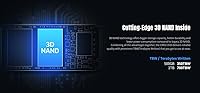
  • Flash Type: The drive uses 3D TLC NAND flash, a widely adopted technology that balances storage density, write endurance, and cost per gigabyte.
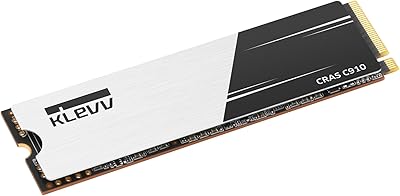
  • Heatsink: A 1mm-thick slim aluminum heatsink is included in the box and is optional to attach, keeping the total installed height at 3.40mm with it fitted.
  • Dimensions: With the heatsink attached, the drive measures 80 x 22 x 3.40mm; without it, the profile drops to 80 x 22 x 2.15mm for tighter chassis installations.
  • Weight: The drive weighs 10g with the heatsink installed and 7g as a bare module, making it one of the lightest storage options in its capacity class.
  • Encryption: Hardware-based AES 256-bit encryption is built into the controller, protecting stored data without any measurable impact on drive performance.
  • Health Monitoring: The drive includes built-in S.M.A.R.T. support, allowing compatible system tools to track drive health indicators and flag potential issues early.
  • SLC Caching: An intelligent SLC caching algorithm is used to accelerate burst write performance and maintain consistent responsiveness during typical mixed workloads.
  • Compatibility: The drive is officially compatible with desktop PCs, laptops, and mini PCs that feature an M.2 2280 slot with PCIe Gen4 or Gen3 support.
  • Release Date: The drive was first made available in August 2024, making it a relatively recent product with a growing body of real-world user feedback.
  • Manufacturer: The drive is designed and sold by KLEVV, a brand operated by Essencore, a memory and storage specialist headquartered in South Korea.
  • Model Number: The official model identifier for the 4TB variant is K04TBM2SP0-C91, which can be used to verify compatibility and locate official documentation.

Related Reviews
KLEVV CRAS C910 1TB NVMe SSD
80%
88%
Sequential Read Performance
74%
Sequential Write Performance
81%
Thermal Management & Heatsink
91%
Installation & Compatibility
83%
4K Random Performance
More
KLEVV CRAS C910 500GB NVMe SSD
79%
88%
Sequential Read Speed
82%
Sequential Write Speed
79%
Random Read & Write
61%
Sustained Write Consistency
86%
Thermal Management
More
KLEVV CRAS C930 2TB NVMe PCIe Gen4x4 SSD
88%
93%
Performance
90%
Ease of Installation
94%
Compatibility with PS5
95%
Speed (Read/Write)
88%
Thermals (Cooling Efficiency)
More
KLEVV CRAS C910 1TB NVMe SSD
80%
88%
Sequential Read Speed
85%
Sequential Write Speed
61%
Sustained Write Consistency
91%
Value for Money
83%
Thermal Management
More
KLEVV CRAS C925G 2TB M.2 NVMe PCIe Gen4 SSD
89%
94%
Performance
92%
Thermal Management
89%
Ease of Setup
91%
Compatibility with PS5
93%
Speed (Read/Write)
More
WD_BLACK SN8100 4TB NVMe SSD
82%
97%
Sequential Throughput
93%
Random I/O Performance
61%
Thermal Management
67%
Value for Money
82%
Installation & Compatibility
More
WD_BLACK 4TB SN7100 NVMe SSD
87%
94%
Performance (Speed)
92%
Storage Capacity
85%
Power Efficiency
89%
Installation & Setup
91%
Durability & Reliability
More
Ediloca EN870 4TB NVMe M.2 SSD
78%
91%
Sequential Read Speed
58%
Sustained Write Performance
93%
PS5 Compatibility
84%
Value for Money
89%
Installation Experience
More
XPG SX8100 4TB NVMe M.2 SSD
72%
93%
Storage Capacity
86%
Sequential Read Speed
67%
Sequential Write Speed
58%
Thermal Performance
84%
Endurance & Longevity
More
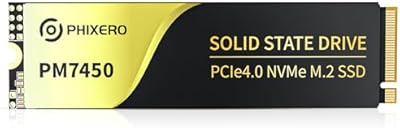
PHIXERO PM7450 4TB NVMe SSD
81%
93%
Sequential Read Performance
87%
Sequential Write Performance
61%
QLC Endurance & Longevity
88%
Thermal Management
84%
Burst Write Speed
More

FAQ

It works in both. The CRAS C910 follows the standard M.2 2280 form factor, which is found in the majority of modern laptops and desktops alike. If your laptop has an M.2 slot — and most made in the last five years do — it should physically fit. Just double-check whether your specific model supports M.2 2280 size and NVMe protocol, as a small number of older or budget laptops only support SATA M.2 drives.

You can absolutely skip it. The heatsink is optional and simply snaps onto the drive — there are no screws or adhesives involved. Most users installing the drive in a laptop or a system that already has its own M.2 thermal pad will want to leave the heatsink off to keep the clearance slim. For desktop builds with open airflow, attaching it is a quick and easy way to help keep temperatures in check.

Yes, it will work in a Gen3 slot, but you will not get anywhere near the rated Gen4 speeds. In a Gen3 environment, you can expect sequential reads closer to 3,500 MB/s, which is still fast but not what you are paying for. If your platform is Gen3-only, it is worth considering whether a more affordable Gen3-optimized drive would be a smarter fit for your budget.

For most video workflows, this NVMe SSD performs very well. Moving large batches of footage or doing sustained camera dumps will feel fast. However, like all drives using 3D TLC NAND, it relies on an SLC cache to maintain peak write speeds, and if you are writing several hundred gigabytes in a single uninterrupted session, speeds will taper off once that cache fills. For day-to-day editing and file management, this is rarely an issue — it mainly matters for very large, non-stop sequential writes.

Yes, it is physically and electrically compatible with the PS5 expansion slot, which accepts M.2 2280 NVMe drives. The included heatsink also satisfies Sony’s requirement for a heatsink on aftermarket drives. That said, always confirm the latest PS5 firmware compatibility requirements before purchasing, as Sony occasionally updates its supported drive specifications.

The 990 Pro is a strong drive with a longer track record and a well-established software ecosystem, which gives some buyers extra peace of mind. The CRAS C910 competes closely on raw sequential performance at this capacity tier and undercuts it on price in many markets. The key difference is brand familiarity and years of reliability data — Samsung simply has more of both. If that matters to you, it is a fair reason to pay a premium. If you are comfortable with a newer brand backed by solid early reviews, this 4TB Gen4 drive holds its own well.

KLEVV does not bundle proprietary cloning software in the box. That said, free third-party tools like Macrium Reflect or the free tier of EaseUS Todo Backup handle M.2 NVMe migrations reliably. Many users also just do a clean OS install onto the new drive, which is often the cleaner approach anyway if you have been meaning to start fresh.

KLEVV offers a five-year limited warranty on the CRAS C910 series, which is standard for drives in this class and on par with what Samsung and WD offer on their enthusiast-grade NVMe products. Keep your purchase receipt, as warranty claims typically require proof of purchase date.

The AES 256-bit encryption is hardware-based, meaning the drive’s controller handles it at the chip level. To activate and manage it, you typically use your system’s BIOS security settings or Windows BitLocker, which recognizes hardware encryption on compatible drives automatically. You do not need any third-party software installed, and there is no performance hit from enabling it.

It depends on your specific chassis. The heatsink adds about 1.25mm of height to the drive profile, bringing it to 3.40mm total — which is slim by heatsink standards. Most mini PCs and small form factor cases with a dedicated M.2 slot have enough room, but a handful of particularly compact designs use a thermal pad on the case lid instead and prefer a bare drive. Check your mini PC’s manual for M.2 height clearance before deciding whether to attach the heatsink or install the drive bare.

Where to Buy