Overview

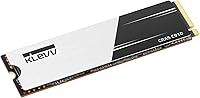
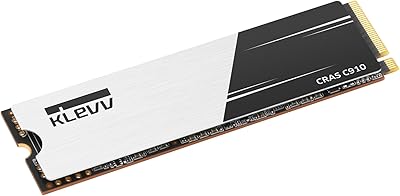
The KLEVV CRAS C910 500GB NVMe SSD comes from Essencore, a company backed by SK Hynix flash expertise — which should ease any hesitation about choosing a lesser-known name. At this price point, finding a Gen4 drive with an included aluminum heatsink is genuinely rare, and that alone sets this NVMe drive apart from a crowded field. It uses the standard M.2 2280 footprint, so it fits desktops, laptops, and mini PCs without issue. Sequential speeds are strong, and the 350 TBW endurance rating is competitive for a 500GB drive. Honest, capable, and priced where real buyers shop.
Features & Benefits

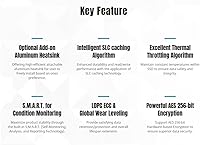
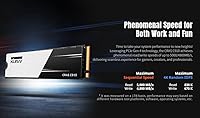
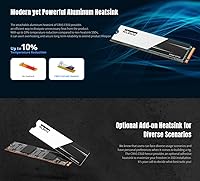
Running on a PCIe Gen4x4 interface, the CRAS C910 hits sequential reads around 5000MB/s — fast enough that your OS and applications feel noticeably more responsive compared to a SATA or older Gen3 drive. The attached heatsink is only 1mm thick, so it won't block RAM slots or laptop bays, yet it keeps temperatures meaningfully lower during sustained workloads. Under the hood, 3D TLC NAND paired with an SLC caching layer handles everyday tasks well, though write speeds can taper off during very large, prolonged transfers once the cache fills. AES 256-bit encryption is baked in at the hardware level, and S.M.A.R.T. monitoring lets you keep tabs on drive health over time.

Best For

This Gen4 SSD makes the most sense for gamers upgrading from SATA who want faster load times without paying flagship SSD prices. It's also a solid pick for content creators juggling project files, scratch disks, and OS duties on a budget build. Laptop owners with a free M.2 slot will appreciate the slim heatsink design — it adds thermal protection without the thickness that blocks bays in tighter chassis. DIY builders putting together a mid-range desktop will find it works well as either a primary boot drive or a secondary storage option. Buyers who want a heatsink bundled in — rather than an afterthought — will feel right at home here.

User Feedback

With a 4.6-star average across close to 1,000 ratings, buyer sentiment for this NVMe drive leans consistently positive. The most repeated praise involves how painless installation is and how noticeably snappier systems feel afterward — especially for people moving up from older SATA drives. The bundled heatsink also gets called out as a genuine convenience rather than a gimmick. On the flip side, some users doing heavy, back-to-back large file transfers have noted that write speeds don't stay at peak levels indefinitely, which is expected behavior for TLC NAND but worth knowing upfront. Feedback on KLEVV's warranty support is thinner in volume, making it harder to draw firm conclusions there.

Pros

  • Gen4 PCIe speeds make boot times and application launches noticeably faster than SATA or Gen3 alternatives.
  • The included aluminum heatsink is a genuine bonus — most competing drives at this price point ship bare.
  • At just 1mm thick, the heatsink slots into most laptops and compact builds without causing clearance problems.
  • Hardware-level AES 256-bit encryption protects sensitive data without any measurable impact on everyday drive performance.
  • A 4.6-star average from nearly 1,000 buyers signals consistent real-world satisfaction, not just a few outliers.
  • Installation is plug-and-play — buyers repeatedly report getting up and running without driver issues or extra steps.
  • The 350 TBW endurance rating is competitive for a 500GB Gen4 drive in this affordable price bracket.
  • SK Hynix-backed flash gives the CRAS C910 a credible foundation, despite KLEVV being a lesser-known name.
  • S.M.A.R.T. support enables proactive health monitoring, which is reassuring for a primary boot drive.
  • Broad M.2 2280 compatibility covers desktops, laptops, and mini PCs without needing adapters or workarounds.

Cons

  • Write speeds fall off noticeably once the SLC cache fills during sustained heavy transfers — a real limitation for large media work.
  • KLEVV carries limited brand recognition, and long-term warranty support feedback from real users remains relatively sparse.
  • 500GB fills up fast for anyone storing sizable game libraries or working with multi-hour video footage.
  • No first-party management software is included, so health monitoring depends entirely on third-party S.M.A.R.T. tools.
  • Real-world performance under mixed or random workloads may not match the headline sequential benchmark figures.
  • The heatsink adds a few millimeters of height that can create fitment problems in ultra-compact NUC-style enclosures.
  • KLEVV products are harder to find in physical retail, which limits same-day replacement options if something goes wrong.
  • Peak sequential write speeds trail what top-tier Gen4 drives from larger brands deliver at comparable pricing tiers.

Ratings

The scores below are generated by AI after analyzing verified buyer reviews for the KLEVV CRAS C910 500GB NVMe SSD from global marketplaces, with spam, bot submissions, and incentivized feedback actively filtered out to protect integrity. Each category reflects weighted patterns drawn from hundreds of real-world use cases — gaming builds, laptop upgrades, and creative workstations alike. Strengths and pain points are both represented transparently, so the numbers tell the full story rather than just the flattering parts.
Sequential Read Speed
88%
Buyers upgrading from SATA SSDs consistently report a dramatic difference in how quickly their systems boot and how fast large files — game installs, video exports, disk images — become accessible. The Gen4 bandwidth delivers exactly what most users hope for in daily use, and the improvement feels tangible from day one.
Peak sequential read numbers are achieved under ideal, low-queue conditions, and real-world sustained performance under heavier parallel workloads does not always match the advertised ceiling. A handful of users with synthetic benchmarking experience noted that results vary depending on thermal conditions and the specific test tool used.
Sequential Write Speed
82%
18%
For routine tasks — saving large project files, copying application folders, installing games — the write speed is noticeably faster than what most people have experienced on SATA or Gen3 drives. Several content creators specifically mentioned how much quicker render exports land on the drive compared to their previous setups.
The rated write speed is respectable but trails some competing Gen4 drives at a similar price point, particularly on sustained sequential writes where the gap can widen. Users migrating very large libraries in a single session may find the CRAS C910 slightly slower than expected on those extended operations.
Random Read & Write
79%
21%
For typical desktop and gaming workloads — loading levels, switching between applications, accessing scattered game asset files — the random performance is more than sufficient and contributes to a generally responsive feel. Gamers in particular reported snappier in-game asset streaming compared to their previous SATA drives.
Under sustained mixed random workloads, such as running a game while simultaneously downloading a large update, some users noticed occasional dips in responsiveness. The 4K random figures, while solid on paper, are not at the top of the Gen4 category and may not fully satisfy users running storage-intensive professional applications.
Sustained Write Consistency
61%
39%
For everyday computing — copying a few large files, saving video project checkpoints, or running a routine backup — the SLC cache keeps write speeds elevated and steady without any perceptible slowdown. The majority of buyers never push past the cache threshold in normal use, so for them performance feels consistently reliable.
When the SLC write cache fills during prolonged, high-volume transfers — moving several hundred gigabytes in a single session, for example — write speeds fall back to the base TLC rate, which is significantly slower. Video editors and users who handle large raw footage archives on a regular basis flagged this as a real and recurring limitation.
Thermal Management
86%
The bundled aluminum heatsink is among the most discussed positives in buyer reviews, with many noting their drive runs measurably cooler compared to bare M.2 drives they have used previously. At just 1mm thick, it adds meaningful thermal protection without compromising compatibility in tight laptop bays or compact mini PC slots.
A small number of users with ultra-compact builds — particularly NUC-style chassis with strict M.2 clearance tolerances — found that even the slim heatsink caused fitment problems and had to be removed entirely. Without the heatsink attached, the drive's temperature performance falls in line with other bare Gen4 TLC drives rather than standing out.
Value for Money
91%
This is where the drive earns its strongest and most consistent praise from real buyers — getting Gen4 NVMe speeds along with an included heatsink at this price tier represents genuinely good value, especially for builders working within a strict budget. Many users explicitly stated they chose this drive over pricier competitors specifically because of what comes in the box.
The value proposition weakens somewhat for users who actually need more than 500GB of fast primary storage, since the per-gigabyte cost advantage narrows when compared to 1TB and 2TB alternatives from competing brands. A few buyers also felt the absence of any bundled management or migration software was a noticeable omission even at this price.
Installation Ease
93%
Installation feedback is overwhelmingly positive — the vast majority of buyers described the experience as plug-and-play, with the drive recognized immediately by Windows and compatible BIOSes without any manual driver setup required. First-time builders in particular appreciated how little friction was involved in getting the drive up and running.
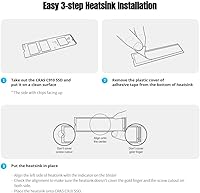
There is no dedicated migration software included, which means users transferring an existing OS to this drive need to source a third-party cloning tool independently — a minor but real extra step that occasionally tripped up less experienced buyers. Heatsink alignment during physical installation also required care, which a few users found unexpectedly fiddly.
Build Quality
83%
The drive feels solid, and the aluminum heatsink — though lightweight — gives the package a more premium physical presence than a bare PCB M.2 drive. The fit and finish of the heatsink attachment received specific positive comments from builders who appreciated the clean aesthetic inside a windowed case.
KLEVV does not publicly disclose the specific controller used in this drive, which makes it harder to independently assess long-term hardware reliability compared to brands that are more transparent about their full component stack. A number of technically inclined buyers found this lack of disclosure mildly frustrating when researching before purchase.
Compatibility
89%
The standard M.2 2280 form factor means this drive slots into nearly any modern desktop, laptop, or mini PC without surprises, and its Gen4 interface is backward compatible with Gen3 motherboard slots. Buyers across a wide range of platforms — AMD and Intel builds alike — reported no compatibility issues whatsoever.
Users with very old motherboards limited to PCIe Gen3 will see significantly reduced peak speeds, and those whose M.2 slots support only SATA signaling cannot use this drive at all. Compatibility verification is entirely on the buyer, and the product packaging could do more to highlight these distinctions clearly.
Endurance & Longevity
76%
24%
A 350 TBW endurance rating for 500GB capacity is competitive within this price range and should comfortably cover typical consumer workloads — gaming, media consumption, office productivity — across several years of regular use. S.M.A.R.T. compatibility also lets users monitor wear indicators proactively before problems develop.
Heavy writers — users who frequently move large video archives, run active virtual machines, or use the drive for continuous data logging — may approach the TBW ceiling faster than they would on a more endurance-focused alternative. The 350 TBW figure is solid for the price but not exceptional by current mid-range Gen4 standards.
Data Security
84%
Hardware-level AES 256-bit encryption is a feature many budget-tier drives skip entirely, so having it built in is a genuine benefit for professionals handling sensitive client files or anyone running an encrypted OS volume. It operates transparently without adding latency or requiring any additional software configuration to activate.
KLEVV does not provide its own security management utility, so users who want to configure or verify encryption settings must rely on the operating system's built-in tools or third-party software. For more advanced security workflows — such as those found in corporate environments — this bare-bones software approach is a meaningful limitation.
Health Monitoring
72%
28%
S.M.A.R.T. support means the drive can report health data to any compatible monitoring utility, giving users visibility into temperature readings, wear level, and error counts over time. This kind of proactive insight is particularly reassuring when the drive is serving as a primary boot volume with important data on it.
With no first-party dashboard or companion app, accessing and interpreting S.M.A.R.T. data requires a separate software download — tools like CrystalDiskInfo are free and functional, but casual users may not think to check them or fully understand the readings. The overall experience feels noticeably less polished than what Samsung Magician or WD Dashboard provides.
Brand Support
67%
33%
KLEVV's connection to SK Hynix gives the brand a credible flash foundation, and the five-year warranty period matches what most established SSD manufacturers offer at this tier. A meaningful portion of buyers who researched the brand background reported feeling reassured once they understood the SK Hynix relationship behind the product.
Real-world warranty claim experiences from verified buyers are relatively sparse in volume, making it genuinely difficult to assess how smooth the support process is when something actually goes wrong. Compared to Samsung or Western Digital, KLEVV simply does not have the depth of long-term ownership feedback needed to draw firm conclusions about after-sales reliability.
Power Efficiency
78%
22%
In typical desktop and laptop workloads, the drive does not draw unusual amounts of power, and laptop users reported no noticeable change in battery drain during everyday tasks like browsing, document editing, or light gaming. Idle power behavior appears to be in line with the broader Gen4 NVMe category norm.
Under sustained read and write loads — extended gaming sessions or prolonged file transfers — power draw increases noticeably, which can trim battery life for laptop users over time. KLEVV also does not publish detailed power consumption figures, making it harder to compare this drive against competitors in power-sensitive mobile scenarios.
Software Ecosystem
54%
46%
The drive works out of the box with standard OS-level tools and is recognized by mainstream third-party utilities like CrystalDiskInfo and HWiNFO without any configuration. For users who simply want the drive to function reliably and have no interest in a companion app, the absence of software is a non-issue.
There is no KLEVV-branded management software at all — no firmware update portal, no health dashboard, no performance tuning interface, and no migration wizard included or available for download. Compared to the mature software ecosystems that Samsung and WD have built around their drives, this is a meaningful gap that more engaged buyers will notice quickly.

Suitable for:

The KLEVV CRAS C910 500GB NVMe SSD is a well-rounded pick for anyone stepping up from an older SATA drive and wanting a tangible speed improvement without pushing into premium price territory. Gamers building or refreshing a mid-range rig will notice the difference in boot times and game load screens almost immediately after the swap. Laptop owners with an available M.2 slot are another strong match — the heatsink is slim enough to fit inside most consumer notebooks without causing clearance issues. Content creators handling moderate file sizes, project caches, and OS duties will find the performance comfortably sufficient for daily creative work. DIY builders who want thermal protection included out of the box — rather than sourcing a separate heatsink — get real practical value without an extra purchase. Its standard M.2 2280 form factor drops into desktops, mini PCs, and most laptops with zero compatibility headaches.
Not suitable for:

If your workflow involves sustained, back-to-back large file transfers — think RAW video ingestion, multi-gigabyte archive operations, or regular full-drive backups — the KLEVV CRAS C910 500GB NVMe SSD may not hold up to your expectations. Like any TLC NAND drive, it relies on an SLC cache buffer to maintain peak write speeds, and once that buffer saturates under prolonged load, throughput drops noticeably. Users who need more than 500GB of fast primary storage will also want to consider the 1TB or 2TB variants rather than this entry capacity. Buyers for whom brand recognition is a dealbreaker will feel more comfortable with established players like Samsung or WD, though at a meaningful cost premium. This is equally not the right choice for write-intensive server workloads or anyone seeking enterprise-grade endurance ratings. Those who depend heavily on first-party drive management software will also find the ecosystem around KLEVV thinner than what the bigger brands offer.
Specifications

  • Capacity: The drive provides 500GB of storage, suitable for an operating system, applications, and a moderate library of games or project files.
  • Interface: Operates over an NVMe PCIe Gen4x4 interface, using four lanes of Gen4 bandwidth to achieve its rated transfer speeds.
  • Form Factor: Built to the M.2 2280 standard, measuring 80mm in length and 22mm in width, which fits the vast majority of modern motherboard slots.
  • Sequential Read: Rated for sequential read speeds of up to 5000MB/s, enabling fast OS boot times and rapid access to large files.
  • Sequential Write: Sequential write speeds reach up to 3700MB/s, well above what any SATA SSD can deliver for file saves and transfers.
  • Random Read: 4K random read performance is rated at up to 545,000 IOPS, supporting responsive multitasking and quick application launches.
  • Random Write: 4K random write performance reaches up to 510,000 IOPS, handling mixed read-write workloads with low latency under typical conditions.
  • Endurance: Carries a 350 TBW endurance rating, representing the total volume of data the drive is designed and warrantied to write over its lifetime.
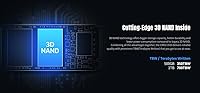
  • Flash Type: Uses 3D TLC NAND flash with an SLC caching algorithm that helps sustain write performance during shorter bursts of data-intensive activity.
  • Heatsink: Includes a removable aluminum heatsink that is 1mm thick and engineered to reduce operating temperatures by up to 10% compared to bare drives.
  • Dimensions: With the heatsink attached the drive measures 80mm x 22mm x 3.40mm; without it the height drops to 2.15mm for tighter-fitting slots.
  • Weight: Weighs 10g with the heatsink installed and 7g without, keeping it light enough for compact builds and mobile workstations.
  • Encryption: Supports AES 256-bit hardware-based encryption, securing stored data at the drive level without requiring software overhead or a performance trade-off.
  • Monitoring: Compatible with S.M.A.R.T. technology, allowing users to track drive health metrics proactively through any compatible third-party monitoring utility.
  • Compatibility: Designed for use in desktops, laptops, and mini PCs equipped with an M.2 2280 slot supporting PCIe Gen4 or backward-compatible Gen3 signaling.

Related Reviews
KLEVV CRAS C910 4TB NVMe SSD
80%
91%
Sequential Read Speed
84%
Sequential Write Speed
83%
Thermal Management
88%
Value for Money
93%
Installation Experience
More
KLEVV CRAS C910 1TB NVMe SSD
80%
88%
Sequential Read Performance
74%
Sequential Write Performance
81%
Thermal Management & Heatsink
91%
Installation & Compatibility
83%
4K Random Performance
More
KLEVV CRAS C930 2TB NVMe PCIe Gen4x4 SSD
88%
93%
Performance
90%
Ease of Installation
94%
Compatibility with PS5
95%
Speed (Read/Write)
88%
Thermals (Cooling Efficiency)
More
KLEVV CRAS C910 1TB NVMe SSD
80%
88%
Sequential Read Speed
85%
Sequential Write Speed
61%
Sustained Write Consistency
91%
Value for Money
83%
Thermal Management
More
KLEVV CRAS C925G 2TB NVMe Gaming SSD
84%
91%
Sequential Speed Performance
88%
Thermal Management
86%
Build Quality & Design
89%
PS5 Compatibility
82%
Value for Money
More
Crucial P310 500GB NVMe SSD
87%
93%
Read & Write Speed
91%
Value for Money
88%
Thermal Management
94%
Compatibility
92%
Installation Ease
More
Crucial P3 500GB NVMe M.2 SSD
82%
88%
Read Speed Performance
71%
Write Speed Performance
93%
Value for Money
94%
Ease of Installation
86%
Reliability & Longevity
More
WD_BLACK SN770M 500GB NVMe SSD
89%
93%
Performance
95%
Compatibility with Gaming Consoles
91%
Speed (Read/Write)
88%
Installation Ease
87%
Durability
More
TEAMGROUP MP44L 500GB Gen4 NVMe SSD
78%
88%
Sequential Read Speed
61%
Sustained Write Performance
79%
Thermal Management
91%
Installation & Compatibility
93%
Value for Money
More
fanxiang S880E 500GB NVMe SSD
78%
83%
Raw Speed Performance
86%
PS5 Compatibility
91%
Value for Money
77%
Thermal Management
93%
Installation Ease
More

FAQ

In most cases, yes — if your laptop has an M.2 2280 slot that supports NVMe, you should be good to go. The heatsink is only 1mm thick, so clearance issues are uncommon even in slimmer notebooks. That said, it is always worth confirming your laptop model's M.2 slot type in the manual before purchasing.

The heatsink is completely optional and easy to leave off. If your motherboard already has its own M.2 thermal pad or cover, just skip the heatsink entirely. It is most useful in open-air builds or systems with limited airflow around the M.2 slot.

The PS5 accepts M.2 NVMe PCIe Gen4 drives, and this drive's form factor is technically compatible. Sony also recommends using a heatsink, which is conveniently included here. Before installing, check Sony's latest storage expansion guidelines to confirm slot clearance specifics for your console revision.

That is a fair concern. KLEVV operates under Essencore, a company with direct connections to SK Hynix, one of the largest NAND flash manufacturers in the industry. It is not a household name like Samsung or WD, but the underlying flash quality is backed by serious manufacturing expertise. The 4.6-star rating from a substantial number of buyers also adds some real-world reassurance.

On raw sequential read speed, this Gen4 SSD is genuinely competitive. Where the bigger brands pull ahead is in their software ecosystems, more established warranty support networks, and broader retail availability. If speed-per-dollar and the bundled heatsink are your priorities, this drive holds its ground — but if brand infrastructure matters to you, Samsung and WD have a deeper support bench.

Yes, and noticeably so — particularly for boot times, game load screens, and any task that moves large chunks of data. General web browsing or document editing may feel roughly similar, but anything that stresses the storage system will feel more responsive. The jump from SATA to Gen4 NVMe is one of the more impactful upgrades you can make in a mid-range build.

This is worth understanding before you buy. Like all TLC NAND drives, the CRAS C910 uses a fast SLC cache buffer to maintain high write speeds during typical workloads. If you push through a very large sustained transfer that exhausts that cache, speeds will fall back to the base TLC write rate, which is noticeably slower. For everyday use this rarely comes up, but video editors and users running large backups regularly should keep this in mind.

No, there is no proprietary migration software included in the package. If you are transferring your existing OS and files from another drive, you will need a third-party tool — Macrium Reflect Free is a solid free option that works well for this purpose. It takes a little extra setup, but it is straightforward and widely used.

Yes, Gen4 NVMe drives are backward compatible with Gen3 slots. You will not reach the full 5000MB/s read speeds — Gen3 bandwidth caps the drive at roughly half that — but it will still outperform any SATA SSD by a meaningful margin. It also means the drive is ready to perform at full speed if you upgrade your motherboard in the future.

KLEVV typically offers a 5-year limited warranty on this drive, which matches what most reputable SSD brands provide at this tier. The honest caveat is that user feedback on KLEVV's warranty claims process is thinner in volume than what you would find for Samsung or WD, so it is harder to fully assess the experience. Reviewing KLEVV's official warranty terms directly before purchase is a smart move.