Overview

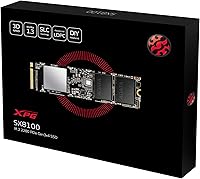
The XPG SX8100 4TB NVMe M.2 SSD comes from ADATA's XPG sub-brand, which targets performance-focused builders and creative professionals who want reliable speed without paying flagship prices. Fitting 4TB into the standard M.2 2280 form factor is genuinely impressive for a PCIe Gen3 drive — this capacity tier used to belong exclusively to SATA or bulky 2.5-inch drives. Gen4 SSDs exist and are faster, but they command a significant premium and require newer platforms to matter. The SX8100 occupies a practical middle ground. A 5-year limited warranty adds meaningful peace of mind for long-term storage investments. One important note upfront: this drive is not Mac compatible, so Apple users should look elsewhere.
Features & Benefits

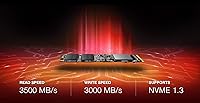
At the heart of this 4TB NVMe drive is a PCIe Gen3x4 interface capable of sequential reads up to 3500 MB/s — fast enough to feel genuinely snappy when loading large project files or transferring footage. Worth flagging: the listing shows conflicting write speed figures, with 3000 MB/s in the title versus 1900 MB/s in the spec sheet. Real-world sustained writes likely land closer to the lower figure. Random IOPS of up to 290K read and 240K write keep multitasking responsive day-to-day. The 3D NAND endurance is rated at up to 1280TB written, which should outlast most workloads comfortably. Under heavy continuous writes, thermal throttling is possible, so a heatsink bracket is worth considering on compact builds.

Best For

This high-capacity M.2 SSD is a strong fit for creative workstation users — video editors juggling 4K timelines, photographers managing tens of thousands of RAW files, or 3D artists who need quick access to large asset libraries. It also suits PC builders on Intel 9th or 10th Gen and AMD Ryzen 3000 platforms, where PCIe Gen4 support simply is not available. Rather than stacking multiple smaller drives, you get one clean, high-capacity solution. If you are coming from a SATA SSD or a spinning hard drive, the throughput jump will be immediately noticeable. It is less compelling for anyone already running a Gen4-capable system, where the price difference can go toward a meaningfully faster option.

User Feedback

Across over 1,600 ratings, the SX8100 holds a solid 4.2-star average, and the praise is fairly consistent: buyers appreciate the large storage capacity in a compact form factor and the noticeable improvement over SATA-based drives. Complaints tend to be more specific. Some users report that sustained write speeds drop under prolonged heavy loads, consistent with thermal throttling behavior common in drives running without active cooling. A handful of compatibility issues with older BIOS versions have also surfaced. On the support side, experiences with ADATA's warranty process are mixed — some report smooth replacements while others describe slow response times. Overall it is a well-regarded drive, but managing thermals remains a real consideration for anyone with demanding, continuous workloads.

Pros

  • 4TB of NVMe storage in a single M.2 2280 slot keeps builds clean and simple.
  • Sequential read speeds up to 3500 MB/s make a real difference when loading large project files.
  • A 5-year limited warranty is unusually generous for this category and adds long-term confidence.
  • TBW endurance rated up to 1280TB means the drive should outlast typical home and creative workstation use.
  • Fits most modern motherboards without adapters, making installation straightforward.
  • At 0.3 ounces, it works equally well in compact desktop builds and compatible laptops.
  • Buyers upgrading from SATA or HDD storage report a dramatic and immediately noticeable speed improvement.
  • Random IOPS performance holds up well during multitasking and application switching.

Cons

  • Advertised write speeds conflict between the product title and the spec sheet, making it hard to know what to expect.
  • Sustained heavy writes can trigger thermal throttling, particularly in cases without good airflow.
  • No heatsink is included, which is a real oversight given how warm this drive can run under load.
  • ADATA customer support quality is inconsistent, with some buyers reporting slow or frustrating warranty claims.
  • A small number of users have encountered compatibility issues with certain older motherboard BIOS versions.
  • Gen4 platform owners get little value here since the drive cannot leverage faster interface bandwidth.
  • Software tooling for drive monitoring and health checks is not as polished as what Samsung or WD offer.
  • The 4TB capacity tier at this price point faces growing competition from newer drives with better thermal management.

Ratings

The XPG SX8100 4TB NVMe M.2 SSD has been scored by our AI system after analyzing verified global buyer reviews, with spam, bot-generated feedback, and incentivized posts actively filtered out. The scores below reflect a balanced picture — what this drive genuinely does well and where real owners have run into friction. Both strengths and consistent pain points are transparently represented across every category.
Storage Capacity
93%
Getting 4TB in a single M.2 slot is something buyers consistently highlight as a major practical win. Editors and archivists report being able to consolidate entire project libraries onto one drive without juggling multiple storage devices, which simplifies both builds and workflows considerably.
A small segment of buyers note that with 4TB comes a longer format process and slightly more anxiety around single-point-of-failure risk — a concern that nudges some toward pairing it with a backup drive, adding cost to the overall setup.
Sequential Read Speed
86%
Users working with large video files and RAW photo batches report that loading and scrubbing through footage feels noticeably faster compared to their previous SATA drives. At close to 3500 MB/s on compatible Gen3 systems, the real-world difference during file transfers is tangible and appreciated.
Buyers coming from Gen4 drives or those who run synthetic benchmarks closely may find the ceiling underwhelming in comparison. On some systems, the drive does not consistently hit peak read figures under real workloads, which creates a gap between advertised performance and observed results.
Sequential Write Speed
67%
33%
For typical workstation tasks — saving project exports, moving moderate-sized file batches, or writing OS data — the write speed is more than adequate and rarely becomes a bottleneck in practice for home and creative users.
This is the most contested spec in the listing. The product title claims up to 3000 MB/s write, while the spec sheet lists 1900 MB/s, and real-world sustained writes frequently drop further once the SLC cache is exhausted. Multiple buyers have flagged this inconsistency, and it erodes trust in the stated specifications.
Thermal Performance
58%
42%
Under light to moderate workloads — everyday desktop use, gaming, and occasional file transfers — the drive stays within acceptable temperature ranges without intervention, and most buyers in standard ATX builds do not encounter throttling during normal day-to-day use.
Sustained heavy writes expose a real thermal weakness. Users running long encoding jobs, large backup operations, or continuous file migrations report noticeable speed drops consistent with thermal throttling. The drive ships without a heatsink, and in poorly ventilated cases or slim laptops, heat buildup becomes a genuine performance concern.
Endurance & Longevity
84%
A TBW rating of up to 1,280TB is genuinely strong for a consumer NVMe drive at this capacity, and most home users — even those doing regular video editing or large archive management — are unlikely to approach that ceiling before the drive is otherwise obsolete. Long-term owners in the review pool report no notable degradation over years of moderate use.
A few buyers with more write-heavy professional environments express uncertainty about long-term 3D NAND reliability at this density, particularly when thermal throttling events are frequent. There is limited long-run data available for the 4TB variant specifically, which leaves some durability questions unanswered.
Compatibility
72%
28%
The M.2 2280 form factor slots into the vast majority of modern motherboards without adapters or special tooling, and most buyers report a smooth, plug-and-install experience on mainstream Intel and AMD Gen3 platforms. The drive is recognized immediately on updated systems in most cases.
A recurring thread in negative reviews involves older motherboards — particularly pre-2019 boards — where BIOS versions do not properly detect the drive without an update. Some users also installed the drive in M.2 SATA-only slots, unaware that physical fit does not equal functional compatibility, leading to frustrating non-detection issues.
Installation Experience
88%
Buyers consistently describe installation as quick and painless — the drive simply slots in, gets secured with a single screw, and is detected by the OS without additional drivers on Windows 10 and 11. For first-time builders, the straightforward process is frequently called out as a confidence booster.
The packaging does not include a mounting screw, which is a minor but real annoyance for buyers building fresh systems who may not have a spare on hand. A small number of users also wished for a brief setup guide covering NVMe initialization in Disk Management for new installations.
Random IOPS Performance
81%
19%
Application launch times, OS responsiveness, and multitasking fluidity all benefit from the drive's random read and write IOPS figures, which sit comfortably above what SATA SSDs can offer. Users switching from SATA consistently describe their systems feeling noticeably more responsive after the swap.
Under heavy simultaneous read-write scenarios — such as running virtual machines while also transferring large files — some buyers report that random performance dips more than expected. The gap between peak rated IOPS and real-world mixed-workload IOPS is wider than what premium Gen4 alternatives tend to show.
Warranty Coverage
82%
18%
A 5-year limited warranty is a genuine differentiator at this price tier, and buyers frequently mention it as a deciding factor. The extended coverage period signals manufacturer confidence and gives long-term peace of mind, especially for users storing irreplaceable creative or professional archives.
The warranty is only as good as the support process behind it, and that is where confidence wavers. A portion of buyers describe slow response times and multi-step RMA processes that take longer than expected, making the coverage feel less reassuring in practice than it does on paper.
Value for Money
76%
24%
For buyers on Gen3 platforms who want a single high-capacity NVMe drive without the cost of upgrading their entire system, the SX8100 occupies a practical and defensible position in the market. The combination of 4TB capacity, solid sequential reads, and a 5-year warranty makes the overall package feel reasonably justified for its use case.
Buyers who dig into the spec sheet inconsistencies and real-world thermal behavior may feel the value proposition is slightly inflated relative to competitors offering better thermal management or more transparent specifications at similar price points. Gen4 alternatives are increasingly close in cost at lower capacities, making the trade-off worth calculating carefully.
Software & Ecosystem
53%
47%
The drive works out of the box with standard OS tools for formatting and initialization, meaning most buyers never need to touch third-party software at all. Windows users in particular find the basic operational experience clean and hassle-free without installing anything extra.
ADATA's SSD Toolbox — the companion utility for drive health monitoring, firmware updates, and diagnostics — is widely criticized for being outdated and less capable than the tools offered by Samsung, WD, or Crucial. Users who want visibility into drive health, wear indicators, or temperature readings over time will likely find the software ecosystem disappointing.
Form Factor Practicality
91%
Weighing just 0.3 oz and conforming to the universal M.2 2280 standard, the SX8100 works equally well in full-size ATX towers, compact ITX builds, and compatible laptops without any physical adaptation. Buyers building small-form-factor systems appreciate that storage capacity no longer requires sacrificing space.
The compact form factor, while broadly compatible, also means there is no room for any onboard thermal solution. In tightly packed ITX cases with limited airflow, the drive can run warmer than in open or well-ventilated enclosures, which amplifies the thermal throttling concerns already noted by users with demanding workloads.
Mac Compatibility
11%
89%
There is no meaningful positive here for Mac users — this category exists solely to flag an important limitation that affects a real segment of buyers who land on this product page without noticing the compatibility restriction.
The drive is explicitly incompatible with Mac systems, with no supported workaround. Buyers who purchased without checking this detail report frustration upon discovering the drive is unrecognized in macOS. This is a hard dealbreaker for the Apple user base and a flaw in how prominently the limitation is communicated in the listing.
Customer Support Experience
61%
39%
Some buyers report positive interactions with ADATA support, particularly when reaching out through official channels with clear documentation of the issue. Successful warranty replacements do happen, and when the process works, users note the outcome was fair and the replacement was in good condition.
The support experience is inconsistent enough to be a recurring complaint. Slower-than-expected response times, difficulty reaching the right department, and a multi-step RMA process that some describe as unnecessarily cumbersome all pull the score down. For a premium-priced product with a 5-year warranty, buyers reasonably expect a smoother support experience.

Suitable for:

The XPG SX8100 4TB NVMe M.2 SSD is built for users who need serious storage capacity without committing to a full platform upgrade. Video editors working with 4K footage, photographers managing large RAW archives, and 3D artists who constantly access heavy asset libraries will find the combination of high throughput and generous capacity genuinely useful in daily work. It is also a smart pick for PC builders on Intel 9th or 10th Gen or AMD Ryzen 3000 systems, where PCIe Gen4 is not an option anyway — you get close to the ceiling of what your platform can do. Consolidating storage onto a single high-capacity M.2 drive keeps builds clean and eliminates the need for secondary drives in most home workstation setups. Anyone upgrading from a SATA SSD or an old spinning hard drive will notice an immediate and meaningful difference in how quickly files load, projects open, and data transfers complete.
Not suitable for:

Mac users should stop here — the SX8100 is explicitly incompatible with Apple systems, and no workaround changes that. Buyers who already have a PCIe Gen4-capable platform, such as AMD Ryzen 5000 or Intel 12th Gen and newer, would be better served by a Gen4 drive where the speed delta actually translates into tangible workflow gains. The XPG SX8100 4TB NVMe M.2 SSD is also not ideal for environments that involve prolonged, continuous heavy writes — such as video surveillance recording, server workloads, or intensive backup pipelines — since thermal throttling under sustained load is a documented real-world concern. Users who prioritize a plug-and-play experience and want minimal setup friction may also find the lack of robust software tooling from ADATA frustrating compared to competitors like Samsung. Finally, anyone running an older motherboard with only an M.2 SATA slot rather than an NVMe slot will find this drive simply does not work — always verify your board supports PCIe NVMe before purchasing.
Specifications

  • Capacity: The drive offers 4TB of usable storage, making it one of the higher-capacity options available in the M.2 NVMe format.
  • Form Factor: It uses the M.2 2280 form factor, meaning it is 22mm wide and 80mm long, the most common M.2 size found in modern desktops and laptops.
  • Interface: The drive connects via PCIe Gen3x4, utilizing all four available PCIe 3.0 lanes for maximum throughput on compatible platforms.
  • Protocol: It operates on the NVMe 1.3 protocol, which significantly reduces latency and CPU overhead compared to older AHCI-based SATA drives.
  • Sequential Read: Sequential read speeds reach up to 3500 MB/s, allowing large files and project assets to load quickly under typical workloads.
  • Sequential Write: Sequential write speeds are listed at up to 3000 MB/s in the product title, though the official spec sheet cites 1900 MB/s — real-world sustained performance is likely closer to the latter figure.
  • Random Read IOPS: Random read performance reaches up to 290,000 IOPS, contributing to responsive application launches and fast file system access.
  • Random Write IOPS: Random write performance reaches up to 240,000 IOPS, supporting smooth multitasking and frequent small-file operations.
  • TBW Endurance: The drive is rated for up to 1,280TB written over its lifetime, which is a strong endurance figure suitable for most home and professional workstation workloads.
  • NAND Type: Storage cells use 3D NAND flash technology, which stacks memory layers vertically to improve density, endurance, and power efficiency compared to planar NAND.
  • Cache: The drive includes 64MB of onboard cache to help manage write queuing and maintain consistent performance during mixed workloads.
  • Dimensions: Physical dimensions are 3.15 x 0.87 x 0.14 inches, consistent with the standard M.2 2280 specification.
  • Weight: The drive weighs just 0.3 oz, making it practical for both desktop builds and compatible slim laptops without adding meaningful bulk.
  • Warranty: ADATA provides a 5-year limited manufacturer warranty, which is among the longer coverage periods offered on consumer NVMe SSDs in this category.
  • Compatibility: The drive is designed for desktop and laptop systems with a PCIe NVMe M.2 slot; it is explicitly not compatible with Mac systems.
  • Installation Type: This is an internal drive that installs directly into an M.2 slot on the motherboard and does not require a separate power or data cable.
  • Manufacturer: The SX8100 is produced by ADATA under the XPG sub-brand, which is positioned toward performance-oriented gaming and creative professional users.

Related Reviews

ORICO TCM2 M.2 NVMe SSD Enclosure
78%
83%
Transfer Speed
61%
Thermal Management
74%
Build Quality
91%
Ease of Installation
86%
Cable Bundle Quality
More
TEAMGROUP MP44Q 4TB NVMe SSD
80%
92%
Sequential Read Speed
78%
Sequential Write Speed
91%
Value for Money
74%
Thermal Management
81%
Compatibility
More
Kingston NV2 4TB M.2 NVMe SSD
83%
93%
Value for Money
82%
Read Performance
61%
Sustained Write Speed
96%
Installation Ease
89%
Compatibility
More
fanxiang S660 4TB NVMe M.2 SSD
88%
92%
Performance
89%
Cooling Efficiency
91%
Ease of Installation
96%
Compatibility with PS5
87%
Build Quality
More
fanxiang S770 4TB NVMe M.2 SSD
84%
88%
Read Speed Performance
82%
Write Speed Consistency
93%
PS5 Compatibility
86%
Thermal Management
84%
Value for Money
More
ORICO IG740PRO 4TB M.2 NVMe SSD
79%
91%
Sequential Read Performance
88%
Endurance & Longevity
84%
Thermal Management
79%
Value for Money
74%
PS5 Compatibility
More
Kingston NV3 4TB NVMe SSD
80%
91%
Sequential Read Speed
63%
Sustained Write Performance
94%
Storage Capacity
88%
Value for Money
93%
Installation Ease
More
Crucial T500 4TB Gen4 NVMe M.2 SSD
89%
94%
Performance
87%
Cooling Efficiency
90%
Installation Process
92%
Reliability
95%
Compatibility with PS5
More
MOVE SPEED HB7450 4TB NVMe M.2 SSD
79%
91%
Read/Write Performance
93%
PS5 Compatibility
94%
Storage Capacity Value
83%
Thermal Management
78%
Build Quality
More
PNY CS2241 4TB NVMe SSD
85%
88%
Read Performance
83%
Write Performance
61%
Thermal Management
92%
Value for Money
94%
Installation Ease
More

FAQ

It can, provided your laptop has an M.2 slot that supports PCIe NVMe — not just M.2 SATA. Check your laptop's manual or manufacturer spec page to confirm the slot type before purchasing, since physically fitting does not guarantee compatibility.

No. The XPG SX8100 4TB NVMe M.2 SSD is explicitly not compatible with Mac systems, and there is no supported workaround. Mac users should look at drives specifically validated for Apple hardware.
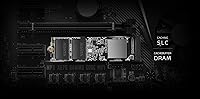
This is a legitimate point of confusion. The product title cites up to 3000 MB/s write, while the official spec sheet lists 1900 MB/s. In practice, real-world sustained sequential write performance on most 3D NAND drives at this capacity tends to align closer to the lower figure once the SLC cache fills. Treat 1900 MB/s as the more reliable benchmark for planning purposes.

It is not strictly required for light everyday use, but it is worth considering if your workload involves long stretches of heavy writing, such as large file transfers or video encoding. Thermal throttling under sustained load has been noted by some users, and a simple M.2 heatsink or a motherboard slot with a built-in thermal pad can help keep temperatures in check.

Not all M.2 slots are NVMe capable. Some only support SATA protocol over the M.2 connector, which is a completely different interface. Check your motherboard manual for the specific slot — it should indicate whether it supports PCIe NVMe, and which generation (Gen3 or Gen4). This drive requires a Gen3 or Gen4 NVMe slot.

For gaming specifically, the raw sequential speed matters less than most marketing suggests — game load times are more limited by random IOPS and storage latency, where this drive performs well. It is a solid choice for a gaming PC, especially if you also want space for large game libraries, recordings, or streaming assets. On an older Gen3 platform, it represents the upper tier of what your system can actually use.

ADATA handles warranty claims through their support portal, where you submit a ticket and go through an RMA process. User experiences vary — many report smooth replacements, while others describe longer wait times and slower communication. Keeping your purchase receipt and registering the drive through ADATA's website can help speed up the process if you ever need to use it.

The drive is rated for up to 1,280TB written over its lifetime. For most home users — even those doing regular video editing or large file transfers — this is far more endurance than you are likely to exhaust before the drive becomes obsolete for other reasons. Professional environments with continuous high-write workloads are a different story, but for creative workstation use, the endurance rating is more than adequate.

A small number of users have reported issues with certain older motherboard BIOS versions not properly recognizing the drive at first boot. In most cases, updating to the latest BIOS version resolves the problem. If you are running a board from 2018 or earlier, it is worth checking the manufacturer's support page for NVMe compatibility notes before installing.

Probably not as a primary drive. If your platform supports PCIe Gen4, you can get meaningfully faster speeds by paying a bit more for a Gen4 NVMe SSD, and the high-capacity Gen4 options have become increasingly competitive. The SX8100 makes the most sense on Gen3 systems where it can actually run at its rated speeds — on a Gen4 board, it will still work, but you would be leaving platform performance on the table.