Overview

The PHIXERO PM7450 4TB NVMe SSD enters a competitive market with a straightforward pitch: Gen4 speed and substantial capacity packed into a single M.2 stick. PHIXERO operates under Shenzhen ORICO Technologies, a manufacturer with an established hardware background, though the brand remains relatively unfamiliar in Western markets. What makes this 4TB Gen4 drive notable isn't only the headline throughput — it's the rare pairing of high sequential performance with storage depth that usually forces buyers to compromise. It uses QLC NAND, which is worth understanding upfront. QLC trades some write endurance for higher density, making large capacities more accessible, but sustained heavy-write workloads every single day are not its ideal environment.

Features & Benefits

At the heart of this high-capacity NVMe SSD sits the InnoGrit IG5236 controller, built on a 12nm FinFET process. That matters because the controller governs how consistently the drive performs under sustained load, not just during short benchmark bursts. The 8-channel design enables sequential reads up to 7,450MB/s and writes up to 6,500MB/s, placing it competitively at the upper end of the Gen4 range. Dynamic SLC caching accelerates burst writes noticeably, though users transferring very large files in one continuous pass may see speeds taper once the cache fills. A graphene thermal pad handles heat passively without requiring an aftermarket heatsink, and hardware AES encryption with 4K LDPC error correction quietly guards data integrity through long rendering sessions.

Best For

This 4TB Gen4 drive suits video editors working in 4K or higher resolutions who want a fast scratch disk and a project archive occupying a single slot. PC builders with Gen4-capable motherboards who are tired of juggling multiple drives for capacity will find it a logical upgrade path. Photographers and 3D artists managing large asset libraries benefit from the combination of raw throughput and storage depth. PS5 users can install it as an internal expansion drive, though that is one valid scenario among several rather than its defining purpose. Anyone looking to consolidate two or three older SSDs into a single, faster unit will find the PM7450 a genuinely practical solution.

User Feedback

With 98 ratings averaging 4.5 out of 5 stars for a drive that only launched in May 2025, early buyer reception has been notably strong. Most praise centers on real-world transfer speeds aligning with advertised figures, thermal behavior staying controlled during extended sessions, and solid overall build quality. Technically minded buyers do raise legitimate questions about long-term QLC endurance, which is a fair concern for heavy-write environments — though casual to moderate users are unlikely to run into meaningful limits quickly. A handful note that the brand feels unfamiliar compared to Samsung or WD, but actual performance complaints are rare. Reliability data over years of use simply does not exist yet, and that transparency is worth keeping in mind.

Pros

  • Sequential read speeds up to 7,450MB/s place it at the top of the Gen4 consumer category.
  • 4TB capacity in a single M.2 slot eliminates the need to manage multiple drives for most users.
  • The InnoGrit IG5236 controller handles sustained workloads more capably than budget controllers at lower price points.
  • Graphene thermal pad keeps operating temperatures in check without requiring a bulky aftermarket heatsink.
  • Hardware AES encryption and 4K LDPC error correction add meaningful data protection for long editing or rendering sessions.
  • Dynamic SLC cache delivers fast burst write performance for everyday file transfers and application loading.
  • Compatible with desktops, modern laptops, and PS5 — genuinely versatile across multiple platforms.
  • A five-year warranty is competitive and signals reasonable long-term confidence from the manufacturer.
  • Early buyer ratings average 4.5 stars across nearly 100 reviews, with real-world speeds consistently matching advertised figures.
  • NVMe 1.4 protocol support ensures broad compatibility with current-generation systems.

Cons

  • QLC NAND carries lower write endurance than TLC alternatives, which matters for sustained daily heavy-write workloads.
  • Once the SLC cache fills during very large file transfers, write speeds drop noticeably to native QLC rates.
  • PHIXERO has limited brand recognition in Western markets, making independent long-term reliability data hard to come by.
  • Launched in May 2025 with under 100 reviews — not enough history to assess multi-year durability with confidence.
  • Gen3 system owners get no benefit from the Gen4 speed rating, effectively paying for performance they cannot access.
  • No included heatsink means buyers with poorly ventilated cases or high-ambient setups may need additional cooling solutions.
  • QLC endurance figures can be a harder sell for buyers planning to use this in a write-intensive professional or server context.
  • The brand's relative obscurity may complicate warranty service experiences compared to established names like Samsung or Western Digital.

Ratings

Our AI rating system analyzed verified global buyer reviews for the PHIXERO PM7450 4TB NVMe SSD, actively filtering out incentivized, duplicate, and bot-generated feedback to surface what real users actually experienced. The scores below reflect both the genuine strengths that impressed buyers and the friction points that tempered enthusiasm — nothing is glossed over. This 4TB Gen4 drive earned strong early marks across most categories, with a few areas where honest trade-offs are worth understanding before you buy.

Sequential Read Performance
93%
Buyers running benchmark tools and real-world file transfer tests consistently reported speeds landing close to the advertised 7,450MB/s ceiling, which is rare for drives that often fall well short of their marketing claims. Video editors moving large project folders between drives noticed the difference immediately compared to their previous Gen3 setups.
Peak sequential reads are only realized on systems with a properly configured PCIe Gen4 x4 slot — users on Gen3 platforms or certain laptop implementations reported speeds roughly half the rated maximum, which was a source of disappointment for a minority of buyers who did not check compatibility first.
Sequential Write Performance
87%
For everyday workloads — exporting a video timeline, duplicating large game installations, or moving RAW photo batches — the sustained write performance impressed most buyers, with real-world figures comfortably outpacing what they had seen from older drives in the same price bracket.
Buyers who attempted very large single-pass writes, particularly above 200GB in one operation, noted the characteristic speed drop once the SLC cache fills and speeds settle at native QLC rates. This is a structural trait of all QLC drives, but it still caught some users off guard.
QLC Endurance & Longevity
61%
39%
For typical home and creative studio workloads — gaming, video editing projects, photo libraries — the endurance rating on a 4TB QLC drive is practically sufficient for years of use, and most buyers in these use cases expressed no concern after putting the drive through regular paces.
Enthusiast and prosumer buyers are right to apply scrutiny here. QLC NAND carries a lower terabytes-written rating than TLC alternatives, and because this drive launched in May 2025, there is simply no multi-year reliability data to draw from yet — a meaningful gap that cautious buyers should factor into their decision.
Thermal Management
88%
The pre-applied graphene thermal pad performed well in real installations, with users reporting stable temperatures even during prolonged export sessions and long gaming stretches. Several buyers specifically noted they did not need to add a third-party heatsink, which simplified the build process.
In compact or poorly ventilated cases where ambient temperatures run high, a handful of buyers observed the adaptive throttling mechanism stepping in during extended sustained workloads. It is not a failure — the drive is protecting itself — but it does mean peak performance is not always guaranteed in thermally constrained environments.
Burst Write Speed
84%
The dynamic SLC caching layer delivers a noticeably snappy experience for the kinds of write operations most people actually do — installing software, saving project files, copying moderate-sized folders. Buyers who came from SATA or Gen3 drives found the burst responsiveness to be one of the most immediately perceptible upgrades.
The SLC cache size on a 4TB QLC drive, while reasonably sized, is not bottomless. Heavy sequential writes that exceed the cache boundary expose the underlying QLC write speeds, which is when the performance gap versus TLC competitors becomes most apparent.
PS5 Compatibility
82%
18%
Buyers who installed this high-capacity NVMe SSD into their PS5 reported a smooth process — the drive was recognized immediately, and the graphene pad satisfied Sony's heatsink requirement without needing an additional accessory purchase. Game load times were consistently reported as fast and in line with expectations for a Gen4 drive.
A small number of PS5 buyers mentioned being uncertain about whether the thermal pad alone would suffice in the console's warm interior over years of use, though no thermal failures were reported in the available review window. The limited review period makes this a question that time will ultimately answer.
Value for Money
79%
21%
Positioned at a mid-to-upper price point for the Gen4 4TB category, most buyers felt the combination of speed, capacity, and the five-year warranty made the purchase defensible compared to similarly priced alternatives from better-known brands that sometimes offered less storage for the same outlay.
Some buyers noted that TLC-based 4TB drives from established brands can be found at comparable prices, making the QLC trade-off feel less like a value play and more like a compromise — particularly for those who did their research before purchasing.
Brand Trust & Reputation
58%
42%
Buyers who looked into PHIXERO's parent company, Shenzhen ORICO Technologies, came away more reassured, as ORICO has a legitimate track record in storage hardware. The 4.5-star average across early reviews also provided some social proof that helped skeptical buyers pull the trigger.
For buyers unfamiliar with the brand, the lack of Western market history and third-party long-term reviews creates a trust gap that marketing alone cannot close. Several reviewers explicitly noted they would have preferred purchasing from a more established name if the specs had been equivalent.
Build & Physical Quality
86%
The drive arrived well-packaged and felt solid in hand, with the graphene pad applied neatly and flush. Buyers who handled it noted that the physical construction did not feel like a budget product, and the M.2 form factor seated cleanly into slots without any fitment issues.
There is no included heatsink beyond the graphene pad, which may feel like an omission to buyers who are used to drives that ship with one. The pad does its job, but buyers accustomed to premium packaging from competitors may find the unboxing experience modest.
Compatibility Range
89%
The standard M.2 2280 footprint and NVMe 1.4 protocol mean this drive slots into a wide range of modern systems without any adapter or configuration work. Desktop builders, laptop upgraders, and PS5 owners can all use the same drive, which buyers appreciated as a straightforward plug-and-play experience.
Backward compatibility with Gen3 slots works at a hardware level but significantly curtails real-world performance, and not all buyers read the fine print before purchasing. A clearer call-out of the Gen4 requirement would prevent some of the disappointment expressed by Gen3 system owners.
Software & Setup Experience
91%
There are no drivers to install, no companion software required, and no activation hoops to jump through. Every major operating system recognized the PM7450 immediately on first boot, and PS5 installation followed Sony's standard expansion process without any complications.
PHIXERO does not currently offer a proprietary monitoring utility, which means users who want to track health metrics, temperature, or SMART data need to rely on generic third-party tools. For most buyers this is a non-issue, but power users accustomed to Samsung Magician or WD Dashboard may miss the dedicated software experience.
Encryption & Data Security
83%
Hardware AES encryption operates transparently in the background without any user configuration required, and buyers who explicitly tested it noted no perceptible performance impact during regular workloads. For creative professionals storing client work or sensitive project data, this is a meaningful layer of passive protection.
The encryption implementation requires compatible platform support to function fully, and buyers on systems without a Trusted Platform Module or proper NVMe security configuration may not benefit from the hardware encryption layer without additional setup steps that PHIXERO does not clearly document.
Warranty & Support
74%
26%
A five-year warranty is competitive and on par with what premium brands like Samsung offer on their consumer NVMe lineup. Buyers who contacted support during the review period generally reported responses that were helpful, if not always rapid.
With PHIXERO operating primarily out of Shenzhen and having limited Western service infrastructure, the warranty claim process is less streamlined than buyers used to brands with regional support centers would expect. Response times and claim resolution can vary, and this introduces an element of uncertainty for buyers outside of China.

Suitable for:

The PHIXERO PM7450 4TB NVMe SSD is a strong fit for creative professionals who have outgrown the idea of separating fast working storage from bulk archive space. Video editors cutting 4K or higher resolution footage will appreciate having a single drive that handles both the scratch disk demands and the long-term project library without constant file management juggling. Photographers working with large RAW libraries, 3D artists managing heavy asset folders, and audio producers with extensive sample collections all fall squarely into its target audience. PC builders running a Gen4-capable platform who want to maximize capacity per M.2 slot — rather than stacking multiple smaller drives — will find the math compelling. Gamers who have accumulated a large library and want fast load times without an external drive will also be well served, as will PS5 owners looking to expand internal storage through the console's M.2 slot.

Not suitable for:

Buyers who write massive volumes of data every single day over a period of years should think carefully before committing to this drive. The PHIXERO PM7450 4TB NVMe SSD uses QLC NAND, which offers excellent density but carries lower write endurance ratings compared to TLC-based alternatives — a meaningful distinction for professional environments where a drive is continuously ingesting large files hour after hour. Users who require a well-established brand name with a long public track record for enterprise or business-critical deployments should also pause, since PHIXERO is relatively new to Western markets and independent long-term reliability data is still thin on the ground. Anyone expecting consistent sustained write speeds through very large single-pass transfers should be aware that once the dynamic SLC cache is saturated, speeds will drop to native QLC rates, which is a normal characteristic of this architecture but can be jarring if unexpected. Finally, systems running PCIe Gen3 platforms will not reach the drive's rated speeds, so older motherboards significantly limit the value proposition here.

Specifications

  • Capacity: This drive offers 4TB of usable storage, making it one of the higher-capacity options available in the M.2 2280 form factor for consumer use.
  • Interface: It connects via PCIe Gen4 x4, delivering up to four times the bandwidth of Gen3 drives when used with a compatible motherboard or console.
  • Protocol: The drive uses the NVMe 1.4 protocol, which reduces latency and command overhead compared to older AHCI-based storage solutions.
  • Form Factor: Built to the M.2 2280 standard, meaning it measures 22mm wide and 80mm long — the most common M.2 size across modern laptops, desktops, and the PS5.
  • Sequential Read: Rated sequential read speed reaches up to 7,450MB/s under optimal conditions using the 8-channel InnoGrit controller architecture.
  • Sequential Write: Rated sequential write speed reaches up to 6,500MB/s, placing it at the competitive high end of the Gen4 consumer SSD category.
  • Controller: The InnoGrit IG5236 controller is fabricated on a 12nm FinFET process, contributing to efficient power use and consistent performance under sustained workloads.
  • NAND Type: Flash storage is built on QLC (Quad-Level Cell) NAND, which enables high density and large capacities but carries lower write endurance ratings than TLC NAND.
  • Cache: Dynamic SLC caching accelerates burst write performance by temporarily treating a portion of the QLC cells as faster single-level storage during active write operations.
  • Encryption: Hardware-level AES encryption is built into the controller, protecting stored data without imposing a measurable performance penalty during normal operation.
  • Error Correction: 4K LDPC (Low-Density Parity-Check) ECC is implemented to detect and correct bit errors, helping maintain data integrity across long-term storage and intensive workloads.
  • Cooling: A graphene thermal pad is pre-applied to the drive, and an adaptive cooling algorithm dynamically adjusts performance to manage heat without requiring an additional heatsink.
  • Warranty: PHIXERO covers this drive with a 5-year limited warranty, which is standard for premium consumer NVMe SSDs and includes access to their technical support team.
  • Weight: The drive weighs 1.13 ounces (approximately 32 grams), consistent with a standard M.2 SSD with a thermal pad attached.
  • Dimensions: Physical dimensions are 2.36 x 1.97 x 0.79 inches, reflecting the standard M.2 2280 footprint with the graphene pad adding minimal thickness.
  • Compatibility: Officially compatible with desktop PCs, laptops, and the PlayStation 5, provided the host system includes a PCIe Gen4 M.2 slot.
  • Manufacturer: Produced by Shenzhen ORICO Technologies Co., Ltd, a Chinese hardware manufacturer with an established background in storage accessories and peripherals.
  • Availability: The drive first became available in May 2025, making it a recent entry with early but strong buyer reception in the internal SSD category.

Related Reviews
PHIXERO P7000PRO 4TB NVMe SSD
80%
88%
Sequential Read Speed
82%
Sequential Write Speed
76%
Thermal Management
84%
Value for Money
91%
Installation Experience
More
PHIXERO P5000 2TB NVMe SSD
88%
93%
Performance (Speed)
88%
Build Quality
90%
Heat Management
85%
Ease of Installation
92%
Compatibility
More
WD_BLACK SN850X 4TB NVMe SSD
89%
93%
Performance
88%
Thermal Management
87%
Software & Firmware
91%
Ease of Installation
90%
Build Quality
More
fanxiang S690Q 4TB NVMe SSD
87%
93%
Performance
95%
Speed (Read/Write)
90%
Ease of Installation
88%
Thermal Management
87%
Build Quality
More
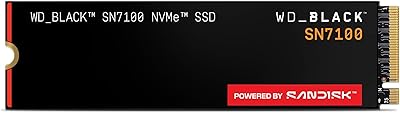
WD_BLACK 4TB SN7100 NVMe SSD
87%
94%
Performance (Speed)
92%
Storage Capacity
85%
Power Efficiency
89%
Installation & Setup
91%
Durability & Reliability
More
XPG SX8100 4TB NVMe SSD
82%
92%
Performance
89%
Value for Money
75%
Installation Ease
90%
Reliability
94%
Speed (Read/Write)
More
KingSpec XG7000 4TB NVMe SSD
81%
91%
Sequential Read Speed
88%
Sequential Write Speed
83%
Thermal Management
89%
Value for Money
92%
PS5 Compatibility
More
PHIXERO P5000 1TB NVMe SSD
86%
92%
Read/Write Speeds
88%
Performance Under Load
95%
Ease of Installation
85%
Thermal Management
90%
Compatibility with Devices
More
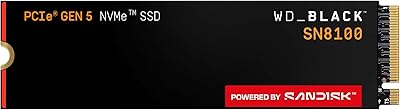
WD_BLACK SN8100 4TB NVMe SSD
82%
97%
Sequential Throughput
93%
Random I/O Performance
61%
Thermal Management
67%
Value for Money
82%
Installation & Compatibility
More
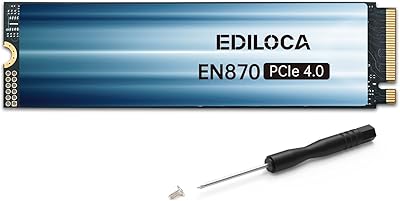
Ediloca EN870 4TB NVMe M.2 SSD
78%
91%
Sequential Read Speed
58%
Sustained Write Performance
93%
PS5 Compatibility
84%
Value for Money
89%
Installation Experience
More

FAQ

Those peak numbers are achieved under controlled benchmark conditions, which is standard across the industry. In day-to-day use — copying files, loading applications, exporting video — you will see real-world speeds that are meaningfully fast, though rarely matching the absolute ceiling. For most workloads, the practical performance difference between 7,000 and 7,450MB/s is not something you would notice without a stopwatch.

QLC gets a rough reputation in enthusiast circles, and some of that concern is legitimate for enterprise or write-intensive professional environments. For the vast majority of home users, content creators, and gamers, the endurance rating on a 4TB QLC drive is more than sufficient for years of normal use. Where you need to be more thoughtful is if your workflow involves continuously writing hundreds of gigabytes every single day — in that case, TLC alternatives are worth considering.

Yes, the pre-applied graphene thermal pad means you can install it directly into the PS5's M.2 bay without purchasing a separate heatsink, which Sony's guidelines do recommend having. That said, some users prefer to add a slim third-party heatsink for extra peace of mind in warm environments. Either way, the drive fits the PS5 expansion slot natively.

Once the dynamic SLC cache is saturated — which typically happens during sustained writes of very large files — speeds drop to native QLC write rates, which are considerably slower than the advertised peak. This is a normal characteristic of QLC drives across all brands, not a defect specific to this model. For most file transfers in the 50–100GB range, you are unlikely to notice the cache filling up.

The drive will physically fit and function in a Gen3 slot, but you will be limited to Gen3 bandwidth — roughly half the rated maximum speeds. It is backward compatible, so it will not cause problems, but you will not get anywhere near the advertised performance figures. If your laptop is Gen3 only, a Gen4 drive is not the most cost-efficient choice.

No dedicated drivers or software are required. Modern operating systems including Windows 10, Windows 11, and recent versions of macOS and Linux recognize NVMe drives natively. For PS5, it is recognized automatically during the system's storage expansion setup process. You simply install it and go.

The pre-applied graphene pad draws heat away from the controller and NAND chips and disperses it, working alongside an adaptive algorithm in the controller firmware that can modestly throttle performance before temperatures reach critical levels. In a well-ventilated case, most users will never notice the throttling. In cramped or poorly cooled enclosures, adding a low-profile heatsink on top of the pad is a sensible precaution.

Migrating from multiple drives to a single 4TB drive is doable but does require some planning. Tools like Macrium Reflect or Clonezilla can clone individual drives, though consolidating two separate drives into one is more of a manual copy-and-reorganize process than a simple clone. If one of those drives is your OS drive, cloning software handles it cleanly. Budget a couple of hours and make sure you have backups before starting.

PHIXERO's warranty is handled through their direct support channels, so the process is different from brands like Samsung or WD that have large regional service networks. Communication and resolution quality can vary, which is a reasonable concern with newer market entrants. The 5-year coverage is a genuine commitment, but it is worth keeping your purchase receipt and knowing that the support experience may require more patience than you would expect from an established brand.

No practical benefit. This is an internal NVMe M.2 drive designed for PCIe slots, and even if placed in a USB enclosure, the connection would bottleneck speeds dramatically — USB 3.2 Gen 2 tops out around 1,000MB/s, nowhere near the drive's capability. For external use, a purpose-built portable SSD is a far better fit. This drive is designed to live inside a machine.