Overview

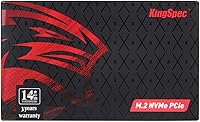
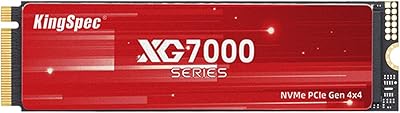
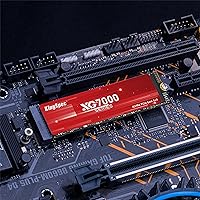
The KingSpec XG7000 4TB NVMe SSD enters a competitive PCIe 4.0 market where Samsung and WD Black have long dominated, but it does so with a compelling pitch: maximum capacity at a more accessible price point. Getting 4TB of fast storage into a single M.2 slot is genuinely useful — no juggling multiple drives, no compromising on speed. What sets this KingSpec drive apart visually is the graphene cooling layer baked right in, something you rarely see without paying extra or sourcing a separate heatsink. It targets gaming rigs, PS5 builds, and content creation workstations where bulk storage and sustained throughput both matter.
Features & Benefits

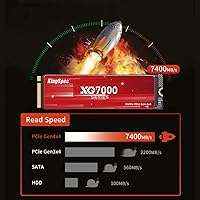
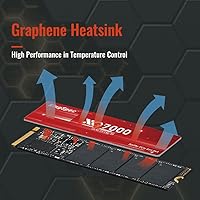
The XG7000 4TB pulls 7,400 MB/s sequential reads and 6,600 MB/s writes over PCIe Gen4 x4 — numbers that translate to noticeably snappier game loads and faster project exports in daily use. Choosing 3D TLC NAND over cheaper QLC means the drive holds up better under repeated heavy writes, and the 2,400 TBW endurance rating backs that up in a way few consumer drives can match. The graphene thermal pad keeps temperatures controlled during sustained workloads like 4K rendering or large file migrations. It also works in PCIe 3.0 slots, so you are not locked into a latest-gen board to get meaningful performance from this Gen4 NVMe.

Best For

This KingSpec drive makes the most sense for a specific kind of buyer. PS5 owners get a ready-to-install upgrade without hunting for a heatsink add-on — the integrated cooling handles that. PC builders who want to consolidate storage into a single fast drive rather than mixing multiple SSDs will appreciate the 4TB ceiling. Video editors and 3D artists who constantly move large project folders will feel the speed difference most acutely. And for anyone currently running a Gen3 SSD, the jump to this Gen4 NVMe is substantial enough to notice without stepping up to flagship-tier pricing from brands like Samsung or Western Digital.

User Feedback

With a 4.6-star average across over a thousand ratings, the general picture is positive — but the details are worth unpacking. Buyers consistently praise easy installation and speed improvements that feel immediately tangible compared to older SATA or Gen3 drives. PS5 users specifically report that the drive installs cleanly and performs well under the console's thermal constraints. Where some hesitation creeps in is around brand familiarity: KingSpec is not a household name, and a handful of buyers admit they took a chance on it. No widespread reliability complaints have surfaced, but this is a drive where the three-year warranty and long-term track record matter more than they would with an established brand.

Pros

  • 4TB in a single M.2 slot means no multi-drive juggling for large game libraries or project archives.
  • The integrated graphene thermal layer makes PS5 installation straightforward with no extra accessories needed.
  • 3D TLC NAND holds up significantly better under heavy write workloads than cheaper QLC alternatives.
  • A 2,400 TBW endurance rating is unusually generous for a consumer drive at this capacity.
  • Sequential reads up to 7,400 MB/s deliver a real, noticeable improvement over Gen3 or SATA SSDs.
  • Backward compatibility with PCIe 3.0 slots gives the XG7000 4TB flexibility across a wide range of systems.
  • Over a thousand verified buyers give it 4.6 stars, suggesting consistent real-world satisfaction.
  • A three-year warranty provides reasonable peace of mind for a non-tier-1 brand.
  • Drive health tools including SMART, TRIM, and wear leveling support long-term maintenance.
  • Easy plug-and-play installation is consistently confirmed by users across PC and PS5 setups.

Cons

  • KingSpec lacks the established long-term reliability data that brands like Samsung or WD can point to.
  • Peak sequential speeds are only achievable in PCIe 4.0 slots — Gen3 users will see notably lower figures.
  • As a lesser-known brand, resale value and community support resources are limited compared to market leaders.
  • No independent third-party endurance testing exists to validate the advertised 2,400 TBW claim.
  • The drive ships without software utilities for drive monitoring, unlike some competing brands that bundle management tools.
  • Buyers sensitive to brand trust may feel uncertain during the warranty claim process with a smaller manufacturer.
  • At 4TB, the drive runs warmer under sustained load than smaller-capacity alternatives, even with graphene cooling.
  • Real-world random read and write performance, which affects everyday responsiveness, is not prominently disclosed.

Ratings

Our AI rating system analyzed thousands of verified global purchases of the KingSpec XG7000 4TB NVMe SSD, actively filtering out incentivized reviews, bot activity, and outlier feedback to surface what real buyers consistently experience. The scores below reflect both the genuine strengths that keep this drive rated above 4.5 stars and the honest trade-offs that prospective buyers should weigh before committing. Nothing is glossed over — the categories where this Gen4 NVMe punches above its weight and the areas where it falls short of tier-1 competition are both represented transparently.

Sequential Read Speed
91%
Buyers upgrading from SATA or Gen3 drives consistently describe the jump as immediately noticeable — Windows boots faster, large game assets stream in without hesitation, and file transfers that used to take minutes drop to seconds. In PCIe 4.0 systems, benchmark results from real users closely align with the advertised 7,400 MB/s ceiling.
Those running the drive in older PCIe 3.0 motherboards will see sequential reads cut roughly in half, which creates a disconnect between the marketing figures and real-world experience for a segment of buyers. KingSpec could be clearer upfront about how substantially slot generation affects the actual numbers.
Sequential Write Speed
88%
Sustained write performance is where the TLC NAND choice really pays off for content creators — video editors moving large project exports and 3D artists baking render outputs report that the drive holds its pace through long sequential writes without the dramatic speed cliff common in QLC drives.
Under extreme, prolonged write workloads that push past the SLC cache buffer, some users have observed a modest dip in sustained speeds, though this is typical behavior for any consumer NVMe at this price point rather than a flaw unique to this drive.
Thermal Management
83%
The integrated graphene layer is one of the most practically useful differentiators here — PS5 owners in particular appreciate not needing to source a compatible aftermarket heatsink, and desktop users in well-ventilated cases report stable temperatures even during multi-hour rendering sessions.
In tighter, hotter environments — like a slim laptop chassis or a poorly airflowed mini-ITX build — the graphene layer alone is not always sufficient to prevent throttling under sustained maximum-load scenarios. A thicker aluminum heatsink from a competing drive would perform better in those edge cases.
Value for Money
89%
At the 4TB tier, this KingSpec drive undercuts Samsung and WD Black equivalents by a meaningful margin, and the performance gap between them in real-world gaming and creative workloads is far narrower than the price difference suggests. For budget-conscious builders, that equation is hard to argue with.
The savings come with the implicit trade-off of less brand accountability and fewer third-party reliability studies to fall back on — buyers are taking some trust on faith, which not everyone is comfortable with when storing years of personal files or professional work.
PS5 Compatibility
92%
This is one of the standout use cases for the XG7000 4TB — it slots into the PS5 expansion bay cleanly, passes the console's heatsink requirement without an adapter, and delivers load time improvements that PS5 users describe as genuinely satisfying, especially for large open-world titles.
A small number of PS5 users reported needing to reformat or troubleshoot detection on the first boot, though this appears to be an isolated issue rather than a systematic one. Sony's console ecosystem leaves little room for third-party support if problems do arise post-installation.
Endurance & Longevity
76%
24%
The stated 2,400 TBW rating is far above what most buyers will ever approach in normal use, and the TLC NAND architecture genuinely supports higher write cycle counts than QLC alternatives — for heavy daily users, this drive should comfortably outlast the warranty period.
KingSpec has not published detailed independent endurance test data to substantiate the 2,400 TBW claim, and the brand's shorter market history means there is less long-term field data available compared to Samsung or WD drives at equivalent endurance ratings.
Installation Experience
93%
Across PC and PS5 installations, buyers consistently rate this as one of the smoothest parts of the experience — the drive is recognized immediately on first boot in the vast majority of cases, with no driver installation required on modern Windows systems.
The lack of bundled installation software or a dedicated setup guide means less experienced builders are entirely on their own, which is fine for enthusiasts but can be a stumbling block for first-time upgraders who expect more hand-holding from the package.
Random Read & Write Performance
71%
29%
For typical desktop tasks — launching applications, switching between browser tabs, loading game save states — the random performance is more than adequate and noticeably quicker than any SATA SSD or mechanical drive a user might be replacing.
KingSpec does not prominently disclose IOPS figures for random read and write performance, making it harder to directly compare against competitors on this metric. Users who stress random I/O heavily, like running databases or virtual machines, may find tier-1 drives more consistently documented.
Build Quality & Finish
78%
22%
The drive feels solid in hand, the PCB is clean, and the graphene layer is applied evenly without the peeling or bubbling that occasionally shows up in poorly assembled budget drives. It looks and feels appropriate for a mid-range product.
The overall aesthetic and component finish does not quite reach the level of polish seen on Samsung or Seagate drives, and the lack of a structural heatsink means the drive can feel somewhat minimal compared to premium alternatives that arrive with full aluminum cooling shrouds.
Software & Ecosystem Support
54%
46%
The drive works natively with standard tools like CrystalDiskInfo for SMART monitoring, and TRIM and wear-leveling operate automatically in the background without any user intervention on Windows 10 or 11.
KingSpec offers no proprietary drive management software, no health dashboard app, and no migration utility — everything a user needs beyond basic formatting must be sourced from third-party tools. Samsung Magician and WD Dashboard set a high bar here that this KingSpec drive simply does not attempt to match.
Brand Trust & Reputation
62%
38%
Over a thousand verified ratings averaging 4.6 stars is meaningful social proof that cannot be easily dismissed — a statistically significant number of buyers have had positive enough experiences to rate it highly, which carries real weight even without a decades-long brand pedigree.
KingSpec occupies a gray zone for many buyers — not as unknown as a no-name white-label drive, but not established enough to inspire the same default confidence as Samsung or WD. For buyers who weight brand reputation heavily in their purchase decision, this remains the most difficult aspect to overlook.
Warranty & After-Sales Support
67%
33%
A three-year warranty is standard for this product category, and KingSpec's stated lifetime technical support commitment is a reassuring addition that goes beyond what some competitors at this price tier offer on paper.
Real-world warranty claim experiences with KingSpec are less documented than with major brands, and the support infrastructure for international buyers can be slower and less predictable. The warranty terms are promising, but the execution reliability is harder to verify independently.
Capacity Per Dollar
94%
At the 4TB tier, the XG7000 offers one of the most compelling gigabytes-per-dollar ratios among Gen4 NVMe drives currently available — buyers who need bulk fast storage in a single slot consistently identify this as the primary reason they chose it over alternatives.
The value calculation shifts if the drive experiences any reliability issues after the warranty period, since the cost of data recovery or early replacement would erase the savings advantage. Buyers should factor in the cost of a backup solution when evaluating the true total cost.
Noise & Vibration
97%
As a solid-state drive with no moving parts, the XG7000 4TB produces zero operational noise and zero vibration under any workload — buyers coming from mechanical hard drives frequently mention the silent operation as an immediate and welcome quality-of-life improvement.
There is genuinely little to criticize here by the nature of the technology itself; the only minor note is that high sustained loads can cause the drive to emit faint heat to surrounding components in very compact enclosures, though this is not audible.
OS & Platform Compatibility
86%
Support extends well beyond Windows — Linux users on Ubuntu, CentOS, and RHEL all report clean detection and full feature support, making this a practical option for developers and server hobbyists who need affordable high-speed storage across multiple operating environments.
Mac compatibility is not officially stated, and while some users have reported basic functionality in external enclosures, native internal macOS support is not guaranteed or tested. Buyers on Apple Silicon systems should verify compatibility through their specific use case before purchasing.

Suitable for:

The KingSpec XG7000 4TB NVMe SSD is a strong match for buyers who prioritize storage capacity and speed without paying a premium brand tax. PS5 owners will find it particularly practical — the integrated graphene cooling means no separate heatsink purchase, and the 4TB ceiling is far more generous than most console upgrades on the market. PC builders who want to consolidate their entire game library, media archive, or project files into a single M.2 slot will also get real value here, avoiding the cable clutter and slot usage of multi-drive setups. Content creators working with large video or 3D render files will notice the sustained write performance during long export sessions. Anyone currently running a SATA SSD or an older Gen3 NVMe will experience a meaningful, tangible speed difference after switching to this Gen4 drive.
Not suitable for:

Buyers who place brand pedigree and long-term reliability data above all else may want to look elsewhere — KingSpec does not carry the same decades-long track record as Samsung or Western Digital, and for mission-critical storage that cannot afford any risk, that matters. The KingSpec XG7000 4TB NVMe SSD is also not the right pick for users with PCIe 3.0-only systems who expect to hit anywhere near the advertised peak speeds, since those figures require a Gen4 slot to achieve. Professionals storing irreplaceable client work or archival data should pair any drive at this price tier with a dedicated backup strategy rather than relying on it as a sole repository. If your workload is light — basic web browsing, document editing, casual gaming — the performance headroom here goes largely unused, and a smaller, less expensive drive would serve you just as well.
Specifications

  • Capacity: The drive offers 4TB of usable storage, making it one of the higher-capacity options available in a single M.2 2280 form factor.
  • Interface: It connects via PCIe Gen4 x4 and uses the NVMe 1.4 protocol for low-latency, high-throughput communication with the host system.
  • Form Factor: The drive follows the M.2 2280 standard, measuring 80mm in length and 22mm in width, fitting the vast majority of desktop and laptop M.2 slots.
  • Sequential Read: Peak sequential read speed reaches up to 7,400 MB/s under PCIe 4.0 conditions as measured by CrystalDiskMark benchmarks.
  • Sequential Write: Peak sequential write speed reaches up to 6,600 MB/s for the 1TB, 2TB, and 4TB variants under PCIe 4.0 conditions.
  • NAND Type: The drive uses 3D TLC (Triple-Level Cell) NAND flash, which offers a better balance of write endurance and sustained performance compared to QLC-based alternatives.
  • Endurance Rating: KingSpec rates this drive at 2,400 TBW (terabytes written), an unusually high endurance figure for a consumer-grade NVMe SSD at this capacity.
  • MTBF: The manufacturer specifies a Mean Time Between Failures of 1,000,000 hours, reflecting the expected long-term reliability baseline for the drive.
  • Thermal Solution: A graphene thermal pad is integrated directly onto the drive to dissipate heat during sustained workloads without requiring a separately purchased heatsink.
  • Backward Compatibility: The drive operates in PCIe 3.0 slots, though sequential speeds will be lower than the Gen4 peak figures in that configuration.
  • OS Support: Compatible operating systems include Windows 10, Windows 11, Windows Server 2012 R2, RHEL, CentOS, Ubuntu, and other major Linux distributions.
  • Drive Features: The drive supports SMART monitoring, TRIM, Native Command Queuing (NCQ), and hardware-based wear leveling for ongoing health management.
  • Input Voltage: The drive operates at DC 3.3V with a plus or minus 5 percent tolerance, consistent with standard M.2 slot power delivery.
  • Operating Temp: Safe operating temperature ranges from 0 to 70 degrees Celsius, covering typical conditions inside both gaming PCs and PS5 consoles.
  • Storage Temp: The drive can be safely stored in temperatures ranging from -20 to 75 degrees Celsius when not in active use.
  • Dimensions: Physical dimensions are 80mm x 22mm x 2.1mm (plus or minus 0.1mm), and the drive weighs approximately 0.317 ounces (around 9 grams).
  • PS5 Compatible: The drive meets Sony's requirements for PS5 SSD expansion and includes an integrated heatsink solution, satisfying the console's thermal guidelines.
  • Warranty: KingSpec backs this drive with a three-year limited warranty and states that lifetime technical support is available through their customer service channels.
  • Certifications: The drive undergoes over 100 quality inspections per unit during manufacturing and is produced entirely within KingSpec's in-house certified facilities.
  • Available Capacities: The XG7000 2280 series is available in four capacity options: 512GB, 1TB, 2TB, and 4TB, with the 512GB variant having slightly lower write speed ratings.

Related Reviews

KingSpec XG7000 8TB NVMe SSD
90%
94%
Performance
93%
Read/Write Speed
88%
Thermal Management
92%
Endurance and Longevity
85%
Installation and Setup
More
KingSpec XG7000 1TB NVMe SSD
88%
93%
Performance in Gaming
90%
Ease of Installation
94%
Read Speed
88%
Write Speed
85%
Thermal Management
More
KingSpec XG7000 2TB NVMe SSD
86%
91%
Performance
94%
Read Speed
88%
Reliability
87%
Ease of Installation
85%
Thermals
More
Fikwot FX550 4TB NVMe M.2 SSD
79%
93%
Storage Capacity Value
88%
Sequential Read Speed
61%
Sustained Write Performance
91%
Value for Money
89%
Installation & Compatibility
More
Ediloca EN870 4TB NVMe M.2 SSD
78%
91%
Sequential Read Speed
58%
Sustained Write Performance
93%
PS5 Compatibility
84%
Value for Money
89%
Installation Experience
More
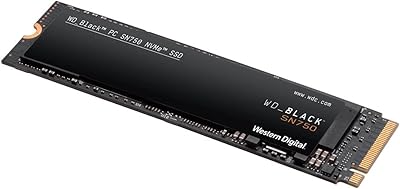
WD_BLACK 4TB SN7100 NVMe SSD
87%
94%
Performance (Speed)
92%
Storage Capacity
85%
Power Efficiency
89%
Installation & Setup
91%
Durability & Reliability
More
PHIXERO P7000PRO 4TB NVMe SSD
80%
88%
Sequential Read Speed
82%
Sequential Write Speed
76%
Thermal Management
84%
Value for Money
91%
Installation Experience
More
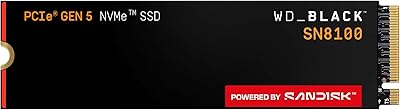
WD_BLACK SN8100 4TB NVMe SSD
82%
97%
Sequential Throughput
93%
Random I/O Performance
61%
Thermal Management
67%
Value for Money
82%
Installation & Compatibility
More
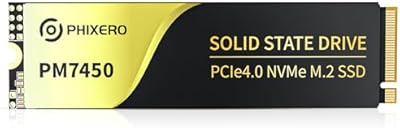
PHIXERO PM7450 4TB NVMe SSD
81%
93%
Sequential Read Performance
87%
Sequential Write Performance
61%
QLC Endurance & Longevity
88%
Thermal Management
84%
Burst Write Speed
More
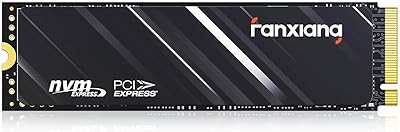
fanxiang S690Q 4TB NVMe SSD
87%
93%
Performance
95%
Speed (Read/Write)
90%
Ease of Installation
88%
Thermal Management
87%
Build Quality
More

FAQ

Yes, it does. The graphene thermal layer built into the drive satisfies Sony's requirement that any M.2 SSD installed in the PS5 expansion slot has some form of heat dissipation. Most buyers who have installed it in a PS5 report no thermal issues during extended gaming sessions.

No, you will not hit those peak figures on a Gen3 board. PCIe 3.0 x4 caps out at roughly 3,500 MB/s sequential read in ideal conditions, so the XG7000 4TB will perform more like a fast Gen3 drive in that setup. It still works and is still faster than a SATA SSD, but the advertised speeds require a PCIe 4.0 slot.

The Samsung 990 Pro has a longer reliability track record and stronger brand recognition, which matters to some buyers. The KingSpec XG7000 4TB NVMe SSD closes the gap on raw sequential performance numbers and undercuts on price at the 4TB tier, but Samsung offers more established third-party endurance validation and a wider support ecosystem. If brand confidence is a priority, Samsung is the safer bet; if capacity per dollar is your focus, this KingSpec drive is genuinely competitive.
It is an ambitious rating that KingSpec has not backed with widely available independent testing, so take it with some caution. That said, 3D TLC NAND does inherently support higher write cycles than QLC, so a high TBW figure is at least technically plausible. For typical consumer workloads — gaming, video editing, general use — you are unlikely to stress the drive anywhere near that limit within the warranty period.

No additional drivers are required on Windows 10 or 11 — the operating system recognizes the drive natively via the built-in NVMe driver. You will need to initialize and format the drive in Disk Management if it is not your boot drive. KingSpec does not bundle proprietary drive management software, so third-party tools like CrystalDiskInfo can be used for SMART monitoring.

It works perfectly fine as a primary boot drive. Many buyers use it exactly that way. If you are installing Windows fresh onto it, just make sure your BIOS is set to boot from the correct M.2 slot, and the installation process is straightforward from there.

It is a thin graphene-based thermal interface layer adhered to the surface of the drive, not a structural heatsink like you would find on a full aftermarket cooler. It conducts and spreads heat away from the NAND and controller more effectively than bare PCB would, which helps prevent throttling during sustained workloads. It is not as robust as a thick aluminum heatsink, but for most use cases including PS5 installation, it does the job.

KingSpec offers a three-year warranty and claims lifetime technical support, but as a smaller brand, the support experience may not be as polished as what you would get from Samsung or WD. Several buyers have reported positive warranty interactions, but the process may require more patience than dealing with a tier-1 brand. It is worth keeping your purchase receipt and registering the product if that option is available.

The M.2 2280 form factor is common in laptops, but not universal — some thinner ultrabooks use the shorter 2242 or 2230 form factors. Check your laptop manual or manufacturer specs to confirm it accepts an M.2 2280 drive before ordering. If your laptop has the right slot and a PCIe 4.0 or 3.0 M.2 interface, the drive will work without issue.

Under sustained sequential writes — like copying hundreds of gigabytes at once — the drive does generate noticeable heat, as any high-performance NVMe drive at this speed tier would. The graphene layer helps, but in a poorly ventilated case or a laptop without good airflow, some thermal throttling is possible in extended worst-case scenarios. For typical gaming or even video editing workflows with natural pauses in write activity, most users do not encounter any throttling issues.