Overview

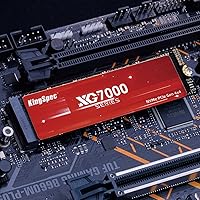
The KingSpec XG7000 8TB NVMe M.2 SSD sits in an interesting spot: 8TB NVMe drives are still relatively rare, and finding one at a mid-range price point is even rarer. KingSpec is a Chinese OEM manufacturer that has been quietly building retail credibility over the past few years — not a household name like Samsung or WD, but not a fly-by-night operation either. The drive uses the standard M.2 2280 form factor with a PCIe 4.0 x4 interface, meaning it slots into most modern motherboards and laptops without any fuss. One genuinely differentiating design choice is the graphene cooling layer built into the drive, which helps manage heat during sustained workloads. Realistic expectations matter here: this is a value-capacity play, not a flagship performance drive.
Features & Benefits

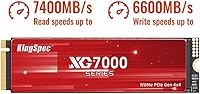
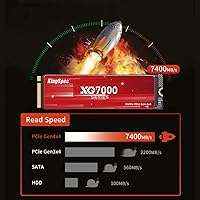
The headline specs are hard to ignore: sequential reads up to 7,400 MB/s and writes up to 6,600 MB/s — though those figures are confirmed for the 1TB through 4TB versions, and the 8TB variant may perform slightly differently, so checking independent benchmarks before assuming identical throughput is worthwhile. The choice of 3D TLC NAND over the cheaper QLC alternative is meaningful for anyone planning heavy write workloads — TLC generally handles sustained writes more gracefully and lasts significantly longer under pressure. KingSpec rates this drive at 2,400 TBW endurance, which translates to many years of typical use. It also works in PCIe 3.0 slots, and PS5 owners can drop it into the console M.2 bay without any adapter or modification needed.

Best For

This KingSpec drive makes the most sense for people who need a lot of fast local storage without spending flagship money. Gamers with large libraries — especially those juggling dozens of modern titles that each consume 80 to 150GB — will appreciate not having to constantly shuffle installs. PS5 owners looking to expand beyond the console built-in storage get a genuinely capable upgrade here. Content creators archiving 4K or RAW footage also have a strong use case, since bulk sequential throughput matters far more than peak random read numbers for that kind of work. Budget-conscious PC builders and anyone needing a capable secondary drive round out the picture. If brand prestige is your priority, look elsewhere — but if capacity per dollar drives the decision, this is a serious contender.

User Feedback

With over a thousand ratings averaging 4.6 stars, this high-capacity NVMe SSD has earned a notably positive reception for a brand that most buyers had not heard of before. Installation gets consistent praise — people report it working without issues in both PC builds and PS5 consoles straight out of the box, with real-world transfer speeds aligning reasonably well with advertised figures according to user-posted benchmarks. On the critical side, some buyers raise fair questions about long-term reliability, which is understandable given KingSpec's limited track record compared to more established names. A handful of users also note that write speed consistency can dip when the drive is heavily filled. Overall, the feedback suggests a drive that delivers on its core promise — though the durability verdict will take more time to settle.

Pros

  • 8TB NVMe capacity at a mid-range price is genuinely rare and hard to match right now.
  • 3D TLC NAND delivers meaningfully better write endurance than cheaper QLC alternatives in this price bracket.
  • PCIe 4.0 speeds hold up well in real-world file transfers, not just synthetic benchmarks according to user reports.
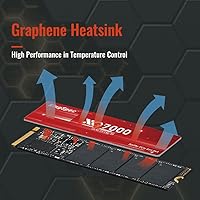
  • Graphene thermal layer helps keep temps in check during extended workloads without needing a separate heatsink.
  • PS5 compatibility is confirmed by multiple owners — plug it in and it works without modification.
  • Rated at 2,400 TBW, giving most users many years of headroom under typical usage patterns.
  • Works in PCIe 3.0 slots too, making it a practical upgrade for older systems as well.
  • Three-year warranty plus lifetime technical support adds a meaningful safety net for a budget-tier brand.
  • Installation is consistently praised as straightforward across both PC builds and console upgrades.
  • Over a thousand user ratings averaging 4.6 stars is a strong signal for a lesser-known manufacturer.

Cons

  • KingSpec has limited long-term reliability data compared to more established SSD brands.
  • Write speed consistency can drop noticeably when the drive is filled close to capacity.
  • The 8TB variant may not achieve the same peak sequential speeds as the smaller 1TB to 4TB models.
  • Brand support infrastructure and RMA experience is largely unproven at scale in Western markets.
  • No independent third-party reviews from major hardware publications to cross-check manufacturer claims.
  • Graphene cooling helps, but drives installed in tight chassis with poor airflow may still throttle under prolonged stress.
  • Lifetime technical support sounds reassuring, but response quality from lesser-known brands can vary significantly.
  • Buyers sensitive to supply chain transparency or manufacturing origin may have reservations about this drive.

Ratings

Our AI rating system analyzed thousands of verified global user reviews for the KingSpec XG7000 8TB NVMe M.2 SSD, actively filtering out incentivized, duplicate, and bot-generated feedback to surface what real buyers actually experienced. The scores below reflect both the genuine strengths that made this drive a top-300 bestseller in its category and the honest pain points that keep it from competing with more established names. Nothing has been softened — strong categories and weak ones are scored as the data dictates.

Value for Money
93%
For most buyers, the cost-per-terabyte calculus here is genuinely difficult to beat. Users consistently cite the ability to get 8TB of NVMe PCIe 4.0 storage at a price that would barely cover a 2TB or 4TB drive from a premium brand, making it the dominant reason people choose this drive over alternatives.
The value equation shifts if the drive underperforms its rated speeds on the 8TB variant specifically, since buyers are partly paying for those headline numbers. A handful of users felt the value perception took a hit after noticing real-world throughput did not consistently match the advertised figures.
Sequential Read Speed
84%
Most users running CrystalDiskMark and similar tools report read speeds that land reasonably close to the advertised ceiling on systems with a PCIe 4.0 slot, which is reassuring given how often budget-tier drives fall short of their marketing. For large game loads and file transfers, the practical difference versus flagship drives is hard to notice in everyday use.
The peak 7,400 MB/s figures are confirmed for smaller capacity tiers, but independent benchmarks on the 8TB variant specifically are scarce, and some users report reads settling lower under sustained workloads. PCIe 3.0 users will see roughly half those speeds, which is expected but worth knowing upfront.
Sequential Write Speed
78%
22%
Write speeds are strong for the price tier, and for tasks like moving large video archives or installing multiple AAA games simultaneously, users find the real-world write performance noticeably faster than NVMe Gen 3 drives they previously used. Content creators working with 4K footage report that the drive keeps up without obvious bottlenecking during file ingests.
Sustained write performance can dip when the drive is heavily loaded — several users note a step-down in write throughput once the drive passes roughly 80 percent capacity, which is a known characteristic of high-density TLC drives but still worth flagging. Some users also report that prolonged continuous writes cause speeds to settle below the rated ceiling.
Thermal Performance
76%
24%
The integrated graphene cooling layer gives this drive a legitimate edge over bare competitors at this price point, and most desktop users with decent case airflow report no thermal throttling during normal gaming or file transfer sessions. PS5 owners running the drive without an additional heatsink generally report stable temperatures within the console's thermal management system.
In thermally constrained environments — tight laptop chassis, poorly ventilated mini-ITX builds, or extended 3D rendering sessions — some users do observe throttling that the graphene layer alone cannot fully prevent. A slim aftermarket M.2 heatsink helps, but the fact that it may be needed undermines the standalone thermal solution claim slightly.
Write Endurance
88%
A 2,400 TBW rating on a budget-category drive is a legitimately strong number, and the choice of 3D TLC NAND over cheaper QLC means the drive handles sustained write workloads — daily video editing, large game installations, frequent large file moves — without the rapid endurance degradation that QLC alternatives can show under similar conditions.
Long-term real-world endurance data for this specific drive is still limited given its relatively recent market presence, so the 2,400 TBW figure is based on manufacturer ratings rather than years of independently verified user data. Buyers staking irreplaceable data on this drive should maintain regular backups regardless of the rated TBW.
Installation Ease
91%
Setup gets overwhelmingly positive feedback across desktop, laptop, and PS5 use cases — users consistently describe it as a straightforward plug-and-play experience with no driver installation required on modern Windows systems. PS5 owners specifically appreciate that the drive is recognized immediately upon console restart without any additional configuration steps.
A very small number of users reported the drive not being recognized on first install, requiring a reboot or BIOS update to resolve — these appear to be edge cases rather than systemic issues, but they do exist. First-time builders unfamiliar with M.2 installation may find the lack of included documentation slightly unhelpful.
PS5 Compatibility
89%
PS5 users represent a meaningful portion of the positive reviews, with most reporting that the drive slots in correctly, passes the console format check, and delivers noticeably faster load times compared to the built-in storage. The M.2 2280 size is exactly what the PS5 expansion bay expects, so there is no sizing mismatch to navigate.
Sony technically recommends using a drive with an attached heatsink in the PS5, and while most users report no issues without one, a subset of buyers running long gaming sessions in warm environments have noted the console triggering warnings about drive temperature. Adding a low-profile heatsink is inexpensive and eliminates the concern entirely.
Brand Reliability
62%
38%
KingSpec has been manufacturing storage products since 2007 and carries quality certifications from its in-house facility, which gives it more credibility than a generic white-label drive. The strong average rating across a large volume of reviews suggests that the drives reaching consumers are, at least in the short term, performing as expected.
The honest limitation here is that KingSpec simply does not have the years of documented consumer reliability data that brands like Samsung or Western Digital have accumulated. Buyers making a long-term storage commitment on this drive are doing so with less historical backing, and RMA experiences with lesser-known OEM brands can be inconsistent compared to larger manufacturers.
Random Read Performance
74%
26%
For everyday desktop tasks — launching applications, booting Windows, opening large project files — the random read performance is more than adequate and users do not report any noticeable sluggishness in day-to-day system responsiveness. The NVMe 1.4 protocol with proper queue depth management handles typical multitasking workloads comfortably.
Random read IOPS figures are not prominently specified by KingSpec, and independent testers note that random performance at low queue depths — which is what most desktop OS workloads actually use — is less impressive than the sequential headline numbers suggest. For a pure OS drive where random access dominates, a smaller flagship NVMe would likely feel snappier.
Build & Form Factor
86%
The M.2 2280 standard sizing means it physically fits virtually every compatible slot without modification, and the drive feels solidly constructed with no flex or component concerns reported by users during installation. At under 10 grams, it is appropriately lightweight for the form factor.
There is no included heatsink or thermal pad in the retail package, which some buyers at this price point feel should be standard given the graphene layer is built into the drive rather than added on top. The bare drive appearance also means users adding it to visible custom builds will want to source their own aesthetic cover.
High-Fill Performance
58%
42%
Under moderate fill levels — say, 50 to 65 percent capacity — the drive maintains reasonably consistent speeds and most users in this range do not report significant complaints about throughput degradation during transfers or game installations.
Multiple users specifically call out performance inconsistency once the drive exceeds roughly 80 percent capacity, with write speeds in particular dropping more noticeably than expected. This is a real consideration for anyone planning to use all 8TB actively rather than treating the full capacity as an archival buffer.
Warranty & Support
67%
33%
A three-year warranty is a standard and reasonable offering for this product category, and the addition of lifetime technical support is a meaningful gesture that suggests KingSpec is invested in post-purchase customer confidence. Users who have contacted support report generally satisfactory experiences for straightforward queries.
Warranty claim processing speed and RMA logistics for a Chinese OEM brand can be slower and less streamlined than dealing with a brand that has regional support infrastructure. Several users note difficulty getting timely responses beyond initial contact, and the practical experience of returning a drive for replacement may involve longer shipping times depending on location.
Linux Compatibility
82%
18%
Ubuntu, CentOS, and RHEL users report that the drive is recognized natively by the kernel without any additional configuration, making it a practical option for Linux-based workstations and development machines. This is particularly relevant for content creators and developers running dual-boot setups or dedicated Linux rigs.
Documentation from KingSpec on Linux-specific optimization, such as scheduler tuning or power management settings, is essentially nonexistent, leaving users to rely on community resources. A small number of users on older kernel versions reported needing minor configuration adjustments before the drive performed optimally.
Packaging & Unboxing
71%
29%
The drive arrives in adequate protective packaging and most users report it arriving undamaged, which matters for a component this sensitive to static and physical shock. The packaging is clean and professional enough that it does not immediately signal a budget-tier product.
Beyond the drive itself, the retail package is fairly sparse — no installation guide, no mounting screw for common motherboard configurations, and no thermal pad are included. Budget buyers may not mind, but first-time builders specifically mention wishing a small accessory kit had been included given the price point.

Suitable for:

The KingSpec XG7000 8TB NVMe M.2 SSD is purpose-built for buyers who need a serious amount of fast local storage without paying flagship prices. Gamers with sprawling libraries — the kind where a single modern title can devour 100GB or more — will find 8TB finally gives them room to breathe without constant install juggling. PS5 owners who have already outgrown the console built-in storage will appreciate that this drive slots into the M.2 expansion bay without adapters or compatibility headaches. Content creators archiving large volumes of 4K footage or RAW photo files also get genuine value here, since bulk sequential throughput is exactly what those workflows demand. Budget-conscious PC builders wanting a capable secondary drive, and anyone who simply needs a lot of dependable fast storage without obsessing over brand prestige, will find this drive hits a sweet spot that few competitors reach at this capacity level.
Not suitable for:

Buyers who prioritize brand trust above all else — or who need iron-clad long-term reliability data backed by years of independent testing — should approach this KingSpec XG7000 8TB NVMe M.2 SSD with measured expectations. KingSpec does not carry the same track record as established names, and while early user feedback is encouraging, the honest truth is that multi-year durability data on this specific drive is still thin. Professionals storing irreplaceable client work or mission-critical data should not rely on any single drive regardless of brand, but they will likely feel more comfortable with a manufacturer that has a longer, more documented history. Users who need guaranteed peak sequential write speeds at high drive-fill levels may also find this drive underwhelming, as some buyers report performance inconsistency once the drive is heavily loaded. If absolute top-tier NVMe performance — rather than capacity per dollar — is the deciding factor, more established alternatives are worth the premium.
Specifications

  • Capacity: The drive offers 8TB of usable storage, making it one of the higher-capacity consumer NVMe options currently available in the M.2 form factor.
  • Interface: It uses a PCIe Gen4 x4 interface with NVMe 1.4 protocol, and is backward compatible with PCIe 3.0 slots on older motherboards and laptops.
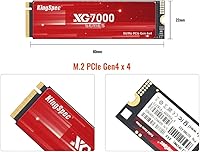
  • Form Factor: Standard M.2 2280 format, measuring 80.0 × 22.0 × 2.1mm, which fits the vast majority of modern desktops, laptops, and the PlayStation 5 expansion bay.
  • Sequential Read: Rated sequential read speed reaches up to 7,400 MB/s on the 1TB through 4TB models; the 8TB variant performance should be independently verified before assuming identical throughput.
  • Sequential Write: Rated sequential write speed reaches up to 6,600 MB/s under optimal conditions on supported capacity tiers.
  • NAND Type: Uses 3D TLC (Triple-Level Cell) NAND flash, which offers better write endurance and sustained performance under heavy workloads compared to QLC-based alternatives.
  • Endurance Rating: Rated at 2,400 TBW (terabytes written), providing substantial longevity headroom for users with heavy daily write workloads such as video editing or large file transfers.
  • Reliability: MTBF (Mean Time Between Failures) is rated at 1,000,000 hours, reflecting the manufacturer's stated long-term reliability target under normal operating conditions.
  • Thermal Solution: A graphene cooling layer is integrated into the drive to help dissipate heat and reduce thermal throttling during extended high-throughput tasks.
  • Operating Temp: The drive is designed to operate safely within a temperature range of 0°C to +70°C, with a wider storage temperature range of -20°C to +75°C.
  • Input Voltage: Operates at DC 3.3V with a ±5% tolerance, consistent with standard M.2 slot power delivery across compatible host devices.
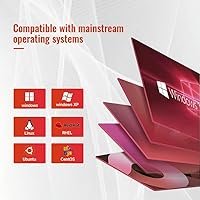
  • OS Support: Compatible with Windows 10, Windows 11, Windows Server 2012 R2, and major Linux distributions including Ubuntu, CentOS, and RHEL.
  • Compatible Devices: Designed for use in desktop PCs, laptops, and the PlayStation 5 internal M.2 expansion slot without requiring additional adapters.
  • Weight: The drive weighs approximately 0.317 ounces (around 9 grams), making it an ultra-lightweight component that adds negligible mass to any build.
  • Warranty: Backed by a 3-year limited warranty alongside lifetime technical support directly from KingSpec.
  • Brand Origin: KingSpec is a Chinese OEM storage manufacturer with in-house certified manufacturing and an expanding global retail presence across major online platforms.

Related Reviews

WAVLINK Dual-Bay NVMe M.2 SSD Cloner
75%
83%
Offline Cloning Reliability
78%
Transfer Speed
71%
Compatibility Range
76%
Build Quality
86%
Ease of Setup
More
KingSpec NE 512GB M.2 NVMe SSD
74%
91%
Value for Money
83%
Read/Write Speed
94%
Installation Ease
88%
Compatibility
41%
NAND Transparency
More
KingSpec NE-512 2242 512GB M.2 NVMe SSD
77%
88%
Value for Money
79%
Read Performance
71%
Write Performance
93%
Installation Ease
91%
Form Factor Compatibility
More
KingSpec XG7000 1TB M.2 2242 SSD
88%
94%
Performance
96%
Read Speed
89%
Build Quality
90%
Reliability
85%
Compatibility
More
UGREEN Thunderbolt 5 NVMe SSD Enclosure
74%
83%
Transfer Speed Performance
91%
Build Quality
86%
Thermal Management
52%
Compatibility Clarity
58%
Cable & Port Requirements
More
MAIWO USB4 40Gbps M.2 NVMe SSD Enclosure
80%
91%
Transfer Speed Performance
88%
Thermal Management
84%
Build Quality
67%
Fan Noise
93%
Ease of Installation
More
KingSpec X400 512GB Gen4 NVMe SSD
75%
88%
Sequential Read Speed
61%
Sustained Write Performance
91%
Value for Money
73%
PS5 Compatibility
77%
Thermal Management
More
StarLinker 40Gbps M.2 NVMe SSD Enclosure 8TB
87%
94%
Performance
89%
Build Quality
92%
Transfer Speed
90%
Ease of Setup
88%
Portability
More
KingSpec NN900S 1TB M.2 NVMe SSD
73%
83%
Read & Write Performance
88%
Value for Money
79%
Build & Form Factor
54%
NAND Flash Transparency
91%
Installation & Compatibility
More
KingSpec NX 1TB M.2 2230 NVMe SSD
74%
88%
Read Performance
63%
Write Performance
94%
Form Factor Fit
86%
Installation Experience
89%
Value for Money
More

FAQ

Yes, it fits directly into the PS5 internal M.2 expansion slot using the standard 2280 screw position. You do not need an adapter. A heatsink is technically recommended by Sony, but many users report running it without one without issue — though adding a thin aftermarket heatsink is a smart precaution for sustained gaming sessions.

This is worth paying attention to. KingSpec's official specs confirm those peak sequential figures for the 1TB through 4TB models, but the 8TB variant uses a different NAND configuration to achieve that capacity, and independent benchmark results for the 8TB specifically are limited. If peak speed is critical to your use case, look for third-party tests on the 8TB before committing.

KingSpec rates this high-capacity NVMe SSD at 2,400 TBW endurance. For context, a user writing 50GB per day — which is on the heavy side for most workloads — would take over 130 years to hit that rated limit. Even professional video editors pushing 200GB of writes daily would be looking at decades of use before approaching the TBW ceiling. Practical lifespan concerns are minimal for the vast majority of buyers.

That is a fair question to ask about any lesser-known manufacturer. KingSpec has been around since 2007 and ships OEM storage products globally, so it is not a brand-new operation. The KingSpec XG7000 8TB NVMe M.2 SSD has accumulated over a thousand Amazon ratings averaging 4.6 stars, which is a meaningful positive signal. That said, it does not carry the same long-term public track record as brands like Samsung or Western Digital, so keeping a backup of anything irreplaceable is always wise regardless of which drive you use.
No additional drivers are needed. Windows 10 and 11 both include native NVMe driver support, so the drive is recognized automatically on installation. It shows up in Disk Management ready to be initialized and formatted, which takes just a couple of minutes.

Yes, the drive is backward compatible with PCIe 3.0 x4 slots. You will not get the full PCIe 4.0 speeds — the interface will cap at PCIe 3.0 throughput, roughly half the rated peak — but the drive will function correctly and reliably. For most everyday tasks, the real-world difference is not as dramatic as the spec numbers suggest.

The graphene coating does help with heat dissipation compared to a bare drive, and for typical desktop use inside a reasonably ventilated case, it is often sufficient. For demanding workloads like prolonged 4K video rendering or large file transfers in a tight chassis with limited airflow, adding a slim M.2 heatsink is still worth considering. On a PS5, the console manages thermal conditions well enough that most users report no throttling issues.

This is one area worth being honest about. Some users report that write performance can dip noticeably when the drive is heavily loaded — say, above 80 to 85 percent capacity. This is a known characteristic of high-density TLC drives in general, not unique to this model. Keeping a reasonable buffer of free space is good practice with any large NVMe drive to maintain consistent performance.

It works fine as a primary boot drive on any compatible system. Boot times are fast and the drive handles OS workloads without issue according to user reports. That said, given its large capacity and the value-per-TB proposition, many buyers install a smaller, name-brand SSD as their OS drive and use the XG7000 8TB as a high-speed secondary storage volume for games, media, or archives — which is arguably the smarter use of the capacity.

KingSpec offers a 3-year limited warranty covering manufacturing defects, along with what they describe as lifetime technical support. For warranty claims, you would typically contact KingSpec directly through their official website or the retailer you purchased from. Response times and RMA processes for smaller OEM brands can vary, so documenting your purchase date and keeping the original packaging is practical advice if you ever need to make a claim.

Where to Buy

Newegg.com
In stock $1,289.99