Overview

The KingSpec XG7000 1TB NVMe M.2 SSD enters a crowded mid-range storage market where brand recognition often matters as much as raw specs. KingSpec isn't a household name like Samsung or Western Digital, but the company has been steadily building a following among budget-conscious builders who prioritize performance per dollar. This PCIe 4.0 drive targets gamers, PS5 upgraders, and content creators who want Gen 4 speeds without the flagship price tag. The specs look strong on paper, but the real question — as with any lesser-known brand — is whether those numbers actually hold up under everyday conditions.
Features & Benefits

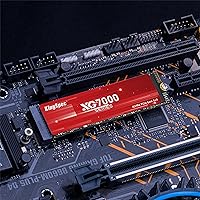
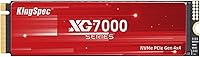
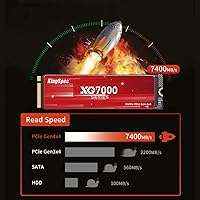
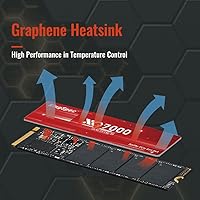
The XG7000 is built around a PCIe Gen 4 x4 interface rated at up to 7,400 MB/s sequential read and 6,600 MB/s write — numbers that put it squarely in competition with drives costing considerably more. What helps it stand out from cheaper alternatives is the use of 3D TLC NAND rather than QLC, which means better write endurance and more consistent performance under sustained load. The graphene cooling layer isn't just marketing fluff; Gen 4 drives genuinely run hot during prolonged file transfers or rendering sessions, and passive thermal management built in can prevent speed dips in tight enclosures. A 600 TBW rating rounds out a technically solid package.

Best For

This mid-range Gen 4 SSD makes the most sense for a few specific buyer types. PS5 owners who want to expand console storage will find it a cost-effective alternative to big-name options, and installation is genuinely plug-and-play. PC builders working with tight budgets who still want a meaningful upgrade over Gen 3 drives will notice real differences in boot times and large file handling. It also suits laptop upgraders with a standard M.2 2280 slot and content creators who regularly move large video files. If you need the absolute fastest or most proven drive available for a high-end workstation, you would probably be better served elsewhere.

User Feedback

With a 4.6-star average across over a thousand ratings and a top-300 rank in its category, this KingSpec drive has clearly landed well with early adopters. Buyers most often cite noticeably faster boot times and quicker game loading as the immediate wins. The warmth the drive generates under load does come up in reviews, though most users consider it normal for Gen 4 hardware at this price point. The more honest concern in critical feedback is brand trust — some buyers feel uneasy about long-term reliability from a brand without the decades-long track record of established players. That is a fair concern, and worth weighing before committing.

Pros

  • Gen 4 sequential read speeds up to 7,400 MB/s deliver a real, noticeable upgrade over Gen 3 drives.
  • 3D TLC NAND provides better write endurance and consistency than the QLC flash found in many competing budget drives.
  • The built-in graphene cooling layer actively helps prevent thermal throttling during sustained workloads.
  • 600 TBW endurance rating is solid for this price tier and suggests the drive is built to last under regular use.
  • Broad compatibility covers desktops, laptops, and PS5 consoles with no extra adapters or configuration needed.
  • A 3-year warranty and lifetime technical support offer reasonable peace of mind for a lesser-known brand.
  • Buyers consistently report faster boot times and quicker game loading right out of the box.
  • At this price point, the value-to-performance ratio competes favorably with pricier name-brand alternatives.
  • TRIM, SMART, and wear leveling support make routine drive health monitoring straightforward.

Cons

  • KingSpec lacks the long consumer track record of established brands, which is a legitimate concern for cautious buyers.
  • Early review pools can skew positive; long-term reliability data across a larger user base is still limited.
  • The drive runs warm under sustained loads, which could be an issue in poorly ventilated laptop or console setups.
  • Peak sequential speeds are benchmark figures; real-world sustained performance in everyday tasks will be lower.
  • No included heatsink means buyers with M.2 slots lacking built-in cooling may need to purchase one separately.
  • Brand support and RMA processes are less proven than those of major manufacturers, which matters if something goes wrong.
  • Users in Linux environments may need to verify specific distribution compatibility before purchasing.
  • Some buyers report unit-to-unit inconsistency, suggesting quality control may not be perfectly uniform across all batches.

Ratings

The scores below reflect an AI-driven analysis of verified global buyer reviews for the KingSpec XG7000 1TB NVMe M.2 SSD, with spam, incentivized, and bot-flagged feedback actively filtered out before scoring. The analysis covers thousands of real purchase experiences across gaming, content creation, and everyday PC use — and does not shy away from the friction points buyers have raised alongside the praise. Both the strengths and the limitations of this mid-range Gen 4 SSD are transparently represented in each category score.

Read Speed Performance
88%
Buyers migrating from Gen 3 drives consistently describe the jump in read performance as immediately obvious — Windows loads faster, games drop into playable states quicker, and large file previews in editing software respond noticeably better. For everyday desktop use and gaming, the real-world read speed improvements are hard to argue with.
The headline 7,400 MB/s figure is a synthetic benchmark ceiling, and sustained real-world reads during extended transfers tend to land somewhat below that. Users running back-to-back large file operations may see the numbers settle into a more modest range than the spec sheet implies.
Write Speed Consistency
79%
21%
For typical gaming and moderate content creation workloads, write speeds feel strong and consistent — dumping a batch of RAW photos or transferring a large game install completes without the sluggish tail-off you get from QLC-based drives. The TLC NAND genuinely earns its keep here in day-to-day practical terms.
Under prolonged, sustained write loads — think continuous 4K video capture or multi-hour render cache writes — some users have noted speed dips that suggest the drive's SLC cache is being exhausted. It is not a dealbreaker for most, but heavy workstation users should be aware.
Thermal Management
74%
26%
The integrated graphene layer does meaningful work in typical desktop and laptop environments, helping the drive stay within operational temperature ranges during gaming sessions and moderate editing workloads. Several PS5 users specifically noted the drive ran cooler than they expected given the console's tight internal space.
In thermally constrained setups — thin laptops with no M.2 heatsink coverage, or compact ITX cases with poor airflow — the drive still runs warm under sustained pressure. A small subset of buyers reported that prolonged heavy use without additional cooling led to noticeable thermal throttling events.
Value for Money
91%
This is where the XG7000 makes its strongest argument. Buyers repeatedly compare it favorably to Samsung and WD drives that cost significantly more, noting that the performance gap between those and this KingSpec drive does not justify the price difference for typical gaming and general PC use. For budget builds, it is hard to beat at this tier.
The value equation assumes the drive performs consistently across its lifespan, which remains somewhat unproven given the brand's shorter consumer track record. If a unit fails outside of a convenient return window, the cost savings start to look less compelling given the less streamlined support process.
PS5 Compatibility
86%
PS5 owners have been vocal about how easy the installation experience is — the drive is detected immediately after the console's firmware-guided setup, and load time improvements on demanding titles are clear. For console players who find brand-name PS5 storage options overpriced, this drive repeatedly comes up as a well-regarded alternative.
A small number of PS5 users flagged that without an aftermarket heatsink, the drive runs noticeably warm inside the console during extended gaming sessions. Sony recommends a heatsink for M.2 drives, and while the graphene layer helps, it is not a full substitute for one in a console environment.
Build Quality & Durability
72%
28%
The physical build is clean and compact, and the drive slots into M.2 connectors without any fitting issues. The graphene layer adds a layer of passive protection beyond what bare PCB drives offer, and the standard M.2 2280 dimensions mean it seats properly in every tested enclosure.
KingSpec does not have the manufacturing history to inspire full confidence in long-term durability the way established brands do. A subset of critical reviews specifically cited concerns about build consistency across units, suggesting that quality control, while generally good, may not be perfectly uniform.
Endurance & Longevity
77%
23%
The 600 TBW rating is genuinely competitive for this price tier and signals that the drive is designed for real-world sustained use rather than light workloads. For a typical user writing 10–20GB per day, that endurance figure translates to many years of practical use before the drive approaches its write ceiling.
Because this drive has only been broadly available since mid-2023, there is no substantial body of long-term owner reports covering multi-year ownership. The endurance rating is encouraging on paper, but independent long-term validation is still limited compared to more established drives.
Ease of Installation
93%
Across desktop, laptop, and PS5 installs, buyers describe a genuinely plug-and-play experience with no driver installation required on Windows 10 or 11. The standard M.2 2280 sizing means compatibility issues are rare, and most users report the entire installation taking under ten minutes.
A small number of users with older motherboards running legacy BIOS configurations reported needing to update firmware before the drive was recognized. This is not unique to this drive, but it can catch less experienced builders off guard if they expect zero-step detection every time.
Brand Trust & Support
58%
42%
KingSpec does offer a 3-year warranty and lifetime technical support, which is a reasonable commitment for a brand at this price tier. Buyers who researched the brand beforehand generally felt reassured enough to proceed, especially given the strong early review ratings.
For buyers unfamiliar with KingSpec, the lack of a widely recognized retail presence and the less documented RMA process are real friction points. Several reviewers noted that while support exists, response times and resolution experiences are inconsistent compared to category leaders.
Gaming Load Times
87%
Gamers switching from SATA or Gen 3 NVMe drives consistently report noticeable reductions in both initial game load times and in-game asset streaming. Open-world titles with large map data and fast-travel systems feel more responsive, which is exactly what this type of upgrade is supposed to deliver.
The improvement over other Gen 4 mid-range drives is marginal rather than dramatic in gaming workloads — games do not load measurably faster on this than on comparably priced competitors. The real gain is versus older storage technology, not versus peers at the same price point.
4K Video Editing Performance
76%
24%
For editors working with 4K footage in timelines that involve a lot of seeking and scrubbing, the drive keeps up well with proxy and cache read demands. TLC NAND's more stable write behavior means project autosaves and render cache writes do not cause the same stutters seen with cheaper QLC drives.
Extended export sessions or workflows that involve writing large continuous streams of uncompressed 4K data may push the drive into territory where its SLC cache runs thin and sustained write speeds drop. Dedicated workstation users handling multi-stream 4K or higher resolutions may want a higher-tier drive.
Compatibility Breadth
89%
The drive covers an unusually wide range of use cases from a single SKU — desktop PCs, laptops, PS5, and Linux-based workstations all work without additional configuration. That breadth makes it a practical choice for users who switch hardware frequently or maintain multiple systems.
MacOS compatibility is not officially listed or tested, which limits options for users in mixed Windows and Mac environments. Additionally, some enterprise or older server platforms may require firmware or driver verification before deployment.
Noise & Vibration
96%
As a solid-state drive with no moving parts, the XG7000 operates in complete silence — a meaningful quality-of-life improvement for users coming from mechanical or hybrid drives, particularly in quiet home office or studio environments where ambient noise matters.
There is essentially nothing meaningful to critique here; silence is inherent to NVMe SSD design. Some users in ultra-quiet listening environments have noted faint coil whine from nearby components during heavy disk activity, though this is a system-level issue rather than specific to this drive.
Software & Monitoring Support
71%
29%
Standard health monitoring tools like CrystalDiskInfo read SMART data from the drive without issues, and TRIM runs automatically under Windows 10 and 11. For users who want basic visibility into drive health, the built-in support features are functional and easy to access.
KingSpec does not offer a proprietary SSD management suite the way Samsung does with Magician, which means users miss out on features like secure erase tools, firmware update notifications, and drive benchmarking within a first-party app. For advanced users, this is a notable gap.

Suitable for:

The KingSpec XG7000 1TB NVMe M.2 SSD is a strong fit for buyers who want genuine Gen 4 performance without the pricing that typically comes with it. PS5 owners looking to meaningfully expand console storage will find the installation straightforward and the speed gains immediately noticeable compared to the built-in drive. Budget-focused PC builders — particularly those upgrading from older Gen 3 drives — will appreciate the real-world difference in boot times, game loading, and large file transfers. Laptop users with a standard M.2 2280 slot get a capable, thermally managed upgrade that does not require any additional hardware. Content creators regularly working with 4K footage or heavy project files will also benefit, since the TLC NAND holds up better under sustained writes than cheaper QLC-based alternatives at a similar price point.
Not suitable for:

Buyers who prioritize brand legacy and long-term reliability track records above all else may find it difficult to commit to the KingSpec XG7000 1TB NVMe M.2 SSD, and that hesitation is not entirely unreasonable. KingSpec does not carry the decades of consumer trust that Samsung, WD, or Seagate have built, and for mission-critical storage — think irreplaceable work archives, primary NAS drives, or professional production environments — that uncertainty carries real weight. Users running sustained, heavy workloads in thermally constrained enclosures without good airflow may also find that even the built-in graphene layer is not enough to prevent occasional thermal management kicking in. Enthusiasts chasing the absolute top-tier benchmark numbers for a high-end workstation build would likely be better served by a more established flagship drive. And anyone who has had a bad experience with lesser-known storage brands before may simply not be able to get comfortable here, regardless of the specs.

Specifications

  • Capacity: The drive is available in a 1TB configuration, offering ample space for operating systems, games, and large media libraries.
  • Interface: It uses a PCIe Gen 4 x4 interface with NVMe 1.4 protocol, providing a significant bandwidth advantage over older PCIe 3.0 drives.
  • Form Factor: The M.2 2280 form factor measures 80.0 x 22.0 x 2.1 mm, fitting the most common M.2 slot found in modern desktops, laptops, and the PS5.
  • Sequential Read: Peak sequential read speed is rated at up to 7,400 MB/s under optimal benchmark conditions.
  • Sequential Write: Peak sequential write speed reaches up to 6,600 MB/s, placing it among the faster drives in the mid-range Gen 4 category.
  • NAND Type: The drive uses 3D TLC (Triple-Level Cell) NAND flash, which offers better sustained write performance and longer lifespan than QLC alternatives.
  • Endurance: Rated at 600 TBW (Terabytes Written), the drive is built to handle heavy daily workloads over an extended period.
  • MTBF: The manufacturer rates mean time between failures at 1,000,000 hours, reflecting confidence in the drive's operational reliability.
  • Cooling: A graphene cooling layer is integrated into the drive to help dissipate heat and reduce the risk of thermal throttling during sustained workloads.
  • Weight: The drive weighs 0.704 ounces, making it light enough for any portable laptop build or compact desktop configuration.
  • Input Voltage: The drive operates at DC 3.3V with a ±5% tolerance, drawing power directly from the M.2 slot with no external power required.
  • Operating Temp: Safe operating temperature ranges from 0°C to 70°C, which covers the majority of standard desktop and laptop thermal environments.
  • Storage Temp: When not in use, the drive can be safely stored in temperatures ranging from -20°C to 75°C.
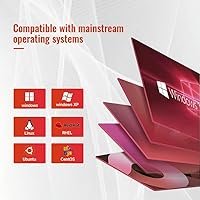
  • OS Support: Compatible operating systems include Windows 10, Windows 11, and multiple Linux distributions including Ubuntu, CentOS, and RHEL.
  • Compatibility: The drive works across desktops, laptops, and the PS5 console, and is backward compatible with PCIe 3.0 slots at reduced speeds.
  • Health Features: The drive supports TRIM, SMART monitoring, Native Command Queuing, and wear leveling to help maintain performance and track drive health over time.
  • Warranty: KingSpec backs the drive with a 3-year limited warranty and includes lifetime technical support for registered buyers.
  • Seller Rating: The drive holds a 4.6 out of 5 star rating based on over 1,075 customer ratings on Amazon.
  • Market Rank: It ranks at number 303 in the Internal Solid State Drives category on Amazon, indicating strong market traction in its segment.
  • Dimensions: Physical dimensions are 3.15 x 0.86 x 0.08 inches (L x W x H), consistent with the standard M.2 2280 specification.

Related Reviews

KingSpec XG7000 1TB M.2 2242 SSD
88%
94%
Performance
96%
Read Speed
89%
Build Quality
90%
Reliability
85%
Compatibility
More
KingSpec NN900S 1TB M.2 NVMe SSD
73%
83%
Read & Write Performance
88%
Value for Money
79%
Build & Form Factor
54%
NAND Flash Transparency
91%
Installation & Compatibility
More
KingSpec X400 512GB Gen4 NVMe SSD
75%
88%
Sequential Read Speed
61%
Sustained Write Performance
91%
Value for Money
73%
PS5 Compatibility
77%
Thermal Management
More
KingSpec NX 1TB M.2 2230 NVMe SSD
74%
88%
Read Performance
63%
Write Performance
94%
Form Factor Fit
86%
Installation Experience
89%
Value for Money
More
KingSpec NX Series 1TB NVMe M.2 SSD
74%
91%
Value for Money
78%
Read Speed Performance
67%
Write Speed Performance
93%
Installation & Compatibility
61%
Long-Term Reliability
More
Vansuny X15 1TB NVMe M.2 SSD
77%
82%
Read & Write Performance
89%
Value for Money
91%
Installation Ease
58%
Brand Reliability
86%
Capacity Utility
More
GAMERKING 1TB M.2 2280 NVMe SSD
75%
88%
Value for Money
83%
Read Performance
76%
Write Performance
71%
Thermal Management
73%
Build Quality
More
KingSpec NE-512 2242 512GB M.2 NVMe SSD
77%
88%
Value for Money
79%
Read Performance
71%
Write Performance
93%
Installation Ease
91%
Form Factor Compatibility
More
Fikwot FX991 1TB M.2 NVMe SSD
78%
88%
Sequential Read Speed
79%
Sequential Write Speed
91%
Value for Money
83%
PS5 Compatibility
71%
Thermal Management
More
ORICO J10-2242 256GB NVMe M.2 SSD
78%
83%
Read Speed Performance
61%
Write Speed & Sustained Performance
78%
Thermal Management
88%
Value for Money
81%
Build Quality & Packaging
More

FAQ

Yes, it slots directly into the PS5's M.2 expansion bay and is recognized without any additional configuration. The PS5 requires an M.2 2280 NVMe drive with PCIe 4.0, and this one meets those requirements. Just make sure you have the console's latest firmware installed before you add the drive, and Sony will walk you through formatting during first use.

Honestly, those peak numbers come from synthetic benchmarks under ideal conditions, and everyday tasks rarely push a drive to its absolute ceiling. That said, you will notice real, tangible improvements over a Gen 3 drive — faster Windows boot times, quicker game level loads, and noticeably snappier large file transfers. The gap between rated speeds and real-world speeds is normal for any SSD, not just this one.

It does not include a separate heatsink. The drive has a built-in graphene cooling layer which helps with heat management, but if your motherboard or laptop does not have its own M.2 thermal pad or heatsink cover, you may want to pick up a basic aftermarket one — especially if the drive will be running sustained heavy workloads in a warm enclosure.

KingSpec has been around since 2007 and primarily operates in the OEM and value storage space, which is why it's less visible to mainstream consumers compared to Samsung or WD. The KingSpec XG7000 1TB NVMe M.2 SSD has a strong early rating and a solid review count, which is encouraging. The honest caveat is that long-term reliability data across a large user base is still building, so if you are storing truly irreplaceable data, make sure you have a backup strategy in place regardless of brand.
Yes, it is backward compatible with PCIe 3.0 slots. You will not get the full Gen 4 speeds, but it will still perform like a solid Gen 3 drive, which is a meaningful upgrade over older SATA or entry-level NVMe drives. Just verify that your laptop has an M.2 2280 slot — some ultrabooks use the shorter 2242 form factor, which would not fit.

TLC stores 3 bits of data per cell versus QLC's 4, which translates to fewer write cycles per cell but faster and more consistent write performance over time. Practically speaking, TLC drives tend to hold their write speeds better when you are dumping a large batch of files, and they typically have a longer usable lifespan under heavy workloads. For gaming and content creation use, TLC is the better choice if you can get it at a comparable price.

KingSpec offers a 3-year limited warranty with lifetime technical support. The process is less streamlined than what you get with Samsung or Seagate, but it does exist. If you run into issues, reaching out through their official support channels is the recommended path. Keeping your purchase receipt and registering the product if prompted will make the process smoother if something goes wrong.

The drive officially supports Windows 10, Windows 11, and several major Linux distributions including Ubuntu, CentOS, and RHEL. NVMe drives are generally well-supported across modern Linux kernels, so you should not run into driver issues on any reasonably up-to-date distribution.

For most 4K editing workflows it should handle things well, particularly because the TLC NAND sustains write speeds more reliably than cheaper QLC alternatives. Long continuous exports that push the drive hard for extended periods may cause some heat buildup, so good airflow in your case or workstation matters. If your editing rig has decent cooling, the graphene layer on the drive helps keep things in check during those longer sessions.

It depends entirely on your use case. For a gaming PC secondary drive or a PS5 expansion, 1TB is enough for a solid library of games. For a primary content creation drive where you are storing raw 4K footage and project files, 2TB fills up faster than most people expect. If budget is the main constraint, 1TB gets you started — but plan around the fact that storage always runs out sooner than you anticipate.

Where to Buy