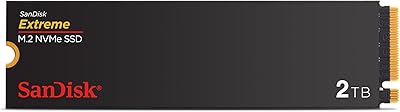
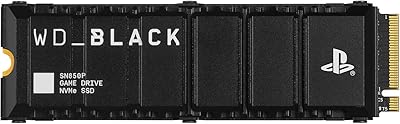
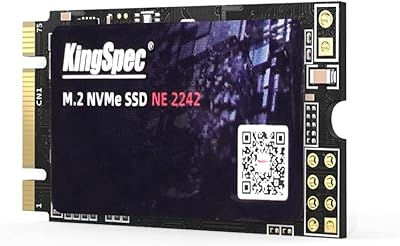
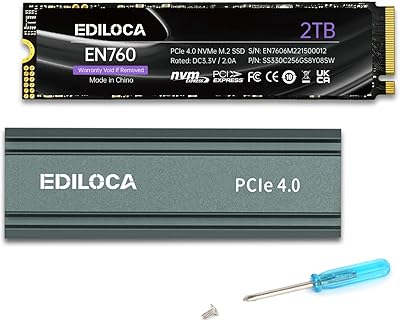
Overview

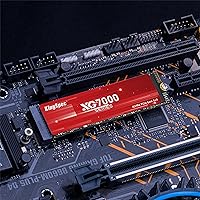
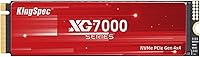
The KingSpec XG7000 2TB NVMe M.2 SSD enters a crowded PCIe 4.0 market with a clear pitch: Gen4 performance at a price that doesn't demand much justification. KingSpec has been manufacturing storage hardware for over 15 years, though it remains far less recognized in Western markets than Samsung or Western Digital — and that's worth acknowledging upfront. This drive follows the standard M.2 2280 form factor, runs a PCIe 4.0 x4 interface with NVMe 1.4 protocol, and fits natively into most modern motherboards and the PS5's expansion slot. Since its mid-2023 launch, it has built a 4.6-star average across more than 1,000 verified purchases, suggesting real-world results are tracking reasonably well against buyer expectations.
Features & Benefits

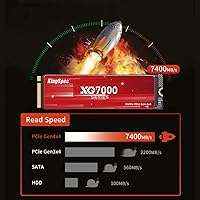
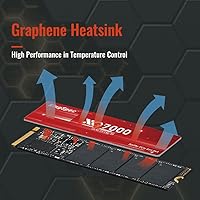
The headline numbers are hard to argue with on paper: 7,400 MB/s sequential read and 6,600 MB/s write put this Gen4 NVMe drive among the faster options in its class, though manufacturer figures should always be taken as a ceiling rather than a guarantee under sustained load. What matters more in daily use is NAND quality — KingSpec opted for 3D TLC rather than cheaper QLC flash, which generally means better write consistency and longer endurance. The 2TB variant carries a 1,200 TBW rating, which is genuinely solid. A graphene thermal pad ships pre-applied, helping manage heat during rendering or large transfers without requiring a separate purchase. PCIe 3.0 backward compatibility broadens its appeal across older platforms as well.

Best For

This M.2 SSD makes the most sense for a few distinct buyer profiles. PS5 owners expanding storage are probably the clearest fit — the drive slots into the console's M.2 bay, Sony firmware recognizes it cleanly, and the included thermal layer helps satisfy Sony's heatsink guidance. PC builders putting together a mid-range gaming rig on a budget will find the value proposition compelling, particularly compared to what Samsung or WD charge for comparable Gen4 specs. Content creators working with 4K timelines or heavy render queues also benefit from the TLC endurance and sustained write performance. It's less suited to enterprise environments or anyone who needs absolute top-tier brand assurance — tier-one alternatives still hold that edge.

User Feedback

Across a wide pool of buyer reviews, the KingSpec XG7000 earns consistent praise for benchmark accuracy — real-world speeds in CrystalDiskMark closely match advertised figures, which carries weight when third-party reviews for this brand are still limited. PS5 installation feedback is notably positive, with users reporting no firmware conflicts and proper speed recognition by the console. On the critical side, some buyers describe the thermal pad as thin, and those running this M.2 SSD in warm or cramped builds may prefer adding an aftermarket heatsink. The most common reservation isn't about performance at all — it's about long-term brand confidence. Actual failure reports remain rare, which is encouraging, though time will ultimately tell more than any short-term review pool can.

Pros

  • Real-world sequential speeds closely match advertised figures, according to consistent user benchmark reports.
  • 3D TLC NAND offers meaningfully better write endurance than the QLC flash found in many competing budget drives.
  • The 1,200 TBW endurance rating for the 2TB capacity is generous and well above average for this price tier.
  • A graphene thermal pad ships included, saving PS5 users and builders an extra purchase.
  • PS5 installation is straightforward, with no firmware conflicts reported by the large majority of console users.
  • PCIe 3.0 backward compatibility means this M.2 SSD works in older systems without any performance penalty on those platforms.
  • A 3-year warranty plus claimed lifetime technical support adds a reasonable layer of post-purchase protection.
  • At 2TB, the capacity comfortably handles large game libraries, video projects, or mixed-use storage needs.
  • Over 1,000 verified ratings with a 4.6-star average points to a consistent ownership experience across diverse use cases.
  • The price-to-performance ratio is one of the most frequently praised aspects across buyer reviews.

Cons

  • KingSpec's brand recognition and long-term reliability data lag well behind tier-one SSD manufacturers.
  • Independent third-party benchmark coverage for this specific drive remains limited, making pre-purchase research harder.
  • The included thermal pad is thin and may be insufficient for sustained workloads in warm or airflow-restricted builds.
  • Manufacturer performance figures represent peak conditions; sustained write speeds under real workloads may vary.
  • Buyers seeking a robust RMA or support experience may find KingSpec's customer infrastructure less accessible than major brands.
  • No DRAM cache is confirmed in available spec data, which can affect random read performance in certain mixed workload scenarios.
  • Long-term failure rate data is still sparse given the drive's relatively recent market entry in 2023.
  • Users who frequently push sustained write-heavy workloads — like large RAW photo culling or continuous 4K capture — may notice thermal throttling without an upgraded heatsink.

Ratings

Our AI rating system analyzed thousands of verified global purchase reviews for the KingSpec XG7000 2TB NVMe M.2 SSD, actively filtering out incentivized, bot-generated, and duplicate feedback to surface what real buyers actually experience. The scores below reflect both the genuine strengths that keep this drive rated so highly and the honest trade-offs that matter depending on your specific use case. Positive sentiment and real pain points are weighted equally so you can make an informed call.

Sequential Read Speed
88%
Buyers running CrystalDiskMark benchmarks consistently report read speeds that land close to the advertised 7,400 MB/s ceiling, which is notably rare for a drive at this price tier. In practical terms, this translates to fast game load screens, snappy OS boots, and quick large-file access during video editing sessions.
Sequential peaks are measured under controlled burst conditions, and some users note that real-world sustained transfers — like moving a 200GB game folder — can show lower throughput than the headline figure implies. The gap between peak and sustained isn't unique to this drive, but it is worth setting expectations around.
Sequential Write Speed
84%
The 6,600 MB/s write rating holds up reasonably well in everyday tasks, and users exporting 4K timelines or copying large RAW photo batches report noticeably faster completion times compared to their previous Gen3 drives. TLC NAND plays a real role here — write consistency is more stable than QLC alternatives at similar price points.
Write speed can dip during very long sequential writes once the SLC cache is saturated, which is standard behavior for consumer NVMe drives but more noticeable here when moving data sets in the hundreds of gigabytes. Users archiving or cloning full drive images have flagged this more than casual gamers have.
Value for Money
93%
This is the category that drives most purchase decisions for the KingSpec XG7000, and the feedback is overwhelmingly positive — buyers consistently describe it as one of the best dollar-per-gigabyte options available for a Gen4 TLC drive. Getting 2TB of PCIe 4.0 storage with a graphene pad and TLC NAND at this price genuinely undercuts flagship competition by a meaningful margin.
Value perception softens slightly when buyers factor in the brand uncertainty — some feel the price gap versus Samsung or WD narrows once you account for the peace of mind a more established warranty ecosystem provides. For risk-averse buyers, the savings may not feel as compelling over a 5-year horizon.
PS5 Compatibility
91%
Console users represent a large portion of reviewers, and the installation experience draws near-universal praise — the drive fits cleanly in the PS5's M.2 slot, Sony firmware detects and formats it without issues, and the pre-applied graphene pad satisfies the console's heatsink requirement out of the box. Most users reported the entire installation taking under ten minutes.
A handful of PS5 users in particularly warm environments or with limited console ventilation noted higher drive temperatures during marathon gaming sessions, suggesting the stock thermal pad has limits. Adding an aftermarket low-profile heatsink is a straightforward fix, but it is an extra step some buyers weren't expecting to need.
Thermal Management
74%
26%
The graphene thermal pad is a practical inclusion that most competing budget drives skip entirely, and it does its job adequately under moderate workloads — casual gaming, standard file transfers, and everyday PC use rarely push temperatures into throttling territory. PS5 users in particular benefit from having any thermal layer present to meet Sony's installation guidelines.
Under sustained heavy workloads — extended 3D rendering, continuous large file writes, or use inside a compact ITX case with poor airflow — the thin pad reaches its limits and temperatures can climb enough to trigger throttling. Users who regularly run intensive workloads in warm environments consistently recommend investing in a beefier aftermarket heatsink solution.
Build & NAND Quality
82%
18%
The choice of 3D TLC NAND over cheaper QLC flash is a meaningful engineering decision that buyers with some technical knowledge consistently call out positively in reviews. The 1,200 TBW endurance rating for the 2TB model is well above average for consumer drives in this segment, giving confidence for heavy daily use over several years.
Because KingSpec hasn't published detailed controller or NAND sourcing information, some technically minded buyers are uncomfortable with the lack of transparency around exactly which components are inside. Without independent teardown data widely available, there is limited third-party validation of the endurance claims.
Random Read Performance
71%
29%
For typical consumer workloads — launching applications, navigating an OS, loading game assets — random read performance feels responsive and doesn't represent a bottleneck in everyday use. Most buyers notice the improvement immediately when upgrading from SATA or Gen3 drives.
The absence of confirmed DRAM cache raises some questions about peak random read performance under multi-threaded workloads. Users running database applications or heavily parallelized software pipelines have noted that the drive performs less competitively in those scenarios compared to DRAM-equipped rivals at a similar price.
Installation Experience
89%
Across desktop, laptop, and PS5 installations, buyers describe the physical setup as genuinely straightforward — the M.2 2280 form factor is universal, no software or drivers are needed for Windows or Linux, and the drive shows up immediately on first boot. First-time builders specifically appreciate the plug-and-play reliability.
A small number of laptop users encountered fitment notes around heatsink clearance in ultrathin chassis where the graphene pad added just enough height to create interference with the drive retainer or cover plate. This is an edge case, but worth checking against your specific laptop model before purchasing.
Brand Reliability Confidence
61%
39%
KingSpec has been manufacturing storage products for over 15 years and the failure rate reported by actual buyers of this specific model is low relative to the review volume — actual defective unit complaints are a small fraction of the overall feedback pool. For buyers comfortable with value-tier brands, the track record so far is encouraging.
The honest reality is that KingSpec simply lacks the publicly documented long-term reliability data that Samsung, WD, or Seagate have accumulated across millions of drives over decades. Buyers who prioritize that institutional confidence — especially for a primary or only system drive — will find this gap hard to ignore regardless of the current user ratings.
Sustained Workload Consistency
72%
28%
For the core audience — gamers loading titles, creators exporting finished video, users doing periodic large transfers — sustained performance is adequate and rarely becomes a frustration in normal use patterns. The TLC NAND does help maintain more consistent behavior across repeated write cycles than QLC-based options would.
Users who stress the drive continuously — think automated backup pipelines, large RAID array rebuilds, or non-stop render farm workloads — can encounter speed variation once the cache is exhausted. This is not an uncommon trait at this tier, but it limits the drive's appeal for professional continuous-write environments.
Warranty & Support
67%
33%
A 3-year warranty with claimed lifetime technical support is a reasonable coverage package for a drive in this price range, and buyers who have contacted KingSpec support report generally satisfactory response times. The warranty period matches what tier-one brands offer on comparable consumer drives.
The accessibility of KingSpec's support infrastructure for international buyers outside Asia varies, and some users describe the RMA process as less streamlined than dealing with Samsung or WD's established regional support networks. Lifetime technical support is a broad claim whose practical limits remain untested for most current owners.
PCIe 3.0 Backward Compatibility
86%
Buyers with older-generation motherboards appreciate that this M.2 SSD runs without issues in PCIe 3.0 slots, making it a viable upgrade path for systems that predate Gen4 platforms. The drive auto-negotiates to the appropriate link speed with no manual configuration needed.
Buyers who purchase this specifically for Gen4 speeds and then discover their motherboard or laptop only supports Gen3 will see roughly half the advertised sequential throughput. This is a system limitation rather than a drive flaw, but it catches some buyers off guard who didn't verify their platform's M.2 slot generation beforehand.
Capacity Utilization
88%
At 2TB, this drive covers the storage needs of most modern use cases in a single install — a large Steam library, a working 4K project archive, and an OS partition can all coexist comfortably. Users upgrading from 1TB drives consistently report the additional headroom reducing the mental overhead of managing free space.
Buyers who anticipated using the full 2TB capacity continuously at high write throughput may encounter the SLC cache depletion behavior described elsewhere. In practice, most users never saturate the full capacity in a single session, so this is more of a theoretical concern than a daily frustration.
OS & Platform Compatibility
91%
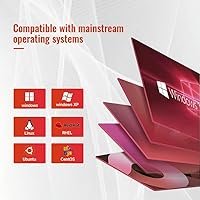
Support for Windows 10, Windows 11, and major Linux distributions including Ubuntu, CentOS, and RHEL makes this a versatile option across home and light professional environments. Linux users in particular note that the drive is recognized natively by modern kernels with zero configuration required.
KingSpec does not list macOS as an officially supported platform, which limits options for Mac users with compatible hardware. Additionally, there is no proprietary drive management software equivalent to Samsung Magician, so users who rely on manufacturer tools for health monitoring or firmware updates are dependent on third-party utilities like CrystalDiskInfo.

Suitable for:

The KingSpec XG7000 2TB NVMe M.2 SSD is a strong fit for budget-conscious buyers who want genuine Gen4 performance without paying flagship prices. PS5 owners are arguably the most natural audience — the drive slots directly into Sony's M.2 expansion bay, the console firmware recognizes it without issues, and the pre-applied graphene thermal layer satisfies heatsink requirements without an extra purchase. Mid-range PC builders who have a PCIe 4.0 slot to fill and want 2TB of fast storage for gaming or everyday workloads will also find this a compelling option. Content creators dealing with large 4K project files or sustained read-heavy editing pipelines can take advantage of the TLC NAND's more consistent write behavior compared to QLC-based alternatives. Laptop users with an open M.2 2280 slot looking to leave SATA or Gen3 speeds behind will see a meaningful real-world difference, particularly in file transfer and load times.
Not suitable for:

Buyers who prioritize brand pedigree and long-term manufacturer support above all else may want to look elsewhere — the KingSpec XG7000 2TB NVMe M.2 SSD simply does not carry the same track record or ecosystem backing as Samsung, WD, or Seagate in Western markets. Professionals running workloads where storage reliability is mission-critical — think medical imaging, financial data servers, or production video archives — should lean toward enterprise-grade drives with more established warranty infrastructure and independently verified endurance data. Users in thermally constrained builds, such as compact ITX cases or fanless enclosures, should note that the included thermal pad is relatively thin, and extra cooling measures may be needed under sustained heavy workloads. Anyone expecting exhaustive third-party benchmark coverage or a large community knowledge base around this specific model will find the research pool still fairly limited compared to category leaders. If absolute peak sustained performance under professional stress conditions is the priority, more proven Gen4 options may deliver greater confidence.
Specifications

  • Capacity: This drive is available in a 2TB configuration, offering ample space for large game libraries, 4K video projects, or mixed-use storage.
  • Interface: It uses a PCIe Gen4 x4 interface with NVMe 1.4 protocol, delivering low-latency communication between the drive and the host system.
  • Form Factor: The drive follows the M.2 2280 standard, measuring 80.0 × 22.0 × 2.1 mm, which fits the vast majority of modern motherboards and the PS5 expansion bay.
  • Sequential Read: Rated sequential read speed reaches up to 7,400 MB/s under optimal, manufacturer-tested conditions.
  • Sequential Write: Rated sequential write speed reaches up to 6,600 MB/s, applicable to the 1TB, 2TB, and 4TB variants specifically.
  • NAND Type: The drive uses 3D TLC (Triple-Level Cell) NAND flash, which offers a better balance of endurance and sustained performance compared to QLC-based alternatives.
  • Endurance: The 2TB model carries a 1,200 TBW (Terabytes Written) endurance rating, indicating a long operational lifespan under typical heavy-use conditions.
  • Reliability: Mean Time Between Failures is rated at 1,000,000 hours, reflecting the manufacturer's confidence in component-level durability.
  • Thermal Solution: A graphene thermal pad is pre-applied to the drive to help dissipate heat during sustained workloads and assist with PS5 heatsink compliance.
  • Compatibility: The drive is compatible with desktop PCs, laptops, and the PlayStation 5 console's internal M.2 expansion slot.
  • OS Support: Supported operating systems include Windows 10, Windows 11, and major Linux distributions including Ubuntu, CentOS, and RHEL.
  • PCIe Backward Compat: The drive is backward compatible with PCIe 3.0 slots, though maximum speeds will be limited to Gen3 throughput in those configurations.
  • Input Voltage: The drive operates at DC 3.3V with a ±5% tolerance, consistent with standard M.2 slot power delivery.
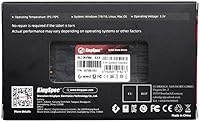
  • Operating Temp: The rated operating temperature range is 0°C to 70°C, suitable for standard consumer desktop, laptop, and console environments.
  • Storage Temp: Safe storage temperature when the drive is not in use ranges from -20°C to 75°C.
  • Weight: The drive weighs 0.704 oz (approximately 20g), making it negligible as a factor in any build or portable system.
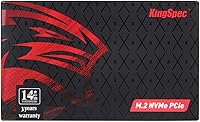
  • Warranty: KingSpec provides a 3-year limited warranty on this drive, along with claimed lifetime technical support.
  • Dimensions: Physical dimensions are 80.0 mm (L) × 22.0 mm (W) × 2.1 mm (H), within standard M.2 2280 tolerances of ±0.1 mm.
  • Model Identifier: The official model designation is XG7000-2TB, part of KingSpec's XG7000 2280 product series.
  • Certifications: KingSpec states the drive undergoes over 100 quality inspections per unit in its own manufacturing facilities, though no specific third-party certification details are published.

Related Reviews
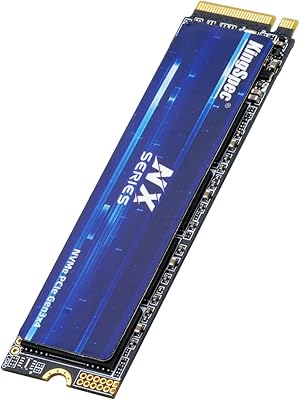
KingSpec NX Series 2TB NVMe M.2 SSD
76%
91%
Value for Money
78%
Read Performance
67%
Write Performance
94%
Installation Ease
88%
Compatibility
More
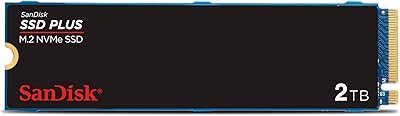
SanDisk 2TB SSD Plus M.2 NVMe SSD
86%
89%
Performance
92%
Ease of Installation
88%
Reliability
91%
Value for Money
90%
Capacity
More
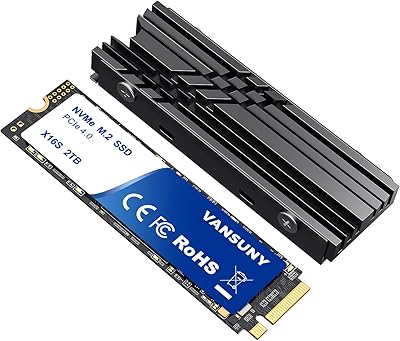
Vansuny 2TB NVMe M.2 Internal SSD
78%
88%
Value for Money
79%
Read/Write Speed
91%
PS5 Compatibility
74%
Thermal Management
93%
Installation Experience
More
GAMERKING 2TB M.2 NVMe Internal SSD
75%
78%
Read/Write Performance
82%
Value for Money
91%
Installation Experience
67%
Thermal Management
63%
Long-Term Reliability
More
KingSpec X400 2TB Gen4 NVMe SSD
78%
88%
Read Performance
73%
Write Performance
91%
PS5 Compatibility
84%
Thermal Management
93%
Installation Experience
More
Ediloca EN870 2TB NVMe M.2 SSD
78%
88%
Sequential Read Speed
79%
Sequential Write Speed
91%
Value for Money
93%
PS5 Compatibility
86%
Installation Ease
More
KingSpec NE 512GB M.2 NVMe SSD
74%
91%
Value for Money
83%
Read/Write Speed
94%
Installation Ease
88%
Compatibility
41%
NAND Transparency
More
Fikwot FX910 2TB M.2 NVMe SSD
80%
88%
Read/Write Performance
91%
Thermal Management
93%
Installation Ease
84%
PS5 Compatibility
87%
Value for Money
More
PNY CS1030 2TB M.2 NVMe SSD
77%
91%
Value for Money
83%
Read Speed Performance
72%
Write Speed Performance
88%
Boot & Load Times
94%
Installation Ease
More
WD_BLACK SN850P 2TB NVMe SSD
86%
93%
Read Speed Performance
96%
PS5 Compatibility & Licensing
94%
Installation Experience
88%
Heatsink Quality & Thermal Management
71%
Value for Money
More

FAQ

It should work, yes. Sony requires that any M.2 drive installed in the PS5 has some form of heat management, and this drive ships with a graphene thermal pad already applied. That said, the pad is on the thinner side, so if your console runs in a warm or enclosed space, adding an aftermarket heatsink is a worthwhile precaution. Most users report no issues with just the included pad under normal gaming conditions.

Based on user feedback, sequential speeds in CrystalDiskMark tend to land close to the rated figures, which is a good sign. Keep in mind those are peak burst conditions — sustained workloads like copying hundreds of gigabytes in one go may show some variation. For typical gaming, general file transfers, and 4K editing timelines, most buyers report being satisfied with actual throughput.

Yes, the drive is backward compatible with PCIe 3.0 slots. You won't get Gen4 speeds in that configuration — you'll be capped at Gen3 bandwidth — but the drive will function correctly and still outperform older SATA SSDs significantly.

TLC stores three bits of data per cell versus four for QLC, which generally translates to better write endurance and more stable sustained performance under heavy loads. For most consumers, the difference shows up over time — TLC drives tend to maintain consistent speeds longer before write slowdowns occur during large transfers. The 1,200 TBW rating on this drive reflects that advantage.

Potentially, yes. The included graphene pad helps, but compact cases with limited airflow can push NVMe temperatures higher during extended workloads. If your ITX build doesn't have active airflow directed at the M.2 slot, consider pairing this M.2 SSD with a low-profile aftermarket heatsink. Most modern motherboards also have M.2 heatsink covers that work well.

That's a fair concern to raise. Samsung and WD have longer publicly documented track records in Western markets and more extensive third-party testing data. KingSpec has been manufacturing storage for over 15 years, and user failure reports for this drive are rare so far — but the ownership history simply isn't as long or as widely documented. If brand longevity and a robust RMA process are top priorities, established names still have an edge.

Yes, officially supported Linux distributions include Ubuntu, CentOS, and RHEL, in addition to Windows 10 and 11. Most modern Linux kernels handle NVMe drives natively, so setup is typically plug-and-play without extra driver installation.

Like most SSDs, sustained write performance can decrease as the drive fills up and the controller has less free space to manage wear leveling and caching. Keeping at least 10–15% of total capacity free is a good general practice for maintaining consistent speeds over time.

KingSpec has not publicly confirmed the presence of a dedicated DRAM cache on this model. Many drives in this price range use a host memory buffer (HMB) approach instead, which leverages system RAM. This is worth keeping in mind for workloads involving heavy random read operations, where a dedicated DRAM cache can make a noticeable difference.

KingSpec's warranty covers manufacturing defects and drive failures under normal use conditions for three years from the date of purchase. They also advertise lifetime technical support, though the practical reach of that support for international buyers may vary. For warranty claims, you would typically need proof of purchase and would contact KingSpec directly through their official support channels — it is worth keeping your order confirmation accessible.

Where to Buy