Overview

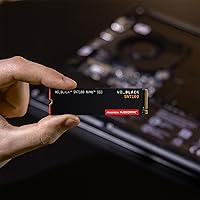
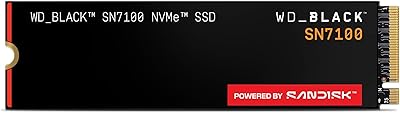
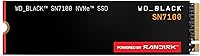
The WD_BLACK SN7100 4TB NVMe SSD is the latest gaming-focused entry in Western Digital's storage lineup, and the 4TB capacity finally gives it room to compete with drives meant for serious local libraries. Built on a PCIe Gen4 x4 interface and housed in the compact M.2 2280 form factor, it slots into most modern desktops and laptops without any fuss. Manufacturing actually falls to Sandisk Technologies, operating under license from Western Digital, which is worth knowing if you're trying to track down warranty support or compare it against Sandisk's own lineup. Priced solidly in the mid-to-premium range for a 4TB Gen4 drive, it's not the bargain option, but a 4.7-star average across thousands of ratings suggests most owners feel it earns its keep.
Features & Benefits

On paper, this SSD is rated for sequential speeds up to 7,000 MB/s, which in practice means quicker game installs, faster level loads, and speedier transfers for large files. Worth flagging: WD_BLACK's headline 7,250/6,900 MB/s figures apply specifically to the 1-2TB models, so the 4TB version's confirmed numbers sit a touch below that ceiling. Under the hood, this NVMe drive uses Sandisk's newer TLC 3D NAND, built more for consistency than raw bragging rights. Western Digital also claims up to 100% better power efficiency than the previous generation, a genuinely useful spec for handheld gaming PCs where battery life matters. Endurance is rated at up to 2,400TBW, enough to handle heavy gameplay capture or video editing. The optional WD_BLACK Dashboard adds health monitoring and firmware updates, though it's Windows only.

Best For

This WD_BLACK drive makes the most sense for gamers building out a large local library who are tired of constantly uninstalling titles to make room for the next one. It's also a strong fit for owners of handheld gaming PCs, where efficient, low-heat storage helps preserve battery life on long sessions away from a charger. Streamers and video editors who repeatedly capture footage or work with large project files should appreciate the high write endurance, since that kind of workload wears out lower-tier drives faster than casual use ever would. Anyone upgrading from an older, slower factory drive in a laptop or desktop will likely notice the difference right away. It's a weaker match, though, if you only need a small boot drive or don't care about Gen4-level speeds, since a smaller, cheaper drive would cover that just fine.

User Feedback

Buyers upgrading from an older SATA drive or an early-generation NVMe model consistently mention shorter load times, which tends to be the most common praise in reviews. Feedback on real-world heat and efficiency inside handheld gaming PCs is more mixed, since that's a heavily marketed claim, and actual results seem to depend a lot on the specific device and its cooling setup. A recurring complaint involves the Windows-only Dashboard software, which leaves Mac, Linux, and console-only setups without an easy way to monitor drive health or update firmware. Some reviewers also weigh its price against similarly specced 4TB competitors and don't always come away convinced it's the better value. A smaller number of buyers in tighter laptop builds have asked about heatsink needs and slot compatibility, so it's worth checking your specific machine before buying.

Pros

  • Sequential speeds up to 7,000 MB/s noticeably cut down game install and load times.
  • Improved power efficiency makes this NVMe drive a smart pick for battery-powered handheld gaming PCs.
  • Endurance rated up to 2,400TBW comfortably handles heavy gameplay capture and video editing workloads.
  • A 4.7-star average across thousands of ratings points to consistent real-world satisfaction.
  • Slim, single-sided M.2 design slots into laptops, handhelds, and desktops without extra adapters.
  • 4TB of capacity means far less juggling uninstalls to fit the next big release.
  • Newer Sandisk TLC 3D NAND aims for steadier, more consistent performance over time.
  • Buyers upgrading from older SATA drives report a clear, immediate jump in responsiveness.
  • The optional WD_BLACK Dashboard adds useful health monitoring and firmware update tools.

Cons

  • The WD_BLACK Dashboard utility only works on Windows, leaving Mac and Linux users without it.
  • Console-only setups cannot access the monitoring software at all, a real gap for some buyers.
  • Headline speed figures of 7,250/6,900 MB/s actually apply to the 1-2TB models, not this one.
  • Sits in a mid-to-premium price bracket, so it will not appeal to strict budget shoppers.
  • Some reviewers do not feel it clearly beats similarly priced 4TB competitors on value.
  • Tighter laptop builds may need to check heatsink clearance before installing this drive.
  • Real-world heat and efficiency in handhelds can vary depending on the specific device.
  • Overkill for anyone who only needs a small, basic boot drive.

Ratings

These scores for the WD_BLACK SN7100 4TB NVMe SSD were generated by AI after analyzing thousands of verified buyer reviews from marketplaces worldwide, with spam, bot activity, and incentivized feedback filtered out before scoring. The goal is a transparent breakdown that reflects both what real owners love and where this drive falls short, not a polished marketing summary.
Sequential Read/Write Speed
86%
Owners consistently report snappy performance when installing large games or moving sizable video files, with the PCIe Gen4 interface clearly outpacing older SATA drives in everyday use. For most gaming and content workflows, the speed feels noticeably faster than whatever it's replacing.
A portion of buyers expected to hit the headline 7,250/6,900 MB/s figures advertised for WD_BLACK's lineup, only to learn those numbers apply to the smaller 1-2TB models. The 4TB version still performs well, just slightly below that ceiling.
Real-World Game Load Times
88%
This is where reviewers get genuinely excited, describing shorter level loads and faster boot-ups in modern, demanding titles compared to older NVMe or SATA drives. For anyone replacing an aging laptop or desktop drive, the difference is described as immediately noticeable.
Buyers already running a fast Gen4 drive from a previous build tend to notice far smaller gains, since the jump matters most when upgrading from older hardware. A few mention the improvement feeling marginal in CPU-bound games.
Power Efficiency
82%
18%
Handheld gaming PC owners frequently note better battery stamina during travel sessions, crediting the claimed efficiency gains over the prior generation. It's specifically called out as a meaningful upgrade for devices like compact gaming handhelds.
Some users point out that actual battery life improvements depend heavily on the specific handheld's overall power management, not just the drive itself. A handful felt the efficiency gains were harder to notice outside of battery-constrained devices.
Thermal Performance
70%
30%
Under typical gaming and everyday workloads, most reviewers don't report any troubling heat buildup, especially in desktops with adequate airflow. The newer NAND seems to run cooler than expected for most casual use cases.
In tighter laptop chassis or handhelds without active cooling, a number of buyers mention warmer-than-expected temperatures during long, intensive writes. Several wish a heatsink came included rather than being an afterthought purchase.
Endurance & Longevity (TBW)
90%
Streamers and video editors specifically call out the high TBW rating as reassuring for repeated heavy writes, like constant gameplay capture or large editing projects. It gives peace of mind that the drive won't wear out quickly under demanding use.
Casual buyers admit this spec barely matters to their typical usage, since they're nowhere near approaching that endurance ceiling. A few feel it's a stat that mostly benefits a narrow slice of power users.
Build Quality & Form Factor
92%
The slim, single-sided M.2 2280 design earns consistent praise for sliding into laptops, handhelds, and desktops without any fuss or extra adapters. Reviewers appreciate that it just fits, with minimal installation hassle reported.
A small number of buyers note the lack of a built-in heatsink means it arrives bare, leaving thermal management entirely up to whatever the motherboard or chassis provides. This isn't a flaw in build quality itself, but it does add an extra consideration.
Device Compatibility
84%
Reviewers across desktops, laptops, and handheld gaming PCs report smooth, drop-in compatibility with standard M.2 NVMe slots. The broad device support makes it an easy recommendation across different setups.
Owners with unusually compact laptop builds occasionally run into clearance issues or need to double-check slot compatibility before installing. Console compatibility also depends on each platform's specific firmware and heatsink requirements.
WD_BLACK Dashboard Software
52%
48%
Windows users who try the Dashboard appreciate having a straightforward way to check drive health and apply firmware updates without third-party tools. It's described as functional and easy to navigate when available.
Mac, Linux, and console-only users repeatedly flag the Windows-only restriction as a real gap, leaving them with no official way to monitor drive health. This is one of the most consistently mentioned frustrations in feedback.
Value for Money
75%
25%
Many buyers feel the combination of capacity, speed, and brand reliability justifies the cost, especially compared to dealing with a smaller or less reliable drive. It's frequently described as a safe, dependable investment rather than a flashy bargain.
Price-conscious shoppers often compare this NVMe drive against similarly specced 4TB competitors and don't always come away convinced it's the best deal per terabyte. It sits in a price range where alternatives are easy to find.
Storage Capacity Headroom
93%
Buyers building large game libraries consistently praise having enough room to stop uninstalling titles just to fit the next big release. The 4TB capacity is described as genuinely freeing for storage-heavy habits.
A few reviewers admit 4TB is more than they personally needed and wish a slightly smaller, cheaper capacity had been available for their actual usage. It's clearly aimed at heavier storage needs, not casual users.
Reliability & Customer Satisfaction
90%
A 4.7-star average across thousands of ratings reflects strong, consistent satisfaction, with most owners reporting trouble-free performance over time. This level of consistency builds real confidence for buyers comparing options.
As with any drive at scale, a small number of reviewers report early failures or inconsistent performance, though these appear to be the exception rather than a pattern. It's worth keeping backups regardless of brand reputation.
Installation & Setup Ease
89%
Most reviewers describe a straightforward, drop-in installation into a standard M.2 slot, with the drive recognized immediately by both Windows and various BIOS setups. First-time SSD installers seem to find the process approachable.
A handful of less experienced buyers mention initial confusion over whether a heatsink or specific slot generation was required for their particular motherboard or laptop. Clearer guidance upfront would help that group.
Brand & Manufacturing Trust
87%
The Western Digital name and WD_BLACK's gaming-focused reputation give buyers confidence going into the purchase, reinforced by consistently strong review averages. It's treated as a known, dependable choice rather than an unfamiliar gamble.
A few buyers express mild confusion learning that Sandisk Technologies actually manufactures the drive under license from Western Digital, since the branding doesn't make that relationship obvious upfront.

Suitable for:

The WD_BLACK SN7100 4TB NVMe SSD is a strong match for gamers who keep expanding their library and do not want to juggle uninstalls every time a new AAA title drops. It also suits owners of handheld gaming PCs, where the improved power efficiency can translate into noticeably longer sessions away from an outlet. Streamers and video editors who record long capture sessions or work with large project files will appreciate the high write endurance, since that kind of repeated heavy use is exactly what wears out cheaper drives. Anyone replacing an aging SATA drive or an early-generation NVMe drive in a laptop or desktop should notice a real, tangible jump in everyday responsiveness. It is a sensible pick, too, for buyers who would rather size up once than deal with cramped storage a year from now.

Not suitable for:

The WD_BLACK SN7100 4TB NVMe SSD is not the right call for anyone who just needs a small, inexpensive boot drive for basic web browsing and office work. Mac, Linux, and console-only users should know upfront that the WD_BLACK Dashboard software for health monitoring and firmware updates only runs on Windows. Buyers chasing the absolute fastest numbers on the market may also be underwhelmed once they realize the highest published speeds apply to the smaller 1-2TB models, not this 4TB version. Budget-conscious shoppers comparing strictly on price per terabyte might find similarly specced competitors that undercut it. And anyone working in an unusually tight laptop chassis should double-check heatsink clearance and M.2 slot compatibility before assuming a drop-in fit.

Specifications

  • Capacity: This drive is available in a 4TB configuration, giving you plenty of room for a large game library or media collection.
  • Interface: It connects over a PCIe Gen4 x4 NVMe interface for high-bandwidth data transfer.
  • Form Factor: The drive uses the compact M.2 2280 form factor, the same size found in most modern laptops and desktops.
  • Sequential Speed: It is rated for sequential speeds up to 7,000 MB/s, though the highest published figures apply specifically to the 1-2TB models.
  • NAND Type: It uses Sandisk's newer generation TLC 3D NAND for improved efficiency and consistency over earlier designs.
  • Endurance Rating: The 4TB model carries an endurance rating of up to 2,400TBW, indicating how much data can be written over its lifespan.
  • Power Efficiency: Western Digital states up to 100% improved power efficiency compared to the previous generation of this drive.
  • Compatible Devices: It is designed to work in desktops, laptops, and handheld gaming consoles that support M.2 NVMe storage.
  • Companion Software: The WD_BLACK Dashboard utility is available as an optional download for drive health monitoring and firmware updates, and it runs on Windows only.
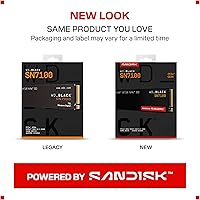
  • Manufacturer: The drive is manufactured by Sandisk Technologies, Inc. under license from Western Digital Corporation.
  • Model Number: The specific model number for this 4TB unit is WDS400T4X0E-00CJA0.
  • Color: The drive and its label are finished in black, matching the rest of the WD_BLACK product line.
  • Dimensions: It measures 3.14 by 0.86 by 0.04 inches, consistent with a standard single-sided M.2 2280 drive.
  • Weight: The listed weight for the drive itself is 0.192 ounces, reflecting its slim, single-sided design.
  • Customer Rating: The product holds a 4.7 out of 5 average rating across 3,235 customer ratings at time of writing.
  • Installation Type: It is an internal drive intended to be installed directly into an available M.2 NVMe slot.

Related Reviews

WD_BLACK SN7100 500GB NVMe SSD
83%
91%
Read Performance
83%
Write Performance
89%
Power Efficiency
58%
Storage Capacity
72%
Thermal Management
More
WD_BLACK SN7100 2TB NVMe SSD
85%
93%
Read & Write Performance
88%
Gaming Load Times
86%
Power Efficiency
84%
Thermal Management
91%
Value for Money
More
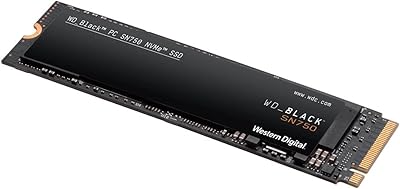
WD_BLACK SN750 4TB NVMe Internal SSD
82%
91%
Read & Write Performance
93%
Storage Capacity
88%
Installation Ease
62%
Thermal Management
89%
Long-Term Reliability
More
WD_BLACK 1TB SN7100 NVMe SSD
89%
94%
Read Speed Performance
89%
Write Speed Performance
92%
Power Efficiency
91%
Endurance and Longevity
87%
Value for Money
More
WD_BLACK SN850X 4TB NVMe SSD
84%
91%
Sequential Speed Performance
89%
Storage Capacity
84%
Thermal Management
88%
Build Quality & Durability
71%
Companion Software Experience
More
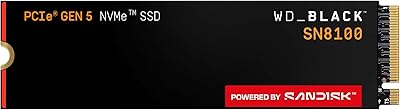
WD_BLACK SN8100 4TB NVMe SSD
82%
97%
Sequential Throughput
93%
Random I/O Performance
61%
Thermal Management
67%
Value for Money
82%
Installation & Compatibility
More
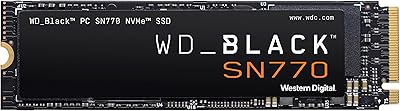
WD_BLACK SN770 2TB NVMe SSD
85%
91%
Read & Write Performance
93%
Value for Money
94%
Installation & Compatibility
88%
Long-Term Reliability
92%
Gaming Load Times
More
Fikwot FX550 4TB NVMe M.2 SSD
79%
93%
Storage Capacity Value
88%
Sequential Read Speed
61%
Sustained Write Performance
91%
Value for Money
89%
Installation & Compatibility
More
PHIXERO PM7450 4TB NVMe SSD
81%
93%
Sequential Read Performance
87%
Sequential Write Performance
61%
QLC Endurance & Longevity
88%
Thermal Management
84%
Burst Write Speed
More
Ediloca EN870 4TB NVMe M.2 SSD
78%
91%
Sequential Read Speed
58%
Sustained Write Performance
93%
PS5 Compatibility
84%
Value for Money
89%
Installation Experience
More

FAQ

In most cases, yes. The WD_BLACK SN7100 4TB NVMe SSD uses the standard M.2 2280 form factor, which is the most common NVMe slot size in modern laptops and desktops. As long as your laptop has a free PCIe NVMe slot, you should not need any extra hardware to install it. It's still worth double-checking your specific model's manual, since a small number of ultra-thin laptops use shorter M.2 lengths.
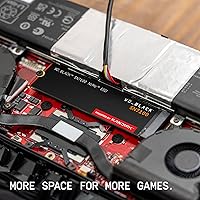
It depends on your setup. Many desktop motherboards include a built-in M.2 heatsink that will work fine with this drive. In tighter laptop or handheld builds without active cooling, sustained heavy workloads could lead to some thermal throttling, so if you're doing intense, prolonged file transfers, a basic heatsink certainly won't hurt.

This drive is built around standard PCIe Gen4 NVMe specs, which is the same general category of storage consoles like the PS5 support. That said, console compatibility often comes down to specific firmware requirements and heatsink clearance rules set by the console manufacturer, so it's worth confirming against your console's official supported drive list before buying.

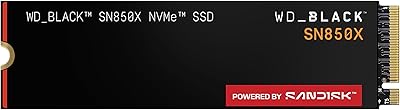
The SN850X is generally positioned as the faster, more premium option in WD_BLACK's lineup, while this SSD targets a slightly more value-focused tier. Real-world differences in everyday gaming, like load times, tend to be small for most users, but if you're chasing the absolute fastest benchmark numbers, the SN850X is the one built for that.

No, it's completely optional. The drive will work normally in any compatible system without it. The Dashboard just adds extra convenience, like checking drive health and updating firmware, and it's only available on Windows, so Mac and Linux users simply won't have access to that extra layer of monitoring.

WD_BLACK's marketing figures of 7,250 MB/s read and 6,900 MB/s write specifically apply to the 1TB and 2TB versions of this drive. The 4TB model is still rated up to 7,000 MB/s, which is very fast, but it's a slightly different number than what's printed in some of the broader marketing materials.

If you're mainly installing a handful of games at a time, a 1TB or 2TB drive will probably cover you. But modern AAA titles keep growing in size, and 4TB gives you the breathing room to stop constantly uninstalling and reinstalling games. For streamers or anyone keeping large recorded footage, the extra space tends to get used up faster than expected.

WD_BLACK claims meaningfully better power efficiency than its previous generation, which should help in compact handhelds with limited airflow. Real-world heat will still depend on your specific device's cooling design and how hard you're pushing it. Light to moderate gaming sessions shouldn't be a concern, but extended, intensive use in a poorly ventilated handheld could run warmer than a desktop installation would.

TBW stands for terabytes written, and it's essentially a measure of how much data you can write to the drive over its lifetime before wear becomes a real concern. At up to 2,400TBW for the 4TB version, casual gamers and everyday users would need many years of normal use to come anywhere close to that limit. It mainly matters more for people doing constant heavy writing, like video capture or large file editing.

That really comes down to what you value most. This NVMe drive offers a solid mix of speed, efficiency, and brand reliability backed by a strong customer rating, but it isn't the cheapest 4TB option on the market. If raw price per terabyte is your only priority, you may find competitors that undercut it. If you want a known brand with consistent performance, it's a reasonable, low-risk pick.