
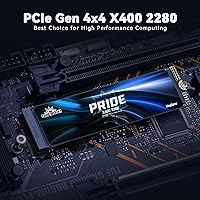


Overview

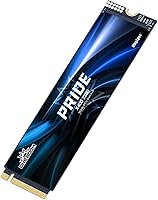
The KingSpec X400 512GB Gen4 NVMe SSD enters a crowded but price-sensitive market where buyers want Gen4 speeds without paying flagship prices. KingSpec has built a quiet reputation in the budget-to-mid-range storage space over the years, and this Gen4 NVMe drive is aimed squarely at gamers, PS5 upgraders, and creators watching their spending. At 512GB, it works well as an OS or boot drive and makes a solid PS5 expansion option, though anyone planning to stockpile a large game library or raw video footage will likely outgrow it sooner than expected. The performance numbers look strong on paper — what actually matters is how they hold up under real workloads.

Features & Benefits

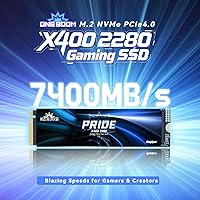
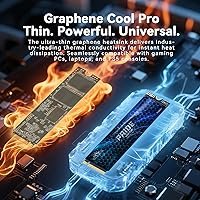
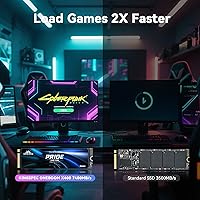
Running on a PCIe 4.0 x4 interface, the KingSpec X400 hits sequential read speeds up to 7300MB/s — roughly double what a Gen3 drive can offer in the same slot. In practice, that means noticeably snappier game loads and faster file transfers when the drive is working within its SLC cache. That cache is where things get nuanced: the 3D TLC NAND underneath performs well for typical burst workloads, but sustained write speeds can taper off once the cache fills during large back-to-back transfers. The graphene heatsink handles thermals passively, and the standard M.2 2280 footprint means it drops into most modern systems without adapter fuss. A 3-year warranty and 1800TBW endurance rating round things out reasonably for this price bracket.

Best For

This budget Gen4 SSD makes the most sense for a few specific buyer types. PS5 owners needing a storage upgrade without spending on a premium brand will find the value hard to argue with — just confirm heatsink clearance in the PS5 bay before buying, since fit can vary by revision. PC builders using it as a dedicated game partition or fast boot drive will get the most from its sequential speed advantages. Laptop upgraders coming from SATA or older Gen3 will notice a genuine day-to-day difference. Where it fits less naturally is as a primary drive for heavy 4K editing pipelines or large media archives — 512GB fills up faster than most creators anticipate.

User Feedback

With over 100 ratings and a 4.5-star average, the KingSpec X400 is holding up well for a brand without the name recognition of the big storage players. Buyers consistently highlight easy installation and a real speed improvement over whatever drive they replaced — those coming from SATA SSDs seem particularly satisfied. The more pointed criticism falls where you would expect for TLC NAND at this tier: write performance under heavy, sustained loads is not always as steady as the headline specs imply. A handful of buyers have raised fair questions about long-term reliability, which is a reasonable concern for any newer brand. That said, the overall reception is genuinely positive, with most reviewers clearly calibrating their expectations to the price point.

Pros

  • PCIe 4.0 x4 interface delivers up to 7300MB/s sequential read speeds, a substantial jump over Gen3 drives.
  • Standard M.2 2280 form factor fits desktops, gaming laptops, and PS5 expansion slots without adapters.
  • Graphene heatsink handles passive thermal management without requiring a separate cooler purchase.
  • Dynamic SLC caching keeps burst performance strong for typical day-to-day file transfers and game loading.
  • 1800TBW endurance rating is respectable for a value-tier drive used in light to moderate workloads.
  • S.M.A.R.T. support lets you monitor drive health over time without third-party hardware.
  • Three-year warranty provides a reasonable safety net at this price point.
  • Installation is straightforward — no tools required for most M.2 slots.
  • Idle power draw of 2.5mW keeps it efficient in battery-powered laptops.
  • Early buyer feedback sits at 4.5 stars across over 100 ratings, suggesting strong satisfaction for the price.

Cons

  • Sustained write speeds drop once the SLC cache fills, which affects large back-to-back file transfers.
  • 512GB fills up quickly with modern game installs, limiting usefulness as a standalone gaming library drive.
  • KingSpec lacks the long reliability track record of more established storage brands.
  • Long-term brand support and warranty claim responsiveness remain less proven compared to major competitors.
  • PS5 heatsink clearance is not universally guaranteed across all console revisions — buyers must verify before purchasing.
  • No publicly available detailed benchmark data from independent reviewers makes pre-purchase performance verification harder.
  • TLC NAND at this density tier is less suited to write-heavy professional workflows than pricier MLC alternatives.
  • Limited capacity options may force buyers to consider a different product line entirely if they need 1TB or more.

Ratings

The KingSpec X400 512GB Gen4 NVMe SSD earned its scores through AI-assisted analysis of verified global buyer reviews, with spam, bot-generated, and incentivized feedback actively filtered out before scoring. The results reflect both where this budget Gen4 SSD genuinely delivers and where real users ran into friction — nothing is glossed over. Strengths and pain points are weighted equally so you can make a genuinely informed call before buying.

Sequential Read Speed
88%
Users upgrading from Gen3 or SATA drives consistently reported faster game load screens and snappier OS boot times in real use. The 7300MB/s ceiling translates to a tangible daily experience, particularly when launching large game titles or opening heavy project files.
Peak sequential speeds are achieved under ideal, low-queue-depth conditions that do not always reflect everyday multitasking. Buyers running simultaneous background processes sometimes found the perceived speed gain less dramatic than the spec sheet implied.
Sustained Write Performance
61%
39%
For typical file operations — moving a few game folders, copying a moderate-sized video project, or installing software in batches — the dynamic SLC cache keeps write speeds feeling responsive and consistent enough for most users.
Once the SLC cache fills during a large back-to-back transfer, native TLC NAND speeds kick in and the drop is noticeable. Users copying very large archives or doing long raw video ingests flagged this as a real frustration, not just a theoretical limitation.
Value for Money
91%
Buyers repeatedly described this Gen4 NVMe drive as one of the most sensible purchases they made for their build or PS5 upgrade — getting PCIe 4.0 speeds at a price usually associated with Gen3 hardware. For the target use case, the cost-to-performance ratio is difficult to argue with.
The value proposition weakens if your workload pushes into sustained write territory regularly, since the performance ceiling in those scenarios does not quite match what the price suggests you are getting compared to slightly pricier TLC alternatives with larger cache allocations.
PS5 Compatibility
73%
27%
The included graphene heatsink means buyers do not need to source a separate cooler, which is one of the more annoying extra steps in a PS5 storage upgrade. Several confirmed PS5 users reported clean installation and functional performance within Sony's expansion bay.
Heatsink clearance is not universally guaranteed across all PS5 hardware revisions, and KingSpec does not publish detailed clearance specs per model. A small but vocal group of buyers flagged fitment uncertainty, which makes this a slightly more cautious recommendation for PS5 specifically.
Thermal Management
77%
23%
The graphene heatsink does real work during moderate gaming sessions and shorter rendering tasks, keeping the drive from throttling in typical desktop and laptop environments where airflow exists. Most users reported no unexpected slowdowns during two to three hour gaming stretches.
During extended, thermally demanding workloads like multi-hour 4K renders in a poorly ventilated enclosure, the passive heatsink reaches its limits. A handful of users in compact mini-ITX or fanless builds noted occasional thermal throttling under those conditions.
Installation Ease
93%
Installation feedback was overwhelmingly positive — the standard M.2 2280 footprint slots in without fuss across a wide range of motherboards and laptops, and buyers with no prior SSD experience reported getting the drive up and running in under ten minutes. No tools required in most scenarios.
The only friction point some users encountered was the lack of bundled cloning or migration software, meaning those transferring an existing OS installation had to source a third-party tool independently before they could complete the swap.
Build Quality
74%
26%
The drive feels solid in hand with no flex or cheap feel to the PCB, and the graphene heatsink is securely attached rather than loosely adhered. Buyers handling it during installation generally noted it looked and felt like a legitimate mid-tier component.
KingSpec does not share detailed information about the specific NAND controller or flash vendor used in this model, which makes it harder to independently assess long-term build reliability. Some buyers noted they would feel more confident with more transparent component sourcing.
Long-Term Reliability
62%
38%
The 1800TBW endurance rating and inclusion of Wear Leveling and Bad Block Management are legitimate protective features, and the 3-year warranty provides a baseline layer of assurance for buyers using this as a light-duty daily driver.
KingSpec does not have the multi-year reliability dataset that larger brands have accumulated, and user reviews — while positive — are still early-stage for this model. Buyers who prioritize long-term proven durability data will find the track record here thinner than they might like.
Capacity Adequacy
66%
34%
For buyers using this as a dedicated boot and OS drive, a game partition for their active titles, or a PS5 expansion for rotating storage, 512GB is a practical and cost-efficient entry point that covers everyday needs without overshooting.
Modern AAA game installs are relentless in their size growth, and 512GB fills up faster than many buyers anticipate — particularly those expecting to keep five or more large titles installed simultaneously. Upgraders coming from larger mechanical drives may feel constrained quickly.
Random Read & Write
71%
29%
For OS-level tasks — launching applications, reading game asset files, handling browser cache — random performance is solid and keeps the system feeling responsive during mixed daily workloads without the user ever thinking about it.
Random write speeds under heavy queue depth are not where this budget Gen4 SSD shines relative to more expensive NVMe options. Power users running database workloads or professional applications that hammer random writes will find the performance gap over premium drives more apparent here.
Warranty & Support
63%
37%
A 3-year warranty is a reasonable commitment for a value-tier drive, and most buyers operating within normal use parameters should not need to invoke it. The existence of S.M.A.R.T. monitoring at least means drive health problems can be caught early.
KingSpec's customer support infrastructure is less established than major storage brands, and accounts of the warranty claim process being slow or communication-heavy have surfaced in user feedback. Buyers in regions with limited local KingSpec service presence should factor this in.
Noise & Vibration
96%
As a solid-state drive with no moving parts, the KingSpec X400 operates in complete silence under all conditions. This makes it an ideal fit for noise-sensitive environments like home studios or quiet home office setups where mechanical drive hum was previously a minor but persistent irritant.
There is genuinely nothing meaningful to flag here — silent operation is a baseline characteristic of all NVMe SSDs. Listing noise as a concern for this product type would not reflect real user feedback.
Software & Ecosystem
54%
46%
S.M.A.R.T. compatibility means this budget Gen4 SSD works with widely available free health monitoring tools like CrystalDiskInfo on Windows, giving buyers a no-cost way to keep an eye on drive wear and temperature without needing proprietary software.
KingSpec does not offer a branded companion application for drive management, cloning, or performance tuning, which puts it behind brands that bundle value-added software. Buyers who prefer a guided migration experience or want manufacturer-backed tooling will need to fill that gap themselves.

Suitable for:

The KingSpec X400 512GB Gen4 NVMe SSD is a strong fit for budget-conscious buyers who want a genuine generational speed upgrade without stretching into premium territory. PS5 owners looking to add storage for faster game loading will find it a practical option, provided they verify heatsink clearance for their specific console revision. PC builders putting together an affordable gaming rig can use this Gen4 NVMe drive as a snappy boot or primary game drive where it will perform at its best handling typical burst workloads rather than sustained heavy writes. Laptop upgraders replacing an aging SATA or Gen3 drive will notice a meaningful real-world difference in everyday responsiveness and application load times. It also works well as a secondary scratch disk for light 4K editors who want faster export headroom without committing to a high-capacity, high-endurance solution.

Not suitable for:

Buyers expecting flagship-level consistency from the KingSpec X400 512GB Gen4 NVMe SSD may find the reality more nuanced than the headline specs suggest. Like most TLC NAND drives at this price tier, write performance can soften noticeably once the dynamic SLC cache is exhausted during large, sustained transfers — something heavy video editors or backup-intensive workflows will run into regularly. The 512GB capacity is also a genuine constraint for anyone planning to use this as their sole storage for a modern game library, since a handful of current titles can consume that space on their own. Users who prioritize long-term reliability data from an established brand name may feel more comfortable spending more on a drive with a longer track record. This budget Gen4 SSD is not the right call for professional storage workloads, NAS applications, or any environment where sustained write endurance is a daily requirement.

Specifications

  • Interface: Uses a PCIe 4.0 x4 NVMe interface, delivering up to 7300MB/s sequential read speeds.
  • Form Factor: Standard M.2 2280 dimensions fit the vast majority of modern desktops, laptops, and the PS5 expansion slot.
  • Capacity: Offers 512GB of usable flash storage, suitable for an OS drive, game partition, or PS5 expansion.
  • NAND Type: Built on 3D TLC NAND flash, a common choice in value-tier NVMe drives balancing density and cost.
  • Cache System: Employs dynamic SLC caching to boost burst transfer performance during typical workloads.
  • Endurance Rating: Rated at 1800TBW, reflecting the total data volume the drive is designed to handle over its lifespan.
  • Heatsink: Includes a multi-layer graphene heatsink for passive thermal dissipation during extended read and write sessions.
  • Idle Power: Draws approximately 2.5mW at idle, making it reasonably efficient for use in battery-powered laptops.
  • Warranty: Backed by a 3-year manufacturer warranty covering defects under normal operating conditions.
  • Health Monitoring: Supports S.M.A.R.T. diagnostics, allowing compatible software to track drive health and flag potential issues early.
  • Error Management: Features Bad Block Management and Wear Leveling to extend drive longevity and maintain data integrity over time.
  • Command Queuing: Native Command Queuing (NCQ) support helps optimize the order of read and write operations for better throughput.
  • Compatibility: Compatible with desktop PCs, gaming laptops, and the PS5 console expansion bay (heatsink clearance should be verified per PS5 revision).
  • Dimensions: Measures 3.94 x 2.36 x 0.59 inches, consistent with the standard M.2 2280 physical specification.
  • Weight: Weighs 0.705 ounces, adding negligible mass to any system it is installed in.
  • Backward Compat.: Backward compatible with PCIe 3.0 slots, though maximum speeds will be limited to Gen3 bandwidth in that configuration.
  • Installation: Designed for tool-free installation in M.2 slots equipped with a retention clip or screw-less mechanism.

Related Reviews
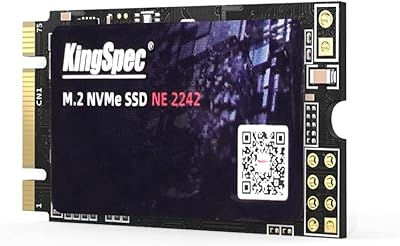
KingSpec NE-512 2242 512GB M.2 NVMe SSD
77%
88%
Value for Money
79%
Read Performance
71%
Write Performance
93%
Installation Ease
91%
Form Factor Compatibility
More
KingSpec NE 512GB M.2 NVMe SSD
74%
91%
Value for Money
83%
Read/Write Speed
94%
Installation Ease
88%
Compatibility
41%
NAND Transparency
More
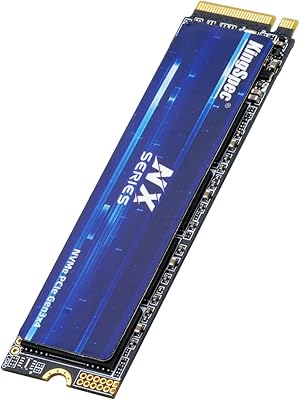
KingSpec NX Series 512GB NVMe M.2 SSD
72%
83%
Read Speed Performance
47%
Write Speed Transparency
91%
Value for Money
72%
Build & Reliability
88%
Compatibility
More
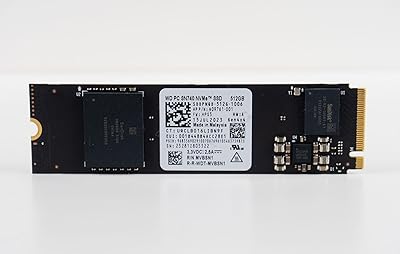
Western Digital 512GB Gaming Gen4 NVMe SSD
74%
88%
Read & Write Speed
81%
Value for Money
93%
Installation Ease
74%
Compatibility
62%
Storage Capacity
More
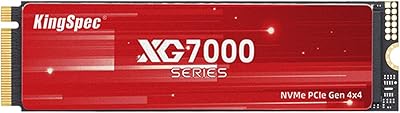
KingSpec XG7000 8TB NVMe M.2 SSD
79%
93%
Value for Money
84%
Sequential Read Speed
78%
Sequential Write Speed
76%
Thermal Performance
88%
Write Endurance
More
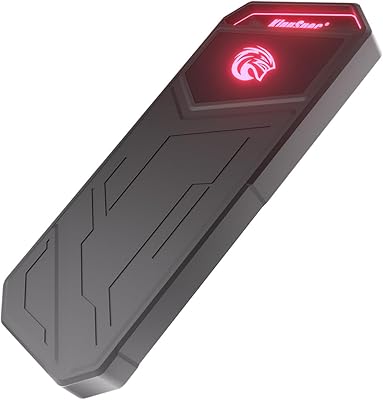
KingSpec Z5 512GB External SSD
80%
83%
Transfer Speed
88%
Build Quality
91%
Portability
67%
Device Compatibility
74%
RGB Lighting
More
KingSpec XG7000 4TB NVMe SSD
81%
91%
Sequential Read Speed
88%
Sequential Write Speed
83%
Thermal Management
89%
Value for Money
92%
PS5 Compatibility
More
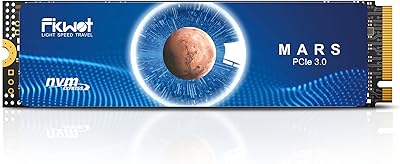
Fikwot FX550 512GB NVMe SSD
83%
91%
Performance
92%
Value for Money
88%
Read Speed
85%
Write Speed
89%
Reliability
More
KingSpec XG7000 1TB NVMe M.2 SSD
81%
88%
Read Speed Performance
79%
Write Speed Consistency
74%
Thermal Management
91%
Value for Money
86%
PS5 Compatibility
More
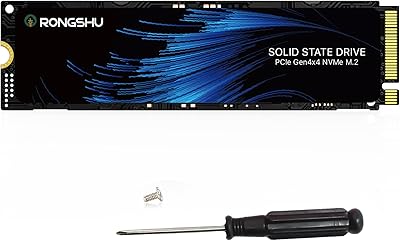
RONGSHU RS001 512GB PCIe 4.0 NVMe SSD
75%
91%
Value for Money
83%
Read Speed Performance
86%
PS5 Compatibility
53%
Brand Reliability
61%
Sustained Workload Performance
More

FAQ

It does use the correct M.2 NVMe interface that the PS5 expansion slot requires, and the included graphene heatsink means you are not buying a separate cooler. That said, heatsink thickness and width can vary by PS5 revision, so it is worth checking clearance dimensions against Sony's official expansion slot specifications before you commit.

Yes, genuinely. Moving from a SATA drive running around 550MB/s to a Gen4 NVMe drive at this level is a significant jump in sequential throughput. Game load times, OS boot speeds, and large file transfers all feel noticeably faster in day-to-day use.

It depends entirely on your library. Modern AAA titles routinely land between 60GB and 150GB each, which means three or four large games can already fill this drive. It works well as a dedicated partition for your most-played titles or as a primary OS and applications drive, but anyone planning to store a wide library on a single drive should seriously consider a 1TB or larger option.

This is a real consideration worth understanding before you buy. The KingSpec X400 512GB Gen4 NVMe SSD uses dynamic SLC caching to hit its peak write speeds, but once that cache fills during a very large continuous write — think copying a 100GB-plus file in one go — the drive falls back to native TLC NAND speeds, which are considerably lower. For typical gaming and everyday use this rarely matters, but for sustained large transfers it is worth knowing.

Yes, the drive is backward compatible with Gen3 slots. You just won't reach the full 7300MB/s sequential read figure — speeds will be capped at what PCIe 3.0 x4 can deliver, which is roughly half that. Still a solid performing drive even in that scenario.

KingSpec does not consistently bundle cloning software with this drive. If you are migrating from an existing OS installation, you will want to download a third-party tool like Macrium Reflect Free or use the free tier of a manufacturer-agnostic migration utility before you swap drives.

Graphene is a legitimate thermal conductor, and the multi-layer design here does help manage heat during moderate sustained workloads. For typical gaming sessions or occasional large transfers it performs well. During very long, intensive rendering or backup operations the drive may still throttle slightly, which is expected behavior for any passively cooled storage device.

Because this Gen4 NVMe drive supports S.M.A.R.T., any standard NVMe health tool will work with it. CrystalDiskInfo is a popular free option on Windows, and smartmontools works cross-platform including Linux. These tools let you check temperature, wear indicators, and read the drive's error logs at any time.

KingSpec offers a 3-year warranty, but as a smaller brand, the support process may not be as streamlined as larger names in the storage market. It is worth keeping your purchase receipt and registering the product if KingSpec offers that option, since proof of purchase will almost certainly be required for any warranty claim.

For light 4K editing — cutting together shorter projects, doing basic color work, or running proxy workflows — this budget Gen4 SSD provides enough sequential read speed to handle the workload without constant buffering. Where it starts to show limits is during long export sessions that push sustained writes over extended periods, or when your project files and scratch disk are all competing for space on a single 512GB drive.