Overview

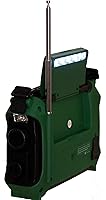
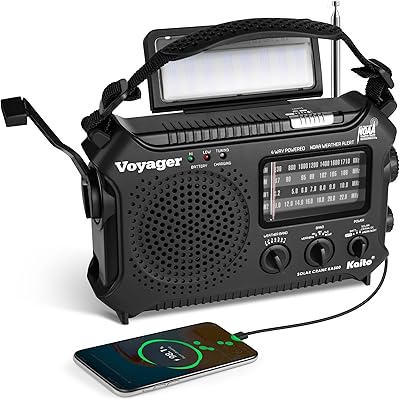
The Kaito KA500 Solar Dynamo NOAA Weather Radio is built for one purpose: keeping you informed and powered when the grid goes down. It draws from four power sources — a tilting solar panel, a hand-crank generator, rechargeable internal batteries, and standard AA cells — so you're rarely left without options. The NOAA weather alert capability is what sets it apart from casual portable radios; it receives official emergency broadcasts directly. Compact enough to fit in a go-bag yet sturdy enough for a home shelf, it also includes a USB port for charging your phone during an outage — a small but genuinely useful addition.
Features & Benefits

The tilting solar panel is one of the more thoughtful design choices here — it adjusts to follow the sun's angle, squeezing out more charge over the course of a day. That said, solar alone won't rapidly top off the battery; think of it as a slow, steady supplement rather than a quick fill. The brushless hand-crank generator is a more immediate power source when you need it fast. Beyond power, the Kaito KA500 covers AM, FM, shortwave, and NOAA bands, giving you access to local news, international broadcasts, and official weather alerts. The built-in LED flashlight and USB output round out a genuinely practical feature set.

Best For

This emergency radio is a natural fit for anyone who takes preparedness seriously. Campers and hikers will appreciate having reliable weather alerts in areas with no cell service, while households in hurricane or tornado country will want it close at hand during storm season. It's equally well-suited for off-grid cabins or remote travel where conventional power isn't available. The layered charging options — solar, crank, and battery — make this hand-crank weather radio appealing to preppers and survivalists who need a single device that keeps working regardless of conditions. If you're assembling a go-bag or disaster kit, this is a practical, well-rounded choice.

User Feedback

With a 4.0-star average across 146 ratings, reception is broadly positive, though buyers are candid about a few limitations. The multiple charging methods and solid, reasonably durable build earn consistent praise, as does the portability — it's light enough to toss in a bag without much thought. On the critical side, some users note that cranking to a meaningful charge takes real effort, and solar is noticeably slow, which fits its role as a supplemental source rather than a primary one. The USB phone-charging feature earns mixed reactions — functional in a genuine emergency, but not a fast charger by any measure. AM and FM reception is generally reliable and clear; shortwave performance is more variable.

Pros

  • NOAA weather alert reception works reliably during severe weather when phone networks are congested or down.
  • Four independent power sources mean you are almost never completely without a way to keep the radio running.
  • Compact and light enough at 1.25 pounds to pack into any emergency bag without second-guessing.
  • The tilting solar panel is a thoughtful design touch that actually improves energy capture compared to fixed flat panels.
  • AM and FM reception is clear and dependable for local news and emergency broadcasts in most suburban and urban settings.
  • Built-in LED flashlight removes the need to carry a separate light source during a power outage.
  • The brushless hand-crank generator feels more robust than the fragile cranks found on cheaper competing models.
  • USB phone charging, while slow, can provide just enough power to send a critical message during a multi-day outage.
  • Shortwave band adds access to international broadcasts that purely domestic AM/FM radios cannot reach.
  • Solid long-term reliability reported by buyers who have used this emergency radio for several years without major issues.

Cons

  • Solar charging is extremely slow — direct sunlight for hours yields only a modest increase in battery level.
  • Sustained hand-cranking is physically tiring and delivers only a short burst of listening time per session.
  • Shortwave reception is plagued by interference in urban areas, making it difficult to isolate clean signals.
  • USB output is too weak to meaningfully charge any modern smartphone in a reasonable amount of time.
  • The internal battery capacity is limited, so heavy use across multiple features drains it faster than expected.
  • No external antenna port means there is no easy fix when NOAA or shortwave signals are weak at your location.
  • The owner's manual lacks clear guidance on battery maintenance and optimal charging sequences.
  • Single-mode flashlight with no brightness adjustment drains battery noticeably during extended use.
  • Plastic casing, while adequate for storage, does not inspire confidence if the device is dropped on a hard surface.
  • Tuning shortwave frequencies requires patience and prior experience — first-time users often find it confusing.

Ratings

The Kaito KA500 Solar Dynamo NOAA Weather Radio has been scored by our AI system after analyzing verified buyer reviews from multiple global platforms, with spam, bot-generated, and incentivized feedback actively filtered out. Scores reflect real-world performance patterns — both what this hand-crank weather radio consistently gets right and where it falls short for everyday users. Strengths and frustrations are weighted equally so you get an honest picture before you buy.
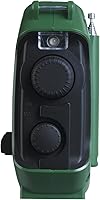
Power Versatility
88%
Buyers consistently praise the layered charging approach — having solar, hand-crank, AA batteries, and a rechargeable internal pack means there is almost always a fallback option available. During extended outages or backcountry trips, that redundancy genuinely reduces anxiety about being left without power.
No single charging method is fast or high-capacity on its own, so users who expect to rely on just one source often feel underserved. The AA battery backup helps bridge that gap, but it means keeping spares on hand at all times.
NOAA Weather Alert Reception
84%
For users in storm-prone regions, the NOAA alert function is the centerpiece feature, and most agree it works reliably. Several buyers specifically noted receiving clear, timely official broadcasts during severe weather events when phone service was unavailable.
A handful of users in rural or mountainous areas reported inconsistent NOAA signal strength depending on their location relative to broadcast towers. Reception quality can vary, and there is no external antenna port to compensate when signal is weak.
Solar Charging Performance
54%
46%
The tilting solar panel design is genuinely thoughtful — it allows the panel to be angled toward the sun rather than sitting flat, which does improve energy capture during peak daylight hours. For slow top-offs during a sunny afternoon outdoors, it works as intended.
Solar charging is slow by most users' accounts — treating it as a primary power source will leave you frustrated. Multiple reviewers noted it can take many hours of direct sunlight to produce a meaningful charge, making it a useful supplement rather than a standalone solution.
Hand-Crank Generator
67%
33%
The brushless generator mechanism feels more durable than cheaper alternatives, and buyers appreciate that it does not feel flimsy under sustained use. In a genuine emergency, knowing the crank is built to last adds real confidence.
Getting a useful charge out of the hand crank requires sustained, tiring effort. Several users found that a few minutes of cranking provides only a short burst of listening time, which becomes tedious during extended power outages or when sharing the device with older family members.
AM and FM Reception
79%
21%
Local AM and FM stations come in clearly for most users in suburban and urban settings. Buyers assembling emergency kits specifically called out the FM reception as reliable enough for real news monitoring during disasters.
Reception drops noticeably in remote areas or inside concrete buildings without repositioning the antenna. A few users compared it unfavorably to dedicated home radios, noting the audio clarity is adequate but not exceptional at the edges of signal range.
Shortwave Reception
61%
39%
Shortwave coverage adds a dimension that pure AM/FM radios lack, allowing access to international broadcasts and a wider range of frequencies. For preparedness enthusiasts who value shortwave as a backup information source, having it included at this price tier is a genuine plus.
Shortwave performance is the most inconsistent band on this radio. Users with prior shortwave experience note significant interference and difficulty isolating clean signals, particularly in urban environments with high electrical noise. It works, but seasoned shortwave listeners will find it underwhelming.
Build Quality and Durability
76%
24%
The overall construction feels solid for an emergency-use device — the casing does not flex excessively, and the crank mechanism holds up across repeated use without wobbling or loosening. Several buyers who have owned theirs for years report no significant wear issues.
The plastic housing is functional but not rugged. It would not fare well against serious drops onto hard surfaces, and some users noted the antenna feels a bit loose at the base over time. It is built for preparedness storage, not for rough daily handling.
Portability and Form Factor
82%
18%
At around 1.25 pounds and compact enough to fit inside a standard emergency go-bag, this hand-crank weather radio is genuinely grab-and-go friendly. Campers and hikers noted it does not add burdensome weight when packed alongside other gear.
The dimensions are slightly bulkier than ultra-compact competitors, which matters if bag space is at a premium. The form factor is well-suited to shelf storage or car kits, but minimalist backpackers might find smaller alternatives more practical for weight-sensitive trips.
USB Phone Charging
58%
42%
In a true emergency, being able to push enough charge into a phone to send a text or make a quick call is a real lifeline. Several users specifically credited this feature for helping them communicate during multi-day outages when no other power source was available.
Charging speed is very slow — this is not a power bank replacement. Users expecting to meaningfully charge a modern smartphone will be disappointed, as the output is limited and the source batteries drain quickly when the USB port is in use.
LED Flashlight
71%
29%
The integrated flashlight is bright enough to navigate a dark room or find supplies in a power outage, and having it built into the radio means one less separate item to manage in an emergency. Buyers with young children found it particularly reassuring as a dual-function tool.
The flashlight is single-mode with no adjustable brightness, and battery draw is noticeable during extended use. It is a useful bonus feature, but it is not a substitute for a dedicated torch if you need sustained, high-output illumination over hours.
Ease of Use
77%
23%
The control layout is straightforward, and most buyers had the radio tuned and operating within a few minutes of unboxing. For older users or those who rarely interact with multi-band radios, the intuitive design removes a meaningful barrier to actually using it during stressful emergencies.
Tuning shortwave frequencies requires some patience and familiarity, which can be confusing for first-time shortwave users. The manual could also be clearer on the correct charging sequence for the internal battery pack, leading to some early confusion in reviews.
Value for Money
73%
27%
At its mid-range price point, the combination of NOAA alerts, multiple power inputs, a flashlight, and USB output represents solid overall value. Buyers shopping specifically for emergency preparedness equipment found the feature-to-cost ratio competitive within its category.
Buyers expecting premium performance in every area — particularly solar speed and phone charging — sometimes feel the price overpromises. If you only need one or two of its functions, cheaper single-purpose devices might serve you better for less money.
Setup and Initial Configuration
74%
26%
Out of the box, the radio requires minimal setup — insert batteries or begin charging, extend the antenna, and you are essentially ready to use it. The straightforward approach suits buyers who want a device that works without a lengthy onboarding process.
The included documentation is thin on troubleshooting guidance. A few users had questions about optimal solar charging positioning and battery maintenance that were not answered clearly in the manual, leading them to rely on third-party forums for answers.

Suitable for:

The Kaito KA500 Solar Dynamo NOAA Weather Radio was built for people who think ahead — and it shows. Households in hurricane corridors, tornado belts, or wildfire-prone areas will get the most out of it, particularly for its direct NOAA weather alert reception that keeps working when cell towers go down. Campers and hikers who venture into areas without reliable mobile coverage will appreciate having AM, FM, and shortwave bands available alongside official weather broadcasts in a single portable unit. At just over a pound, it fits comfortably in a go-bag without becoming a burden, making it a practical addition to any emergency preparedness kit. Off-grid cabin owners and frequent travelers to remote locations will also find the layered power options — solar, hand-crank, rechargeable battery, and AA cells — genuinely reassuring when conventional power is not available for days at a time.
Not suitable for:

If you are looking for a high-performance dedicated radio or a fast portable charger, the Kaito KA500 Solar Dynamo NOAA Weather Radio will likely leave you wanting more in those specific areas. Serious shortwave listeners who need clean, interference-free reception across a wide frequency range should look at purpose-built shortwave receivers instead — this radio covers the band, but not with the fidelity that enthusiasts expect. Anyone counting on the solar panel or hand crank to rapidly charge their phone during an emergency will be frustrated; both power sources are slow by design and better suited to keeping the radio itself running than topping off a modern smartphone. Buyers who need a rugged, drop-resistant device for demanding fieldwork or construction environments should also look elsewhere, as the plastic housing is durable enough for storage and careful use but not built for punishment. If your primary need is a reliable phone charging solution, a dedicated power bank will serve you far better.
Specifications

  • Dimensions: The unit measures 8.3″ long by 2.3″ wide by 5.3″ high, making it compact enough to fit inside a standard emergency go-bag.
  • Weight: At 1.25 pounds (20 oz) including batteries, the radio is light enough for extended carry without adding meaningful burden to a packed bag.
  • Band Coverage: Receives AM, FM, shortwave (SW), and NOAA weather band frequencies, covering local broadcasts, international shortwave stations, and official emergency alerts.
  • Power Sources: Supports four independent power inputs: a built-in tilting solar panel, a hand-crank brushless generator, a rechargeable internal battery pack, and 3 AA alkaline batteries.
  • Generator Type: The hand-crank uses a brushless AC-type generator, which is generally more durable and smoother to operate than standard brushed alternatives found in lower-cost models.
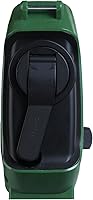
  • Solar Panel: The integrated solar panel is designed to tilt and adjust angle relative to the sun, improving energy capture during daylight hours compared to fixed flat-panel designs.
  • Battery Backup: Three AA batteries are included in the box and serve as a secondary power source when the rechargeable internal pack is depleted.
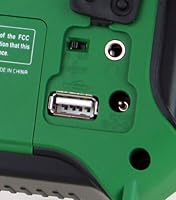
  • USB Output: A single USB port provides low-output power for charging mobile devices in emergencies; it is intended for trickle charging rather than rapid power delivery.
  • Flashlight: A built-in single-mode LED flashlight is integrated into the body of the radio for use during power outages or low-light emergency situations.
  • NOAA Alert: The radio includes dedicated NOAA weather band reception for receiving official National Weather Service broadcasts and emergency alert transmissions.
  • Model Number: The official model designation is KA500IP-GRN, manufactured by Hisonic International under the Kaito brand name.
  • Color Option: The reviewed unit is available in green; other color variants may be offered under different model suffix codes.
  • Included Contents: The package includes the radio unit, 3 AA batteries, and a basic instruction manual; no USB charging cable is included in the standard box.
  • Manufacturer: Produced by Hisonic International, Inc., a company that markets emergency and consumer radios under the Kaito brand in North America.
  • Availability Status: As of the listed product data, this model has not been discontinued by the manufacturer and remains in active production.

Related Reviews
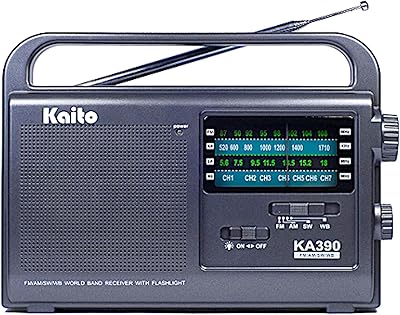
Kaito KA390 Portable Weather Radio
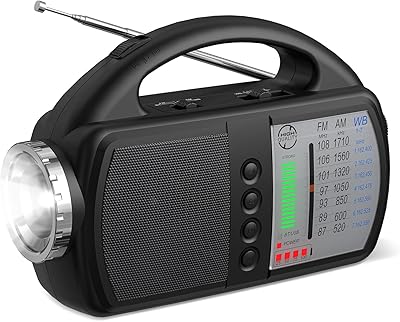
76%
88%
Value for Money
86%
NOAA Weather Reception
81%
FM Reception
67%
Shortwave Reception
78%
Speaker Quality
More
Audiocrazy AM FM NOAA Emergency Weather Radio
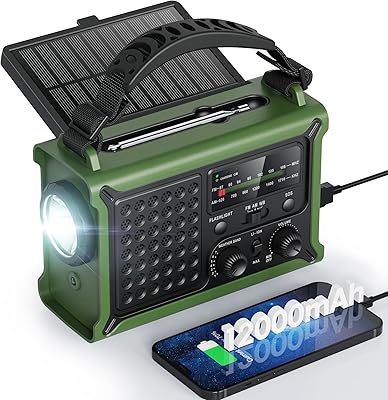
67%
83%
NOAA Reception
61%
Battery Life
58%
Build Quality
79%
Value for Money
62%
Bluetooth Performance
More
Raynic NOAA Weather Radio 12000mAh
86%
88%
Performance in Emergencies
91%
Charging Options
83%
Signal Reception
89%
Flashlight & Lamp Effectiveness
85%
Ease of Use
More
Rychi TMUS-MD319 NOAA Weather Alert Radio
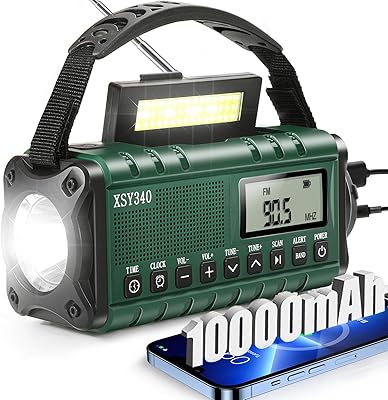
75%
86%
Alert Reliability
71%
S.A.M.E. Programming Ease
89%
External Warning Light
63%
Battery Backup Performance
67%
Build Quality
More
FQBLXY H27 30000mAh Emergency Weather Radio
67%
83%
Value for Money
71%
Battery Capacity
44%
Solar Charging
41%
Hand Crank Efficiency
67%
Radio Reception
More
Midland ER210 Emergency Weather Radio
75%
91%
NOAA Reception Quality
83%
Power Source Versatility
78%
Battery Life
89%
Ease of Use
67%
Flashlight Performance
More
Eoxsmile CR1009Pro Emergency Weather Radio
79%
88%
Value for Money
91%
NOAA Weather Alert
67%
Battery Life
83%
Charging Versatility
74%
Build Quality
More
Leaton Emergency NOAA Weather Alert Radio
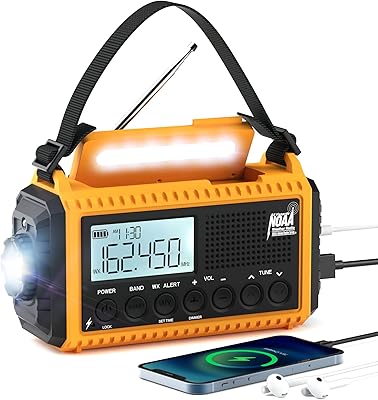
85%
88%
Battery Life & Charging Options
85%
Weather Alerts & Reception
90%
Build Quality & Durability
93%
Portability & Size
87%
Ease of Use
More
PPLEE 1009Pro-G NOAA Emergency Weather Radio
84%
94%
Power Options Versatility
88%
Build Quality and Durability
81%
Ease of Use
90%
Portability and Size
75%
Sound Quality (Radio Reception)
More
PPLEE CR1009 5000mAh Emergency Weather Radio
74%
88%
NOAA Reception Reliability
91%
Power Redundancy
83%
Battery Life
47%
Solar Charging Performance
44%
Hand Crank Efficiency
More

FAQ

Realistically, solar charging on this radio is quite slow — in strong, direct sunlight you might get 30 to 60 minutes of listening time after several hours of sun exposure. Think of the solar panel as a slow top-off mechanism rather than a primary charging method. It works best when left in a sunny window or outdoors for most of the day while the radio is not in active use.

You can get a small amount of charge into your phone, but do not expect it to be quick. The USB output on this hand-crank weather radio is low-wattage, so it is best used to push just enough charge into a phone to send a message or make a brief call — not to bring a dead battery back to meaningful capacity. If fast phone charging during emergencies is a priority, pairing this radio with a dedicated power bank is a smarter approach.

You tune into the NOAA weather band manually by selecting the WX band position on the dial. The radio does not have an automatic alerting function that wakes from standby like some higher-end dedicated weather alert radios do. That said, once tuned in, it receives official National Weather Service broadcasts clearly in most areas with good signal coverage.

Several minutes of steady cranking will typically give you around 20 to 30 minutes of radio listening time, depending on volume level and which band you are using. The crank is more effective as a short-term top-up than as your main power strategy. For longer listening sessions during an emergency, the AA battery backup or the internal rechargeable pack will serve you better.

It is more of a bonus feature than a serious shortwave receiver. You can pick up strong international broadcasts on it, but experienced shortwave listeners will notice significant background noise and interference, particularly in urban environments. If shortwave is a core requirement for you, a purpose-built portable shortwave radio will give you noticeably better results.

The plastic casing is sturdy enough for careful long-term storage, but extreme heat — like the inside of a parked car during summer — can degrade the rechargeable battery over time. It is better stored at room temperature in a cool, dry location. If car storage is unavoidable, remove the AA batteries and check the internal battery health periodically.

Rechargeable batteries lose capacity over time even in storage, so it is a good idea to give the internal battery a top-up charge every few months. The AA battery backup is useful precisely for this scenario — fresh alkalines stored separately and inserted when you actually need the radio will ensure reliable operation even if the internal pack has self-discharged during long storage periods.

It is bright enough for navigating a dark room, finding supplies in a closet, or moving around your home during a power outage. Do not expect it to replace a dedicated flashlight for outdoor use or extended illumination — it is a single-mode light with no adjustable brightness, and running it continuously will draw down the battery noticeably faster.

The internal rechargeable battery is not designed for easy user replacement, which is a legitimate long-term consideration. The good news is that the AA battery backup means the radio remains functional even if the internal pack degrades significantly — you simply switch to alkaline cells. Some technically inclined users have replaced the internal battery themselves, but it requires opening the casing and is not officially supported.

For AM, FM, and NOAA bands, absolutely — tuning is straightforward and anyone can get it working within a few minutes. Shortwave is a different story; finding and holding a clear signal requires some patience and familiarity with how shortwave propagation works. If you are buying this primarily as an emergency preparedness radio rather than a hobbyist device, the learning curve for the core features is minimal.

Where to Buy