Overview

The PPLEE CR1009 5000mAh Emergency Weather Radio sits comfortably in the mid-range category — NOAA-certified, genuinely portable, and loaded with enough redundancy to make it a credible addition to any emergency preparedness kit. At roughly a pound and barely bigger than a thick paperback, it's easy to toss in a go-bag or keep on a shelf without it taking over space. What really sets it apart at this price point is the five-way charging system — something you rarely see outside of more expensive units. This isn't a high-fidelity listening device; it's a practical, no-frills tool built around reliability when things go wrong.
Features & Benefits

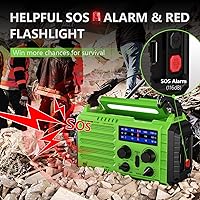
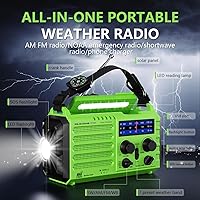
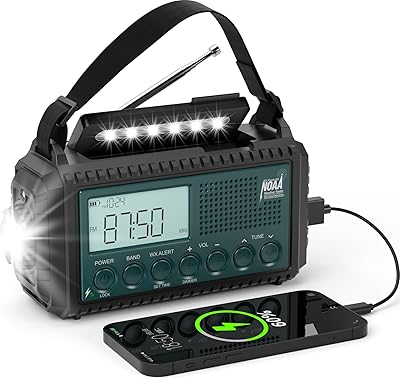
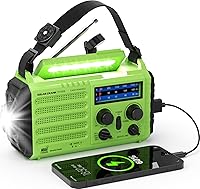
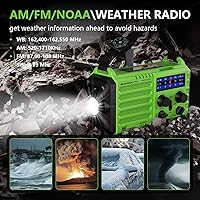
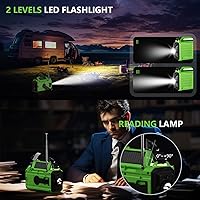
Power redundancy is the core story here. The PPLEE hand crank radio draws energy from a built-in rechargeable battery, solar panel, hand crank, USB input, or AAA batteries — meaning if one method fails, four others are waiting. The 5000mAh internal battery can partially charge a smartphone twice over while still running the radio and lights. There are two lighting modes: a bright LED flashlight for navigating in the dark and a softer reading lamp that won't blind you at 2 a.m. The SOS siren hits an ear-splitting 116dB. Reception spans AM, FM, shortwave, and NOAA weather bands, with a 3.5mm jack for private listening.

Best For

This multi-power survival radio makes the most sense for people living where severe weather is a real seasonal threat — think Gulf Coast hurricane season, Tornado Alley spring storms, or wildfire-prone Western states. It also suits campers and hikers who want one compact device to handle communication, lighting, and phone top-ups without hauling separate gear. The large physical volume knob and straightforward physical controls make it especially approachable for older users or anyone who doesn't want to wrestle with menus in the dark. Budget-conscious preppers who have been putting off building an emergency kit will find this a reasonable, well-rounded starting point.

User Feedback

Owners consistently praise the NOAA reception reliability and how quickly the device locks onto weather alerts — that core function delivers as advertised. Build quality also earns positive comments given the price. On the critical side, two limitations surface regularly: solar charging on a panel this small is genuinely slow, and most users treat the hand crank as a last resort rather than a real power source. AM and FM audio is functional but noticeably thinner than a dedicated portable radio. The flashlight brightness gets solid marks; the SOS alarm is described as legitimately loud. Buyers seem satisfied overall, as long as they arrive with realistic expectations about what a compact all-in-one unit can actually deliver.

Pros

  • NOAA weather alerts work reliably and lock on quickly — the most critical function delivers.
  • Five independent power sources mean you are rarely, if ever, completely without options.
  • The 5000mAh battery can top up a smartphone at least once, which matters during prolonged outages.
  • Dual lighting modes — a bright flashlight and a soft reading lamp — cover more scenarios than a single bulb.
  • At around one pound, this emergency weather radio is light enough to drop into any bag without thinking about it.
  • The SOS alarm is genuinely loud; buyers consistently confirm it performs at the claimed decibel level.
  • Physical controls with a large volume knob make operation straightforward for all age groups.
  • AM, FM, shortwave, and NOAA coverage in one unit reduces how many devices you need to manage.
  • Build quality is better than expected for the price tier — feels sturdy enough for regular handling.
  • Ranked among the top weather radios on Amazon, which reflects a consistent track record across many buyers.

Cons

  • Solar charging is very slow on the compact panel — do not rely on it to meaningfully recharge the battery in a day.
  • Hand crank power is best treated as a backup of last resort, not a practical daily charging method.
  • AM and FM audio sounds noticeably thin compared to any dedicated portable radio.
  • Shortwave reception quality varies widely depending on your location and surrounding interference.
  • The PPLEE hand crank radio lacks a digital frequency display, making precise tuning harder than it should be.
  • No weather alert auto-scan feature — you need to manually find the correct NOAA channel for your area.
  • Plastic construction, while adequate, shows wear with heavy outdoor use over time.
  • USB charging output is limited, so topping up larger modern smartphones will take considerably longer than expected.
  • The earphone jack placement and cord management can feel awkward in the field.
  • This multi-power survival radio does not include a carrying case, which would have been a practical addition at this price.

Ratings

The PPLEE CR1009 5000mAh Emergency Weather Radio scores below are generated by AI after analyzing thousands of verified global buyer reviews, with spam, bot-submitted, and incentivized feedback actively filtered out. This multi-power survival radio earns strong marks in several critical areas — but real user data also surfaces consistent pain points that deserve equal weight. The breakdown below reflects both sides honestly, so you can make a confident, informed decision.
NOAA Reception Reliability
88%
Users across storm-prone regions consistently report that this emergency weather radio locks onto NOAA weather band channels quickly and holds the signal well during severe weather events. Several reviewers specifically tested it during active hurricane warnings and tornado watches, with the alert reception performing exactly as needed when it mattered most.
A small but vocal group of buyers in densely built urban areas or locations far from NWS transmitters note occasional signal dropouts. Manual channel selection — without any auto-scan feature — means you need to know your local NOAA frequency in advance, which catches unprepared buyers off guard.
Power Redundancy
91%
Having five independent power options is what genuinely separates the PPLEE hand crank radio from most competitors at this price tier. Buyers who lived through multi-day outages after major storms consistently single this out as the feature that gave them real peace of mind — knowing that even if USB charging was unavailable, they still had solar, crank, and AAA fallbacks.
The redundancy story is more compelling on paper than in practice for some inputs. Both solar and hand crank are too slow for meaningful recharging under real conditions, so in extended emergencies the burden falls heavily on the rechargeable battery and AAA backup, which narrows the effective redundancy considerably.
Battery Life
83%
The 5000mAh internal battery performs well for extended radio-only use, with many users reporting a full day or more of continuous listening before needing a recharge. Buyers who kept it on a shelf for months and then needed it during a sudden outage were often pleasantly surprised to find the battery still holding a usable charge.
Running the radio, flashlight, and phone charging simultaneously drains the battery faster than some buyers expect. A handful of owners also noted that battery capacity appeared to degrade more quickly than ideal after 12 to 18 months of regular use, which raises some long-term reliability questions.
Solar Charging Performance
47%
53%
On bright, unobstructed sunny days the solar panel does produce a measurable trickle of power, which can meaningfully extend battery life over a long outdoor day. Campers who set the radio in direct sunlight during the day and used it only in the evenings found the solar input helpful for topping off reserves incrementally.
This is one of the weakest aspects buyers flag in real-world use. Indoors, near windows, or under overcast skies the solar panel produces almost nothing practical. Even under strong direct sunlight, fully recharging the battery via solar alone would take an unrealistically long time, and buyers who relied on it during actual emergencies were frequently disappointed.
Hand Crank Efficiency
44%
56%
In a true last-resort scenario where every other power source is exhausted, the hand crank does produce enough energy for short bursts of radio or flashlight use. A few minutes of cranking can buy you enough power to catch a critical weather update, which is a genuine safety net even if it is far from convenient.
Sustained cranking is tiring, and the power generated per minute of effort is low enough that most buyers quickly relegate it to emergency-of-last-resort status. Multiple reviewers express frustration that the crank is marketed more prominently than its real-world utility justifies, leading to inflated expectations that the experience does not match.
AM/FM Audio Quality
61%
39%
For spoken-word content like news broadcasts, emergency instructions, and weather updates, the built-in speaker produces clear enough audio at reasonable volume levels. Users who primarily tune to AM talk stations or local FM news during power outages generally find it functional and adequate for the purpose.
Anyone expecting music to sound good will be let down — the speaker lacks bass response and distorts noticeably at higher volume levels. Buyers who also own dedicated portable radios consistently describe the audio quality here as a clear step down, and this is one of the most commonly cited disappointments in longer user reviews.
Shortwave Reception
55%
45%
In rural areas and locations with lower RF interference, some users report picking up international shortwave broadcasts cleanly enough to be genuinely useful. The coverage range of 7 to 19 MHz gives access to a wide slice of the shortwave spectrum, and for casual shortwave listening the feature works better than its compact size might suggest.
Urban buyers and those in electrically noisy environments frequently report that shortwave reception is too inconsistent to rely on. Without an external antenna port, performance is limited entirely to the built-in telescoping rod, and the gap between this and a proper shortwave receiver is significant enough that enthusiast buyers are likely to be frustrated.
LED Flashlight Brightness
79%
21%
Most buyers are genuinely impressed by the flashlight output for a device of this size and price. During actual power outages, reviewers describe it as bright enough to illuminate a room adequately, navigate a hallway safely, or check outdoor conditions — covering the practical bases without needing a separate torch.
The beam pattern is more flood-style than a tight spotlight, which limits its useful range for tasks like checking a property perimeter in the dark. A few buyers also noted the flashlight gets warm after extended continuous use, which suggests some caution for prolonged high-output operation.
Reading Lamp Usefulness
74%
26%
The softer diffused lamp mode is a detail that owners genuinely appreciate once they use it. During extended blackouts, the gentler light is far more comfortable for sustained activities like reading, playing cards, or keeping children calm — scenarios where the harsh flashlight beam would be unnecessary and eye-straining.
Coverage area is limited by the lamp's output level, meaning it works well for one person in close proximity but does not adequately light a larger room or dining table. A small number of buyers found the distinction between the two light modes less obvious than expected, suggesting the brightness difference could be more pronounced.
SOS Alarm Effectiveness
86%
Buyers who tested the SOS siren consistently confirm the 116dB claim feels accurate — it is startlingly loud and the accompanying red alert light adds a meaningful visual component for low-visibility distress situations. Outdoor users and emergency preparedness educators specifically highlight this feature as one of the most credibly executed on the device.
The SOS function is powerful enough that accidental activation is a real concern, particularly for households with young children or when the radio is stored in a bag alongside other gear. There is no activation lock or guard, which a few safety-conscious buyers flag as a notable design oversight.
Build Quality & Durability
68%
32%
For its price bracket, the physical construction is better than buyers typically expect. The casing feels solid rather than flimsy, the knobs and buttons have a reassuring tactile response, and the unit has survived drops and rough handling in several user-reported camping and emergency scenarios without failing.
The housing is entirely plastic, and sustained outdoor exposure or rough gear storage does leave visible wear over time. A handful of long-term owners report that the hand crank mechanism in particular begins to feel looser after frequent use, raising questions about longevity under heavy rotation.
Portability & Form Factor
84%
At one pound and compact enough to fit inside most day packs without dedicated space planning, this multi-power survival radio earns consistent praise for being genuinely portable rather than just labeled as such. The integrated carry strap is a practical addition that buyers regularly mention as a convenience during outdoor use.
The included strap is functional but basic — it is not padded or adjustable enough for comfortable extended wear over a shoulder. A few buyers also note that without a protective case or pouch included in the box, the radio surface is prone to scratching when stored alongside other gear.
Ease of Use
87%
The large rotary volume knob and clearly labeled physical band selector are standout usability features that real buyers — especially older adults — call out specifically in their reviews. Operating the radio in complete darkness during a real outage requires no menu navigation, no button sequences, and no reading of fine print.
Manual frequency tuning without a digital display makes landing precisely on a target station more trial-and-error than it should be, particularly for AM frequencies where stations sit close together. First-time users of shortwave and weather bands sometimes report a learning curve finding their specific local channels without the manual nearby.
Value for Money
82%
18%
The sheer number of functions packed into this price point makes it a compelling value proposition for buyers building a first emergency kit on a limited budget. Multiple reviewers explicitly state they expected far less given the cost, and the NOAA certification combined with the five power sources delivers tangible functional depth that justifies the spend.
Buyers who compare it directly against slightly more expensive dedicated emergency radios from established brands note meaningful differences in audio quality, reception sensitivity, and long-term durability. The value is strong for what it is, but it is not a substitute for premium options — and buyers who stretched the budget slightly sometimes express regret in longer reviews.

Suitable for:

The PPLEE CR1009 5000mAh Emergency Weather Radio is a strong fit for households in storm-prone regions — Gulf Coast residents bracing for hurricane season, Midwesterners dealing with tornado threats, or anyone in wildfire country who knows that power and cell service can vanish without warning. If your emergency kit currently has nothing in it, this is a practical, affordable anchor piece that covers weather alerts, lighting, and phone backup in a single device. Campers and weekend hikers will also find it a sensible carry, especially those who want to pack light without sacrificing safety options. The large physical volume knob and uncomplicated layout make it genuinely accessible for older adults or anyone who needs to operate a device quickly, in the dark, under stress. Budget-conscious preppers who want meaningful redundancy without spending premium prices will feel they got solid value here.

Not suitable for:

If you are a serious shortwave listener or someone who cares deeply about audio fidelity, the PPLEE CR1009 5000mAh Emergency Weather Radio will likely disappoint — the speaker and tuner are functional rather than impressive, and shortwave reception on a compact indoor antenna varies considerably by location. Anyone expecting the solar panel or hand crank to serve as a primary, fast-charging power source should recalibrate: both are genuinely slow and work best as last-resort trickle options, not daily drivers. This is also not the right pick for those who want a sleek, digitally controlled unit with a precise frequency display and modern interface. Serious outdoor survivalists or emergency professionals who need military-grade durability and reception performance will find the build quality adequate for casual use but not up to that standard. If you already own a quality dedicated emergency radio and are simply looking for an upgrade, the improvement here may not justify the purchase.
Specifications

  • Brand & Model: Manufactured by PPLEE E-Commerce Co., Ltd under model number CR1009.
  • Dimensions: The unit measures 6.69″ long by 3.74″ tall by 2.36″ wide, making it roughly the size of a thick hardcover novel.
  • Weight: Complete unit weighs approximately 1 pound, suitable for bag carry without meaningful added bulk.
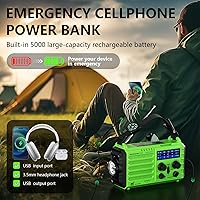
  • Battery Capacity: Built-in rechargeable lithium battery rated at 5000mAh, capable of partial smartphone charging alongside radio and lighting use.
  • Power Sources: Supports five independent input methods: built-in rechargeable battery, solar panel, hand crank generator, USB DC 5V input, and AAA alkaline batteries.
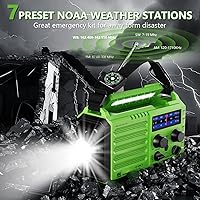
  • Radio Bands: Receives AM (520–1710 kHz), FM (88–108 MHz), shortwave SW (7–19 MHz), and NOAA weather band (WB) across seven total bands.
  • NOAA Certification: Officially NOAA-certified to receive real-time emergency alerts and weather bulletins directly from the National Weather Service.
  • SOS Alarm: Integrated SOS siren reaches up to 116dB output, accompanied by a flashing red alert light for visual distress signaling.
  • Lighting: Equipped with two lighting modes: a high-output LED flashlight for directional illumination and a diffused reading lamp for ambient indoor light.
  • Audio Output: Features a built-in speaker and a 3.5mm earphone jack for private, wired listening without disturbing others.
  • Volume Control: Physical rotary volume knob provides analog control without requiring menus or button sequences.
  • Connectivity: Includes a USB port for both charging the internal battery (input) and charging external devices such as smartphones (output).
  • Included Batteries: Ships with AAA batteries included for immediate backup power use straight out of the box.
  • Color & Style: Available in green with a compact form factor designed for both home shelf storage and outdoor carry.
  • Carrying Strap: Integrated portable strap and a built-in compass are included for outdoor navigation and hands-free carrying convenience.
  • Availability: First listed for sale in January 2020 and remains active, with no discontinuation by the manufacturer.
  • Market Rank: Holds a Best Sellers Rank of approximately #16 in the Weather Radios category on Amazon at time of evaluation.

Related Reviews

PPLEE 1009Pro-G NOAA Emergency Weather Radio
84%
94%
Power Options Versatility
88%
Build Quality and Durability
81%
Ease of Use
90%
Portability and Size
75%
Sound Quality (Radio Reception)
More
TFTDOUP Emergency Weather Alert Radio
86%
88%
Overall Performance
85%
Battery Life
90%
Charging Options
80%
Ease of Use
87%
Build Quality
More
UMUTOO EM03 5000mAh Emergency Weather Radio
74%
88%
Value for Money
82%
NOAA Reception
79%
Battery Capacity
51%
Hand-Crank Charging
57%
Solar Charging
More
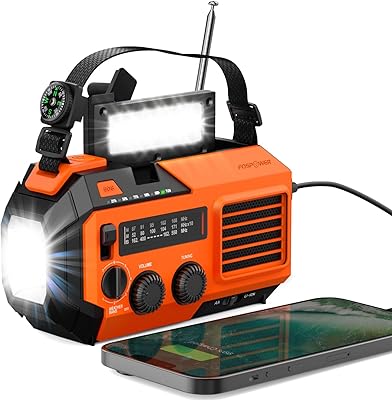
FosPower A6 5200mAh Emergency Weather Radio
77%
91%
NOAA Reception
84%
Build Quality
67%
Power Bank Utility
53%
Hand Crank Efficiency
49%
Solar Charging
More
Sttfaishen F20 Emergency Hand Crank Weather Radio
72%
82%
NOAA Alert Reception
54%
Battery Capacity & Honesty
61%
Hand Crank Usability
57%
Solar Charging Performance
83%
USB-C Charging Speed
More
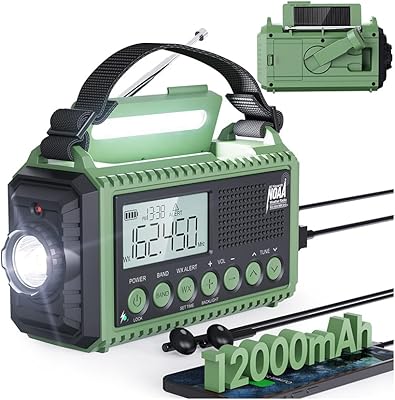
Roxicosly CR1009Ultra 12000mAh Emergency Weather Radio
74%
88%
Battery Life
91%
Charging Versatility
86%
NOAA Alert Performance
58%
Hand Crank Durability
44%
Solar Charging Speed
More
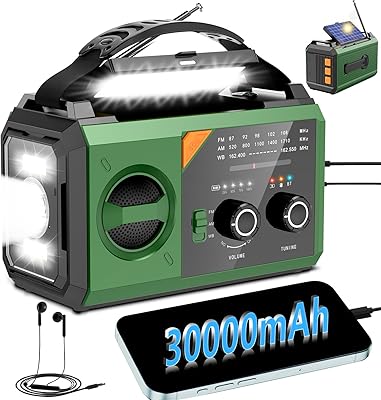
RAOUOEN 30000mAh Emergency Weather Radio
85%
89%
Battery Life & Charging
91%
Performance in Emergencies
75%
Portability & Weight
84%
Sound Quality & Reception
87%
Ease of Use
More
QAUYYW Emergency Weather Radio XSY330
86%
89%
Battery Life
85%
Ease of Use
92%
Portability
75%
Radio Reception
88%
Build Quality
More
OnLyee CR1030 Emergency Weather Radio
76%
88%
Power Source Redundancy
83%
Hand Crank Durability
61%
Solar Charging Performance
79%
NOAA Reception Quality
67%
Battery Capacity & Phone Charging
More
PRUNUS J-369 Emergency Weather Radio
84%
88%
Value for Money
93%
Power Options Flexibility
85%
Ease of Use
90%
SOS Alarm Effectiveness
80%
Battery Life
More

FAQ

It depends heavily on what you are running. With just the radio active at moderate volume, you can expect many hours of continuous use from the 5000mAh cell. Running the flashlight or lamp alongside the radio will shorten that runtime noticeably. Think of it as a capable all-day battery for radio use alone, with reserves shrinking as you add functions.

Yes, the USB output port lets you charge a smartphone or other USB device directly from the internal battery. That said, a full phone charge draws a significant portion of the 5000mAh capacity, so plan on treating it as a top-up option rather than a full recharge source if you also want to keep the radio running.

Honestly, treat it as a slow trickle option rather than a reliable fast-charger. The solar panel on a device this size simply cannot generate enough power to fully recharge the battery in a reasonable timeframe, especially under indirect or overcast light. It works best as a way to extend battery life over several sunny hours rather than restore it quickly.

It is worth having, but calibrate your expectations. Several minutes of hand cranking will give you a small amount of usable power — enough for short bursts of radio or a brief flashlight use. Most owners treat it as a genuine last resort when all other power sources are depleted, not something you would crank for an extended session.

The PPLEE CR1009 5000mAh Emergency Weather Radio does not auto-scan for NOAA channels, so you will need to tune manually. The easiest approach is to look up your local NOAA weather radio station frequency in advance at weather.gov, write it down, and store it with the radio. There are seven weather band channels total, and the correct one varies by region.
Shortwave performance on any compact radio like this one is heavily dependent on your location, local interference, and antenna positioning. Indoors in an urban area, reception can be inconsistent. Outdoors or near a window with a clear line of sight will generally give better results. Do not expect this to match a dedicated shortwave receiver with an external antenna.

The flashlight mode produces a focused, directional beam — useful for navigating in the dark, checking a fuse box, or moving around during a blackout. The reading lamp mode emits a softer, more diffused light that is easier on the eyes for sustained use, like reading a map or sitting around a tent at night. Having both in one unit is a small but genuinely practical touch.

Yes, and that is one of its genuine strengths. The physical rotary volume knob and clearly labeled band selector mean you do not need to navigate menus or read a manual under pressure. For older adults or anyone who wants to pick it up and use it during an emergency without fumbling, the hands-on controls are a real advantage.

The siren is rated at up to 116dB, which is genuinely loud — roughly comparable to a power saw or a thunderclap at close range. The red flashing alert light accompanies it for visual signaling. Use the SOS function only in genuine distress situations where you need to attract attention from rescuers or nearby people, as the volume can cause hearing discomfort at close range.

Yes, AAA batteries are one of the five supported power sources, and a set is included in the box. This is a useful failsafe for long-term storage scenarios where the internal battery may have self-discharged over time. Keep a spare set of AAAs stored with the radio so you are never caught without a backup power option.