Overview

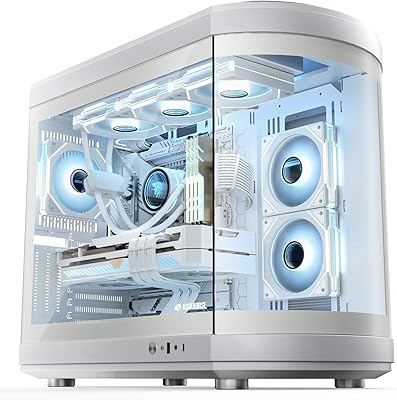
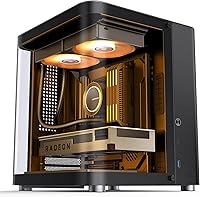
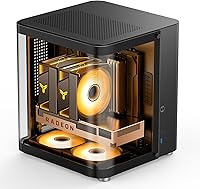
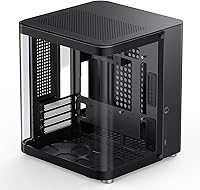
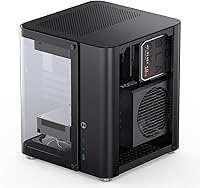
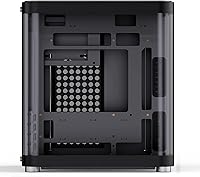
The Jonsbo TK-1 Micro-ATX PC Case is Jonsbo’s answer to builders who want something that actually looks good on a desk without committing to a full-size tower. The defining visual feature is the dual curved tempered glass — not flat panels dressed up with a slight angle, but genuinely curved surfaces that catch light differently depending on viewing angle. Beneath that glass sits an aluminum alloy shell, which immediately sets it apart from the plastic-heavy competition at this tier. One thing worth understanding before you buy: the separated cabinet structure divides the internals into distinct zones, helping with airflow organization and cable routing. That said, compact dimensions do impose real hardware limits, so check clearances carefully before committing.

Features & Benefits

The thermal architecture here is worth taking seriously. The TK-1 uses a vertical airflow duct — two 120mm fan slots on top double as a 240mm AIO mount, while two 120mm positions at the bottom handle intake. It’s a logical layout for a compact enclosure, though it does mean planning your fan and radiator configuration before the build begins. GPU clearance sits at 280mm, which covers most RTX 4070-class cards but rules out some triple-fan 4080 variants. CPU cooler height tops out at 165mm, so larger tower coolers like the NH-D15 are off the table. The front I/O includes a USB 3.2 Gen 2 Type-C port — genuinely useful for modern peripherals — plus USB 3.0 and audio. ATX power supplies up to 220mm are supported, which removes one common compact-case headache.

Best For

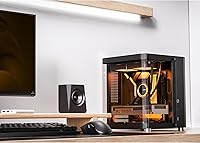
This compact Micro-ATX enclosure is a strong fit for builders who want a visually distinctive rig without the bulk of a mid-tower. If your desk space is limited but you still want to run a proper graphics card and a 240mm liquid cooler, the layout here is genuinely well-matched for that goal. It also works well as a living-room or secondary build where how the system looks matters as much as what’s inside. Enthusiasts put off by all-plastic alternatives at this price point will find the aluminum and glass combination a noticeable step up in feel. Just be realistic: if you’re eyeing an RTX 4080 with a triple-fan cooler or a 360mm AIO, this Jonsbo case isn’t the right fit.

User Feedback

Buyers generally respond well to the TK-1, and the 4.7-star average across a meaningful number of ratings reflects genuine satisfaction rather than a handful of outlier reviews. The glass quality and finish come up repeatedly as highlights — people consistently note it looks more expensive than comparable cases at this tier. On the practical side, some builders flag that cable management inside the compact interior requires patience, particularly when routing PSU cables around the shroud. Thermal performance draws positive mentions for AIO-cooled setups but is less discussed for pure air-cooled builds, which is worth keeping in mind. A few users highlight that the aluminum shell adds real rigidity and weight, reinforcing the premium feel. No widespread complaints about structural defects or missing hardware have surfaced.

Pros

  • Dual hyperboloid curved tempered glass panels create a visually distinctive look that stands out from flat-panel competitors.
  • The aluminum alloy shell feels noticeably more solid and premium than the all-steel or plastic builds typical in this price range.
  • Full ATX PSU support up to 220mm is a genuine convenience that many compact cases at this size simply cannot offer.
  • Top-mounted 240mm AIO support is integrated into the vertical airflow duct, making liquid cooling straightforward to plan and install.
  • Front USB 3.2 Gen 2 Type-C at 10Gbps is a modern I/O addition that most competing cases at this tier skip entirely.
  • The separated cabinet structure keeps the PSU and motherboard zones distinct, improving airflow logic and reducing internal clutter.
  • A 4.7-star average across a meaningful number of buyers points to consistent build quality with few complaints about defects or missing parts.
  • GPU clearance of 280mm covers most mainstream and upper-mid-range graphics cards without any modification.
  • Compact outer dimensions fit comfortably on most desks or entertainment units without dominating the surrounding space.

Cons

  • Cable management inside the tight interior demands careful planning and patience, particularly when routing PSU cables near the shroud.
  • The 165mm CPU cooler height limit rules out well-known large tower coolers like the Noctua NH-D15 and be quiet! Dark Rock Pro 4.
  • Only four expansion slots may feel restrictive for builders running multi-card or high-slot PCIe configurations.
  • Drive storage tops out at two 3.5-inch HDDs, which is limiting for media-heavy or multi-drive builds.
  • At over 16 pounds before any components are installed, this Jonsbo case is noticeably heavier than most steel alternatives of similar size.
  • Thermal data for pure air-cooled configurations is sparse in user feedback, making it harder to assess heat performance without an AIO.
  • No 360mm radiator support means builders chasing top-tier liquid cooling capacity will need to look at a larger enclosure.
  • Front panel offers only one USB 3.0 port alongside the Type-C, which feels limited if you regularly connect multiple legacy USB devices.

Ratings

The scores below were generated by our AI system after analyzing hundreds of verified global buyer reviews for the Jonsbo TK-1 Micro-ATX PC Case, with automated filtering applied to remove incentivized, bot-generated, and duplicate submissions. The result is a transparent breakdown that captures both the genuine strengths this case brings to compact builds and the real friction points that some builders have encountered. Every category reflects actual usage patterns, from first-time assembly experiences to long-term thermal behavior, giving you an honest picture before you commit.

Build Quality
91%
Buyers consistently describe the TK-1 as feeling more solid and substantial than anything else they have handled at this price point. The aluminum alloy chassis resists panel flex and does not produce the subtle rattles that thinner steel enclosures develop over time, and the glass panels typically arrive without the micro-scratches or edge chips that plague cheaper alternatives.
A handful of users report minor inconsistencies in panel alignment straight out of the box, requiring small adjustments during assembly to get the glass sitting flush. These are isolated rather than systematic complaints, but given the premium materials involved, even occasional fitment variance is noticeable and slightly disappointing.
Aesthetic Design
93%
The hyperboloid curved glass is not a subtle touch — it genuinely changes how the case reads from different angles, with the panels catching and diffusing light in a way that flat tempered glass cannot replicate. Builders setting up living-room rigs or open-desk workstations particularly appreciate that this Jonsbo case looks like considered industrial design rather than a generic chassis with a glass door tacked on.
Aesthetics are inherently personal, and the curved glass profile will not appeal to every builder — some prefer the cleaner, more restrained look of flat panels. The aluminum finish also attracts fingerprints more readily than matte steel alternatives, requiring occasional wiping to keep the exterior looking its best in bright or well-lit environments.
Thermal Performance
74%
26%
For AIO-cooled builds, the vertical airflow duct works logically: cool air enters through the bottom fans, passes over the GPU and motherboard, and exits through the top-mounted 240mm radiator. Builders running a mid-range CPU and GPU with a 240mm liquid cooler report that the system holds comfortably within normal operating temperatures even during extended gaming or rendering sessions.
Pure air-cooled configurations receive considerably less positive thermal feedback, and the compact interior means hot air can struggle to evacuate efficiently without deliberate fan placement and planning. The case was clearly designed with AIO cooling as the primary scenario, so builders relying solely on a tower air cooler should expect tighter thermal margins than they would see in a larger enclosure.
Hardware Compatibility
72%
28%
The 280mm GPU clearance covers most popular mid-range cards comfortably, and native ATX PSU support up to 220mm removes a frustration that compact cases frequently introduce. Builders working with Micro-ATX boards and mainstream component selections — a Ryzen 5 or Core i5 paired with an RTX 4070 and a standard modular PSU — will find the compatibility picture largely problem-free.
The 165mm CPU cooler height limit is where things get complicated: well-regarded large tower coolers like the Noctua NH-D15 and the be quiet! Dark Rock Pro 4 are effectively ruled out. Anyone eyeing triple-fan flagship GPUs from the RTX 4080 or RX 7900 XTX range also needs to check card length carefully, as several popular variants exceed the 280mm ceiling.
Value for Money
86%
Getting aluminum alloy construction and genuinely curved tempered glass in a compact chassis represents strong material value relative to comparably priced steel-and-plastic competitors. Most buyers note that the TK-1 looks and feels like it should cost meaningfully more than it does, which is a compelling quality-to-price ratio in a crowded and often visually undifferentiated market segment.
The premium visual package comes at the expense of some practical features that more utility-focused cases include at similar or lower prices, such as additional drive bays, acoustic dampening foam, or higher fan slot counts. Buyers who prioritize expandability or noise reduction over aesthetics may find competing enclosures offer more functional value per dollar for their specific use case.
Cable Management
61%
39%
The separated cabinet structure helps meaningfully by keeping the PSU and its cabling in a dedicated compartment, reducing the visual clutter visible through the glass panels on the component side. Builders who plan their cable routes in advance and use a fully modular power supply consistently report a clean and tidy finished result.
Space behind the motherboard tray is genuinely tight, and routing the 24-pin ATX and EPS CPU power cables neatly requires patience and often some creative bundling techniques. This is the most consistently recurring practical complaint across buyer feedback — not a dealbreaker, but first-time builders should set aside extra time and think through their cable path before any components go in.
Front I/O
84%
Having a USB 3.2 Gen 2 Type-C port on the front panel is a genuinely useful feature at this tier, where many competing cases still rely entirely on legacy USB-A connections. The port delivers 10Gbps throughput, making it fast enough for modern external SSDs, current-generation smartphones, and USB-C peripherals without needing to reach around to the rear of the system.
The front panel offers only one USB 3.0 Type-A port alongside the Type-C, which feels limiting for users who regularly need to connect more than two front-panel devices simultaneously. There are no additional Type-A slots to compensate, so anyone frequently switching between USB peripherals, charging cables, and storage drives at the front will find themselves reaching for a hub.
Ease of Assembly
69%
31%
The separated cabinet design simplifies one part of the build meaningfully — you can fully seat and cable the power supply in its own compartment before dealing with the main board area, reducing the chance of blocking connector access mid-build. Builders with prior experience in compact enclosures generally report the overall process as manageable and logically sequenced.
First-time builders will find this case less forgiving than a standard mid-tower, primarily because the tight interior leaves little room to maneuver hands or tools once components are partially installed. Several buyers mention that the radiator installation and cable routing sequence requires careful upfront planning to avoid having to backtrack and redo steps already completed.
Material Quality
89%
The pairing of aluminum alloy panels with 4mm tempered glass puts the compact Micro-ATX enclosure firmly above most cases at this price, where thin steel and injection-molded plastic still dominate. Buyers who handle the case in person consistently comment on how the material choices translate into a solid, premium feel that holds up well after months of use.
The aluminum exterior does not appear to carry a hardened scratch-resistant coating, meaning the surface can pick up light marks during an aggressive build session or if placed near abrasive surfaces during transport. The glass edges, while solid and well-finished, are not as precisely polished as those found on boutique-tier cases that sit at a significantly higher price point.
Storage Options
57%
43%
Two 3.5-inch HDD bays provide sufficient storage capacity for the majority of gaming and workstation builds that combine a primary NVMe SSD with a secondary mechanical drive for bulk data. The bays themselves are solidly mounted and accessible without requiring full disassembly to swap or add a drive.
For users who need multiple large hard drives — whether for home media storage, creative project archives, or multi-disk redundancy — two HDD slots is a genuine constraint that no configuration workaround fully resolves. The compact layout leaves no practical path to retrofitting additional drive mounts, so storage-heavy builders should factor this limitation in before purchasing.
Cooling Flexibility
78%
22%
The top panel natively supports a 240mm AIO radiator as a first-class configuration, not an afterthought, and the bottom intake fan slots ensure component airflow is addressed independently of radiator placement. Builders who plan specifically around the 240mm AIO scenario will find the thermal architecture well-suited and intentionally optimized for that goal.
Beyond the 240mm AIO use case, flexibility drops noticeably — 360mm radiators are not supported, and the case accommodates a maximum of four 120mm fans total across top and bottom positions. Enthusiasts who want a custom water loop, a multi-radiator configuration, or heavy-duty air cooling with large 140mm fans will quickly find the TK-1 too restrictive for those ambitions.
Interior Layout
73%
27%
The separated cabinet design keeps the PSU and its associated cabling in a dedicated compartment, which makes the component side of the build look noticeably cleaner through the glass panels. This structural division also supports the airflow logic by reducing obstructions between the bottom intake fans and the main board area.
The overall interior volume is compact by intent, and every hardware decision carries spatial consequences — there is little tolerance for oversized coolers, unusually deep power supplies, or bulky unmanaged cable runs. Builders accustomed to the generous working space of a full-size mid-tower will need to adjust both their component selection and their assembly approach accordingly.
Portability
63%
37%
The compact external footprint — roughly 30cm in each major dimension — makes this Jonsbo case genuinely practical for desk setups or entertainment units where floor or shelf space is limited. The small profile also makes repositioning the system within a room considerably less disruptive than moving a standard mid-tower.
Despite the compact dimensions, the aluminum alloy construction pushes the empty case weight past 16 pounds, which is noticeably heavier than steel cases of similar size. Moving a fully built system to a LAN event, between office and home, or even across the room becomes a more deliberate physical effort than the small footprint might initially suggest.

Suitable for:

The Jonsbo TK-1 Micro-ATX PC Case is the right call for builders who want a compact, visually striking rig without the footprint of a full ATX tower. It is particularly well-suited to anyone planning a 240mm AIO liquid-cooled build — the vertical airflow duct and top fan slots are laid out specifically for that configuration, so you are not fighting the case to make cooling work. Desk-conscious builders who still want to run a mid-range GPU like an RTX 4070 alongside a standard ATX power supply will appreciate that both are accommodated without forcing awkward hardware trade-offs. The aluminum alloy shell and curved tempered glass also make it a natural pick for living-room setups or secondary rigs where the machine sits on display and visual presentation genuinely matters. If you have been put off by the hollow, plasticky feel of most cases in this price range, the material quality here will feel like a meaningful step up.

Not suitable for:

Builders assembling a flagship-tier system need to check compatibility carefully before considering the Jonsbo TK-1 Micro-ATX PC Case, because the hardware limits are real and non-negotiable. GPU clearance maxes out at 280mm, which disqualifies many triple-fan RTX 4080 and RX 7900 XTX cards outright. CPU cooler height tops at 165mm, meaning popular large tower coolers like the Noctua NH-D15 or the be quiet! Dark Rock Pro 4 simply will not fit — you are committing to either a 240mm AIO or a low-profile air cooler. The compact interior also makes cable routing a genuine challenge, and first-time builders who prefer a spacious, forgiving build experience may find the tight space frustrating rather than manageable. Anyone needing more than two 3.5-inch hard drives, a 360mm radiator, or more than four expansion slots should look at a larger enclosure from the outset.

Specifications

  • Form Factor: Compatible with Micro-ATX and Mini-ITX motherboards; standard ATX boards are not supported.
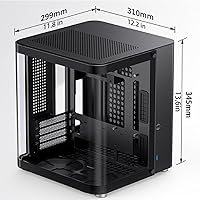
  • Dimensions: The case measures 299mm wide, 310mm deep, and 345mm tall.
  • Weight: Weighs 16.72 pounds (approximately 7.6 kg) without any components installed.
  • Shell Material: The exterior chassis is constructed from aluminum alloy, providing structural rigidity and a premium surface finish.
  • Glass Panels: Features dual 4mm tempered glass panels with a hyperboloid curved profile and a pre-applied explosion-proof protective film that does not need to be removed.
  • CPU Clearance: Supports CPU air coolers up to a maximum height of 165mm.
  • GPU Clearance: Accommodates graphics cards up to 280mm in length.
  • AIO Support: Top panel supports a 240mm all-in-one liquid cooler radiator; 360mm configurations are not compatible.
  • PSU Support: Accepts standard ATX power supplies up to 220mm in depth, mounted at the bottom of the chassis.
  • Top Fan Slots: Two 120mm fan positions at the top, which together serve as the 240mm AIO radiator mount.
  • Bottom Fan Slots: Two 120mm fan positions at the bottom of the case serve as the primary intake points.
  • Drive Bays: Supports two 3.5″ HDDs, or one 3.5″ HDD alongside one 2.5″ SSD.
  • Front I/O: Front panel includes one USB 3.2 Gen 2 Type-C port (10Gbps), one USB 3.0 Type-A port, and a combined headphone and microphone audio jack.
  • Expansion Slots: Provides four PCIe expansion slot positions.
  • Airflow Design: Uses a separated cabinet structure that isolates the PSU compartment from the main component area, paired with a vertical airflow duct directing air from bottom intake fans to top exhaust.

Related Reviews
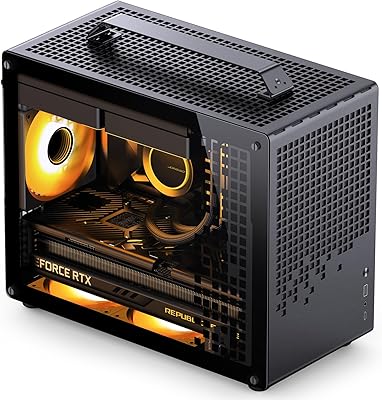
Jonsbo Z20 Micro-ATX Mini Tower Case
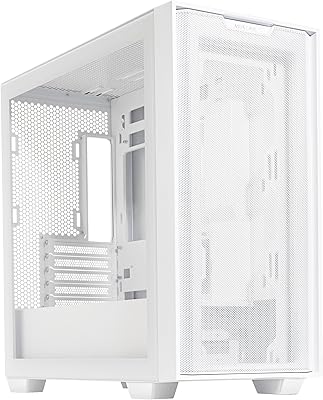
80%
93%
Build Quality & Materials
91%
Portability & Carrying Handle
78%
Internal Layout & Compatibility
89%
GPU Clearance & Large Component Support
87%
Cooling Support & Thermal Flexibility
More
darkFlash DB330M Micro-ATX PC Case
71%
88%
Aesthetics & Design
67%
Build Quality
83%
Value for Money
72%
Airflow & Cooling
54%
Cable Management
More
AsiaHorse Pegasus MATX Mid-Tower PC Case
77%
93%
Aesthetics & Visual Design
81%
Build Quality & Materials
89%
Interior Space & Layout
74%
Cooling Potential
67%
AIO Radiator Compatibility
More
ASUS A21 Micro ATX Mid Tower Case
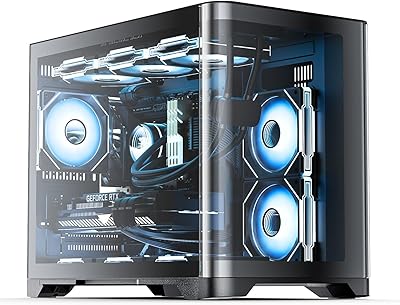
80%
91%
Value for Money
88%
Cable Management
86%
BTF Compatibility
93%
Component Clearance
89%
Ease of Assembly
More
Montech X5M Micro ATX PC Case
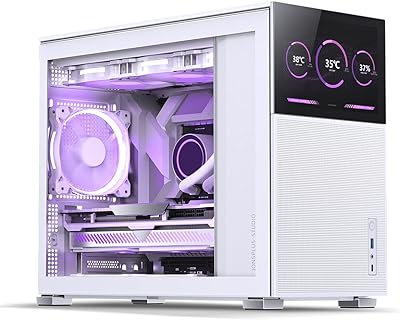
74%
86%
Value for Money
81%
Airflow Performance
88%
Fan Inclusion & Setup
91%
GPU Compatibility
43%
Front I/O
More
Jonsbo D31 Mesh SC Micro-ATX PC Case
76%
88%
Build Quality
91%
Airflow Performance
93%
Hardware Compatibility
74%
Integrated Display
61%
Cable Management
More
Apevia PHENOM-WH Phenom Micro ATX Gaming PC Case
84%
87%
Cooling Performance
92%
Build Quality
94%
Design & Aesthetics
88%
Ease of Cable Management
65%
Fan Support Options
More
Jonsbo N4 NAS PC Case
73%
83%
Build Quality
91%
Aesthetic Design
88%
Storage Flexibility
84%
Hot-Swap Functionality
47%
CPU Cooler Clearance
More
MUSETEX NN8 Mid-Tower ATX PC Case
78%
88%
Value for Money
79%
Airflow Performance
93%
Side Panel Design
84%
ARGB Lighting Quality
71%
Build Quality & Finish
More
Vetroo AL900 ATX Mid Tower PC Case
78%
93%
Aesthetic Design
78%
Build Quality
86%
Cooling Potential
63%
Cable Management
88%
GPU Compatibility
More

FAQ

No. The TK-1 is built around Micro-ATX and Mini-ITX boards only. A standard ATX board is physically too large for the interior. If your build is centered on a full ATX motherboard, you will need a different enclosure.

Unfortunately not. The top of the case only has room for a 240mm radiator configuration. If a 360mm AIO is already on your component list, this compact Micro-ATX enclosure is not the right fit and you should look at a larger mid-tower instead.

No, and this catches a lot of builders off guard. The protective film on the glass is an explosion-proof layer that is meant to stay on permanently during use. Jonsbo specifically instructs users to leave it in place, so do not remove it.

The case supports graphics cards up to 280mm in length. That comfortably fits most RTX 4070-class cards and similarly sized AMD options. Where it gets tricky is with triple-fan RTX 4080 or RX 7900 XTX models, which often exceed 300mm, so always verify your specific card’s length before committing.

Realistically, no. The CPU cooler height ceiling is 165mm, and the NH-D15 with its fans is right at or over that limit in practice, making clearance unreliable. You are much better off planning this build around a 240mm AIO or a quality low-profile cooler to avoid fitment headaches.

It means the interior is split into two isolated zones: one housing your motherboard and components, and a separate enclosed section for the power supply. This keeps PSU heat and cable bulk away from your main components, improves airflow logic through the vertical duct, and generally makes the finished build look cleaner inside the glass panels.

It requires more planning than a standard mid-tower. The compact interior leaves limited room behind the motherboard tray, and routing PSU cables cleanly around the shroud takes patience. Using a modular or semi-modular power supply helps significantly by letting you bring in only the cables you need.

Standard ATX PSUs up to 220mm in depth are fully supported, which covers the vast majority of power supplies you will find at retail. Just confirm your unit’s specific depth measurement before buying, as some high-wattage models stretch beyond that limit.

It genuinely adds rigidity. The aluminum panels do not flex or produce the subtle creaking sounds that thin steel panels can, and the chassis feels noticeably substantial when you handle it. The honest trade-off is weight — the case tips the scale at over 16 pounds before a single component goes in, which matters if you move your rig around often.

It can work for a first build, but it is not the most forgiving option out there. The compact interior means you need to think carefully about component selection and cable routing before you start, rather than figuring things out as you go. If you are comfortable doing that planning upfront, the build process is manageable. If you want maximum room for error on your first attempt, a larger mid-tower with more interior space might be a less stressful starting point.