
Overview

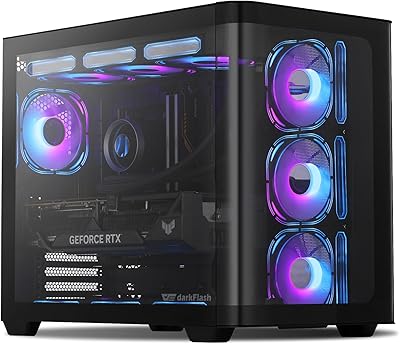
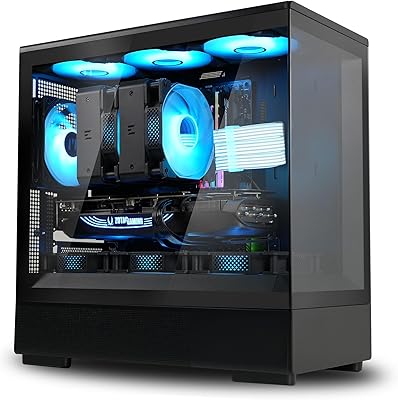
The darkFlash DB330M Micro-ATX PC Case arrived in mid-2024 with a straightforward ambition: make a compact build look far more expensive than it actually is. The 270-degree dual tempered glass covering the front and side is the centerpiece, and in person it really does command attention. Ranking #36 in Computer Cases with a 4.1-star average from around 150 buyers, this MATX glass case has clearly resonated with budget-conscious builders. But 4.1 stars is honest — not exceptional. There are real trade-offs here, and calling the DB330M a value-tier showpiece is both accurate and fair.

Features & Benefits

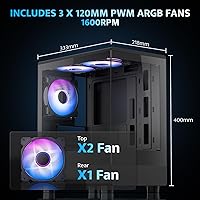
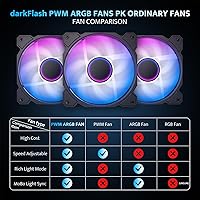
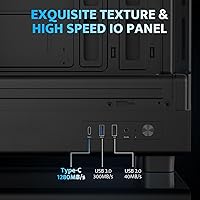
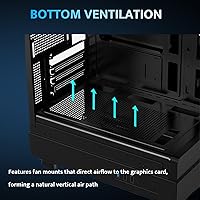
The glass is the obvious talking point, but what's underneath matters too. Three pre-installed DR08 ARGB fans come ready to run — no extra fan purchases needed to get that lit look on day one. Worth noting: the RGB hub is not included, so you'll need a motherboard header or a separate controller to manage the lighting. The vertical airflow layout routes one fan toward the GPU via the PSU channel, a clever approach to compact thermal management. Front I/O delivers a USB Type-C port, USB 3.0, and USB 2.0 alongside HD audio — genuinely practical. The case also fits a 240mm AIO at the top, which is a meaningful option at this price point.

Best For

This compact gaming chassis is a strong pick for first-time builders who want their rig to look impressive without overspending. If you're buying ARGB fans anyway, the three included units make a real dent in total build cost. It suits setups with mid-range GPUs up to 305mm and CPUs running in the 65W–125W thermal range — the kind of hardware most MATX enthusiasts are already pairing. The smaller footprint is also a genuine advantage for tight desk spaces. One real limitation: the 140mm PSU cap means bulkier power supplies simply won't fit. If you need more than one SSD slot or plan to run a high-wattage PSU, verify your specs before ordering.

User Feedback

Across roughly 150 reviews, the pattern is fairly consistent. Buyers are genuinely impressed by the glass panel visibility and how vivid the ARGB lighting looks once the system is powered on — first impressions tend to be strong. Assembly gets positive marks too, with most builders finding the layout intuitive. Where things get trickier is cable management: the space behind the motherboard tray is tight, and anyone using a modular PSU may need extra patience. A handful of reviewers noted the glass feels thinner than expected for this price. Fan noise under load comes up occasionally, though not consistently enough to call it a definitive flaw. Packaging protected the glass panels well in transit, which multiple buyers appreciated.

Pros

  • Three PWM ARGB fans come pre-installed, saving money and setup time right out of the box.
  • The 270-degree tempered glass coverage gives compact builds a genuinely striking visual presence.
  • Front I/O includes a USB Type-C port, which is practical and increasingly necessary for modern peripherals.
  • Supports a 240mm AIO radiator at the top, offering real liquid cooling flexibility for a budget chassis.
  • Magnetic dust filters on the top and front panel help protect components without much maintenance effort.
  • The MATX footprint keeps desk space usage small without sacrificing GPU or motherboard compatibility.
  • Bottom-mounted PSU placement keeps heat away from sensitive components and tidies up the internal layout.
  • Packaging has consistently protected the glass panels during shipping, based on multiple buyer accounts.
  • Assembly is intuitive enough for first-time builders to complete confidently without prior experience.

Cons

  • The RGB hub is not included, so controlling ARGB lighting requires a motherboard header or a separate hub.
  • Cable management space behind the motherboard tray is tight, especially with bulky or non-modular PSUs.
  • Maximum PSU length is capped at 140mm, which rules out a wide range of popular full-size power supply units.
  • Some buyers have reported the tempered glass feels thinner than expected, raising mild durability concerns.
  • Fan noise under sustained load has been noted by a subset of users, though the data is not yet conclusive.
  • Only one SSD bay is included, limiting storage flexibility for builders who need multiple fast drives.
  • The review count sits around 150, meaning the overall rating could still shift as more buyers weigh in.
  • The vertical airflow design is an interesting concept, but thermal performance has not been independently verified.

Ratings

Ratings for the darkFlash DB330M Micro-ATX PC Case were generated by AI after systematically analyzing verified buyer reviews from global markets, with spam, incentivized responses, and suspected bot activity actively filtered out before scoring. Each category score reflects the real distribution of user sentiment — not averages skewed toward a final impression — so both genuine strengths and recurring frustrations are visible in the numbers. The result is an honest, buyer-focused breakdown that shows exactly where this compact glass case delivers and where it falls short.

Aesthetics & Design
88%
The 270-degree tempered glass wrapping the front and side is the undisputed centerpiece of this chassis — in a dark room with the ARGB fans lit, it genuinely looks like it belongs in a build twice the price. Buyers consistently praise the visual impact it delivers on a budget desk setup.
Some users have noted the glass feels noticeably thinner than premium alternatives, which makes moving or repositioning the case feel slightly precarious. The plastic accent trim also lowers perceived build quality up close, which is a noticeable trade-off for buyers expecting solid construction throughout.
Build Quality
67%
33%
The steel frame gives the chassis a reasonably solid structural foundation, and the overall assembly holds together well once components are installed. Buyers running a stationary desk rig rarely report structural issues during normal daily use.
Tempered glass panels have drawn consistent feedback about feeling thinner than expected for this price, and the plastic accent trim registers as budget-grade to the touch. Anyone planning to move the case frequently will want to handle it more carefully than they might with a heavier-built chassis.
Value for Money
83%
Getting three pre-installed ARGB fans, 270-degree tempered glass coverage, and a USB Type-C front panel at this price tier is genuinely hard to beat. For first-time builders putting together a compact gaming rig, the included accessories alone represent meaningful savings over buying those components separately.
The value calculation shifts if your hardware falls outside the case's limits — specifically the 140mm PSU cap and single SSD bay, which could force costly compromises. Buyers who also need to purchase an ARGB hub will see the effective total cost creep up more than the sticker price suggests.
Airflow & Cooling
72%
28%
The vertical airflow concept — routing one of the bottom fans toward the GPU through the PSU channel — is a thoughtful design choice for compact builds running warm mid-range graphics cards. Support for a 240mm AIO at the top also gives builders a solid liquid cooling path without needing to move to a larger chassis.
The vertical airflow design, while clever in theory, has not been validated by independent thermal benchmarks, making it hard to confirm how much it actually helps under real workloads. Builders running power-hungry GPUs or heavily overclocked CPUs should temper expectations and consider whether this layout alone meets their thermal requirements.
Cable Management
54%
46%
The case includes a dedicated cable routing area and standard tie-down points that make the initial build manageable for most straightforward configurations. With a fully modular PSU, experienced builders report keeping the interior looking presentable despite the tight rear clearance.
The space behind the motherboard tray is consistently cited as the biggest frustration in real builds — non-modular PSUs in particular result in cluttered cable runs that are genuinely difficult to manage cleanly. First-time builders using entry-level power supplies with lots of fixed cables may find the process more stressful than expected.
Ease of Assembly
81%
19%
The internal layout is designed with beginner builders in mind — component access is intuitive, fan positions are clearly laid out, and most buyers report completing their first build without needing extra guides. The pre-installed fans remove one of the more fiddly steps from a typical MATX build.
Cable routing and the tight PSU bay can slow things down for builders using bulkier hardware combinations, especially late in a build when space is most limited. The 140mm PSU restriction is also not prominently flagged during the purchase process, which has caught some buyers off guard mid-build.
Front I/O
78%
22%
Having a USB Type-C port on the front panel at this price is a practical addition most daily users appreciate — plugging in modern phones or portable drives without reaching around back is a real convenience. The USB 3.0 port and HD audio jack round out a capable front panel for everyday use.
There is only a single USB 3.0 port on the front, which feels limiting once you factor in external drives, headsets, or other peripherals that users tend to hotplug daily. Power users who rely on multiple front-facing ports will likely find themselves routing cables to the rear more often than they would prefer.
Hardware Compatibility
63%
37%
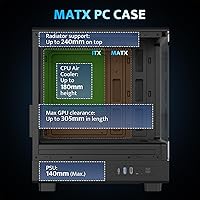
The chassis comfortably supports Micro-ATX and Mini-ITX boards, clears GPUs up to 305mm, and leaves room for CPU coolers up to 180mm — a bracket covering the majority of mid-range gaming builds assembled today. The 240mm AIO support at the top also expands cooler choices meaningfully for this form factor.
The 140mm maximum PSU length is a genuine blocker that has frustrated a meaningful share of buyers — many popular power supplies, particularly those rated above 650W, exceed that cap. Full ATX boards are also a non-starter, which limits upgrade paths for any builder who later wants to move to a larger platform.
ARGB Lighting
76%
24%
When running, the ARGB fans viewed through the wide glass panels create a visual impact that consistently surprises buyers at this price tier. The PWM control means fan speed and lighting behavior can be adjusted through the motherboard, giving builders flexibility without extra hardware.
The RGB hub is not included, meaning buyers whose motherboards lack a 3-pin ARGB header will need a separate controller before the lighting functions at all. Some users have also found that daisy-chaining all three fans for synchronized effects requires extra troubleshooting, particularly on older motherboards.
Dust Management
74%
26%
The magnetic top filter is one of the more practical design touches in this chassis — it pops off easily for cleaning and sits securely during use, which is more than can be said for many cases at this price. The front panel filter adds another layer of protection in dust-prone environments.
The front panel filter is not magnetic like the top one, making it slightly less convenient to remove and reinstall during routine cleaning. Users in dustier environments may find that the bottom of the case near the PSU area has less dust protection than they would ideally want.
Storage Options
49%
51%
For a single-drive setup — one SSD for the OS and games alongside an HDD for bulk storage — the available bays are just sufficient to cover a basic gaming configuration without awkward workarounds. The standard drive cage keeps drives accessible during and after the initial build.
With only one dedicated SSD bay and two HDD slots, this compact gaming chassis falls well short for anyone needing multiple fast drives — a configuration increasingly common among gamers and content creators alike. Builders wanting two or more SSDs will need to improvise mounting solutions or choose a different chassis entirely.
Noise Level
69%
31%
Under light to moderate workloads, most buyers report the three included fans run quietly in the background without drawing attention. The PWM speed control helps keep noise down during everyday desktop use and light gaming where the system is not under sustained thermal pressure.
A subset of buyers has flagged increased fan noise during heavier gaming sessions or CPU-intensive tasks, though this is not a dominant theme in the overall feedback pool. With only around 150 total reviews, the noise complaint pattern is still too limited to assess with full confidence.
PSU Compatibility
57%
43%
For builders running a typical 550W or 650W PSU at standard lengths, the bottom-mounted bay works cleanly and keeps the power supply thermally separated from the main motherboard area. The bottom placement also contributes to a tidier internal layout for straightforward builds.
The 140mm PSU length cap is a real-world purchase blocker easy to overlook until mid-build, and many popular higher-wattage units from well-known brands come in at 160mm or longer. Buyers with an existing PSU should measure it before ordering — returning a partially assembled case is a genuinely frustrating experience.
Packaging & Shipping
86%
Multiple buyers specifically called out the packaging as a standout for a budget product — glass panels arrived intact across a wide range of shipping conditions, which is reassuring when ordering a glass-heavy chassis online. Well-protected glass on arrival means one less thing to worry about on build day.
No widespread negative feedback on packaging has emerged in the review pool, making it difficult to flag a specific concern beyond general expectations. As with any case featuring large glass panels, buyers should still inspect for micro-cracks or chips upon unboxing, regardless of how secure the outer packaging appears.

Suitable for:

The darkFlash DB330M Micro-ATX PC Case is built for budget-conscious builders who want a visually impressive compact rig without paying flagship prices. If your priority is a desk setup that genuinely looks the part — wide glass panels, glowing fans, the full aesthetic — this chassis delivers that without requiring extras like separate fan purchases. It's especially well-suited for first-time builders who want a forgiving assembly experience: the layout is intuitive, three ARGB fans are already installed, and the front I/O includes a Type-C port that feels current without adding cost. Builders pairing a mid-range GPU under 305mm with a mainstream 65W–125W processor will find the clearances comfortable and the included cooling adequate for typical gaming workloads. The 240mm AIO support at the top is a genuine bonus for anyone wanting to step up from air cooling without moving to a larger chassis.

Not suitable for:

The darkFlash DB330M Micro-ATX PC Case runs into real trouble when your build pushes against its hardware constraints. The 140mm maximum PSU length is a hard stop for builders running higher-wattage, full-size power supplies — many popular units exceed that cap, so checking your PSU dimensions before ordering is not optional. Cable routing behind the motherboard tray is tight enough that working with a non-modular or semi-modular PSU can turn a straightforward build into a frustrating one. Storage expansion is also limited: with only one SSD bay and two HDD slots, this chassis is not a smart pick for anyone building a multi-drive workstation or media server. Finally, if you're planning a thermally demanding build that needs sustained, verified airflow performance, the vertical duct concept is interesting but unproven by independent benchmarks — so don't count on it as a serious cooling solution.

Specifications

  • Form Factor: Supports Micro-ATX and Mini-ITX motherboards in a Midi Tower chassis configuration.
  • Dimensions: External body measures 333 × 218 × 400mm (13.11 × 8.58 × 15.75 inches).
  • Weight: The case weighs approximately 10.68 pounds (4.85 kg) without any installed components.
  • Included Fans: Three DR08 PWM ARGB 120mm fans are pre-installed, positioned at the rear and near the PSU bay.
  • Front I/O: The front panel provides one USB Type-C, one USB 3.0, one USB 2.0, HD Audio, and a Reset button.
  • GPU Clearance: Accommodates graphics cards up to 305mm in length.
  • CPU Clearance: Accepts CPU air coolers up to 180mm in total height.
  • PSU Support: Bottom-mounted PSU bay fits power supplies up to a maximum of 140mm in length.
  • Radiator Support: Top panel supports up to a 240mm radiator; the rear panel supports a single 120mm radiator.
  • Fan Positions: Additional fan mounting is available at the rear (1×120mm), bottom (2×120mm), and top (2×120mm or 2×140mm).
  • Drive Bays: Includes two 3.5-inch HDD bays and one 2.5-inch SSD bay.
  • Expansion Slots: Provides four PCIe expansion slots for add-in cards.
  • Materials: Constructed with a steel frame, tempered glass panels on the side and front, and plastic accent trim.
  • Glass Coverage: Dual tempered glass panels span 270 degrees across the front and left side of the chassis.
  • Dust Filters: A removable magnetic dust filter sits on the top panel, with an additional filter covering the front panel.
  • Warranty: darkFlash provides a one-year manufacturer warranty covering defects in materials and workmanship.

Related Reviews
AsiaHorse Pegasus MATX Mid-Tower PC Case
77%
93%
Aesthetics & Visual Design
81%
Build Quality & Materials
89%
Interior Space & Layout
74%
Cooling Potential
67%
AIO Radiator Compatibility
More
ASUS A21 Micro ATX Mid Tower Case
80%
91%
Value for Money
88%
Cable Management
86%
BTF Compatibility
93%
Component Clearance
89%
Ease of Assembly
More
darkFlash DS900 ATX Mid-Tower PC Case
75%
76%
Build Quality
83%
Cooling Potential
91%
Aesthetics & Visibility
88%
Value for Money
74%
Cable Management
More
Montech X5M Micro ATX PC Case
74%
86%
Value for Money
81%
Airflow Performance
88%
Fan Inclusion & Setup
91%
GPU Compatibility
43%
Front I/O
More
darkFlash DRX70 ATX Mid-Tower PC Case
74%
83%
Value for Money
78%
Airflow Performance
89%
Ease of Assembly
67%
RGB Lighting
71%
Build Quality & Materials
More
darkFlash DY470 Full-Tower ATX PC Case
80%
93%
Cable Management
78%
Build Quality & Materials
84%
Cooling Potential
91%
Aesthetics & Visual Design
89%
GPU Compatibility & Mounting
More
Jonsbo Z20 Micro-ATX Mini Tower Case
80%
93%
Build Quality & Materials
91%
Portability & Carrying Handle
78%
Internal Layout & Compatibility
89%
GPU Clearance & Large Component Support
87%
Cooling Support & Thermal Flexibility
More
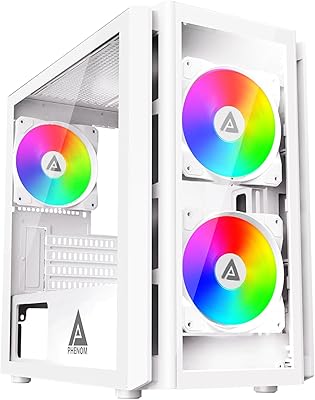
Apevia PHENOM-WH Phenom Micro ATX Gaming PC Case
84%
87%
Cooling Performance
92%
Build Quality
94%
Design & Aesthetics
88%
Ease of Cable Management
65%
Fan Support Options
More
MUSETEX NN8 Mid-Tower ATX PC Case
78%
88%
Value for Money
79%
Airflow Performance
93%
Side Panel Design
84%
ARGB Lighting Quality
71%
Build Quality & Finish
More
GIM GM4-B Mid Tower PC Case
79%
83%
Build Quality & Materials
88%
Tempered Glass Panels
79%
Cooling Potential & Airflow
81%
Cable Management
86%
Value for Money
More

FAQ

Three DR08 PWM ARGB 120mm fans come pre-installed and ready to run out of the box — no extra purchase needed for basic airflow and lighting. Two are positioned near the PSU bay and one is at the rear. Keep in mind the RGB hub is not included, so to control the lighting effects you will need either a 3-pin ARGB header on your motherboard or a separate ARGB hub.

That is absolutely worth checking before you order. The PSU bay is bottom-mounted with a hard cap of 140mm in length — many budget and mid-range PSUs fall within that limit, but plenty of higher-wattage and semi-modular units do not. Pull up the spec sheet for your specific PSU and verify the length. If it exceeds 140mm, this chassis will not accommodate it.

Not necessarily. If your motherboard has a 3-pin ARGB header, you can connect the fans directly and manage the lighting through your board's software. If your motherboard lacks that header, you will need a standalone ARGB controller or hub. The fans still function perfectly for airflow without any lighting connection — the ARGB is just inactive until you have a compatible controller.

The DB330M supports graphics cards up to 305mm in length, which covers most mainstream mid-range cards comfortably. Common options like the RTX 4060 or RX 7600 fit well within that window. If you are considering a high-end triple-slot card, check the exact length in the manufacturer specs — some of those exceed 305mm and will not fit.

Yes, and it works reasonably well for a case at this price point. The top panel accepts a 240mm radiator, which is the standard size for most entry-level and mid-range AIO coolers. The rear supports a single 120mm radiator for smaller loops. A 360mm AIO is not supported, so if that is your plan, you will need a larger chassis.

It can be, depending on your PSU. The space behind the motherboard tray is usable but not generous, and buyers with non-modular or semi-modular PSUs have noted it gets tight quickly. Pairing this compact gaming chassis with a fully modular PSU helps significantly — you only route the cables you actually need, which keeps the back of the case manageable.

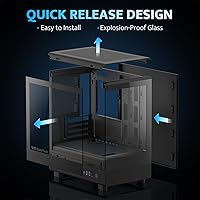
Use a soft microfiber cloth with a small amount of water or diluted screen cleaner, and wipe in gentle circular motions. Avoid paper towels, rough fabrics, or solvent-based cleaners, as these can scratch or cloud the glass surface. The panels can be detached for a more thorough clean if needed — just handle them carefully on a flat, padded surface.

The darkFlash DB330M Micro-ATX PC Case is designed for Micro-ATX and Mini-ITX motherboards only. Full-size ATX boards will not fit — the internal layout is specifically built around the smaller MATX footprint, which is also what keeps the overall chassis compact enough for tighter desk setups.

A small number of buyers have reported noticing fan noise under sustained load, though it has not been a widespread or dominant complaint. During lighter tasks the fans tend to run quietly. Since they are PWM fans, your motherboard can ramp them up or down based on system temperature — so configuring a sensible fan curve in your BIOS can help keep noise down during everyday use.

A handful of buyers have noted the tempered glass panels feel somewhat thinner than expected for the price, which is a fair observation compared to higher-end cases. For static desk use, it holds up fine under normal conditions, but it is not the kind of glass you would want to stress-test with rough handling or frequent moves. The good news is that packaging has been consistently praised for keeping the glass intact during shipping.