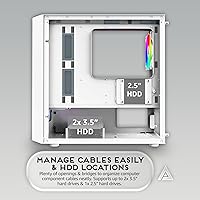
Overview

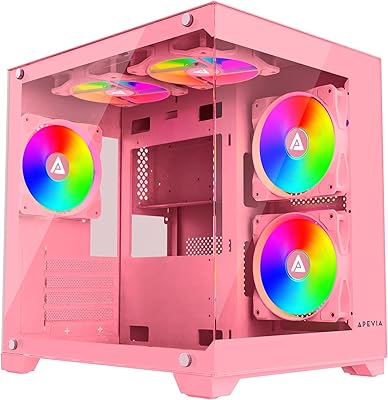
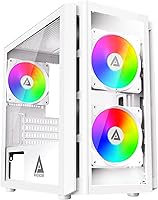
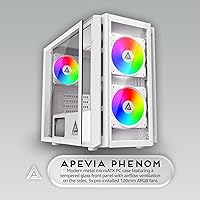
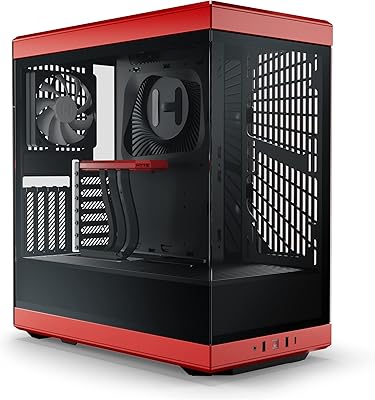
The Apevia Phenom Micro ATX Mid Tower Case is a budget-conscious enclosure that punches above its weight on visual appeal, making it a natural pick for first-time builders and RGB enthusiasts who want their setup to look sharp without spending a fortune. What sets it apart at this price tier is the dual tempered glass treatment — both the left side panel and the front panel are glazed, which is genuinely uncommon here. Physically, it sits comfortably on a desk without dominating the space, measuring roughly 15 x 8 x 15 inches. Just set expectations accordingly: this is an aesthetics-first build with entry-level construction quality.

Features & Benefits

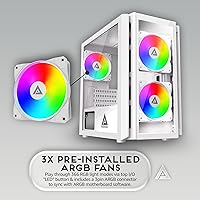
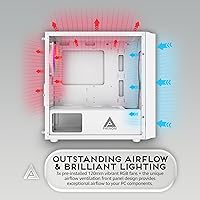
Three pre-installed 120mm ARGB fans come ready to go straight out of the box — two at the front, one at the rear — and cycling through the 366 lighting modes is handled by a hardware button on the top panel, no software or app required. The front panel combines tempered glass with built-in airflow vents, so you get the visual showcase without completely choking intake. This mATX case accommodates GPUs up to 340mm long and CPU coolers up to 155mm tall, which covers the vast majority of mid-range components. Magnetic dust filters on the top and bottom panels are a genuine convenience — pull them off, rinse them, done. Cable routing space behind the motherboard tray is present but notably tight.

Best For

This Apevia build is a strong match for anyone putting together their first PC on a tight budget who still wants the desk to look the part. If you are pairing a mid-range GPU under 340mm with a standard air cooler, you will not run into clearance problems. It is particularly well-suited for bedroom or home office setups where the RGB glow is part of the atmosphere, not just an afterthought. Micro ATX and ITX motherboard owners get full compatibility, keeping the internal layout manageable for a newcomer. It is less ideal for high-TDP systems that need serious sustained airflow beyond what three 120mm fans can reliably deliver.

User Feedback

Buyers consistently praise the out-of-box RGB impact — most report the lighting looks far more impressive in person than in product photos, and the glass panels are clear enough to show off any build properly. Assembly tends to go smoothly for most builders, which is a genuine confidence booster for newcomers. On the flip side, the ARGB motherboard sync function trips people up: activating it requires holding the LED button for five full seconds, and that detail is easy to miss. A number of reviewers also note the front panel restricts airflow more than expected, and a few mention minor edge sharpness during handling. Overall value sentiment is positive, though build consistency is not perfect across every unit.

Pros

  • Dual tempered glass panels on both the front and side give this mATX case a premium visual presence well above its price point.
  • Three ARGB fans come pre-installed and ready to light up the moment you power on, with zero software setup required.
  • 366 lighting modes are cycled through a simple top-panel button, making RGB customization genuinely accessible for beginners.
  • Magnetic dust filters on the top and bottom panels snap off easily for cleaning, which is a feature many pricier cases skip.
  • GPU clearance up to 340mm and CPU cooler support up to 155mm means most mainstream mid-range components fit without issue.
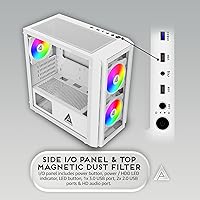
  • Front I/O includes two USB 3.0 ports and an HD audio jack, covering everyday connectivity needs without adapters.
  • The Phenom enclosure supports both Micro ATX and ITX motherboards, giving builders some flexibility in platform choice.
  • Non-punch-out PCIe slots make GPU installation cleaner and less stressful for first-time builders.
  • Overall assembly experience is widely reported as straightforward, with most builders completing their first build without major frustrations.
  • Value for money sentiment among buyers is consistently strong, with most agreeing the visual payoff exceeds what the price suggests.

Cons

  • The front tempered glass panel limits air intake noticeably, which can push temperatures higher than a mesh-front alternative would allow.
  • Cable management space behind the motherboard tray is tight enough to make a tidy build genuinely challenging for less experienced builders.
  • Fan noise becomes audible at higher speeds, which may be distracting in quiet environments or during light workloads.
  • Switching to ARGB motherboard sync mode requires holding the LED button for five seconds — this is poorly documented and confuses many buyers.
  • ARGB sync is only compatible with motherboards that have a 3-pin ARGB header, leaving older boards without native sync support.
  • Some units have been reported to have sharp metal edges along internal panels, posing a minor but real risk during component installation.
  • Panel fitment consistency is not perfect across all units, with occasional reports of slight misalignment on the front or side glass.
  • Only one 2.5-inch SSD bay is included, which may feel limiting for builders who plan to run multiple storage drives.
  • The top fan mounts are optional expansion slots only — no fans are pre-installed there, so additional cooling requires a separate purchase.

Ratings

The Apevia Phenom Micro ATX Mid Tower Case earns a well-rounded but nuanced set of scores based on AI-assisted analysis of verified global buyer reviews, with spam, bot activity, and incentivized feedback actively filtered out before scoring. Across thousands of real builder experiences, this enclosure consistently impresses on visual impact and out-of-box usability while revealing genuine trade-offs in airflow, cable management, and build consistency that any honest assessment must reflect.

Visual Design
91%
Buyers repeatedly describe this mATX case as looking far more expensive than it actually is once the ARGB fans are running and the tempered glass is on display. The combination of front and side glass panels at this price tier is rare, and most first-time builders report being genuinely impressed the moment they power it on for the first time.
The aesthetic leans heavily into the bold RGB-everywhere style, which is not universally appealing — builders going for a clean, minimalist look will find the visual direction difficult to tone down without disabling the lighting entirely.
RGB Lighting
88%
The hardware-button control for 366 lighting modes is one of the most practical implementations at this price point — no drivers, no app, no compatibility headaches. Buyers appreciate being able to cycle through colors and effects instantly, making the lighting feel genuinely fun rather than a chore to configure.
ARGB motherboard sync mode requires holding the LED button for five full seconds to activate, and this is not documented clearly anywhere obvious in the packaging or manual. A meaningful number of users never successfully activate sync mode simply because they do not know this step exists.
Value for Money
86%
Across the user base, the consensus is strong: the Phenom enclosure punches well above its price tier in terms of visual output and included accessories. Getting three pre-installed ARGB fans, dual tempered glass panels, and magnetic dust filters together in one package at this cost is genuinely difficult to match among competing options.
The value perception drops slightly for buyers who run into quality consistency issues like panel misalignment or sharp internal edges, since those experiences reframe the budget pricing as a trade-off rather than a bargain. It remains excellent value when the unit arrives in good condition, but that caveat matters.
Airflow & Cooling
61%
39%
For light-to-moderate gaming builds with mid-range components, the three included fans provide adequate circulation and most builders report acceptable temperatures during typical gaming sessions. The front vents do allow some passive intake even with the glass panel in place.
The front tempered glass panel is a real restriction on intake airflow, and builders running power-hungry CPUs or GPUs will notice the thermal impact under sustained load compared to a mesh-front alternative. This is the single most recurring technical complaint across the entire user review pool.
Cable Management
54%
46%
The space behind the motherboard tray is usable, and experienced builders who plan their cable routing in advance can achieve a reasonably tidy result. Modular power supplies make the process considerably more manageable inside this Apevia build.
The rear routing channel is noticeably shallow, and anyone using a non-modular PSU with a full bundle of cables will struggle to close the back panel without forcing it. First-time builders in particular frequently report frustration here, and it remains one of the most common criticisms across all review sources.
Build Quality
67%
33%
The metal chassis feels solid and reasonably rigid for the price tier, and most buyers find the overall construction acceptable for a budget-oriented enclosure. Panel installation is straightforward, and the case holds its shape well once fully assembled.
Edge finishing is inconsistent — a noticeable subset of buyers reports sharp metal edges along internal cutouts that can catch hands during cable routing or drive installation. Panel fitment also varies between units, with some front glass panels sitting slightly off-alignment out of the box.
Ease of Assembly
82%
18%
First-time builders consistently rate the assembly process as approachable, with non-punch-out PCIe slots making GPU installation particularly clean and stress-free. The layout is logical and component access is generally unobstructed during the build process.
The tight cable management space adds friction toward the end of the build when everything else is in place and cables still need routing, which can turn an otherwise smooth experience into a frustrating final stretch.
Fan Quality
69%
31%
The included 120mm ARGB fans look excellent at lower speeds and produce a satisfying lighting effect that complements the glass panels well. For general desktop use and light gaming, they move enough air to keep a mid-range system in check.
Fan noise becomes noticeable when speeds ramp up under load, and the acoustic profile at higher RPMs is not what most users would consider pleasant. Builders sensitive to background noise during extended gaming or content consumption sessions may want to budget for quieter aftermarket replacements.
Dust Filtration
83%
The magnetic dust filters on the top and bottom panels are a highlight that buyers genuinely appreciate — they pull off in seconds, rinse clean under a tap, and snap back without any tools or effort. For a budget case to include both top and bottom coverage is a meaningful practical win.
There is no dedicated front intake dust filter, which is a real oversight given that the two front fans are drawing air directly into the case. Builders in dusty environments will likely find dust accumulating on internal components faster than the filtered areas alone would suggest.
Front I/O
76%
24%
Having two USB 3.0 ports on the top panel covers the daily needs of most users — plugging in a controller, a thumb drive, or a headset adapter without reaching around to the back of a tower is a convenience builders notice regularly in day-to-day use.
There is no USB-C port on the front panel, which is an increasingly common expectation even among budget cases. Buyers who regularly transfer data or charge devices via USB-C will need to use the rear motherboard I/O, which is a minor but real inconvenience.
Component Compatibility
79%
21%
Supporting GPUs up to 340mm and CPU coolers up to 155mm covers the overwhelming majority of mid-range and even some upper-mid-range component configurations, giving builders reasonable flexibility without needing to cross-reference clearance figures obsessively.
The lack of ATX motherboard support is a hard ceiling for builders who might want to upgrade their platform down the line, and the single 2.5-inch SSD bay limits storage expansion for builds that rely on multiple solid-state drives.
Storage Options
57%
43%
Two 3.5-inch hard drive bays accommodate dual HDD setups comfortably, which suits builders who want large-capacity spinning storage for game libraries or media collections alongside their primary SSD.
With only one dedicated 2.5-inch SSD slot, builders planning multi-drive SSD configurations will quickly run out of official mounting options. In an era where two or three SSDs in a single system is increasingly common, this feels like a meaningful limitation even at the budget tier.
Lighting Modes Variety
84%
Three hundred and sixty-six selectable lighting modes via a single button is a genuinely impressive number for a standalone hardware controller, and buyers enjoy experimenting with the variety without needing to open any software on their PC.
Without software control, there is no way to fine-tune individual fan zones, set specific colors with precision, or create custom sequences — everything is cycle-based, which satisfies casual RGB users but will feel limiting to anyone who wants granular lighting control.
Motherboard ARGB Sync
58%
42%
For builders with a compatible 3-pin ARGB header on their motherboard, the sync functionality works reliably once activated and integrates cleanly with major motherboard lighting ecosystems including those from ASUS, MSI, and Gigabyte.
The activation method — a five-second button hold — is undocumented in any obvious place, and the 3-pin ARGB requirement excludes boards with only the older 4-pin RGB header entirely. These two issues together generate a disproportionate share of the negative reviews relative to how minor the underlying design choice actually is.

Suitable for:

The Apevia Phenom Micro ATX Mid Tower Case is built squarely for first-time PC builders who want their rig to look genuinely impressive without committing to a high-end budget. If your priority is a visually striking desk setup — think bedroom gaming station or a home office build where aesthetics matter as much as performance — this enclosure delivers dual tempered glass panels and pre-installed ARGB lighting that most cases at this price tier simply do not offer. Builders working with Micro ATX or ITX motherboards will find the internal layout accommodating enough for standard component configurations, including GPUs up to 340mm and most popular air coolers. It is also a solid pick for anyone who finds RGB software finicky, since all 366 lighting modes are toggled directly from a hardware button on the top panel with no drivers or apps involved. If you are pairing this with a mid-range processor and a mainstream graphics card for everyday gaming and general use, the thermal headroom is more than adequate for the task.

Not suitable for:

Builders with demanding thermal requirements should approach the Apevia Phenom Micro ATX Mid Tower Case with realistic expectations, because the front glass panel does restrict intake airflow in ways that a mesh-front case would not. If you are planning to run a high-TDP CPU alongside a power-hungry GPU and expect the system to stay cool under sustained loads, the three included 120mm fans may not be enough without supplemental cooling, and the design does not prioritize maximum air throughput. Enthusiasts who care deeply about tidy cable management will also find the workspace behind the motherboard tray frustratingly shallow, making a clean build more difficult than it needs to be. Anyone expecting ARGB motherboard sync to work intuitively should know upfront that switching to sync mode requires holding the LED button for a full five seconds — it is not obvious, and it trips up a meaningful number of buyers. Finally, note that Amazon listing data sometimes shows this case as black, but the WH model suffix specifically denotes the white colorway, so double-check the variant before ordering if color accuracy matters to your build aesthetic.

Specifications

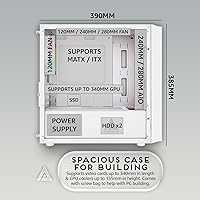
  • Form Factor: Micro ATX Mid Tower configuration supports standard Micro ATX and Mini-ITX motherboards up to 9.6″ x 9.6″.
  • Dimensions: The chassis measures 15.35″ (L) x 7.87″ (W) x 15.16″ (H), making it compact enough for most desk setups.
  • Weight: Fully assembled chassis weight is approximately 11.79 lbs before components are installed.
  • Material: The main structure is constructed from a steel metal chassis with tempered glass used for both the left side panel and the front panel.
  • Included Fans: Three 120mm ARGB fans come pre-installed: two mounted at the front intake position and one at the rear exhaust position.
  • Fan Capacity: The case supports up to five 120mm fans in total, with two additional optional slots available on the top panel.
  • GPU Clearance: Graphics cards up to 340mm in length can be installed without modification or panel interference.
  • CPU Cooler Height: Air CPU coolers up to 155mm (approximately 6.10″) in height are supported within the side panel clearance.
  • Drive Bays: Storage capacity includes two 3.5″ hard drive bays and one dedicated 2.5″ SSD mounting position.
  • Expansion Slots: Four PCIe expansion slots are provided, using a non-punch-out design for cleaner and more straightforward GPU installation.
  • Front I/O Ports: The top panel houses two USB 3.0 ports and one HD audio combo jack for headset and microphone connectivity.
  • RGB Lighting: 366 hardware-selectable ARGB lighting modes are accessible via a dedicated LED button on the top panel, requiring no software.
  • ARGB Sync: A 3-pin ARGB connector is included for motherboard sync, compatible exclusively with motherboards that feature a 3-pin ARGB header.
  • Dust Filters: Magnetic dust filters are fitted on both the top panel and the bottom panel for straightforward removal and cleaning.
  • PSU Mounting: The power supply is rear-bottom mounted, keeping it isolated from the main motherboard area for cleaner internal layouts.
  • Motherboard Support: Compatible with standard Micro ATX and Mini-ITX form factor motherboards; full ATX boards are not supported in this enclosure.
  • Color Variant: The WH suffix in the model name denotes the white colorway; some retail listings may incorrectly display the color as black.
  • Glass Panels: Both the front-facing panel and the left side panel use tempered glass, providing visibility into the build from two angles simultaneously.

Related Reviews
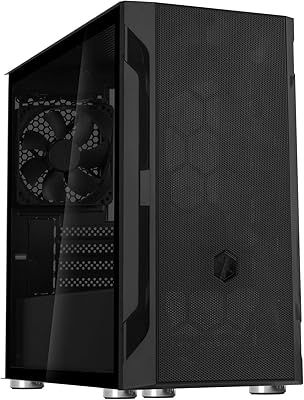
SilverStone FARA H1M Mid-Tower Micro-ATX Case
82%
91%
Airflow Performance
88%
Build Quality
85%
Cooling Options
65%
Cable Management
82%
Aesthetics
More
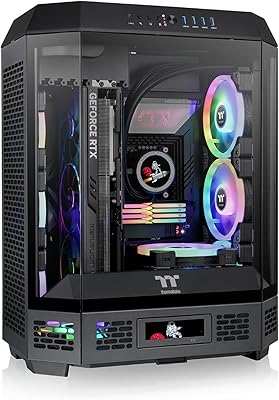
Thermaltake Tower 600 Mid-Tower ATX Case
79%
91%
Build Quality
93%
Aesthetic Design
88%
Cable Management
94%
Cooling Capacity
71%
Installation Experience
More
HYTE Y40 Mid-Tower ATX Gaming Case
76%
94%
Aesthetics & Design
88%
Build Quality
62%
Cooling Performance
83%
Value for Money
81%
Cable Management
More
KEDIERS P6 Mid Tower ATX PC Case
75%
88%
Aesthetic Design
71%
Build Quality
84%
Included Fans & Lighting
78%
Airflow & Thermal Performance
81%
Radiator & Cooling Support
More
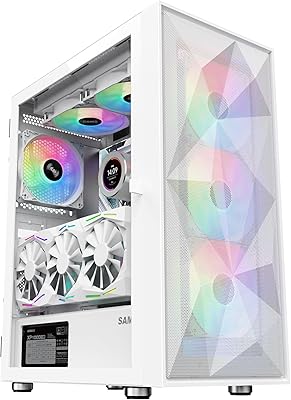
SAMA 3509 ATX Mid Tower PC Case
74%
88%
Value for Money
74%
Build Quality
81%
Airflow & Cooling Performance
67%
Pre-installed Fan Quality
86%
Tempered Glass Panel
More
Zalman S3 ATX Mid-Tower PC Case
74%
83%
Value for Money
71%
Build Quality
58%
Airflow & Cooling Performance
86%
Ease of Assembly
67%
Acrylic Side Panel
More
Zalman T6 ATX Mid Tower PC Case
71%
83%
Value for Money
67%
Build Quality
71%
Airflow & Cooling
79%
Interior Space & Layout
76%
Cable Management
More
Zalman S4 Mid-Tower ATX PC Case
75%
72%
Build Quality
88%
Value for Money
91%
Ease of Assembly
67%
Airflow Performance
63%
Cable Management
More
SAMA S40 Mid Tower ATX PC Case
79%
88%
Airflow Performance
83%
Included Fan Quality
79%
Build Quality & Finish
92%
GPU Compatibility
61%
Cable Management
More
darkFlash DS900 ATX Mid-Tower PC Case
75%
76%
Build Quality
83%
Cooling Potential
91%
Aesthetics & Visibility
88%
Value for Money
74%
Cable Management
More

FAQ

Good catch — this is a genuinely confusing point. The WH at the end of the model name stands for white, so the physical case is white. Some Amazon listing data incorrectly displays the color as black, which has tripped up a number of buyers. If you ordered the PHENOM-WH specifically, you should receive the white version.

No, it will not. This enclosure is designed for Micro ATX and Mini-ITX boards only, with a maximum supported size of 9.6″ x 9.6″. If you are planning a build around a standard full ATX board, you will need to look at a larger case.

Most RTX 4070 models from major manufacturers fall well under the 340mm GPU length limit, so you should be fine in the majority of configurations. That said, it is always worth double-checking the specific length of your card model before ordering, since some factory-overclocked triple-fan variants can run slightly longer.

This one catches a lot of people off guard. To activate motherboard sync mode, you need to press and hold the LED button on the top panel for a full five seconds until the fans switch over. Once in sync mode, your motherboard's ARGB software takes control. Just make sure your board actually has a 3-pin ARGB header — the standard 4-pin RGB header is not compatible with these fans.

It is adequate for a mild to moderate build, but it is not exceptional. The front panel does have ventilation cutouts to allow some air through, but tempered glass inherently restricts intake compared to a mesh front. If you are running a high-TDP processor paired with a demanding GPU, you may want to monitor thermals closely and consider whether additional cooling is needed.

The front of the case supports a 240mm radiator mount, so a compact all-in-one liquid cooler is an option if you prefer that over air cooling. Just be aware that installing a front radiator will displace the two included front fans, so factor that into your cooling plan.

Cable management is workable but not particularly generous. The space behind the motherboard tray is tighter than what you find in higher-end cases, so it takes a bit of patience to get everything routed cleanly. Using modular power supplies and sleeved cables helps significantly. For a first build it is manageable, but do not expect the same ease you would get from a purpose-built cable management chassis.

Yes, this is one of the more practical features of the Phenom enclosure. Both the top and bottom dust filters are magnetic, meaning they pull straight off without any screws or clips. You can rinse them under water, let them dry, and snap them back on — the whole process takes just a few minutes.

At lower speeds they are reasonably quiet and unobtrusive in a normal room environment. However, at higher RPMs the fans do become audible, which some users find noticeable during extended gaming sessions. If fan noise is a particular concern for you, aftermarket fans with better acoustic performance could be swapped in without much difficulty.

It is worth being aware of, particularly around the internal panel cutouts and the drive bay area. A small number of builders have reported nicking their hands during cable routing or component installation. Wearing a pair of basic work gloves during the initial build process is a simple precaution that most experienced builders recommend regardless of the case brand.