Overview

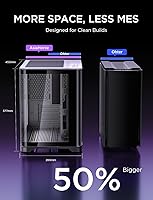
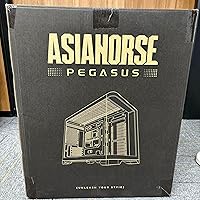
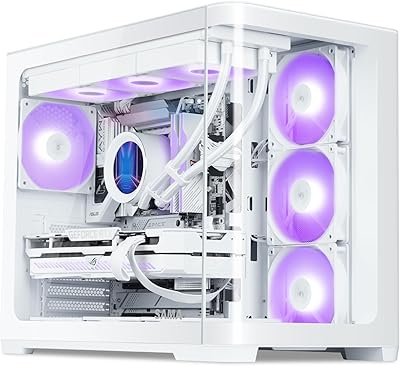
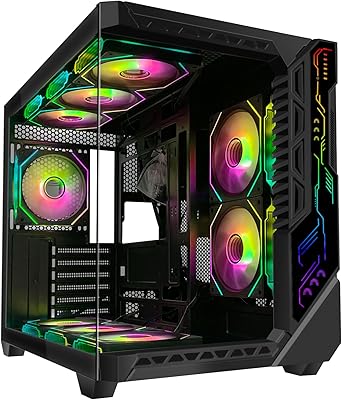
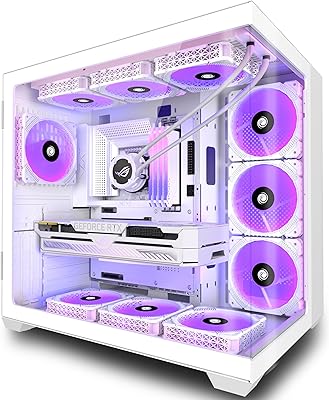
The AsiaHorse Pegasus MATX Mid-Tower PC Case arrived on the market in mid-2024 and has been quietly building a following among hobbyist builders who want a visually striking enclosure without the premium price tag of brands like Fractal Design or Lian Li. What sets this MATX case apart immediately is its dual-chamber layout and sweeping panoramic tempered glass — three sides of curved glass that give your components room to breathe and be seen. Airflow is decent, the interior is genuinely roomy for the form factor, and the price sits at a point where the trade-offs feel fair. Just don't expect a full suite of front I/O ports.
Features & Benefits

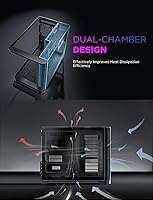
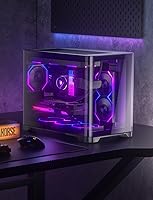
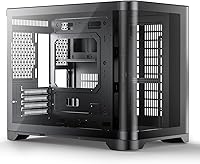
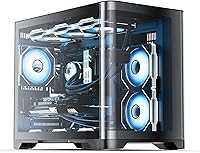
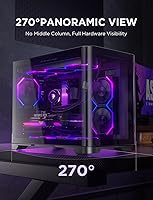
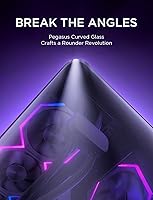
The 270° curved glass panel is the centerpiece here — it wraps around the front and both sides, offering an unobstructed view of your build that flat-panel cases simply can't match. The dual-chamber layout keeps PSU and cabling tucked away behind the motherboard tray, so the main chamber stays clean-looking with minimal effort. Cooling headroom is solid: the top supports a full 360mm radiator, and there are nine fan mount positions across the chassis — though no fans are included, so budget accordingly. GPU clearance reaches 400mm, making this gaming chassis compatible with large RTX 40-series cards, and the SPCC steel frame gives the whole structure a reassuring rigidity.

Best For

This MATX case is a natural fit for first-time PC builders who want their rig to look expensive without paying flagship prices. RGB enthusiasts will appreciate how much the curved glass showcases lighting — it's practically designed for showing off. If you're planning a 360mm AIO loop on a constrained budget, this gaming chassis is one of the few options at this price that actually accommodates one without compromise. It also works well for anyone upgrading from a cramped older case and craving more breathing room for wire management and component access. ITX board users can also make it work, though the extra space will feel indulgent.

User Feedback

Early buyers have responded positively, with the glass quality and premium appearance drawing consistent praise given the price point — a recurring theme in reviews. The assembly process earns good marks too; the manual is clear enough, and the included hardware is adequate. Where things get more nuanced: the 52mm top clearance is a genuine constraint, and users fitting thicker AIO units have reported needing to install the motherboard and CPU power cables before mounting the cooler — worth planning for. Some builders with heavy GPUs have noted GPU sag as a concern. The front I/O also draws mild criticism, with only two USB ports feeling a little sparse.

Pros

  • The three-sided curved tempered glass looks genuinely premium and turns heads for the price paid.
  • Dual-chamber layout keeps PSU and cables completely hidden from the main viewing area.
  • Interior space is unusually generous for the MATX form factor, making builds feel relaxed rather than cramped.
  • Top radiator support handles a full 360mm AIO, which is rare at this price point.
  • GPU clearance reaches 400mm, covering virtually every current consumer graphics card on the market.
  • The SPCC steel frame feels solid and well-braced — there is no flexing or creaking during installation.
  • Wire management channels are thoughtfully placed and keep the finished build looking clean.
  • USB-C 3.2 on the front I/O is a practical inclusion that many budget cases still skip.
  • Assembly process is straightforward; the included hardware and documentation are adequate for beginners.
  • Early buyer ratings are strong, suggesting quality control is consistent across units.

Cons

  • Only two standard USB ports on the front panel will feel limiting for peripheral-heavy setups.
  • The 52mm top radiator clearance is tight and demands careful planning before committing to a thick AIO.
  • No fans are included in the box, adding to the total build cost beyond the case price alone.
  • Heavy GPUs may experience sag over time without an aftermarket GPU support bracket.
  • The PSU length limit of 200mm rules out some longer modular power supplies.
  • Cable routing cutouts are present but limited, which can frustrate builders with thicker cable sets.
  • AsiaHorse is a relatively new brand without the long-term reliability track record of Fractal or Lian Li.
  • The case is marketed as a full-tower MATX but physically functions as a mid-tower, which may confuse buyers expecting larger clearances.
  • Side radiator support maxes out at 240mm, which limits options for builders wanting a dual-loop setup.
  • No dust filter coverage is mentioned for bottom fan mounts, which may affect long-term maintenance.

Ratings

Our AI rating system analyzed verified global buyer reviews for the AsiaHorse Pegasus MATX Mid-Tower PC Case, actively filtering out incentivized, bot-generated, and low-quality feedback to surface what real builders actually experienced. The scores below reflect an honest cross-section of this chassis — celebrating where it genuinely delivers and calling out the friction points that matter when you are mid-build and frustrated. Nothing is softened; the strengths and the trade-offs are weighted equally.

Aesthetics & Visual Design
93%
The 270° curved glass panel consistently earns praise as the case's standout feature — builders report that even non-enthusiast friends notice and comment on how premium the enclosure looks in person. For RGB setups, the panoramic visibility is practically unmatched at this price tier.
A small group of buyers feel the aesthetic leans heavily on the glass to carry the design, and the non-glass exterior panels look noticeably plainer by comparison. Those who prefer a more industrial or minimalist look may find the all-glass approach feels slightly over-designed.
Build Quality & Materials
81%
19%
The SPCC steel frame surprised many buyers who expected flimsy construction given the price — the chassis feels genuinely rigid during component installation with no panel flex or creaking. The tempered glass panels feel thick and confidence-inspiring compared to thinner budget competitors.
A handful of users noted that some secondary panel fitment was slightly inconsistent out of the box, with minor alignment gaps on non-glass panels. At this price it is not a dealbreaker, but buyers used to Fractal or Lian Li tolerances will notice the difference.
Interior Space & Layout
89%
Builders coming from cramped MATX cases consistently describe the interior as genuinely roomy — there is real comfort in being able to reach around components during installation without knocking into the PSU or cabling. The dual-chamber separation is a practical win that keeps the visible build area looking intentional rather than cluttered.
The PSU bay is capped at 200mm, which quietly eliminates some longer high-wattage modular units that experienced builders might already own. A few users also found the cable routing cutouts behind the motherboard tray to be fewer in number than they expected given the overall spaciousness.
Cooling Potential
74%
26%
Nine fan mount positions and top support for a 360mm radiator give this gaming chassis more thermal headroom than most competitors at the same price point — builders running aggressive cooling loops have made it work well. The bottom intake positions in particular help maintain a solid positive pressure configuration.
No fans are included, which means the out-of-box thermal performance is essentially zero until you add your own — a cost that catches some first-time buyers off guard. The 52mm top clearance constraint also means not every 360mm AIO will drop in cleanly without careful pre-planning around fan and radiator thickness.
AIO Radiator Compatibility
67%
33%
The top 360mm radiator mount makes this one of the more versatile budget MATX enclosures for liquid cooling builds, and builders who planned their components around the 52mm limit report clean, successful installations. Side support for 240mm radiators adds a secondary liquid cooling option that most cases in this class skip entirely.
The 52mm combined radiator-plus-fan thickness limit at the top is the single most common frustration mentioned in reviews — builders who did not check in advance found themselves partially disassembling the build to route the CPU power cable before fitting the cooler. It is a solvable problem, but it is a real one.
GPU Compatibility
86%
Four hundred millimeters of GPU length clearance handles virtually every current consumer card on the market, and builders dropping in triple-fan RTX 40-series cards consistently confirm they fit without modification. The 180mm height allowance also covers most wide AIB cooler designs.
There is no native GPU support bracket included, and heavier flagship cards have prompted a few users to notice subtle sag after extended periods of use. For a mid-range build this is rarely catastrophic, but it is an oversight that costs almost nothing to solve at the manufacturing level.
Wire Management
72%
28%
The dual-chamber design does the heavy lifting by physically isolating the PSU and bulk cabling from the display chamber — builders report that even moderately tidy cable routing behind the tray produces a clean-looking finished build. Velcro tie-down points and routing channels are present and appreciated.
The actual number of cable routing cutouts through the motherboard tray is limited relative to the case size, which becomes noticeable when you are working with a fully modular PSU and have several thick cable runs to manage simultaneously. A more generous cutout pattern would make an already-decent layout noticeably better.
Front I/O
58%
42%
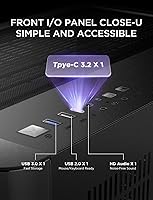
The USB-C 3.2 port is a forward-thinking inclusion that many cases at this price still omit, and for users primarily connecting a single USB device or charging a phone it covers daily needs adequately. The port placement on the front panel is accessible and logically positioned.
Two standard USB ports — one 3.0 and one 2.0 — is lean by modern standards, and builders who regularly plug in multiple peripherals, external drives, or controllers simultaneously will feel the constraint fairly quickly. Several reviews specifically called out wanting at least one additional USB 3.0 port.
Assembly Experience
82%
18%
First-time builders consistently report that the case goes together without major confusion — the panel removal process is intuitive, standoffs are pre-installed for common motherboard layouts, and the included hardware bag is complete. The manual, while not elaborate, covers the key steps clearly enough.
The top radiator installation sequence is a specific pain point that the manual does not adequately warn about — users who install the motherboard after the AIO cooler often find the CPU power cable is unreachable. A clearer installation order callout in the documentation would prevent a lot of frustration.
Noise Dampening
51%
49%
The heavy tempered glass panels provide some passive sound attenuation compared to mesh-only cases, and builders running quiet fan profiles report the chassis does not add any structural resonance or vibration noise of its own. The steel frame avoids the panel buzz that cheaper stamped-metal cases sometimes produce.
There is no foam or acoustic dampening material anywhere in the enclosure, so fan and component noise passes through without meaningful reduction. Buyers expecting a quieter build from this gaming chassis will need to invest in low-noise fans and rely entirely on fan curve tuning rather than any passive help from the case itself.
Value for Money
88%
Relative to what comparable money buys from more established brands, the sheer amount of glass, interior volume, and cooling flexibility on offer here is difficult to argue with — most competitors at the same price deliver noticeably less on at least one of those three dimensions. For budget-conscious builders, the price-to-feature ratio is one of the case's strongest selling points.
The absence of included fans means the true cost of a functional build is higher than the case price alone implies, and buyers who factor in three to four decent fans will narrow the value gap with pricier options. Brand confidence and long-term support from AsiaHorse also remains an open question compared to Fractal or Lian Li.
RGB & Lighting Showcase
91%
The panoramic three-sided glass is purpose-built for lighting visibility, and RGB builds photographed inside this chassis routinely look significantly more impressive than the same hardware in a standard single-panel case. Builders report that the curved glass transitions eliminate the harsh shadowed corners that flat panels create.
The case provides no integrated RGB lighting of its own, so the quality of the light show is entirely dependent on the components inside. Builders expecting the chassis to contribute to the aesthetics beyond visibility alone will need to plan their own lighting ecosystem from scratch.
Storage Options
76%
24%
Five total drive bays — two for 3.5-inch HDDs and three for 2.5-inch SSDs — covers the needs of most modern gaming builds that rely on a primary NVMe drive supplemented by one or two bulk storage HDDs. The mounting positions are accessible and do not conflict with other major components.
The HDD and SSD bays are tucked into the PSU chamber, which keeps them out of sight but also means swapping drives after the build is complete requires a bit more disassembly than cases with externally accessible bays. Builders planning frequent storage changes may find this inconvenient over time.
Thermal Long-Term Reliability
69%
31%
Builders who set up proper positive pressure configurations using the bottom intake and top exhaust positions report stable long-term temperatures during extended gaming sessions. The steel frame shows no signs of heat-related warping or deformation even in high-ambient-temperature environments based on early user reports.
Without included fans and with no mesh front panel, passive airflow through the chassis when fans are running at low speeds is limited — the glass panels restrict natural convection airflow. In warm rooms or high-TDP system configurations, this makes thoughtful fan curve planning non-optional rather than nice to have.

Suitable for:

The AsiaHorse Pegasus MATX Mid-Tower PC Case is a strong pick for hobbyist builders who want their rig to look impressive without pushing into premium price territory. It particularly suits first-time builders who feel intimidated by cramped cases — the oversized interior makes component installation more forgiving, and the dual-chamber design keeps cables out of sight with minimal effort. RGB enthusiasts will find the three-sided curved glass genuinely rewarding; there are few cases at this price that showcase lighting as well. Builders planning a 360mm AIO cooler on a budget will also find this one of the more capable options available in its tier. If you're mounting a large RTX 40-series card and want room to breathe, this gaming chassis handles it without complaint.
Not suitable for:

The AsiaHorse Pegasus MATX Mid-Tower PC Case is not the right call for builders who prioritize front I/O density — two USB ports and a USB-C is workable, but anyone running multiple external drives or peripherals simultaneously will feel the pinch. Power users planning a thick 360mm AIO with fans that push past 52mm combined depth will need to sequence their build carefully, and those who skip that step often regret it mid-installation. Builders with very heavy flagship GPUs should also factor in the horizontal slot design, which offers limited native GPU sag protection. If you want the polish and ecosystem support of established brands like Fractal Design or be quiet!, this gaming chassis won't fully replicate that experience. And if ATX motherboard support is on your list, this enclosure simply won't accommodate it.
Specifications

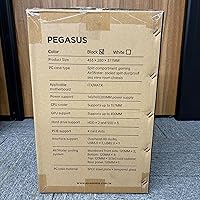
  • Dimensions: The case measures 453mm in length, 280mm in width, and 377mm in height, placing it firmly in mid-tower territory despite some full-tower marketing language.
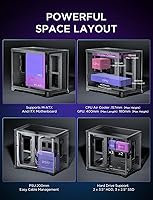
  • Motherboard Support: Compatible with Micro ATX and Mini-ITX motherboard form factors; ATX and larger boards are not supported.
  • GPU Clearance: Accommodates graphics cards up to 400mm in length and 180mm in height, covering the vast majority of current consumer GPUs including full-length RTX 40-series models.
  • CPU Cooler Height: Maximum supported CPU cooler height is 157mm, which is sufficient for most tower air coolers but may exclude the tallest premium aftermarket options.
  • PSU Clearance: Supports power supply units up to 200mm in length, which covers most standard ATX PSUs but excludes some longer modular units.
  • Radiator Support: The top of the chassis accepts 360mm and 240mm radiators; the side panel supports 240mm and 120mm radiators.
  • Fan Mounts: Nine fan mounting positions are distributed across the chassis: three on top, three on the bottom, two on the side, and one at the rear — no fans are included.
  • Drive Bays: Offers two 3.5-inch HDD bays and three 2.5-inch SSD bays for a total of five storage mount points.
  • Front I/O: The front panel includes one USB 3.0 port, one USB 2.0 port, one USB-C 3.2 Gen 2 port, and standard 3.5mm audio connectors.
  • Glass Coverage: A 270° curved tempered glass panel wraps around the front face and both side panels for a panoramic view of internal components.
  • Frame Material: The structural chassis is constructed from SPCC cold-rolled steel, providing rigidity without excessive weight.
  • Panel Material: All visible panels use thickened tempered glass designed to resist shattering under normal handling and installation stress.
  • Top AIO Clearance: When mounting a radiator at the top, the combined thickness of the radiator and its fans must not exceed 52mm to avoid clearance conflicts with the motherboard area.
  • Item Weight: The case weighs approximately 3 pounds unboxed, which is relatively light for a steel-framed chassis of this size.
  • PCIe Slots: The case provides four horizontal PCIe expansion slots, which sets the practical limit for multi-card or expansion card configurations.
  • Chamber Layout: A dual-chamber design physically separates the PSU and cable routing area from the main motherboard and component chamber.
  • Color Options: The reviewed configuration is finished in black; a white variant is also available in the product line.
  • Brand: Manufactured by AsiaHorse, a consumer PC accessories brand that entered the case market with a focus on aesthetics-forward, competitively priced enclosures.
  • Release Date: The product was first made available in June 2024, making it a relatively recent entry in the budget-to-mid-range MATX case segment.
  • Compatibility Note: The case is confirmed compatible with RTX 40-series GPUs within the stated length and height clearance limits, including dual and triple-fan cooler designs.

Related Reviews

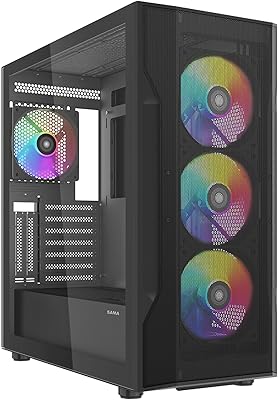
SAMA V60 Mid Tower PC Case
80%
93%
Out-of-Box Cooling Value
78%
Airflow Performance
91%
AIO & Radiator Flexibility
88%
Tempered Glass & Aesthetics
71%
Build Quality & Materials
More
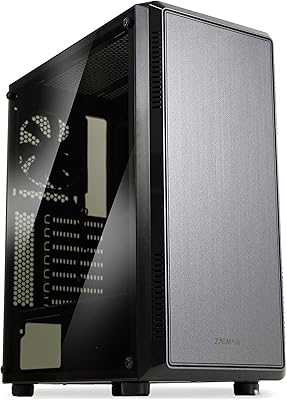
Zalman S3 ATX Mid-Tower PC Case
74%
83%
Value for Money
71%
Build Quality
58%
Airflow & Cooling Performance
86%
Ease of Assembly
67%
Acrylic Side Panel
More
SAMA NEVIEW 4503 Mid Tower PC Case
76%
91%
Value for Money
78%
Build Quality
83%
Airflow Performance
76%
ARGB Lighting
82%
Hardware Compatibility
More
ANSAITE W9 Mid-Tower ATX PC Case
77%
88%
Value for Money
91%
RGB & Lighting Performance
74%
Airflow & Cooling Capacity
63%
Build Quality & Materials
84%
Cable Management
More
SAMA V Mesh Mid Tower PC Case
79%
91%
Airflow Performance
88%
Included Fans
86%
Value for Money
67%
Build Quality
83%
Ease of Assembly
More
SAMA S40 Mid Tower ATX PC Case
79%
88%
Airflow Performance
83%
Included Fan Quality
79%
Build Quality & Finish
92%
GPU Compatibility
61%
Cable Management
More
Vetroo AL800 Mid Tower ATX PC Case
76%
78%
Build Quality
84%
Tempered Glass Panel
76%
Airflow Performance
61%
Fan Included & Expandability
69%
Cable Management
More
Corsair FRAME 4000D RS Mid-Tower Case
82%
91%
Airflow Performance
88%
Build Quality
86%
Modularity & Upgradability
83%
Fan Mounting System
78%
GPU Compatibility
More
Corsair 3000D Airflow Mid-Tower PC Case
81%
93%
Airflow Performance
88%
Build Quality & Materials
91%
Thermal Management Design
84%
Cable Management
61%
Included Fans Quality
More
KEDIERS K4 ATX Mid Tower PC Case
80%
91%
Value for Money
93%
Aesthetic Design
74%
Build Quality
72%
Cooling Performance
84%
Ease of Assembly
More

FAQ

In most configurations, yes. The GPU clearance is rated at 400mm long and 180mm tall, which covers the reference and most AIB partner RTX 4080 and 4090 cards. That said, some triple-fan 4090 models push right up against those limits, so it is worth double-checking your specific card's dimensions before committing. One thing to watch is GPU sag — a few users with very heavy cards have noted it over time, so an aftermarket GPU support bracket is a sensible addition.

No, the AsiaHorse Pegasus MATX Mid-Tower PC Case does not include any fans in the box. The nine fan mount positions are the theoretical ceiling for what you can install, but you will need to purchase fans separately. Budget for at least three to four fans if you want reasonable airflow through the chassis.
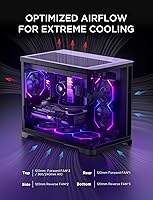
You can, but there is a real caveat here. The maximum combined thickness of the radiator plus its fans is 52mm at the top mount. Many 360mm AIOs with 25mm fans will just barely fit, but thicker fans or radiators will not clear the motherboard area. If your AIO setup exceeds 52mm, AsiaHorse specifically recommends installing the motherboard and routing the CPU power cable before fitting the cooler — skipping that step makes the wiring nearly impossible.

The maximum CPU cooler height is 157mm. Most popular tower coolers like the Noctua NH-U12S or DeepCool AK620 fall within this limit, but very tall coolers like the Noctua NH-D15 (which exceeds 165mm) will not fit. Always check your cooler's exact height spec before purchasing.

Generally decent for the price, though not exceptional. The dual-chamber layout does most of the heavy lifting by keeping the PSU and bulk cabling completely separate from the main build area. The routing channels behind the motherboard tray are adequate, but several builders have noted that the actual cutouts are a bit limited in number, so thicker cable sets from fully modular PSUs can get cramped back there.

Most users find it straightforward. The panels are designed to come off without tools in the standard way common to modern cases. The curved glass does feel more substantial than thin budget panels, which is reassuring, but it also means you want to handle it carefully and avoid putting it down on hard surfaces. Routine cleaning for dust is not a frequent concern if you have good positive pressure airflow.

At this price point, you are comparing this gaming chassis against options like the Fractal Pop Air or the lower end of Lian Li's LANCOOL lineup. Those brands carry a longer reliability track record and often have more refined internal fitment, but they rarely offer this much glass coverage or interior volume at the same price. If aesthetics and space are your top priorities and you are not brand-loyal, this enclosure punches above its price. If long-term brand support and RMA confidence matter more, the established names still have an edge.

Yes, Mini-ITX boards are supported. The case will accommodate them fine, though you will have a lot of unused space given the chassis is sized for Micro ATX. That is not necessarily a bad thing — it gives you more room to route cables cleanly and fit larger cooling solutions than a dedicated ITX case would allow.

Stick to PSUs 200mm or shorter. Most standard ATX power supplies from brands like Corsair, EVGA, and Seasonic fall within that range, but some of the longer fully modular high-wattage units can exceed it. Check your PSU's listed length before ordering, especially if you are going with a 1000W or higher unit.

A small number of users have flagged this, particularly with heavier triple-fan flagship cards. The horizontal PCIe slot design does not include a built-in GPU support bracket. For mid-weight cards this is not really an issue, but if you are running something like a heavy 4090 AIB card, picking up an inexpensive aftermarket GPU brace is a smart move to protect the PCIe slot over time.