Overview

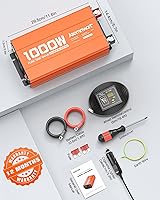
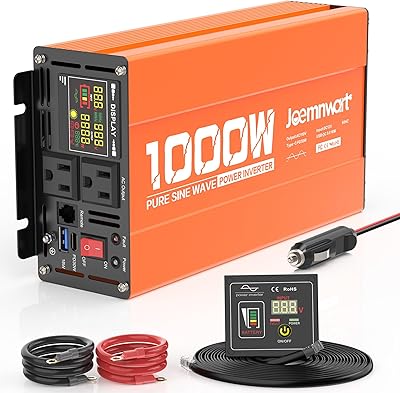
The Joemnwart 1000W Pure Sine Wave Power Inverter stepped onto the market in late 2024, entering a category crowded with established names — so it has something to prove. It converts 12V DC from a car or truck battery into clean 110V AC, delivering 1000W continuously with a 2000W peak for brief power spikes. That continuous rating covers a laptop, a small appliance, or a CPAP machine without issue. The aluminum housing and a well-stocked accessory bundle — cables, a remote, spare fuses, and more — suggest more thought went into this package than you typically expect from a brand this new.
Features & Benefits

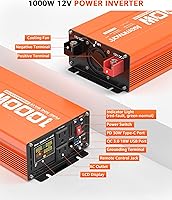
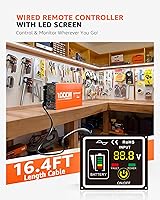
The clearest reason to choose pure sine wave over a cheaper modified alternative comes down to power quality. Modified sine wave works fine for basic tools, but it can wear on sensitive electronics over time — think of it like running a precision instrument on a bumpy road. This sine wave inverter outputs smooth, utility-grade AC, making it genuinely safe for laptops and medical devices. The dual USB fast charging ports — one QC3.0 and one 30W PD — let you top up phones and tablets at the same time. An LCD display and wired remote round things out, letting you monitor voltage and cut power without leaving your seat.

Best For

This 1000W inverter fits best in the hands of people who spend real stretches of time in vehicles or off-grid. Van-lifers and road-trippers will appreciate reliable AC power for a laptop or compact appliance without hunting for campground hookups. RV and boat owners get a quieter, more portable alternative to running a generator just to charge devices overnight. Truck drivers on long hauls can power a CPAP or small electric cooker straight from the cab. It also serves as a practical emergency backup during outages — enough to keep essential devices running for several hours when paired with a healthy battery.

User Feedback

With roughly 105 ratings and a 4.2-star average, early reception for the Joemnwart inverter is cautiously positive — though that pool is still thin for a product launched in late 2024. Buyers consistently highlight the clean, stable output and how straightforward the initial setup is. The fan staying quiet under light loads comes up repeatedly as a welcome detail. On the flip side, some reviewers raise fair questions about long-term reliability from an unfamiliar brand, and a few express doubt about whether peak wattage performance holds under sustained heavy loads. The remote and LCD earn mostly good marks. Treat the current ratings as an encouraging early signal, not a settled verdict.

Pros

  • Pure sine wave output keeps laptops, CPAP machines, and sensitive electronics running safely without interference.
  • The aluminum casing offers noticeably better durability than the plastic-shell competitors common at this tier.
  • Dual fast-charge USB ports — QC3.0 and 30W PD — mean fewer adapters cluttering your cab or camper.
  • The wired remote is a genuinely practical feature that saves real trips to the trunk or cargo area.
  • Six layers of safety protection, including reverse polarity, give confident peace of mind during direct battery wiring.
  • The fan stays quiet under light loads, which matters a great deal during overnight use in a small enclosed space.
  • The included accessory bundle — cables, fuses, ground wire, and more — means most users can install it without a separate parts run.
  • Early adopters report clean, stable power delivery consistent with the pure sine wave specification.
  • At its price point, the feature-to-cost ratio compares favorably against well-known brands offering similar specs.
  • Soft-start technology reduces the sharp current spike that can damage appliances or trip protection unnecessarily.

Cons

  • Brand history is measured in months, not years — long-term durability remains an open and unresolved question.
  • The review pool is still thin, making it hard to identify failure patterns that only surface over time.
  • The LCD shows voltage but not live wattage draw, which limits its usefulness for careful load management.
  • Wired remote cable length has been flagged as too short for vehicles with deep cargo configurations.
  • Some users report unexpected shutoffs when starting appliances they expected to fall within the peak power window.
  • The manual lacks wire gauge guidance, leaving less experienced users to research safe installation independently.
  • In warm ambient conditions, the inverter can hit thermal protection limits faster than expected under sustained high loads.
  • Only a 12-month warranty backs a unit that some buyers plan to use for several years or more.
  • No USB-C port exceeds 30W, which rules this out as a charging solution for power-hungry USB-C laptops.
  • Customer support responsiveness from a newer brand remains an unknown factor that established competitors have already demonstrated.

Ratings

The Joemnwart 1000W Pure Sine Wave Power Inverter has been put through its paces by a growing pool of verified buyers, and our AI-driven scoring system has analyzed that feedback worldwide — actively filtering out incentivized reviews and bot activity — to surface what real users actually experience. Scores reflect both the genuine strengths this inverter brings to the table and the legitimate concerns that keep it from standing alongside more established competitors. Nothing here is sugarcoated.
Power Output Quality
88%
Users who run laptops, CPAP machines, and other electronics that are picky about power quality consistently report stable, interference-free operation. The pure sine wave output behaves much like what comes out of a wall socket, which matters when you are running something like an audio interface or a medical device on the road.
A handful of buyers question whether the inverter truly sustains its rated 1000W continuously under hot ambient conditions, suggesting some thermal throttling may occur during extended heavy loads. This is worth keeping in mind for anyone planning to push the unit close to its ceiling for hours at a stretch.
Build Quality
79%
21%
The aluminum casing feels noticeably more solid than the plastic shells common at this price tier, and several reviewers mention that the unit survived rough handling during van and truck travel without showing damage. The overall fit and finish reads as competent for a brand this new.
Some users flag that the casing edges and port surrounds feel slightly less refined up close, and a few noted minor cosmetic inconsistencies out of the box. For a brand with no long track record, these small details do raise questions about manufacturing consistency over larger production runs.
USB Charging Performance
84%
The combination of a QC3.0 port and a 30W PD port in a single inverter is genuinely useful on the road — reviewers report charging a phone from near-empty to full in well under an hour. Having both protocols covered means this unit handles most modern phones and tablets without needing a separate adapter.
Only two USB ports are available, which feels limiting if you regularly travel with multiple people or several devices at once. There is also no USB-C PD port capable of pushing above 30W, so users with power-hungry laptops relying solely on USB-C will find this inverter falls short for that specific need.
Safety Protection System
86%
The six-layer protection suite — covering reverse polarity, short circuit, overload, and more — gives buyers genuine peace of mind, especially those wiring the unit directly to a battery for long-term use. Reviewers who accidentally reversed the cables reported the protection system caught the error without damage to the inverter or connected devices.
A few users note the inverter can be somewhat aggressive in triggering its overload shutoff during the startup spike of certain appliances, which can be frustrating when trying to power a small power tool or a mini-fridge that draws a brief surge on startup. Re-configuring the load order sometimes helps, but it requires trial and error.
Noise Level
82%
18%
The temperature-triggered fan design earns consistent praise from buyers who use this inverter in quiet environments — inside a camper van at night or in a truck cab during sleep hours. Under light to moderate loads, the unit runs in near silence, which is a meaningful quality-of-life improvement over inverters that run fans continuously.
Once the fan does kick in, some users describe it as louder than expected for an enclosed space, particularly at higher load percentages. It is not disruptive for daytime use, but light sleepers who are also running a CPAP or other overnight device may notice the fan cycles during extended use.
LCD Display & Remote Control
77%
23%
The wired remote is a practical touch that riders and drivers genuinely use — being able to toggle the inverter on or off from the front seat without crawling to the trunk or cargo area saves real hassle. The LCD readout gives a quick voltage snapshot that helps users keep tabs on battery health during use.
The LCD display is functional but not particularly detailed — it does not show wattage draw in real time, which would be far more useful for managing loads than voltage alone. The wired remote cable length is also considered too short by some users who mounted the inverter in deeper cargo areas.
Ease of Installation
89%
The included accessory kit is more complete than most competitors in this range — battery cables, a cigarette lighter adapter, a ground wire, spare fuses, and even a small screwdriver are all in the box. First-time inverter buyers specifically call out how straightforward the setup was, even without prior electrical experience.
The user manual, while included, is brief and lacks detailed guidance on wire gauge recommendations or how to safely size a fuse for direct battery connections. Anyone installing this semi-permanently in a vehicle would benefit from consulting outside resources rather than relying on the included documentation alone.
Thermal Management
74%
26%
The aluminum body acts as a passive heatsink, helping the unit shed heat during moderate use without relying entirely on active cooling. In real-world tests described by buyers, the chassis stays warm but not alarmingly hot during hour-long sessions powering a laptop and a phone simultaneously.
Under sustained high loads in warm environments — like a sun-baked truck cab in summer — some users report the unit cycling off due to overheating protection more quickly than expected. The fan threshold is pegged to internal temperature, which means ambient heat accelerates how fast the unit reaches its thermal limit.
Value for Money
81%
19%
For what comes in the box — pure sine wave output, fast USB charging, a remote, aluminum construction, and a multi-layer safety system — the overall package represents solid value at its price point compared to well-known brands offering a similar spec sheet for noticeably more. Buyers frequently describe it as a pleasant surprise for the outlay.
The brand has no established long-term reputation yet, and that uncertainty carries real weight when evaluating value. If this inverter fails outside its 12-month warranty window, sourcing support from a newer brand could prove frustrating — an established brand at a similar price point might offer more reliable after-sales infrastructure.
Portability & Form Factor
83%
At just over six pounds and with a footprint that fits comfortably in a mid-size truck toolbox or RV cabinet, this is a genuinely portable unit that does not feel burdensome to move between vehicles. The sturdy handle-style casing makes single-hand carrying easy.
While compact relative to its output class, it is still bulky enough that casual users who want to toss an inverter in a backpack or duffel will find it inconvenient. The cigarette lighter adapter limits maximum draw to around 150W anyway, so users who need the full 1000W must deal with the larger direct-battery cable setup regardless.
Brand Reliability & Longevity
58%
42%
Early adopters who purchased shortly after the late-2024 launch report no failures in the first several months of regular use, which is an encouraging baseline. The 12-month warranty at least provides a formal safety net during the most critical early ownership period.
With fewer than 200 reviews and a brand history measured in months, there is simply no meaningful long-term data yet. Buyers who plan to depend on this inverter daily for years — particularly for medical equipment — should weigh the lack of multi-year durability evidence as a genuine, unresolved risk factor.
Peak Power Handling
71%
29%
The 2000W peak rating gives the unit a reasonable buffer for appliances that draw a short surge on startup — small power tools, mini fridges, and similar devices tend to start without triggering the shutoff under normal conditions. Buyers report successful startup of several common household appliances within the expected wattage range.
Claims about sustained peak performance under real-world conditions are harder to verify given the limited review pool. A few users report the inverter cutting out during startup of appliances they expected to fall within the peak threshold, suggesting the actual peak window may be narrower or shorter-lived than advertised.
Conversion Efficiency
76%
24%
Users who monitor their battery drain closely note that the Joemnwart inverter does not appear to bleed excessive power at idle, which is useful during stationary overnight stays where battery conservation matters. The claimed 90% efficiency figure broadly aligns with real-world usage patterns described in reviews.
Independent verification of the exact efficiency figure is not available, and no-load consumption — though stated as minimal — is not quantified clearly in the product documentation. Buyers who need precise power budgeting for solar setups may want to measure actual draw with a dedicated meter rather than relying on the stated specs.

Suitable for:

The Joemnwart 1000W Pure Sine Wave Power Inverter is a strong match for anyone who spends meaningful time away from the grid and needs reliable AC power drawn from a 12V vehicle battery. Van-lifers and long-haul truck drivers will find it particularly well-suited for running a laptop, keeping a CPAP machine going overnight, or powering a small appliance without the noise and hassle of a portable generator. RV and boat owners who want cleaner power for sensitive electronics — without paying a premium for a big-brand unit — will appreciate the pure sine wave output, which treats delicate gear with the same quality of electricity it would get from a wall outlet at home. Road-trippers who also need fast USB charging for phones and tablets can cover all their devices from a single unit, which simplifies setup considerably. Emergency preparedness households will also find this a practical backup option during short-term outages, provided they pair it with a healthy, well-maintained battery.

Not suitable for:

Buyers who depend heavily on an inverter for mission-critical or long-term daily use should approach this sine wave inverter with measured expectations. The Joemnwart 1000W Pure Sine Wave Power Inverter launched in late 2024, and with fewer than 200 reviews to draw from, there is simply no multi-year reliability data available yet — that is a real gap for anyone planning to run medical equipment continuously or wire this unit into a permanent off-grid setup. Users with high-wattage demands — think power tools, full-size microwaves, or air compressors — will find 1000W of continuous output a hard ceiling that this inverter cannot exceed. Those who need USB-C charging above 30W for power-hungry laptops will also hit a wall, as neither USB port goes beyond that threshold. Anyone who values deep after-sales support and brand accountability built over years of market presence may find a newer, less-proven manufacturer a difficult leap of faith for a component they are counting on regularly.

Specifications

  • Continuous Power: This inverter delivers a steady 1000W of continuous AC power, sufficient for running a laptop, CPAP machine, or small household appliance from a 12V battery source.
  • Peak Power: A 2000W peak rating provides a brief surge buffer to handle the startup spike that many appliances draw before settling into their normal running wattage.
  • Input Voltage: The unit is designed exclusively for 12V DC input, making it compatible with standard car, truck, RV, and boat battery systems.
  • Output Voltage: It converts battery power into 110V–120V AC output, matching the standard wall-outlet voltage used across the United States.
  • Waveform Type: The output waveform is pure sine wave, which closely replicates utility grid electricity and is safe for use with sensitive electronics and motor-driven appliances.
  • AC Outlets: Two standard US-format AC outlets are provided, allowing two separate appliances or chargers to run simultaneously.
  • USB Port 1: The first USB-A port supports Qualcomm Quick Charge 3.0 at up to 18W, enabling fast charging for compatible Android and other QC-certified devices.
  • USB Port 2: The second USB-A port delivers up to 30W using the Power Delivery protocol, suitable for fast-charging many modern smartphones and smaller USB-C devices via an appropriate cable.
  • Efficiency Rating: The manufacturer rates conversion efficiency at up to 90%, meaning roughly 10% of drawn battery power is lost as heat during the conversion process under optimal conditions.
  • Casing Material: The enclosure is constructed from aluminum, which contributes to passive heat dissipation and offers better impact resistance than typical plastic inverter housings.
  • Cooling System: An internal fan activates automatically when the unit's internal temperature exceeds 45°C or when load surpasses 50% of rated capacity, and remains off below those thresholds to minimize noise.
  • Display: An LCD screen on the unit face shows real-time input voltage, providing a basic readout for monitoring battery health during operation.
  • Remote Control: A wired remote control is included in the package, allowing the inverter to be powered on or off from a distance without physical access to the unit itself.
  • Safety Protections: Six built-in protection circuits guard against overvoltage, undervoltage, overload, overheating, short circuit, and reverse polarity connection errors.
  • Soft Start: Soft-start technology gradually ramps up power delivery at startup, reducing inrush current stress on both the inverter and connected appliances.
  • Dimensions: The unit measures 14.09″ x 7.87″ x 5.51″, making it compact enough to fit in most truck toolboxes, RV storage compartments, or under-seat vehicle spaces.
  • Weight: At 6.23 pounds, the inverter is portable enough to move between vehicles or storage locations without significant effort.
  • Warranty: Joemnwart covers this inverter with a 12-month manufacturer warranty, with customer service support included for the duration of that period.
  • In the Box: The package includes the inverter unit, two battery cables, one cigarette lighter adapter, one wired remote control, one grounding wire, two replacement fuses, and a small screwdriver.
  • Market Launch: This product became available in September 2024, making it a relatively new entry with a still-developing track record in the market.

Related Reviews

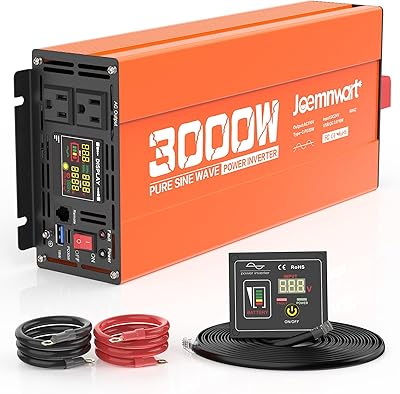
Joemnwart 3000W Pure Sine Wave Power Inverter 24V DC to 110V AC
85%
91%
Power Output
89%
Efficiency
88%
Ease of Use
74%
Noise Levels
85%
Build Quality
More
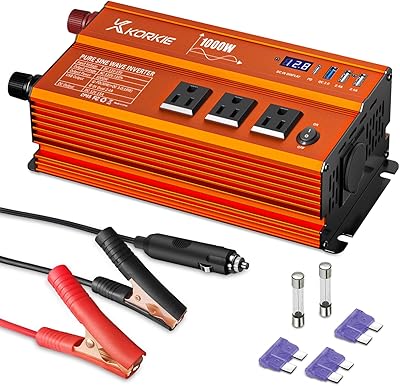
KORKIE 1000W Pure Sine Wave Inverter
87%
92%
Power Output Performance
88%
Portability
85%
Ease of Use
90%
Cooling System Efficiency
87%
Battery Compatibility
More
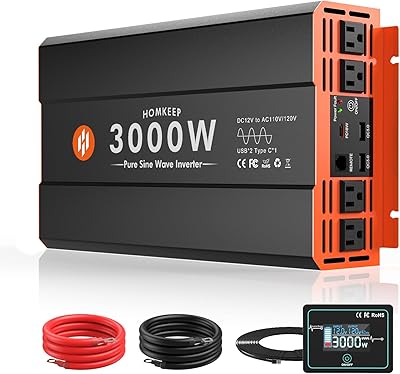
Homkeep 3000W Pure Sine Wave Power Inverter
88%
93%
Power Performance
88%
Ease of Use
90%
Build Quality
85%
Noise Level
91%
Safety Features
More
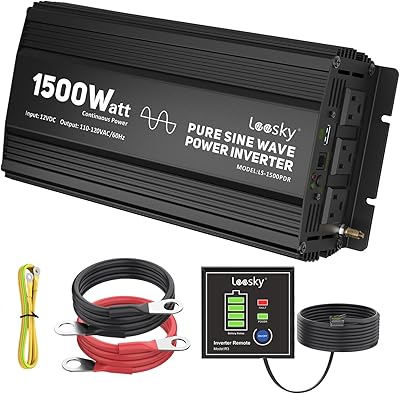
LEESKY 1500W Pure Sine Wave Power Inverter
82%
88%
Output Power Quality
84%
Build Quality
86%
Value for Money
91%
Remote Controller Usefulness
79%
Noise Level
More
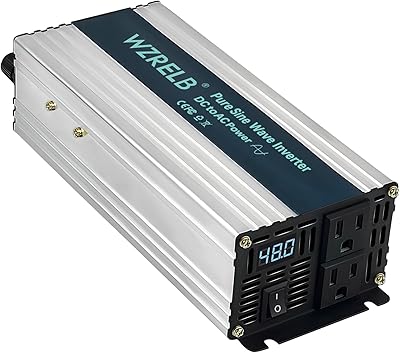
WZRELB 1000W Pure Sine Wave Inverter SE100048
82%
88%
Power Performance
90%
Ease of Use
75%
Cooling System Efficiency
70%
Surge Power Handling
85%
Portability
More
Yinleader 3500W Pure Sine Wave Power Inverter
86%
94%
Power Output Performance
89%
Ease of Setup & Installation
91%
Remote Control Convenience
85%
Durability & Build Quality
78%
Noise Levels
More
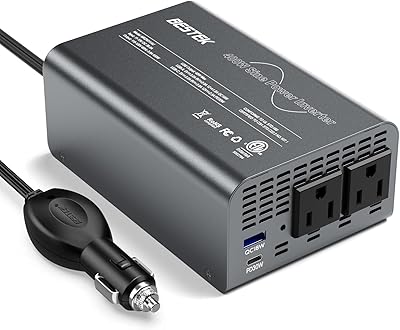
BESTEK 400W Pure Sine Wave Power Inverter
81%
91%
Power Output Quality
74%
Real-World Wattage Reliability
88%
USB Charging Speed
83%
Fan Noise
76%
Build Quality & Durability
More
Ampinvt 5000W 24V Split Phase Power Inverter
72%
83%
Power Output Reliability
78%
Build Quality
86%
Pure Sine Wave Quality
81%
Battery Charger Performance
54%
Installation Experience
More
Joemnwart 1500W Pure Sine Wave Inverter 12V to 110V
85%
88%
Performance
92%
Value for Money
85%
Ease of Use
89%
Build Quality
91%
Safety Features
More
GIANDEL 2000 Watt Pure Sine Wave Power Inverter
82%
88%
Power Output Performance
90%
Surge Capacity
85%
Energy Efficiency
80%
LCD Display & Monitoring
75%
Cooling System & Heat Management
More

FAQ

Yes, pure sine wave output is exactly what CPAP machines need — they are among the most sensitive devices to power quality, and a modified sine wave inverter can cause motor wear or erratic pressure over time. The Joemnwart 1000W Pure Sine Wave Power Inverter outputs clean AC that behaves like wall power, so your CPAP should run normally. Just make sure your vehicle battery is in good health and sufficiently charged before you sleep, since a CPAP running all night will draw it down meaningfully.
For AC charging, yes — you can plug your standard MacBook charger into one of the two AC outlets and it will work fine. The USB ports top out at 30W on the PD port, which is enough for charging smaller laptops and phones via USB-C cable, but will charge a MacBook Pro quite slowly compared to its full-speed adapter. For fastest results, stick with the AC outlet and your original power brick.

The package includes a set of battery cables with ring terminal connectors that attach directly to your battery posts — red to positive, black to negative. This direct connection is the only way to draw the full 1000W, since the cigarette lighter adapter is limited to around 150W by the fuse in most vehicles. If you are making a permanent or semi-permanent installation, consult an automotive guide for appropriate wire gauge at this current draw.

It only runs when needed, which is one of the more appreciated design choices on this inverter. The fan stays completely off during light use and only spins up when the internal temperature climbs above 45°C or the load exceeds roughly half the rated capacity. For overnight low-load use — like running a CPAP or charging devices — most users report the unit stays nearly silent.

Think of pure sine wave as smooth, rolling ocean waves and modified sine wave as choppy, stepped waves. Most simple devices like phone chargers or basic power tools do not care much about the difference, but anything with a sensitive microprocessor, an electric motor, or audio components can run poorly — or degrade faster — on modified sine wave. If you are running a laptop, CPAP, medical equipment, or quality audio gear, pure sine wave is the right call.

Yes, all four outputs are available simultaneously up to the inverter's total 1000W continuous limit. In practice, two AC devices and two charging phones or tablets is well within that budget for typical use cases. Just be mindful of the combined wattage of anything plugged into the AC outlets — the inverter will shut off to protect itself if the total draw exceeds its rated capacity.

The LCD displays input voltage from your battery, which is useful for keeping an eye on whether your battery is getting too low during extended use. It does not show live wattage consumption, which would honestly be more useful for load management. The voltage readout is generally reported as reasonably accurate by users, but for precision power budgeting — especially in a solar setup — a dedicated battery monitor will give you more actionable data.

This is a real limitation that comes up in user feedback. The cable is serviceable for many installations, but buyers who mount the inverter deep in a truck bed or at the rear of a larger SUV cargo area have found it comes up short. If your mounting location is more than a few feet from where you want the remote, plan on routing the cable creatively or sourcing an extension.

The reverse polarity protection circuit is designed to catch exactly this mistake. If the cables are swapped, the inverter should detect the error and refuse to operate rather than allowing current to flow through the unit incorrectly. Users who have made this mistake report no damage to the inverter itself, though you should always double-check your connections before powering on — red to positive, black to negative, every time.

It covers the most statistically likely failure window — early manufacturing defects tend to show up in the first few months of use. That said, if you are planning to wire this 1000W inverter into a van build or depend on it daily for years, a single year of coverage is thinner than what established brands sometimes offer. Keep your purchase receipt and register the product with Joemnwart if that option is available, so you have a clear record if something goes wrong before the warranty period ends.