Overview

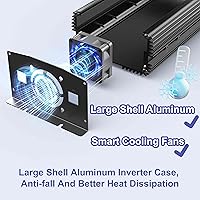
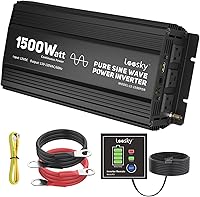
The LEESKY 1500W Pure Sine Wave Power Inverter sits in a practical middle ground — capable enough for real off-grid and emergency use, yet compact enough to fit under a truck seat or inside an RV compartment. It converts 12V DC to 120V AC with a clean waveform (THD under 3%), which matters when running sensitive electronics like a CPAP machine or a Starlink dish rather than just charging a phone. LEESKY isn't a household name, but the aluminum alloy casing, UL-listed fuses, and AIG-backed product liability insurance suggest a brand working to earn trust beyond a low price point. The included 15ft remote controller with battery level monitoring is a genuinely useful touch you don't always find at this tier.
Features & Benefits

Three standard AC outlets and a USB port handle most real-world simultaneous needs — think laptop, fan, and phone at the same time. The seven protection modes cover the usual suspects: short circuit, overload, over- and under-voltage, overheating, and output short circuit, with an input/output isolation design that adds an extra layer of safety during extended runs. The cooling fan kicks in automatically around 104°F and stays quiet until the load genuinely demands it. Worth noting: the 1500W rating is continuous output, not peak — the unit handles up to 3000W surge briefly, but sustained loads above 1500W aren't what this is built for. Lithium battery compatibility and Starlink-friendly clean output round out a solid feature set.

Best For

This pure sine wave inverter is a strong fit for RV and camper van owners who want AC power on demand without firing up a generator for every small task. Truck drivers running a CPAP machine, laptop, or small appliance on a long haul will appreciate the clean, stable output — modified sine wave units can cause buzzing in audio gear and irregular behavior in medical devices. It also works well as a home emergency backup, keeping a router, lamp, or small fan running during a power outage. Starlink users running the dish from a 12V battery bank should find this inverter's output clean enough to handle it without issues.

User Feedback

With a 4.6 out of 5 star rating across 132 reviews for a listing that launched in mid-2024, the LEESKY 1500-watt unit is off to a solid start. Buyers frequently praise the remote controller convenience — particularly those who mounted the inverter out of direct reach, like under a truck bed cover or inside an RV cabinet. Build quality earns positive mentions too, with the aluminum shell feeling noticeably sturdier than cheaper plastic alternatives. On the critical side, some users note the included battery cables are just 2 feet long, which can limit placement flexibility. A few reviewers mention the fan becomes audible at higher loads, though not disruptively so. Most buyers feel the value-to-performance ratio holds up well against pricier, more established brands.

Pros

  • Pure sine wave output with THD under 3% protects sensitive electronics that modified sine wave inverters can damage or interfere with.
  • The 15-foot remote lets you control and monitor the inverter from a distance, a real practical advantage in truck or RV installations.
  • Three AC outlets mean you can run multiple devices at once without needing a separate power strip.
  • Aluminum alloy casing handles heat dissipation and physical bumps better than the plastic shells common at this price point.
  • Seven built-in protection modes — including overheat, short circuit, and under-voltage shutdown — reduce the risk of damage to the inverter and connected devices.
  • AIG product liability insurance and UL-listed fuses offer meaningful safety assurance from a brand still building its reputation.
  • Compatible with lithium battery systems, making it a solid fit for modern DIY solar and van build setups.
  • At around six pounds, it is portable enough to move between vehicles or use in different locations without it being a hassle.
  • The automatic cooling fan stays quiet during light to moderate use, which matters in sleeping or quiet working environments.
  • A 12-month warranty provides a reasonable safety net given the price tier.

Cons

  • The included battery cables are only 2 feet long, forcing most buyers to purchase longer cables before a proper installation is even possible.
  • No USB-C port on a unit launched in mid-2024 is a noticeable gap, especially for users with modern phones and tablets.
  • The remote controller lacks real-time wattage or output voltage display, limiting its usefulness for anyone wanting to track actual power consumption.
  • Fan noise becomes clearly audible under heavier loads, which can be an issue in quiet cab or sleeping-area installations.
  • Under-voltage alarm thresholds may trigger earlier than expected with LiFePO4 batteries, cutting off usable capacity before the battery is actually depleted.
  • LEESKY has a limited long-term reliability track record compared to established inverter brands, leaving some uncertainty for mission-critical applications.
  • Protection thresholds are fixed and not user-adjustable, which restricts flexibility for advanced users with custom battery configurations.
  • Sustained loads above 1500W will trigger protection cutoffs — buyers who need headroom above that ceiling need to look at a higher-rated unit.

Ratings

The LEESKY 1500W Pure Sine Wave Power Inverter earns a strong overall standing based on AI analysis of verified global buyer reviews, with spam, bot activity, and incentivized feedback actively filtered out before scoring. Across categories ranging from output quality to installation practicality, both the genuine strengths and the recurring frustrations are reflected honestly in the scores below.
Output Power Quality
88%
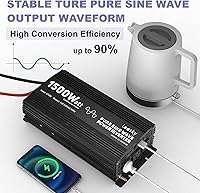
Buyers running sensitive electronics — CPAP machines, Starlink dishes, and audio equipment — consistently report clean, stable power with no interference or device malfunctions. The pure sine wave output with THD under 3% holds up well under moderate, sustained loads, which is exactly what this class of user needs.
A handful of buyers note that at loads approaching the 1500W continuous ceiling, output stability can show minor fluctuations. Those expecting the surge rating to function as a sustained working capacity have occasionally been disappointed when protection circuits kick in earlier than anticipated.
Build Quality
84%
The aluminum alloy shell is the first thing buyers comment on favorably — it feels noticeably more robust than the plastic-bodied inverters common at this price range. Several RV and truck users mention it has survived bumps, vibration, and dusty environments without showing signs of wear.
A few buyers point out that the terminal block feels less refined than the body itself, and the included 2-foot battery cables are short enough to limit mounting flexibility in larger vehicle setups. The overall assembly is solid, but finishing details are occasionally inconsistent.
Value for Money
86%
For a pure sine wave unit at this price point, buyers frequently note that comparable output quality from established brands costs considerably more. The inclusion of a remote controller, UL-listed fuses, and AIG product liability insurance gives buyers confidence that they are not trading safety for savings.
Some experienced inverter users feel the accessory bundle — particularly the short battery cables — could be more generous given what the unit costs. Those who have owned higher-end inverters occasionally flag that the long-term reliability track record for LEESKY is still being established.
Remote Controller Usefulness
91%
The 15-foot cable on the remote is a practical standout. Buyers who mount the inverter under a truck bed, inside a rear cargo area, or tucked into an RV cabinet say the ability to monitor battery level and toggle power from the cab or living area is genuinely useful day-to-day.
The remote display is functional but basic — it shows battery level and on/off status, but does not display real-time wattage draw or output voltage. Users looking for deeper monitoring insight will likely want a separate battery management display to complement it.
Noise Level
79%
21%
Under light to moderate loads, the auto-activating cooling fan stays quiet enough that most users forget it is running. Buyers using the inverter in RV sleeping areas or quiet cab environments during moderate use report it is not disruptive.
When loads climb toward the upper half of the rated capacity, the fan becomes noticeably audible. A small number of buyers describe the fan noise at high draw as louder than expected for a unit marketed partly toward quiet vehicle and living-space use.
Installation & Setup
77%
23%
The physical installation is straightforward — mounting holes, clear terminal labeling, and a logical layout make initial setup manageable for someone with basic 12V wiring knowledge. The included instruction manual covers the essentials without being overly technical.
The 2-foot battery cables included in the box are the most common setup complaint by a wide margin. For any installation where the inverter is not sitting directly next to the battery, buyers need to source longer cables separately, which adds cost and effort right out of the gate.
Protection Systems
87%
The seven built-in protection modes cover the scenarios that matter most in mobile and off-grid use — low battery shutdown, overheat cutoff, and short-circuit protection all function as described. Several buyers mention the inverter has protected their devices during unexpected voltage drops without any damage.
The protection thresholds are preset and not user-adjustable, which limits flexibility for advanced users running custom battery setups with non-standard voltage curves. Buyers with LiFePO4 batteries running at the lower end of their discharge range have occasionally triggered under-voltage shutdowns earlier than expected.
Compatibility with Lithium Batteries
83%
Buyers pairing this inverter with lithium battery banks — particularly in solar van builds and off-grid cabin setups — report reliable operation without communication issues. The input voltage range of 9.8 to 16V DC accommodates most common 12V lithium configurations comfortably.
There is no active battery chemistry selection or lithium-specific optimization mode. Users with tightly managed LiFePO4 systems note that the under-voltage alarm threshold sits slightly high relative to usable lithium discharge depth, meaning the inverter may alarm before the battery is actually depleted.
Thermal Management
81%
19%
The aluminum casing does real work here — buyers in hot climates and summer RV conditions note the unit stays cooler to the touch during extended use than plastic-cased alternatives they previously owned. The automatic fan threshold keeps things quiet until heat management actually demands airflow.
Extended high-load operation in enclosed, poorly ventilated spaces pushes the over-temperature protection to cut power sooner than some buyers expect. A few truck users who mounted the unit in tight under-seat locations report occasional thermal shutdowns that required repositioning for better airflow.
AC Outlet Usability
82%
18%
Three standard US-style sockets mean buyers can run multiple devices simultaneously without a power strip, which is a genuine convenience in an RV or emergency setup. The sockets are spaced well enough that most standard plugs fit without blocking adjacent outlets.
The outlets do not include any individual switching or circuit separation, so a fault on one connected device affects all three simultaneously. Buyers accustomed to inverters with individually fused outlets consider this a minor but real limitation in multi-device setups.
USB Charging
68%
32%
Having a built-in USB port is a convenient touch for keeping a phone or small device charged without using up an AC outlet slot. For basic charging needs during a power outage or road trip, it does the job acceptably.
The 2.4A USB-A output is behind modern charging expectations — buyers with USB-C devices or those wanting faster phone and tablet charging find it limiting. There is no USB-C port, which stands out as a gap given how common USB-C charging has become across device categories.
Brand Trust & Warranty Support
73%
27%
The AIG-backed product liability insurance and 12-month warranty give buyers more formal reassurance than many similarly priced inverters from lesser-known brands. The inclusion of UL-listed fuses on a unit at this price point signals a basic commitment to safety compliance.
LEESKY does not yet have the brand recognition or long-term community track record of established inverter manufacturers. Buyers who have owned their unit for over six months offer limited long-term reliability data, and customer service response quality in after-sales situations gets mixed feedback.
Portability & Form Factor
85%
At just over 6 pounds and roughly the footprint of a thick hardcover book, this pure sine wave inverter is genuinely portable by the standards of its wattage class. Buyers switching between a truck cab and a camper setup appreciate being able to move it without significant effort.
It is not compact enough to sit unobtrusively on a desk or countertop, so placement in tight vehicle interiors requires some planning. The weight, while reasonable for the output capacity, rules it out for truly lightweight backpack-style portable power applications.

Suitable for:

The LEESKY 1500W Pure Sine Wave Power Inverter is a practical fit for anyone who needs dependable AC power in a mobile or off-grid setting without paying a premium for a big-name brand. RV and camper van owners will get the most out of it — the clean sine wave output protects sensitive gear like CPAP machines, laptops, and Starlink terminals that a cheaper modified sine wave unit could damage or interfere with. Truck drivers on long hauls who want to run a small appliance or charge multiple devices simultaneously will appreciate the three AC outlets and the 15-foot remote, which lets them control and monitor the inverter from the cab even when it is stowed behind the seat or in a cargo area. It also works well as a light emergency home backup unit, capable of keeping a router, fan, or small medical device running during a power outage when paired with a 12V battery bank. Off-grid solar builders who need a reliable 12V-to-120V conversion stage with lithium battery compatibility will find the input voltage range and protection suite well matched to typical DIY system requirements.
Not suitable for:

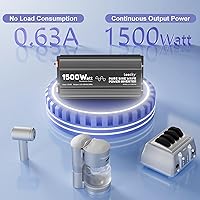
The LEESKY 1500W Pure Sine Wave Power Inverter is not the right choice for buyers planning to run heavy loads close to or at the 1500W continuous ceiling for extended periods — this is a unit suited to moderate, practical use, not sustained high-demand applications like power tools, large air compressors, or whole-home appliance backup. The 2-foot battery cables included in the box are genuinely short, so anyone planning a permanent or semi-permanent installation at any distance from their battery bank will need to budget for and source longer cables separately before the unit is even usable. Buyers who want advanced monitoring features — real-time wattage readout, output voltage display, or battery chemistry selection for optimized LiFePO4 performance — will find the basic remote controller insufficient and may need to supplement with external metering equipment. If brand reputation and years of proven field reliability are non-negotiable for your application, LEESKY's relatively short market history may give you pause, especially for mission-critical setups like medical device power or permanent off-grid living. Finally, anyone expecting USB-C fast charging from the built-in port will be disappointed — the single USB-A output is functional but outdated by current device standards.
Specifications

  • Continuous Output: Delivers a steady 1500W of continuous AC power under normal operating conditions.
  • Peak Surge Power: Handles brief startup surges up to 3000W, accommodating the higher draw many motor-driven appliances require at startup.
  • Input Voltage: Accepts DC input in the range of 9.8V to 16V, compatible with standard 12V vehicle and battery bank systems.
  • Output Voltage: Produces 120V AC output within a ±10% tolerance at 60Hz, matching standard North American household current.
  • Output Waveform: Generates a true pure sine wave with total harmonic distortion under 3%, safe for sensitive and medical-grade electronics.
  • Efficiency Rating: Operates at up to 90% conversion efficiency under optimal load conditions, minimizing battery drain during use.
  • AC Outlets: Equipped with 3 standard US-style 15A sockets, each supporting up to 1500W of total combined output.
  • USB Port: Includes one USB-A port rated at 2.4A for basic device charging without occupying an AC outlet.
  • Remote Controller: Ships with a 15-foot wired remote that displays battery charge level and provides on/off control of the inverter.
  • Casing Material: Constructed from aluminum alloy for improved structural durability, drop resistance, and passive heat dissipation.
  • Cooling System: Built-in fan activates automatically when internal temperature reaches 104°F and shuts off once the unit cools down.
  • Over-Temp Protection: Triggers an automatic shutdown if internal temperature reaches approximately 149°F to prevent heat-related damage.
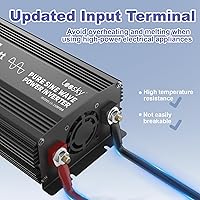
  • Protection Modes: Features 7 protection systems covering short circuit, overload, over-voltage, under-voltage, overheat, output short circuit, and input/output isolation.
  • Built-in Fuses: Fitted with UL-listed fuses that provide a certified layer of protection against electrical faults and fire risk.
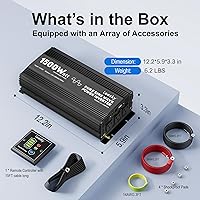
  • Dimensions: Measures 12.2 x 5.9 x 3.3 inches, making it compact enough for under-seat or cabinet installation in most vehicles.
  • Weight: Weighs 6.13 pounds, portable enough to move between setups without requiring permanent installation.
  • Included Cables: Package includes 2-foot red and black battery cables and a 3-foot grounding cable for basic connection to a 12V source.
  • Warranty: Backed by a 12-month manufacturer warranty covering defects in materials and workmanship.
  • Liability Insurance: Product liability coverage is underwritten by AIG insurance, providing an additional layer of consumer protection.
  • Battery Compatibility: Compatible with standard lead-acid and lithium battery systems, including those used in off-grid solar and van build setups.

Related Reviews

OLTEANP TK-1500W 1500W Pure Sine Wave Inverter
87%
89%
Power Performance
92%
Value for Money
85%
Ease of Use
90%
Portability & Size
93%
Safety Features
More
Novopal 1500W Pure Sine Wave Inverter
83%
90%
Power Efficiency
67%
Portability/Weight
85%
Ease of Use
88%
Build Quality
92%
Safety Features
More
Yinleader 3500W Pure Sine Wave Power Inverter
86%
94%
Power Output Performance
89%
Ease of Setup & Installation
91%
Remote Control Convenience
85%
Durability & Build Quality
78%
Noise Levels
More
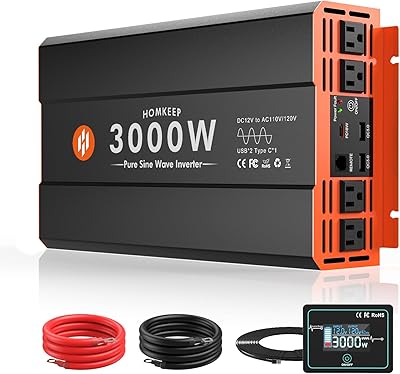
Homkeep 3000W Pure Sine Wave Power Inverter
88%
93%
Power Performance
88%
Ease of Use
90%
Build Quality
85%
Noise Level
91%
Safety Features
More
WZRELB 1500W 24V Pure Sine Wave Inverter
85%
84%
Performance under Load
91%
Ease of Installation
88%
Quiet Operation
89%
Reliability and Durability
82%
Power Conversion Efficiency
More
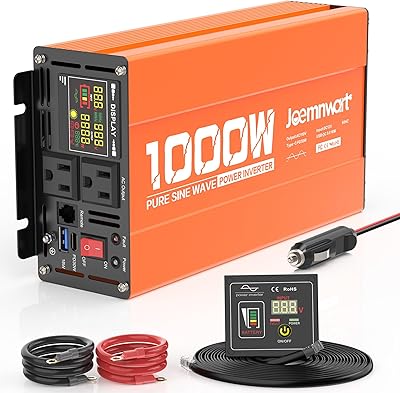
Joemnwart 1000W Pure Sine Wave Power Inverter
79%
88%
Power Output Quality
79%
Build Quality
84%
USB Charging Performance
86%
Safety Protection System
82%
Noise Level
More
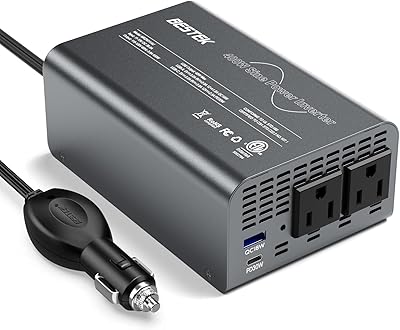
BESTEK 400W Pure Sine Wave Power Inverter
81%
91%
Power Output Quality
74%
Real-World Wattage Reliability
88%
USB Charging Speed
83%
Fan Noise
76%
Build Quality & Durability
More
Joemnwart 1500W Pure Sine Wave Inverter 12V to 110V
85%
88%
Performance
92%
Value for Money
85%
Ease of Use
89%
Build Quality
91%
Safety Features
More
Ampinvt 5000W 24V Split Phase Power Inverter
72%
83%
Power Output Reliability
78%
Build Quality
86%
Pure Sine Wave Quality
81%
Battery Charger Performance
54%
Installation Experience
More
GIANDEL 2000 Watt Pure Sine Wave Power Inverter
82%
88%
Power Output Performance
90%
Surge Capacity
85%
Energy Efficiency
80%
LCD Display & Monitoring
75%
Cooling System & Heat Management
More

FAQ

Yes, this is one of the most practical use cases for a pure sine wave unit at this wattage. Most CPAP machines draw between 30W and 100W depending on pressure settings and whether a humidifier is running, so the inverter handles them comfortably. Just make sure your battery bank is large enough to sustain that draw for the hours you need — a single group 31 AGM or a 100Ah lithium battery should cover most users through a full night.

The 1500W continuous rating is the maximum power the unit can deliver steadily over time — that is the number you should use when calculating whether your devices will run safely. The 3000W surge rating only applies for brief moments, typically a fraction of a second, to handle the startup spike that motors and compressors demand when they first turn on. Do not plan to run 2000W of sustained load on this unit expecting the surge capacity to cover the difference.

Yes, the LEESKY 1500W Pure Sine Wave Power Inverter is well suited to powering a Starlink terminal. Starlink equipment is sensitive to power quality and works best with a true pure sine wave source, which this unit provides. The standard Starlink dish draws roughly 50W to 100W during normal operation, well within the continuous output capacity.
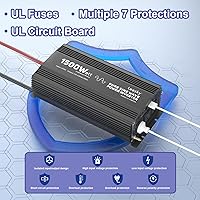
For most permanent or semi-permanent vehicle installations, yes, you will almost certainly need longer cables. Two feet is only enough if the inverter is sitting directly beside the battery, which is rarely practical in a truck cab, RV, or cargo area setup. Plan to pick up appropriately gauged 4 AWG or 2 AWG cables in the length you need before your first installation — it is a common first-purchase companion item for this unit.

You can mount it in a semi-enclosed space, but ventilation matters. The cooling fan needs airflow to do its job, and the overheat protection will cut power if the unit cannot dissipate heat adequately. Leave at least a few inches of clearance around the fan vents and avoid fully sealed enclosures, especially if you plan to run moderate to heavy loads for extended periods.

No, the remote only displays battery charge level in bars and allows you to turn the inverter on or off remotely. It does not show real-time wattage consumption, output voltage, or input current. If you want to monitor actual power draw, you will need a separate inline watt meter or battery monitor installed on your system.

It is compatible in the sense that it will operate correctly from a LiFePO4 battery bank within the supported input voltage range of 9.8V to 16V. However, there is no lithium-specific battery profile or chemistry setting to optimize the discharge thresholds. The under-voltage alarm is set around 9.8V, which is on the low end for LiFePO4 — some users with tightly managed lithium systems find the alarm triggers slightly before their battery management system would, so factor that into your setup expectations.

Under light loads — say, charging a laptop and running a small fan — the cooling fan is barely noticeable. As you approach the upper half of the rated capacity, the fan ramps up and becomes clearly audible, roughly comparable to a mid-range box fan on a low setting. It is not disruptive in a vehicle cab or outdoor setting, but if the inverter is inside a small RV sleeping space and you are running a heavy load at night, you may notice it.

Yes, with the right setup. You will need a 12V battery bank — or multiple batteries wired in parallel — with enough capacity to sustain your loads for the duration you need. The inverter itself handles the conversion cleanly. Keep in mind it is not a whole-home backup solution; think of it as capable of running a router, a few lights, a small fan, or a medical device — not an air conditioner or refrigerator compressor for extended periods.

Established brands like Renogy, AIMS, or Victron carry more field history and wider community support, which counts for something in long-term off-grid builds. That said, for the price, this inverter competes well on paper specifications and initial build impression — the aluminum casing and UL-listed fuses are genuine differentiators at this tier. Buyers who need a proven unit for mission-critical applications may prefer a more established name, but for RV trips, truck cab use, or occasional emergency backup, most owners report it holds up well.