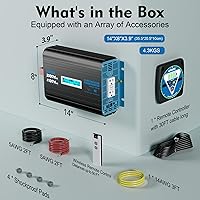
Overview

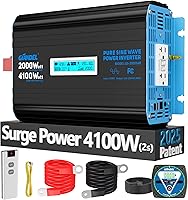
The Giandel 2000W Pure Sine Wave Power Inverter enters a crowded mid-range market with some genuine differentiators worth paying attention to. It converts 12V DC to 120V AC, handling up to 4100W surge for brief moments — useful when motor-driven appliances like refrigerators or air compressors kick on. What stands out physically is the aluminum alloy housing, which manages heat far better than the plastic shells common on budget units. It also carries UL458 and FCC certifications, which matter if you are installing it in an RV or off-grid system where insurance or campground rules apply. For a product launched in late 2024, the review volume it has already built is notably strong.

Features & Benefits

What makes this pure sine wave inverter worth considering over a cheaper modified sine wave unit is the quality of power it delivers — clean enough for CPAP machines, audio equipment, and variable-speed tools that would otherwise hum, overheat, or malfunction. The GFCI-protected outlets are a meaningful addition at this power tier, offering ground fault protection you would normally expect only from a wall outlet. The 15-foot wired remote lets you mount the unit in a compartment and still monitor battery voltage from the driver seat. A USB-C 36W port handles fast charging directly, and idle draw stays under 12W, so it will not quietly drain your battery bank during standby.

Best For

This inverter is a natural fit for RV owners who regularly run a 1500W microwave, a CPAP, or small appliances and need the stable waveform that sensitive electronics demand. Van-lifers and truck drivers powering laptops or audio gear from a 12V battery bank will appreciate the clean output and compact footprint. Off-grid solar builders will find the certification compliance particularly valuable — UL and FCC approvals can affect whether a system passes inspection or qualifies under certain insurance policies. It also works well as an emergency backup inverter paired with a deep-cycle battery, delivering reliable AC power when the grid goes down without risking damage to connected devices.

User Feedback

With over 700 ratings and a 4.4-star average, the Giandel 2000W unit has earned consistent praise for its quiet operation and solid build quality — buyers frequently note it runs appliances without the buzzing or interference that cheaper inverters produce. The LCD readout gets positive mentions for clarity, though a handful of users found it harder to read in direct sunlight. Some reviewers reported the cooling fans become noticeably loud under heavy sustained load, worth knowing if the unit lives in a living space rather than a utility compartment. Customer service appears responsive based on review patterns, with most warranty concerns resolved without major friction. Overall, a well-rounded performer for its class.

Pros

  • Pure sine wave output keeps sensitive electronics like CPAPs, laptops, and audio gear running cleanly without hum or interference.
  • GFCI-protected outlets add a genuine safety layer that many competing inverters at this power level skip entirely.
  • The aluminum alloy housing handles heat better than plastic-shell alternatives and feels built to last through rough mobile use.
  • A 15-foot wired remote with battery voltage display makes installation in a compartment or under a seat fully practical.
  • Idle draw under 12W means the inverter is not quietly bleeding your battery bank dry during standby.
  • UL458 and FCC certifications give off-grid solar installers a compliant option without paying premium inverter prices.
  • The LCD readout gives you real-time load wattage and battery status at a glance, which is genuinely useful day to day.
  • USB-C 36W fast charging built directly into the unit removes the need for a separate adapter in most setups.
  • Over 700 reviews with a 4.4-star average suggests this is not a flash-in-the-pan product with padded ratings.
  • An 18-month warranty backed by US-based service centers provides a realistic support path if something goes wrong.

Cons

  • Cooling fans get noticeably loud under sustained heavy loads, which can be disruptive if the unit is mounted inside a living area.
  • Some users report the LCD screen is harder to read in direct sunlight, limiting visibility in certain outdoor or cab-mounted setups.
  • At 15 inches long and over 12 pounds, this inverter is bulkier than some competing units and requires deliberate mounting space planning.
  • The included battery cables have been flagged by some buyers as shorter than ideal for flexible installation configurations.
  • Strictly a 12V input unit, so anyone running a 24V or 48V battery system needs to look elsewhere entirely.
  • Fan noise at idle, while low, is not completely silent, which may matter in quiet overnight camping environments.
  • The remote control functionality is basic, limited to on/off and voltage monitoring rather than any advanced load management.
  • No Bluetooth or app connectivity means all monitoring is confined to the physical LCD and wired remote.

Ratings

The scores below for the Giandel 2000W Pure Sine Wave Power Inverter were generated by our AI system after analyzing verified global buyer reviews, actively filtering out incentivized, bot-generated, and duplicate feedback to surface genuine ownership experiences. Each category reflects both the consistent praise and the recurring frustrations real users have reported across thousands of hours of combined use in RVs, off-grid solar setups, and emergency backup scenarios. Nothing has been softened — strong scores are earned and weaker scores reflect honest patterns from the field.

Power Output Reliability
88%
Buyers running microwaves, CPAP machines, and power tools consistently report that this inverter delivers its rated 2000W without unexpected shutdowns under normal operating conditions. RV owners in particular appreciate that the unit handles their combined appliance loads day after day without thermal trips during reasonable use.
A subset of users pushing the inverter close to its continuous ceiling for extended periods have noted it will eventually trigger overload protection, which is expected behavior but frustrating if your load calculations were borderline. Real-world sustained capacity for some buyers feels closer to 1800W before the unit becomes cautious.
Pure Sine Wave Quality
91%
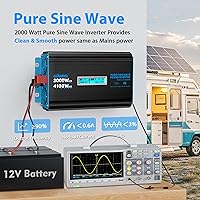
Audio enthusiasts and CPAP users are among the most vocal praise-givers here, noting zero interference, hum, or device misbehavior that they previously experienced with modified sine wave alternatives. Laptops, variable-speed tools, and sensitive medical equipment all run cleanly without any of the waveform-induced heat or buzzing that lower-tier inverters cause.
There is very little to criticize on waveform quality at this price point, though a small number of technically inclined buyers using oscilloscopes have noted minor harmonic distortion at very high loads — imperceptible in practice but worth flagging for precision audio or lab-grade equipment applications.
Build Quality
86%
The aluminum alloy housing is one of the most consistently praised physical attributes across buyer reviews, with many comparing it favorably to plastic-shell inverters they had previously owned that cracked, warped, or degraded from heat over time. The unit feels solid and dense in a way that gives installers confidence when mounting it permanently in a vehicle or compartment.
A few buyers noted that the terminal connections and internal cable routing show some inconsistency in finishing quality, suggesting the manufacturing tolerances are not perfectly uniform across units. The overall housing is strong, but it is not at the level of commercial-grade inverters that cost significantly more.
Noise Level
74%
26%
At idle or light loads, the cooling fans are barely audible, which matters a lot for van-lifers and campers who run the inverter overnight for phone charging or CPAP use. Many reviewers specifically mention being surprised by how quiet it runs compared to expectations set by budget-tier inverters.
Under heavy and sustained loads the fans spin up to a level that multiple buyers describe as noticeably loud — comparable to a small desk fan on medium speed. For inverters mounted inside a living space rather than a rear compartment or exterior bay, this becomes a real quality-of-life issue during peak usage.
LCD Display & Monitoring
79%
21%
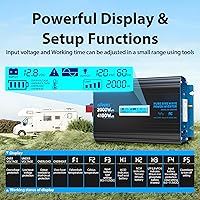
The real-time readout of input voltage, load wattage, and battery status is genuinely useful during everyday use, and buyers doing solar system management find it helpful for spotting battery sag under load without needing a separate monitor. The fault code display also helps diagnose protection events quickly rather than leaving users guessing.
Several reviewers found the LCD difficult to read in direct sunlight or at an angle, which is a practical limitation when the inverter is mounted in a cab or outdoor-adjacent location. The display backlight and contrast are adequate for indoor or shaded settings but fall short of what you would want for bright daylight readability.
Wired Remote Control
77%
23%
The 15-foot remote is long enough for most RV and van builds where the inverter lives under a bed or in a rear compartment, and buyers appreciate being able to flip the unit on or off and check battery voltage without crawling to the installation location. It adds a level of everyday convenience that makes a real difference once installed.
The remote functionality is limited to on/off control and voltage display — there is no load monitoring, fault notification, or more advanced feedback available through it. Some users also reported intermittent connection issues with the remote after extended periods of use, suggesting the connector quality could be more robust.
GFCI Outlet Safety
89%
Buyers using this inverter near water — on boats, in camper kitchens, or in outdoor emergency setups — specifically call out the GFCI outlets as a meaningful differentiator from competitors at the same price. The UL458 certification gives professional installers and safety-conscious buyers confidence that the protection is not just nominal.
The unit only includes two AC outlets, which can feel limiting when running multiple appliances simultaneously. Some buyers resort to a power strip, which introduces its own considerations around total load management and technically steps outside the direct protection umbrella of the GFCI circuit.
Installation Ease
78%
22%
The included ring terminal cables and clear labeling make the initial installation approachable for confident DIYers, and the wired remote simplifies placement decisions by decoupling the control point from the inverter body. Most buyers with basic 12V wiring experience report getting it up and running without difficulty.
The included battery cables are on the shorter side according to multiple reviewers, limiting flexibility in positioning the inverter relative to the battery bank. buyers with longer cable runs or unconventional installation layouts end up sourcing heavier gauge cable separately, which adds cost and effort to the project.
Idle Efficiency
84%
The sub-12W idle draw is one of the more underrated specs here, and buyers who leave their inverter active overnight for CPAP or light phone charging report minimal battery impact compared to less efficient models they previously owned. For solar-powered setups where every watt-hour counts, this is a meaningful operational advantage.
While the idle draw is low, it is not zero — buyers with very small battery banks (under 100Ah) on cloudy days still need to factor it into their energy budgets. A proper standby mode that draws even less when no load is detected would make this unit considerably more suitable for minimalist off-grid builds.
USB-C Charging
72%
28%
Having a 36W USB-C port built directly into the inverter removes the need for a separate wall adapter for phone and tablet charging, which van-lifers and daily mobile users find genuinely convenient. The 36W output is fast enough to charge most modern smartphones and smaller tablets at full speed.
The USB-C port is a single port with no USB-A companion, which feels limiting on a unit this size when multiple devices need simultaneous charging. A handful of buyers also noted the port stopped delivering full 36W output after extended use, suggesting it may not be as durable as the core inverter components.
Surge Handling
81%
19%
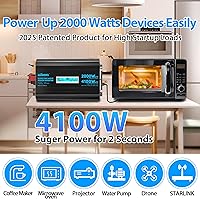
The 4100W surge capacity handles the startup spikes of refrigerator compressors, power tool motors, and similar inductive loads without tripping protection, which is the primary scenario where surge rating actually matters in day-to-day use. Buyers running combination loads in RV kitchens report reliable startup behavior across multiple appliances.
The 2-second surge window is standard for the category but tight for appliances with longer or harder startup cycles, like older well pumps or large compressors. Buyers who misread the spec sheet expecting sustained high-surge capability have occasionally been surprised when protection trips on difficult motor loads.
Value for Money
83%
Relative to competing 2000W pure sine wave inverters with comparable certifications, the pricing sits at a fair midpoint that buyers consistently describe as reasonable given the aluminum housing, GFCI outlets, and included remote. The 18-month warranty and US-based service support add tangible value beyond what budget alternatives offer.
Budget-conscious buyers can find uncertified 2000W inverters for considerably less, and for applications where certification compliance and waveform purity are not critical, the price premium may feel harder to justify. The value proposition is strongest for buyers who genuinely need what the certifications and pure sine wave output provide.
Customer Support & Warranty
76%
24%
The presence of three US-based service centers and an 18-month warranty is frequently mentioned positively by buyers who have had to make contact, with most reporting responsive and helpful interactions. Compared to inverter brands with overseas-only support, the domestic service infrastructure is a genuine differentiator for buyers who prioritize post-purchase peace of mind.
A minority of buyers reported slower-than-expected response times during high-demand periods, and the warranty claim process involves shipping a heavy 12-pound unit which adds friction and cost even when the claim itself is honored. The support experience appears inconsistent enough that it is not uniformly excellent across all cases.

Suitable for:

The Giandel 2000W Pure Sine Wave Power Inverter is built for people who need dependable, clean AC power in mobile or off-grid settings where waveform quality actually matters. RV owners running a microwave, a CPAP machine, or a mini fridge will get the stable output those appliances need without the interference or overheating risks that come with modified sine wave alternatives. Van-lifers and truck drivers who carry laptops, audio gear, or variable-speed tools will also find it fits naturally into a 12V battery-based setup. Off-grid solar builders who need a mid-capacity inverter that clears UL and FCC certification hurdles — whether for insurance, inspection, or peace of mind — will appreciate that this unit covers those bases without jumping to a premium price tier. It is equally practical as an emergency home backup inverter paired with a deep-cycle battery, giving you safe, regulated power for essential devices when the grid goes out.

Not suitable for:

The Giandel 2000W Pure Sine Wave Power Inverter is not the right call for buyers who need to run high-draw appliances continuously near or at the 2000W ceiling for extended periods, as sustained heavy loads push the cooling fans hard and can introduce noise that is disruptive in a living space. Anyone looking to power a large central air conditioner, a well pump, or a workshop compressor should be looking at 3000W or higher capacity units instead. If your installation space is extremely tight, the 15-inch length and 12-pound weight deserve a measurement check before you commit. Buyers who want a simple plug-and-forget setup with no monitoring screen or remote may find the feature set more than they need. And if you are running a 24V or 48V battery bank, this unit simply does not apply — it is strictly a 12V input inverter.

Specifications

  • Continuous Output: This inverter delivers a steady 2000W of continuous AC power for running appliances and electronics simultaneously.
  • Surge Capacity: Peak surge power reaches 4100W for up to 2 seconds, accommodating the startup spike of motor-driven appliances like refrigerators and compressors.
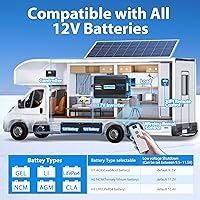
  • Input Voltage: Designed exclusively for 12V DC battery systems, including lead-acid, AGM, and lithium battery banks.
  • Output Voltage: Produces a regulated 120V AC output suitable for standard North American appliances and electronics.
  • Waveform Type: Pure sine wave output matches utility grid quality, making it safe for sensitive electronics, medical devices, and variable-speed motors.
  • AC Outlets: Equipped with two UL458-certified GFCI-protected 20A AC outlets that provide ground fault circuit interrupter protection.
  • USB-C Port: Includes one USB-C port delivering up to 36W for fast-charging smartphones, tablets, and compatible laptops directly.
  • Remote Control: A 15-foot wired remote allows on/off control and real-time battery voltage monitoring from a distance.
  • Display: A large LCD screen shows live input voltage, output voltage, load wattage, battery status, and active fault or protection codes.
  • Idle Power Draw: Standby consumption stays below 12W (0.95A maximum), minimizing unnecessary battery drain when no load is connected.
  • Housing Material: The enclosure is constructed from aluminum alloy, offering superior heat dissipation and impact resistance compared to plastic-shell alternatives.
  • Dimensions: The unit measures 15 x 8.1 x 4 inches, requiring adequate clearance on all sides for ventilation during installation.
  • Weight: At 12.07 pounds, this inverter is substantial enough to require secure mounting rather than loose placement.
  • Certifications: Holds UL458 approval for power inverters and FCC certification for electromagnetic compatibility in North American markets.
  • Warranty: Covered by an 18-month hassle-free warranty supported by three US-based service centers located in Illinois, Tennessee, and Texas.
  • Model Number: The official model designation is GS-2000SAR-GFCI, which should be referenced when contacting support or ordering replacement parts.
  • Cooling System: High-speed internal ventilation fans activate automatically under load to maintain safe operating temperatures inside the aluminum housing.
  • Protection Modes: Built-in protections cover under-voltage, over-voltage, over-temperature, overload, and short circuit conditions, with fault codes shown on the LCD.

Related Reviews
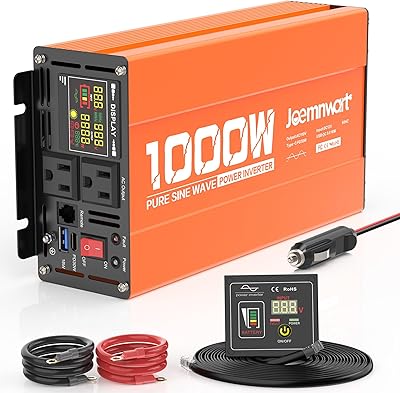
Joemnwart 1000W Pure Sine Wave Power Inverter
79%
88%
Power Output Quality
79%
Build Quality
84%
USB Charging Performance
86%
Safety Protection System
82%
Noise Level
More
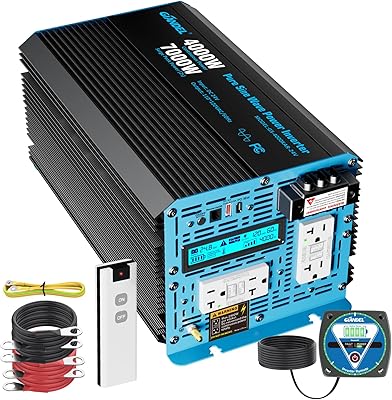
Giandel 4000W 24V Pure Sine Wave Inverter
80%
91%
Pure Sine Wave Quality
88%
Build Quality
86%
Safety Features
83%
Output Power Accuracy
81%
Value for Money
More
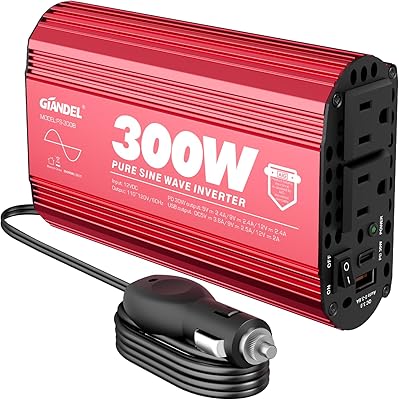
Giandel PS-300B 300W Pure Sine Wave Inverter
84%
93%
Power Output Quality
88%
USB Charging Speed
86%
Noise Level
82%
Build Quality
63%
Plug & Connection Reliability
More
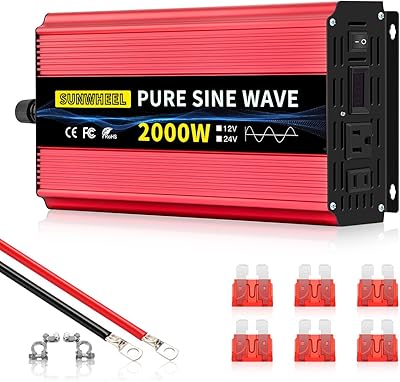
SUNWHEEL 2000W Pure Sine Wave Inverter
80%
86%
Power Output Reliability
91%
Waveform Quality
83%
Build Quality
88%
Noise Level
67%
LCD Display Usefulness
More
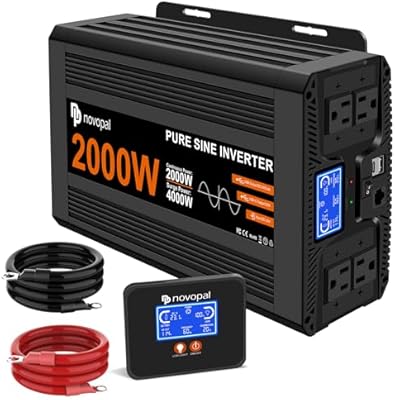
Novopal 2000W 24V Pure Sine Wave Inverter
79%
88%
Power Output Quality
83%
Build Quality
79%
Value for Money
74%
Ease of Installation
81%
Remote Control Functionality
More
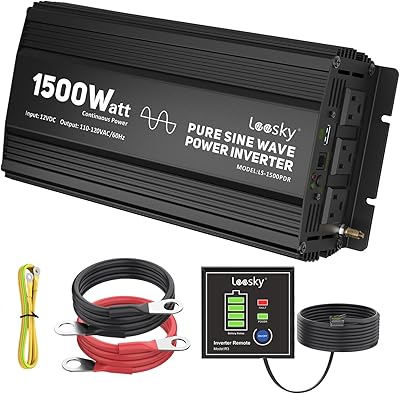
LEESKY 1500W Pure Sine Wave Power Inverter
82%
88%
Output Power Quality
84%
Build Quality
86%
Value for Money
91%
Remote Controller Usefulness
79%
Noise Level
More
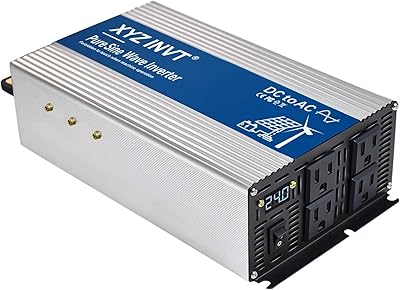
XYZ INVT 2000W Pure Sine Wave Inverter
75%
88%
Power Output Quality
58%
Thermal Management
83%
Surge Handling
91%
Portability & Size
86%
Conversion Efficiency
More
Yinleader 3500W Pure Sine Wave Power Inverter
73%
83%
Power Output Quality
61%
Build Quality
67%
Thermal Management
63%
Surge Performance
86%
Ease of Setup
More
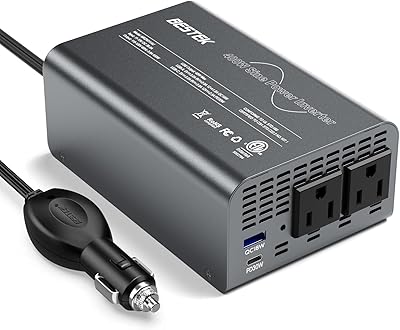
BESTEK 400W Pure Sine Wave Power Inverter
81%
91%
Power Output Quality
74%
Real-World Wattage Reliability
88%
USB Charging Speed
83%
Fan Noise
76%
Build Quality & Durability
More
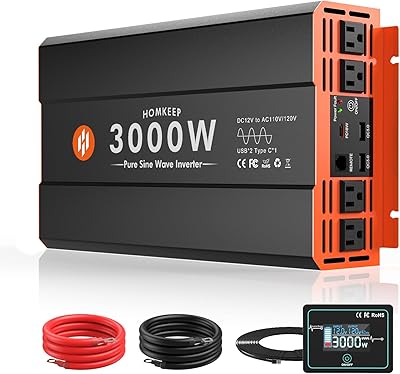
Homkeep 3000W Pure Sine Wave Power Inverter
88%
93%
Power Performance
88%
Ease of Use
90%
Build Quality
85%
Noise Level
91%
Safety Features
More

FAQ

Yes, a 1500W microwave falls within the continuous 2000W output capacity of this inverter, so it will handle it without issue. Just make sure your battery bank is large enough to sustain the draw — a 1500W load pulling from a 12V system demands roughly 125 amps per hour, so a substantial battery bank is important for anything beyond short cooking sessions.

Absolutely. Pure sine wave output is exactly what CPAP machines require, since they are sensitive to waveform quality and can malfunction or suffer damage on modified sine wave power. This pure sine wave inverter produces power that is functionally equivalent to what comes out of a standard wall outlet, so your CPAP should run without any issues.

The unit connects via ring terminal cables directly to your 12V battery terminals. Ring terminal connections are more secure than alligator clips and are the standard approach for a permanent or semi-permanent installation. Make sure to fuse the positive cable close to the battery — a fuse rated appropriately for the cable gauge and inverter capacity is essential for safe operation.

At idle or light loads the fans are relatively quiet, but under heavy sustained loads they do spin up noticeably. Several buyers have mentioned this, so if your inverter will be mounted inside the living area of a van or camper rather than in a separate compartment, it is worth considering how often you will be pushing it near capacity during nighttime hours.

Yes, it is compatible with lithium iron phosphate (LiFePO4) battery banks as well as lead-acid and AGM batteries, provided the system operates at 12V. The LCD will display your battery voltage in real time, which is useful for monitoring state of charge regardless of battery chemistry.

GFCI stands for ground fault circuit interrupter, and it cuts power within milliseconds if it detects a difference in current between the hot and neutral conductors — essentially protecting you from electric shock if a fault or moisture issue occurs. It is the same protection you find in bathroom and outdoor wall outlets, and having it on an inverter used in an RV, boat, or outdoor setup is a meaningful safety feature that not all competing inverters include.

You can mount it inside a cabinet, but the cabinet needs adequate ventilation — the cooling fans need airflow to exhaust heat effectively. A fully sealed enclosure will cause the unit to overheat and trigger thermal protection shutdown. Cut ventilation openings or use a vented cabinet design if you want to keep the inverter out of sight.

The included remote cable is 15 feet, which is enough for most RV and van installations where the inverter is mounted under a seat or in a rear compartment. Extending it beyond that is technically possible with the right connector and cable gauge, but it is not officially supported and could affect signal reliability, so most installers work within the included length or reposition the inverter if needed.

That depends heavily on your load. Running a 1000W load from a 12V system draws roughly 83 amps per hour, so a 200Ah battery bank would give you around two hours at that load before hitting a safe discharge level. For lighter loads like laptop charging or a small fan, the same battery bank stretches considerably further. The idle draw of under 12W means the inverter itself is not a significant factor when nothing is plugged in.

The built-in overload protection will automatically shut the unit down and display a fault code on the LCD screen rather than allowing the inverter to sustain damage or start a fire. Once you reduce or disconnect the load, you can restart the unit. This protection system is one of the reasons certifications like UL458 matter — they require that these safeguards actually work reliably under test conditions.

Where to Buy