Overview

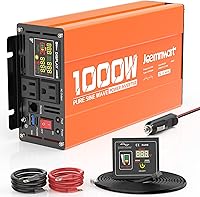
The Joemnwart 1000W Pure Sine Wave Power Inverter entered the market in late 2024 as a mid-range option for anyone who needs dependable AC power drawn from a 12V car or truck battery. What separates it from cheaper alternatives is its pure sine wave output — the same clean, stable waveform your home outlets produce, rather than the choppy approximation that budget modified sine wave units deliver. That distinction genuinely matters for sensitive gear. Whether you're camping in an RV, crossing the country in a van, weathering a home power outage, or running equipment on a boat, it covers a solid range of real-world use cases at a price point that doesn't demand a second thought.

Features & Benefits

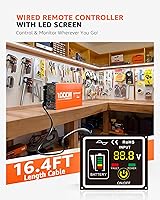
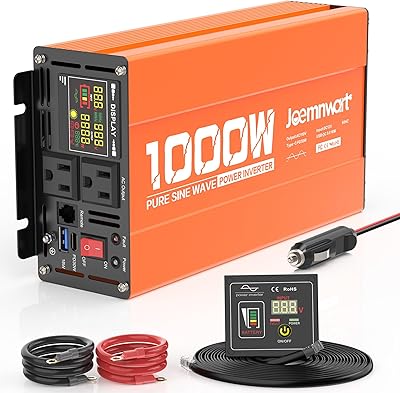
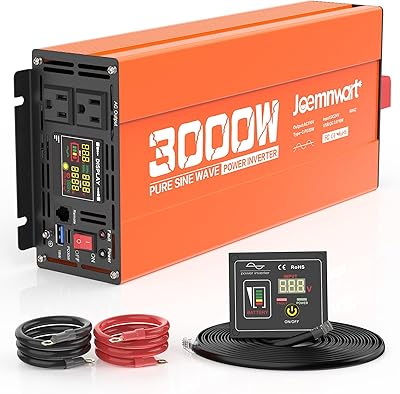
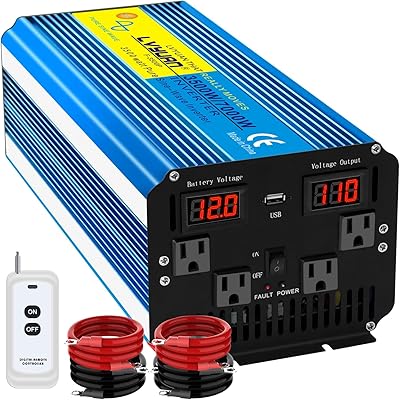
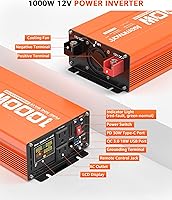
This sine wave inverter handles 1000W of continuous power — enough to run a laptop, a small TV, a CPAP machine, or a box fan without issue. Push past that and a 2000W peak covers motor startup surges. Two AC outlets alongside a QC3.0 and a PD 30W USB port let you charge phones while powering a device at the same time. An LCD screen displays real-time status, and the included wired remote means you can switch things on or off without crawling under a truck seat. The aluminum casing and auto-activating cooling fan manage heat practically, staying quiet until the load actually demands airflow.

Best For

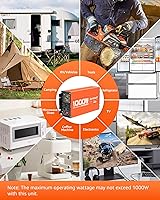
The Joemnwart inverter is a natural fit for RV campers, van lifers, and truck drivers who rely on 12V battery power for everyday gear — laptops, small coffee makers, CPAP machines, or a mini-fridge running overnight. Boaters and off-grid weekend warriors will also get solid use from it. That said, it's worth being realistic: high-draw appliances like microwaves, hair dryers, or power saws will push this unit hard, and sustained loads hovering near the 1000W ceiling are not what it's built for. Think of it as a capable portable backup solution for essential electronics, not a substitute for a whole-home generator.

User Feedback

Sitting at 4.3 stars across roughly 107 reviews, the consensus on this 1000W inverter is cautiously positive. Buyers frequently call out clean, stable output as a highlight — CPAP users and laptop owners in particular noted no device interference or unusual behavior. Setup gets consistent praise for being intuitive, and the USB charging speed earns repeated approval. On the flip side, some buyers found fan noise noticeable under heavier loads, and the included battery cables struck a few as light-duty for the price. The manual could also be more thorough. With a still-modest review pool, long-term reliability remains an open question worth factoring into your decision.

Pros

  • Pure sine wave output protects sensitive electronics like CPAP machines and laptops from power irregularities.
  • 1000W continuous capacity handles most everyday off-grid needs — fans, TVs, small appliances — without strain.
  • Two fast-charging USB ports (QC3.0 and PD 30W) let you top up phones and tablets simultaneously.
  • The LCD display gives real-time visibility into load and voltage without guesswork.
  • A wired remote control adds genuine convenience, especially in tight truck cab or RV cabinet installations.
  • Six-layer safety protection covers the failure scenarios that matter most in mobile and emergency use.
  • The aluminum housing and auto-start cooling fan manage heat actively, not just passively.
  • Setup is straightforward — buyers consistently report getting up and running without needing to dig through the manual.
  • The 12-month warranty provides a reasonable coverage window for a product at this price tier.
  • Compact and light enough at just over 6 pounds to move between a truck, boat, or home backup kit easily.

Cons

  • The cooling fan can become noticeably loud under heavier loads, which may be disruptive in quiet environments.
  • Included battery cables feel light-duty to some buyers and may need upgrading for higher sustained loads.
  • The user manual lacks depth — some setup details require outside research for less experienced users.
  • With only around 107 ratings so far, there is not yet enough long-term data to assess durability confidently.
  • The brand is new to market, so warranty support and customer service are still largely unproven over time.
  • No built-in Bluetooth or app monitoring — remote visibility is limited to the wired remote and LCD display.
  • A single wired remote limits placement flexibility if you need control from more than one location.
  • Running two AC outlets near full capacity simultaneously leaves no headroom for unexpected startup surges.
  • This 1000W inverter does not support 24V battery systems, limiting compatibility with some larger vehicle setups.

Ratings

Our team trained an AI model on verified global buyer reviews of the Joemnwart 1000W Pure Sine Wave Power Inverter, actively filtering out incentivized, repetitive, and bot-flagged submissions to surface what real users actually experience. The scores below reflect a transparent synthesis of genuine praise and recurring frustrations — nothing is glossed over. Whether this inverter earns a spot in your truck cab or falls short of your needs, the ratings tell the full story.

Power Output Quality
88%
Buyers consistently report that the pure sine wave output behaves exactly like wall power — laptops charge without adapter buzz, CPAP machines run quietly through the night, and sensitive audio gear shows no interference. For off-grid users who've burned through modified sine wave units before, the difference is immediately noticeable.
A handful of users pushing loads close to the 1000W ceiling noticed occasional voltage dips during high-demand startup moments, particularly with older motor-driven appliances. This is more a physics limitation than a product flaw, but it catches some buyers off guard.
Build Quality
76%
24%
The aluminum alloy housing feels meaningfully more solid than the plastic shells found on budget competitors in this category. Several truck drivers noted it held up well under the vibration and temperature swings of daily cab use, and the overall assembly doesn't rattle or flex under hand pressure.
The included battery cables drew repeated criticism for feeling thin relative to the inverter's rated capacity — a legitimate concern when you're drawing sustained current. A few buyers upgraded to heavier-gauge cables almost immediately, which adds an unplanned extra cost.
USB Charging Speed
91%
The QC3.0 and PD 30W USB ports are a genuine highlight for buyers who've used this 1000W inverter as a travel charging hub. Phones that normally take two hours to charge from a standard USB outlet charge in roughly 45 to 60 minutes, and the ports handle simultaneous use without noticeable speed reduction.
Both ports are USB-A only — there's no USB-C port, which is increasingly the standard connector for modern laptops and newer Android flagships. Users who rely on USB-C cables exclusively will need an adapter, which is a small but real friction point.
Ease of Setup
84%
Most buyers were up and running within ten minutes, even without deep electrical knowledge. The color-coded battery cables, included cigarette lighter adapter, and straightforward terminal connections make initial setup intuitive enough that first-time inverter users felt confident from the start.
The user manual is thin on detail — particularly around optimal battery cable sizing, grounding best practices, and what the LCD fault codes actually mean. Users who ran into any trouble found themselves searching forums rather than consulting the included documentation.
Noise Level
67%
33%
During light use — charging phones, running a laptop, or powering a small fan — the fan stays completely off and the inverter is effectively silent. This makes it genuinely usable in an RV bedroom or a quiet overnight truck cab environment at moderate loads.
Under heavier loads, the cooling fan spins up and produces a clearly audible hum that multiple buyers described as distracting in quiet settings. It's not alarmingly loud, but if you're powering a 600W to 800W appliance in a small space, you will hear it consistently.
Safety Features
86%
The six-layer protection system covers the failure modes that actually matter in mobile environments — reverse polarity alone has saved more than a few buyers from costly mistakes during late-night cable connections. The soft-start technology also helps reduce stress on both the inverter and connected devices at power-on.
While the protections themselves work as advertised, the inverter offers no audible warning before shutting down due to overload or overheating — it simply cuts power. For users running medical equipment or time-sensitive devices, a pre-shutdown warning tone would meaningfully reduce risk.
Thermal Management
79%
21%
The aluminum housing acts as a passive heat sink during low-load operation, and the auto-activating fan handles higher temperatures efficiently before they become a problem. Several buyers in hot climates — running this inverter in parked vehicles on warm days — reported no overheating shutdowns under normal use.
In enclosed or poorly ventilated mounting locations — inside a sealed cabinet, for example — thermal buildup happens faster than expected. A few buyers reported thermal shutdowns not from overload, but from insufficient airflow around the unit, which the manual does not adequately warn against.
Value for Money
83%
For what this sine wave inverter includes — pure sine wave output, fast USB ports, remote control, LCD display, and a six-protection safety system — the price sits in a sweet spot that buyers repeatedly called out as fair. Comparable pure sine wave units from established brands often cost significantly more for similar specs.
The value calculation shifts slightly if you factor in potentially upgrading the battery cables and the uncertainty of supporting a newer, less proven brand. Buyers paying for reliability and long-term peace of mind may find the modest premium for a more established name worth it.
LCD Display Usefulness
74%
26%
The display gives real-time visibility into input voltage and load draw, which is genuinely useful for monitoring battery drain during overnight use. RV users particularly appreciated being able to glance at the display to ensure their battery wasn't dropping below safe thresholds.
The display readability in direct sunlight is mediocre — a common complaint from boaters and outdoor users. The information shown is also fairly basic; there's no display of remaining battery runtime estimation or output frequency, which more experienced users tend to want.
Remote Control Practicality
71%
29%
The wired remote is a real convenience for installations where the inverter is tucked away in a truck bed toolbox, RV compartment, or under a van floor. Being able to switch the unit on or off without physically accessing it saves meaningful time during daily use.
The cable length is adequate for typical under-seat or small-cabinet installs but falls short for larger vehicles or any setup where the inverter is mounted more than a few feet from the user's position. There's no wireless or app-based control option as an alternative.
Multi-Device Performance
81%
19%
Running a laptop through one AC outlet while fast-charging two phones through the USB ports simultaneously worked without complaint for the majority of buyers. The shared capacity is managed well enough that light mixed loads don't cause voltage instability.
Running two power-hungry AC devices at the same time — even if each is individually within the inverter's range — can bring the system close to its limit faster than users expect. There's no automatic load-balancing, so it requires the user to manage total draw mentally.
Package Contents
78%
22%
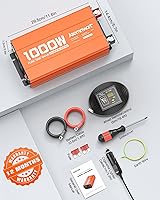
The box includes a cigarette lighter adapter, battery clamp cables, grounding wire, replacement fuses, a screwdriver, and the remote — a genuinely complete kit that lets most buyers start using the inverter immediately without an extra trip to the hardware store.
Despite the reasonable accessory list, the battery cables are the weak link — their gauge is on the light side for a 1000W inverter, and buyers planning sustained high-load use should factor in the cost and effort of sourcing appropriate replacements before relying on them heavily.
Brand Reliability
58%
42%
Joemnwart's 12-month warranty and responsive early customer service responses suggest genuine post-purchase support intent. Buyers who contacted support for questions or initial troubleshooting reported reasonably fast, helpful replies.
The brand launched in late 2024 and has fewer than 200 reviews globally at the time of analysis — there simply is not enough long-term data to assess how the inverter holds up after a year or two of regular use. Buyers who prioritize proven brand longevity will find this track record too short to feel confident.
Compatibility Range
72%
28%
Pure sine wave output makes this 1000W inverter compatible with virtually any device designed to run on standard AC power — from medical equipment to audio interfaces to variable-speed kitchen appliances. It's genuinely broader in compatibility than any modified sine wave alternative in this price range.
The unit is strictly a 12V input inverter, which limits it to standard automotive and marine battery setups. Users with 24V systems — common in larger commercial trucks and some marine vessels — cannot use it without an additional converter, which is an important compatibility gap.

Suitable for:

The Joemnwart 1000W Pure Sine Wave Power Inverter is a strong match for anyone who regularly needs reliable AC power away from a standard wall outlet. RV campers and van lifers will find it well-suited for running laptops, small fans, streaming devices, or a CPAP machine overnight — exactly the kind of everyday load it handles comfortably. Truck drivers who spend nights in the cab can run a mini-fridge or brew a pot of coffee without worrying about damaging sensitive electronics. It also makes a sensible emergency backup for homeowners who want to keep a router, phone chargers, and essential medical gear running during a short outage. Boaters and off-grid weekend travelers will appreciate having two AC outlets and fast USB charging available simultaneously without needing a generator on deck.

Not suitable for:

Buyers expecting to run high-demand appliances should look elsewhere — the Joemnwart 1000W Pure Sine Wave Power Inverter is not built for sustained loads approaching its ceiling. A microwave, electric kettle, hair dryer, or corded power tool can easily pull 1200W to 1800W continuously, which will push this unit into overload territory fast. The 2000W peak rating handles startup surges but does not mean those appliances can run indefinitely. Anyone needing a heavy-duty workshop inverter or a whole-home backup solution will outgrow this unit quickly. Additionally, buyers who prioritize a well-established brand with years of verified long-term reliability data may want to wait — the brand only launched in late 2024 and the review base, while positive, is still relatively small.

Specifications

  • Continuous Output: The inverter delivers a steady 1000W of continuous AC power, suitable for running most laptops, CPAP machines, small fans, and entertainment devices.
  • Peak Output: A 2000W peak rating handles the brief startup surge that motors and compressors demand before settling into their normal running wattage.
  • Input Voltage: Designed to draw power from a standard 12V DC source, such as a car, truck, RV, or boat battery.
  • Output Voltage: Produces 110V to 120V AC output compatible with standard US electrical devices and appliances.
  • Waveform Type: Outputs a true pure sine wave, which mirrors the quality of utility grid power and is safe for sensitive electronics and medical equipment.
  • AC Outlets: Includes two standard US-style AC outlets, allowing two devices to be plugged in and powered at the same time.
  • USB Charging: Features one USB-A port with Qualcomm Quick Charge 3.0 at 18W and one USB-A port with Power Delivery at 30W for fast simultaneous device charging.
  • Efficiency: Achieves up to 90% conversion efficiency, meaning minimal energy is wasted as heat during the DC-to-AC conversion process.
  • Cooling System: An intelligent fan automatically activates when the internal temperature exceeds 45°C or when load exceeds 50%, and stays off during light use to reduce noise.
  • Housing Material: The outer casing is constructed from aluminum alloy, which helps dissipate heat and provides more impact resistance than a plastic enclosure.
  • Safety Protections: Incorporates six protection layers covering overvoltage, undervoltage, overload, overheating, short circuit, and reverse polarity connection.
  • Display: An onboard LCD screen shows real-time operating data including input voltage and load status so users can monitor conditions at a glance.
  • Remote Control: A wired remote control is included in the box, allowing the unit to be switched on or off from a distance without physical access to the inverter body.
  • Dimensions: The unit measures 14.09 x 7.87 x 5.51 inches, making it compact enough for under-seat or cabinet installation in most vehicles.
  • Weight: At 6.23 pounds, the inverter is light enough to be moved between setups — truck cab, boat, or home — without much effort.
  • Warranty: Joemnwart covers the inverter with a 12-month manufacturer warranty backed by their customer support team.
  • In the Box: Package includes the inverter unit, two battery cables, a cigarette lighter adapter, a wired remote, a grounding wire, two replacement fuses, a screwdriver, and a user manual.
  • Availability: This inverter became available for purchase in September 2024, making it a relatively recent release with a still-growing review history.

Related Reviews

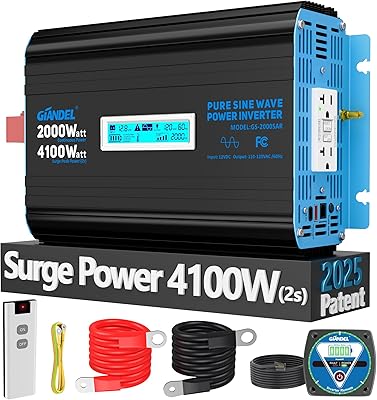
Joemnwart 1000W Pure Sine Wave Power Inverter
79%
88%
Power Output Quality
79%
Build Quality
84%
USB Charging Performance
86%
Safety Protection System
82%
Noise Level
More
Joemnwart 3000W 24V Pure Sine Wave Inverter
78%
88%
Waveform Quality
74%
Power Output Accuracy
72%
Build Quality
83%
Value for Money
86%
Noise Level
More
KORKIE 1000W Pure Sine Wave Inverter
76%
88%
Output Signal Quality
82%
Port Variety & Charging
91%
Ease of Setup
79%
Fan Noise
63%
Build Quality
More
WZRELB SE100048 1000W Pure Sine Wave Inverter
78%
88%
Power Output Quality
91%
Value for Money
61%
Long-Term Reliability
67%
Thermal Management
84%
Voltage Protection
More
BESTEK 400W Pure Sine Wave Power Inverter
81%
91%
Power Output Quality
74%
Real-World Wattage Reliability
88%
USB Charging Speed
83%
Fan Noise
76%
Build Quality & Durability
More
Homkeep 3000W Pure Sine Wave Power Inverter
88%
93%
Power Performance
88%
Ease of Use
90%
Build Quality
85%
Noise Level
91%
Safety Features
More
Yinleader 3500W Pure Sine Wave Power Inverter
73%
83%
Power Output Quality
61%
Build Quality
67%
Thermal Management
63%
Surge Performance
86%
Ease of Setup
More
LEESKY 1500W Pure Sine Wave Power Inverter
82%
88%
Output Power Quality
84%
Build Quality
86%
Value for Money
91%
Remote Controller Usefulness
79%
Noise Level
More
Giandel 2000W Pure Sine Wave Power Inverter
81%
88%
Power Output Reliability
91%
Pure Sine Wave Quality
86%
Build Quality
74%
Noise Level
79%
LCD Display & Monitoring
More
Ampinvt 5000W 24V Split Phase Power Inverter
72%
83%
Power Output Reliability
78%
Build Quality
86%
Pure Sine Wave Quality
81%
Battery Charger Performance
54%
Installation Experience
More

FAQ

Yes, most CPAP machines draw between 30W and 80W, which is well within what the Joemnwart 1000W Pure Sine Wave Power Inverter can handle. The pure sine wave output is particularly important here — CPAP machines are sensitive to power quality, and a modified sine wave unit can cause motor noise, reduced performance, or even equipment damage over time. Just make sure your vehicle battery is large enough to sustain the draw through the night without being drained completely.

For very light loads like charging a phone or running a small fan, yes — the included cigarette lighter adapter will work. However, most car cigarette lighter sockets are fused at 10A to 15A, which caps you at roughly 120W to 180W. If you want to use the full 1000W capacity, you will need to connect the inverter directly to your battery using the included cable clamps.

Modified sine wave inverters produce a stair-stepped electrical signal that approximates AC power but is not identical to what your wall outlet produces. That is fine for simple resistive loads like a basic lamp or a phone charger. But for laptops, medical devices, audio equipment, or anything with a variable-speed motor, pure sine wave output is noticeably better — devices run cooler, quieter, and without the buzzing or reduced performance that modified sine wave can cause.

Not reliably. A typical compact microwave pulls 1000W to 1200W at steady operation, and a hair dryer on high can draw 1500W or more — both are beyond what this 1000W inverter can sustain safely. The 2000W peak rating handles startup surges, not continuous loads. For high-draw appliances like these, you would need a larger inverter in the 2000W to 3000W continuous range.

The fan is designed to stay off during light loads, so for basic charging tasks you may not hear it at all. Under heavier loads it does activate, and some buyers have described it as noticeable but not disruptive. It is comparable to a small desktop fan on a low setting. If you are using this 1000W inverter in a quiet bedroom or small cabin setting at high load, the fan noise is something worth factoring in.

The included wired remote gives you a practical reach for most vehicle and cabinet installations. It is designed for situations where the inverter is mounted in a trunk, under a seat, or inside a storage bay — letting you toggle power from the front of the vehicle or the main living area of an RV. The cable length is reasonable for typical installs, though it is not long enough to span a large vehicle from end to end.

The six-layer protection system — covering overheating, overload, and short circuit among others — does provide a meaningful safety net for unattended use. That said, standard practice for any inverter is to ensure good ventilation around the unit, avoid covering it, and make sure your battery has sufficient capacity so it does not drop to a level that could damage the battery or trigger undervoltage shutdown mid-night.

You can, but the combined draw of both devices still cannot exceed 1000W continuously. So two devices drawing 400W each is fine; two drawing 600W each is not. The inverter does not split capacity between outlets — both share the same 1000W pool. Keep an eye on the LCD display, which shows your current load, to avoid pushing the unit into overload.

Reverse polarity protection is built into the safety system, so the inverter will not operate and will not be permanently damaged if you accidentally reverse the positive and negative cables. It is a genuine fail-safe, not just a marketing claim. That said, always double-check polarity before powering on — red to positive, black to negative.

It is a reasonable option for keeping essentials running — think a router, phone chargers, a small lamp, or a medical device — during a short outage. You would need a 12V battery source to power it from, such as a car battery or a dedicated deep-cycle battery kept in storage. It will not run a refrigerator or window AC unit for long, but for critical low-draw electronics during an outage, the Joemnwart inverter is a practical and affordable backup tool.