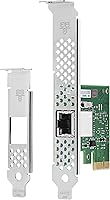
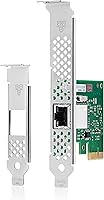
Intel I210-T1 Gigabit Ethernet Network Adapter
Overview
The Intel I210-T1 Gigabit Ethernet Network Adapter has been a steady presence in the internal networking card market since 2013, and its staying power says a lot about the I210 chipset's reputation. Not every product earns that kind of longevity. This is a single-port PCIe Gigabit NIC built for desktop users who simply need a dependable wired connection — nothing more, nothing less. Intel's driver support across both consumer and light enterprise environments has kept it relevant long past the point when most hardware becomes obsolete. If you are expecting multi-port flexibility or 10GbE speeds, look elsewhere. This Intel NIC is a focused, no-frills tool that does one thing very well.
Features & Benefits
Running on a PCIe Gen 2.1 interface, the I210-T1 adapter keeps latency low and bandwidth consistent — practical advantages you notice during sustained file transfers or high-throughput network tasks. Energy Efficient Ethernet and DMA Coalescing quietly reduce power draw during idle periods, which matters in machines that run around the clock. The ventilated bracket helps in thermally tight cases, and the low-halogen build is a minor but genuine nod toward responsible manufacturing. For users in media production environments, the IEEE 802.1Qav AVB support enables tightly synchronized audio and video streams over a local network — a feature most general users will never need, but those who do will absolutely want it.
Best For
This Gigabit network card earns its place in a few specific scenarios. If your onboard Realtek or Killer NIC has been dropping packets or causing random disconnects, swapping it out for this Intel NIC is a well-trodden fix that consistently delivers results. Home lab users running ESXi, Proxmox, or Hyper-V particularly value the I210 chipset — Intel NICs are recognized and supported out of the box in most hypervisors without any driver wrangling. IT admins managing desktop fleets appreciate the predictability: same card, same drivers, no surprises. Audio and video professionals who need AVB-capable hardware for synchronized media over Ethernet will also find this adapter fits neatly into that workflow.
User Feedback
Buyers consistently single out plug-and-play reliability as the standout quality — particularly on Linux, where the I210-T1 adapter is recognized without any manual driver installation. The most common purchase story in reviews is someone ditching a frustrating onboard Realtek chip and never looking back. The ventilated bracket draws mixed reactions: some users appreciate the airflow design, while others swap it out for a standard bracket immediately. The main criticism centers on price — budget PCIe NICs exist for less, and some buyers question whether the Intel premium is justified for basic home use. Most who have used it in virtualization or pfSense setups disagree; for those workloads, the reliability margin over cheaper alternatives is real and measurable.
Pros
- Recognized natively by ESXi, Proxmox, and Hyper-V with zero driver headaches out of the box.
- On Linux, the I210 chipset simply works across every major distribution without manual driver installation.
- Replaces unreliable onboard Realtek and Killer NICs with a connection that stays up under sustained load.
- Energy Efficient Ethernet keeps idle power draw genuinely low, useful in always-on server or NAS builds.
- Fits any available PCIe slot — x1 through x16 — without wasting high-bandwidth real estate.
- AVB support makes this Gigabit network card a credible choice for professional AV and media production setups.
- Consistently praised for long-term reliability, with users reporting zero issues years after purchase.
- pfSense and OPNsense communities treat the I210 chipset as a trusted, community-endorsed standard.
- DMA Coalescing reduces CPU overhead during high-throughput transfers, keeping system performance stable.
- A mature, actively maintained driver ecosystem means continued OS support well into the future.
Cons
- No low-profile bracket is included in the box, making compact or HTPC builds an extra-cost hassle.
- The price premium over budget alternatives is hard to justify for users with simple home networking needs.
- Single-port design forces users building multi-WAN or complex virtual networks to buy multiple units.
- Hard Gigabit ceiling means it becomes a bottleneck on any network that has already moved to 2.5GbE or faster.
- The ventilated bracket is non-standard and a portion of users swap it out immediately for a conventional one.
- Deep-sleep resume can occasionally trigger link renegotiation on certain motherboard power management configurations.
- No hardware revisions or feature updates since 2013 — newer Intel NIC generations offer capabilities this card lacks.
- Minimal packaging with no low-profile bracket and no driver media leaves less experienced builders without guidance.
Ratings
The Intel I210-T1 Gigabit Ethernet Network Adapter scores here reflect an AI-driven analysis of verified global buyer reviews, with spam, bot-submitted, and incentivized feedback actively filtered out before scoring. Across hundreds of real-world assessments — from home lab builders to IT administrators replacing fleet NICs — both the genuine strengths and the recurring frustrations are represented without sugarcoating.
Driver Stability & OS Compatibility
Network Reliability & Stability
Virtualization Performance
Value for Money
Installation Experience
Build Quality
Power Efficiency
Throughput & Latency
AVB & Media Streaming Support
Linux & Open-Source Ecosystem Fit
Form Factor & Slot Compatibility
Longevity & Long-Term Reliability
Packaging & Accessories
Suitable for:
The Intel I210-T1 Gigabit Ethernet Network Adapter is purpose-built for desktop users who need a wired connection they can genuinely rely on — not one that drops out during a large file transfer or misbehaves after a system update. It is an especially strong fit for home lab builders running ESXi, Proxmox, or Hyper-V, where Intel NIC compatibility is practically a prerequisite for a frustration-free setup. Anyone who has spent hours debugging a flaky Realtek or Killer onboard adapter will recognize immediately why the I210 chipset has such a loyal following. Linux users in particular benefit from the mature igb kernel driver, which means the card just works across virtually every mainstream distribution without any manual intervention. IT administrators standardizing hardware across a desktop fleet will also appreciate the predictable behavior and long driver support lifecycle that Intel maintains for this chipset. For audio and video professionals who need AVB-capable hardware to synchronize media streams across a local network, this Gigabit network card is one of the most accessible options available at its price tier.
Not suitable for:
The Intel I210-T1 Gigabit Ethernet Network Adapter is not the right call for buyers whose primary concern is getting the lowest possible price for basic home connectivity — budget PCIe NICs from lesser-known brands exist at a fraction of the cost and will handle everyday browsing, streaming, and casual file transfers without issue. Anyone who has already moved to a 2.5GbE or 10GbE local network infrastructure will find this I210-T1 adapter a hard bottleneck, since its ceiling is standard Gigabit and there is no upgrade path within the same hardware. Small form factor or HTPC builders should also think twice, as the standard retail package does not include a low-profile bracket, and sourcing one separately adds both cost and hassle. Users who need multiple ports on a single card — whether for multi-WAN routing or complex virtual switching — will need to either buy multiple units or consider a purpose-built multi-port alternative. Finally, buyers chasing the latest silicon with features like hardware-accelerated MACsec or 2.5G speeds should look at newer Intel NIC generations, as this product's design has not changed since its original launch over a decade ago.
Specifications
- Manufacturer: This network adapter is designed and manufactured by Intel Corporation.
- Model Number: The official Intel model number for this adapter is I210T1.
- Chipset: The card is built on the Intel I210 Ethernet controller chipset, known for driver longevity and enterprise-grade stability.
- Interface: It connects to the host system via a PCI Express Gen 2.1 interface running at 2.5 GT/s.
- Slot Requirement: The card physically occupies a single PCIe x1 lane but is mechanically compatible with any PCIe x1, x4, x8, or x16 slot.
- Port Configuration: The adapter provides one RJ-45 Ethernet port supporting full-duplex operation at 10, 100, and 1000 Mbps speeds.
- Max Data Rate: Maximum data transfer rate is 1000 Mbps (1 Gbps) over standard Cat5e or better Ethernet cabling.
- Data Protocols: Supported data link protocols include standard Ethernet and Gigabit Ethernet (IEEE 802.3ab).
- AVB Support: The card implements IEEE 802.1Qav Audio-Video Bridging for time-sensitive, synchronized media streaming over a local network.
- Power Features: Energy Efficient Ethernet (IEEE 802.3az) and DMA Coalescing are both supported to reduce active and idle power consumption.
- PCB Construction: The printed circuit board uses low-halogen materials, reducing the presence of brominated and chlorinated flame retardants.
- Bracket Type: A ventilated full-height expansion bracket is included and pre-installed; a low-profile bracket is not included in the standard package.
- Compatible Systems: This adapter is designed for desktop PCs and tower workstations with a standard ATX or similar full-height PCIe slot.
- OS Support: Driver support covers Windows 10, Windows 11, major Linux distributions via the in-tree igb driver, and leading hypervisors including VMware ESXi, Proxmox VE, and Microsoft Hyper-V.
- First Available: The I210-T1 was first made available to the market in October 2013 and remains in active production.
- Discontinuation Status: As of the latest available data, this adapter has not been discontinued by Intel.
- Item Weight: The card weighs approximately 0.035 ounces, making it one of the lightest PCIe expansion cards in its category.
- UPC: The primary UPC code for this product is 887758430248.
Related Reviews
Intel EXPI9301CTBLK Gigabit PCI-E Network Adapter
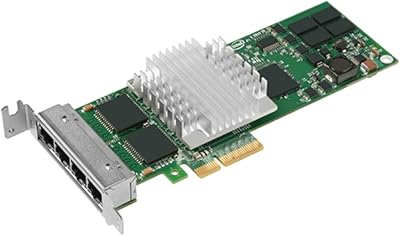
Intel EXPI9404PTL Quad-Port Gigabit Ethernet NIC
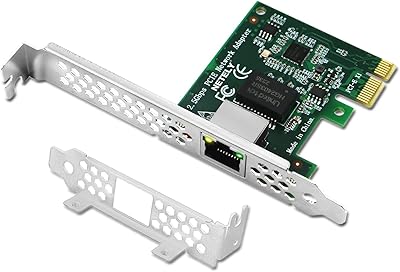
NETELY I225-T1 2.5GbE PCIe Network Adapter
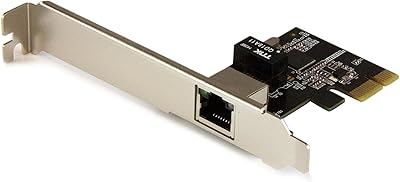
StarTech ST1000SPEXI PCIe Gigabit Network Card
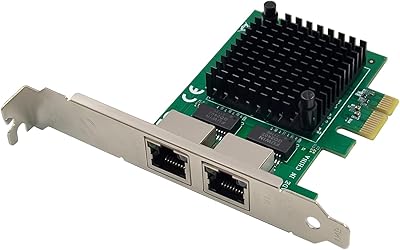
ULANSeN Dual I226-V 2.5GbE PCIe Network Card
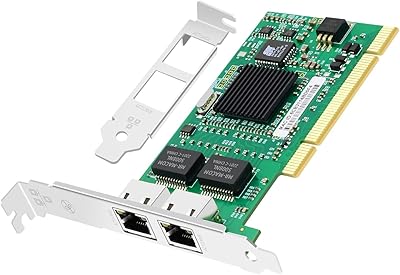
Jeirdus Intel 82546 Dual-Port Gigabit NIC
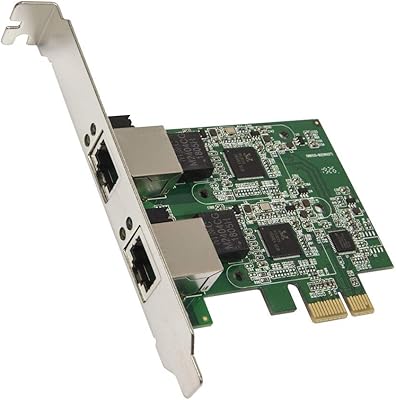
Syba SD-PEX24066 Dual 2.5GbE PCIe Adapter
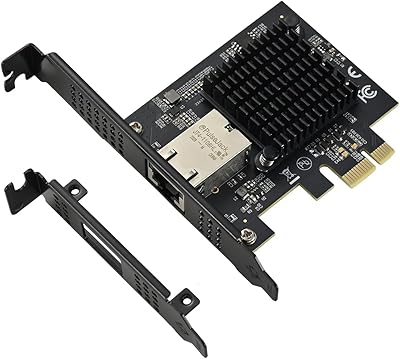
IO CREST AQC113 10Gbps PCIe Network Card
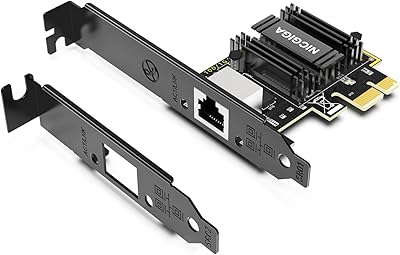
NICGIGA NIC-5G 5Gbps PCIe Network Card