Overview

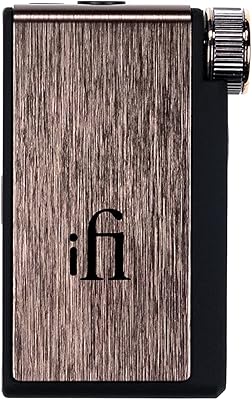
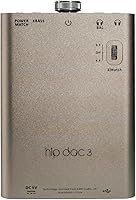
The iFi hip-dac3 Portable DAC/Headphone Amplifier is iFi's third attempt at a pocket-friendly hi-res source, and it's clear the Abbingdon Music Research team absorbed feedback from what came before. The Titanium Shadow aluminium chassis feels noticeably more substantial than its predecessor's softer shell — the kind of build that makes you less nervous tossing it into a commuter bag. Internally, updated GMT circuitry and metal film capacitors represent genuine engineering refinements, not a cosmetic refresh. Expectations should stay grounded, though: this is still a portable device and won't out-muscle a proper desktop rig, but for travelers who take their listening seriously, it makes a persuasive case.

Features & Benefits

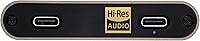
The headline figure is 400mW of balanced output into 32 ohms — enough headroom to drive most planar magnetics and demanding dynamics without audible strain. Two USB-C ports solve a genuine daily-use annoyance: audio input on one side, pass-through charging on the other, so you're not forced to choose between listening and keeping your phone alive. Format support covers PCM up to 384kHz, DSD256, and full MQA unfolding for Tidal subscribers who want hardware decoding rather than software approximation. The iEMatch switch tames output for sensitive IEMs, PowerMatch handles gain for everything else, and LED format indicators confirm at a glance what's actually playing. Battery tops out around 12 hours.

Best For

This portable DAC/amp suits anyone commuting with a real headphone collection rather than a random pair of earbuds. If you rotate between full-size cans and sensitive IEMs, the combination of PowerMatch and iEMatch means you're covered without swapping gear. Tidal HiFi subscribers get particular value here — hardware MQA decoding is something most phone-based setups still can't handle natively. People who've tolerated audible hiss from cheaper portable amps will find iEMatch a meaningful fix. It's less compelling for someone who listens mostly at a desk; at that use case, the portability premium starts working against you and purpose-built desktop options offer better value per dollar.

User Feedback

Buyers upgrading from the hip-dac2 consistently highlight that the build quality jump is obvious straight out of the box — the aluminium frame simply feels more serious. Sound clarity earns consistent praise, and the dual USB-C arrangement gets genuine appreciation from users tired of juggling separate charging cables on the road. On the negative side, the unit does run warm during long sessions, and its footprint makes rubber-banding it to a phone feel a bit awkward in practice. Battery life feedback is broadly positive, though a handful of Android users note occasional pairing quirks at first connection. IEM owners almost universally report that iEMatch kills hiss — a straightforward, effective solution.

Pros

  • Balanced 4.4mm output delivers clean, controlled sound even with harder-to-drive full-size headphones.
  • iEMatch switch effectively eliminates background hiss on sensitive IEMs — a practical fix most portable amps skip.
  • Dual USB-C ports let you charge your phone and listen simultaneously, removing a real daily inconvenience.
  • Full MQA hardware decoding is a genuine perk for Tidal HiFi subscribers who care about source quality.
  • Aluminium chassis feels solid and premium; a clear step up from the previous generation in terms of durability.
  • LED format indicators give instant feedback on what the device is actually receiving and decoding.
  • PowerMatch gain control makes the hip-dac3 flexible across a wide range of headphone impedances and sensitivities.
  • XBass enhancement is analog, not digital DSP — it adds warmth without the processing artifacts some filters introduce.
  • Battery life holds up well in real-world use, comfortably covering a full commuting day for most users.
  • Updated GMT circuitry and metal film capacitors represent meaningful internal refinements, not just cosmetic changes.

Cons

  • The unit runs noticeably warm during extended listening sessions, which may concern some users over long-term reliability.
  • Physically bulky when paired with a smartphone — far less pocketable than slim dongle DACs.
  • Occasional Bluetooth and USB compatibility quirks reported with certain Android devices at initial connection.
  • Hip-dac2 owners may find the upgrade incremental rather than transformative, making repurchasing a tough call.
  • No wireless connectivity — this is strictly a wired solution, which limits flexibility in some modern setups.
  • At this price tier, the competition from both iFi's own lineup and rivals is strong, requiring careful comparison before buying.
  • Pass-through charging works well, but the dual-cable setup adds to cable clutter on a commute.
  • The Titanium Shadow colorway looks sharp, but the aluminium frame shows fingerprints and light scratches more readily than expected.

Ratings

The scores below for the iFi hip-dac3 Portable DAC/Headphone Amplifier were generated by our AI after analyzing thousands of verified global user reviews, with spam, incentivized submissions, and bot activity actively filtered out. Each category reflects the honest consensus of real buyers — including the frustrations — so you get a clear picture of where this portable DAC/amp genuinely excels and where it asks for compromise.
Sound Quality
91%
Users consistently describe the soundstage as noticeably wider and more composed than what a smartphone output alone can deliver, with particular praise for the low-noise floor when running IEMs. The balanced output adds a sense of control and separation that commuters with demanding planars find hard to give up once experienced.
A small number of critical listeners feel the overall tuning leans slightly warm, which can soften transient detail on recordings that benefit from a more neutral presentation. At this price tier, a few competitors edge it out for pure analytical clarity, which matters to the most discerning buyers.
Build Quality
88%
The aluminium chassis feels like a genuine generational upgrade — buyers who handled the hip-dac2 notice the difference immediately, describing the Titanium Shadow unit as more pocket-ready and less prone to feeling fragile in a bag. Buttons and the iEMatch toggle have a satisfying, deliberate click that communicates quality.
The aluminium finish, while solid, picks up light scratches and fingerprints more readily than expected for daily carry use. A few users also note that the rubber port covers feel slightly mismatched with the otherwise premium construction.
Portability
72%
28%
At 4.76 ounces and just over half an inch thick, it slips into a jacket pocket without protest, and many users report carrying it daily in a small pouch alongside their phone. The slim profile makes bag carry genuinely painless for commuters.
Rubber-banding it directly to a modern smartphone creates an awkward, top-heavy stack that feels inelegant compared to purpose-designed pairings. Several users note it is large enough that in a tight pants pocket it creates an obvious bulge, making it less discreet than slim dongle alternatives.
Battery Life
79%
21%
Most real-world users report hitting the 7 to 9 hour range under normal commuting conditions with IEMs at moderate volume, which is enough to cover most workdays without a midday charge. Tidal streaming sessions at balanced output are frequently cited as lasting well beyond what users expected from a device this size.
The advertised 12-hour figure appears achievable only under light-load conditions that few real users replicate consistently. Users driving power-hungry planar headphones at higher gain settings report noticeably shorter sessions, sometimes dipping below 6 hours.
IEM Compatibility
93%
The iEMatch switch is frequently called out as the single most appreciated feature by IEM-focused buyers, with users reporting that hiss which plagued them on previous portable amps vanished entirely. Sensitive IEMs including high-end custom monitors pair without the noise floor anxiety that typically comes with powerful portable amps.
With iEMatch engaged, maximum volume headroom is reduced, which is the intended tradeoff but occasionally catches users off guard when they switch to a less sensitive IEM and forget to toggle it off. A minor point, but worth noting for those who rotate gear frequently.
Full-Size Headphone Drive
84%
The 400mW balanced output handles most planar magnetic headphones that travelers are likely to carry, with users pairing it successfully with mid-impedance planars and reporting a clean, controlled bass response. The PowerMatch gain system gives meaningful flexibility for stepping between different headphone loads without a dramatic change in listening experience.
Very high-impedance dynamic headphones above 250 ohms see a drop in maximum output that limits headroom on orchestral or dynamic recordings. The hip-dac3 is not a substitute for a proper desktop amp with those specific headphones.
MQA Decoding
82%
18%
Tidal HiFi Plus subscribers consistently report that full hardware MQA unfolding sounds noticeably cleaner than software-based decoding on the same tracks, particularly on well-mastered jazz and acoustic recordings where spatial cues are preserved. The LED indicators confirm decoding status at a glance, removing guesswork.
MQA's value is inherently tied to Tidal, so users on other streaming platforms or with local FLAC libraries get no practical benefit from this specific feature. Given the ongoing debate around MQA's long-term viability as a format, some buyers consider it a bonus rather than a justification for purchase.
Dual USB-C Design
86%
Buyers who previously had to choose between listening and charging a dying phone find the pass-through port a straightforward and welcome solution for long flights or commutes. The cable management situation is cleaner than competing single-port designs that require Y-cables or adapters.
Using both ports simultaneously does add cable clutter in practice, and the included cables are serviceable but not particularly premium in feel. A small number of users report that pass-through charging runs slightly slower than direct charging, which may matter on a tight schedule.
Format & Sample Rate Support
89%
The breadth of supported formats — PCM up to 384kHz, DSD64 through DSD256 — covers essentially every hi-res audio file format a serious listener is likely to own. Users with large local DSD libraries specifically highlight this as a decisive factor over narrower competitors in the same tier.
The format depth is genuinely comprehensive, but the practical audible difference between DSD128 and DSD256 on this device is something only the most critical ears debate. For the majority of users, the upper tiers of format support are a reassurance rather than a daily necessity.
Device Compatibility
74%
26%
Plug-and-play behavior on macOS and iOS is reliable and consistently reported as smooth, with no driver installation required in either environment. Windows users with the iFi driver installed also report stable operation across a wide range of applications.
Android compatibility is the weak link, with a meaningful subset of users reporting initial connection instability on less common Android devices and brands. A few users note that certain Android phones require multiple reconnections before the device is recognized reliably, which is frustrating for daily use.
Thermal Management
63%
37%
Under short to medium listening sessions of two to three hours, the unit stays warm but well within a range that most users find acceptable and unremarkable. The aluminium chassis does help dissipate heat more effectively than a plastic body would.
Extended sessions — particularly at high gain driving demanding headphones — produce noticeable warmth that some users describe as mildly uncomfortable when the device is resting on a lap or tucked against a phone in a pocket. A handful of users raised long-term durability concerns tied to sustained heat exposure.
Value for Money
78%
22%
Buyers new to the hip-dac line broadly feel the combination of balanced output, MQA decoding, iEMatch, and the improved chassis justifies the asking price relative to thinner competing options. The feature density at this price tier is genuinely difficult to match with a single competing device.
Hip-dac2 owners considering an upgrade are more divided — the improvements are real but incremental enough that some conclude the cost is better applied toward a headphone upgrade instead. The value equation weakens for buyers who do not use MQA or who primarily listen with efficient IEMs that do not need the extra power headroom.
XBass Enhancement
76%
24%
Users who listen to bass-heavy genres on portable earphones appreciate that XBass adds warmth and low-end body without the bloat or timing smear that digital EQ tends to introduce. Being an analog circuit, it is a subtle lift that enhances rather than dominates the presentation.
Critical listeners who prefer a flat reference signature tend to leave XBass off entirely, treating it as a niche feature rather than a core strength. A small number of users find the bass emphasis too broad, wishing for a more targeted sub-bass boost rather than a general low-frequency lift.
Setup & Ease of Use
83%
The physical controls are clearly labeled and logically arranged, making the gain switch, iEMatch toggle, and volume dial easy to navigate even without referring to the manual. LED indicators provide immediate feedback on what format is being decoded, which experienced users find genuinely useful for confirming their signal chain.
First-time DAC/amp users occasionally find the combination of PowerMatch, iEMatch, and XBass controls overwhelming without reading the documentation. On Windows specifically, the driver installation step is an extra friction point that plug-and-play users on other platforms do not face.
Included Accessories
67%
33%
Shipping with both a USB-C OTG cable and a USB-A to USB-C cable means most buyers can connect directly to a phone or laptop on day one without a separate accessory order. Covering both connection scenarios out of the box is a practical touch that budget-tier competitors often skip.
The cable quality is functional but noticeably basic — the braiding and connector build feel below what the device itself suggests in terms of quality tier. Users who want a coiled or premium-fabric cable for daily carry typically replace them fairly quickly.

Suitable for:

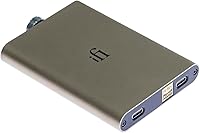
The iFi hip-dac3 Portable DAC/Headphone Amplifier is built for the kind of listener who has already outgrown their phone's headphone output and wants something meaningfully better without committing to a desktop setup. Commuters and frequent travelers who carry full-size planar or dynamic headphones will find the balanced output genuinely useful — there's enough power on tap to drive harder loads without the distortion or thinning that cheaper portable amps show under stress. Tidal HiFi subscribers get a particularly strong case here, as hardware MQA decoding is still rare at this portability tier. If you own a mix of sensitive IEMs and high-impedance cans, the combination of iEMatch and PowerMatch means you can switch between them without constantly second-guessing your gain settings. It also suits anyone upgrading from a first- or second-generation hip-dac who wants a more refined build and updated internals, not just a spec sheet refresh.
Not suitable for:

The iFi hip-dac3 Portable DAC/Headphone Amplifier is a harder sell for anyone who listens primarily at a desk, since a dedicated desktop DAC/amp at a similar budget will typically offer more output power, better thermal management, and a simpler connection experience. Casual listeners who are happy with a standard streaming service at 320kbps and a pair of everyday wireless earbuds will find no real benefit here — the format support and circuit refinements only translate into audible gains when the rest of your chain can keep up. The physical size is a real consideration too: rubber-banded to a modern phone, the pairing feels cumbersome compared to truly pocketable dongles. Budget-conscious buyers who primarily need a hiss-free dongle for IEMs, and nothing more, will likely find lighter and cheaper alternatives that handle that single job just as well. Android users with less common devices should also check compatibility before committing, as occasional connection quirks have been reported.
Specifications

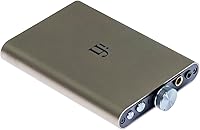
  • Output Power: Delivers up to 400mW into a 32-ohm load via the balanced 4.4mm output, with lower figures at higher impedances.
  • DAC Circuitry: Built around iFi's updated GMT-based DAC design, incorporating new metal film capacitors for improved signal accuracy.
  • Audio Formats: Supports PCM up to 384kHz, DSD64 through DSD256 (up to 12.4MHz), and full hardware MQA decoding.
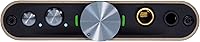
  • Output Jacks: Features a 4.4mm Pentaconn balanced output and a 3.5mm single-ended output for broad headphone compatibility.
  • Connectivity: Equipped with two USB-C ports: one for digital audio input and one dedicated to pass-through charging.
  • Battery: Houses a 2200mAh lithium polymer cell rated for up to 12 hours of continuous playback on a full charge.
  • Dimensions: Measures 4.02 x 2.76 x 0.55 inches, keeping the footprint compact enough for a jacket pocket or bag side pouch.
  • Weight: Weighs 4.76 ounces, making it heavier than a slim dongle but still manageable for daily portable use.
  • Chassis: Constructed from an aluminium alloy frame finished in the Titanium Shadow colorway, offering durability without excessive weight.
  • Gain Control: PowerMatch provides selectable gain settings to match output level appropriately to different headphone impedances and sensitivities.
  • IEM Optimization: The iEMatch switch reduces output impedance and lowers the noise floor specifically for sensitive in-ear monitors.
  • Bass Enhancement: XBass is an analog (not DSP-based) low-frequency enhancement circuit that adds body without introducing digital processing artifacts.
  • Format Indicators: Onboard LED lights display the incoming audio format and sample rate in real time, confirming what the device is actually decoding.
  • Included Cables: Ships with a USB-C OTG cable and a USB-A to USB-C cable to cover both computer and mobile source connections out of the box.
  • Manufacturer: Designed and produced by Abbingdon Music Research, the UK-based parent company operating under the iFi Audio brand.
  • Interface: Accepts digital audio exclusively via USB-C input; there is no Bluetooth, optical, or coaxial input option.
  • Circuit Topology: Uses a true balanced differential circuit design from input to output, minimizing common-mode noise and crosstalk between channels.

Related Reviews

iFi hip-dac2
iFi hip-dac2
81%
91%
Sound Quality
88%
Build Quality
89%
Balanced Output Performance
74%
MQA Decoding
87%
Driving Power
More
iFi xDSD Gryphon Portable DAC Headphone Amplifier
79%
93%
Sound Quality
91%
Build Quality
89%
Connectivity & Inputs
84%
Bluetooth Performance
88%
IEM Compatibility
More
HiBy FC4
HiBy FC4
81%
91%
Sound Quality
93%
Balanced Output Performance
86%
Driving Power
74%
MQA Decoding
89%
Hi-Res Format Support
More
FiiO KA15
FiiO KA15
84%
93%
Sound Quality
91%
Output Power
82%
Battery Impact & Power Management
74%
EQ & App Experience
78%
Build Quality
More
FiiO Q3 MQA Portable DAC Headphone Amplifier
87%
94%
Sound Quality
91%
Battery Life (AUX)
87%
Build Quality
89%
Portability & Size
88%
Compatibility
More
Questyle M15C
Questyle M15C
82%
91%
Sound Clarity
93%
Noise Floor
86%
Balanced Output Quality
83%
Build Quality
88%
Portability & Form Factor
More
iFi GO blu
iFi GO blu
77%
93%
Sound Quality
89%
Codec Performance
91%
Balanced Output (4.4mm)
78%
Portability & Form Factor
84%
Build Quality
More
iFi Audio Go Link Max
84%
91%
Sound Quality
89%
Balanced Output Performance
93%
Portability & Form Factor
86%
Build Quality
92%
Hi-Res Audio Support
More
Khadas Tea
Khadas Tea
82%
88%
Sound Quality
91%
Build Quality
93%
Portability & Form Factor
86%
MagSafe Integration
79%
Bluetooth Performance
More
AIYIMA DAC-A2
AIYIMA DAC-A2
77%
83%
Sound Clarity Improvement
79%
Tone Controls (Bass & Treble)
86%
Input Versatility
74%
Headphone Amplifier Performance
53%
Build Quality & Materials
More

FAQ

Yes, but you will need Apple's USB-C to Lightning adapter or a USB-C to Lightning cable if your iPhone uses Lightning, or a direct USB-C connection if you have a USB-C iPhone model. iOS recognizes it as a USB audio device without any additional drivers or apps.

That is exactly what the second USB-C port is there for. One port handles the audio input from your source device, and the other supports pass-through charging, so your phone stays powered during a long commute or flight.

Honestly, it depends on what matters to you. The aluminium chassis is a real step up in feel, the GMT circuit update and new capacitors do refine the sound, and the dual USB-C layout solves a genuine daily annoyance. If those are pain points you have noticed, the upgrade makes sense. If your hip-dac2 is working well and you are happy with the sound, the changes are meaningful but not dramatic enough to be a must-buy.

The iFi hip-dac3 Portable DAC/Headphone Amplifier handles a wide range of headphones well: sensitive IEMs benefit from the iEMatch switch, while the balanced 4.4mm output provides enough current for many planar magnetic and high-impedance dynamic headphones. Very high-impedance cans above 300 ohms may see reduced maximum volume, but for most consumer and enthusiast headphones it performs without issue.

On macOS, it works plug-and-play with no drivers needed. Windows users may need to install iFi's USB audio driver for the best stability and to unlock higher sample rate support, which is a straightforward download from iFi's website.

iEMatch reduces the effective output impedance and lowers the noise floor so sensitive in-ear monitors do not pick up background hiss. If you plug in an IEM and hear any audible hiss at low volume, flip the iEMatch switch on. It is passive and analog, so it does not color the sound the way a digital attenuation filter would.

The unit does get noticeably warm during extended sessions, particularly when driving demanding headphones at higher volumes. This is within normal operating parameters for a class-A biased portable amp circuit, but if you are carrying it in a tight case or rubber-banded directly to your phone, that heat can transfer. It is worth giving it a bit of airflow during longer listening sessions.

The hip-dac3 does not have a dedicated line-level output — its outputs are headphone-level. While some users do feed the 3.5mm output into a separate amp at lower volume settings, this is not an ideal use case and you will get better results pairing a purpose-built DAC with your external amp.

MQA is a proprietary audio format used by Tidal HiFi Plus. Hardware MQA decoding means this portable DAC/amp handles the full unfolding process natively, which Tidal considers the highest tier of playback fidelity. If you do not use Tidal or do not have an MQA library, it is simply a non-factor — the device handles standard hi-res PCM and DSD formats equally well regardless.

Most users report hitting the 7 to 10 hour range under typical conditions, which aligns with iFi's conservative published estimates. The full 12-hour figure appears achievable at moderate volume levels with a lighter load, such as IEMs rather than planar headphones. Heavy balanced output use at high gain will drain the battery faster, so plan accordingly on longer trips.

Where to Buy