Overview

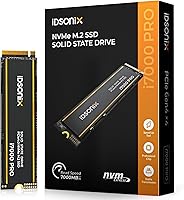
The iDsonix i7000PRO 2TB NVMe SSD is a newer entry into the Gen 4 storage market from Dongguan Hao Ren Electronic Technology, a Chinese OEM that most buyers won't recognize from shelf space at Best Buy. That unfamiliarity is worth acknowledging upfront — this isn't a WD Black or Seagate FireCuda with years of public benchmarks behind it. What it is, though, is a PCIe Gen 4x4 M.2 2280 drive that launched in June 2024 and quickly climbed into the top 700 sellers in its Amazon category. It also ships with a heatsink included — something most competitors at this price tier charge extra for or skip entirely.
Features & Benefits

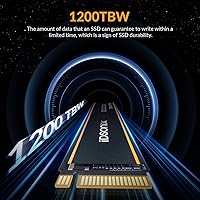
On paper, this Gen 4 SSD advertises sequential reads of up to 7,000 MB/s and writes up to 6,600 MB/s — peak figures that match what flagship drives promise, though real-world workloads rarely hit those ceilings. The more noteworthy spec is the 1,200 TBW endurance rating, which is unusually generous here; writing 100GB daily would theoretically keep this drive going for decades. It uses 3D NAND flash, which helps with both longevity and sustained write consistency compared to older planar designs. NVMe 1.4 brings in useful features like TRIM support and Native Command Queuing. The included aluminum heatsink is a practical touch — especially if you're installing this in a PS5 or a case with limited airflow. It also works in PCIe Gen 3 slots, though you'll see noticeably reduced throughput.

Best For

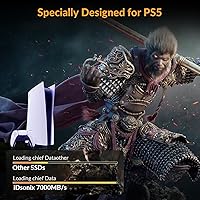
This iDsonix NVMe drive makes the most sense for a specific kind of buyer: someone who wants Gen 4 performance without paying the premium that brands like Samsung or Seagate command. PS5 owners looking to expand their storage will find the included heatsink especially convenient, since Sony's console requires one for M.2 installations — just verify the heatsink dimensions clear the PS5 bay cover before assuming it fits flush. PC builders upgrading from a SATA SSD will notice a significant jump in load times and file transfer speeds. Content creators working with large raw video files or photo libraries will appreciate the fast sequential throughput. Budget-conscious gamers with sprawling libraries are probably the core audience here.

User Feedback

With a 4.5-star average across nearly 200 ratings, the i7000PRO is landing well with most buyers. Installation gets consistent praise — people report it's straightforward, and the heatsink fits without drama for both PC and PS5 setups. A handful of reviewers mention running CrystalDiskMark and seeing speeds close to advertised figures, which is reassuring. On the critical side, a small number of buyers flagged detection issues after installation, a concern worth noting since firmware reliability is harder to verify on newer OEM brands. Long-term durability data simply isn't available yet given the mid-2024 launch — that 1,200 TBW claim sounds strong but remains unproven in practice. The 5-year support promise is at least a reasonable safety net for hesitant buyers.

Pros

  • Sequential read speeds up to 7,000 MB/s match what flagship Gen 4 drives advertise at a noticeably lower price.
  • A heatsink is included in the box — a genuine cost saver, especially for PS5 installations.
  • The 1,200 TBW endurance rating is unusually high for a drive at this price tier.
  • 3D NAND flash helps maintain consistent write performance over time compared to older storage technologies.
  • Installation is widely reported as straightforward, with no complicated setup required.
  • Backward compatibility with PCIe Gen 3 slots gives this Gen 4 SSD flexibility across older and newer systems.
  • A five-year service warranty provides at least a basic safety net for buyers uncertain about the brand.
  • Available in capacities from 512GB up to 4TB, making it adaptable to different storage needs and budgets.
  • Works across Windows, macOS, and Linux, covering the vast majority of user environments.
  • Early Amazon ratings sit at 4.5 stars across a solid number of reviews, suggesting most buyers are genuinely satisfied.

Cons

  • iDsonix has limited brand history, making it harder to trust long-term reliability claims without independent verification.
  • The advertised peak speeds are sequential figures — everyday mixed workloads will see considerably lower numbers.
  • No publicly available third-party benchmark data exists yet to confirm or challenge the manufacturer's performance specs.
  • Firmware update support and long-term software maintenance are unproven for this OEM.
  • A small but notable subset of buyers have reported drive detection issues after installation.
  • The heatsink dimensions may not clear the PS5 expansion bay cover in all configurations — worth double-checking before assuming plug-and-play.
  • Using this drive in a Gen 3 slot cuts throughput significantly, undermining the case for the Gen 4 premium.
  • Brand-level customer support infrastructure is far thinner than what established competitors offer.
  • Long-term durability is still an open question given the product only entered the market in mid-2024.
  • Buyers looking for a companion cloning or management software utility will find none bundled or officially supported.

Ratings

Our AI rating system analyzed verified global buyer reviews for the iDsonix i7000PRO 2TB NVMe SSD, actively filtering out incentivized, bot-generated, and spam submissions to surface what real users genuinely experienced. The scores below reflect both the strengths that made this Gen 4 drive a surprise top-700 bestseller and the legitimate pain points that more cautious buyers have flagged. Nothing has been softened — where feedback was mixed or critical, the scores reflect that honestly.

Value for Money
91%
Buyers consistently highlight that getting a heatsink bundled with a 2TB Gen 4 NVMe drive at this price tier is hard to argue with. Gamers and PS5 owners especially appreciated not having to source a separate thermal solution, which often adds extra cost and decision fatigue to the purchase.
The strong value perception is somewhat contingent on the drive performing as advertised over time, which remains unverified given its mid-2024 launch date. A few buyers noted that if any reliability issues emerge down the road, the savings would feel less meaningful.
Read/Write Performance
83%
Users who ran benchmark tools like CrystalDiskMark reported sequential read results comfortably in the high 6,000 MB/s range, which holds up well against the advertised 7,000 MB/s ceiling. For large file transfers — moving game installs, video exports, or raw photo archives — the throughput was a noticeable step above anything SATA-based.
Real-world mixed workloads, like running a game while background processes write data, produce more modest results than the peak sequential figures suggest. A handful of buyers noted the drive did not feel dramatically different from a solid Gen 3 NVMe in everyday desktop use.
PS5 Compatibility
86%
PS5 users broadly reported a smooth installation experience, with the M.2 2280 form factor dropping in cleanly and the console recognizing the drive without any manual configuration steps. Several reviewers specifically mentioned that this Gen 4 SSD brought their PS5 storage expansion up to Sony's recommended speed threshold for optimal performance.
The bundled heatsink's fit inside the PS5 expansion bay is not universally guaranteed — some users found the profile sat slightly taller than ideal, requiring the bay cover to be left off or gently adjusted. Buyers with a PS5 Slim should verify heatsink clearance before purchasing.
Installation Experience
89%
The installation process drew consistent praise across both desktop PC and PS5 users, with most describing it as a plug-in-and-go experience requiring no technical expertise. The heatsink attachment process was also described as intuitive, with thermal pads pre-aligned to minimize guesswork.
A small subset of buyers — primarily on older motherboards — reported the drive was not detected immediately after installation, requiring a BIOS update or slot reassignment to resolve. These cases were a minority but worth noting for anyone working with legacy hardware.
Thermal Management
81%
19%
The included aluminum heatsink proved genuinely useful in compact builds and the PS5, where passive airflow is limited and thermal throttling can silently cap drive performance. Users running sustained workloads like large file copies reported stable speeds without the sudden performance dips that unprotected NVMe drives sometimes exhibit.
Under extended, write-heavy workloads — think hours of continuous 4K video rendering or large database operations — the heatsink alone may not be fully sufficient in cases with poor internal airflow. The heatsink is also not the most robust solution compared to aftermarket options, but it is more than adequate for typical gaming and general use.
Build & Hardware Quality
74%
26%
The physical drive and heatsink feel solid enough for day-to-day handling, and the M.2 2280 PCB is consistent with what you'd expect at this tier. Most buyers noted there were no obvious quality control issues out of the box.
iDsonix lacks the manufacturing pedigree of established SSD brands, and the heatsink in particular feels thinner than premium aftermarket options. Buyers expecting the same material quality as a Samsung or WD Black product may find the construction a touch utilitarian.
Endurance & Durability
72%
28%
The 1,200 TBW endurance rating is genuinely impressive for a drive at this price point, and even skeptical buyers acknowledged that the rating — if accurate — would comfortably outlast the useful life of most consumer systems. The 3D NAND flash design also supports better write consistency over time compared to planar alternatives.
The fundamental problem here is that the drive has simply not existed long enough for anyone to stress-test that endurance claim independently. Without multi-year real-world data or third-party validation, the 1,200 TBW figure must be taken on faith — which is a real ask for a brand with no established track record.
Firmware & Driver Reliability
63%
37%
The majority of buyers experienced no firmware-related issues, with the drive operating normally from first boot without any additional drivers or software on Windows 10 and 11. That baseline reliability is a reasonable starting point for a newer OEM product.
A recurring concern in lower-star reviews involved intermittent detection failures, where the drive would occasionally not appear in the OS until a system restart or BIOS tweak. There is no official firmware update tool or management software, which means users have no recourse if a firmware bug surfaces post-purchase.
Brand Trust & Support
58%
42%
The five-year service warranty is a meaningful commitment for a lesser-known brand, and buyers who contacted iDsonix support for pre-sale questions generally reported receiving timely responses. The warranty term matches what premium competitors advertise, which at minimum signals intent.
Real-world warranty claim experiences are sparse given the brand's short history, making it difficult to assess how effectively iDsonix handles returns or replacements in practice. Buyers accustomed to the responsive, established support ecosystems of Samsung or WD will likely find this a step down.
Backward Compatibility
77%
23%
Buyers with Gen 3 motherboards or older laptops appreciated that this Gen 4 SSD functioned without issues in their systems, giving the drive a wider addressable audience than a Gen 4-only product would have. It was consistently described as a drop-in upgrade with no compatibility surprises.
The speed reduction in a Gen 3 slot is significant — buyers expecting near-7,000 MB/s in an older system will be disappointed, with real-world Gen 3 throughput closer to 3,000–3,500 MB/s. A few laptop users felt they had overpaid for Gen 4 capability they could not actually use.
Packaging & Unboxing
78%
22%
Reviewers noted the packaging was tidy and protective, with the drive and heatsink arriving in good condition even after shipping. The inclusion of the heatsink kit inside the box without requiring a separate order was a small but appreciated detail.
There are no quick-start instructions included for less technical buyers, which could create friction for first-time NVMe installers who need guidance on heatsink attachment or PS5 installation steps. A simple printed guide would have meaningfully improved the out-of-box experience.
OS & Platform Coverage
84%
Support for Windows 7 through 11, macOS 10.9 and later, and major Linux distributions gives this Gen 4 SSD unusually broad platform coverage for a budget-oriented drive. Linux users in particular flagged this as a plus, since not all budget NVMe drives are tested and confirmed on non-Windows environments.
macOS support depends heavily on whether the host Mac has an M.2 PCIe slot, which limits this to specific Mac Pro or hackintosh configurations — the average MacBook user cannot benefit. The OS compatibility list is broad on paper but narrower in practice for non-Windows buyers.
Capacity Options
88%
The availability of sizes from 512GB all the way to 4TB under the same i7000PRO product line is a genuine convenience for buyers who want to stay within a familiar brand ecosystem as their storage needs evolve. The 2TB sweet spot in particular drew positive feedback for offering meaningful capacity without a steep price premium.
Buyers interested in the 4TB variant will find limited reviews and feedback compared to the 2TB model, making it harder to assess whether the larger capacity options maintain the same performance and endurance characteristics. The 512GB version also competes in a more crowded segment where the value proposition is less distinctive.

Suitable for:

The iDsonix i7000PRO 2TB NVMe SSD is a strong fit for budget-conscious buyers who want genuine Gen 4 performance without paying the premium attached to household names like Samsung or WD. PS5 owners will find it particularly practical — the included heatsink removes one of the more annoying hurdles of console storage expansion, and the M.2 2280 form factor slots directly into Sony's expansion bay. PC builders assembling a mid-range gaming rig or home workstation on a tighter budget get 2TB of fast NVMe storage at a price point that leaves room for the rest of the build. Content creators who regularly move large video files or work with high-resolution photo libraries will benefit from the strong sequential throughput, where this Gen 4 SSD clearly outpaces any SATA-based alternative. It also suits users upgrading from an older HDD or SATA SSD who want a meaningful, noticeable speed improvement without overcomplicating the decision.

Not suitable for:

Buyers who prioritize long-term reliability data and established brand trust should think carefully before committing to the iDsonix i7000PRO 2TB NVMe SSD — it launched in mid-2024, and independent durability testing simply has not had time to catch up with its claims. The 1,200 TBW endurance figure sounds impressive, but without third-party verification or years of real-world feedback, it remains a manufacturer promise rather than a proven track record. Enterprise users, professionals running write-intensive workloads, or anyone storing irreplaceable data without a secondary backup strategy would be better served by a drive from a brand with deeper firmware support history. Laptop users should also note that while this Gen 4 SSD works in Gen 3 slots, the speed will be cut roughly in half — making it a less compelling upgrade for notebooks that lack a Gen 4 interface. Anyone expecting the same ecosystem support, software tools, or firmware update pipeline that Samsung or Seagate provides will likely be disappointed here.
Specifications

  • Capacity: This drive is available in a 2TB configuration, with the full product line spanning from 512GB up to 4TB to suit different storage needs.
  • Interface: It uses a PCIe Gen 4x4 interface with the NVMe 1.4 protocol, offering significantly higher bandwidth than older PCIe Gen 3 or SATA-based drives.
  • Form Factor: The drive follows the M.2 2280 standard, meaning it is 22mm wide and 80mm long — the most common M.2 size found in modern desktops, laptops, and the PS5.
  • Sequential Read: Peak sequential read speed is rated at up to 7,000 MB/s under ideal, manufacturer-tested conditions.
  • Sequential Write: Peak sequential write speed is rated at up to 6,600 MB/s, again representing best-case rather than typical mixed-workload figures.
  • Random Read: 4K random read performance is rated at up to 1,000,000 IOPS, which reflects responsiveness during tasks like booting an OS or launching applications.
  • Random Write: 4K random write performance reaches up to 800,000 IOPS, relevant for workloads involving frequent small file operations.
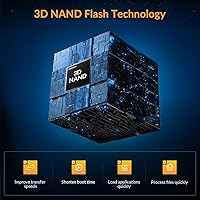
  • Flash Type: The drive uses 3D NAND flash memory, which stacks memory cells vertically to improve density, endurance, and sustained write consistency over older planar NAND designs.
  • Endurance: The manufacturer rates this drive at 1,200 TBW (terabytes written), which is a high figure for this price category, though independent verification is not yet available.
  • Heatsink: An aluminum heatsink kit is included in the package, designed to help manage thermal output and reduce the risk of performance throttling under sustained loads.
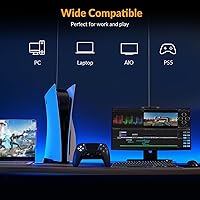
  • Compatibility: This Gen 4 SSD is compatible with PS5, desktop PCs, laptops, and all-in-one PCs that support an M.2 PCIe interface, and also works in PCIe Gen 3 slots at reduced speeds.
  • OS Support: Supported operating systems include Windows 7, 8, 10, and 11, macOS 10.9 and later, and Ubuntu/Linux distributions.
  • Special Features: The drive supports TRIM, Native Command Queuing (NCQ), shock resistance, and backward compatibility with PCIe Gen 3 slots.
  • Warranty: iDsonix backs this drive with a five-year service commitment and states that technical support is available for product-related issues.
  • Weight: The drive weighs 1.76 ounces, making it light and easy to handle during installation.
  • Package Size: The retail package measures 4.96 x 3.5 x 0.79 inches, compact enough to include the drive, heatsink, and mounting hardware.
  • Manufacturer: This drive is made by Dongguan Hao Ren Electronic Technology Co., Ltd, a Chinese OEM that began selling under the iDsonix brand in international markets.
  • Release Date: The i7000PRO first became available in June 2024, making it a relatively recent product with a limited long-term reliability track record at this time.

Related Reviews

SanDisk 2TB SSD Plus M.2 NVMe SSD
86%
89%
Performance
92%
Ease of Installation
88%
Reliability
91%
Value for Money
90%
Capacity
More
ORICO X7000 2TB NVMe SSD
79%
88%
Read & Write Performance
84%
PS5 Compatibility
91%
Thermal Management
93%
Installation Ease
82%
Value for Money
More
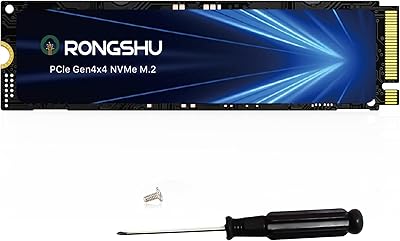
RONGSHU RP7000 2TB NVMe SSD
78%
88%
Read/Write Performance
91%
Value for Money
93%
PS5 Compatibility
74%
Thermal Management
67%
Endurance & Longevity
More
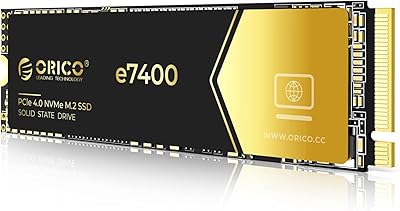
ORICO e7400 2TB M.2 NVMe SSD
81%
91%
Sequential Speed
78%
Random Read/Write
86%
Thermal Management
83%
PS5 Compatibility
88%
Value for Money
More
TEAMGROUP MP44L 2TB NVMe M.2 SSD
79%
88%
Sequential Read Performance
83%
Sequential Write Performance
74%
Thermal Management
91%
Installation Experience
89%
Value for Money
More
TEAMGROUP MP33 2TB NVMe M.2 SSD
78%
93%
Value for Money
86%
Read Performance
67%
Write Performance
94%
Installation Ease
91%
Compatibility
More
WD_BLACK SN770 2TB NVMe SSD
85%
91%
Read & Write Performance
93%
Value for Money
94%
Installation & Compatibility
88%
Long-Term Reliability
92%
Gaming Load Times
More
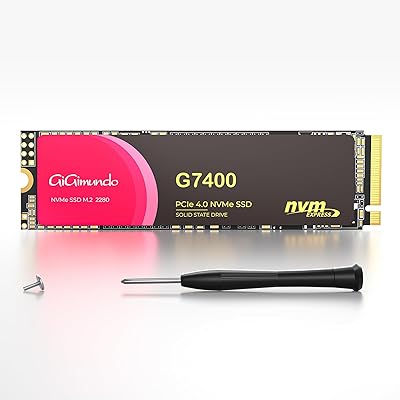
GiGimundo G7400 2TB NVMe SSD
76%
88%
Read Speed Performance
54%
Sustained Write Speed
91%
Gaming Load Times
83%
Value for Money
67%
Thermal Management
More
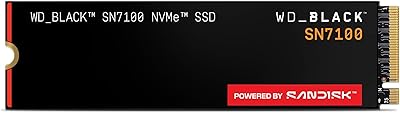
WD_BLACK SN7100 2TB NVMe SSD
85%
93%
Read & Write Performance
88%
Gaming Load Times
86%
Power Efficiency
84%
Thermal Management
91%
Value for Money
More
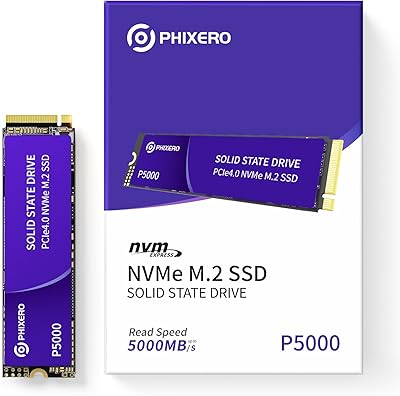
PHIXERO P5000 2TB NVMe SSD
88%
93%
Performance (Speed)
88%
Build Quality
90%
Heat Management
85%
Ease of Installation
92%
Compatibility
More
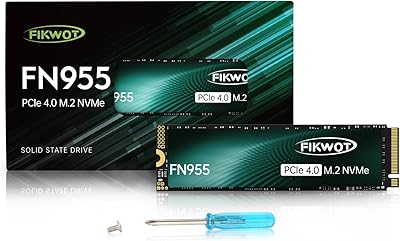
Fikwot FN955 2TB M.2 NVMe SSD
81%
88%
Read Performance
74%
Write Performance
92%
Value for Money
93%
PS5 Compatibility
67%
Thermal Management
More

FAQ

Yes, the M.2 2280 form factor is exactly what the PS5 expansion slot requires, and the drive is confirmed compatible by the manufacturer. The included heatsink fits many PS5 configurations, but you should measure the clearance in your specific PS5 model before assuming it drops in without modification — some heatsink profiles sit slightly taller than Sony's recommended limit for the bay cover to close flush.

Absolutely. Moving from a SATA drive capped at around 550 MB/s to a Gen 4 NVMe drive rated at 7,000 MB/s is a substantial jump, particularly for large sequential file transfers and game load times. Day-to-day tasks like opening a browser or a document are less dramatically affected, but anything involving moving large files or loading asset-heavy games will feel noticeably faster.

You can, but your speeds will be limited to what Gen 3 can handle — roughly 3,500 MB/s read at best. The drive is backward compatible, so it will work without any issues, but you won't see the full Gen 4 performance. If your laptop only has Gen 3, you might want to weigh whether the premium over a well-reviewed Gen 3 drive is worth it for your specific use case.

That's a fair concern. iDsonix is manufactured by Dongguan Hao Ren Electronic Technology, a Chinese OEM that's relatively new to the international market. The iDsonix i7000PRO 2TB NVMe SSD launched in mid-2024 and has accumulated a 4.5-star average across nearly 200 ratings, which is an encouraging early signal. That said, there's no long multi-year track record or extensive independent testing to draw on yet, so if brand heritage and proven reliability are top priorities for you, established names will offer more peace of mind.

TBW stands for terabytes written, and it's a measure of how much data you can write to the drive over its lifetime before wear becomes a concern. At 1,200 TBW, if you wrote 100GB of data every single day, the drive would theoretically last well over 30 years. For a typical home user or gamer writing far less than that daily, endurance is essentially a non-issue — the 1,200 TBW rating is generous even by premium drive standards.

No dedicated drivers are required. NVMe drives are natively supported by Windows 10 and 11, and the OS will recognize the drive automatically. You'll just need to initialize and format it in Disk Management if it's being used as a secondary drive. There's no proprietary management software from iDsonix, which is worth knowing if you're used to tools like Samsung Magician.

The heatsink typically attaches using thermal pads and small mounting clips or screws — the exact method may vary slightly by kit revision, but most buyers report it's a simple process that takes just a few minutes. No special tools are required beyond what you'd already use for M.2 installation. Just make sure to peel the protective film off the thermal pad before attaching it to the drive.

According to the manufacturer, yes — Windows 7 is listed as a supported OS. That said, older motherboards may not have PCIe Gen 4 slots, which means you'll be limited to Gen 3 speeds. You should also confirm your motherboard has an M.2 slot that supports NVMe, since some older boards only support M.2 SATA drives, which use the same connector but a different protocol.

Thermal throttling is a real concern with any high-performance NVMe drive under sustained heavy workloads — the faster the drive, the more heat it generates. The included heatsink is specifically designed to help mitigate this, and for typical gaming or general PC use it should be sufficient. If you're running extremely long sequential write operations repeatedly, like rendering large video files for hours at a stretch, a well-ventilated case or additional airflow near the M.2 slot will help keep temperatures in check.

iDsonix offers a five-year service warranty, which is on par with what premium brands offer. The practical reality is that warranty claims with lesser-known OEMs can vary in experience — response times and return logistics may not be as smooth as dealing with a company like Western Digital. Keeping proof of purchase and registering the product if that option is available will make any potential claim easier to process down the line.