Overview

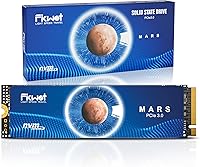
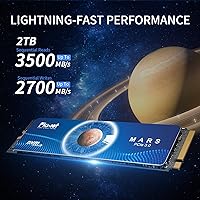
The Fikwot FX550 2TB NVMe M.2 SSD enters a crowded budget storage market where shoppers are increasingly skeptical of unfamiliar brands — and rightfully so. Fikwot sits somewhere between true bargain-bin obscurity and established mid-range names, offering PCIe 3.0 x4 speeds rather than the newer Gen 4 standard. You're getting rated reads of 3,500 MB/s and writes of 2,700 MB/s, which is genuinely competitive for this tier. The drive uses QLC NAND flash, a trade-off worth understanding before buying. On the upside, the 5-year warranty and 640TBW endurance rating signal more confidence than many no-name alternatives at this price point. Listed since June 2025, real-world long-term data is still scarce.
Features & Benefits

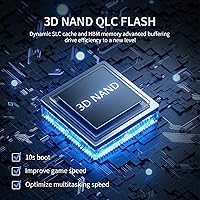
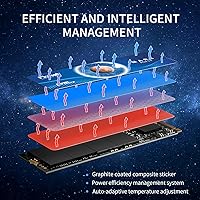
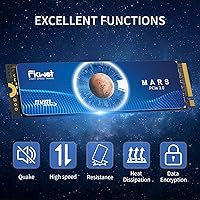
What makes this Fikwot SSD more interesting than a plain spec sheet suggests is how its technologies work together in practice. The drive uses dynamic SLC caching to handle everyday burst writes quickly — think copying files, installing apps, or loading game assets. Once that cache fills during heavy sustained writes, speeds will drop noticeably, which is normal for QLC-based drives and not a dealbreaker for most users. An HBM memory buffer reduces access latency without requiring dedicated DRAM, keeping costs down. Passive cooling comes from a graphite-coated thermal sticker, so no separate heatsink is needed. Hardware AES-256 encryption and TRIM support round out a feature set that punches above its weight, and the single-sided PCB is a quiet but meaningful win for slim-chassis builds.

Best For

The FX550 2TB drive is a strong fit for anyone upgrading a laptop or desktop from a mechanical hard drive or aging SATA SSD — the speed jump will feel dramatic regardless of the Gen 3 ceiling. Mini PC builders working with compact form factors will appreciate the single-sided board, which fits systems where a double-sided M.2 card simply will not seat properly. Gamers benefit too, since fast sequential reads mean quicker load times even if the drive is not ideal for sustained large file writes. It also works well as a secondary storage drive where endurance is not a front-line concern. One firm caveat: this drive does not support PS5 — Fikwot explicitly flags this, so console upgraders need to look elsewhere.

User Feedback

This M.2 NVMe drive is brand new to market, so the feedback pool is thin — just five ratings averaging 4.8 stars at the time of writing. Early buyers report fast installation and noticeable speed improvements over whatever they replaced, which is expected from any competent NVMe upgrade. What is harder to gauge is long-term reliability. QLC drives can degrade faster under heavy write loads, and five reviews spanning a few weeks tell us nothing about how this performs after a year of real use. Independent benchmark data from trusted storage-focused outlets is also absent so far. If you are comfortable being an early adopter and the warranty gives enough reassurance, it is a reasonable bet — but patient buyers may want to wait for more community data to surface.

Pros

  • Sequential read speeds up to 3,500 MB/s make everyday tasks like booting and app loading noticeably faster.
  • The single-sided PCB fits thin laptops and compact mini PCs that reject bulkier double-sided M.2 drives.
  • A 5-year warranty with 640TBW endurance is reassuring for a value-tier drive.
  • Hardware AES-256 encryption protects sensitive data without requiring software overhead.
  • The graphite-coated thermal sticker handles heat passively, so no aftermarket heatsink is needed.
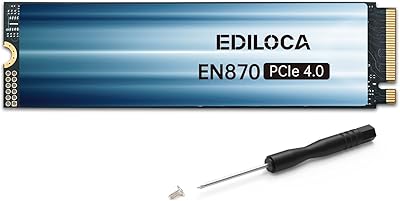
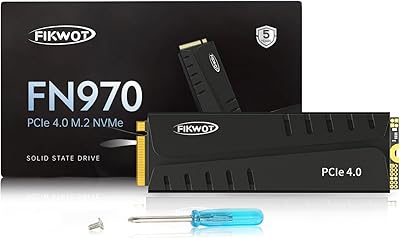
  • Ships with a mounting screw and screwdriver — a small detail that genuinely helps first-time builders.
  • HBM buffer technology reduces access latency without the cost of a dedicated DRAM chip.
  • At 2TB capacity, the FX550 2TB drive offers ample room for large game libraries or media collections.
  • TRIM and SMART support help the drive manage itself intelligently over time, preserving longevity.
  • Compatible with Windows 8 through 11 and Linux, covering nearly every modern desktop use case.

Cons

  • QLC NAND write endurance is lower than TLC alternatives — long-term heavy use remains unproven at this stage.
  • Sustained write speeds fall sharply once the SLC cache is saturated, which matters for large continuous transfers.
  • Only a handful of early reviews exist, making it impossible to assess real-world long-term reliability yet.
  • No independent benchmark data from established storage review outlets is available to validate advertised speeds.
  • Fikwot is a relatively unknown brand, which may complicate warranty claims or support interactions down the line.
  • PCIe 3.0 x4 is the ceiling here — users with Gen 4 or Gen 5 capable systems will leave bandwidth on the table.
  • Not compatible with PS5, which could catch console-focused buyers off guard if they skim the listing.
  • No dedicated DRAM cache means performance under mixed random workloads may trail DRAM-equipped competitors.

Ratings

The Fikwot FX550 2TB NVMe M.2 SSD has been evaluated by our AI rating system after analyzing verified global buyer feedback, actively filtering out incentivized, bot-generated, and spam reviews to surface what real users actually experienced. Scores reflect both where this M.2 NVMe drive genuinely delivers and where it falls short — nothing is glossed over. Early reception is cautiously positive, but the drive is new enough that some categories carry inherent uncertainty, and that is reflected honestly in the numbers below.
Sequential Read Speed
88%
Users upgrading from SATA SSDs or mechanical drives consistently report a dramatic improvement in boot times and application loading. For gaming, large asset streaming felt noticeably faster, and Windows 11 startup times dropped to under ten seconds for many buyers.
The 3,500 MB/s ceiling is firmly a PCIe 3.0 result — buyers who already own a Gen 4 system will not see this drive reach its full potential, and competing Gen 4 drives at similar price points are starting to close the gap on value.
Sustained Write Performance
61%
39%
For everyday workloads — installing games, saving documents, transferring moderate file batches — the dynamic SLC cache keeps things feeling snappy and responsive. Most home users will rarely push past that cache boundary in normal daily use.
Once the SLC cache is saturated during heavy continuous writes, like moving a large video archive or writing a multi-hundred-gigabyte backup, speeds drop noticeably. This is a known QLC limitation, not a defect, but it is a real ceiling for write-intensive tasks.
Value for Money
86%
At its price point, landing 2TB of NVMe storage with a 5-year warranty and a 640TBW endurance rating is genuinely competitive. Buyers replacing old SATA drives feel they are getting substantially more storage and speed for a reasonable outlay.
The QLC NAND reduces long-term write durability compared to TLC-based rivals at similar prices, and some shoppers may find that established brands offer TLC options within striking distance of this price, making the value comparison less clear-cut.
Compatibility & Fit
92%
The single-sided PCB design earned specific praise from mini PC and thin-laptop users who had struggled fitting double-sided drives into tight M.2 slots. The standard M.2 2280 footprint means virtually any modern desktop, laptop, or compact system with an NVMe slot will accept it without fuss.
PS5 users need to be aware this drive is explicitly listed as incompatible with Sony's console — buyers who missed that detail and purchased for console storage expansion were understandably frustrated. Gen 4 systems technically accept it, but leave bandwidth unused.
Thermal Management
77%
23%
The pre-applied graphite-coated sticker does a reasonable job keeping temperatures in check during typical workloads, and most buyers did not feel the need to add an aftermarket heatsink for everyday desktop or laptop use.
Under sustained heavy loads, the passive sticker alone is not a substitute for a proper heatsink in a high-airflow desktop build. Buyers running the drive in enclosed mini PC chassis with limited airflow reported slightly elevated temperatures worth monitoring.
Ease of Installation
94%
The inclusion of a mounting screw and small screwdriver in the box was a genuine convenience that buyers — especially first-time builders — appreciated. Physical installation is as simple as any standard M.2 drive, and Windows detects it automatically with no driver hunting required.
A small number of users were momentarily confused about formatting the drive as a secondary unit since it arrives unformatted, which is standard practice but not always obvious to less experienced buyers without a quick-start guide in the box.
Endurance & Longevity
69%
31%
A 640TBW rating for a 2TB QLC drive is respectable, and the 5-year warranty offers a meaningful safety net. For typical consumer workloads — general computing, gaming, media storage — the drive should realistically outlast the warranty period without issue.
QLC NAND fundamentally wears faster under write-heavy use than TLC or MLC alternatives, and with the drive only launched in mid-2025, there is no long-term real-world data yet to confirm how it holds up beyond the first year or two.
Random Read & Write (IOPS)
73%
27%
The HBM buffer technology helps reduce random access latency meaningfully compared to true DRAM-less designs, keeping the drive feeling responsive during multi-tasking scenarios and OS-level operations where small random reads dominate.
Without dedicated DRAM, the drive cannot fully match the random I/O consistency of DRAM-equipped competitors during complex mixed workloads. Power users running virtual machines or database applications on the primary drive may notice this gap under pressure.
Brand Reliability & Trust
63%
37%
Fikwot backs the drive with a 5-year warranty and has been responsive in early support interactions, which gives cautious buyers some confidence that the company intends to stand behind its products rather than disappear after the sale.
Fikwot is not yet a recognized name in storage, and with only a handful of verified reviews available, there is no meaningful track record to assess customer service quality at scale or confirm that warranty claims are handled smoothly long-term.
Noise & Vibration
97%
As a solid-state drive with no moving parts, the FX550 2TB drive is completely silent under all conditions — a real advantage for users who previously dealt with spinning hard drive noise during nightly backups or intensive file operations.
There is virtually nothing negative to flag here by nature of the technology, though some users transitioning from HDDs occasionally misinterpret system fan noise as drive-related, which is worth clarifying in setup documentation.
Power Efficiency
81%
19%
Laptop users reported that switching to this M.2 NVMe drive from a mechanical hard drive contributed to noticeably quieter operation and modestly improved battery life during everyday tasks, consistent with NVMe drives generally consuming less idle power than HDDs.
QLC NAND does consume slightly more power during write operations than TLC counterparts, and in sustained write scenarios on a laptop, the power efficiency advantage narrows compared to a well-optimized TLC alternative.
Data Security Features
83%
Hardware AES-256 encryption is a meaningful inclusion at this price tier, allowing users to secure sensitive data on laptops without relying entirely on software encryption layers. SMART support also lets users monitor drive health proactively through tools like CrystalDiskInfo.
Activating AES-256 encryption typically requires setting up a hardware password through the system BIOS, which is not a straightforward process for average users and is rarely documented clearly in the minimal packaging materials that ship with the drive.
Packaging & Unboxing
78%
22%
Buyers appreciated the practical inclusion of a mounting screw and screwdriver, which many similarly priced drives omit entirely. The packaging is compact and functional, with the drive arriving well-protected and ready to install.
There is no printed quick-start guide or even a basic setup card included, which leaves less experienced users relying entirely on online searches to complete what should be a straightforward installation process.

Suitable for:

The Fikwot FX550 2TB NVMe M.2 SSD is a practical choice for everyday users who want a meaningful speed upgrade without spending heavily on premium storage. If you are coming from a mechanical hard drive or an older SATA SSD, the jump in responsiveness will feel significant — boot times, app launches, and file transfers will all improve noticeably. Laptop owners with a free M.2 2280 slot will find the single-sided board fits cleanly in thin chassis designs where bulkier double-sided drives sometimes cause clearance issues. Mini PC builders working with compact systems like Intel NUC-style platforms will similarly appreciate that physical compatibility. Gamers who prioritize fast sequential reads for loading large open-world titles will get solid performance for the price point. It also works well as a secondary storage drive for media libraries, project archives, or game installations where you are not hammering it with constant large writes.
Not suitable for:

Buyers with demanding, write-heavy workloads should think carefully before committing to the Fikwot FX550 2TB NVMe M.2 SSD. QLC NAND inherently carries lower write endurance than TLC-based alternatives, and once the dynamic SLC cache is exhausted during sustained large file transfers, speeds will drop considerably — this is a known characteristic of the technology, not a defect, but it matters if your workload involves frequent large video edits, database operations, or continuous backups. Anyone planning to use this drive as a primary workstation drive for professional content creation should look at TLC-based options instead. PS5 users must also steer clear — Fikwot explicitly confirms this drive is incompatible with Sony's console, and no workaround exists. Finally, risk-averse buyers who rely on established long-term reliability data before purchasing will find the very limited review pool and absence of independent third-party benchmarks uncomfortable at this stage of the product's life.

Specifications

  • Capacity: The drive offers 2TB of usable storage space, suitable for large game libraries, media collections, or general-purpose computing.
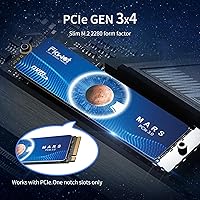
  • Interface: It uses an M.2 NVMe PCIe 3.0 x4 interface, which is widely supported by laptops, desktops, and mini PCs built over the past several years.
  • Form Factor: The M.2 2280 form factor means the drive is 22mm wide and 80mm long, the most common M.2 size found in consumer systems.
  • NAND Type: Storage cells use 3D QLC (Quad-Level Cell) NAND flash, which offers high density at lower cost but with reduced write endurance compared to TLC alternatives.
  • Sequential Read: Rated sequential read speed reaches up to 3,500 MB/s under optimal conditions using the NVMe protocol.
  • Sequential Write: Rated sequential write speed reaches up to 2,700 MB/s, though real-world sustained write performance will be lower once the SLC cache is exhausted.
  • Cache Architecture: The drive combines a dynamic SLC write cache with HBM (Host Buffer Memory) technology to reduce latency without requiring a dedicated DRAM chip.
  • Encryption: Hardware-level AES-256 encryption is supported natively, allowing data protection without measurable performance overhead.
  • Endurance Rating: The rated write endurance is 640TBW (terabytes written), which is adequate for typical consumer workloads over the warranty period.
  • Warranty: Fikwot provides a 5-year limited warranty on this drive, which is on par with more established brands in the mid-range storage segment.
  • PCB Design: The drive uses a single-sided PCB layout, meaning all components are mounted on one face, enabling compatibility with slim laptops and space-constrained mini PC slots.
  • Thermal Solution: A graphite-coated composite sticker is pre-applied to the drive to assist with passive heat dissipation during regular operation.
  • OS Compatibility: The drive supports Windows 8, Windows 10, Windows 11, and Linux operating systems out of the box.
  • Device Support: Compatible with desktops, laptops, and mini PCs equipped with an M.2 2280 NVMe slot; not compatible with PlayStation 5.
  • Weight: The drive weighs 1.13 ounces, making it light enough to have no meaningful impact on laptop portability.
  • Package Contents: Each unit ships with the drive itself, one mounting screw, and a small screwdriver, covering the basic hardware needed for installation.
  • Additional Features: The drive supports TRIM and SMART technologies, which help maintain long-term performance and provide health monitoring data to the operating system.

Related Reviews
Fikwot FX991 2TB NVMe SSD
78%
88%
Sequential Read Performance
61%
Sustained Write Speed
93%
PS5 Compatibility
91%
Value for Money
82%
Thermal Management
More
Fikwot FX910 2TB M.2 NVMe SSD
80%
88%
Read/Write Performance
91%
Thermal Management
93%
Installation Ease
84%
PS5 Compatibility
87%
Value for Money
More
Fikwot FX953 2TB M.2 2230 NVMe SSD
77%
83%
Read Speed Performance
71%
Write Speed Performance
74%
Thermal Management
91%
Installation Experience
78%
Device Compatibility
More
SanDisk 2TB SSD Plus M.2 NVMe SSD
86%
89%
Performance
92%
Ease of Installation
88%
Reliability
91%
Value for Money
90%
Capacity
More
Vansuny 2TB NVMe M.2 Internal SSD
78%
88%
Value for Money
79%
Read/Write Speed
91%
PS5 Compatibility
74%
Thermal Management
93%
Installation Experience
More
Fikwot FX660 2TB NVMe SSD
79%
88%
Sequential Read Performance
63%
Sustained Write Speed
71%
Thermal Management
91%
PS5 Compatibility
89%
Value for Money
More
GAMERKING 2TB M.2 NVMe Internal SSD
75%
78%
Read/Write Performance
82%
Value for Money
91%
Installation Experience
67%
Thermal Management
63%
Long-Term Reliability
More
Fikwot FX991 1TB M.2 NVMe SSD
78%
88%
Sequential Read Speed
79%
Sequential Write Speed
91%
Value for Money
83%
PS5 Compatibility
71%
Thermal Management
More
fanxiang S770 2TB NVMe M.2 SSD
79%
88%
Sequential Read Speed
91%
PS5 Compatibility
86%
Value for Money
83%
Thermal Management
74%
Build Quality
More
Fikwot FN203 2TB M.2 SATA SSD
88%
88%
Sequential Read Speed
84%
Sequential Write Speed
90%
Durability
87%
Data Integrity/Error Correction
95%
Ease of Installation
More

FAQ

Yes, this is exactly the scenario it is designed for. The FX550 2TB drive runs natively on PCIe 3.0 x4, so you will get its full rated performance without any bottleneck on a Gen 3 system.

No, and this is worth being clear about. Fikwot explicitly states that this drive is not compatible with the PlayStation 5. If you need a PS5 storage upgrade, you will need a PCIe 4.0-compatible NVMe drive that meets Sony's requirements.

Write speeds will drop significantly once the dynamic SLC cache is full — this is normal behavior for QLC-based drives, not a fault. For everyday tasks like installing software, copying documents, or loading games, you will rarely hit that ceiling. It mainly shows up when writing very large files, like copying a 100GB video project in one go.

Not at all. If you can locate the M.2 slot on your motherboard or laptop, the process takes a few minutes. The drive even ships with a mounting screw and a small screwdriver, so you do not need to hunt for tools before you start.

It can warm up under sustained load, as all NVMe drives do, but the pre-applied graphite-coated sticker helps dissipate heat passively. For typical everyday use — browsing, gaming, general file work — temperatures should stay within safe ranges without needing an aftermarket heatsink.

For gaming specifically, it is really not a concern. Games read far more than they write, and sequential read speed is what drives load time performance. QLC endurance becomes relevant only if you are writing massive amounts of data repeatedly over years, which gaming alone will not typically cause.

Yes, and the single-sided PCB design is actually a meaningful advantage here. Some compact systems have M.2 slots with very little clearance above the board, and a double-sided drive can fail to seat properly or even cause damage. This M.2 NVMe drive avoids that problem entirely.

No additional drivers are required for Windows 10 or Windows 11 — the operating system detects it automatically via the standard NVMe driver stack. Linux users will similarly find it works without manual configuration on modern kernels. Just format the partition and you are ready to go.

At 640TBW, if you were writing 100GB per day every day, the drive would theoretically reach its rated endurance limit in around 17 years. Most home users write far less than that, so for typical workloads this endurance rating should comfortably outlast the 5-year warranty period.

It is a fair concern. This Fikwot SSD launched in mid-2025 and has very few real-world reviews as of now, so there is genuinely limited long-term data to draw from. The warranty terms are solid and early buyer impressions are positive, but if you prefer to buy based on an established reliability track record, waiting a few more months for the review pool to grow is a reasonable call.