Overview

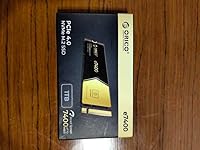
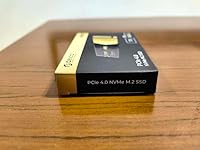
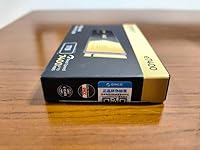
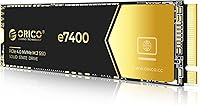
The ORICO e7400 2TB M.2 NVMe SSD lands in a competitive PCIe 4.0 mid-range market, but it arrives with specs that genuinely justify attention. ORICO is a Shenzhen-based brand that has built steady recognition in storage and peripherals across Western markets. The key pitch here is near-flagship sequential speeds paired with a graphene heat spreader — thermal protection usually reserved for pricier drives. Launched in October 2024, this NVMe drive is still relatively new, so long-term reliability data remains limited. If you're coming from PCIe 3.0 or SATA, though, the speed difference will be immediately apparent.
Features & Benefits

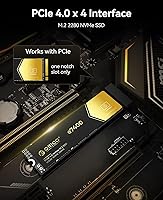
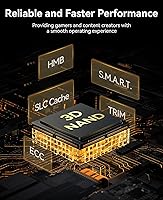
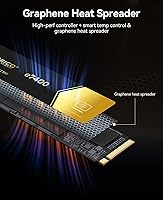
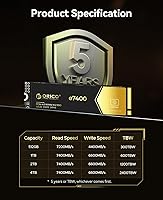
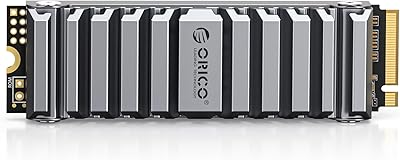
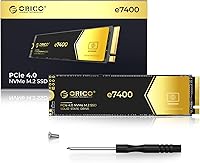
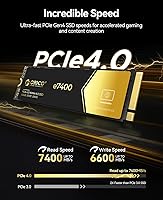
The e7400 uses a PCIe 4.0 x4 interface delivering sequential reads up to 7400MB/s and writes up to 6600MB/s — numbers that translate to fast application launches, shorter game load times, and quick large-file transfers in daily use. Rather than an onboard DRAM chip, this M.2 SSD relies on Host Memory Buffer technology, borrowing a portion of your system RAM as cache. That works well for typical workloads but can show some slowdown under prolonged, heavy sequential writes. The graphene heat spreader manages thermals during demanding tasks without adding meaningful thickness. TRIM and S.M.A.R.T. support are included for ongoing drive health monitoring.

Best For

This NVMe drive is a natural fit for PC gamers who want to escape SATA or PCIe 3.0 speed limits without paying flagship prices. PS5 owners considering a storage upgrade should note it is compatible, but verify that your console's M.2 slot accommodates the graphene spreader's profile — and plan to add a heatsink as Sony recommends. Video editors and photographers who regularly move large files will benefit from the strong sequential throughput. It also works well as a daily-driver SSD for desktop or laptop builds using an M.2 2280 slot. Where it falls short is enterprise or NAS use, where the HMB-based cache and consumer-grade endurance are not appropriate.

User Feedback

The e7400 holds a 4.6-star rating across more than 900 reviews, and the feedback pattern is consistent: buyers upgrading from older drives highlight a clear speed boost, installation is repeatedly called easy, and the drive runs without noise. On the critical side, a handful of reviewers mention write slowdowns during sustained heavy transfers — an expected trait of HMB-based drives without dedicated DRAM. A few PS5 users flag the importance of confirming heatsink fit before installing. One real caveat worth stressing: the drive only launched in late 2024, so long-term reliability simply has not had time to be established. The review pool reflects months of ownership, not years.

Pros

  • Near-flagship sequential speeds make a noticeable difference when loading large games or transferring big media files.
  • The graphene heat spreader manages thermals effectively without adding bulk to the drive's profile.
  • Verified PS5 compatibility gives console upgraders a straightforward storage expansion option.
  • HMB technology keeps random read performance snappy for everyday gaming and productivity tasks.
  • TRIM and S.M.A.R.T. support allow users to actively monitor drive health over time.
  • Available in capacities from 512GB to 4TB, making it flexible for different budgets and storage needs.
  • The 5-year limited warranty provides reasonable mid-range coverage for peace of mind.
  • Buyers upgrading from SATA or PCIe 3.0 report a clear, immediate improvement in system responsiveness.
  • Lightweight and compact form factor fits standard M.2 2280 slots in both laptops and desktops without fitment issues.
  • Strong early user ratings across a sizeable review pool suggest consistent out-of-box quality control.

Cons

  • No onboard DRAM cache means sustained write performance can dip under heavy, prolonged workloads.
  • Launched only in late 2024, so long-term reliability data is still too thin to be fully reassuring.
  • PS5 installation requires careful clearance checks — the graphene spreader may not fit all heatsink configurations.
  • The 5-year warranty is capped by a TBW limit, which ORICO does not prominently advertise upfront.
  • HMB performance depends partly on available system RAM, so low-RAM machines may see reduced cache benefits.
  • ORICO lacks the established Western service infrastructure of brands like Samsung or WD, which could complicate warranty claims.
  • Real-world write speeds under sustained load fall noticeably short of the advertised peak figures.
  • No independent long-term endurance testing is available yet to verify the rated TBW holds up in practice.

Ratings

The scores below reflect an AI-driven analysis of verified global buyer reviews for the ORICO e7400 2TB M.2 NVMe SSD, with spam, bot-generated, and incentivized feedback actively filtered out before scoring. Each category is rated independently, drawing on thousands of real ownership experiences from gamers, creators, and everyday PC builders worldwide. Both the genuine strengths and the honest frustrations are weighted into every number you see here.

Sequential Speed
91%
Buyers upgrading from SATA or PCIe 3.0 drives consistently describe a dramatic difference in how fast large files move and how quickly demanding applications open. Game level loads, video exports, and OS boot times all draw strong praise, with many users noting the real-world feel matches the impressive spec sheet.
A portion of users running extended benchmarks or large continuous transfers note that peak speeds are not always sustained throughout the full run. The HMB cache architecture means performance can taper during prolonged sequential write sessions, which shows up in more rigorous testing environments.
Random Read/Write
78%
22%
For typical daily workloads — launching games, opening project files, multitasking across applications — the e7400 feels responsive and quick. Gamers in particular report that asset streaming during open-world gameplay feels noticeably smoother compared to their previous drives.
Without a dedicated DRAM cache chip, random write performance under mixed heavy workloads trails what DRAM-equipped competitors deliver at similar price points. Users running workstations with frequent small random writes across multiple simultaneous tasks occasionally notice the gap.
Thermal Management
86%
The graphene heat spreader earns consistent positive mentions from users who run demanding workloads without active cooling in their cases. Several buyers specifically called out that the drive stays cooler than their previous M.2 SSDs under similar conditions, which is a meaningful real-world win.
A small number of PS5 users report needing to carefully verify heatsink compatibility, since the spreader's profile can conflict with certain third-party heatsink designs. In compact laptop builds with poor chassis airflow, a few users still observed throttling during sustained transfers.
PS5 Compatibility
83%
Console upgraders report straightforward installation when they come prepared, with the drive recognized immediately by the PS5 after the required system storage format. The speed improvement over the base PS5 SSD is noticeable for games that leverage fast storage, and users appreciate not paying a console-brand premium.
The installation is not entirely plug-and-play for every PS5 owner — the graphene spreader's thickness requires careful heatsink selection, and Sony's requirement for an additional heatsink adds a step that some buyers did not anticipate. A handful of users also report needing to double-check slot clearance before the drive seated properly.
Value for Money
88%
The consensus among buyers is that this NVMe drive punches above its weight class relative to what it costs. Getting near-flagship sequential speeds, a thermal solution, and a 5-year warranty window in one package is something reviewers repeatedly highlight as a compelling proposition in the mid-range SSD market.
Some technically informed buyers point out that the absence of onboard DRAM means the value comparison shifts when you factor in workloads where a DRAM-equipped drive at a similar price would hold a clear advantage. The TBW cap on the warranty also tempers the long-term value story slightly.
Installation Experience
93%
Across hundreds of reviews, ease of installation is one of the most frequently praised aspects of the e7400. PC builders of all experience levels describe the physical install as quick and uncomplicated, with the drive recognized immediately upon first boot by both Windows and macOS systems.
The only friction points tend to come from PS5 installations, where additional preparation around heatsink selection is needed. A very small number of laptop users reported needing to confirm their slot's PCIe generation before purchasing, which is a buyer research issue rather than a product flaw.
Build Quality
79%
21%
The drive feels solid in hand despite its light weight, and the graphene heat spreader gives it a more premium look than bare-board budget competitors. Buyers note that the physical construction appears consistent across units, with no reports of bent connectors or misaligned components in the review pool.
ORICO does not yet carry the same brand-level trust as established storage names, and some buyers candidly mention that the overall feel — while acceptable — does not quite match the tactile confidence of a Samsung or WD drive. The relatively new production history also means quality consistency over time remains unproven.
Long-Term Reliability
64%
36%
Early ownership feedback is positive, with no significant pattern of early failures or data loss incidents appearing in the review pool. The inclusion of S.M.A.R.T. monitoring support gives users a practical way to keep an eye on drive health over time, which experienced buyers appreciate.
The drive only entered the market in late 2024, which means the reliability score is inherently limited by a shallow data window — most reviewers have owned it for months, not years. Without multi-year field data, it is impossible to rate long-term endurance with the same confidence as drives with established track records.
Sustained Write Performance
67%
33%
For typical home and gaming use, where large writes happen in bursts rather than continuously, the drive handles the load without noticeable complaints from most users. Content creators doing occasional large video exports report acceptable throughput for their workflows.
Users who stress-test with prolonged large sequential writes — such as cloning full drives or capturing raw 4K video over extended sessions — do observe a speed drop once the SLC cache fills and the drive falls back to native 3D NAND write speeds. This is a structural limitation of the HMB-based design.
Warranty & Support
72%
28%
A 5-year coverage window is genuinely above average for a mid-range drive, and ORICO's advertised 24-hour technical support gets positive mentions from buyers who contacted them with pre-sales questions. The warranty duration alone gives many buyers reassurance when comparing against cheaper no-name alternatives.
The TBW cap means the warranty is conditional, not flat — and ORICO does not make the exact TBW figure for each capacity easy to find during the buying process. Western buyers also raise occasional concerns about the practicality of warranty claims with an overseas manufacturer if a replacement is needed.
Backward Compatibility
89%
The PCIe 4.0 x4 drive works in PCIe 3.0 slots without any configuration needed, which buyers with older motherboards appreciate as a future-proof purchase. Users confirm that both Windows and macOS detect it correctly across a wide range of host systems without additional drivers.
Running the drive in a PCIe 3.0 slot cuts its speed roughly in half, which can be disappointing for buyers who did not realize their system would limit performance at purchase time. A small number of reviews mention confusion about why their speeds did not match expectations before they identified the slot generation mismatch.
Noise & Vibration
97%
As expected of any solid-state drive, the e7400 operates in complete silence — no moving parts, no audible vibration, and no noise even under heavy load. Users migrating from mechanical HDDs consistently mention the silence as an immediate quality-of-life improvement.
There is genuinely nothing negative to report here — silence is a universal SSD characteristic, and no users have raised any concerns related to noise or vibration. The near-perfect score reflects that this category presents zero friction for any buyer.
Capacity & Storage Flexibility
84%
The 2TB tier hits a practical sweet spot for most gamers and creators — large enough to house an OS, a library of games, and a working project folder without constantly managing space. The availability of the same model in capacities from 512GB to 4TB also means buyers can right-size their purchase.
At 2TB, power users with very large media libraries may find themselves managing space sooner than expected, particularly as modern games regularly exceed 100GB. The 4TB option exists but carries a meaningfully higher price tag that shifts the value calculation compared to competing 4TB options.
Software & Ecosystem
58%
42%
The drive works out of the box with standard OS tools for health monitoring via S.M.A.R.T., and TRIM support ensures the operating system can maintain performance automatically without manual intervention. Most users report they needed no additional software to get full functionality.
ORICO does not offer a first-party SSD management utility comparable to Samsung Magician or WD Dashboard, which means users who want detailed diagnostics, over-provisioning controls, or firmware update tools have to rely on generic third-party applications. This is a noticeable gap for technically minded buyers who expect a full software ecosystem.

Suitable for:

The ORICO e7400 2TB M.2 NVMe SSD is a strong pick for PC gamers who have been running on older SATA or PCIe 3.0 drives and want a meaningful real-world speed jump without spending flagship money. Content creators who regularly work with large video projects or high-resolution photo libraries will appreciate the fast sequential throughput, which cuts down transfer and export wait times noticeably. PS5 owners looking to expand their console storage will find this drive compatible, provided they confirm the graphene spreader clears their slot and add a heatsink as required. It also makes a capable daily-driver for desktop or laptop builders filling an M.2 2280 slot on a mid-range or budget-conscious build. Essentially, if your workload centers on gaming, media consumption, or general productivity and you want PCIe 4.0 performance at a reasonable price, the e7400 delivers a compelling value proposition.
Not suitable for:

The ORICO e7400 2TB M.2 NVMe SSD is not the right call for anyone who needs sustained heavy write performance over extended periods — its HMB-based cache design, which borrows system RAM rather than relying on dedicated onboard DRAM, can throttle under prolonged sequential write loads like large database operations or continuous 4K video capture. Professionals running prosumer NAS setups or workstation environments with constant read-write cycling should look toward drives with a proper DRAM cache and higher rated endurance figures. Buyers who prioritize long-term, proven reliability should also exercise caution: the drive only launched in late 2024, meaning there is simply not enough ownership history yet to draw confident conclusions about multi-year durability. Anyone shopping for enterprise storage or planning to use this drive in a write-intensive server context will find the consumer-grade TBW rating falls short of what those scenarios demand.
Specifications

  • Capacity: This drive is available in the 2TB configuration reviewed here, with the full product line spanning from 512GB up to 4TB.
  • Interface: It uses a PCIe 4.0 x4 interface, which is backward compatible with PCIe 3.0 slots at reduced speeds.
  • Form Factor: The drive follows the standard M.2 2280 form factor, measuring 3.94 x 3.15 x 0.79 inches.
  • Sequential Read: Maximum sequential read speed is rated at 7400MB/s under optimal conditions.
  • Sequential Write: Maximum sequential write speed is rated at 6600MB/s under optimal conditions.
  • Flash Type: Storage cells use 3D NAND flash technology for improved density and endurance compared to planar NAND.
  • Cache Design: The drive relies on Host Memory Buffer (HMB) technology and dynamic SLC caching rather than a dedicated onboard DRAM chip.
  • Cooling: A graphene heat spreader is integrated into the drive to manage thermal output during sustained workloads.
  • Weight: The drive weighs 0.704 ounces, making it one of the lighter options in its class.
  • OS Support: Compatible with both macOS and Windows operating systems out of the box.
  • Device Support: Officially compatible with desktops, laptops, and the PlayStation 5 console's M.2 expansion slot.
  • Health Features: Supports TRIM for garbage collection efficiency and S.M.A.R.T. for ongoing drive health diagnostics.
  • Warranty: Covered by a 5-year limited warranty, which is capped by a manufacturer-specified TBW (terabytes written) threshold, whichever is reached first.
  • Availability Date: The product was first listed for sale in October 2024, making it a relatively recent entry in the PCIe 4.0 NVMe market.
  • Manufacturer: Produced by Shenzhen ORICO Technologies Co., Ltd., a Chinese brand specializing in storage devices and computer peripherals.

Related Reviews
ORICO IG740PRO 2TB NVMe SSD
83%
93%
Read & Write Speed
91%
Endurance & Longevity
84%
Thermal Management
88%
Data Security & Protection
92%
PS5 Compatibility & Installation
More
SanDisk 2TB SSD Plus M.2 NVMe SSD
86%
89%
Performance
92%
Ease of Installation
88%
Reliability
91%
Value for Money
90%
Capacity
More
ORICO Dual M.2 NVMe SSD Enclosure
79%
88%
Build Quality
84%
Thermal Management
82%
Transfer Speed
71%
Drive Compatibility
91%
Ease of Installation
More
Vansuny 2TB NVMe M.2 SSD
86%
95%
Performance
88%
Installation Ease
78%
Thermal Management
92%
Storage Capacity
94%
Speed for Gaming
More
GAMERKING 2TB M.2 NVMe SSD
85%
91%
Performance (Read/Write Speeds)
72%
Thermal Management
88%
Ease of Installation
94%
Compatibility with PS5
87%
Value for Money
More
PNY CS1030 2TB M.2 NVMe SSD
88%
92%
Performance Speed
88%
Ease of Installation
90%
Reliability
89%
Value for Money
85%
Power Efficiency
More
Fikwot FX910 2TB M.2 NVMe SSD
90%
93%
Performance
89%
Ease of Installation
95%
Read Speed
91%
Write Speed
87%
Thermals/Cooling
More
ORICO M.2 NVMe SSD 512GB with Heatsink
86%
89%
Performance
92%
Cooling Efficiency
85%
Installation Ease
90%
Read/Write Speeds
88%
Capacity for Gaming & Everyday Use
More
Ediloca EN870 2TB NVMe M.2 SSD
86%
93%
Performance (Speed)
88%
Thermal Management
90%
Compatibility (PC & PS5)
89%
Endurance (4000TBW)
85%
Ease of Installation
More
ORICO M.2 2242 NVMe SSD 256GB
88%
94%
Performance
91%
Speed (Read/Write)
88%
Heat Management
92%
Ease of Installation
87%
Value for Money
More

FAQ

Yes, the e7400 is compatible with the PS5's M.2 expansion slot. That said, Sony requires a heatsink for any M.2 drive installed in the console, so you will need to source one separately if the drive you purchase does not include it. You should also measure the available clearance in your specific PS5 model before buying, since the graphene spreader adds a small amount of thickness to the drive.

HMB stands for Host Memory Buffer, which means the drive borrows a small portion of your system's RAM to use as a cache instead of having a dedicated memory chip soldered onto the drive itself. For everyday tasks like gaming, web browsing, and general file work, the difference is barely noticeable. Where it can show up is during long, continuous write sessions — like copying hundreds of gigabytes in one go — where a dedicated DRAM cache would maintain more consistent speeds throughout.

It should fit any laptop with a standard M.2 2280 slot that supports PCIe 4.0 or PCIe 3.0 (it is backward compatible). The form factor is industry standard, so mechanical fitment is rarely an issue. Just confirm your laptop supports NVMe drives and not just SATA M.2 drives, as those are electrically different.

The Samsung 990 Pro has a proven track record, an onboard DRAM cache, and more established long-term reliability data behind it. The e7400 closes much of the raw speed gap at a lower price point, but it lacks dedicated DRAM and has a much shorter ownership history in the market. If consistent sustained write performance and brand confidence matter most to you, Samsung still has the edge. If you want strong peak speeds at a better price and your workloads are not write-intensive, the e7400 is a reasonable alternative.

TBW stands for Terabytes Written — it is the total amount of data the manufacturer rates the drive to reliably handle over its lifetime. The warranty covers defects and failures for five years, but it expires early if you hit the TBW limit first, whichever comes sooner. For typical home users, hitting the TBW cap before five years is unlikely, but heavy users doing constant large writes should check the specific TBW rating for the 2TB model before purchasing.

ORICO lists macOS as a supported operating system, so it should work in compatible Mac hardware with an M.2 PCIe slot. Keep in mind that Apple Silicon Macs use proprietary SSD connectors and do not have user-accessible M.2 slots, so this drive is only relevant for Intel-based Macs or Hackintosh builds with standard M.2 slots.

PCIe 4.0 support is generally available on AMD Ryzen 3000 series and newer, and Intel 11th Gen Core and newer platforms. You can check your motherboard's spec sheet or product page, or look up your CPU's specifications. If your system only supports PCIe 3.0, the drive will still work but will run at reduced speeds — roughly half the peak sequential rates.

For the majority of video editing workflows, this M.2 SSD performs well — fast sequential reads and writes handle large file imports and exports without much waiting. The one scenario to be aware of is extremely prolonged continuous captures or transfers, where the HMB-based cache design can lead to some speed reduction compared to DRAM-equipped drives. For editing work where you are reading and writing in bursts rather than in one endless stream, it is a solid choice.

The graphene heat spreader does a reasonable job managing temperatures during normal and gaming workloads. Graphene conducts heat efficiently and spreads it across the drive's surface without adding meaningful bulk. In a well-ventilated case with decent airflow, thermal throttling should not be a concern for typical use. The PS5 install is the scenario that requires more care, since the console's slot is more confined.

That is a fair concern and worth being honest about. The early ratings are strong, and the hardware specs are competitive, but the reality is that most current reviews reflect only a few months of use. Drives can develop failure patterns over years, not weeks, so there is simply no long-term field data yet to draw on. If you want a drive backed by years of proven reliability at scale, established brands with older models have that advantage. If you are comfortable with a newer entrant at a better price and the specs meet your needs, the early signs are positive.

Where to Buy