Overview

The RONGSHU RP7000 2TB NVMe SSD is one of those drives that makes you do a double-take at the price tag. From Shenzhen Heshan Technology — a manufacturer with limited Western market history — this Gen 4 NVMe drive punches well above its weight on paper, offering speeds that rival far pricier options from established names. It targets a practical middle ground: gamers who want fast load times, content creators who move large files regularly, and PS5 owners tired of running out of storage. New to Western markets, RONGSHU deserves measured optimism rather than blind trust — but the specs and early traction are genuinely hard to ignore.
Features & Benefits

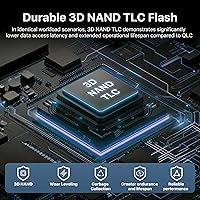
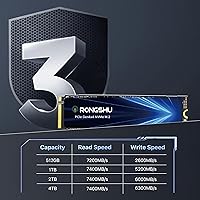
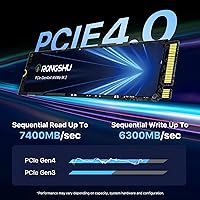
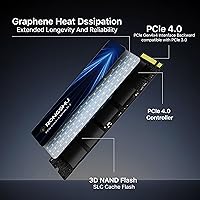
The RP7000 runs on a PCIe 4.0 x4 interface, hitting sequential reads of up to 7,400 MB/s and writes of up to 6,000 MB/s — numbers that translate to noticeably snappier game load times and faster large file transfers compared to Gen 3 drives. The drive uses 3D NAND TLC flash, which holds a real endurance advantage over QLC-based alternatives, especially under repetitive write tasks. An SLC caching layer handles burst workloads well, though sustained writes beyond the cache buffer will see speeds drop — worth knowing if you plan to copy large archives regularly. A pre-applied graphene thermal sticker helps manage heat passively, which matters in tight PS5 or laptop enclosures.

Best For

This 2TB internal SSD hits a sweet spot for a few specific types of buyers. PS5 owners get a straightforward, compatible storage upgrade without the brand tax of well-known alternatives. Budget-conscious PC builders gain genuine Gen 4 throughput for gaming and everyday creative work. Laptop users who need the M.2 2280 form factor and a solid 2TB of space will find the compatibility broad. And if you're moving from an older SATA or Gen 3 NVMe drive, the speed difference is substantial enough to feel real in daily use. It's less compelling for workstation users who do sustained write operations — the cache limits apply there.

User Feedback

With a 4.6-star rating across over 340 reviews and a ranking of #94 in Internal SSDs, the RP7000 has built a surprisingly strong early reputation. Buyers frequently highlight the easy installation — particularly for PS5 — and note that real-world speeds hold up well against the advertised figures. The included screwdriver is a small but appreciated touch. On the downside, the brand's short track record is a legitimate concern; there simply isn't enough long-term data yet to speak confidently about multi-year reliability. A handful of users have also noted speed inconsistencies under sustained loads, consistent with the SLC cache behavior described earlier. For value-driven buyers, the early signs are positive, but patience for more field data is reasonable.

Pros

  • Gen 4 sequential read speeds of up to 7,400 MB/s are genuinely competitive with drives costing significantly more.
  • TLC flash technology offers better write endurance and consistency than the QLC drives common in this price range.
  • PS5 compatibility is confirmed and praised by multiple real-world buyers — installation is straightforward.
  • A pre-applied graphene thermal sticker helps manage heat passively, a thoughtful touch for compact builds.
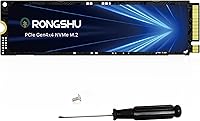
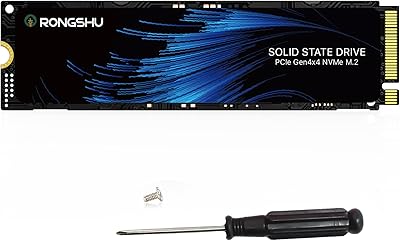
  • The box includes a screwdriver and screws, so you can install the drive without hunting for extra tools.
  • Real-world speeds reported by buyers closely match the advertised figures — no major gap between spec sheet and practice.
  • A 3-year warranty provides a basic safety net that many budget-tier drives from similar brands skip.
  • At 2TB capacity, the RP7000 offers ample room for large game libraries, media files, and project storage.
  • Amazon ranking of #94 in Internal SSDs reflects strong early traction and buyer confidence for a newer brand.
  • Boot times and application load speeds are frequently highlighted as noticeably improved by users upgrading from older drives.

Cons

  • RONGSHU is a relatively unknown brand in Western markets, and long-term reliability data is still thin.
  • SLC cache exhaustion during sustained large writes causes a significant speed drop — not ideal for heavy transfer workloads.
  • No independent third-party endurance testing is publicly available to verify TBW claims under real conditions.
  • The 3-year warranty support is only as reliable as the company behind it, which remains an open question.
  • Some users have reported speed inconsistencies during sustained operations, likely tied to thermal or cache behavior.
  • PS4 is explicitly unsupported, which may catch some buyers off guard despite the PlayStation branding angle.
  • The manufacturer is based in China with limited Western support infrastructure, which could complicate RMA processes.
  • Benchmark conditions listed in the specs use specific hardware that may not reflect performance in all system configurations.

Ratings

The scores below reflect an AI-driven analysis of verified global buyer reviews for the RONGSHU RP7000 2TB NVMe SSD, with spam, bot-generated, and incentivized feedback actively filtered out before scoring. Each category is rated independently to give you an honest picture of where this drive excels and where it falls short. Both the genuine strengths and the recurring pain points are represented transparently — nothing is glossed over.

Read/Write Performance
88%
Real-world users consistently report that game load times and large file transfers feel genuinely fast, with benchmarks closely matching the advertised 7,400 MB/s sequential read figure. For everyday gaming and media work, the Gen 4 throughput delivers a tangible improvement over older drives.
Once the SLC cache is saturated during sustained large writes — think moving a 200GB folder in one shot — speeds drop noticeably, which disappoints users doing regular bulk data operations. The peak numbers are real but only tell part of the story.
Value for Money
91%
Buyers repeatedly flag that getting Gen 4 speeds and TLC flash at this price point is hard to beat, especially compared to established-brand alternatives offering similar specs at a higher cost. For budget PC builders and PS5 upgraders, the performance-per-dollar ratio stands out as the drive's single strongest selling point.
The value equation shifts slightly if you factor in brand uncertainty — established competitors offer similar specs with longer reliability track records, which some buyers consider worth paying extra for. The price is competitive, but peace of mind has a cost too.
PS5 Compatibility
93%
PS5 installation is one of the most consistently praised aspects across buyer reviews — the drive slots in cleanly, the pre-attached graphene sticker satisfies Sony's heatsink requirement, and the console recognizes it immediately without any fuss. Users report noticeably faster game load times after the upgrade.
A small number of users were caught off guard that PS4 is not supported, which is worth flagging clearly before purchase. Outside of that, PS5-specific complaints are minimal.
Thermal Management
74%
26%
The pre-applied graphene cooling sticker is a practical inclusion that handles passive heat dissipation well under typical gaming and everyday workloads, keeping temperatures stable in most desktop and PS5 environments without any extra purchase required.
Under sustained heavy workloads in poorly ventilated cases, some users have noted thermal throttling affecting performance, and the thin sticker provides less protection than a dedicated aluminum heatsink. Users with compact or warm-running builds may want to supplement it.
Endurance & Longevity
67%
33%
The 3D NAND TLC flash is genuinely more durable than the QLC alternatives common at this price tier, offering better write endurance across repeated workloads — something content creators doing regular project saves will appreciate over time.
The brand launched in Western markets only recently, and multi-year reliability data simply does not exist yet. Buyers who have owned the drive long enough to stress-test it are still a small pool, making it impossible to speak confidently about lifespan beyond early-stage impressions.
Installation Experience
89%
Including a screwdriver and screws in the box is a small but genuinely appreciated detail — multiple buyers noted completing the full installation without needing a single additional tool. The M.2 2280 format fits cleanly across PS5, most desktops, and a wide range of laptops.
A handful of laptop users discovered their machine used a shorter M.2 slot size, which is a compatibility check RONGSHU's documentation could make more prominent. This is a user research issue as much as a product one, but clearer guidance upfront would reduce confusion.
Brand Trust & Reputation
58%
42%
The RP7000 has accumulated over 340 verified ratings with a strong 4.6-star average in a short time, and its #94 ranking in Internal SSDs suggests real buyer traction rather than inflated visibility. For a new-to-market brand, that early momentum is notable.
RONGSHU remains largely unknown outside of Chinese domestic markets, and the absence of an established Western support network, independent endurance testing, or years of public failure data is a genuine concern for buyers who prioritize brand accountability. Trust takes time to earn.
Warranty & Support
62%
38%
A 3-year warranty is a reasonable inclusion for this price tier and signals that the manufacturer is willing to stand behind the product, at least on paper. Buyers who have reached out to support report receiving responses without major delays.
Support is handled remotely from China, with no local RMA infrastructure in Western markets, which adds friction to any claims process. The warranty is only as strong as the company behind it, and RONGSHU has not yet had the time to build a verified support track record.
Sustained Write Consistency
63%
37%
For moderate workloads — saving game files, exporting short video clips, or moving a few large files at a time — the SLC cache keeps write speeds feeling fast and responsive. Most casual to moderate users will not encounter the cache ceiling in daily use.
Sustained sequential writes beyond the cache buffer result in a meaningful speed drop that shows up clearly in benchmarks and in real use when copying large archives. Video editors working with uncompressed RAW footage or users doing large nightly backups will notice this limitation consistently.
Boot & Load Times
86%
Faster Windows boot times and noticeably quicker game load screens are among the most frequently mentioned real-world benefits in buyer reviews, with users upgrading from SATA or Gen 3 drives particularly struck by the difference. The Gen 4 interface makes a tangible impact on daily use responsiveness.
On systems limited to PCIe 3.0 slots, the speed advantage shrinks considerably, and a few buyers on older platforms expressed mild disappointment after expecting the full headline figures. The improvement is real but hardware-dependent.
Packaging & Unboxing
77%
23%
The packaging is tidy and practical, and buyers appreciate that the thermal sticker arrives pre-applied — one less step during installation. The included accessories feel like a thoughtful addition for a drive in this category.
The packaging itself is functional rather than premium, and a few buyers noted minimal printed documentation, relying instead on online resources for installation guidance. Not a dealbreaker, but worth noting for first-time builders.
Backward Compatibility
83%
The drive runs without issue in PCIe 3.0 slots, giving it a wide compatibility window across older desktops and laptops that lack Gen 4 support. This makes the RP7000 a viable upgrade even for users who cannot yet take full advantage of its top speeds.
PS4 is explicitly not supported, and a segment of buyers assumed PlayStation compatibility extended to the older console. This is clearly disclosed in the listing, but it does occasionally lead to avoidable returns.
Real-World Speed Accuracy
79%
21%
A notable portion of buyers who ran their own benchmarks reported speeds broadly consistent with the advertised figures, which builds confidence that the marketing numbers reflect genuine hardware capability rather than cherry-picked test conditions.
Results vary by system configuration — the listed test environment uses specific AMD hardware that may not match every buyer's setup, and some users on different platforms reported a wider gap between advertised and measured figures than expected.

Suitable for:

The RONGSHU RP7000 2TB NVMe SSD makes the most sense for buyers who want a meaningful performance upgrade without paying a premium for a household name. PS5 owners are probably the clearest fit — the drive installs cleanly, meets Sony's expansion requirements, and delivers noticeably faster load times compared to the console's base storage. Budget PC builders who want Gen 4 throughput for gaming or light creative work will also get strong value here, especially if they are upgrading from an older SATA or Gen 3 NVMe drive where the speed difference is immediately tangible. Laptop users needing a 2TB M.2 2280 drive will appreciate the broad compatibility and the thoughtful inclusion of installation hardware right in the box. For casual to moderate workloads — game libraries, media storage, everyday file access — this 2TB internal SSD delivers well above what its price tier typically promises.
Not suitable for:

The RONGSHU RP7000 2TB NVMe SSD is harder to recommend for buyers who place long-term reliability above all else. RONGSHU has a very short track record in Western markets, and there simply is not enough multi-year field data to give the same confidence you would get from a Samsung, WD, or Seagate alternative. Power users who routinely push large sustained write operations — think video editors working with massive RAW footage files or data professionals doing regular large backups — will hit the SLC cache ceiling, after which write speeds drop considerably. Workstation builders running demanding server-adjacent tasks or NAS setups should look elsewhere. If brand support infrastructure, established RMA processes, and long-term warranty confidence are non-negotiable for your use case, the RP7000 is not the right call, regardless of how competitive its specs look on a spec sheet.
Specifications

  • Capacity: The drive offers 2TB of nominal storage capacity, with actual formatted capacity slightly lower due to binary vs. decimal conversion differences used by operating systems.
  • Interface: Uses a PCIe 4.0 x4 NVMe interface, delivering substantially higher bandwidth than PCIe 3.0 or SATA-based alternatives.
  • Form Factor: Standard M.2 2280 form factor, measuring 3.15 x 0.87 x 0.09 inches, compatible with most modern desktops, laptops, and the PS5 expansion slot.
  • Sequential Read: Rated sequential read speed reaches up to 7,400 MB/s under controlled benchmark conditions using CrystalDiskMark 8.0.x on an AMD Ryzen 5 7600 platform.
  • Sequential Write: Rated sequential write speed reaches up to 6,000 MB/s, measured under the same controlled benchmark environment as the read figures.
  • Flash Type: Built on 3D NAND TLC (Triple-Level Cell) flash, which provides better write endurance and sustained performance consistency compared to QLC-based drives in the same category.
  • Cache Technology: Employs a dynamic SLC (Single-Level Cell) caching layer that accelerates burst read and write performance, though speeds will taper once the cache is saturated during large sustained transfers.
  • Thermal Solution: Ships with a graphene thermal cooling sticker pre-applied to the front of the drive to aid passive heat dissipation in thermally constrained enclosures.
  • Weight: The drive weighs 0.32 ounces, making it effectively weightless in any system build or console installation context.
  • Compatibility: Compatible with PS5, desktop PCs, and laptops supporting the M.2 2280 slot; PS4 is explicitly not supported by this drive.
  • Warranty: Backed by a 3-year limited warranty with stated access to free technical support from the manufacturer, Shenzhen Heshan Technology Co., Ltd.
  • In-Box Contents: Package includes the drive itself, one screwdriver, two M2x3mm screws, and the pre-attached graphene thermal sticker — no additional thermal pad purchase required.
  • Manufacturer: Designed and manufactured by Shenzhen Heshan Technology Co., Ltd, operating under the RONGSHU brand name.
  • Product Series: Part of the RP7000 series, RONGSHU's flagship Gen 4 NVMe lineup positioned for gaming, content creation, and high-performance computing use cases.
  • Installation Type: Internal drive installed directly into the M.2 slot; no external enclosure, adapter, or additional power connection is required for standard installation.

Related Reviews
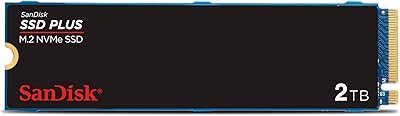
SanDisk 2TB SSD Plus M.2 NVMe SSD
86%
89%
Performance
92%
Ease of Installation
88%
Reliability
91%
Value for Money
90%
Capacity
More
RONGSHU RS001 1TB NVMe SSD
75%
91%
Value for Money
88%
Read/Write Speed
93%
PS5 Compatibility
53%
Brand Trustworthiness
71%
Thermal Management
More
ORICO X7000 2TB NVMe SSD
79%
88%
Read & Write Performance
84%
PS5 Compatibility
91%
Thermal Management
93%
Installation Ease
82%
Value for Money
More
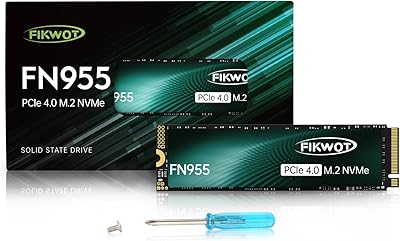
Fikwot FN955 2TB M.2 NVMe SSD
81%
88%
Read Performance
74%
Write Performance
92%
Value for Money
93%
PS5 Compatibility
67%
Thermal Management
More
RONGSHU RS001 512GB PCIe 4.0 NVMe SSD
75%
91%
Value for Money
83%
Read Speed Performance
86%
PS5 Compatibility
53%
Brand Reliability
61%
Sustained Workload Performance
More
TEAMGROUP MP33 2TB NVMe M.2 SSD
78%
93%
Value for Money
86%
Read Performance
67%
Write Performance
94%
Installation Ease
91%
Compatibility
More
ORICO e7400 2TB M.2 NVMe SSD
81%
91%
Sequential Speed
78%
Random Read/Write
86%
Thermal Management
83%
PS5 Compatibility
88%
Value for Money
More
WD_BLACK SN7100 2TB NVMe SSD
85%
93%
Read & Write Performance
88%
Gaming Load Times
86%
Power Efficiency
84%
Thermal Management
91%
Value for Money
More
WD_BLACK SN770 2TB NVMe SSD
85%
91%
Read & Write Performance
93%
Value for Money
94%
Installation & Compatibility
88%
Long-Term Reliability
92%
Gaming Load Times
More
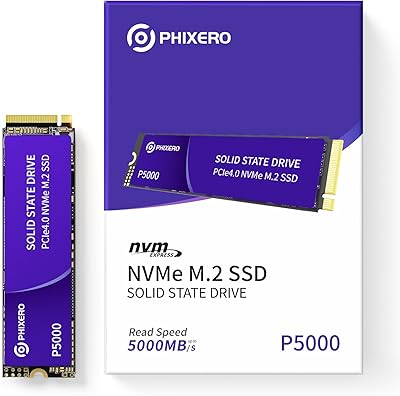
PHIXERO P5000 2TB NVMe SSD
88%
93%
Performance (Speed)
88%
Build Quality
90%
Heat Management
85%
Ease of Installation
92%
Compatibility
More

FAQ

Yes, the RP7000 is fully compatible with the PS5 expansion slot. The M.2 2280 form factor fits the console's dedicated slot, and the graphene thermal sticker already attached to the drive satisfies Sony's requirement for a heatsink. You will need to format the drive through the PS5 system menu after installation, which takes just a couple of minutes.

Most modern laptops with an M.2 slot will accept this drive physically, but there are two things to verify before buying. First, confirm your laptop has an M.2 2280 slot — some ultrabooks use shorter 2242 slots. Second, check whether your laptop supports PCIe 4.0; if it only supports PCIe 3.0, the drive will still work but will run at Gen 3 speeds. Either way, it is backward compatible.

For most everyday tasks — loading games, booting Windows, transferring moderate-sized files — you will never notice the cache limit at all. The SLC cache handles bursts extremely well. The situation where it matters is if you are copying very large files continuously, like moving a 200GB video archive in one go; once the cache fills, write speeds will drop noticeably. For typical gaming and general use, this is rarely an issue.

TLC stores three bits of data per cell versus QLC's four, which means each cell is written and erased fewer times to achieve the same workload, resulting in better endurance over time. In practical terms, TLC drives tend to maintain more consistent write speeds under repeated heavy use compared to QLC, which can slow down more significantly once its cache is exhausted. For gaming and mixed workloads, TLC is the more durable choice.

That is a fair and important question. RONGSHU is a relatively new name in Western markets, and honestly, there is not years of failure-rate data available yet the way there is for Samsung or Western Digital. The early buyer reviews are positive and the specs are legitimate, but if long-term reliability track record is your top priority, that is a genuine limitation to factor in. For budget-conscious buyers willing to accept some uncertainty, the value is strong — just back up anything critical, as you should with any drive.

The pre-applied graphene sticker provides basic thermal protection and is sufficient for most desktop and laptop scenarios. If your motherboard includes its own M.2 heatsink or cover, you should remove the graphene sticker before installing to avoid fitment issues. For heavy sustained workloads in poorly ventilated cases, a dedicated M.2 heatsink from your motherboard is preferable to the sticker alone.

The 7,400 MB/s figure is a synthetic sequential read benchmark and represents the best-case scenario in an ideal test environment. In real-world use, you can expect game load times and file transfers to be genuinely fast — noticeably better than Gen 3 drives — but your system's CPU, chipset, and workload type all affect what you actually see. Sequential transfers of large files will feel fast; random small-file access is less about raw speed and more about latency, where this drive also performs well.

Yes, you can. Gen 4 NVMe drives are backward compatible with PCIe 3.0 slots. The drive will operate at Gen 3 speeds — roughly half the rated maximum — which still puts it at around 3,500 MB/s sequential read, well ahead of any SATA SSD. You will not get the full performance benefit, but it is a functional and still fast option.

The package includes the drive, a small screwdriver, and two M2x3mm screws — everything you need for a standard M.2 installation. The graphene thermal sticker is already attached to the drive. It is a small thing, but having the screwdriver included means most buyers can complete the installation without rummaging around for the right tool.

The drive comes with a stated 3-year warranty and manufacturer support through RONGSHU. Since the brand operates primarily out of China, support is handled remotely rather than through a local service center network. Response times and the actual claims experience are areas where independent long-term data is limited. For a drive at this price tier, a 3-year warranty is a reasonable inclusion, but managing expectations about the claims process is sensible given the brand's early stage in Western markets.