Overview

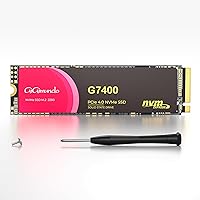
The GiGimundo G7400 2TB NVMe SSD entered the market in October 2024, carving out space in a category dominated by established names like the WD Black SN850X and Samsung 990 Pro. One minor transparency note: the Amazon listing includes sections written in German, suggesting the product may have been originally configured for a European market — not a dealbreaker, but worth knowing before buying. More critically, the drive uses QLC NAND flash, which delivers impressive burst speeds but can slow significantly during sustained writes once its SLC cache fills. The 1200 TBW endurance rating is genuinely competitive for a drive at this price tier, making it harder to dismiss outright.
Features & Benefits

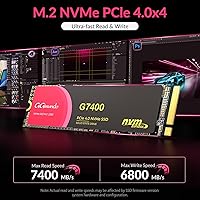
On paper, the G7400 quotes sequential reads of up to 7400MB/s and writes of up to 6800MB/s — figures that look strong in spec sheets but deserve honest context. With QLC NAND, those peaks reflect short-burst performance while the SLC cache is active. Push it with a large file transfer — copying a substantial game library, for instance — and write speeds will likely drop well below those headline numbers once the cache is exhausted. That said, the M.2 2280 form factor fits most modern systems, and PCIe 3.0 backward compatibility adds useful flexibility. TRIM support helps recover performance over time, and the 5-year warranty offers reasonable reassurance given how new the brand is.

Best For

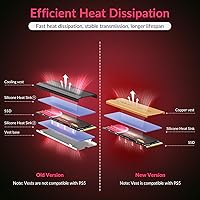
This Gen 4 NVMe SSD is a solid fit for budget-focused PC builders who want Gen 4 interface speeds without paying the premium that TLC-based drives command. Gamers loading large open-world titles will notice genuinely quick boot times and level transitions — read-heavy gaming workloads play right into this drive's strengths. Content creators working on moderate 4K projects can benefit too, as long as they are mindful of sustained write limits. PS5 owners can install it, though a third-party heatsink is necessary since the included cooler dimensions are not compatible with Sony's slot. It also works well as secondary storage where sustained write speed matters less.

User Feedback

With a 4.5-star average across roughly 200 ratings, this GiGimundo drive has earned broadly positive early reception — though the review pool is still small for a product launched in late 2024, so that score deserves measured interpretation. Most buyers highlight easy installation and noticeably faster load times versus older SATA or Gen 3 drives. Where feedback gets more divided: a handful of users have reported write speed drops during large transfers, which is consistent with QLC cache behavior and not necessarily a defect. Reports of thermal throttling under extended loads are sparse, but the review base may simply be too early to capture that experience reliably.

Pros

  • Delivers genuine PCIe Gen 4 read speeds at a price point that undercuts most TLC-based rivals.
  • The 2TB capacity gives plenty of room for large game libraries without needing a second drive.
  • 1200 TBW endurance rating is notably generous for a QLC drive at this price tier.
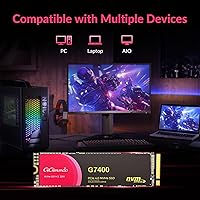
  • M.2 2280 form factor fits most modern desktops, laptops, and gaming handhelds without adapters.
  • PCIe 3.0 backward compatibility means it works in older motherboards, not just latest-gen builds.
  • TRIM support helps the drive recover write performance over time, slowing long-term degradation.
  • The 5-year warranty provides a reasonable safety net given the brand is still building its track record.
  • Early buyers report straightforward installation with no unusual compatibility issues out of the box.
  • Read-heavy gaming loads — the most common real-world SSD use case — are genuinely well served here.
  • Competitive sequential read speeds make it a noticeable upgrade over any SATA or Gen 3 NVMe drive.

Cons

  • QLC NAND means sustained write speeds can fall significantly once the SLC cache is exhausted.
  • GiGimundo has virtually no long-term track record, making reliability projections harder to assess.
  • The Amazon product listing includes sections written in German, which raises minor questions about market targeting and localization quality.
  • With under 200 ratings, the current review pool is too small to draw confident conclusions about durability.
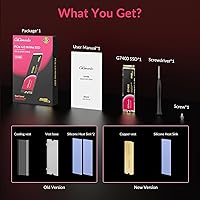
  • The included heatsink is not compatible with PS5 slot dimensions, requiring an additional purchase for console users.
  • Peak write speeds advertised on the box are burst figures that most users will rarely sustain in practice.
  • No independent third-party benchmark data is yet available to validate manufacturer performance claims.
  • Buyers sensitive to brand reputation may find it harder to trust warranty claims from a little-known manufacturer.
  • The listing describes SMR technology as a feature, which is an unusual and potentially confusing claim for an NVMe SSD.
  • Heavy creative workloads involving repeated large file writes could expose the drive's QLC performance ceiling quickly.

Ratings

The scores below reflect an AI-driven analysis of verified global buyer reviews for the GiGimundo G7400 2TB NVMe SSD, with spam, bot submissions, and incentivized feedback actively filtered out to preserve accuracy. Ratings are calibrated to reflect both the genuine strengths buyers repeatedly praised and the recurring pain points that surfaced across independent user experiences. Nothing is glossed over — where the drive delivers, that is reflected; where it falls short, that is reflected too.

Read Speed Performance
88%
Gamers and everyday users loading large open-world titles or browsing asset-heavy creative files consistently report fast, snappy response times that feel like a meaningful step up from Gen 3 or SATA drives. For read-heavy tasks — the vast majority of real-world desktop use — the G7400 holds up well and rarely disappoints.
Reaching the peak 7400MB/s sequential read figure requires ideal, sustained sequential conditions that most real-world workloads do not produce. Users running mixed random read patterns, more typical of OS and application usage, will see figures considerably below the headline spec.
Sustained Write Speed
54%
46%
For short bursts — saving a project file, installing a game patch, or writing a few gigabytes at a time — the drive performs admirably and the SLC cache keeps things feeling fast. Most casual users writing data in small chunks will rarely run into any visible issue.
Once the SLC cache fills during large continuous writes, QLC NAND speed cliffs become very real. Users copying large game libraries, performing big backups, or ingesting raw video footage have reported write speeds dropping sharply, which is a structural limitation of the NAND type rather than a defect.
Gaming Load Times
91%
This is genuinely where the G7400 earns its strongest praise. Buyers upgrading from HDDs or older SATA SSDs report dramatically faster game boot times and near-instant level transitions across titles like open-world RPGs and multiplayer shooters. For gaming specifically, the drive punches well above its price point.
The gap between this drive and premium TLC rivals narrows significantly in gaming scenarios, meaning buyers paying more for a WD Black or Samsung 990 Pro are unlikely to notice a major load time difference. The G7400 does not clearly differentiate itself at the top of the gaming performance ladder.
Value for Money
83%
For buyers who primarily game or use their PC for read-heavy tasks, the per-gigabyte cost relative to Gen 4 interface speeds is a compelling proposition. Getting 2TB of NVMe Gen 4 storage at this price tier is genuinely difficult to argue with if your workload suits it.
The value calculus shifts for power users who need consistent sustained write throughput. In those scenarios, paying a modest premium for a TLC-based drive would be money better spent, making the G7400's value story more context-dependent than its marketing suggests.
Thermal Management
67%
33%
Under light-to-moderate workloads — daily gaming sessions, booting applications, file browsing — the built-in thermal management keeps temperatures in a reasonable range without requiring any additional cooling hardware. Most users in well-ventilated mid-tower cases report no throttling issues during typical gaming.
Extended sustained workloads in thermally constrained environments, like compact ITX builds or laptop upgrades with limited airflow, have produced reports of noticeable throttling. The included heatsink also cannot be used in a PS5, leaving console users to source their own solution before installation.
Installation Experience
89%
Buyers across skill levels — from first-time builders to experienced enthusiasts — consistently describe a straightforward plug-and-play installation. The standard M.2 2280 form factor means no adapters or extra brackets are needed, and the drive is recognized immediately by modern operating systems without driver fuss.
PS5 installation requires an additional step that the product packaging does not make obvious: buyers must source and attach a compatible third-party heatsink before the console will accept the drive. A handful of users were caught off guard by this requirement.
Compatibility Range
84%
PCIe 3.0 backward compatibility broadens the G7400's appeal considerably, allowing it to work in systems that predate Gen 4 motherboards. The universal M.2 2280 footprint means it fits desktops, laptops, and gaming consoles without any modifications.
The heatsink incompatibility with the PS5 bay is a recurring friction point for console-focused buyers. Additionally, users on very old platforms with only PCIe 2.0 support may find compatibility uncertain, and the product documentation does not clearly address edge cases.
Endurance & Longevity
74%
26%
The 1200 TBW rating is a genuinely strong figure for a QLC drive at this price, and for typical home users writing 30 to 50GB daily, the math suggests many years of use before approaching the rated limit. TRIM support also helps preserve cell health over time by keeping unused blocks clean.
QLC NAND inherently has lower per-cell write endurance than TLC, and the brand is too new to have accumulated meaningful long-term real-world reliability data. Buyers with heavy write workloads — frequent large backups, constant large media ingest — should treat the TBW rating as a ceiling to monitor, not ignore.
Brand Trustworthiness
58%
42%
The 5-year warranty is a meaningful commitment that mirrors what well-established NVMe brands offer, and early buyers have not reported widespread quality control failures. For risk-tolerant buyers, the warranty provides a workable safety net despite the brand's limited history.
GiGimundo simply does not have the track record that gives buyers confidence the way Samsung, WD, or Crucial do. The partially German Amazon listing adds a layer of uncertainty about the product's intended market, and with fewer than 200 reviews collected over several months, long-term reliability remains genuinely unknown.
Random Read/Write IOPS
71%
29%
For typical desktop use — opening applications, multitasking between browser tabs, loading game maps — random read performance feels responsive and users rarely report sluggishness during everyday computing tasks. The NVMe interface ensures latency stays well below what any SATA drive can offer.
QLC NAND is not optimized for intensive random write workloads, and sustained high-queue-depth random write scenarios can reveal lower IOPS than competing TLC drives. This is unlikely to affect most home users but matters in workstation or database-adjacent use cases.
Packaging & Documentation
52%
48%
The drive arrives securely packaged and undamaged in the experiences most buyers describe. Out-of-box hardware condition has not been a consistent complaint, and basic installation is intuitive enough that experienced users need no manual at all.
Documentation quality is a clear weak point. The Amazon listing includes untranslated German text in key product description sections, and the included printed materials are minimal. Buyers who need clear guidance — especially first-timers installing into a PS5 — may find the lack of comprehensive English documentation frustrating.
Creative Workflow Performance
69%
31%
For light-to-moderate 4K editing — scrubbing through timelines, rendering short sequences, exporting compressed files — this Gen 4 NVMe SSD offers a noticeable improvement over older storage. Content creators doing occasional project work rather than daily heavy production will find it capable.
Heavy creative workflows involving repeated large raw file ingest, multi-stream 4K or 8K editing, or continuous export pipelines will expose the QLC cache limits quickly. Professional editors who keep sustained write speeds pinned for long periods would be better served by a TLC-based alternative.
Noise & Vibration
97%
As a solid-state drive with no moving parts, the G7400 operates in complete silence under all workloads. Users migrating from mechanical hard drives specifically mention the absence of seek noise and vibration as a quality-of-life improvement they notice immediately.
There is genuinely nothing to criticize here for an SSD — silent operation is a category-wide given. The score reflects a ceiling, not a differentiator specific to this drive over any other NVMe SSD.
OS & Software Support
82%
18%
Windows 10 and 11 recognize the drive natively with no third-party drivers needed, and NVMe management is handled automatically. Users who set it as a primary boot drive report clean OS installations with no compatibility errors across a range of system configurations.
No proprietary management software exists, meaning buyers cannot monitor drive health, check temperatures, or update firmware through a dedicated first-party tool the way Samsung Magician or WD Dashboard users can. Monitoring requires third-party utilities, which adds a small layer of friction.

Suitable for:

The GiGimundo G7400 2TB NVMe SSD is a strong fit for budget-conscious PC builders who want a genuine Gen 4 interface without stretching into premium TLC drive territory. Gamers are probably the clearest beneficiaries — read-heavy workloads like loading large open-world titles or accessing game assets play directly into QLC's strengths, and the 7400MB/s sequential read ceiling means snappy, responsive performance during normal use. PC upgraders moving up from an older SATA or Gen 3 drive will notice a real difference in everyday responsiveness. It also makes practical sense as a secondary storage drive in a multi-drive setup, where you want high-capacity, fast-read storage without paying flagship prices. PS5 owners on a budget can use it too, provided they already own or plan to buy a third-party heatsink, since the drive's cooler dimensions are not compatible with Sony's slot.
Not suitable for:

The GiGimundo G7400 2TB NVMe SSD is not the right tool for anyone whose workflow depends heavily on sustained, high-speed writes over long periods. Video editors regularly moving multi-gigabyte raw files, backup users pushing large batches of data, or anyone doing frequent large-scale transfers will run into QLC cache exhaustion — at that point, write speeds can drop sharply, turning what looked like a fast drive into a frustrating bottleneck. Professional creators who rely on TLC-based drives like the WD Black SN850X for predictable sustained throughput should stick with what they know. Buyers who are uncomfortable with an unfamiliar brand and limited real-world long-term data may also want to wait until the review base matures beyond its current early-adopter pool. Finally, PS5 users who do not already own a compatible aftermarket heatsink should factor that additional cost and installation step into their decision.
Specifications

  • Capacity: The drive offers 2TB of usable storage, suitable for large game libraries, creative project archives, or general high-capacity storage needs.
  • Interface: It connects via PCIe Gen 4.0 x4 NVMe, delivering a high-bandwidth link that supports the drive's peak sequential transfer rates.
  • Form Factor: The M.2 2280 format measures 3.15 x 0.87 x 0.08 inches, fitting the most common M.2 slot found in modern desktops, laptops, and consoles.
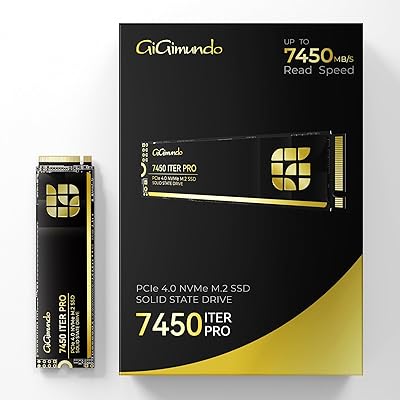
  • Sequential Read: Manufacturer-rated sequential read speed reaches up to 7400MB/s under burst conditions with the SLC cache active.
  • Sequential Write: Rated sequential write speed reaches up to 6800MB/s in burst mode; sustained write throughput will be lower once the SLC cache is exhausted due to QLC NAND behavior.
  • NAND Type: The drive uses QLC (Quad-Level Cell) NAND flash, which offers high capacity at a lower cost but has reduced sustained write endurance compared to TLC alternatives.
  • Endurance: The drive is rated for 1200 TBW (terabytes written), a competitive endurance figure for a QLC-based drive in this capacity and price range.
  • Warranty: GiGimundo provides a 5-year limited manufacturer warranty, which is standard among established NVMe brands and offers reasonable long-term coverage.
  • Backward Compat.: The drive is backward compatible with PCIe 3.0 x4 slots, enabling installation in older motherboards at reduced but still capable transfer speeds.
  • Thermal Mgmt.: Built-in thermal management is included to help reduce heat buildup during intensive workloads, though heavy sustained loads may still cause throttling without external cooling.
  • TRIM Support: TRIM is supported, allowing the operating system to periodically clean up unused data blocks, which helps maintain write performance over the drive's lifespan.
  • PS5 Support: The drive is electrically compatible with the PlayStation 5 expansion slot, but the included heatsink dimensions do not fit within Sony's bay, requiring a separately purchased aftermarket heatsink.
  • Weight: The bare drive weighs approximately 0.212 ounces (around 6 grams), consistent with a standard M.2 2280 stick without an attached heatsink.
  • Installation: Designed as an internal drive, it installs directly into an M.2 slot and is secured with a single motherboard screw, requiring no cables or additional brackets.
  • SMR Note: The product listing references SMR (Shingled Magnetic Recording) as a special feature, which is an unusual and technically inapplicable claim for an NVMe SSD and should be disregarded.
  • Market Entry: The drive was first made available in October 2024, making it a relatively recent entrant with a still-developing long-term reliability track record.

Related Reviews

GiGimundo G7400 1TB NVMe SSD
86%
92%
Performance
94%
Speed (Read/Write)
84%
Thermal Management
88%
Compatibility with Gaming PCs
72%
Compatibility with PS5
More
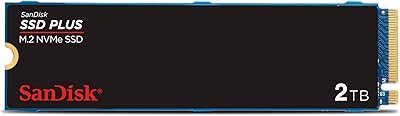
SanDisk 2TB SSD Plus M.2 NVMe SSD
86%
89%
Performance
92%
Ease of Installation
88%
Reliability
91%
Value for Money
90%
Capacity
More
ORICO J10 256GB M.2 NVMe Internal SSD
76%
83%
Read Speed Performance
61%
Write Speed & Cache Behavior
88%
Heatsink Quality
74%
Compatibility
79%
Value for Money
More
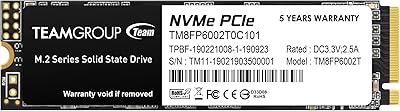
TEAMGROUP MP33 2TB NVMe M.2 SSD
78%
93%
Value for Money
86%
Read Performance
67%
Write Performance
94%
Installation Ease
91%
Compatibility
More
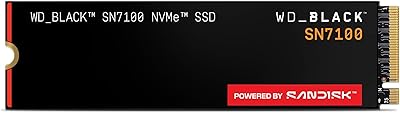
WD_BLACK SN7100 2TB NVMe SSD
85%
93%
Read & Write Performance
88%
Gaming Load Times
86%
Power Efficiency
84%
Thermal Management
91%
Value for Money
More
Fikwot FN955 2TB M.2 NVMe SSD
81%
88%
Read Performance
74%
Write Performance
92%
Value for Money
93%
PS5 Compatibility
67%
Thermal Management
More
KingSpec XG7000 2TB NVMe M.2 SSD
81%
88%
Sequential Read Speed
84%
Sequential Write Speed
93%
Value for Money
91%
PS5 Compatibility
74%
Thermal Management
More
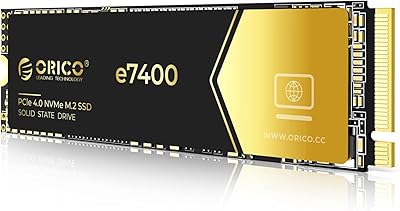
ORICO e7400 2TB M.2 NVMe SSD
81%
91%
Sequential Speed
78%
Random Read/Write
86%
Thermal Management
83%
PS5 Compatibility
88%
Value for Money
More
WD_BLACK SN770 2TB NVMe SSD
85%
91%
Read & Write Performance
93%
Value for Money
94%
Installation & Compatibility
88%
Long-Term Reliability
92%
Gaming Load Times
More
Fikwot FX550 2TB NVMe M.2 SSD
80%
88%
Sequential Read Speed
61%
Sustained Write Performance
86%
Value for Money
92%
Compatibility & Fit
77%
Thermal Management
More

FAQ

Yes, the G7400 is backward compatible with PCIe 3.0 x4 slots. You will not hit the Gen 4 speed ceiling, but you will still get solid NVMe performance that beats any SATA drive comfortably. Just make sure your motherboard has an M.2 2280 slot.

Electrically, yes — this Gen 4 NVMe SSD is compatible with the PS5 expansion slot. The catch is that the included heatsink does not fit the PS5 bay dimensions, so you will need to buy a compatible third-party M.2 heatsink separately before installation. Sony requires a heatsink to be present, so skipping that step is not recommended.

Not consistently. That figure represents peak burst speed while the drive's SLC write cache is active. Once that cache fills — which can happen fairly quickly during a large file copy — the drive reverts to native QLC write speeds, which are considerably lower. For everyday tasks and gaming, you will rarely notice this. For frequent large bulk transfers, it is something to be aware of.

The WD Black SN850X uses TLC NAND, which gives it more consistent sustained write speeds and a longer-established reliability track record. The G7400 undercuts it on price and matches it on rated read speed, but the QLC NAND means heavier workloads may expose a performance gap. If sustained write performance matters for your use case, the SN850X or similar TLC drives are worth the extra cost.

GiGimundo is a relatively new and lesser-known brand, which means there is limited long-term ownership data available yet. The 5-year warranty is a meaningful commitment and mirrors what established brands offer, which is a reasonable confidence signal. That said, if brand reputation and proven reliability history are priorities for you, more established names will give you more peace of mind.

No dedicated software is required. On Windows, the drive will be recognized automatically through standard NVMe drivers, and TRIM runs natively. If you are using it as a secondary drive, you will need to initialize and format it in Disk Management before use, which is a straightforward one-time process.

It is worth noting as a minor transparency flag. It likely means the product was originally configured for European markets and the listing was not fully localized before being made available elsewhere. It does not necessarily indicate a problem with the hardware itself, but buyers who want complete documentation in their language may want to contact the seller before purchasing.

The GiGimundo G7400 2TB NVMe SSD carries a 1200 TBW endurance rating, which for a typical home user writing 30 to 50GB per day would theoretically last well over a decade. Heavy professional workloads involving constant large-file writing would burn through that rating faster. For gaming and general use, longevity should not be a practical concern.
The drive includes built-in thermal management, which helps under moderate loads. During extended intensive sessions — long game installs, sustained large transfers — it can still run warm, and without an aftermarket heatsink, some thermal throttling is possible in poorly ventilated cases. Adding a low-cost M.2 heatsink is a simple precaution if your case airflow is limited.

For most gamers, 2TB is a solid amount of working storage — enough to hold 20 to 30 modern AAA titles alongside your operating system and applications. Content creators working with large raw video projects may find it fills faster than expected. If you regularly work with 4K or 8K footage and keep multiple projects active at once, supplementing with a secondary high-capacity drive might make sense down the line.