Overview

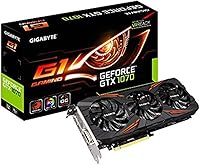
The GIGABYTE GTX 1070 G1 Gaming Graphics Card launched in 2016 as Gigabyte's factory-overclocked answer to what enthusiast gamers actually wanted: strong 1080p performance without touching an overclocking utility. It carved out a reputation quickly, sitting comfortably above reference GTX 1070 cards thanks to its Windforce 3X cooling — three fans instead of the noisy blower that shipped on Nvidia's Founders Edition. Today, this G1 Gaming card lives primarily in the used and refurbished market, and that context matters. Buyers comparing it to a modern budget GPU need honest expectations: Pascal architecture is aging, but for the right use case and price, it still holds up respectably.

Features & Benefits

The headline spec is the factory boost clock — 1822 MHz in OC mode, 1784 MHz in Gaming mode — which squeezes a modest but real fps advantage over a stock GTX 1070, typically a few frames in GPU-bound scenarios. The 8GB of GDDR5 memory on a 256-bit bus is worth noting: that bandwidth and capacity still hold their own in most 1080p titles, and even at 1440p you won't hit an immediate VRAM wall the way you would with a 4GB card. Display connectivity is generous — three DisplayPort 1.4, one HDMI 2.0b, and a DVI-D output — making the Gigabyte GTX 1070 G1 a natural fit for multi-monitor setups or VR rigs.

Best For

This factory-overclocked 1070 makes the most sense for 1080p high-refresh gaming — think 100-plus fps in competitive shooters or steady 60-plus fps in moderately demanding AAA titles on a 144Hz monitor. At 1440p it is usable, but expect to dial settings back in newer releases. Builders sourcing used components will find the Windforce cooling a genuine reliability asset, since it keeps thermals in check without fan noise becoming an issue. One physical caveat: the card is 11 inches long, so confirm your case has the clearance before ordering. Original VR headset owners and anyone building a quiet multi-display workstation will also find it a practical, cost-effective pick.

User Feedback

With over 900 ratings averaging 4.4 out of 5, the reception for this G1 Gaming card has been consistently strong. The most repeated praise centers on near-silent idle behavior — the fans stop entirely under light loads, which owners of quiet builds genuinely appreciate. Long-term durability also comes up often, with multiple buyers noting the card has run without issue for several years of continuous use. On the critical side, the 11-inch length catches people off guard in tighter cases, and a handful of users on older platforms flagged occasional driver or compatibility hiccups. Neither issue is widespread, but both are worth knowing before committing.

Pros

  • Factory overclocked out of the box, so you get a real performance edge over reference GTX 1070 cards without any manual tuning.
  • 8GB of GDDR5 memory keeps the Gigabyte GTX 1070 G1 relevant at 1080p and manageable at 1440p in many titles.
  • The Windforce 3X triple-fan cooler does an excellent job keeping temperatures in check even during extended gaming sessions.
  • Fans stop completely at idle and light loads, making this G1 Gaming card genuinely quiet for everyday desktop use.
  • Five display outputs including three DisplayPort 1.4 connections make multi-monitor setups straightforward and flexible.
  • Proven long-term reliability, with many owners reporting stable operation across several years of consistent use.
  • Solid build quality with a full backplate adds structural rigidity and a clean look in windowed cases.
  • A 500W PSU requirement keeps system power demands reasonable and compatible with most mid-range builds.
  • Strong track record in the used GPU market, with a large pool of buyer feedback to reference before purchasing.
  • HDMI 2.0b output supports 4K at 60Hz, adding display versatility beyond pure gaming scenarios.

Cons

  • Pascal architecture is several generations old, and performance gaps versus current mid-range GPUs are widening with each new game release.
  • No hardware ray tracing support means this factory-overclocked 1070 is completely locked out of a growing list of visual features in modern titles.
  • At 11 inches long, the card will not physically fit in many compact mid-tower or small form factor cases.
  • Sourcing this card new is increasingly difficult; most available units are used, refurbished, or old stock with uncertain history.
  • A small number of users have experienced driver or compatibility issues on aging motherboards with outdated BIOS firmware.
  • Performance in GPU-heavy titles released after 2022 can be inconsistent at 1440p, often requiring significant settings compromises.
  • No support for AV1 hardware decode, which is increasingly relevant for high-efficiency video streaming and content creation workflows.
  • Resale value has dropped considerably, so this is not a card to buy speculatively as an investment or for future resale.

Ratings

The scores below were generated by our AI system after analyzing hundreds of verified global user reviews for the GIGABYTE GTX 1070 G1 Gaming Graphics Card, with automated filters applied to remove spam, bot activity, and incentivized feedback. The result is an honest, balanced breakdown that captures what real buyers consistently praised — and where they ran into genuine frustrations. Both sides are represented without sugarcoating.

Gaming Performance
74%
26%
For 1080p gaming, this G1 Gaming card still delivers respectable frame rates in a wide range of titles — competitive shooters, older open-world games, and esports staples all run well above 60 fps at high settings. Owners who primarily game at 1920x1080 consistently report satisfaction with day-to-day playability.
In GPU-heavy titles released after 2021, frame rates at 1440p or with demanding visual effects can become inconsistent enough to affect the experience. The Pascal architecture is genuinely showing its age against modern mid-range alternatives, and that gap widens with each new release.
Thermal Management
88%
The Windforce 3X triple-fan cooler is one of the strongest aspects of the Gigabyte GTX 1070 G1, keeping GPU temperatures in the low-to-mid 70s Celsius under sustained load — comfortably within safe operating range even in warm rooms. Users who run long gaming sessions report no thermal throttling under normal conditions.
In very poorly ventilated cases or during summer months in warmer climates, a handful of users noted temperatures creeping higher than expected. The cooler performs best when the system case has at least moderate airflow — cramped builds with no intake fans can push the limits.
Noise Level
91%
The semi-passive fan mode is a genuine highlight — fans stop entirely at idle and during web browsing or light desktop work, making this factory-overclocked 1070 essentially silent outside of gaming. Even under full load, the three-fan setup disperses heat quietly enough that most users do not find it distracting.
At sustained maximum load — such as running a benchmark loop or an extended demanding gaming session in a hot room — the fans do become audible. It is not loud by any standard, but users expecting whisper-quiet operation at 100% GPU usage may be slightly surprised.
Build Quality
86%
The full metal backplate adds rigidity to a card that sits at 2.6 pounds, preventing PCB flex when installed in horizontal motherboard layouts. Owners consistently describe the overall construction as solid, with no reports of structural issues or fan bearing failures even after years of regular use.
The plastic fan shroud, while sturdy enough, does not feel as premium as the metal-heavy designs found on flagship cards. Some users feel the aesthetic, while clean, does not quite match the build quality standard of higher-tier Gigabyte AORUS models released around the same era.
VRAM & Memory
79%
21%
8GB of GDDR5 on a 256-bit bus remains a meaningful advantage over cards that shipped with 4GB or 6GB in the same generation. At 1080p, the headroom keeps texture pop-in manageable in open-world titles, and 1440p gaming in less VRAM-hungry games remains viable without hitting a hard memory wall.
The 8008 MHz effective memory speed, while adequate for the era, does not compare favorably to GDDR6-equipped modern cards. In a handful of newer titles with aggressive VRAM usage at 1440p ultra settings, users have reported stuttering consistent with memory pressure.
Cooling Efficiency
83%
Direct-contact heat pipes pulling heat away from the GPU die efficiently distribute thermal load across the full heatsink surface, which is part of why this G1 Gaming card maintains stable clocks without throttling under normal gaming conditions. The design leaves meaningful thermal headroom for users who want to push a modest manual overclock.
Over several years of use, a small number of owners noted that the stock thermal paste begins to degrade and may benefit from repasting — a routine maintenance step that most GPU owners never think about until temperatures creep upward.
Display Connectivity
87%
Five physical outputs — three DisplayPort 1.4, one HDMI 2.0b, and one DL-DVI-D — give this card genuine flexibility that many users actively take advantage of, whether running a triple-monitor setup for productivity or connecting to both a gaming monitor and a TV simultaneously.
While the port selection is broad, the DVI-D output is increasingly a legacy connection that fewer modern displays support. Users with all-DisplayPort monitor setups will have no complaints, but the DVI port takes up space that could arguably have been used for a second HDMI port.
Factory Overclock Value
76%
24%
The jump from the reference 1683 MHz boost to 1822 MHz in OC mode is not dramatic in absolute fps terms, but it represents a tangible out-of-box advantage that requires zero user effort — a meaningful benefit for buyers who have no interest in manual overclocking.
The real-world fps delta between this G1 Gaming card and a stock GTX 1070 is typically only a few frames per second in most titles, which some buyers may find underwhelming relative to the premium Gigabyte charged over reference models at launch.
Long-Term Durability
84%
Multiple verified buyers report using this card continuously for five or more years without hardware failure, which is above average for a consumer GPU. The combination of quality cooling and Pascal architecture's relatively modest power draw appears to contribute to longer operational life than some competing cards from the same period.
Cards sourced from the used market carry unknown usage histories — some units may have been used for extended cryptocurrency mining cycles, which accelerates wear on capacitors and fans. There is no reliable way to verify this without stress testing a used unit thoroughly before committing to a purchase.
Driver & Software Support
69%
31%
NVIDIA continues to issue driver updates for the GTX 10-series, meaning this card still receives game-ready driver releases alongside current GPUs. Users on modern Windows 11 systems generally report stable, problem-free driver installation with no unusual configuration steps required.
A minority of users on older motherboard platforms with outdated BIOS firmware reported initialization quirks or black screen issues during first-time setup. Gigabyte's XTREME Engine software utility, used for clock mode switching and RGB control, has received mixed feedback for stability on certain system configurations.
VR Readiness
67%
33%
For first-generation VR headsets like the Oculus Rift CV1 and HTC Vive, the Gigabyte GTX 1070 G1 meets and comfortably exceeds minimum GPU requirements, providing a solid VR experience in the titles those headsets were designed for.
For newer PC VR headsets with higher resolution panels and reprojection demands, the GTX 1070 struggles to maintain the sustained frame rates needed for a comfortable experience. Anyone considering this card primarily for current-generation PC VR should lower their expectations or budget for a newer GPU.
Physical Fitment
62%
38%
In standard ATX mid-tower and full-tower cases, the 11-inch card length presents no installation difficulties, and the dual-slot design keeps it compatible with most mid-range motherboards that have adequate PCIe slot spacing.
The 11-inch length is the most consistently flagged practical concern among real buyers, particularly those with compact mid-towers where drive cages or case walls reduce GPU clearance. Anyone building in an ITX or mATX case should measure carefully — this card simply will not fit many smaller enclosures.
Value for Money
71%
29%
On the used market at current prices, the Gigabyte GTX 1070 G1 offers a reasonable performance-per-dollar ratio for buyers who primarily need 1080p gaming capability and have a tightly constrained budget. The added cooling quality and factory overclock justify a small premium over bare reference cards.
At any price point where a current-generation budget card is available as an alternative, the math becomes difficult to justify — newer cards offer meaningfully better performance, modern feature support including ray tracing, and a warranty. The value case for this card depends heavily on the specific used-market price at the time of purchase.
Aesthetic & RGB
73%
27%
The RGB lighting strip on the fan shroud and the clean backplate design look genuinely good inside a windowed case, and the XTREME Engine software offers enough color and effect options to satisfy most casual builders who want their GPU to contribute to a themed build.
The RGB implementation is more restrained than what Gigabyte's AORUS line offers, and it lacks integration with popular third-party lighting ecosystems like ASUS Aura Sync or Corsair iCUE. Users who invest heavily in synchronized RGB setups may find the G1 Gaming card's lighting a visual outlier.

Suitable for:

The GIGABYTE GTX 1070 G1 Gaming Graphics Card is a strong match for budget-conscious gamers who want dependable 1080p performance without paying modern GPU prices. If you game primarily at 1920x1080 on a 144Hz monitor and play a mix of competitive titles and older AAA games, this card will keep frame rates comfortably high in most scenarios. It also works well for anyone building or upgrading a secondary rig, a living room PC, or a home-office workstation that occasionally handles light gaming. Original VR adopters running an Oculus Rift or HTC Vive will find the GTX 1070 still meets headset requirements without needing an upgrade. Used-market builders who prioritize proven reliability and a quality cooling solution over cutting-edge performance will find this G1 Gaming card particularly compelling.

Not suitable for:

Anyone chasing smooth performance in demanding modern titles at 1440p or higher should look elsewhere — the GIGABYTE GTX 1070 G1 Gaming Graphics Card is showing its age in GPU-heavy games released after 2021, where frame rates at higher settings can dip uncomfortably. Ray tracing is entirely off the table, as Pascal architecture has no hardware support for it. If you are building in a compact or mini-ITX case, the 11-inch card length is a genuine physical obstacle that may simply not fit. Buyers on very old motherboards with outdated BIOS versions may also encounter compatibility friction that adds unnecessary frustration to the setup process. And if your workload involves AI-assisted creative tools, video encoding acceleration, or modern compute tasks that leverage newer GPU features, a current-generation card will serve you far better.

Specifications

  • GPU Architecture: Built on NVIDIA's Pascal architecture using the GP104 chip, which underpins the GeForce GTX 1070 series.
  • Boost Clock: Runs at 1822 MHz in OC mode and 1784 MHz in Gaming mode, both above the reference GTX 1070 boost of 1683 MHz.
  • VRAM: Equipped with 8GB of GDDR5 memory running at 8008 MHz effective clock speed.
  • Memory Bus: Uses a 256-bit memory interface, delivering up to 256 GB/s of memory bandwidth.
  • Display Outputs: Offers three DisplayPort 1.4 ports, one HDMI 2.0b port, and one DL-DVI-D port for a total of five simultaneous display connections.
  • Max Resolution: Supports a maximum digital output resolution of 7680x4320 at 60Hz via DisplayPort.
  • Cooling System: Uses Gigabyte's Windforce 3X cooling solution with three 80mm fans and composite copper heat pipes making direct GPU contact.
  • Fan Behavior: Fans operate in semi-passive mode, stopping completely during idle or low-load conditions to reduce noise and wear.
  • Card Dimensions: Measures 11 x 4.5 x 1.6 inches (approximately 280 x 114 x 41 mm), occupying a dual-slot footprint.
  • Card Length: At 11 inches long, case clearance should be verified before installation, particularly in compact mid-tower or ITX builds.
  • Weight: The card weighs 2.6 pounds, which is typical for a triple-fan aftermarket GPU with a full metal backplate.
  • Power Requirement: Requires a minimum 500W system power supply with the appropriate PCIe power connectors available.
  • Power Connectors: Draws supplemental power via one 8-pin and one 6-pin PCIe power connector from the system PSU.
  • API Support: Supports DirectX 12, OpenGL 4.5, and Vulkan, covering all major graphics APIs in widespread use at the time of launch.
  • VR Compatibility: Meets the minimum GPU requirements for first-generation VR headsets including the Oculus Rift and HTC Vive.
  • Backplate: Ships with a full metal backplate that reinforces the PCB and provides a cleaner aesthetic in windowed cases.
  • RGB Lighting: Features customizable RGB lighting on the fan shroud, controllable through Gigabyte's XTREME Engine software utility.
  • Model Number: The official Gigabyte model designation is GV-N1070G1 GAMING-8GD, useful for verifying drivers and compatibility documentation.
  • Manufacturer: Designed and produced by Gigabyte Technology, a Taiwanese hardware manufacturer with a long history in discrete graphics cards.
  • Release Date: First made available in June 2016, coinciding with the broader launch of the NVIDIA GTX 1070 product line.

Related Reviews
GIGABYTE GeForce RTX 4080 Gaming OC 16GB Graphics Card
87%
94%
Performance for 4K Gaming
91%
Cooling Efficiency
84%
Ease of Installation
78%
Value for Money
88%
Build Quality and Durability
More
GIGABYTE GeForce RTX 3050 Gaming OC 8GB Graphics Card
84%
91%
Value for Money
88%
Gaming Performance (1080p)
89%
Cooling Efficiency
84%
Build Quality
86%
Noise Level
More
EVGA GeForce GTX 950 2GB SC Gaming Graphics Card
83%
90%
Value for Money
88%
Performance at 1080p
91%
Cooling System Noise
87%
Power Consumption
85%
Ease of Installation
More
MSI NVIDIA GeForce GTX 970 Gaming 4GB Graphics Card
85%
88%
Gaming Performance (1080p/1440p)
93%
Cooling System Noise
91%
Price-to-Performance Ratio
85%
Installation Ease
72%
Driver Compatibility
More
Gigabyte Radeon RX 6800 16GB Graphics Card
77%
88%
Gaming Performance
91%
Thermal Management
87%
Noise Level
93%
VRAM Capacity
89%
Build Quality
More
GIGABYTE RTX 5070 Gaming OC 12GB GPU
83%
93%
Gaming Performance at 1440p
76%
4K Gaming Capability
91%
Thermal Performance
94%
DLSS 4 and Multi Frame Generation
89%
Build Quality and Construction
More
GIGABYTE RX 7700 XT 12GB Graphics Card
83%
88%
1440p Gaming Performance
91%
Thermal Performance
83%
Noise Level
93%
Build Quality
76%
Value for Money
More
GIGABYTE RX 7600 XT 16GB Graphics Card
80%
88%
Value for Money
84%
1080p Gaming Performance
72%
1440p Gaming Performance
93%
VRAM Capacity
86%
Thermal Performance
More
GIGABYTE RX 7800 XT 16GB Graphics Card
78%
91%
1440p Gaming Performance
88%
Thermal Management
93%
VRAM & Future-Proofing
79%
Value for Money
61%
Driver & Software Experience
More
GIGABYTE GeForce RTX 5070 Ti Gaming OC 16G
86%
91%
4K Gaming Performance
89%
Ray Tracing & DLSS 4
93%
Cooling Efficiency
94%
VRAM & Memory Speed
87%
Acoustic Performance
More

FAQ

It depends entirely on what you need it for. If you are gaming at 1080p on a budget and not chasing the latest graphically demanding releases at max settings, the Gigabyte GTX 1070 G1 still does the job reasonably well. For competitive titles, older AAA games, or secondary PC builds, it holds up. If you want ray tracing, high-fidelity 1440p in modern titles, or future-proofing, a newer card is a smarter investment.

Gigabyte recommends a minimum 500W PSU for the system as a whole, not just the card itself. You also need a PSU with both an 8-pin and a 6-pin PCIe connector available. Most quality mid-range power supplies from the past several years will have these, but double-check yours before ordering.

At idle and during light tasks, the fans stop completely, so you will not hear a thing. Under a sustained gaming load, the fans spin up but remain quiet enough that most people would not describe it as intrusive. It is noticeably quieter than a reference blower-style card, which exhausts hot air through a single noisy fan.

The card is 11 inches long, which fits comfortably in most standard mid-tower ATX cases. However, it can be tight in compact mid-towers or cases with drive cages directly in front of the PCIe slots. Measure your available GPU clearance and check your case specs before buying — this is the most common installation issue reported by owners.

Yes, though with caveats. In games from 2016 through roughly 2020, it handles 1440p at medium to high settings with solid frame rates. In more recent GPU-heavy titles, you will likely need to drop settings to medium or lower to maintain smooth performance. It is not ideal as a dedicated 1440p card in 2024, but it is workable.

The card has five output ports — three DisplayPort 1.4, one HDMI 2.0b, and one DL-DVI-D — and can drive up to four displays simultaneously, which is the standard limit for NVIDIA Pascal GPUs regardless of how many ports are physically present.

Yes, the HDMI 2.0b port supports HDR10 output at 4K and 60Hz, so if you have a compatible HDR monitor or TV, you can take advantage of it. DisplayPort 1.4 also supports HDR. Keep in mind that HDR gaming performance at 4K will be very limited given the card's age.

There is inherent risk with any used GPU, but this particular model has a reputation for durability — many owners report years of trouble-free use. The Windforce cooling helps because it runs cooler and quieter than blower cards, which tend to degrade faster under sustained thermal stress. If you can verify basic functionality and buy from a seller with a return window, the risk is manageable.

The card uses a standard PCIe 3.0 x16 slot, so it is broadly compatible with most motherboards from the past decade. A small number of users on very old platforms have reported driver or boot compatibility quirks, typically resolved by updating the motherboard BIOS. If your board is from 2012 or earlier, it is worth checking for any known PCIe compatibility notes.

Yes, Gigabyte's XTREME Engine utility is the intended software for managing the RGB lighting and switching between OC and Gaming performance modes. It is a free download from Gigabyte's support site. If you prefer not to run the software, the card defaults to a static lighting mode and Gaming clock speeds without any issues.

Where to Buy