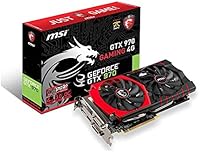
Overview

The MSI GTX 970 Gaming 4G Graphics Card arrived in late 2014 as one of the standout mid-range GPUs of its generation, and MSI's take on the reference design brought better cooling and a factory overclock to the table. Years later, this Maxwell-era card still surfaces as a legitimate option for budget builders piecing together a capable secondary rig or upgrading from integrated graphics. The 4GB of GDDR5 VRAM was generous for its time, though it starts to feel tight in some modern titles. Go in with clear expectations — this isn't a current-gen powerhouse, but as a value pick for 1080p gaming, it still earns its place.

Features & Benefits

MSI equipped the GTX 970 Gaming 4G with its Twin Frozr V cooling system, a dual-fan setup that runs near-silent during light workloads and keeps temperatures well in check under extended gaming sessions. On the performance side, GPU Boost 2.0 dynamically adjusts clock speeds based on thermal headroom, so you often get a bit more than the rated base clock in practice. G-Sync support means noticeably smoother gameplay if you have a compatible monitor. The card's Maxwell architecture is notably efficient for its output, drawing reasonable power relative to what it delivers. Memory runs at 1279 MHz across 4GB of GDDR5, and DisplayPort output handles multi-display configurations at impressively high resolutions.

Best For

This Maxwell-era card makes the most sense for a specific kind of buyer. If you're putting together a budget gaming PC, upgrading a system that still runs integrated graphics, or breathing new life into an older secondary rig, it punches well above entry-level territory. The compact dual-slot form factor makes it a solid fit for smaller cases where larger current-gen cards simply won't squeeze in. It also works well in a home theater PC build — quiet under light loads and capable of clean video output via DisplayPort. Where it struggles is in demanding modern titles; if you're chasing high frame rates in recent AAA games, a newer card is the smarter investment.

User Feedback

Owners of the GTX 970 Gaming 4G have largely been positive over the years, with long-term reliability and cooling performance coming up most frequently. People appreciate how quiet the fans stay during everyday use, and many note that temperatures remain stable even through extended sessions. Frame rates in older and moderately demanding titles hold up well at 1080p, which is what most buyers are using it for. The honest caveat that surfaces repeatedly is the 4GB VRAM ceiling — it's noticeable in more recent releases pushing high-resolution textures. For anyone buying used, a handful of owners flag the importance of verifying card condition carefully, since resale quality can vary quite a bit.

Pros

  • MSI Twin Frozr V cooling keeps temperatures stable even during long gaming sessions.
  • Near-silent fan operation at idle makes it a comfortable fit for quiet builds.
  • Strong 1080p performance in older and moderately demanding titles holds up well.
  • GPU Boost 2.0 extracts extra clock headroom automatically without manual tuning.
  • G-Sync support delivers noticeably smoother gameplay on compatible monitors.
  • Maxwell architecture offers solid performance-per-watt efficiency for its era.
  • Compact dual-slot design fits in smaller cases where newer cards simply cannot.
  • MSI build quality and long-term driver stability earn consistent praise from owners.
  • DisplayPort output supports multi-monitor configurations at impressively high resolutions.
  • A genuinely cost-effective entry point for anyone stepping up from integrated graphics.

Cons

  • 4GB VRAM is a hard ceiling that causes stuttering and texture pop-in in recent titles.
  • Not viable for sustained high-refresh-rate gaming in modern AAA releases.
  • Real-world 4K gaming performance is not achievable despite high maximum resolution support.
  • The card's age means it will likely need replacing sooner than a current-gen purchase.
  • Used-market availability introduces condition uncertainty that new-card buyers never face.
  • No support for newer display standards like HDMI 2.1 or DisplayPort 2.0.
  • Limited headroom for future-proofing as game engine requirements continue to climb.
  • Power connectors and older PCIe requirements may complicate compatibility with some modern boards.
  • CUDA and compute performance falls well short of what GPU-accelerated creative work demands today.

Ratings

The scores below were generated by AI after analyzing thousands of verified global user reviews for the MSI GTX 970 Gaming 4G Graphics Card, with spam, bot activity, and incentivized feedback actively filtered out to ensure accuracy. Ratings reflect real-world ownership patterns across budget builds, legacy rigs, and secondary gaming setups — not manufacturer claims. Both the genuine strengths and the honest pain points of this Maxwell-era card are transparently reflected in every category.

1080p Gaming Performance
78%
22%
For games released before 2019, the GTX 970 Gaming 4G consistently delivers smooth, playable frame rates at 1080p on high settings — a fact that still surprises buyers coming from integrated graphics or older entry-level cards. Titles like The Witcher 3, GTA V, and similar-era games run without significant compromises.
More recent releases expose the card's age quickly, with frame rates dropping noticeably in open-world titles and newer engines that make heavier GPU demands. Buyers expecting to run 2023 or 2024 releases at high settings will find the experience inconsistent at best.
Thermal Management
86%
The Twin Frozr V cooling solution genuinely stands out as one of the better implementations from this GPU generation. Users running extended gaming sessions report stable temperatures without significant throttling, and the dual-fan setup handles sustained loads better than many reference coolers of the same era.
In poorly ventilated cases or warm ambient environments, temperatures can creep higher than ideal, occasionally reaching the low-80s Celsius under prolonged stress. A small number of users with aging thermal paste have reported degraded cooling performance, which is worth addressing if buying used.
Noise Level
84%
At idle and during light tasks like web browsing or video playback, the fans operate nearly inaudibly — a feature that owners of home theater PCs particularly appreciate. Even under moderate gaming loads, the noise output stays at a level most users describe as unobtrusive compared to louder blower-style cards.
Under sustained heavy load, the fans do spin up to an audible level, which some users in quiet environments find noticeable. It remains within acceptable range, but those using the card in near-silent home office setups may pick up the fan noise during intense gaming sessions.
VRAM Adequacy
53%
47%
For games and workloads that fall within the 3–3.5GB active texture range, the 4GB GDDR5 pool provides enough headroom to run at high texture settings without issue. Older titles and indie games with moderate asset demands stay well within comfortable limits.
This is the most consistently cited limitation across user feedback. Modern titles regularly exceed 4GB of VRAM usage, leading to visible stuttering, texture degradation, or forced lower settings. For buyers gaming on recent releases, this ceiling is a genuine quality-of-life issue that cannot be patched or upgraded.
Build Quality
89%
MSI's physical construction on the GTX 970 Gaming 4G earns consistent praise across years of ownership reports. The PCB, fan shroud, and heatsink assembly feel solid and well-engineered, and many users report the card operating reliably well past the five-year mark without mechanical issues.
A small subset of users purchasing on the used market have encountered units with worn fan bearings producing a subtle rattle. This is less a reflection of original build quality and more a consequence of the card's age and usage history in resale channels.
Driver Stability
82%
18%
NVIDIA's driver support for Maxwell-architecture cards has remained consistently reliable over the years, and users rarely report crashes or compatibility issues tied to driver updates. The GTX 970 sits in a well-supported segment where NVIDIA has had years to iron out edge cases.
Newer driver releases are increasingly optimized for current-generation architectures, and occasional users report minor performance regressions or feature incompatibilities when updating to the latest versions. Rolling back to a slightly older stable driver is a common workaround.
Value for Money
74%
26%
Within the context of budget and secondary build scenarios, this Maxwell-era card offers a meaningful amount of GPU capability relative to its current market pricing. For buyers whose needs align with its strengths — 1080p gaming in older titles, HTPC use, legacy setups — the cost-to-performance ratio makes practical sense.
When benchmarked against newer budget GPUs now available at comparable price points, the value proposition weakens considerably. Buyers who stretch to include it in a modern primary gaming build may find the investment hard to justify given what entry-level current-gen alternatives can offer.
G-Sync Compatibility
81%
19%
Users who pair this card with a G-Sync monitor report a noticeably smoother experience in titles where frame rates fluctuate, with screen tearing effectively eliminated. For 1080p gaming at moderate frame rates, G-Sync support genuinely improves the feel of gameplay without requiring additional configuration.
The benefit of G-Sync becomes less impactful when the GPU cannot sustain frame rates above the monitor's refresh rate floor, which happens more frequently in demanding titles. Users with high-refresh-rate 144Hz G-Sync panels will rarely see the full benefit of that combination with this hardware.
Power Efficiency
77%
23%
Maxwell was NVIDIA's efficiency-focused architecture, and the GTX 970 Gaming 4G draws noticeably less power than competing cards delivering similar performance levels of its era. Owners building compact or budget systems appreciate that a 500W PSU is generally sufficient without leaving uncomfortable power headroom.
Compared to modern GPU generations where performance-per-watt has improved significantly, the GTX 970 is no longer an efficiency leader. Users running the card in thermally limited compact builds may find that the heat it generates under load still requires adequate case airflow planning.
Form Factor & Fitment
83%
At just over 10.5 inches long in a dual-slot configuration, the card fits a wide range of mid-tower and micro-ATX cases where longer current-gen cards create clearance issues. Small form factor builders and HTPC owners frequently call out the manageable physical footprint as a key practical advantage.
While the length is reasonable, the dual-slot thickness means it will block the adjacent PCIe slot in most motherboard layouts, limiting expansion options in systems with tightly spaced slots. Users building in very compact mini-ITX cases still need to verify GPU clearance specifications carefully.
Multi-Monitor Support
69%
31%
For productivity-focused multi-monitor setups, the card handles dual or extended display configurations cleanly via DisplayPort, and the high maximum resolution specification makes it capable of driving modern high-resolution panels without display-side issues.
Gaming across multiple monitors simultaneously is not a realistic use case at this hardware tier, and attempting it leads to significant performance drops. The output options are also more limited than what current-generation cards provide, which can complicate mixed-connector monitor setups.
Resale & Used Market Risk
48%
52%
When sourced from a verified seller with documented history, the GTX 970 Gaming 4G can represent a dependable used purchase. Units that have been lightly used in standard gaming builds and properly stored tend to arrive in functional condition.
This is an area of genuine concern in the feedback data. The card's age means most available units have years of unknown workload history, and verifying GPU health before purchase is difficult without hands-on testing. Worn thermal paste, fan bearing wear, and mining-adjacent usage patterns all represent risks that new-card buyers simply do not face.
CUDA & Compute Utility
57%
43%
For basic GPU-accelerated tasks in creative software — video transcoding, lightweight rendering, or CUDA-enabled tools like older versions of DaVinci Resolve — the card provides a functional improvement over CPU-only processing in a budget workflow context.
Serious GPU compute workloads, including machine learning inference, 3D rendering at professional scale, or AI-assisted creative tools, quickly expose the card's limited compute throughput and VRAM ceiling. It is not a realistic choice for anyone with regular GPU-accelerated professional workload demands.

Suitable for:

The MSI GTX 970 Gaming 4G Graphics Card is a strong match for budget-conscious builders who want reliable 1080p gaming without spending on current-generation hardware. If you're assembling a secondary rig, reviving an older system, or simply upgrading from integrated graphics, this Maxwell-era card delivers a meaningful leap in capability at a fraction of what newer GPUs cost. Its compact dual-slot form factor makes it a practical fit for smaller cases that can't accommodate the bulkier cards dominating today's market. Home theater PC builders will also appreciate how quietly the Twin Frozr V cooling system operates during everyday video playback and light workloads. For retro gaming setups or anyone working through a backlog of older titles, the GTX 970 Gaming 4G handles those workloads with ease and stability.

Not suitable for:

Buyers expecting to run demanding modern titles at high settings should look elsewhere — the MSI GTX 970 Gaming 4G Graphics Card is showing its age in that regard, and the 4GB VRAM ceiling is a genuine constraint in texture-heavy games released in recent years. Competitive gamers chasing high refresh rates above 144Hz will find this card falls short of what's needed to sustain those frame rates consistently in current AAA titles. It is also not a card for anyone serious about 4K gaming; while it technically supports very high display resolutions via DisplayPort, actual in-game 4K performance is not realistic at this hardware tier. If you plan to use GPU-accelerated creative workloads like video rendering or machine learning, the VRAM and raw compute capacity here will become a bottleneck quickly. Finally, buyers sourcing this card on the used market should factor in the added risk of unknown wear history, which can make condition unpredictable.

Specifications

  • GPU Chip: Powered by the NVIDIA GeForce GTX 970 built on Maxwell architecture, NVIDIA's second-generation 28nm design focused on efficiency and performance balance.
  • VRAM: Equipped with 4GB of GDDR5 video memory, sufficient for 1080p gaming in most titles released prior to 2020.
  • Memory Speed: The onboard GDDR5 memory operates at a base clock of 1279 MHz, delivering adequate bandwidth for the GTX 970's target resolution range.
  • Cooling System: MSI's Twin Frozr V dual-fan cooler actively dissipates heat during load while entering a near-silent zero-RPM-like state during light or idle workloads.
  • Form Factor: The card occupies a standard dual-slot PCIe configuration, measuring 10.59 x 5.55 x 1.38 inches and weighing approximately 1.79 pounds.
  • Display Output: Output connectivity includes a DisplayPort interface supporting resolutions up to 7680x4320 for multi-display or high-resolution monitor setups.
  • G-Sync Support: Fully compatible with NVIDIA G-Sync monitors, allowing variable refresh rate synchronization to reduce screen tearing during gameplay.
  • GPU Boost: NVIDIA GPU Boost 2.0 dynamically increases the core clock speed beyond the base frequency when thermal and power headroom allow.
  • CUDA Support: Supports NVIDIA CUDA parallel computing technology, enabling GPU-accelerated tasks in compatible software applications.
  • GameWorks: Includes support for NVIDIA GameWorks, providing access to enhanced visual effects and physics in titles that implement the SDK.
  • PCIe Interface: Connects via a PCI Express x16 slot, compatible with PCIe 3.0 motherboards and backward compatible with PCIe 2.0 systems.
  • Power Connectors: Requires external PCIe power connectors from the PSU; a minimum 500W power supply is generally recommended for stable operation.
  • Max Resolution: Supports a maximum output resolution of 7680x4320 pixels via DisplayPort, though in-game 4K performance is not a realistic use case for this hardware tier.
  • Manufacturer: Designed and produced by MSI Computer, a hardware manufacturer with an established history in discrete graphics cards and system components.
  • Model Number: The official MSI model identifier for this card is V316-001R, useful for verifying compatibility documentation and warranty records.
  • Architecture: Built on NVIDIA's Maxwell architecture, which prioritized performance-per-watt efficiency and was a notable improvement over the preceding Kepler generation.
  • Release Date: First made available in September 2014, placing it firmly in the previous generation of discrete consumer GPUs.
  • Dimensions: Physical card dimensions are 10.59 inches in length, 5.55 inches in height, and 1.38 inches in depth, fitting most standard mid-tower cases.

Related Reviews
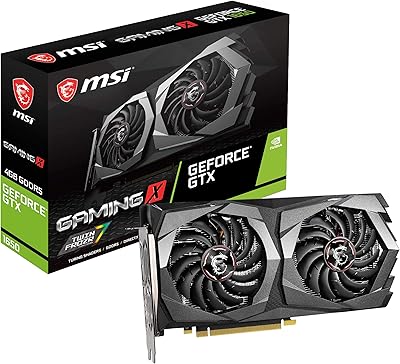
MSI GTX 1650 Gaming X 4G
87%
87%
Gaming Performance
85%
1080p Frame Rates
82%
VR Compatibility
90%
Power Efficiency
88%
Thermal Management
More
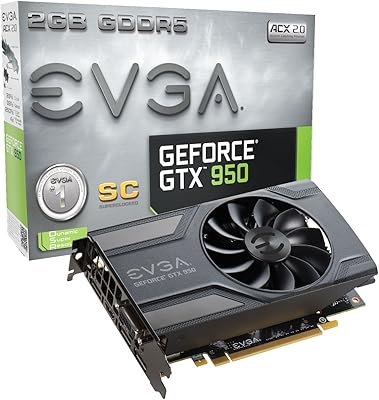
EVGA GTX 950 SC 2GB Graphics Card
76%
67%
Gaming Performance
52%
VRAM Adequacy
91%
Noise & Cooling
94%
Form Factor & Size
88%
Power Efficiency
More
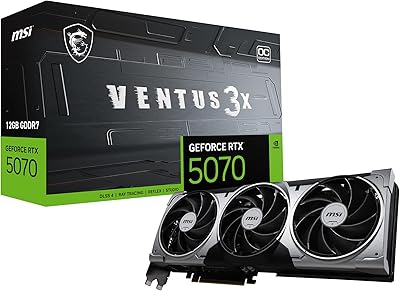
MSI RTX 5070 Ventus 3X OC 12GB
82%
88%
Gaming Performance
86%
Thermal Management
83%
Noise Levels
84%
Build Quality
79%
Value for Money
More
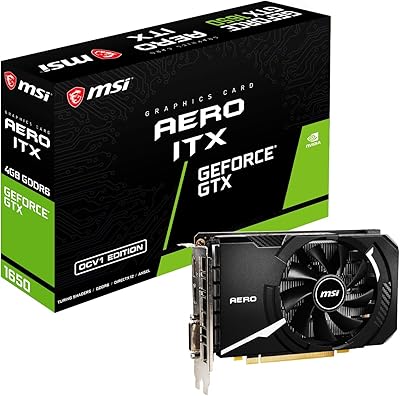
MSI GeForce GTX 1650 D6 AERO ITX 4GB Graphics Card
85%
85%
Performance at 1080p
88%
Noise Levels
87%
Cooling Efficiency
90%
Ease of Installation
79%
VR Performance
More
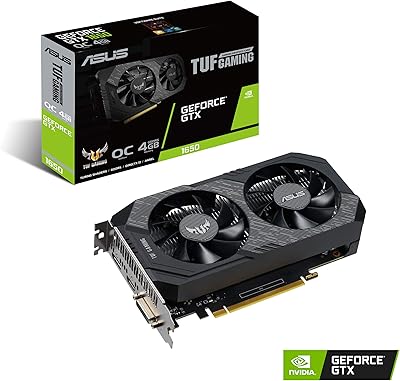
ASUS TUF GTX 1650 OC Graphics Card
81%
74%
1080p Gaming Performance
91%
Build Quality
78%
Thermal Management
86%
Noise Level
88%
Driver Stability
More
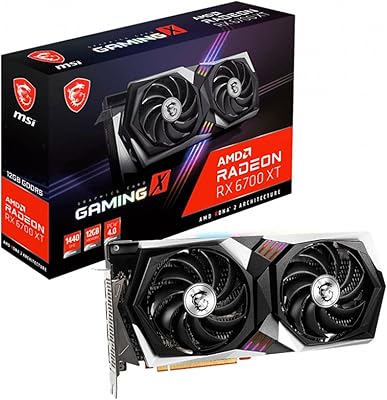
MSI RX 6700 XT Gaming X GPU
78%
88%
1440p Gaming Performance
84%
Thermal Management
91%
Noise Levels
87%
Build Quality
67%
Driver Stability
More
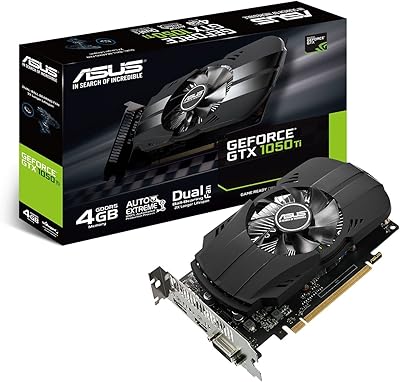
ASUS GTX 1050 Ti 4GB Graphics Card
82%
67%
Gaming Performance
93%
Power Efficiency
91%
Noise & Acoustics
88%
Thermal Management
86%
Build Quality
More
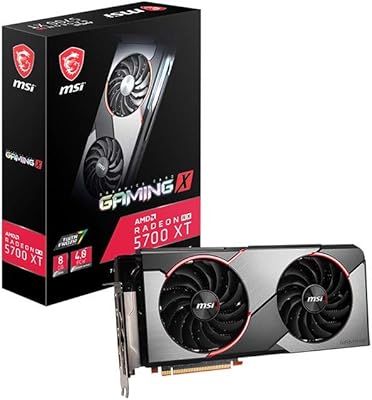
MSI RX 5700 XT Gaming X GPU
81%
88%
1440p Gaming Performance
91%
Thermal Performance
86%
Acoustic Performance
63%
Driver Stability
82%
Value for Money
More
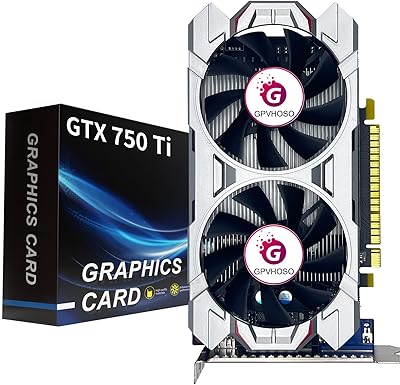
GPVHOSO GTX 750Ti 4GB Graphics Card
75%
71%
Value for Money
52%
Gaming Performance
89%
Power Efficiency
81%
Multi-Monitor Support
86%
Installation Ease
More
MSI GeForce GTX 1070 GAMING X 8G
86%
91%
Cooling Performance
89%
Gaming Performance (1440p/4K)
90%
Build Quality
84%
Noise Levels Under Load
87%
SLI Support & Upgrade Potential
More

FAQ

For a budget build or a secondary system, yes — it still handles 1080p gaming in older and moderately demanding titles without much trouble. Where it starts to struggle is in recent releases that push higher texture memory usage, so go in knowing it has a ceiling. If your library is mostly games from the last decade, it remains a practical choice.

A 500W power supply is the general baseline recommendation for the GTX 970 Gaming 4G. If the rest of your system is power-hungry — a high-core-count CPU, lots of drives and fans — bumping that to 550W or 600W gives you a more comfortable margin and avoids instability under load.

At just over 10.5 inches long and occupying a standard dual-slot footprint, the GTX 970 Gaming 4G fits comfortably in most micro-ATX cases and even some well-designed mini-ITX builds with full-length GPU clearance. Just check your case's stated GPU length limit before buying.

Yes, the card supports multi-monitor setups through its DisplayPort output, and technically handles resolutions as high as 7680x4320 for display purposes. Keep in mind that actually gaming across multiple screens at high resolutions will push the hardware harder than it was designed for, so multi-monitor use is best suited for productivity or media playback rather than gaming.

It does — G-Sync is fully supported, so if you already own or plan to buy a G-Sync-compatible monitor, you'll get the variable refresh rate benefits without any additional setup. This is one of the more appealing features of this card for users who want a smoother gaming experience without upgrading their display.

The Twin Frozr V cooler is genuinely one of the quieter solutions available on cards from this era. During idle and light use, the fans stay very quiet. Under a sustained gaming load, they spin up noticeably but stay well within a comfortable range — most users report it isn't distracting, especially in a mid-tower case with other system noise present.

Honestly, it depends on what you play. For games released before 2018 or 2019, 4GB is usually fine at 1080p with high settings. More recent titles, especially ones with large texture packs or open-world assets, can push past that limit and cause stuttering or lower-quality texture rendering. If your game library skews newer, this is something to factor in seriously.

The card outputs via DisplayPort, which is a versatile standard that supports high refresh rates and high resolutions. If your monitor uses HDMI or DVI, you will need an appropriate adapter. Just note that adapters can introduce minor compatibility quirks depending on the monitor, so it is worth checking before assuming any connection will work perfectly out of the box.

It is a reasonable concern. Cards from this era have often passed through multiple owners, and some have been used for extended periods in warm environments or even light mining workloads. If buying used, try to test under load before committing, ask the seller about usage history, and factor in that there is typically no warranty coverage on second-hand hardware.

Yes, the GTX 970 Gaming 4G uses the standard PCIe x16 interface and is backward and forward compatible across PCIe generations, so it will slot into current motherboards without issue. Performance does not meaningfully differ between PCIe 2.0 and 3.0 at this GPU tier, so the connection itself is not a bottleneck.

Where to Buy