Overview

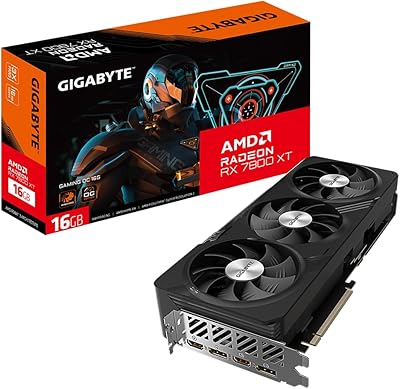
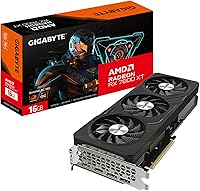
The GIGABYTE RX 7600 XT 16GB Graphics Card lands in a crowded mid-range market with one genuinely surprising move: doubling the VRAM most competitors offer at this tier. For anyone comparing mid-range options right now, that distinction matters more than it might initially seem. This Radeon card targets 1080p players who want headroom in demanding titles and 1440p builders who won't spend flagship money. GIGABYTE's Gaming OC line carries a reputation for solid, no-nonsense construction — the physical build here feels substantial and deliberate. Expectations should stay grounded: raw rasterization won't challenge higher-tier GPUs, but the memory story genuinely shifts the value calculation in its favor.
Features & Benefits

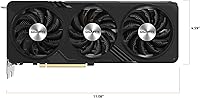
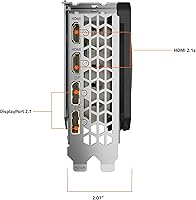
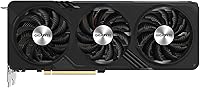
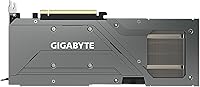
The triple WINDFORCE cooling setup is one of the more noticeable practical advantages here. Under sustained gaming loads the card runs cool and stays quiet — not silent, but unobtrusive compared to smaller two-fan designs in this class. The 16GB GDDR6 is the real talking point: in heavily modded open-world games or titles that aggressively stream textures, 8GB cards start stuttering where this GIGABYTE GPU keeps pulling assets without hesitation. The DisplayPort 2.1 and HDMI 2.1a outputs mean you're covered for high-refresh 1440p or even 4K setups without adapters. PCIe 4.0 support remains relevant for current-gen builds, and the metal backplate adds welcome rigidity to a card of this size.

Best For

The RX 7600 XT suits a fairly specific type of buyer, and knowing that upfront saves frustration. If you're gaming at 1080p and want strong frame rates in titles like Cyberpunk 2077 or Hogwarts Legacy without constantly hitting VRAM walls, this card handles it well. Step up to 1440p and performance is respectable at medium-to-high settings, though pushing ultra presets will expose the limits of the 128-bit memory bus. It also makes practical sense for mod-heavy Bethesda players or anyone running texture packs that inflate memory demand fast. Builders upgrading from older 8GB mid-range cards will feel a meaningful difference, and modern multi-monitor connectivity is fully covered.

User Feedback

Across 817 ratings averaging 4.6 stars, buyers are mostly enthusiastic, and the recurring theme is consistent: generous VRAM at this tier feels like a genuine win against Nvidia's 8GB alternatives in the same range. Cooler performance earns steady praise — owners note the card runs quietly under everyday loads. Where feedback gets more measured is on raw rasterization: several reviewers point out that an RTX 4060 can trade blows or edge ahead in frame rate, particularly in DLSS-optimized titles. AMD driver stability comes up occasionally — most users report solid improvement over prior years, but a minority still flag sporadic software hiccups. Value-per-dollar sentiment overall is strong, especially for VRAM-conscious builders.

Pros

  • 16GB GDDR6 VRAM is unusually generous for this price tier, giving real breathing room in texture-heavy games.
  • Triple WINDFORCE cooling keeps thermals in check under sustained loads without becoming intrusive.
  • Modern display outputs — DisplayPort 2.1 and HDMI 2.1a — cover high-refresh and high-resolution setups out of the box.
  • The RX 7600 XT handles 1080p gaming confidently, including demanding open-world titles.
  • PCIe 4.0 support keeps this GPU relevant on current and near-future platforms.
  • Metal backplate adds structural integrity and helps with heat management on a card this size.
  • Ranked #12 in Computer Graphics Cards on Amazon with a 4.6-star average across over 800 ratings — buyer confidence is high.
  • Mod-heavy players and those running texture packs will find the extra VRAM practically useful, not just a spec sheet number.
  • GIGABYTE's Gaming OC build quality feels solid and well-finished for the category.

Cons

  • The 128-bit memory bus creates a performance ceiling that becomes noticeable at ultra 1440p settings.
  • Raw frame-rate performance in rasterization can trail the RTX 4060 in several popular titles.
  • Ray tracing quality lags behind what Nvidia offers at a comparable price point.
  • DLSS-optimized games put AMD at a disadvantage; FSR is capable but not a like-for-like substitute for every user.
  • Some buyers still report occasional AMD driver hiccups, particularly after major software updates.
  • The card's physical size — over 14 inches long — may be a tight fit in compact or mid-tower cases.
  • Competitive multiplayer players chasing maximum frame rates may find better options elsewhere.
  • No significant advantage in compute or AI-accelerated workloads compared to Nvidia alternatives at this price.

Ratings

The scores below reflect an AI-driven analysis of verified global buyer reviews for the GIGABYTE RX 7600 XT 16GB Graphics Card, with spam, bot activity, and incentivized feedback actively filtered out to ensure the results represent real purchase experiences. Ratings span everything from thermal performance to driver reliability, capturing both what buyers genuinely appreciate and where the card falls short. Nothing is glossed over — the pain points carry the same weight as the strengths.

Value for Money
88%
Buyers consistently point to the 16GB GDDR6 as the core reason this card punches above its price bracket. At a tier where most competitors ship with 8GB, getting double the memory without paying flagship prices resonates strongly with budget-conscious builders who still want room to grow.
When buyers compare pure frame-rate output against similarly priced Nvidia options, the value equation gets murkier. Those who primarily chase raw performance rather than VRAM headroom sometimes feel the pricing is harder to justify against the RTX 4060's rasterization numbers.
1080p Gaming Performance
84%
At 1080p, the RX 7600 XT handles demanding open-world titles with confidence, delivering smooth frame rates in games like Cyberpunk 2077 and Hogwarts Legacy at high settings. Buyers upgrading from older mid-range cards report a noticeable and satisfying improvement in everyday gaming fluency.
A portion of buyers note that in esports titles optimized for Nvidia hardware, the card doesn't always reach the frame counts competitors manage at the same price. For players targeting 240Hz+ at 1080p in competitive shooters, the performance ceiling can occasionally feel restrictive.
1440p Gaming Performance
72%
28%
For 1440p gaming at medium-to-high settings, this Radeon card performs respectably across a wide range of titles, and the generous VRAM keeps texture quality from becoming a bottleneck. Buyers running 1440p monitors for a mix of gaming and productivity find it hits a comfortable performance-per-dollar balance.
Pushing ultra presets at 1440p in the most demanding titles reveals the architectural limits of the 128-bit memory bus, and frame rates can drop more steeply than buyers expect. Users specifically targeting maxed-out 1440p performance have flagged this as a genuine shortcoming compared to wider-bus alternatives.
VRAM Capacity
93%
The 16GB GDDR6 is the card's standout feature in buyer reviews, and the praise is grounded in practical experience. Modded Skyrim builds, texture-pack-heavy playthroughs, and large open-world games that bring 8GB cards to their knees run noticeably cleaner on this GIGABYTE GPU.
Some technically informed buyers point out that while 16GB sounds impressive, the 128-bit bus limits how quickly that memory can be accessed under pressure. In scenarios involving extremely fast asset streaming, the bandwidth constraint partially offsets the raw capacity advantage.
Thermal Performance
86%
The triple WINDFORCE cooling system keeps GPU temperatures well within safe ranges during extended gaming sessions, and buyers appreciate that the card doesn't throttle noticeably under sustained load. Several reviewers specifically noted running hour-long gaming sessions without thermal-related frame drops.
Under the most demanding workloads — particularly in warm ambient environments or poorly ventilated cases — the fans ramp up more aggressively than some buyers expected. The cooling is effective, but it achieves that result through fan speed rather than running quietly under pressure.
Noise Levels
79%
21%
At idle and during light gaming, the card is impressively quiet, with fans sometimes stopping entirely in low-load scenarios. Buyers who use their PCs for a mix of work and gaming appreciate that background tasks and lighter titles don't trigger distracting fan noise.
Under heavy gaming loads, the fan noise becomes clearly audible, and a subset of buyers found it more prominent than expected given the triple-fan setup. Those gaming in quiet rooms without headphones noted it as a minor but persistent annoyance during extended sessions.
Driver Stability
67%
33%
The majority of buyers report stable, reliable day-to-day operation with current AMD driver releases, and the general consensus is that AMD's software has matured compared to its historically inconsistent reputation. Most users install and forget, experiencing no meaningful disruptions over weeks of use.
A recurring minority of reviews flag driver-related issues after major AMD software updates, including occasional crashes or compatibility quirks with specific titles. For users running demanding professional workflows or who can't tolerate any instability, this unpredictability remains a real concern that Nvidia alternatives handle more consistently.
Ray Tracing Performance
54%
46%
Ray tracing is functional on this Radeon card, and for buyers who enable it selectively in single-player titles at moderate settings, the visual uplift is appreciable. Those who treat ray tracing as an occasional enhancement rather than a default setting find it workable.
Buyers who specifically purchased with ray tracing in mind often come away disappointed, as the performance hit is steep and the quality lags noticeably behind Nvidia's implementation at this price tier. Running ray tracing in demanding titles at 1440p frequently requires dialing settings back to the point where the trade-off stops feeling worthwhile.
Build Quality
89%
The physical construction earns consistent praise — the metal backplate, solid fan shroud, and overall finish feel more premium than buyers expect at this price tier. Several reviewers contrasted it favorably with cheaper-feeling reference and budget-brand cards they had owned previously.
The card's 14.3-inch length is a practical challenge in smaller cases, and a handful of buyers found the fit unexpectedly tight in mid-towers they assumed would accommodate it comfortably. Weight is also notable, and without proper support, sag can become an issue in certain case orientations.
Display Connectivity
91%
Dual DisplayPort 2.1 and dual HDMI 2.1a outputs cover virtually every modern display scenario without adapters, and buyers running high-refresh 1440p or multi-monitor setups appreciate the plug-and-play simplicity. The support for up to 8K output also reassures buyers who want long-term flexibility.
A small number of buyers encountered intermittent handshake issues with certain HDMI 2.1 monitors at high refresh rates, requiring driver or cable troubleshooting to resolve. It is not a widespread complaint, but it is worth noting for buyers with premium displays running at the limits of the specification.
Software & RGB Control
74%
26%
GIGABYTE's RGB Fusion integration gives buyers granular control over lighting effects, and those who invest time in the software find it capable of producing polished, well-synced builds. For buyers who want their GPU lighting to match the rest of their system, the functionality is genuinely there.
The GIGABYTE software suite receives mixed feedback — some buyers describe it as unintuitive, and occasional bugs with RGB sync across different component brands have been reported. Users who just want to disable the lighting without software installed also noted the process is less straightforward than it should be.
Installation & Compatibility
83%
Most buyers describe a clean, uncomplicated installation process, and PCIe 4.0 backward compatibility with older boards means the card slots into a wide range of existing systems without issue. Buyers upgrading mid-build found the transition smooth and well-documented.
The physical size requires careful pre-purchase case research, and a few buyers returned the card after discovering clearance issues they hadn't anticipated. Power connector requirements also caught some buyers off guard when upgrading from lower-wattage builds with older PSUs.
Future-Proofing
77%
23%
The 16GB VRAM buffer and modern display outputs give this card a longer useful life than most mid-range alternatives, and buyers who think in multi-year cycles appreciate that memory headroom will age better than a leaner 8GB option. PCIe 4.0 support also keeps it relevant on upcoming platforms.
The 128-bit memory bus is an architectural constraint that won't improve over the card's lifespan, and as game engines push higher resolutions and faster asset streaming, that ceiling becomes more relevant. Buyers who upgrade every two years may not feel the future-proofing argument as strongly as those on longer replacement cycles.

Suitable for:

The GIGABYTE RX 7600 XT 16GB Graphics Card is a strong pick for PC builders who want to game at 1080p with genuine headroom, or at 1440p without paying flagship prices. It makes particular sense for players who favor open-world titles, heavily modded games, or any workload where 8GB cards start showing cracks — the 16GB GDDR6 buffer means textures load cleanly and stutter from memory exhaustion is far less likely. Upgraders coming from older 8GB mid-range GPUs will notice a real difference, not just on paper. Content creators doing light video work or 3D rendering on a budget also benefit from the extra memory without needing a workstation card. Add in modern DisplayPort 2.1 and HDMI 2.1a outputs, and this Radeon card handles multi-monitor or high-refresh setups without any fuss.
Not suitable for:

Buyers prioritizing raw rasterization performance above all else should think carefully before choosing the GIGABYTE RX 7600 XT 16GB Graphics Card over Nvidia alternatives at a similar price point. In titles heavily optimized for DLSS or with deep Nvidia-specific feature support, the RTX 4060 can match or exceed frame rates, and that gap matters if competitive multiplayer at maximum frames is your main focus. The 128-bit memory bus, while fed by fast GDDR6, is a real architectural ceiling that shows up when pushing ultra settings at 1440p or attempting 4K gaming seriously. Users with a strong preference for ray tracing quality will also find AMD's implementation lags behind Nvidia's at this tier. And if AMD's historically inconsistent driver experience has burned you before, know that while things have improved, occasional software hiccups still surface in user reports.
Specifications

  • GPU Chip: Powered by the AMD Radeon RX 7600 XT graphics processor built on RDNA 3 architecture.
  • VRAM: Equipped with 16GB of GDDR6 memory for handling texture-heavy and memory-intensive workloads.
  • Memory Interface: Uses a 128-bit memory bus, which balances bandwidth with the efficiency of the RDNA 3 design.
  • Memory Speed: GDDR6 memory operates at 18000 MHz effective clock speed for fast data throughput.
  • PCIe Interface: Connects via PCI Express 4.0, ensuring compatibility with modern motherboards and adequate bandwidth for this performance tier.
  • Display Outputs: Provides two HDMI 2.1a ports and two DisplayPort 2.1 ports for versatile single and multi-monitor configurations.
  • Max Resolution: Supports output resolutions up to 7680x4320 pixels (8K) across compatible displays.
  • Cooling System: Uses GIGABYTE's triple WINDFORCE fan array to maintain stable thermals under sustained gaming or compute loads.
  • Backplate: A full metal protection backplate covers the rear PCB, adding structural rigidity and aiding passive heat dissipation.
  • RGB Lighting: Integrated RGB Fusion support allows lighting customization through GIGABYTE's software suite.
  • Card Dimensions: Measures 14.3 x 7.45 x 3.31 inches, requiring adequate clearance in the target PC case.
  • Card Weight: Weighs 2.87 pounds, which is typical for a triple-fan card of this class.
  • Power Connector: Requires external PCIe power connectors; builders should confirm PSU compatibility before purchase.
  • API Support: Supports DirectX 12 Ultimate, Vulkan, and OpenGL 4.6 for broad game and application compatibility.
  • Amazon Ranking: Holds a #12 Best Sellers Rank in Computer Graphics Cards on Amazon at time of review.
  • Customer Rating: Rated 4.6 out of 5 stars from over 817 verified ratings on Amazon.

Related Reviews

GIGABYTE RX 7800 XT 16GB Graphics Card
78%
91%
1440p Gaming Performance
88%
Thermal Management
93%
VRAM & Future-Proofing
79%
Value for Money
61%
Driver & Software Experience
More
AMD Radeon RX 6950 XT Graphics Card
72%
92%
4K Gaming Performance
94%
VRAM Capacity & Bandwidth
51%
Power Consumption
48%
Physical Size & Case Fit
67%
Driver Stability
More
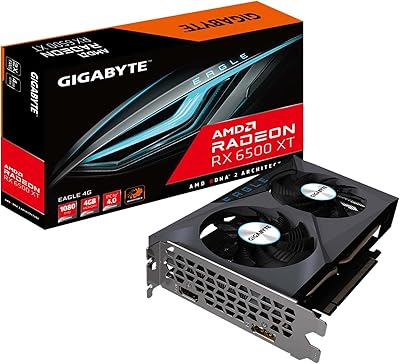
GIGABYTE Radeon RX 6500 XT Eagle 4GB Graphics Card
83%
92%
Value for Money
88%
Gaming Performance (1080p)
90%
Cooling System Efficiency
63%
4K Performance
84%
Build Quality
More
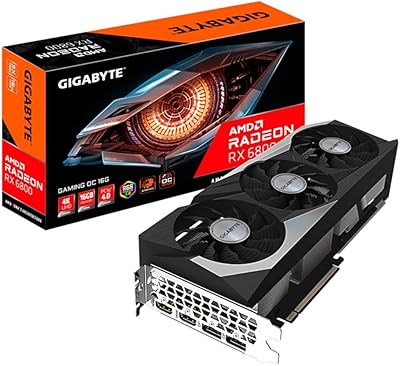
Gigabyte Radeon RX 6800 16GB Graphics Card
77%
88%
Gaming Performance
91%
Thermal Management
87%
Noise Level
93%
VRAM Capacity
89%
Build Quality
More
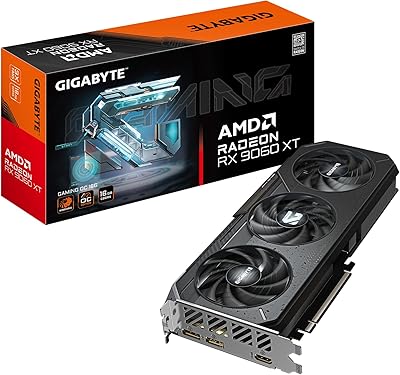
GIGABYTE Radeon RX 9060 XT Gaming OC 16G
83%
93%
1440p Gaming Performance
96%
Memory Capacity (VRAM)
89%
Thermal Management
84%
Acoustic Performance
87%
Build Quality & Materials
More
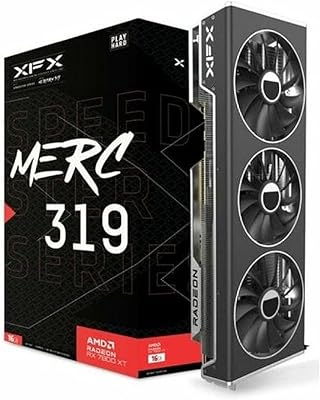
XFX Speedster MERC319 RX 7800 XT 16GB GDDR6 Graphics Card
85%
91%
Overall Performance
94%
Gaming Performance at 4K
88%
Cooling Efficiency
87%
Value for Money
85%
Build Quality
More
GIGABYTE RX 7700 XT 12GB Graphics Card
83%
88%
1440p Gaming Performance
91%
Thermal Performance
83%
Noise Level
93%
Build Quality
76%
Value for Money
More
GIGABYTE Radeon RX 6700 XT Gaming OC 12GB Graphics Card
87%
94%
4K Gaming Performance
91%
Cooling System Efficiency
88%
Installation and Setup
86%
Design and Durability
89%
Frame Rates in Demanding Games
More
Sapphire Nitro+ RX 9070 XT 16GB
82%
92%
Gaming Performance
88%
Thermal Management
91%
Noise Level
93%
VRAM Capacity & Bandwidth
74%
Ray Tracing Performance
More
XFX Swift RX 9070 XT 16GB Graphics Card
78%
93%
Gaming Performance at 1440p
78%
4K Gaming Capability
91%
Thermal Performance
82%
Noise Levels
89%
Build Quality
More

FAQ

It can handle 1440p gaming, but with some caveats. At medium-to-high settings in most titles it performs well, but pushing ultra presets in demanding games will show the limits of the 128-bit memory bus. Think of it as a capable 1440p card for most games, not a guaranteed max-settings option across the board.

It matters more than most people expect. In texture-heavy open-world games and heavily modded titles like those built on Bethesda engines, 8GB cards can start stuttering as assets get pushed out of VRAM. The RX 7600 XT sidesteps that problem, and as games continue to push memory requirements upward, that buffer becomes genuinely useful rather than just a spec sheet talking point.

The RTX 4060 generally edges ahead in raw rasterization frame rates, and DLSS gives Nvidia a meaningful advantage in supported titles. Where this Radeon card holds its ground is VRAM — the 4060 ships with 8GB, which is increasingly tight. If you play a lot of DLSS-optimized games and raw frames matter most, the 4060 is worth considering. If you play mod-heavy games or want memory headroom, the extra VRAM tips the balance here.

At just over 14 inches long, it is a genuinely big card. Most full-size mid-tower and full-tower cases will accommodate it, but compact mid-towers and mini-ITX builds may have clearance issues. Check your case's maximum GPU length spec before ordering — it is worth the two minutes of research.

AMD's driver situation has improved significantly compared to the rough patches of earlier years, and most users of the GIGABYTE RX 7600 XT 16GB Graphics Card report stable day-to-day use. That said, a minority of buyers still flag occasional hiccups after major driver updates. If driver reliability is a hard requirement for you — especially for professional or creative workloads — keep that in mind and check recent community feedback before committing.
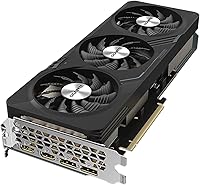
The triple WINDFORCE cooler keeps the card quiet at idle and during light tasks. Under sustained load in demanding games, the fans do spin up and become audible, but most users describe the noise as unobtrusive rather than disruptive. It is not a passive or near-silent solution, but it is well within normal range for a card of this performance level.

Yes — with two DisplayPort 2.1 ports and two HDMI 2.1a ports, you have four outputs available. Running three simultaneous displays is fully supported, though gaming across three monitors will put the GPU under significantly more pressure and will require lowering graphics settings compared to single-screen play.

PCIe is backward compatible, so the RX 7600 XT will work in a PCIe 3.0 slot without issue. You will not get any damage or instability — the card simply negotiates down to the available bandwidth. The practical performance difference between PCIe 3.0 and 4.0 at this GPU performance tier is minimal in real-world gaming.

The RGB Fusion software from GIGABYTE gives you full control over the lighting — you can adjust colors, set effects, or turn it off entirely if you prefer a clean look. It integrates with other GIGABYTE components if you have them, but the software is not required; the card functions perfectly without it.

The 16GB GDDR6 is a genuine asset for light-to-moderate content creation work — tasks like video editing in DaVinci Resolve, 3D rendering in Blender, or working with large image files all benefit from available VRAM. This GIGABYTE GPU is not a purpose-built workstation card, and it won't match the compute-specific performance of Nvidia's professional lineup, but for creators who also game and need a dual-purpose card on a sensible budget, it is a practical option.

Where to Buy