EVGA GTX 950 SC 2GB Graphics Card




Overview
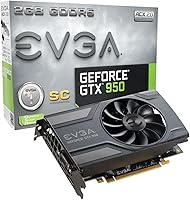
The EVGA GTX 950 SC 2GB Graphics Card launched in 2015 as a mid-range option, and while newer generations have long since arrived, it still holds real appeal for specific builds. EVGA built a strong reputation around reliability and customer support, and this compact GTX 950 reflects that. At just 6.8 inches long, it fits cases that would choke out longer cards entirely. Expectations should be set honestly: this is a 1080p card suited to moderate settings, not a powerhouse. The SC designation means a factory overclock pushing the boost clock to 1342 MHz, giving it a slight but genuine edge over standard GTX 950 reference boards.
Features & Benefits
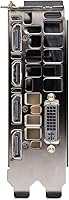
The Superclocked boost clock of 1342 MHz is a small but measurable improvement over a stock GTX 950, and for light gaming it adds up. VRAM is where things get nuanced: 2GB of GDDR5 on a 128-bit bus handles 1080p fine in most older titles, but texture-heavy modern games will push against that ceiling quickly. The cooling solution runs near-silent even under sustained load, which matters in a living room or quiet workspace. Better still, the card draws just 75W, meaning no external connector is required — a 350W PSU covers it. Outputs include HDMI and DisplayPort for connecting 4K displays, handy for media center setups, though gaming at 4K is not in this card's wheelhouse.
Best For
The EVGA Superclocked 950 is purpose-built for situations where space and power constraints shape the decision. Mini-ITX builders and anyone working with a compact case will appreciate the 6.8-inch footprint — a length many larger cards simply cannot match. It suits casual gamers running older or less demanding titles at 1080p on medium-to-high settings without needing an expensive rig around it. HTPC users get a quiet card that can drive a 4K display for video playback while barely stressing a modest power supply. If you are upgrading from integrated graphics or a decade-old discrete card, the performance jump here is immediately noticeable. Low-power desktop builds with small PSUs are also an ideal fit.
User Feedback
Owners of this small form factor GPU tend to agree on a few things. The near-silent operation comes up constantly — people are genuinely surprised by how quiet it stays even during extended sessions. Compact case builders are equally vocal about how the short PCB solved a real physical problem for their builds. On the downside, the 2GB VRAM limitation draws the most criticism, particularly from users who tried running newer titles and hit texture quality walls. EVGA's warranty handling earns consistent praise; multiple owners describe fast, no-hassle support experiences. A small number of users have flagged driver compatibility concerns on older Windows versions. Overall, satisfaction runs high but is clearly tied to buying it for the right use case.
Pros
- Near-silent cooling makes it ideal for quiet living room and media center builds.
- At just 6.8 inches long, this compact GTX 950 fits cases that reject most other discrete GPUs.
- No external power connector required — a modest 350W PSU is all you need.
- Factory Superclocked boost clock delivers a real, if modest, edge over reference GTX 950 cards.
- EVGA's customer support and warranty handling are consistently rated among the best in the industry.
- HDMI and DisplayPort outputs let you connect to a 4K display for sharp media playback.
- Maxwell architecture provides solid power efficiency for its performance tier.
- Substantial performance upgrade for anyone coming from integrated graphics or a decade-old GPU.
- Strong community confidence backed by hundreds of real-world owner reviews over several years.
Cons
- 2GB GDDR5 VRAM is a genuine bottleneck in most titles released after 2018.
- The 128-bit memory bus limits bandwidth headroom compared to wider competing cards.
- Not viable for 4K gaming despite supporting 4K display output.
- Age of the Maxwell architecture means no support for newer NVIDIA feature sets like ray tracing.
- A handful of owners have reported driver compatibility issues on legacy operating systems.
- 768 CUDA cores leave the EVGA Superclocked 950 trailing significantly behind current mid-range GPUs.
- Limited resale value as the GPU market has moved well past this performance tier.
- Medium-to-high settings at 1080p is the realistic ceiling — not high or ultra across the board.
Ratings
Our AI rating engine analyzed hundreds of verified owner reviews for the EVGA GTX 950 SC 2GB Graphics Card from buyers worldwide, actively filtering out incentivized submissions, bot activity, and outlier spam to surface what real users consistently experience. The scores below reflect both the genuine strengths that keep this card relevant for specific builds and the honest pain points that matter to buyers making an informed decision.
Gaming Performance
VRAM Adequacy
Noise & Cooling
Form Factor & Size
Power Efficiency
Build Quality
Customer Support & Warranty
Display Connectivity
Driver Compatibility
Value for Money
Installation Ease
HTPC Suitability
Longevity & Future-Proofing
Overclocking Headroom
Suitable for:
The EVGA GTX 950 SC 2GB Graphics Card is a strong pick for a narrow but well-defined group of buyers who know exactly what they need. Mini-ITX and small form factor builders will find the 6.8-inch card length genuinely liberating — it fits cases that reject almost every other discrete GPU on the market. HTPC enthusiasts who want quiet, capable media playback through a 4K-connected display will also get real value here, since the silent cooling and low power draw make it a natural fit for living room builds. Casual gamers playing older titles or less demanding games at 1080p on medium settings will find performance more than adequate. If your current machine is running integrated graphics or a GPU from the early 2010s, the step up in real-world performance is substantial enough to feel like a new machine.
Not suitable for:
Anyone chasing modern gaming performance should look elsewhere before considering the EVGA GTX 950 SC 2GB Graphics Card. The 2GB VRAM ceiling is a hard constraint that shows up quickly in post-2018 titles, where texture packs alone can exhaust the buffer and force ugly quality compromises. Competitive gamers targeting high frame rates in demanding titles like modern open-world games or AAA shooters will find this card struggles to keep up, even at 1080p. It is also not a card for anyone expecting 4K gaming — the HDMI and DisplayPort outputs can drive a 4K display, but the GPU itself does not have the horsepower to render at that resolution in any meaningful way. Users running cutting-edge creative workloads, video editing pipelines, or GPU-accelerated applications requiring more VRAM will hit a wall fast.
Specifications
- GPU Architecture: Built on NVIDIA's Maxwell architecture, which prioritizes power efficiency and supports anti-aliasing features like MFAA and TXAA.
- CUDA Cores: Equipped with 768 CUDA cores for parallel processing in gaming and GPU-accelerated tasks.
- Base Clock: The GPU runs a base clock of 1152 MHz, providing the foundation for stable everyday performance.
- Boost Clock: The Superclocked variant reaches a factory-overclocked boost clock of 1342 MHz under load.
- VRAM: Includes 2GB of GDDR5 memory, sufficient for 1080p gaming in older and less texture-heavy titles.
- Memory Bus: Operates on a 128-bit memory bus, delivering up to 105.76 GB/s of memory bandwidth.
- Memory Speed: GDDR5 memory runs at an effective clock speed of 6610 MHz.
- Power Draw: The card has a TDP of 75W and requires no external PCIe power connector in most standard configurations.
- PSU Requirement: EVGA recommends a power supply of 350W or greater for stable system operation.
- Card Length: The PCB measures 6.8 inches in length, making it compatible with mini-ITX and small form factor cases.
- Dimensions: Full card dimensions are 6.8 x 4.4 x 1.5 inches, occupying a dual-slot footprint.
- Card Weight: The card weighs approximately 2.4 pounds, which is lightweight relative to larger enthusiast-class GPUs.
- Video Outputs: Connectivity includes HDMI and DisplayPort outputs for connecting monitors or display devices.
- Max Resolution: Supports display output at up to 4096 x 2160 pixels for connecting 4K monitors and televisions.
- Cooling System: Features EVGA's proprietary silent cooling solution designed to minimize fan noise during light and moderate workloads.
- Manufacturer: Designed and supported by EVGA, which offers 24/7 technical support and a direct warranty replacement program.
- Model Number: The official EVGA model identifier is 02G-P4-2951-KR, used for warranty registration and support requests.
- Release Date: This card first became available in August 2015 as part of the GTX 950 product generation.
Related Reviews
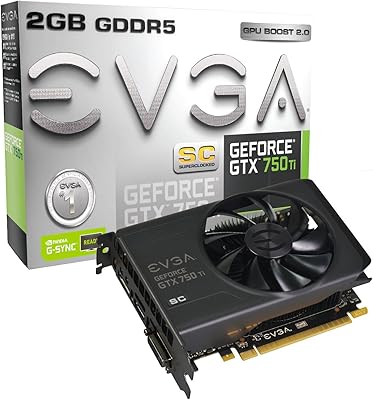
EVGA GTX 750 Ti 2GB Graphics Card
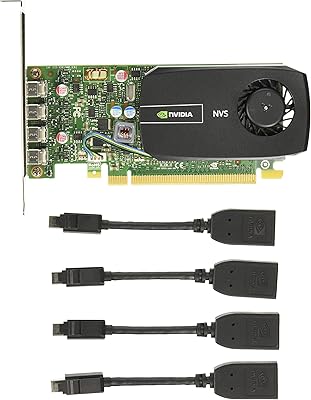
NVIDIA NVS 510 Quadro Graphics Card
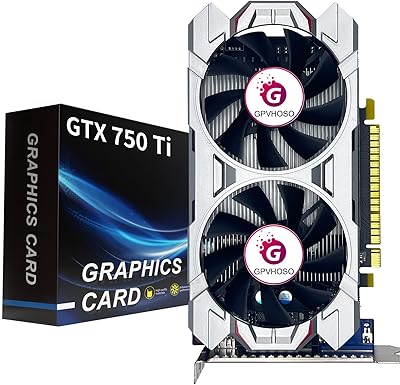
GPVHOSO GTX 750Ti 4GB Graphics Card
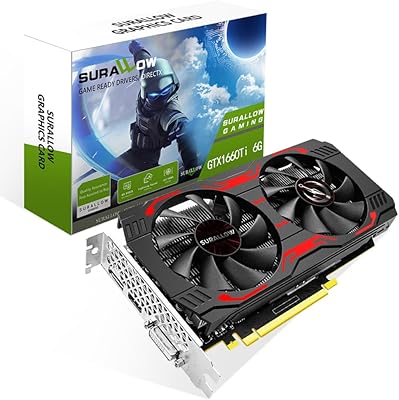
SURALLOW GTX 1660 Ti 6GB Graphics Card
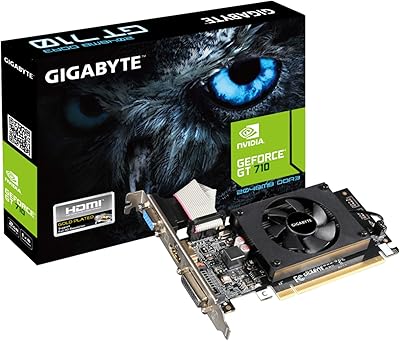
GIGABYTE GeForce GT 710 2GB Graphics Card
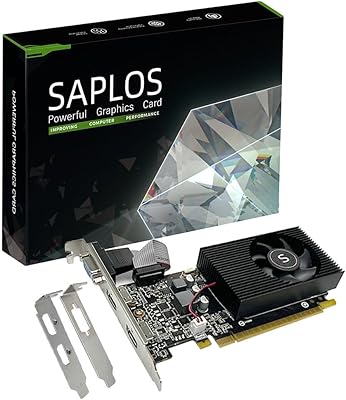
SAPLOS GT 730 2GB DDR3 Low Profile Graphics Card
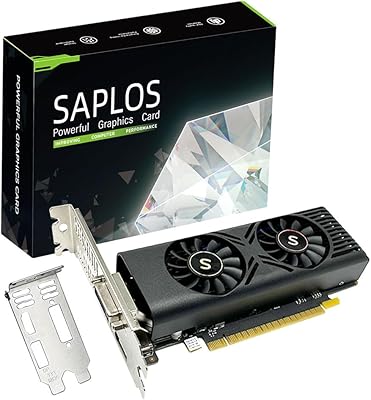
SAPLOS GTX 1050 4GB Graphics Card
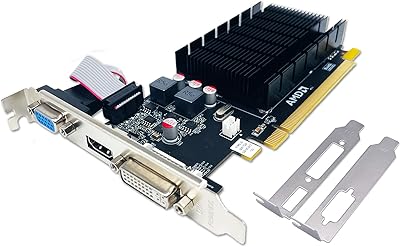
QTHREE Radeon HD 5450 2GB Graphics Card
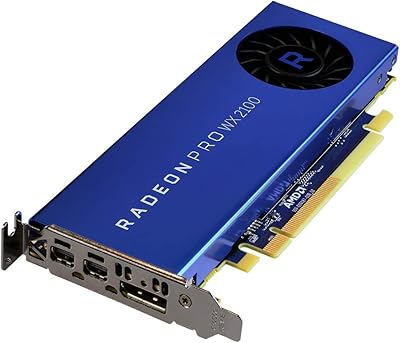
AMD Radeon Pro W2100 2GB Graphics Card