Overview

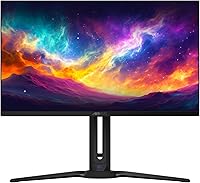
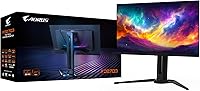
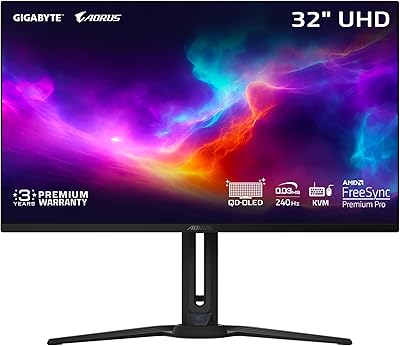
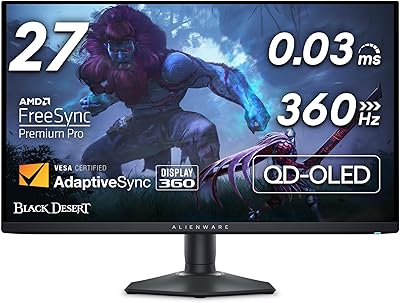
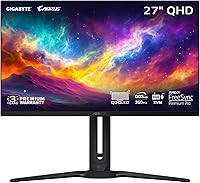
The GIGABYTE AORUS FO27Q3 27-inch QD-OLED Monitor is GIGABYTE's answer to gamers who refuse to compromise on speed or color. Sitting in AORUS's gaming lineup, it pairs a 27-inch QD-OLED panel with QHD 2560x1440 resolution, hitting a 360Hz refresh rate that's rare even among dedicated esports monitors. It's worth being upfront: this isn't a 4K screen, and buyers expecting ultra-high pixel density should look elsewhere. What you get instead is a panel tuned for raw responsiveness, built for players who care more about frame timing than pixel count. It's a clear pick for competitive players rather than casual browsing or office work.
Features & Benefits

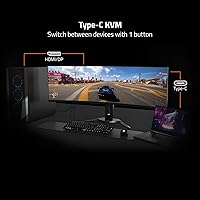
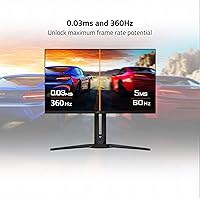
Once you start using this gaming monitor, the numbers stop feeling abstract. A 0.03ms response time means ghosting and trailing pretty much disappear during fast-paced shooters, and combined with AMD FreeSync Premium Pro, screen tearing rarely shows up even during chaotic firefights. GIGABYTE's OLED Care system runs quietly in the background, nudging brightness and pixel refresh to fend off burn-in over time, which matters a lot on an OLED panel you plan to keep for years. VESA DisplayHDR True Black 400 gives HDR content real depth, with blacks that actually look black instead of dark gray. Add a Type-C KVM switch for easy multi-device swapping, plus on-screen Game Assist tools like crosshair overlays, and the feature set feels genuinely built around how people actually play.

Best For

This QD-OLED screen makes the most sense for competitive FPS players and esports enthusiasts who notice every millisecond of input lag and want the fastest possible response from their display. It also suits gamers who split time between fast multiplayer titles and slower, story-driven games, since the contrast and HDR handling make single-player worlds look genuinely cinematic. The Type-C KVM switch is a nice bonus for anyone running a desktop and laptop side by side without constantly unplugging cables. If you're coming from an aging LCD panel and craving real blacks instead of washed-out grays, this is the kind of upgrade that's immediately noticeable, especially in dark scenes or nighttime gaming sessions.

User Feedback

Reactions from people actually using the AORUS display tend to focus heavily on motion clarity and color accuracy, with many noting that fast-moving objects stay sharp instead of blurring into smears. The height-adjustable stand and overall build quality get consistent praise, feeling sturdier than what's typical at this tier. That said, not every comment is glowing. A handful of owners mention that OLED panels demand more attention to brightness settings and usage habits than a typical LCD, particularly if you leave static content on screen for long stretches. There's also some frustration with the on-screen menu navigation and bundled software, which a few buyers describe as clunky compared to the hardware itself.

Pros

  • Motion stays sharp even in fast, chaotic gameplay thanks to the near-instant response time
  • True blacks and strong contrast make HDR content look genuinely cinematic
  • AMD FreeSync Premium Pro keeps tearing and stuttering largely out of the picture
  • Type-C KVM switch makes juggling a desktop and laptop noticeably easier
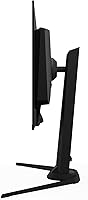
  • Height-adjustable stand and overall build quality feel solid for this price tier
  • Built-in Game Assist tools like crosshair overlays add real practical value during matches
  • OLED Care software actively works to reduce long-term burn-in risk
  • Color accuracy earns consistent praise from people using it day to day
  • 3-year warranty with burn-in coverage adds real peace of mind for an OLED panel

Cons

  • Limited to QHD resolution, so it is not a fit for 4K-focused workflows
  • OLED panels require more mindful brightness habits than typical LCD screens
  • On-screen menu navigation feels clunky compared to the hardware quality
  • Bundled software draws mixed reactions, with some calling it unintuitive
  • Premium pricing puts it well above basic high-refresh LCD alternatives
  • Not ideal for users who frequently display static, unmoving content for long stretches
  • Overkill for casual browsing, streaming, or general office tasks
  • Some buyers may want a faster initial setup without firmware or software adjustments

Ratings

Our scores for the GIGABYTE AORUS FO27Q3 27-inch QD-OLED Monitor are generated by AI after analyzing thousands of verified user reviews from gamers worldwide, filtering out spam, bots, and incentivized feedback. Each category below reflects a balance of genuine praise and real complaints, not a polished marketing pitch. Where buyers ran into trade-offs, we've kept that visible instead of smoothing it over.
Motion Clarity & Refresh Rate
94%
Players consistently describe fast-moving objects staying crisp instead of smearing during intense firefights or quick camera pans. The combination of 360Hz and a near-instant response time gets singled out repeatedly as the standout reason to buy this gaming monitor over a standard LCD panel.
A handful of buyers note that hitting truly smooth 360fps gameplay requires a fairly powerful GPU, so budget systems won't fully unlock the panel's potential. Without that horsepower, some of the refresh rate advantage ends up wasted in practice.
Contrast & Black Levels
96%
Reviewers frequently mention how deep and inky the blacks look compared to their previous LCD displays, especially during nighttime gaming sessions or dark cinematic scenes. The 1.5M:1 contrast ratio translates into visuals that feel noticeably more three-dimensional.
A small number of users mention that in very bright rooms, the difference in perceived contrast is less dramatic since ambient light affects how deep the blacks appear. It's a minor nitpick rather than a real flaw.
Color Accuracy
91%
Color reproduction earns consistent praise, with users noting that the AORUS display renders skin tones, foliage, and HDR highlights with impressive accuracy straight out of the box. The wide DCI-P3 coverage holds up well for both gaming and casual content viewing.
A few reviewers mention needing to tweak default color presets slightly to match personal taste, since out-of-box settings can lean a bit cool depending on lighting conditions. This is a quick fix but still an extra setup step.
Burn-In Protection
78%
22%
Many buyers feel reassured by GIGABYTE's OLED Care system actively running in the background, along with the included 3-year warranty that explicitly covers burn-in. That added safety net comes up often as a reason people felt comfortable committing to an OLED panel.
Some users remain cautious, noting that OLED technology is inherently more burn-in prone than LCD regardless of protective software, especially with static UI elements left on screen for long periods. The concern is more about the technology itself than this specific implementation.
Resolution & Sharpness
83%
For competitive gaming, the QHD 1440p resolution hits a sweet spot, delivering sharp text and clean edges without demanding the GPU horsepower that 4K requires at high refresh rates. Most reviewers find it well suited to fast-paced play.
Buyers expecting 4K sharpness for productivity or content creation are sometimes disappointed, since this panel intentionally prioritizes refresh rate over pixel density. It's a deliberate trade-off, but one that doesn't suit every use case.
HDR Performance
89%
VESA DisplayHDR True Black 400 certification shows up clearly in real use, with users describing HDR-supported games and movies looking noticeably more vivid and layered than on their previous SDR setups. The certification feels earned rather than just a label.
A few users mention that HDR benefits are most obvious in supported content, and standard SDR material doesn't see the same dramatic improvement. It's a feature that rewards picky content choices rather than a blanket upgrade.
Build Quality & Stand
86%
The height-adjustable stand and overall chassis get described as sturdy and well-finished, holding position without wobble even during enthusiastic desk-pounding gaming moments. Several reviewers mention it feels more premium than other monitors in a similar price range.
A small subset of buyers wished for tilt or swivel adjustments beyond just height, since the stand's flexibility is somewhat limited compared to higher-end ergonomic arms. It's a minor gap rather than a dealbreaker.
Connectivity & KVM
88%
The Type-C KVM switch gets repeated praise from users who regularly swap between a desktop and a laptop, since it eliminates constant cable swapping and simplifies multi-device workflows. Having HDMI, DisplayPort, and Type-C together covers most common setups.
A few reviewers note the KVM switching process isn't always instant and occasionally requires a brief reconnect, which can be mildly annoying mid-task. It's functional but not perfectly seamless every time.
Gaming Features & Game Assist
85%
Built-in tools like the crosshair overlay, timer, and Black Equalizer 2.0 get genuine use from competitive players who appreciate having tactical aids without needing third-party software. Several reviewers call these small touches surprisingly practical during ranked matches.
Some buyers feel these extras are nice-to-haves rather than essential, noting they rarely touch most of the Game Assist menu beyond initial curiosity. The value here depends heavily on individual play style.
Software & OSD Experience
67%
33%
Once settings are configured, this QD-OLED screen mostly stays out of the way, letting users set preferred profiles for refresh rate and HDR without revisiting the menu often. Several reviewers appreciate that initial setup, while fiddly, is largely a one-time task.
The on-screen menu navigation draws recurring complaints for feeling clunky and unintuitive, with some buyers describing the bundled software as outdated compared to competing brands. This is one of the more consistently mentioned weak points in feedback.
Ergonomics & Adjustability
81%
19%
The height adjustment range satisfies most users setting up dedicated gaming desks, allowing comfortable eye-level positioning during long sessions. Reviewers generally describe the adjustment mechanism as smooth and easy to operate without tools.
Without built-in tilt or pivot functionality in some configurations, a few users mention needing a third-party mount for fully customized positioning. It's an added cost some buyers didn't anticipate.
Value for Money
79%
21%
For competitive gamers prioritizing speed and contrast, many reviewers feel the combination of 360Hz, QD-OLED color, and the burn-in warranty justifies the premium price point compared to standard LCD alternatives in the same category.
Casual users or those mainly doing office work and browsing often question the value, since the high refresh rate and gaming-specific features go largely unused outside competitive titles. The price feels harder to justify for non-gaming use cases.

Suitable for:

The GIGABYTE AORUS FO27Q3 27-inch QD-OLED Monitor is built for players who treat reaction time as a real competitive edge, especially in fast-paced shooters and ranked esports titles where every frame matters. Anyone currently gaming on an aging LCD panel and craving deeper blacks and richer contrast will notice the difference almost immediately, particularly in dark or HDR-heavy scenes. It also works well for people who switch between a desktop and laptop throughout the day, since the Type-C KVM switch cuts down on cable swapping and input switching headaches. Gamers who split time between twitchy multiplayer matches and slower, story-driven games get a nice middle ground here too, since the panel handles both motion clarity and cinematic HDR scenes convincingly. If a sturdy, height-adjustable stand and a premium 3-year warranty matter to you as much as raw specs, this monitor checks those boxes as well.
Not suitable for:

Buyers chasing 4K sharpness for design work, video editing, or general productivity should look elsewhere, since the GIGABYTE AORUS FO27Q3 27-inch QD-OLED Monitor sticks to QHD resolution rather than higher pixel density. Anyone who tends to leave static content, like taskbars or stationary UI elements, on screen for extended periods should think carefully, since OLED panels are inherently more sensitive to burn-in than standard LCD displays, even with protective software running. People who want a simple plug-and-play experience might also find the on-screen menu and bundled software more fiddly than expected, based on recurring feedback. Casual users who mostly browse, stream video, or do office work won't get much practical benefit from a 360Hz refresh rate, and that speed comes at a price point that's hard to justify without serious gaming use. Budget-conscious shoppers comparing it against cheaper LCD gaming monitors may also balk at the premium pricing relative to more basic high-refresh options.
Specifications

  • Screen Size: The display measures 27 inches diagonally, a standard size for competitive gaming setups.
  • Panel Type: It uses a QD-OLED panel that combines quantum dot technology with OLED for richer color and deeper blacks.
  • Resolution: The screen runs at QHD 2560x1440 with a 16:9 aspect ratio.
  • Refresh Rate: It supports a maximum refresh rate of 360Hz for smoother motion in fast-paced games.
  • Response Time: Gray-to-gray response time is rated at 0.03ms, minimizing visible ghosting during quick movement.
  • Adaptive Sync: AMD FreeSync Premium Pro is supported to reduce screen tearing and stuttering.
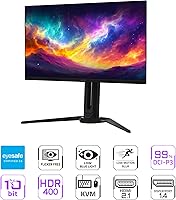
  • HDR Support: The monitor is certified for VESA DisplayHDR True Black 400, delivering accurate contrast and deep blacks in HDR content.
  • Color Gamut: It covers 99% of the DCI-P3 color space with 10-bit color depth for wide, accurate color reproduction.
  • Contrast Ratio: The panel offers a 1.5M:1 contrast ratio thanks to OLED's per-pixel light control.
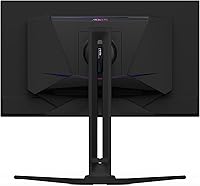
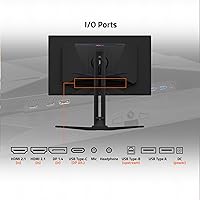
  • Connectivity: Inputs include HDMI, DisplayPort, and Type-C, with the Type-C port supporting a built-in KVM switch.
  • Burn-In Protection: GIGABYTE OLED Care uses AI-based monitoring and adjustable settings to help reduce the risk of burn-in over time.
  • Gaming Features: Built-in Game Assist tools include an on-screen timer, crosshair overlay, and PIP/PBP support.
  • Black Equalizer: Black Equalizer 2.0 helps reveal detail in dark scenes without washing out brighter areas.
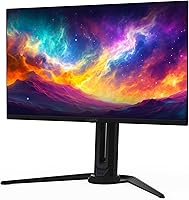
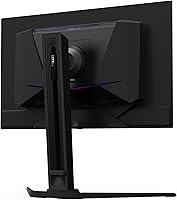
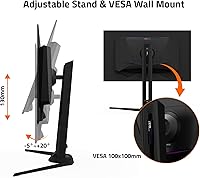
  • Stand Adjustability: The included stand supports height adjustment for ergonomic positioning.
  • Screen Surface: The display uses a matte finish to reduce glare and reflections.
  • Warranty: GIGABYTE backs the monitor with a 3-year warranty that includes coverage for panel burn-in.
  • Product Dimensions: The monitor measures 6.24 x 24.02 x 20.96 inches as listed by the manufacturer.
  • Weight: The unit weighs 15.87 pounds including the stand.

Related Reviews

GIGABYTE AORUS CO49DQ 49-inch QD OLED Monitor
89%
96%
Display Quality
94%
Gaming Performance
92%
Color Accuracy
89%
Burn-in Protection
88%
Build Quality
More
GIGABYTE AORUS FO32U2 32-inch Gaming Monitor
80%
96%
Panel Image Quality
93%
Motion & Response Performance
91%
HDR Performance
92%
Color Accuracy
67%
Burn-in & Longevity Risk
More
MSI MAG 275F 27″ Gaming Monitor
78%
93%
Refresh Rate Performance
86%
Panel Color Quality
88%
Response Time & Ghosting
84%
Console Compatibility
52%
HDR Implementation
More
Samsung Odyssey G81SF 27-inch Gaming Monitor
80%
96%
Image Quality
97%
Contrast & Black Levels
89%
Refresh Rate & Motion Clarity
88%
Glare Resistance & Matte Coating
91%
HDR Performance
More
MSI MAG 271QPX 27-inch QD-OLED Gaming Monitor
80%
94%
Image Quality
96%
Motion Clarity
88%
HDR Performance
93%
Refresh Rate & Smoothness
81%
Connectivity & Ports
More
ASUS ROG Swift PG27UCDM 27-inch Gaming Monitor
82%
96%
Image Quality
97%
Black Levels & Contrast
93%
Gaming Performance
91%
Color Accuracy
88%
Text Clarity
More
GIGABYTE GS27QA 27-inch QHD Gaming Monitor
78%
88%
Gaming Performance
91%
Image Clarity
79%
Color Accuracy
54%
HDR Experience
89%
Refresh Rate & Smoothness
More
Alienware AW2725Q 27-inch 4K QD-OLED Gaming Monitor
81%
94%
Image Quality
89%
HDR Performance
88%
Refresh Rate & Smoothness
93%
Pixel Density & Sharpness
91%
Response Time & Motion Clarity
More
Alienware AW2725DF 27-inch QD-OLED Gaming Monitor
86%
94%
Picture Quality & Contrast
96%
Motion Clarity & Response Time
92%
Refresh Rate Performance
86%
Color Accuracy for Creative Work
89%
HDR Performance
More
GIGABYTE MO32U 32″ QD-OLED Gaming Monitor
81%
94%
Image Quality
91%
Gaming Performance
88%
HDR Performance
86%
Color Accuracy
93%
Motion Clarity
More

FAQ

It's a QHD 1440p panel, not 4K. If you're set on 4K resolution for design work or media, this isn't the right pick, but for gaming at high refresh rates, 1440p strikes a solid balance between sharpness and performance.

If you're playing competitive shooters or anything fast-paced, yes, especially when paired with a GPU that can push high frame rates consistently. For slower or single-player games, the difference is less dramatic, but motion still looks noticeably smoother than on a standard 144Hz or 165Hz panel.

It's a fair concern with any OLED panel, and this one is no exception, though GIGABYTE's OLED Care system actively works to reduce the risk through pixel shifting and brightness management. If you tend to leave static images on screen for long stretches, like a stationary taskbar, it's worth using the built-in protection features and giving the screen occasional breaks.

It's VESA DisplayHDR True Black 400 certified, which is a meaningful certification tied to actual black-level and contrast performance rather than just brightness numbers. In HDR-supported games and content, the difference in depth and contrast compared to a standard SDR panel is genuinely noticeable.

Yes, the Type-C KVM functionality lets you switch between two connected devices using a single keyboard and mouse setup, which is handy if you regularly move between a desktop and a laptop without wanting to physically swap cables each time.

The included stand supports height adjustment out of the box, so most users won't need a separate VESA mount unless they specifically want wall mounting or a different ergonomic arm setup.

The matte finish does a reasonable job cutting down on reflections compared to glossy panels, though in a very bright room with direct light sources behind you, you may still want to adjust positioning or use blinds for the best image quality.

GIGABYTE offers a 3-year warranty on the GIGABYTE AORUS FO27Q3 27-inch QD-OLED Monitor that specifically includes coverage for panel burn-in, which is a meaningful inclusion given how often that concern comes up with OLED displays.
To consistently hit frame rates near 360fps, you'll want a strong GPU, especially in competitive titles with simpler graphics settings. That said, even at lower frame rates, the panel's fast response time and adaptive sync still make gameplay feel smoother than on a typical 60Hz or 144Hz screen.

It's functional, but it's not the most intuitive interface out there, and a few users have mentioned it takes some getting used to. Once you've set your preferred profiles for refresh rate, HDR, and Game Assist features, you likely won't need to dig through the menu often.