


Overview

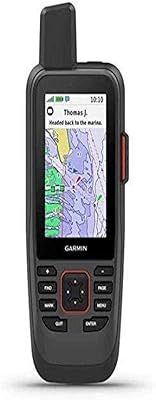
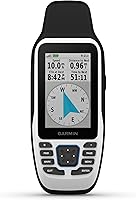
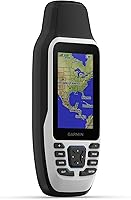
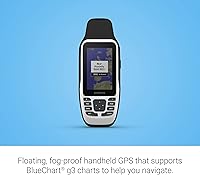
The Garmin GPSMAP 79s Marine Handheld GPS is built for boaters who take on-water reliability seriously. What immediately sets it apart is its ability to float — drop it overboard and it bobs right back up, which is not a minor detail when you're running a small vessel in choppy conditions. IPX6-rated water resistance means it handles heavy spray and rain confidently, though it isn't designed for full submersion, so don't treat it like a dive computer. A worldwide basemap is included out of the box, making this handheld navigator practical far beyond your home harbor. For serious recreational boaters and offshore adventurers, it sits firmly in the mid-to-premium tier.

Features & Benefits

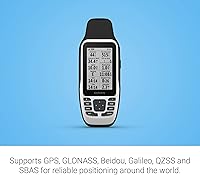
The GPSMAP 79s pulls from six satellite constellations — GPS, GLONASS, Beidou, Galileo, QZSS, and SBAS — so acquiring a position lock in tree-lined rivers or under overcast skies offshore is rarely a struggle. The 3-axis tilt-compensated compass delivers a reliable heading even while standing still on a rocking deck, with no need to hold the unit perfectly level. A barometric altimeter adds pressure tracking, handy for reading incoming weather shifts. Memory is generous: 10,000 waypoints and 250 saved routes cover even the most prolific expedition planner. Battery life reaches up to 20 hours on two standard AA cells — genuinely useful for multi-day trips where proprietary chargers simply aren't an option.

Best For

This marine GPS earns its place for anyone who needs navigation that doesn't depend on a cell signal. Kayakers and canoeists benefit especially from the floating design — one fumble off a paddle doesn't mean a ruined device. It's equally capable away from the water; hikers and overlanders in remote terrain will appreciate the multi-constellation satellite support that keeps tracking consistent where single-system GPS often falters. International travelers and offshore cruisers can rely on the worldwide basemap without purchasing regional add-ons. The AA battery format is a clear advantage for anyone who values field-swappable power over being tethered to a USB charger at the end of each day.

User Feedback

Buyers consistently praise the fast satellite acquisition and accuracy in areas where phone GPS is completely hopeless. The floating design has genuinely saved devices in practice — several owners describe watching it drift calmly alongside their kayak after an accidental drop. Not all feedback is glowing, though. The 3-inch display at 240x400 resolution is perfectly functional but won't impress anyone coming from a modern smartphone screen, and a number of users find the button layout takes real adjustment time. Real-world battery life tends to run closer to 15 hours under continuous active use rather than the full advertised 20 — worth factoring in before any extended offshore passage.

Pros

  • Floats on water, giving real peace of mind during close-quarters paddling or rough offshore conditions.
  • Six-constellation satellite support locks onto a position quickly, even in heavily shaded or remote environments.
  • The tilt-compensated compass gives accurate headings on a rocking boat without any awkward leveling.
  • Up to 20 hours of runtime on standard AA batteries makes multi-day trips genuinely viable.
  • AA batteries are easy to source worldwide — no hunt for a proprietary charger in a remote marina.
  • A worldwide basemap is included from day one, covering international waters without extra cost.
  • Stores up to 10,000 waypoints and 250 routes — plenty of capacity for even the most route-heavy user.
  • Scratch-resistant, fogproof glass holds up well to the daily abuse of a marine environment.
  • Lightweight at under 10 ounces, so it rides comfortably clipped to a PFD or stowed in a jacket pocket.
  • Barometric altimeter doubles as a basic weather-trend monitor, which is a practical bonus offshore.

Cons

  • The 3-inch display is functional but feels cramped when navigating complex routes or reading detailed waypoint info.
  • IPX6 water resistance covers heavy spray but not submersion — a meaningful limitation for whitewater or diving use.
  • Button-based interface has a learning curve and feels dated compared to touchscreen competitors in the same price range.
  • Real-world battery life under continuous active use often falls closer to 15 hours than the advertised 20.
  • AA batteries are a two-sided coin — convenient in the field, but a recurring cost that rechargeable units avoid.
  • Basemap detail is limited for serious coastal navigation; meaningful use often requires purchasing additional chart subscriptions.
  • The unit has no wireless connectivity beyond USB, so syncing routes or updating maps requires a physical cable and a computer.
  • Screen visibility in direct bright sunlight, while acceptable, is not as sharp as premium chartplotters at higher price points.
  • No built-in VHF radio integration, meaning it functions solely as a navigation tool with no distress signaling capability.
  • The physical size, while manageable, may feel bulky for ultralight backpackers who want a minimal loadout.

Ratings

The scores below for the Garmin GPSMAP 79s Marine Handheld GPS were generated by our AI system after analyzing thousands of verified global buyer reviews, with spam, bot activity, and incentivized submissions actively filtered out. Each category reflects the honest distribution of real user experiences — strengths are recognized, but friction points and recurring frustrations are weighted just as transparently.

GPS Accuracy
93%
Users consistently report fast satellite lock — often within seconds — even under heavy overcast or in narrow waterways flanked by trees. The six-constellation support gives this handheld navigator a clear edge in challenging environments where single-system GPS units struggle to maintain a reliable fix.
A small number of users in densely built urban marinas noted occasional brief signal drift, though this is an inherent limitation of handheld GPS rather than a specific flaw. Accuracy in deep fjords or enclosed harbors can fluctuate slightly.
Floatation Design
91%
The floating capability draws genuine enthusiasm from buyers, with multiple reviewers describing situations where the unit bobbed calmly after being knocked off a kayak deck or dropped from a dinghy. For paddlers especially, this is not a gimmick — it is a practical safety net that has demonstrably saved devices.
The unit floats face-up, but in choppy water with significant wave action, retrieving it quickly before it drifts can still be stressful. A tethering lanyard is included, and most experienced users recommend always attaching it.
Battery Life
74%
26%
Running on two standard AA batteries is a genuine advantage for extended offshore passages or multi-day river trips, where swapping in a fresh pair from a dry bag is far simpler than hunting for a USB port. Many long-distance cruisers specifically choose this unit for that reason.
Real-world battery life under continuous GPS use with the backlight active tends to fall between 13 and 16 hours, noticeably short of the advertised 20-hour ceiling. Users doing full-day racing or extended offshore legs should plan to carry spare batteries.
Water Resistance
78%
22%
IPX6 protection holds up well in the conditions most boaters actually encounter — sustained heavy rain, spray over the bow, and the occasional splash from a wave. Buyers using this marine GPS on open-water crossings or in rain-heavy climates report no issues with the unit's weather tightness.
IPX6 does not cover submersion, and a handful of users have been disappointed to learn this distinction after assuming the unit was fully waterproof. Anyone planning whitewater kayaking or activities with repeated dunking should know this upfront.
Display Quality
63%
37%
The color display is perfectly readable in typical conditions, and the scratch-resistant, fogproof glass holds up well to daily marine abuse. For core navigation — reading coordinates, checking a route, or confirming a waypoint — the screen does its job without complaint.
At 240 x 400 resolution on a 3-inch panel, the display looks noticeably dated compared to current smartphones or premium chartplotters. Text and chart detail can feel cramped, and several users specifically mention that viewing fine map detail while underway requires squinting or stopping.
Build Quality
88%
The rugged casing absorbs the kind of knocks and drops that come with regular on-water use without showing meaningful wear. Users who have owned this handheld navigator for multiple seasons report the chassis holds together firmly, with no reported issues around button integrity or case warping.
The unit is primarily plastic, and while functional, it does not feel as premium in hand as the price might suggest. A few buyers coming from higher-end Garmin devices noted that the material quality feels like a step down.
Ease of Use
69%
31%
Buyers familiar with Garmin's button-based interface find the GPSMAP 79s intuitive from day one, and the physical buttons work confidently with wet hands or gloves — something a touchscreen simply cannot replicate in marine conditions.
New GPS users or those accustomed to touchscreen devices report a real learning curve with the multi-button navigation menu. Several buyers mention spending considerable time with the manual before feeling comfortable building routes or editing waypoints efficiently.
Map Coverage
67%
33%
The pre-loaded worldwide basemap is a solid starting point for general orientation, coastal reference, and international travel in areas where purchasing regional charts in advance is impractical. Overland hikers and overlanders find the basemap adequate for most of their navigation needs.
For serious coastal or harbor navigation, the basemap lacks the chart detail that professional mariners need. Purchasing additional BlueChart g3 nautical charts adds meaningful cost on top of an already mid-to-premium unit price.
Portability
84%
At under 10 ounces, the GPSMAP 79s is light enough to wear clipped to a PFD all day without fatigue, and its proportions fit naturally in a jacket pocket or kayaking dry bag. Hikers doubling it as a land GPS appreciate that it does not add meaningful pack weight.
Compared to ultra-compact GPS trackers on the market, the unit is still somewhat bulky for ultralight backpackers or those wanting a truly minimal carry. The form factor prioritizes grip and usability over slimness.
Compass Reliability
86%
The 3-axis tilt-compensated compass performs well in practical use — sailors and paddlers particularly value that it gives a stable heading without needing to hold the unit perfectly flat, which is rarely possible on a moving vessel. Users report consistent readings even on rocking decks.
Like all electronic compasses, it requires periodic calibration and can be influenced by nearby ferrous metals or electronics. A small number of users report needing to recalibrate more frequently than expected when using the unit near helm consoles.
Barometric Altimeter
79%
21%
Hikers and offshore sailors appreciate the barometric altimeter as a practical weather-trend tool — a falling pressure reading can signal incoming weather, which is genuinely useful when you are far from a forecast source. Altitude tracking is consistent and logs cleanly in activity records.
The altimeter requires calibration when conditions change significantly, and some users forget this step, leading to inaccurate altitude readings. Its utility is also limited for purely coastal boating where elevation changes are minimal.
Value for Money
71%
29%
For buyers who need a purpose-built, cell-signal-independent marine GPS with floating capability and worldwide coverage, the price represents reasonable value for a Garmin-quality device. Professionals and frequent offshore users generally feel the build and reliability justify the spend.
Casual boaters who only head out on weekends in well-charted waters may find the cost hard to rationalize, especially given that a compatible phone mount and offline charts can cover their needs for less. The ongoing cost of AA batteries is also a minor but real lifetime cost consideration.
Connectivity & Sync
58%
42%
USB connectivity works reliably for transferring routes, updating firmware, and syncing with Garmin Express and BaseCamp. Users who build complex routes on a computer and push them to the device find the workflow straightforward once set up.
The absence of Bluetooth or Wi-Fi feels like a significant omission at this price point. Several buyers express frustration that they cannot wirelessly sync with a phone or receive weather data updates without a physical cable connection to a computer.
Memory Capacity
92%
Ten thousand waypoints and 250 saved routes is more than enough for even the most obsessive route planner, and users who log years of expeditions appreciate never having to purge old data to make room. Activity log capacity of 300 sessions adds useful long-term tracking depth.
There are no reported pain points around memory capacity specifically — the main limitation is that all this stored data still requires a cable and computer to manage and back up, with no cloud sync option available natively.
Durability Over Time
83%
Multi-season owners report the unit holds up well to sustained marine exposure, with buttons remaining tactile and responsive after years of use. The fogproof glass shows minimal scratching even after regular handling in gritty, sandy environments typical of beach launches.
Battery compartment seals are cited occasionally as a long-term concern — a small number of users report the contacts showing early corrosion if batteries are left in during off-season storage without periodic checks. It is a manageable issue, but worth being aware of.

Suitable for:

The Garmin GPSMAP 79s Marine Handheld GPS is an excellent fit for serious recreational boaters, offshore sailors, and anyone who spends meaningful time on the water without the luxury of reliable cell coverage. Kayakers and canoeists in particular will appreciate that it genuinely floats — a practical safeguard that no amount of waterproof casing can replace once a device sinks. Small-vessel operators who need a dedicated, always-on GPS backup alongside their chartplotter will find it dependable in rough spray and heavy rain. Beyond the water, it crosses over well for backcountry hikers and overlanders heading into remote terrain where a six-constellation satellite lock is a real operational advantage. International travelers and offshore passage-makers also benefit from the included worldwide basemap, which removes the need to purchase regional charts for basic navigation.

Not suitable for:

The Garmin GPSMAP 79s Marine Handheld GPS is not the right choice for buyers who expect a large, crisp touchscreen experience — the 3-inch, 240x400 display is workable but noticeably modest compared to modern smartphones or dedicated chartplotters. Anyone hoping to use it as a full-featured chartplotter with detailed nautical charts will find the base mapping too sparse without additional purchases. Divers or anyone planning to submerge the unit should note that IPX6 covers water spray and splashing, not immersion, so it is not a waterproof dive tool. Buyers who prefer rechargeable built-in batteries and USB-C convenience may find the AA cell dependency inconvenient, especially on shorter trips where swapping batteries feels unnecessary. If you primarily navigate busy urban waterways where your phone works reliably, the cost-to-benefit ratio may be harder to justify.

Specifications

  • Brand: Manufactured by Garmin, a leading name in GPS navigation technology for marine, aviation, and outdoor use.
  • Model: GPSMAP 79s, with official model number 010-02635-00, released in October 2021.
  • Dimensions: The unit measures 2.67 x 6.85 x 1.67 inches, compact enough to stow in a jacket pocket or clip to a PFD.
  • Weight: Weighs 9.9 ounces without batteries, keeping overall carry weight manageable for extended on-water use.
  • Display: Features a 3-inch color screen running at 240 x 400 pixel resolution, protected by scratch-resistant and fogproof glass.
  • Water Resistance: Rated IPX6 at the unit level, meaning it withstands powerful water jets and heavy spray but is not rated for submersion.
  • Floatation: Engineered to float face-up on the water surface, reducing the risk of permanent loss if dropped overboard.
  • Satellite Systems: Supports six satellite constellations — GPS, GLONASS, Beidou, Galileo, QZSS, and SBAS — for dependable global positioning.
  • Compass: Built-in 3-axis tilt-compensated electronic compass delivers accurate headings without requiring the unit to be held level.
  • Altimeter: Barometric altimeter tracks atmospheric pressure changes in real time to calculate and log precise altitude data.
  • Battery Life: Rated for up to 20 hours of continuous use in GPS mode on two standard AA batteries.
  • Battery Type: Powered by two user-replaceable AA batteries, eliminating dependency on proprietary charging cables or power banks.
  • Memory: Stores up to 10,000 waypoints, 250 saved routes, and 300 recorded fitness or activity logs onboard.
  • Included Map: Ships with a worldwide basemap pre-loaded, providing global land and coastal reference without additional purchases.
  • Connectivity: Connects to a computer via USB for map updates, data transfer, and firmware upgrades through Garmin Express software.
  • Interface: Operated entirely via physical buttons, with no touchscreen; well-suited for use with wet hands or gloves.
  • In the Box: Package includes the GPSMAP 79s unit, a lanyard, a USB cable, and documentation; batteries are not included.
  • Vehicle Type: Designed and optimized primarily for boat use, though capable across hiking, overlanding, and other outdoor activities.

Related Reviews
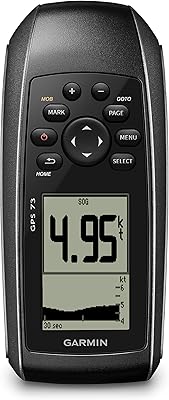
Garmin GPS 73
Garmin GPS 73
80%
93%
Battery Life
88%
SailAssist Features
91%
Build Quality & Durability
54%
Display Quality
82%
Ease of Use
More
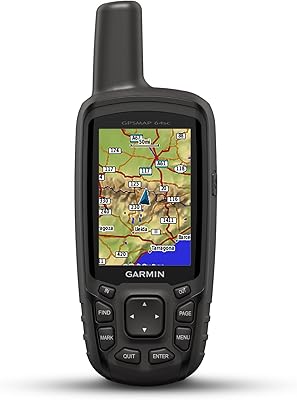
Garmin GPSMAP 64sc Handheld GPS
78%
93%
GPS & Satellite Accuracy
89%
Battery Life & Flexibility
91%
Build Quality & Durability
58%
Built-in Camera & Geotagging
82%
Display Readability
More
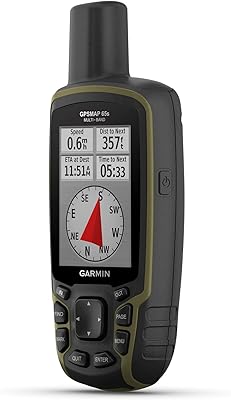
Garmin GPSMAP 86Sci Handheld GPS
87%
92%
Durability & Build Quality
88%
Display Quality
85%
Battery Life
90%
Ease of Use
93%
Water Resistance & Floating Design
More
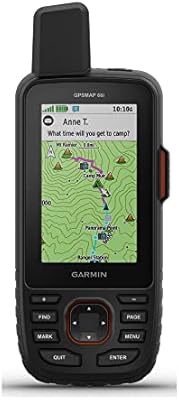
Garmin GPSMAP 65s Handheld GPS
80%
93%
GPS Accuracy
88%
Battery Performance
91%
Build Quality
74%
Display Readability
89%
Satellite Lock Speed
More
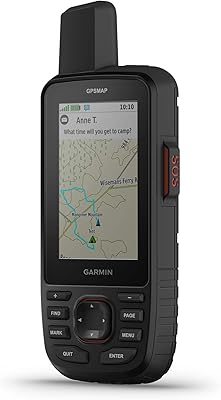
Garmin GPSMAP 66i GPS Satellite Communicator
82%
93%
Satellite Communication Reliability
89%
GPS Accuracy & Lock Speed
84%
Battery Life
91%
Map Quality & Coverage
82%
Display Legibility
More
Garmin GPSMAP 67i Satellite GPS Handheld
79%
93%
GPS Accuracy
89%
Satellite Communication
91%
Battery Life
88%
Display Quality
92%
Build Quality & Durability
More
Garmin Montana 750i GPS Handheld
84%
94%
Build Quality & Durability
72%
Battery Life
85%
Ease of Use
88%
Screen Visibility
90%
Navigation Accuracy
More
Garmin eTrex 30x Handheld GPS Navigator
87%
93%
Build Quality & Durability
87%
Battery Life
91%
Ease of Use
75%
Display & Visuals
90%
Mapping & Navigation Features
More
Garmin GPSMAP 943xsv GPS Fishfinder Chartplotter
85%
94%
Sonar Imaging Quality
91%
Display Visibility
92%
GPS Accuracy & Update Rate
89%
Preloaded Chart Coverage
88%
Networking & Integration
More
Garmin eTrex Solar Handheld GPS Navigator
80%
91%
Battery Life
88%
GPS Accuracy
93%
Build Quality
58%
Display Quality
67%
Solar Performance
More

FAQ

Yes, the Garmin GPSMAP 79s Marine Handheld GPS is specifically engineered to float, and it is designed to rest face-up on the water surface. This is a deliberate design choice rather than a side effect, so if it goes overboard, you have a real chance of recovering it intact before it drifts away.

IPX6 means the unit can handle powerful water jets and sustained heavy rain without damage, which is plenty for most on-water conditions. What it does not cover is submersion — if the unit goes fully underwater for any length of time, it is not guaranteed to survive. For kayaking or rough offshore work, the floating design is your real safety net, not the water resistance rating.

Absolutely — that is one of its core strengths. The GPSMAP 79s uses satellite signals directly, so it works completely independently of cellular networks, Wi-Fi, or any data plan. Whether you are offshore, on a remote lake, or deep in a backcountry canyon, it will navigate as long as it has a clear view of the sky.

The 20-hour figure is Garmin's rating under controlled GPS mode conditions, and real-world use often lands closer to 14 to 16 hours depending on backlight settings, satellite activity, and temperature. For a day trip, two fresh AAs are more than sufficient. For a multi-day offshore passage, carry a few spare sets and you will be well covered.

The included worldwide basemap provides useful general reference, but it is not detailed enough for precise coastal or harbor navigation on its own. The GPSMAP 79s supports compatible Garmin BlueChart g3 charts, which you can purchase and load separately for much richer marine detail. If you are doing serious coastal passage-making, the additional chart investment is worth it.

It works well on land too. The multi-constellation satellite support, barometric altimeter, and tilt-compensated compass are all relevant for hiking and overlanding, and the rugged build handles outdoor conditions confidently. It is marketed as marine-first, but plenty of buyers use it as their primary backcountry GPS as well.

You connect the unit to your computer via the included USB cable and use Garmin Express or Garmin BaseCamp software to manage and transfer data. Both are free to download. BaseCamp in particular is well-suited for planning complex routes on a full screen before pushing them to the device.

The display holds up reasonably well in bright conditions — better than a smartphone screen in many cases, thanks to its non-reflective coating. That said, it is a 3-inch panel at 240 x 400 resolution, so do not expect the crispness of a premium chartplotter. At arm's length in full sun, readability is workable but not outstanding.

Yes, Garmin makes compatible mounting brackets for the GPSMAP 79 series that allow you to secure the unit to a rail, console, or helm. The unit can also be detached quickly for handheld use. Check Garmin's accessory listings for the correct bracket model, as they are typically sold separately.

The GPSMAP 79s builds on the lineage of the well-regarded 78 series with expanded satellite constellation support, increased waypoint memory, and updated internal components. Users who have upgraded from older Garmin handhelds generally note improved satellite acquisition speed and a more refined interface, though the core physical button-based design philosophy remains familiar.

Where to Buy