Overview

The Garmin GPSMAP 67i Satellite GPS Handheld launched in March 2023 as Garmin’s answer to a question serious outdoor users had been asking for years: why carry two devices? Unlike the standard GPSMAP 67, the 67i variant incorporates inReach satellite technology, combining a full-featured rugged GPS with two-way satellite communication in a single unit. That integration is genuinely useful — but it comes with a real catch. The satellite messaging and interactive SOS features require an active inReach subscription, adding a recurring cost on top of the already premium device price. Think of it as a total ownership cost calculation, not just a one-time purchase.
Features & Benefits

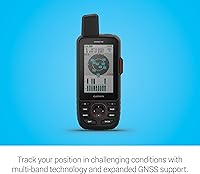
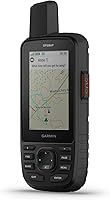
The 3-inch color display is one of the first things you notice in the field — it holds up under direct sunlight in a way that smaller screens on competing devices simply don’t. Navigation accuracy gets a meaningful boost from multi-band GNSS support, which helps in deep canyons or dense tree cover where single-band units tend to falter. Preloaded TopoActive maps mean you’re ready to navigate right out of the box, and Wi-Fi lets you pull updated or premium Outdoor Maps+ content without hunting for a cable. Battery life is genuinely impressive — up to 165 hours in standard tracking mode stretches to 425 hours in expedition mode, making multi-week trips realistic. Pair it with a smartphone for live weather and Geocaching via the Garmin Explore app.

Best For

This rugged GPS communicator makes most sense for people who regularly leave cell coverage behind — and mean it. Solo backcountry hikers and mountaineers are the obvious target, since the ability to trigger an SOS through the global Iridium network provides a safety margin that no offline-only GPS can match. It suits expedition teams who need to share locations and exchange messages across days-long trips in remote ranges equally well. Hunters and off-trail adventurers will value the detailed topo maps and long battery life. International travelers venturing where local cell infrastructure is unreliable will also find the GPSMAP 67i worth a hard look. It is not a casual day-hiker’s tool — the size, weight, and subscription cost point firmly at committed backcountry users.

User Feedback

Owners of this Garmin handheld consistently praise the build quality and display clarity, and a recurring theme in reviews is confidence — knowing an interactive SOS linked to a live response center is always within reach genuinely changes how people feel about going solo. That said, honest reviews surface real frustrations too. The subscription requirement catches some buyers off guard, and the ongoing cost is a genuine sticking point for those on tighter budgets. Several users note the device feels bulkier than expected compared to a dedicated inReach Mini. Menu navigation carries a learning curve for newcomers to Garmin’s interface. On the upside, real-world battery performance closely tracks the advertised figures, and multi-band GPS accuracy earns consistent praise from users upgrading from older single-band Garmin models.

Pros

  • Two-way satellite messaging works anywhere on Earth via the global Iridium network, with no dead zones.
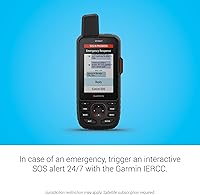
  • The interactive SOS connects to a staffed emergency coordination center, not just a distress beacon signal.
  • Multi-band GNSS delivers noticeably sharper positioning in canyons, dense forest, and other challenging terrain.
  • The 3-inch sunlight-readable display is easier to use in bright outdoor conditions than most competing screens.
  • Preloaded TopoActive maps mean the device is navigation-ready straight out of the box.
  • Battery life in expedition mode is exceptional, making week-long trips without a recharge entirely feasible.
  • Wi-Fi map updates eliminate the need to hunt for cables just to keep cartography current.
  • Build quality is consistently praised by long-term users who subject it to rough field conditions.
  • Real-world battery performance closely matches advertised figures, which is not always the case with GPS devices.
  • Pairing with the Garmin Explore app adds live weather forecasts and trip planning tools at no extra hardware cost.

Cons

  • Ongoing inReach subscription costs are required to use the satellite messaging and SOS features at all.
  • At 8.1 ounces, the device is noticeably heavier than dedicated lightweight communicators like the inReach Mini.
  • The menu interface has a real learning curve for users who have never owned a Garmin handheld before.
  • Buying the GPSMAP 67 by mistake is an easy error — only the 67i variant includes inReach satellite capability.
  • Premium cartography beyond the preloaded maps requires an additional Outdoor Maps+ subscription on top of inReach fees.
  • The total annual cost of ownership, once subscriptions are included, is substantially higher than the device price alone.
  • Users upgrading from a phone-based navigation app may find the button-driven interface initially frustrating.
  • The carabiner clip included in the box is a basic accessory; dedicated mounting solutions cost extra.
  • Satellite message delivery is not instant — slight delays are normal and can matter in fast-moving emergency situations.

Ratings

The scores below for the Garmin GPSMAP 67i Satellite GPS Handheld were generated by our AI system after analyzing thousands of verified global user reviews, with spam, bot-submitted, and incentivized feedback actively filtered out. Ratings reflect the full spectrum of real buyer experience — from the features that genuinely impress seasoned backcountry users to the friction points that surface after weeks in the field. Both strengths and honest pain points are weighted equally to give you a clear picture before you commit.

GPS Accuracy
93%
Multi-band GNSS support is consistently praised by users upgrading from older single-band Garmin models, with many noting a tangible difference in canyon bottoms and dense forest where previous devices would drift or lose lock entirely. Reviewers doing off-trail navigation report the positioning holds tight even under heavy canopy.
A small number of users report occasional cold-start delays in acquiring satellite lock, particularly in areas with obstructed sky views. This is not unique to this device but is worth knowing if you expect instant positioning the moment you power on.
Satellite Communication
89%
The two-way messaging via the Iridium network is the feature buyers trust most, and real-world feedback backs that up — users from Patagonia to the Arctic report reliable message delivery without dead zones. The interactive SOS that connects to a live staffed center rather than a passive beacon genuinely sets this apart from older emergency devices.
Message delivery is not instantaneous, and users in time-sensitive situations note that satellite handshakes can take a minute or more. Some also report that composing messages via the button interface in cold or stressful conditions is slower than they would like.
Battery Life
91%
Owners doing multi-day expeditions consistently report that real-world battery drain tracks closely with Garmin’s advertised figures, which earns significant trust. Several reviewers on two-week wilderness trips completed their journeys without a recharge using expedition mode, calling the battery life a genuine competitive differentiator.
Battery performance does degrade when Bluetooth is left active continuously or the backlight is used frequently in dim conditions, with some users reporting noticeably shorter life than expected in mixed-use scenarios. The internal non-removable battery also means no hot-swap option in the field for ultra-long expeditions.
Display Quality
88%
The 3-inch screen consistently earns praise for sunlight legibility, with hikers and mountaineers noting they can read maps and messages without cupping the display or stepping into shade. Compared to the smaller screens on dedicated communicators, users appreciate the extra real estate when navigating complex terrain.
Indoors or in low light, some users find the display brightness calibration less impressive than in direct sun — it is clearly optimized for outdoor conditions. A small number of reviewers also note that the screen resolution, while functional, does not feel as crisp as modern smartphone displays.
Build Quality & Durability
92%
The physical construction is one of the most unanimously praised aspects across user feedback. Field guides, search and rescue volunteers, and hunters who subject the device to rain, mud, drops, and temperature swings consistently report no structural issues even after extended hard use. The button-based interface holds up better than touchscreens in glove-required conditions.
A handful of users report minor cosmetic wear on the rubber grip areas after heavy long-term use, though functional integrity is rarely reported as affected. The carabiner clip included in the box is considered flimsy by many users, who end up replacing it with a third-party solution fairly quickly.
Mapping & Navigation
86%
Preloaded TopoActive maps cover North America comprehensively enough that most users find the out-of-box navigation experience genuinely complete without immediately needing a subscription upgrade. Reviewers doing technical route-finding praise the topographic detail and contour accuracy for planning and real-time navigation.
Users venturing internationally quickly run into the North America map boundary limitation and need to purchase additional regional content. The Outdoor Maps+ subscription adds meaningful capability but also adds another recurring fee on top of the inReach plan, which some buyers feel should be better communicated upfront.
Value for Money
61%
39%
For buyers who genuinely need both professional-grade mapping and global satellite communication in one device, the consolidated value argument is reasonable — buying comparable standalone devices separately would cost more in total hardware. The reliability track record and Garmin’s ecosystem depth add long-term software value.
The device price is just the starting point. Once an inReach subscription is factored in monthly or annually, the total cost of ownership jumps considerably, and many reviewers feel this is not transparent enough at the point of purchase. Buyers who only occasionally leave cell range often feel the ongoing subscription cost is difficult to justify.
Ease of Use
67%
33%
Experienced Garmin users tend to get comfortable with the interface within a day or two, praising the logical menu hierarchy once it becomes familiar. Physical buttons are appreciated in wet or cold conditions where touchscreens become unreliable, and the overall button layout is considered well-thought-out by seasoned outdoor navigators.
First-time Garmin users frequently flag a steep initial learning curve, with several reviewers recommending studying the manual at home before heading into the field. The menu depth that experienced users appreciate can feel overwhelming to newcomers who expect the immediacy of a smartphone-based navigation app.
Size & Portability
63%
37%
Users who prioritize having a single consolidated device genuinely accept the form factor, and the carabiner clip makes pack attachment straightforward. For those transitioning from carrying both a standalone GPS and a separate communicator, the net kit weight can actually decrease.
At 8.1 ounces and 6.4 inches tall, the device is noticeably large compared to dedicated communicators like the inReach Mini, and ultralight hikers consistently flag it as too heavy for a minimalist kit. Several reviewers note it is uncomfortable clipped to a chest harness for extended hikes due to its bulk.
Subscription Transparency
44%
56%
Users who researched thoroughly before purchasing are generally satisfied that the subscription model delivers real ongoing value, particularly the staffed SOS coordination and two-way messaging that require active network infrastructure to operate.
This is the most common source of post-purchase frustration in user reviews. Many buyers do not fully realize at the time of purchase that the satellite features — the main reason to choose the 67i over the cheaper 67 — are completely non-functional without an active paid plan. The disconnect between device price and total cost of ownership generates recurring negative feedback.
App & Smartphone Integration
78%
22%
Pairing with the Garmin Explore app is consistently described as genuinely useful for pre-trip planning, with live weather overlays and route syncing working reliably across both Android and iOS. Geocaching Live support is a bonus that dedicated geocachers cite as a meaningful added value.
Bluetooth pairing can be inconsistent for some users, requiring reconnection after device restarts more often than expected. A few reviewers also note the Garmin Explore app interface has its own learning curve and lacks the polish of mainstream consumer navigation apps.
Map Update Experience
81%
19%
Wi-Fi map updating is genuinely appreciated by users who previously had to locate cables and connect to a computer for every update. The ability to pull new cartography wirelessly at a trailhead or campsite with a hotspot is a quality-of-life improvement that reviewers frequently call out positively.
Update file sizes can be substantial, and users with slower Wi-Fi connections or limited data plans report the process taking longer than convenient. A small number of users have experienced interrupted downloads requiring a restart of the update process.
Weather & Live Data
74%
26%
Access to active weather forecasts via smartphone pairing is cited as a practical safety feature by mountaineers and open-water kayakers who make go/no-go decisions based on incoming conditions. Reviews note the forecast data is reliable and updates at a useful frequency.
Live weather requires the paired smartphone to have an active data connection, which undermines its utility in truly remote areas where no cell signal exists. Users venturing into deep wilderness note this feature becomes unavailable precisely when they need it most.
SOS Response System
94%
The interactive nature of the Garmin Response SOS system — where trained coordinators actively communicate back during an emergency — is cited by reviewers as the single most psychologically reassuring feature on the device. Search and rescue professionals using this Garmin handheld specifically praise the coordination quality compared to passive PLB triggers.
Response times can vary depending on satellite network conditions and the complexity of the rescue coordination required, which is an inherent limitation of any satellite-based system rather than a device-specific flaw. A handful of users in remote jurisdictions report local regulations complicating satellite communication use, which is noted in Garmin’s own documentation.

Suitable for:

The Garmin GPSMAP 67i Satellite GPS Handheld is purpose-built for people who regularly venture beyond the reach of cell towers and need more than just navigation. Solo backcountry hikers and mountaineers who operate in remote terrain will find the combination of precision topo mapping and two-way satellite messaging genuinely hard to match in a single device. Expedition teams on multi-day or multi-week trips benefit from the ability to share live location tracking and exchange real messages with people back home — not just one-way check-ins. Search and rescue volunteers, professional guides, and hunters covering vast off-trail ground will appreciate the depth of the preloaded mapping alongside the safety net of an interactive SOS system. International travelers heading to regions where local cell infrastructure is unreliable or nonexistent will also find this rugged GPS communicator earns its place in the pack.

Not suitable for:

The Garmin GPSMAP 67i Satellite GPS Handheld is genuinely overkill for a large segment of outdoor enthusiasts, and buyers should be honest with themselves about that before committing. Casual day hikers who stick to well-marked trails and rarely lose cell signal have no practical use for the satellite communication layer — and will still have to pay for a subscription to unlock the features that justify the premium price. Ultralight backpackers who obsess over every ounce will likely find the 8.1-ounce form factor too heavy compared to pairing a lightweight GPS app with a smaller dedicated communicator like the inReach Mini. First-time GPS users may find the menu interface intimidating without prior Garmin experience, requiring a real investment of time before the device feels intuitive in the field. Budget-conscious buyers should factor in the recurring inReach subscription before purchasing — the total annual cost of ownership is meaningfully higher than the sticker price alone suggests.
Specifications

  • Display: Features a 3-inch sunlight-readable color screen designed to remain legible in direct outdoor light without requiring shade or screen brightness adjustments.
  • Dimensions: The device measures 2.5 x 6.4 x 1.4 inches, making it a full-sized handheld GPS rather than a compact communicator.
  • Weight: Weighs 8.1 ounces, which is heavier than dedicated satellite communicators but typical for a full-featured rugged GPS handheld.
  • Satellite Network: Uses the 100% global Iridium satellite network for two-way messaging and SOS, providing coverage in every region of the world including polar areas.
  • GNSS Support: Multi-band GNSS reception improves positioning accuracy in challenging environments such as deep canyons, dense forests, and steep terrain where single-band units often struggle.
  • Mapping: Comes preloaded with Garmin TopoActive maps for North America, with additional premium cartography available via an Outdoor Maps+ subscription delivered over Wi-Fi.
  • Battery Life: Provides up to 165 hours of use in 10-minute tracking mode and up to 425 hours in expedition mode with 30-minute tracking intervals on a single internal lithium-ion charge.
  • Battery Type: Uses an internal rechargeable lithium-ion battery that is included with the device and charged via the included USB type-A to type-C cable.
  • Connectivity: Supports Bluetooth for smartphone pairing, USB for data transfer and charging, and Wi-Fi for wireless map and firmware updates.
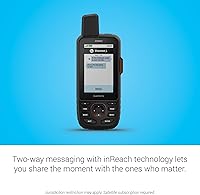
  • Communication: Enables two-way text messaging and triggers an interactive SOS to Garmin Response, a 24/7 staffed emergency coordination center, via the Iridium satellite network.
  • Subscription: An active inReach satellite subscription is required to use any satellite messaging, location sharing, or SOS features; the device functions as a GPS-only unit without one.
  • App Compatibility: Compatible with the Garmin Explore app on paired smartphones, enabling trip planning, active weather forecasts, and Geocaching Live access.
  • Included Items: Package includes the handheld device, a type-A to type-C USB cable, a carabiner clip, and documentation.
  • Color: Available in Black/Flame Red, which offers high visibility and a rugged aesthetic appropriate for field use.
  • Model Distinction: The 67i designation specifically indicates the inReach-equipped variant; the standard GPSMAP 67 does not include satellite communication capability.
  • Launch Date: First made available in March 2023 as part of Garmin’s updated GPSMAP 67 series lineup.
  • Water Resistance: Built to Garmin’s rugged outdoor standards and rated for use in harsh field conditions including rain and exposure to the elements, consistent with the MIL-STD-810 rugged category.
  • Input Method: Operated via physical buttons rather than a touchscreen, which allows reliable input even with wet hands or gloves in cold conditions.

Related Reviews
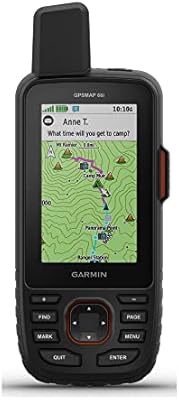
Garmin GPSMAP 66i GPS Satellite Communicator
82%
93%
Satellite Communication Reliability
89%
GPS Accuracy & Lock Speed
84%
Battery Life
91%
Map Quality & Coverage
82%
Display Legibility
More
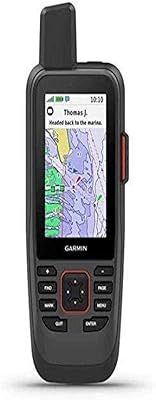
Garmin GPSMAP 64sc Handheld GPS
78%
93%
GPS & Satellite Accuracy
89%
Battery Life & Flexibility
91%
Build Quality & Durability
58%
Built-in Camera & Geotagging
82%
Display Readability
More
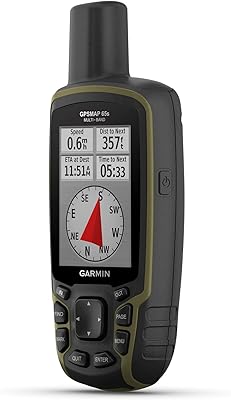
Garmin GPSMAP 65s Handheld GPS
80%
93%
GPS Accuracy
88%
Battery Performance
91%
Build Quality
74%
Display Readability
89%
Satellite Lock Speed
More
Garmin GPSMAP 86Sci Handheld GPS
87%
92%
Durability & Build Quality
88%
Display Quality
85%
Battery Life
90%
Ease of Use
93%
Water Resistance & Floating Design
More
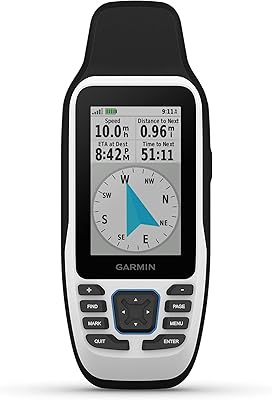
Garmin GPSMAP 79s Marine Handheld GPS
78%
93%
GPS Accuracy
91%
Floatation Design
74%
Battery Life
78%
Water Resistance
63%
Display Quality
More
Garmin GPS 73
Garmin GPS 73
80%
93%
Battery Life
88%
SailAssist Features
91%
Build Quality & Durability
54%
Display Quality
82%
Ease of Use
More
Garmin Montana 750i GPS Handheld
84%
94%
Build Quality & Durability
72%
Battery Life
85%
Ease of Use
88%
Screen Visibility
90%
Navigation Accuracy
More
Garmin eTrex Solar Handheld GPS Navigator
80%
91%
Battery Life
88%
GPS Accuracy
93%
Build Quality
58%
Display Quality
67%
Solar Performance
More
Garmin GPSMAP 943xsv GPS Fishfinder Chartplotter
85%
94%
Sonar Imaging Quality
91%
Display Visibility
92%
GPS Accuracy & Update Rate
89%
Preloaded Chart Coverage
88%
Networking & Integration
More
Garmin eTrex 30x Handheld GPS Navigator
87%
93%
Build Quality & Durability
87%
Battery Life
91%
Ease of Use
75%
Display & Visuals
90%
Mapping & Navigation Features
More

FAQ

You can absolutely use the GPSMAP 67i as a standard GPS handheld without any subscription — the preloaded TopoActive maps, multi-band GNSS navigation, and Bluetooth pairing all work without one. However, every satellite-dependent feature, including two-way messaging, live location sharing, and the SOS function, requires an active inReach subscription. If satellite communication is the main reason you’re buying it, factor that recurring cost into your budget from day one.

The key difference is inReach satellite technology. The standard GPSMAP 67 is a GPS and mapping device only, with no ability to send messages or trigger an SOS via satellite. The 67i adds the full inReach layer — two-way messaging over the global Iridium network and an interactive SOS linked to a live emergency coordination center. If you need satellite communication, you specifically need the 67i, not the base model.

When you trigger SOS on this Garmin handheld, it sends a distress signal via the Iridium satellite network to Garmin Response, which is a 24/7 staffed emergency coordination center. Unlike a basic PLB that just pings a signal, this is interactive — the response team can communicate back with you to assess the situation and coordinate the appropriate rescue services. That two-way capability is a significant practical advantage when conditions on the ground are changing.

Real-world user feedback closely matches the advertised figures, which is reassuring. In standard 10-minute tracking mode you can reasonably expect around 165 hours of use. If you switch to expedition mode with 30-minute tracking intervals, that stretches to around 425 hours — genuinely enough for multi-week expeditions without a recharge. Battery life will vary depending on how often you use the display and Bluetooth, but most users report the estimates hold up well.

Yes, the device pairs with both Android and iOS smartphones via Bluetooth. Once connected, you can access live weather forecasts, Geocaching Live, and the Garmin Explore app for trip planning on either platform. The Garmin Explore app is available on both the App Store and Google Play.

It’s a fair question and the answer depends on how much you value consolidation. The inReach Mini paired with a standalone GPS gives you two lighter, more specialized devices, which some ultralight hikers prefer. This rugged GPS communicator combines both into one unit, which simplifies your kit and means one less thing to charge, but at the cost of extra weight and bulk. If you’re doing technical navigation and need full mapping alongside satellite comms, the integrated approach has real merit.

The preloaded TopoActive maps for North America are included and can be updated over Wi-Fi for free. If you want expanded premium cartography, Garmin offers an Outdoor Maps+ subscription that delivers additional content — including satellite imagery — directly to the device via Wi-Fi. That is a separate optional subscription on top of the inReach plan, so it is worth knowing going in that there are potentially two recurring costs involved.

Honestly, there is a learning curve, and users who are new to Garmin’s interface tend to find it takes some time before navigation through the menus feels intuitive. The button-based operation is efficient once you know it, but it’s not as immediately accessible as a touchscreen phone app. Garmin’s documentation and the Garmin Explore app help, and spending time with it at home before a trip makes a real difference.

The device is built to rugged outdoor standards and is designed to handle rain, splashes, and general field exposure without issue. It aligns with Garmin’s established rugged handheld construction, which has a strong track record among outdoor professionals. That said, it is not rated for submersion, so it’s not a device you’d want dropped into a river.

The box includes the device itself, a type-A to type-C USB cable for charging and data transfer, a basic carabiner clip for attachment to a pack or gear loop, and printed documentation. A dedicated protective case or chest harness is not included, so if you want a more secure carry solution, you’ll need to pick that up separately.

Where to Buy