Overview

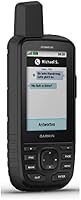
The Garmin GPSMAP 66i GPS Satellite Communicator is what happens when Garmin takes its most capable handheld GPS platform and merges it with full inReach satellite communication — not as an add-on, but as a core design priority. The result is a single rugged unit built for the kind of trips where your phone stopped being useful two days ago. It targets serious backcountry travelers: mountaineers, remote hunters, long-distance thru-hikers, anyone venturing far enough that rescue could depend on what's in their pack. The device is chunky and purposeful, designed for gloved hands in rough weather. One thing to budget for upfront: a satellite subscription is required for the communicator features to function.
Features & Benefits

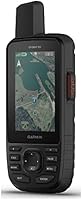
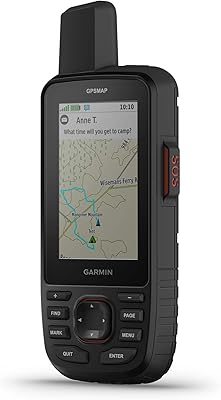
The 3-inch color display is legitimately readable in direct alpine sunlight — the kind of glare that makes phone screens invisible. Beneath that screen is a complete navigation package: preloaded Garmin TOPO maps alongside Birdseye satellite imagery you can download without an annual subscription. Multi-GNSS support pulling from GPS, GLONASS, and Galileo means the GPSMAP 66i locks onto your position faster than single-constellation devices, which matters in dense forest or deep canyon terrain. The built-in altimeter, barometer, and compass add real situational awareness, and cellular connectivity pulls in active weather forecasts when you're in range. Then there's the Iridium satellite network — two-way messaging and interactive SOS that connects you to a 24/7 monitoring center, anywhere on the planet. In Expedition mode, battery life stretches to 200 hours, enough to cover weeks in the field.

Best For

This GPS communicator makes the most sense for people who genuinely operate beyond cell coverage — not occasionally, but routinely. Solo backcountry hikers, mountaineers on remote routes, and international expedition teams all benefit from having two-way satellite messaging baked directly into their primary navigation device. Remote hunters and anglers coordinating across large wilderness areas will find the group tracking and messaging features genuinely practical. It's also a strong fit for thru-hikers who refuse to navigate by phone and want dedicated hardware that won't run dry when the temperature drops. If you're already carrying a standalone GPS and a separate satellite communicator, consolidating into one unit makes obvious sense — you shed redundancy, not capability.

User Feedback

Owners consistently praise the satellite messaging reliability and map quality, with many noting the confidence that comes from carrying a device they genuinely trust in serious terrain. The Garmin Explore app gets frequent mention as a strong pre-trip planning tool. On the critical side, occasional users often balk at the subscription tiers — Garmin offers multiple plans, but none of them are cheap, and if you only do one or two remote trips a year, the math gets uncomfortable. The menu system has a learning curve that smartphone users find steeper than expected. Battery life is excellent with the screen off, but active display use drains it noticeably faster — something to account for on longer days.

Pros

  • Iridium satellite coverage means two-way messaging and SOS work anywhere on Earth, with no regional blind spots.
  • Preloaded TOPO maps plus Birdseye satellite imagery downloads require no ongoing mapping subscription.
  • Multi-GNSS support locks onto position faster and more reliably in dense forest or canyon terrain.
  • Up to 200 hours of battery life in Expedition mode comfortably covers multi-week remote trips.
  • The 3-inch display stays legible in direct sunlight where phone screens become unreadable.
  • Built-in altimeter, barometer, and compass add meaningful situational awareness beyond basic navigation.
  • Garmin Explore app integration makes pre-trip route planning and waypoint management genuinely practical.
  • Consolidating a GPS and satellite communicator into one device reduces pack weight and complexity.
  • Active weather forecast access via cellular connectivity helps with real-time decision-making in the field.
  • The rugged, button-based design is practical in cold weather when gloves make touchscreens useless.

Cons

  • A satellite subscription is required for messaging and SOS features — ongoing costs add up significantly over time.
  • The menu system has a steep learning curve for users accustomed to modern smartphone navigation apps.
  • Battery life drops noticeably with the display running actively, requiring careful power management on long days.
  • The device is bulkier and heavier than lightweight GPS alternatives, which matters on ultralight-focused trips.
  • Occasional users will struggle to justify the subscription cost against the frequency of their remote travel.
  • The SOS function connects to a monitoring center, not directly to rescue services — response time depends on coordination.
  • No touchscreen display, which limits interaction speed compared to touch-based competitors.
  • Cellular-dependent features like active weather forecasts are unavailable once you lose network coverage.
  • The upfront hardware cost is steep, especially when factoring in the mandatory subscription on top.
  • Birdseye imagery downloads require Wi-Fi or cellular access for syncing, which can be inconvenient before remote departures.

Ratings

The scores below for the Garmin GPSMAP 66i GPS Satellite Communicator were generated by our AI after analyzing thousands of verified global user reviews, with spam, bot activity, and incentivized feedback actively filtered out. Both the standout strengths and the recurring frustrations are reflected honestly, so you get a clear picture of what real owners actually experience in the field.
Satellite Communication Reliability
93%
Owners consistently report that messages go through even in the most remote corners of the planet — deep Alaskan wilderness, Patagonian peaks, and Central Asian steppe all included. The 100% Iridium network coverage gives users genuine confidence, not the crossed-fingers kind you get with regional satellite systems.
A small number of users report occasional message delivery delays of several minutes under heavy tree canopy or in narrow canyon slots, though complete failures are rare. For critical timing situations, this slight latency is worth knowing about in advance.
GPS Accuracy & Lock Speed
89%
Multi-GNSS support pulling from GPS, GLONASS, and Galileo simultaneously means the GPSMAP 66i acquires a position lock faster than single-constellation devices, which backcountry users notice immediately when starting a track in dense forest. Positional accuracy in open terrain earns consistent praise from hikers and hunters alike.
In particularly tight terrain — slot canyons, deep ravines, or thick old-growth forest — lock time can stretch and accuracy wobbles slightly compared to performance in open conditions. This is largely a physics limitation rather than a device flaw, but users coming from open-terrain use should set realistic expectations.
Battery Life
84%
In Expedition mode with 30-minute tracking intervals, the internal battery genuinely delivers close to the rated 200 hours, which covers most multi-week backcountry trips without needing a power bank top-up. Long-distance thru-hikers and expedition teams rate this as one of the most practically useful aspects of the device.
Running the display actively for navigation eats through the battery at a notably faster rate, and users who keep the screen on for extended periods find themselves reaching for a USB power bank more than expected. Managing screen-on time becomes a real habit you need to develop on longer trips.
Map Quality & Coverage
91%
The preloaded Garmin TOPO maps are detailed and well-rendered on the 3-inch display, with Birdseye satellite imagery downloads rounding out the picture for terrain that benefits from a visual overhead view. The absence of an annual imagery subscription fee is something owners specifically call out as a meaningful value advantage.
Map rendering for some international regions outside North America and Western Europe is less detailed than domestic coverage, which affects users planning remote expeditions in parts of Asia or South America. Downloading Birdseye imagery also requires Wi-Fi or cellular access beforehand, which demands advance planning.
Display Legibility
82%
18%
The sunlight-readable display earns genuine appreciation from alpine and desert users who have watched phone screens become completely invisible in direct sun — this screen does not have that problem. At 3 inches, there is enough real estate to read map detail and data fields without squinting.
The 240 x 400 pixel resolution looks noticeably dated compared to high-DPI smartphone screens, and users who switch between the two often describe the GPSMAP 66i display as functional but not sharp by modern standards. Map text at smaller zoom levels can feel crowded on the relatively modest resolution.
Build Quality & Durability
88%
The rugged physical construction earns consistent trust from owners who have put it through serious conditions — rainstorms, drops on rocky trail, freezing temperatures, and dusty desert environments. The button-based interface holds up well and does not suffer the touch sensitivity failures that plague some competitors in wet or cold conditions.
The device is noticeably heavier and bulkier than ultralight GPS alternatives, and some users find the plastic casing picks up surface scuffs relatively quickly despite its overall structural durability. It does not feel precious, which is appropriate, but the finish does not inspire the same premium tactile confidence as the internals.
Ease of Use & Menu System
63%
37%
Once learned, the button-based interface becomes second nature for dedicated users, and the physical controls are a genuine advantage in cold weather when gloves make touchscreens useless. Long-term Garmin users who have owned previous handheld GPS units report a comfortable familiarity with the menu logic.
For buyers coming from smartphone navigation apps, the menu structure requires a real investment of time to navigate confidently, and more than a few owners admit they were fumbling with settings during their first actual trip. The learning curve is steeper than Garmin's own marketing implies, and it catches new users off guard.
SOS & Emergency Features
86%
The interactive SOS system, which connects to a 24/7 professional monitoring center that then coordinates with local rescue services, gives solo travelers a credible safety net that many users say directly influenced their decision to push into more challenging terrain. Owners who have actually triggered the SOS report clear, responsive coordination from the monitoring center.
Some users initially misunderstand the SOS as a direct line to rescue services and are surprised to learn it routes through a monitoring intermediary, which introduces a layer of coordination that can extend response time in rare situations. The SOS button also requires a deliberate hold to activate, which is the right design choice but occasionally catches people off guard under stress.
Garmin Explore App Integration
79%
21%
Pre-trip route planning via the Garmin Explore app and website is consistently praised as one of the most practical workflow advantages of owning this handheld unit — building routes on a large screen and syncing them wirelessly is dramatically faster than entering waypoints manually on the device. Users who invest in the app integration report a significantly smoother field experience.
The app has its own learning curve and occasional sync hiccups that frustrate users who expect it to work as intuitively as mainstream consumer apps. Some Android users report more connectivity quirks than iOS users, and the app's update history has been inconsistent in addressing long-standing interface complaints.
Two-Way Messaging Experience
81%
19%
Being able to exchange messages with family, teammates, or base camp from anywhere on Earth — without cell coverage — is a genuinely reassuring capability that owners rate as one of the most used real-world features, not just a marketing bullet point. The ability for non-Garmin recipients to reply via web interface removes a major friction point.
Composing messages using physical buttons is slow and tedious for anything beyond brief check-ins, and users who want to send detailed updates from the field find the input process frustrating. Predictive text and template messages help, but the experience is far removed from the ease of smartphone messaging.
Value for Money
71%
29%
For users who regularly venture into remote terrain and already intended to carry both a dedicated GPS and a satellite communicator, consolidating into one device at this price point represents a real cost efficiency. The absence of a Birdseye imagery subscription also removes an expense that competing platforms typically require.
The combination of a high hardware cost and mandatory ongoing satellite subscription makes total cost of ownership genuinely steep, and occasional backcountry users will struggle to justify the math relative to their actual usage frequency. Garmin offers tiered subscription plans, but even the entry-level option adds up meaningfully over a year.
Weather Forecasting
74%
26%
Active weather forecasts accessed via cellular connectivity give users meaningful decision-making data when planning day routes or deciding whether to push for a summit, and the integration into the device interface is cleaner than checking a separate app. Owners who use this feature regularly cite it as a genuine trip safety tool.
The weather feature is entirely dependent on cellular coverage, which means it becomes unavailable exactly when you are deep enough in the backcountry to most need it. Users who expected satellite-delivered weather were consistently disappointed to find the feature offline in remote zones.
Live Tracking & Location Sharing
83%
The ability for family members or a trip coordinator to follow a user's real-time track on a map provides meaningful peace of mind for solo travelers and remote expeditions, with friends and family not needing any special hardware to view the shared link. Group tracking for coordinated teams is particularly valued by remote hunting parties.
Live tracking interval settings directly impact battery life, and users who set aggressive tracking intervals find the trade-off on battery noticeably punishing during long days. The shared tracking webpage, while functional, is basic in presentation compared to what users have come to expect from consumer mapping platforms.
Physical Controls & Glove Usability
87%
The decision to use physical buttons rather than a touchscreen pays real dividends in cold weather, with mountaineers and winter hikers specifically praising the ability to operate the device confidently with thick gloves on. Button travel and feedback are solid and hold up reliably even after sustained exposure to harsh conditions.
Users who primarily use the device in mild conditions find the button navigation slower and less convenient than touchscreen alternatives, and the lack of a touchscreen option feels like a dated constraint in warmer use cases. Navigating long map lists or detailed menus via buttons requires more button presses than most modern users are accustomed to.

Suitable for:

The Garmin GPSMAP 66i GPS Satellite Communicator is built for people who take remote travel seriously enough to treat communication as a safety system, not an afterthought. Solo hikers heading into wilderness areas days from the nearest trailhead will find the two-way satellite messaging and interactive SOS genuinely reassuring — and so will the people waiting for them at home. Mountaineers, backcountry hunters, and offshore anglers who already carry a dedicated GPS will appreciate consolidating two devices into one without sacrificing capability on either front. Expedition teams benefit from the ability to coordinate positions and messages across the group even when thousands of miles from any cell tower. International adventure travelers operating across multiple countries will find the 100% Iridium global coverage especially valuable, since it removes any concern about regional network gaps. If you use Garmin Explore for pre-trip planning, the integration with this handheld unit makes route management and waypoint syncing genuinely smooth.
Not suitable for:

The Garmin GPSMAP 66i GPS Satellite Communicator is not the right call for casual day hikers or weekend campers who rarely stray beyond areas with decent cell coverage. The device requires an active satellite subscription to unlock its core communication features, and none of the available plans are inexpensive — buyers who only take one or two remote trips per year will likely find the recurring cost hard to justify relative to their actual usage. Ultralight backpackers optimizing every ounce on long-distance routes may struggle with the bulk and weight compared to lighter dedicated GPS options. Beginners expecting the intuitive swipe-and-tap experience of a smartphone app will face a real learning curve with the button-based menu system. This handheld unit also does not contact rescue services directly — the interactive SOS connects to a 24/7 monitoring center that then coordinates with emergency responders, which is an important distinction to understand before relying on it.
Specifications

  • Display Size: The device features a 3-inch sunlight-readable color display optimized for outdoor visibility in bright conditions.
  • Resolution: Screen resolution is 240 x 400 pixels, providing clear rendering of topographic map detail and navigation data.
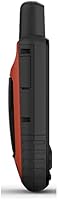
  • Dimensions: The unit measures 6.4 x 2.6 x 1.4 inches, giving it a compact but solid handheld profile built for rugged use.
  • Weight: The device weighs 1.28 ounces without accessories, making it portable despite its dual GPS and satellite communicator functionality.
  • Battery Life: Battery life reaches up to 200 hours in Expedition mode with 30-minute tracking intervals, or up to 35 hours in standard 10-minute tracking mode with the display off.
  • Battery Type: Power comes from an internal rechargeable lithium polymer battery, charged via the included USB cable.
  • Satellite Network: Communication is handled through the 100% global Iridium satellite network, ensuring two-way messaging and SOS coverage anywhere on Earth.
  • Navigation Systems: The unit supports multi-GNSS positioning using GPS, GLONASS, and Galileo constellations simultaneously for improved accuracy and faster satellite acquisition.
  • Preloaded Maps: Garmin TOPO mapping is preloaded on the device, with support for direct Birdseye satellite imagery downloads at no additional annual subscription cost.
  • Sensors: Built-in sensors include a barometric altimeter, electronic barometer, and 3-axis compass for comprehensive environmental and directional awareness.
  • Connectivity: The device connects via Bluetooth, ANT+, Wi-Fi, and cellular, enabling pairing with phones, syncing with Garmin Explore, and access to active weather forecasts.
  • Messaging: Two-way satellite text messaging is supported globally via the Iridium network, requiring an active satellite subscription plan.
  • SOS Function: An interactive SOS feature connects to a 24/7 professional monitoring center that coordinates with local emergency response services on the user's behalf.
  • Input Method: Navigation and menu control are handled via physical buttons, making the device operable with gloves in cold or wet conditions.
  • App Compatibility: The device is compatible with the Garmin Explore app and website for pre-trip planning, waypoint management, route creation, and post-trip data review.
  • Subscription Required: An active Garmin inReach satellite subscription plan is required to use the two-way messaging, SOS, and live tracking communication features.
  • Included Contents: The package includes the GPSMAP 66i unit, access to Birdseye satellite imagery, a USB charging cable, a carabiner clip, and documentation.
  • Operating System: The device runs on an Android-based internal platform and is compatible with both Android and iOS smartphones for app-based connectivity.

Related Reviews
Garmin GPSMAP 67i Satellite GPS Handheld
79%
93%
GPS Accuracy
89%
Satellite Communication
91%
Battery Life
88%
Display Quality
92%
Build Quality & Durability
More
Garmin GPSMAP 64sc Handheld GPS
78%
93%
GPS & Satellite Accuracy
89%
Battery Life & Flexibility
91%
Build Quality & Durability
58%
Built-in Camera & Geotagging
82%
Display Readability
More
Garmin GPSMAP 65s Handheld GPS
80%
93%
GPS Accuracy
88%
Battery Performance
91%
Build Quality
74%
Display Readability
89%
Satellite Lock Speed
More
Garmin inReach Messenger Satellite Communicator
77%
88%
Satellite Reliability
93%
SOS Effectiveness
84%
Two-Way Messaging
91%
Portability & Form Factor
54%
Subscription Value
More
Garmin GPSMAP 86Sci Handheld GPS
87%
92%
Durability & Build Quality
88%
Display Quality
85%
Battery Life
90%
Ease of Use
93%
Water Resistance & Floating Design
More
Garmin InReach Mini Satellite Communicator
75%
91%
Satellite Coverage & Reliability
88%
SOS & Emergency Performance
93%
Portability & Form Factor
84%
Battery Life
53%
Messaging Usability
More
Garmin GPSMAP 943xsv GPS Fishfinder Chartplotter
85%
94%
Sonar Imaging Quality
91%
Display Visibility
92%
GPS Accuracy & Update Rate
89%
Preloaded Chart Coverage
88%
Networking & Integration
More
Garmin inReach SE+ Satellite Communicator
75%
94%
SOS Reliability
91%
Satellite Coverage
78%
Two-Way Messaging
83%
MapShare Tracking
74%
Earthmate App Integration
More
Garmin GPSMAP 79s Marine Handheld GPS
78%
93%
GPS Accuracy
91%
Floatation Design
74%
Battery Life
78%
Water Resistance
63%
Display Quality
More
Garmin GPS 73
Garmin GPS 73
80%
93%
Battery Life
88%
SailAssist Features
91%
Build Quality & Durability
54%
Display Quality
82%
Ease of Use
More

FAQ

Yes — the navigation and GPS functions work without any subscription, but the satellite messaging, live tracking, and SOS features require an active Garmin inReach satellite plan. Garmin offers several tiers ranging from a basic safety-focused plan to unlimited messaging options, so you can match the plan to how often you actually go remote. It is worth factoring this ongoing cost into your budget before purchasing.

Pressing and holding the SOS button initiates an interactive alert through the Iridium satellite network to the GEOS 24/7 emergency monitoring center. That center then contacts the appropriate local rescue authorities on your behalf and keeps a two-way communication channel open with you throughout the rescue coordination process. It does not call rescue services directly from the device — the monitoring center acts as the intermediary.

Yes, recipients do not need a Garmin device of any kind. Outbound messages can be sent to any mobile phone number or email address. The person you are messaging can even reply via a web-based interface that Garmin provides, so standard communication works in both directions without requiring the other party to own any special hardware.

The device is built to withstand outdoor conditions including rain and splashing, rated to MIL-STD-810 military standards for shock, vibration, humidity, and thermal exposure. It is designed to survive the kind of weather you are likely to encounter on serious backcountry trips, though it is not intended for prolonged submersion.

Acquisition time depends on your environment, but multi-GNSS support — pulling simultaneously from GPS, GLONASS, and Galileo satellites — significantly speeds up the initial lock compared to single-system devices. In open terrain with a clear sky view, most users report a lock within a minute or two. Dense tree cover or deep canyon terrain may slow this down slightly.

The GPSMAP 66i comes with Garmin TOPO maps preloaded, so you have solid topographic coverage right out of the box without downloading anything. Birdseye satellite imagery requires a Wi-Fi or cellular connection to download, so the practical approach is to sync imagery for your planned area at home or at camp before heading into a coverage-free zone.

The Garmin Explore app and companion website are the most efficient tools for pre-trip planning. You can build routes, set waypoints, browse maps, and organize collections on your phone or computer, then sync everything directly to the handheld unit. Many users find this workflow far easier than entering waypoints manually on the device, especially for complex multi-day routes.

The internal lithium polymer battery is not user-replaceable in the field. It charges via USB, so a power bank is the most practical backup for extended trips. In Expedition mode with 30-minute tracking intervals the battery stretches to around 200 hours, which covers the majority of multi-week expeditions without needing an external power source.

It is steeper than most people expect coming from touchscreen smartphone apps. The GPSMAP 66i uses a physical button interface with a menu structure that takes some time to navigate intuitively. Most users get comfortable within a few sessions, but the consensus is to spend meaningful time with the device at home before relying on it in the field. Watching Garmin's tutorial videos is genuinely helpful.

Yes, the Iridium satellite network provides truly global coverage with no geographic limitations, making this handheld unit one of the strongest options for international travel in remote areas. The preloaded maps and Birdseye imagery also cover international regions, and multi-GNSS support ensures reliable positioning across different parts of the world. Just check local regulations before departing, as some countries restrict satellite communication devices.

Where to Buy