Overview

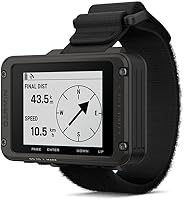
The Garmin Foretrex 801 Wrist-Mounted GPS Navigator is a purpose-built device for people who operate where consumer gadgets simply don't belong. Built on the bones of the well-regarded 701, it brings upgraded multi-band GNSS reception that noticeably tightens positional accuracy in dense terrain or heavy canopy. The monochromatic 2.2-inch screen won't win any beauty contests, but it punches above its weight in direct sunlight and low-light conditions alike. What really stands out in the field is the single AA battery setup delivering up to 100 hours of runtime — a practical advantage no smartphone-based nav solution can touch. This is premium-tier hardware aimed squarely at serious users.
Features & Benefits

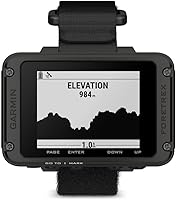
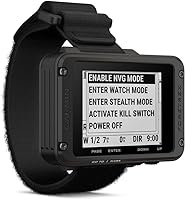
The standout technical upgrade in this wrist GPS is multi-band GNSS, which draws signals from multiple satellite systems simultaneously to hold accuracy in spots where older single-band receivers drift or lose lock entirely. The stealth mode is genuinely useful for its intended audience — it stops the device from recording tracks or broadcasting wirelessly, and the kill switch goes a step further by wiping the entire device memory on command. Beyond the security angle, the onboard sensor suite handles elevation via barometric altimeter and heading via a 3-axis compass, reducing reliance on satellite data alone. Night vision goggle compatibility and Garmin Explore app pairing round out a feature set clearly designed around real operational demands, not marketing bullet points.

Best For

This tactical navigator was built with a specific type of user in mind, and it shows. Military personnel, law enforcement operators, and tactical teams will appreciate the security features that simply don't exist on hiking-focused competitors. Serious backcountry hikers and hunters who venture out for multi-day trips without reliable charging access will find the 100-hour battery life genuinely liberating. Search-and-rescue teams benefit from the wrist form factor during active operations. Coming from the Foretrex 701, the jump to USB-C charging and improved satellite accuracy makes the upgrade straightforward to justify. Casual day hikers or urban users expecting a color map and touchscreen interface will find it unnecessarily stripped down for their needs.

User Feedback

Owners of the Foretrex 801 consistently praise two things: battery longevity that holds up in real conditions and GPS lock performance that noticeably outperforms the 701 in dense tree cover. Tactical users who have tested the stealth mode and kill switch report both work as advertised, with no complaints about unintended data exposure. That said, the most common frustration centers on the monochromatic screen — at this price point, some buyers expect more, and it is a fair criticism. A handful of users have noted inconsistent Bluetooth pairing with the Garmin Explore app. The hook-and-loop strap is functional but draws mixed opinions on long-term comfort. Overall sentiment skews positive among the intended audience, less so among casual outdoor enthusiasts.

Pros

  • Multi-band GNSS delivers noticeably tighter GPS accuracy in dense canopy and challenging terrain compared to its predecessor.
  • Up to 100 hours of battery life from a single AA battery is a genuine field advantage no smartphone nav solution can match.
  • Stealth mode and kill switch address real operational security needs not found on any consumer-grade wearable GPS.
  • The monochromatic screen remains clear and readable in direct sunlight and under night vision goggles.
  • USB-C charging is a meaningful upgrade over older Foretrex models and simplifies cable management in the field.
  • At 5.5 ounces with the strap, this tactical navigator sits on the wrist without feeling burdensome during extended wear.
  • The barometric altimeter and 3-axis compass reduce dependence on satellite data alone, improving reliability in GPS-challenging environments.
  • Garmin Explore app integration enables pre-mission or pre-trip route planning and post-activity review over Bluetooth.
  • Button-only interface is reliable with gloves on, which matters more in real field conditions than any touchscreen ever could.

Cons

  • No color display or on-device mapping makes complex route visualization impossible without a separate device.
  • The premium price is difficult to justify for buyers without genuine tactical or multi-day backcountry use cases.
  • Bluetooth pairing with the Garmin Explore app has been reported as inconsistent by a notable share of users.
  • The hook-and-loop strap divides opinion on long-term wrist comfort, particularly during high-output physical activity.
  • No onboard navigation maps means you cannot pull up terrain or trail data directly on the device itself.
  • Proprietary Garmin OS limits third-party app support, which may frustrate users accustomed to more open platforms.
  • Screen size at 2.2 inches is small for users with older eyes or those wanting to read detailed waypoint data quickly.

Ratings

The scores below for the Garmin Foretrex 801 Wrist-Mounted GPS Navigator were generated by our AI engine after analyzing verified purchase reviews from buyers worldwide, with spam, bot-submitted, and incentivized feedback actively filtered out. Each category reflects the honest distribution of real user sentiment — strengths are credited where earned, and recurring pain points are not softened or omitted. The result is a transparent, category-by-category snapshot of how this tactical navigator actually performs in the hands of the people who bought it.
GPS Accuracy
93%
Users consistently report that the multi-band GNSS locks on faster and holds position more reliably than the Foretrex 701, particularly in dense tree cover, deep valleys, and other GPS-challenging terrain. Backcountry hikers and tactical operators alike called out real-world accuracy as the most tangible upgrade over the previous generation.
A small number of users noted occasional position drift in extreme urban canyon environments with heavy signal interference, though this was not a widely repeated complaint and may reflect edge-case conditions rather than a systemic issue.
Battery Life
91%
The 100-hour runtime from a single AA battery is the feature buyers talk about most enthusiastically, and field reports back it up. Multi-day expedition users described going entire trips without touching a spare battery, which is a genuinely rare experience in the wearable GPS category.
Enabling Bluetooth continuously or pushing screen brightness to maximum can reduce practical battery life noticeably below the rated figure. A handful of users also reported faster-than-expected drain in sustained cold-weather use, which is a known characteristic of AA batteries rather than a device flaw.
Build Quality
89%
The physical construction earns strong marks from users who have taken it through rain, mud, extreme cold, and high-humidity environments without issues. The button interface in particular is praised for holding up under repeated gloved use in conditions where touchscreen devices would have failed entirely.
A few users noted that the hook-and-loop strap shows wear over months of heavy daily use and may need replacement before the device itself shows any signs of aging. The plastic housing, while tough, does pick up cosmetic scratches faster than some buyers expected at this price point.
Screen Readability
82%
18%
The monochromatic display performs exactly as intended in the conditions it was designed for — direct sunlight, harsh ambient light, and night vision goggle use. Users operating in bright outdoor environments rarely mentioned visibility as a problem, which speaks to how well the screen is tuned for field use.
At this price tier, the lack of a color display draws consistent criticism from buyers comparing it to other premium Garmin products. Users who expected richer visual feedback or a map-style interface were visibly frustrated, and the 2.2-inch screen size leaves limited room for displaying dense waypoint data.
Ease of Use
74%
26%
Veterans of the Foretrex line and experienced GPS users generally find the button-based interface logical and efficient once the learning curve is cleared. Glove-compatible controls are genuinely appreciated in field conditions where fine touchscreen gestures are simply not an option.
New users without prior experience on Garmin's proprietary OS reported a steep learning curve, particularly around menu navigation and waypoint management. The lack of a touchscreen or modern visual interface makes the device feel dated to buyers coming from consumer smartwatch ecosystems.
Stealth & Security Features
96%
Among tactical users, the stealth mode and kill switch are described as non-negotiable requirements that no competing wearable GPS addresses as directly. Operators who need to ensure zero data exposure reported high confidence in both features after testing them in realistic scenarios.
For the majority of civilian outdoor users, these features are simply never used, which makes them effectively invisible value at a premium price point. There is also no detailed documentation on exactly what the kill switch wipes and in what sequence, which left some security-conscious users wanting more transparency.
Value for Money
63%
37%
For the narrow audience this wrist GPS targets — tactical operators, serious backcountry users, and Foretrex 701 upgraders — the feature set at this price is defensible, particularly given the multi-band GNSS and security capabilities that genuinely have no direct consumer alternatives.
For anyone outside that specific use case, the price-to-feature ratio is hard to justify against competing GPS wearables that offer color maps, more polished interfaces, and broader feature sets. The absence of mapping display and color screen in particular makes the premium pricing a recurring sticking point in user reviews.
Companion App Integration
67%
33%
When the Garmin Explore app pairing works well, users find the pre-trip route planning and post-activity review workflow genuinely useful, particularly for hunters and hikers who want to prep waypoints at home before heading into the field.
Bluetooth pairing reliability is one of the more consistently mentioned frustrations, with a notable share of users reporting drops, failed syncs, or the need to re-pair after app updates. The app experience feels secondary to the device itself, which is fine for this product type but becomes annoying when it fails mid-workflow.
Wrist Comfort & Fit
68%
32%
The hook-and-loop strap is practical, quick to adjust, and works well for users who need to move the device between layers of clothing or share it in the field. Most short-to-medium wear sessions drew no complaints about fit or pressure points.
Extended wear — particularly during physical exertion or in warm conditions — surfaces comfort complaints that a traditional watch-style strap would likely avoid. Users wearing it continuously over multi-day trips mentioned skin irritation or discomfort that accumulated over time with the hook-and-loop design.
Sensor Suite Performance
87%
The barometric altimeter and 3-axis compass are well-regarded by users who rely on elevation data and heading accuracy when GPS signal alone is insufficient. Search-and-rescue users specifically called out the compass reliability in low-visibility conditions as a practical differentiator.
Compass calibration needs to be performed manually after extended periods without use, which some users found inconvenient in the field. The accelerometer data, while functional, is not surfaced in a particularly user-friendly format for buyers unfamiliar with Garmin's interface conventions.
Night Vision Compatibility
92%
Users who actually use night vision goggles in professional or training contexts rated this feature highly, noting that the screen behaves correctly without washing out or blooming — a real technical achievement that mainstream GPS wearables simply do not address.
For the overwhelming majority of civilian buyers, this feature is entirely irrelevant to their use case, which reinforces a broader pattern of the device being priced partly for specialized capabilities that most buyers will never activate.
Durability in Extreme Conditions
88%
Field reports from users in cold-weather environments, wet climates, and dusty terrain consistently describe the device holding up without issues over extended periods. The ruggedized construction inspires genuine confidence among users who cannot afford device failure in the field.
A small number of users reported screen fogging in rapid temperature transition scenarios, such as moving from very cold outdoor environments into warm indoor spaces. This was not widespread but worth flagging for users who operate in environments with large thermal swings.
Upgrade Value from Foretrex 701
79%
21%
Users upgrading from the 701 consistently acknowledge the GPS accuracy improvement and USB-C charging as real, noticeable day-to-day upgrades. For those whose primary frustration with the 701 was positional drift or the older charging connector, the step up feels well-justified.
Users who were otherwise satisfied with the 701 and were hoping for a more transformative interface or display upgrade came away feeling the visual and UX experience is essentially unchanged. If satellite accuracy and USB-C are not pain points for a 701 owner, the upgrade argument weakens considerably.

Suitable for:

The Garmin Foretrex 801 Wrist-Mounted GPS Navigator was designed with a very specific type of buyer in mind, and those buyers will find it hard to beat. Military personnel, law enforcement operators, and tactical teams get a wearable GPS that includes genuinely useful security features — stealth mode and an instant memory wipe — that no mainstream outdoor watch offers. Multi-day backcountry hikers and wilderness hunters will appreciate running on a single AA battery for up to 100 hours, eliminating the anxiety of finding a charge in the middle of nowhere. Search-and-rescue teams benefit from hands-free wrist navigation that keeps both hands available during active operations. Anyone upgrading from the Foretrex 701 will notice real, measurable improvements in satellite lock accuracy and the welcome addition of USB-C charging. If your navigation needs involve harsh lighting, dense canopy, or environments where operational security actually matters, this wrist GPS is built precisely for you.
Not suitable for:

The Garmin Foretrex 801 Wrist-Mounted GPS Navigator is a purposefully stripped-down tool, and that is a dealbreaker for a meaningful segment of buyers. If you are expecting a color touchscreen map display, turn-by-turn routing, or the kind of rich interface found on Garmin's own fenix or GPSMAP wearables, you will be disappointed — this device does not offer those things. Casual day hikers, weekend trail runners, and urban adventurers will find the feature set unnecessarily limited and the price hard to justify without a tactical or extended-backcountry use case. Buyers who rely heavily on companion app connectivity should be aware that Bluetooth pairing with the Garmin Explore app has produced inconsistent experiences for some users. The hook-and-loop strap, while practical, may not satisfy those who want a more refined or comfortable long-term wear experience. If your navigation demands are modest, there are far better-value options in Garmin's own lineup that will serve you more naturally.
Specifications

  • Screen Size: The device features a 2.2″ monochromatic display optimized for readability across a wide range of lighting conditions, including direct sunlight and low-light environments.
  • Night Vision: The screen is compatible with night vision goggles, a capability not commonly found on consumer-grade wearable GPS devices.
  • GNSS Technology: Multi-band GNSS reception pulls signals from multiple satellite constellations simultaneously to improve positional accuracy over single-band predecessors.
  • Battery: The device runs on a single AA battery and delivers up to 100 hours of operational battery life depending on usage settings.
  • Charging Port: A USB-C port is used for data transfer and charging, replacing the older proprietary connector found on the Foretrex 701.
  • Sensors: Onboard sensors include a 3-axis accelerometer, a 3-axis compass, and a barometric altimeter for comprehensive situational awareness without sole reliance on satellite data.
  • Security Features: Stealth mode disables GPS track storage and all wireless broadcasting, while a dedicated kill switch permanently erases all device memory on command.
  • Connectivity: Bluetooth is the sole wireless communication technology, used primarily for pairing with the Garmin Explore companion app.
  • Companion App: The Garmin Explore app allows users to plan routes before a trip and review recorded activity data afterward via a paired mobile device.
  • Dimensions: The device measures 2.4 x 4 x 1.3 inches, keeping the wrist profile compact enough for active field use.
  • Weight: The unit weighs 5.5 oz including the strap, making it practical for extended wear without significant fatigue.
  • Interface: All user interaction is handled through physical buttons, which remain fully operable while wearing gloves.
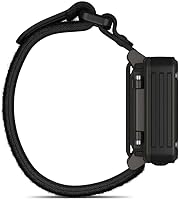
  • Strap Type: A hook-and-loop wrist strap is included in the box and allows for quick donning and doffing in field conditions.
  • Map Coverage: The device supports North America map data, though it does not render detailed color maps on-screen.
  • Platform: The Foretrex 801 runs on Garmin's proprietary operating system, which does not support third-party application installation.
  • Box Contents: The package includes the Foretrex 801 unit, a hook-and-loop wrist strap, a USB-C cable, and product documentation.
  • Model Number: The official Garmin item model number for this device is 010-02759-00.

Related Reviews
Garmin DriveSmart 55 GPS Navigator
74%
88%
Screen Readability
83%
Routing Accuracy
79%
Live Traffic Updates
91%
Ease of Use
57%
Voice Recognition
More
Garmin GPS 18x USB Navigation Receiver
67%
91%
Signal Accuracy
47%
Software Compatibility
78%
Build Quality
63%
Ease of Setup
84%
Long-Term Durability
More
Garmin Drive 53 GPS Navigator
76%
88%
Display Quality
91%
Ease of Use
86%
Navigation Accuracy
41%
Battery Life
63%
Mount & Stability
More
Garmin Nüvi 2539LMT GPS Navigator
78%
91%
Ease of Use
88%
Navigation Accuracy
93%
Map Update Value
82%
Traffic Avoidance
74%
Display Quality
More
Garmin eTrex 30x Handheld GPS Navigator
87%
93%
Build Quality & Durability
87%
Battery Life
91%
Ease of Use
75%
Display & Visuals
90%
Mapping & Navigation Features
More
Garmin Foretrex 301 Waterproof Hiking GPS
86%
88%
Durability and Build Quality
90%
Ease of Use
94%
Battery Life
87%
GPS Accuracy and Performance
65%
Display Visibility in Sunlight
More
Garmin Foretrex 401 Waterproof Hiking GPS
80%
93%
GPS Signal Accuracy
91%
Battery Life
89%
Build Quality & Durability
88%
Navigation Feature Set
61%
Ease of Use & Interface
More
Garmin eTrex SE Handheld GPS Navigator
81%
97%
Battery Life
91%
GPS Accuracy
88%
Build Quality
63%
Display Quality
79%
Ease of Use
More
Garmin eTrex 32x Handheld GPS Navigator
78%
93%
Satellite Performance
91%
Battery Life
88%
Build & Durability
74%
Map Quality & Coverage
89%
Navigation Accuracy
More
Garmin eTrex Solar Handheld GPS Navigator
80%
91%
Battery Life
88%
GPS Accuracy
93%
Build Quality
58%
Display Quality
67%
Solar Performance
More

FAQ

The jump is meaningful if satellite accuracy matters to you. The multi-band GNSS is a real hardware upgrade that improves lock reliability in heavy tree cover and urban canyons where the 701 would sometimes drift. The USB-C port is also a practical daily improvement. If neither of those things bothers you on your 701, the upgrade is harder to justify on price alone.

Yes, completely. The app is optional and used for pre-planning routes and reviewing data after a trip. The device works as a fully standalone GPS navigator straight out of the box without any app pairing required.

Stealth mode stops the device from recording any GPS track data and disables all wireless connectivity, including Bluetooth broadcasting. It is activated through the device settings menu. This is particularly relevant for operational use cases where location data must not be stored or transmitted.

The kill switch is designed to perform a full memory wipe of the device, removing stored waypoints, tracks, and any other saved data. It is intended as a last-resort security measure. It is worth noting you should not trigger it casually, as the data deletion is not reversible.

The multi-band GNSS hardware can acquire satellite signals globally, so the device will function and track your position anywhere in the world. The North America specification refers to pre-loaded map data support rather than satellite coverage, so international users can still navigate but should plan routes through the Garmin Explore app before heading out.

Yes, the display is specifically tuned to be compatible with standard night vision goggles, which is a genuine differentiator at this product tier. This is not a software toggle — the screen brightness and output are designed to avoid blooming or washing out the NVG image, which consumer displays typically fail at.

It is functional and secure, but comfort over extended wear is mixed among users. People running it during high-intensity activity or in hot conditions tend to find it less comfortable than a traditional watch band. It is durable and easy to adjust in the field, which is likely the design priority here over comfort.

Yes, you can create and store waypoints and routes on the device itself. You can also transfer planned routes from the Garmin Explore app via Bluetooth. The total storage capacity is subject to available device memory, which is managed through the standard settings menu.

Yes. The button-only interface is one of its real practical strengths. Unlike touchscreen devices that become unreliable the moment you put on work gloves or tactical gloves, every function on this wrist GPS is accessible through physical buttons designed for gloved hands.

The device takes a single AA battery, and Garmin recommends lithium AA batteries for best performance, especially in cold weather where alkaline batteries lose capacity quickly. The 100-hour figure is achievable with GPS tracking active, but enabling Bluetooth continuously or increasing screen brightness will reduce that number. For long expeditions, carrying a few spare AAs is a simple and lightweight backup plan.

Where to Buy