Overview

The Garmin Foretrex 401 Waterproof Hiking GPS is a wrist-mounted navigation tool built for people who take the outdoors seriously — not casual walkers looking for a glorified step counter. At just 3.1 ounces, this wrist GPS straps on without feeling like a burden over a long day on trail. It handles rain, river crossings, and canyon mud without complaint. Power comes from standard AAA batteries, delivering up to 17 hours of GPS tracking — a practical advantage when you're days from the nearest outlet. With nearly 2,000 ratings and a loyal field following among hikers and professionals, its long track record speaks for itself.
Features & Benefits

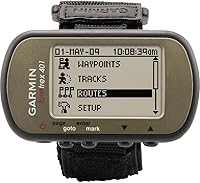
What separates the Foretrex 401 from a basic trail GPS is the combination of tools it packs into a small wrist unit. The HotFix GPS receiver locks onto satellites quickly and holds that signal even when you drop into a tight canyon or push through a forest canopy — conditions that will lose most phone-based navigation. Beyond raw positioning, the built-in electronic compass and barometric altimeter give you real directional and elevation data without needing to be moving. The TracBack function is genuinely useful for solo travel, quietly logging your path so you can retrace every step. It also stores up to 10,000 track points, 500 waypoints, and 20 routes.

Best For

This hiking GPS unit earns its place on the wrists of a fairly specific crowd. Thru-hikers and backpackers who want a map-free navigation backup that doesn't depend on cell service will find it well-suited. It carries a National Stock Number, which tells you something about its build standard — military and tactical users have adopted it for that reason. Hunters and anglers get added value from built-in activity time data for their pursuits. And if you regularly venture somewhere that charging cables are simply not an option, running on standard AAA cells is a genuinely compelling reason to choose this over any rechargeable alternative.

User Feedback

Across a broad pool of verified buyers, the signal reliability story is consistent — people keep coming back to how well this wrist GPS holds its lock where phones and less rugged units fail. Battery performance also draws regular praise. On the other side, the small LCD screen is a genuine friction point; it's a 100 x 64 pixel display that takes time to read fluently, and a vocal minority find the menu navigation dated next to touchscreen devices. That said, most buyers accept these trade-offs knowingly. With a 4.6-star average across close to 2,000 ratings, the overall picture is one of a trusted, purpose-built tool that delivers on its core promise.

Pros

  • Locks onto satellite signal fast and holds it reliably through canyon terrain and heavy forest cover.
  • Standard AAA batteries mean emergency replacements are available almost anywhere on earth.
  • TracBack navigation lets solo hikers retrace their exact route without any pre-planned map loading.
  • Wrist-worn form factor keeps hands free without sacrificing access to critical position data.
  • Barometric altimeter provides stable elevation readings that GPS-only altitude estimates cannot match.
  • Waterproof construction handles rain, stream crossings, and sustained humidity without issue.
  • Stores up to 500 waypoints and 20 saved routes — more than enough for serious field use.
  • Electronic compass gives accurate directional data even while standing completely still.
  • At 3.1 oz, this wrist GPS adds virtually no burden over a long trail day.
  • Built-in hunting and fishing activity times add real utility for sportsmen beyond basic navigation.

Cons

  • Menu navigation has a steep learning curve that frustrates users coming from touchscreen devices.
  • No onboard topographic or moving map display, which surprises buyers at this price point.
  • Screen real estate is tight — the small LCD can be hard to read quickly in low-light conditions.
  • Heart rate monitoring requires an additional separate purchase, adding cost and setup complexity.
  • Housing plastic picks up visible scratches with regular backcountry use over time.
  • Battery runtime drops noticeably in freezing temperatures, below what warm-weather use suggests.
  • Compass accuracy requires the unit to be held level, which takes deliberate habit to maintain.
  • Barometric altimeter needs periodic manual calibration to stay accurate across multi-day trips.
  • Wrist strap comfort over very long wearing periods draws mixed feedback from endurance users.
  • No wireless connectivity for syncing tracks or updating firmware without a physical cable connection.

Ratings

The Garmin Foretrex 401 Waterproof Hiking GPS earns its reputation through consistent real-world performance, and our scores reflect an AI-driven analysis of verified global buyer reviews — with spam, bot activity, and incentivized feedback actively filtered out. Categories span from GPS accuracy to interface usability, capturing what dedicated field users genuinely love and where the unit falls short. Both strengths and friction points are scored transparently so buyers can make a fully informed decision.

GPS Signal Accuracy
93%
Users repeatedly report that this wrist GPS acquires and holds satellite lock faster than expected, even when descending into narrow canyons or pushing through dense forest. In conditions where smartphones drop signal entirely, the HotFix receiver continues to deliver reliable positioning data that hikers and tactical users can actually trust.
A small number of reviewers in extreme high-latitude or heavily built-up terrain have noted occasional brief signal drift. This is rare and typically resolves quickly, but buyers navigating very complex urban-canyon environments should be aware it is not completely immune.
Battery Life
91%
Running on two standard AAA batteries for up to 17 hours in active GPS mode is a genuine field advantage — especially on multi-day routes where carrying a charging cable is impractical. Reviewers consistently highlight how easy it is to swap in fresh batteries at a remote trailhead store or even borrow from another device in a pinch.
Heavy use of the compass and altimeter alongside continuous GPS tracking can reduce the runtime noticeably below the stated ceiling. Users who run all sensors simultaneously on long winter days report needing a spare set of AAs sooner than expected.
Build Quality & Durability
89%
The unit feels solid and purposeful on the wrist — not a toy. Waterproofing holds up through stream crossings, heavy rain, and sweaty summer climbs without any reported seal failures among the majority of long-term owners. The fact that it carries a military National Stock Number gives additional confidence in its construction standards.
The housing plastic shows wear scratches over time with heavy backcountry use, and the wrist strap, while functional, is not universally praised for long-term comfort during extended wearing. Some owners replace it with an aftermarket band after several months.
Navigation Feature Set
88%
TracBack, 500 waypoints, 20 saved routes, and a 10,000-point track log cover virtually every practical navigation scenario a hiker, hunter, or trail runner is likely to face. The dual coordinate format readout is a lesser-discussed but genuinely useful feature for users who need to share positions across different mapping systems.
There is no onboard mapping or topographic display, which surprises a small segment of buyers who expect visual map rendering at this price point. The Foretrex 401 is fundamentally a data-first navigator — if you need a moving map, this is not the right tool.
Ease of Use & Interface
61%
39%
Once the menu logic clicks, experienced GPS users find the button-based navigation fast and reliable even with gloves on — something touchscreen devices simply cannot replicate in cold or wet conditions. The learning curve rewards patience, and veteran Garmin users adapt quickly.
New users frequently describe the interface as unintuitive during the first few outings. The menu hierarchy feels dated by modern standards, and the absence of a touchscreen frustrates buyers accustomed to smartphone-style interaction. This is one of the most common pain points in verified reviews.
Display Readability
63%
37%
In direct outdoor light, the monochrome LCD is crisp and legible without any glare issues that plague reflective touchscreen surfaces. For quick position checks on the move, the display delivers essential data without unnecessary clutter.
The screen real estate is genuinely small at 1.42 x 0.91 inches, and the 100 x 64 pixel resolution limits how much information can be shown at once. Several reviewers note they had to stop and squint in low-light dawn or dusk conditions, and there is no backlight brightness adjustment.
Electronic Compass
84%
Having a compass that works while stationary is a meaningful upgrade over GPS-only directional data, which requires movement to function accurately. Hikers navigating off-trail in poor visibility particularly appreciate being able to orient a paper map against a reliable heading without needing to walk a few steps first.
Reviewers note that compass accuracy degrades if the unit is not held reasonably level, which takes deliberate practice to make habitual. Near metal objects like trekking pole handles or vehicle hoods, the heading can drift slightly before self-correcting.
Barometric Altimeter
82%
18%
The altimeter gives elevation readings that are noticeably more stable than GPS-derived altitude estimates, which can swing by dozens of feet. Backpackers using it to judge pass conditions or storm development through pressure trend data find it a practical safety tool on serious alpine routes.
Like all barometric altimeters, it needs periodic calibration against a known elevation reference to stay accurate over multi-day trips. Users who skip calibration after a weather front passes through report readings drifting enough to be misleading.
Weight & Wearability
86%
At 3.1 ounces, the Foretrex 401 is light enough to forget about during a full trail day. Compared to larger handheld GPS units stuffed into a hip-belt pocket, having navigation on the wrist without noticeable fatigue is something long-distance hikers genuinely appreciate.
The form factor works well for trail running and hiking but feels slightly bulky for activities requiring fine wrist movement. A few reviewers who used it during climbing approaches found the unit occasionally caught on gear or clothing.
Waterproofing
88%
Rain, river crossings, and sustained humidity have not presented problems for the vast majority of long-term owners. Reviewers who have used it across wet Pacific Northwest seasons and tropical trekking environments report no ingress issues after years of regular use.
Garmin does not publish a specific IPX rating prominently for this model, which leaves some buyers uncertain about submersion depth limits. Intentional dunking or kayaking use is not recommended based on the available specifications.
Heart Rate Monitor Compatibility
67%
33%
The ability to pair an optional heart rate monitor adds a fitness data layer that trail runners and ultra-distance athletes find useful — tracking effort alongside position data on a single wrist unit without a separate cycling computer or sports watch.
The heart rate monitor is sold separately at additional cost, and the compatibility is limited compared to modern ANT+ ecosystems. Buyers expecting the same depth of biometric integration found in dedicated running watches will be disappointed.
Hunting & Fishing Utility
74%
26%
Built-in sunrise, sunset, and activity time predictions for hunting and fishing give this GPS unit a practical edge for sportsmen who want a single device that handles both navigation and trip planning. It is a thoughtful inclusion that reviewers in those communities specifically call out as useful.
The predictions are based on location and date calculations rather than real-time environmental data, so they function as general guidance rather than precision tools. Serious anglers and hunters typically supplement with dedicated apps for more nuanced conditions.
Value for Money
71%
29%
For buyers who specifically need a dedicated wrist-worn GPS with military-grade reliability, the investment reflects a product that holds up over many years of hard use. Long-term owners report using the same unit across hundreds of trail days without hardware failure.
At its asking price, the absence of a color display, onboard maps, and modern wireless connectivity is hard to ignore. Casual hikers comparing specs against current mid-range GPS watches will find this unit difficult to justify unless they need its specific combination of features.
AAA Battery Convenience
87%
The ability to grab a pack of AAA batteries at any gas station, gear shop, or airport convenience store before a trip is a practical advantage that rechargeable-only devices cannot match. Expedition users and international travelers particularly value this flexibility when power infrastructure is unreliable.
Carrying spare batteries adds a small but non-zero weight and planning consideration. In freezing temperatures, battery performance drops faster than at room temperature, which reduces real-world runtime below what users experience in moderate conditions.

Suitable for:

The Garmin Foretrex 401 Waterproof Hiking GPS is purpose-built for outdoor users who operate in environments where a smartphone simply cannot be trusted — think multi-day backpacking routes through dense Pacific Northwest forest, solo canyon traverses, or military field operations where reliability is non-negotiable. Thru-hikers will appreciate the combination of lightweight wrist-worn convenience and a robust track log that keeps a detailed record of every mile without requiring pre-loaded maps. Hunters and anglers get a practical bonus in the built-in activity time predictions, making it a genuinely multi-purpose field tool rather than a single-use navigation device. Minimalists and long-distance adventurers who have been burned by proprietary charging cables dying mid-trip will find the AAA battery format a refreshing return to practical simplicity. Tactical and military users looking for NSN-certified equipment that meets real durability standards will find this wrist GPS fits naturally into professional kit without compromise.

Not suitable for:

Buyers expecting the Garmin Foretrex 401 Waterproof Hiking GPS to function like a modern GPS watch or a handheld unit with full topographic map display will be disappointed — this device delivers data, not visual maps, and that distinction matters before spending at this price tier. Casual weekend hikers who rarely venture off marked trails would likely find the interface steep to learn relative to how often they actually need its capabilities. Anyone coming from a touchscreen-first world — smartphones, modern smartwatches, or app-based navigation — should be prepared for a button-driven menu system that feels genuinely dated by current standards. The small monochrome LCD screen is functional but limiting, and users with vision sensitivity or a preference for rich display detail will find it frustrating during extended use. If biometric tracking is a primary goal, the optional heart rate monitor add-on makes this possible but puts it well behind purpose-built running watches that offer native, seamless fitness ecosystems out of the box.

Specifications

  • Weight: The unit weighs 3.1 oz, making it light enough for all-day wrist wear without fatigue on long trail days.
  • Dimensions: Physical body measures 1.7 x 0.9 x 2.9 inches, keeping the overall footprint compact enough to fit under jacket cuffs.
  • Display Size: The LCD screen measures 1.42 x 0.91 inches with a resolution of 100 x 64 pixels, delivering essential navigation data in a monochrome format.
  • Battery: Powered by 2 standard AAA batteries providing up to 17 hours of continuous GPS operation under typical conditions.
  • GPS Receiver: Equipped with a HotFix high-sensitivity GPS receiver designed to acquire satellite lock quickly and maintain it in dense canopy or deep canyon environments.
  • Track Log: Stores up to 10,000 individual track log points, enabling detailed recording of long or complex routes.
  • Waypoints: Supports storage of up to 500 waypoints, allowing users to mark campsites, trailheads, water sources, and other critical locations.
  • Saved Routes: Can hold up to 20 pre-planned or recorded routes in onboard memory for repeated or multi-leg trips.
  • Compass: Includes a built-in electronic compass that provides accurate directional readings even when the user is stationary.
  • Altimeter: Features a barometric altimeter that delivers stable elevation data and can track pressure trends relevant to weather monitoring.
  • TracBack: TracBack function automatically logs the user's traveled path and allows full retracing of that route without any pre-loaded maps required.
  • Position Formats: Supports dual position readout so users can view their current coordinates simultaneously in two different geographic formats.
  • Heart Rate: Compatible with an optional ANT-enabled heart rate monitor accessory sold separately for basic fitness data capture during activity.
  • Waterproofing: Built to withstand rain, splashing, and field moisture exposure; construction is rated for outdoor use in wet and rugged conditions.
  • Activity Data: Includes built-in calculations for sunrise and sunset times as well as hunting and fishing activity period predictions based on location and date.
  • Audible Alerts: Onboard audible tones provide navigation alerts and notifications without requiring the user to look at the screen.
  • Stock Number: Carries National Stock Number 5825-01-579-5635, confirming its qualification for military and government procurement channels.
  • Manufacturer: Designed and manufactured by Garmin, a company with decades of dedicated GPS hardware development and field-use expertise.
  • Model Number: Official Garmin model number is 010-00777-00, useful for identifying compatible accessories, firmware updates, and warranty claims.
  • Connectivity: Interfaces with a computer via a physical data cable for track and waypoint transfer; no Bluetooth or Wi-Fi wireless syncing is supported.

Related Reviews
Garmin Foretrex 301 Waterproof Hiking GPS
86%
88%
Durability and Build Quality
90%
Ease of Use
94%
Battery Life
87%
GPS Accuracy and Performance
65%
Display Visibility in Sunlight
More
Garmin Foretrex 801 Wrist-Mounted GPS Navigator
82%
93%
GPS Accuracy
91%
Battery Life
89%
Build Quality
82%
Screen Readability
74%
Ease of Use
More
Garmin GPS 73
Garmin GPS 73
80%
93%
Battery Life
88%
SailAssist Features
91%
Build Quality & Durability
54%
Display Quality
82%
Ease of Use
More
Garmin Nuvi 2689LMT GPS
86%
91%
Ease of Use
94%
Traffic & Map Updates
85%
Bluetooth Connectivity
88%
Voice-Activated Navigation
92%
Display Quality
More
Garmin nüvi 2455LMT Portable GPS Navigator
71%
83%
Navigation Accuracy
78%
Map Coverage & Updates
76%
Ease of Use
74%
Display Quality
81%
Lane Assist & Junction Views
More
Garmin Drive 53 GPS Navigator
76%
88%
Display Quality
91%
Ease of Use
86%
Navigation Accuracy
41%
Battery Life
63%
Mount & Stability
More
Garmin Fenix Enduro GPS Watch
85%
96%
Battery Life
92%
Build Quality & Durability
89%
Solar Charging Efficiency
88%
Activity Tracking Accuracy
75%
Ease of Use
More
Garmin Foretrex 701 Ballistic Edition
86%
94%
Build Quality & Durability
92%
Ballistics Software Accuracy
89%
Battery Life
72%
Display Brightness
83%
Ease of Use
More
Garmin GPSMAP 64sc Handheld GPS
78%
93%
GPS & Satellite Accuracy
89%
Battery Life & Flexibility
91%
Build Quality & Durability
58%
Built-in Camera & Geotagging
82%
Display Readability
More
Garmin Drive 52 GPS Navigator
73%
91%
Ease of Setup
78%
Map Accuracy
83%
Screen Readability
63%
Refurbished Condition
82%
Value for Money
More

FAQ

Yes, completely. The Foretrex 401 uses satellite-based positioning and has no dependency on cellular networks or Wi-Fi. It will track your location in airplane mode conditions, deep wilderness, or anywhere with a view of the sky.

No — and this is one of the most important things to understand before buying. This hiking GPS unit displays coordinate data, compass headings, elevation, and track information, but it does not render visual topographic or road maps. If a moving map display is essential to how you navigate, you should look at a different device.

That is exactly what the TracBack feature is for. As you hike, the unit continuously logs your path. If you need to head back, you activate TracBack and it guides you along your recorded route in reverse — no pre-planning or map loading required.

It runs on two standard AAA batteries, which is one of its most practical advantages. Under normal GPS use you can expect up to 17 hours, though running the compass and altimeter heavily alongside GPS will bring that down somewhat. Cold weather also reduces runtime, so carrying a spare set on any trip longer than a day is a smart habit.

It is built to handle those conditions. The housing is waterproof and the unit is designed for genuine field exposure — not just light drizzle. Many owners use it through sustained rain and shallow water crossings without issues. That said, it is not designed for intentional submersion or diving use.

You connect the unit to your computer using the physical data cable that comes with it and use Garmin software or compatible third-party applications to download your track logs and waypoints. There is no wireless or Bluetooth sync option — everything goes through the cable.

Yes, but the heart rate monitor is not included and must be purchased separately. The unit supports compatible ANT-enabled chest strap monitors. It is worth noting that this is basic heart rate data integration — do not expect the depth of biometric analytics you would get from a dedicated running watch.

It works well for both. The unit includes built-in predictions for peak hunting and fishing activity windows based on your GPS location and the current date. Hunters and anglers regularly use this wrist GPS as a combined navigation and trip-planning tool in the field.

Honestly, there is a real learning curve. The button-driven menu system takes some time to get comfortable with, especially if you are used to touchscreen navigation on a phone or smartwatch. Most users report that after a few dedicated practice sessions at home before a trip, it becomes second nature — but do not expect to pick it up intuitively on day one.

GPS direction only works when you are actually moving — it calculates your heading based on where you were versus where you are now. The electronic compass in this unit gives you accurate directional information even when you are standing still, which is critical for orienteering, reading a paper map against terrain, or navigating in situations where stopping to get your bearings is necessary.