Overview

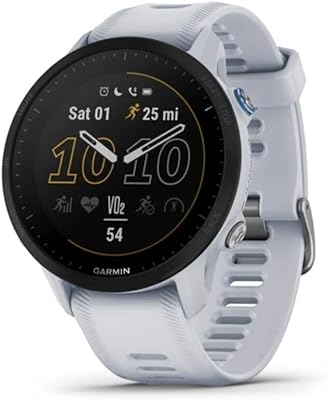
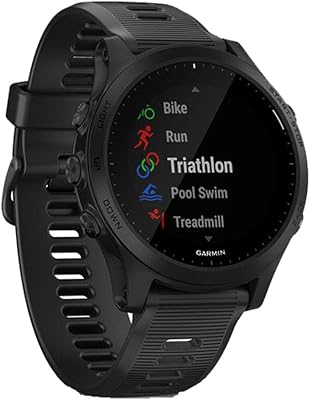
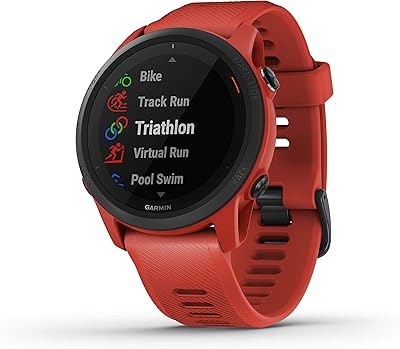
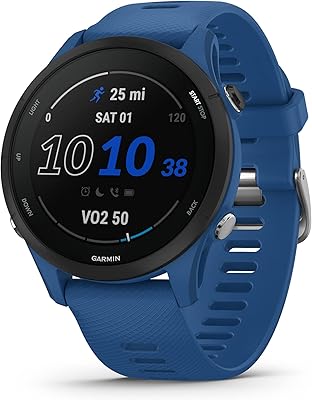
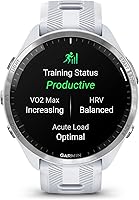
The Garmin Forerunner 965 Running Smartwatch sits at the top of Garmin's Forerunner lineup, built for athletes who treat training as a serious discipline rather than a casual hobby. Pick it up and the first thing you notice is how light it feels — 53 grams with a titanium bezel that looks and feels genuinely premium. The 1.4-inch AMOLED display is sharp and vibrant in a way that older transflective screens simply cannot match. Setting up this Garmin running watch takes some patience; pairing with the Garmin Connect app is straightforward, but the sheer depth of configuration options means you'll be exploring settings for days.
Features & Benefits

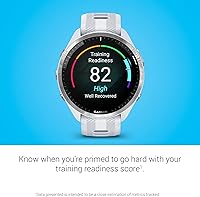
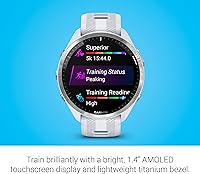
Where the Forerunner 965 earns its place is in how thoughtfully its features translate to real training decisions. The Training Readiness score is genuinely useful — it pulls together HRV status, recent sleep quality, and accumulated training load to tell you, in plain terms, whether today should be a hard effort or an easy shakeout. Multi-band GPS locks on quickly and holds well on open roads and trails, though dense urban canyons can still cause minor drift. Daily suggested workouts adapt after every run, which means the plan you follow during a race taper actually reflects how your body has been responding — not just a generic template someone built months ago.

Best For

This premium GPS smartwatch is purpose-built for athletes who run with intention. Marathon and ultramarathon runners will get the most from the race-adaptive training plans and full-color course mapping. Triathletes benefit from the ability to switch between swim, bike, and run profiles with a single button press, without fumbling through menus at transition. Athletes who actively manage recovery — tracking HRV trends and Body Battery levels alongside weekly load — will find the data depth genuinely rewarding. That said, if you mostly run a few times a week for general fitness and want something simple to glance at your pace, this watch offers far more than you'll likely ever use.

User Feedback

Owners of this Garmin running watch consistently praise the display — visibility in harsh midday sunlight is a frequent highlight, and the screen holds up better than most competitors at this level. GPS reliability during long trail runs earns high marks across the board. On the flip side, the most common complaint is the steep learning curve; newer Garmin users often feel overwhelmed by the number of menus, data fields, and settings to work through. Real-world battery in mixed use tends to land a bit below the advertised ceiling, which is typical. Wrist comfort during overnight wear is generally well-received, though users with smaller wrists occasionally find the fit slightly bulky for sleep.

Pros

  • The AMOLED display is genuinely easy to read mid-run, even in harsh midday sunlight.
  • Multi-band GPS locks on quickly and holds strong on open roads and trails.
  • Training Readiness score gives you one clear, actionable number each morning to guide effort level.
  • Adaptive daily workouts update after every run, so the plan reflects your actual fitness — not a template.
  • At 53 grams, the Forerunner 965 is light enough to forget you are wearing it during long efforts.
  • Triathlon and multisport profiles switch with a single button press, keeping transitions clean.
  • Battery comfortably covers a full week of regular training before needing a charge.
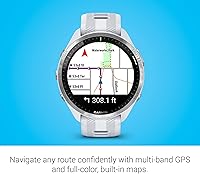
  • Full-color maps with turn-by-turn directions make exploring new routes genuinely practical.
  • The titanium bezel feels and looks premium for a watch you will wear all day, every day.
  • A mature Garmin Connect ecosystem means your data builds into meaningful long-term trends over months.

Cons

  • New Garmin users face a steep learning curve that can take weeks to fully work through.
  • Real-world battery life in mixed use falls noticeably short of the advertised ceiling figures.
  • Wrist-based heart rate lags during high-intensity intervals — a chest strap is still recommended for precise zone training.
  • The Garmin Connect app interface feels dated compared to competing platforms and can be clunky to navigate.
  • Multi-band GPS accuracy drops in dense urban environments with tall buildings blocking sky visibility.
  • The watch size feels slightly bulky for overnight wear, and some users remove it for sleep entirely.
  • Smartwatch notification features are limited and won't satisfy users who want rich daily phone integration.
  • Open-water swim tracking is less precise than pool mode, which may frustrate triathlon-focused buyers.
  • Map preloading and regional downloads require manual setup that catches many first-time users off guard.
  • Occasional sync delays between the watch and the app require manual refreshes after workouts.

Ratings

The Garmin Forerunner 965 Running Smartwatch earns its scores from an AI-driven analysis of verified global user reviews, with spam, bot-generated, and incentivized submissions actively filtered out before any scoring is applied. Ratings reflect the full picture — what dedicated runners and triathletes genuinely love about this watch, as well as the friction points that keep it from being universally perfect. Every category is scored to reflect real-world performance, not marketing claims.
Display Quality
93%
The AMOLED screen draws consistent praise from users who previously owned older Garmin models with transflective displays. Readability in direct sunlight during midday runs is a standout strength — glancing at pace and heart rate data mid-stride feels effortless without adjusting wrist angle or shielding the screen.
A small number of users report that always-on display mode visibly accelerates battery drain, pushing them to disable it and lose some of the screen's wow factor in daily wear. The brightness can also feel excessive indoors at night during sleep tracking checks.
GPS Accuracy
88%
Multi-band GPS locks on reliably for most users within seconds, and track records on open trails and roads show strong consistency between mapped route and actual distance. Runners who log long weekend efforts on rural paths report accurate split data even without phone connectivity.
In dense urban environments with tall buildings on both sides, some users notice occasional positional drift that can throw off pace data for a minute or two. Multi-band GPS performs at its best with clear sky visibility — a limitation worth knowing before expecting perfection in city training blocks.
Training & Recovery Insights
91%
The Training Readiness score has become a daily reference point for many serious users, helping them decide whether to push hard in a tempo session or back off to an easy recovery jog. Athletes in marathon build phases specifically appreciate how the system accounts for accumulated fatigue and adjusts suggested workouts accordingly.
The depth of training data can feel overwhelming for users who are newer to structured training — knowing your HRV status is useful only if you understand how to act on it. A handful of users also note that the readiness score occasionally seems overly conservative after back-to-back hard efforts.
Battery Life
78%
22%
For most users running 4 to 6 times a week with GPS active, real-world battery life holds comfortably through 5 to 7 days before needing a charge — practical enough to avoid the daily charging habit that plagues many smartwatches. Week-long trips without a charger are genuinely achievable if smartwatch features are used conservatively.
Advertised figures assume specific usage conditions that few users actually mirror. With always-on display, continuous heart rate, and multi-band GPS active simultaneously, battery life drops noticeably below expectations. Users who track both day and night data report charging more frequently than they anticipated when purchasing.
Build Quality & Design
89%
The titanium bezel gives the watch a premium feel that users consistently notice and mention, especially those coming from plastic-cased competitors. At just 53 grams, it sits comfortably during all-day wear without the heaviness that some larger GPS watches impose during long runs.
The watch face size, while excellent for data display, sits on the bulkier side for users with smaller wrists — a few users mention it feels slightly oversized during sleep. The silicone band, though functional and sweat-resistant, attracts some criticism for looking less refined than the watch body itself.
Ease of Use & Setup
64%
36%
Experienced Garmin users typically find the interface familiar and appreciate the button layout for controlling workouts without needing to look at the screen. Pairing with the Garmin Connect app is quick and the initial sync is smooth for both Android and iOS users.
First-time Garmin users frequently describe feeling lost in the menu structure during the first week. The sheer volume of configurable data fields, training metrics, and alert settings requires meaningful time investment to set up properly — a reality that surprises buyers expecting a plug-and-play experience at this price level.
Multisport & Triathlon Functionality
87%
Triathletes consistently praise the sport-switching workflow — transitioning from swim to bike to run tracking requires a single button press, keeping transition times clean and data continuous across all three legs. Built-in profiles for duathlons and brick workouts reduce the need to manually configure custom sport sequences.
Some users note that swim tracking in open water is less precise than in pool mode, which can undercount distance on longer swims. A few triathletes also wish the watch offered more granular data during the cycling leg specifically, compared to dedicated cycling computers.
Navigation & Mapping
86%
Full-color maps with turn-by-turn directions are a feature users return to repeatedly, particularly for trail runners exploring unfamiliar routes without wanting to carry a phone. The map rendering is clear and responsive enough to check mid-run without breaking stride.
Map storage and preloading can be confusing to configure initially, and some users report needing to download regional maps manually before a trip. In very remote areas with complex terrain, the basemap detail can thin out, making the watch less reliable as a primary navigation tool.
Sleep & Recovery Tracking
74%
26%
Sleep stage data and the morning Body Battery readout give athletes a useful snapshot of overnight recovery quality, and users who track trends over several weeks report finding meaningful patterns that inform training decisions. The sleep score presentation is clean and easy to interpret at a glance.
The watch's physical size makes it slightly uncomfortable for users who prefer a minimal feel during overnight wear, and a portion of users opt to remove it for sleep entirely. Occasional misclassification of light sleep versus wakefulness has been flagged in user forums, reducing confidence in the granular breakdown.
Heart Rate Monitoring
81%
19%
Wrist-based heart rate tracking performs reliably during steady-state efforts like long easy runs and cycling sessions, with readings that align closely to chest strap data for most users. Continuous heart rate monitoring throughout the day adds useful context to overall stress and recovery trends.
During high-intensity intervals with rapid arm movement, wrist-based readings can lag or spike momentarily, which frustrates users who train specifically by heart rate zones. Dedicated track athletes and those doing speed work tend to recommend pairing with an external chest strap for precise zone control.
App & Ecosystem Integration
79%
21%
The Garmin Connect ecosystem is mature and data-rich, offering detailed analysis of training load trends, VO2 Max history, and race predictions that build meaningfully over months of use. Third-party app support through the Connect IQ store adds flexibility for users who want custom watch faces or niche sport tools.
The Garmin Connect app itself draws mixed reactions — its interface feels dated compared to competitor apps, and navigating between health stats and training metrics can feel clunky on smaller phone screens. Syncing occasionally requires a manual refresh after workouts, which minor but persistently noted.
Value for Money
71%
29%
For athletes who fully engage with the training ecosystem — following adaptive plans, monitoring recovery scores, and using maps regularly — the feature density justifies the investment over time. Runners who compete in multiple disciplines get particular value from having one device handle every sport reliably.
Casual fitness users or those who primarily want a smartwatch with basic run tracking will likely find the price hard to rationalize given how much of the feature set they would leave unused. Competing options at lower price points cover core GPS and heart rate needs without the complexity premium.
Wrist Comfort During Activity
83%
The lightweight build makes the Forerunner 965 largely forgettable during long runs — a genuine compliment for a watch this feature-rich. Users logging back-to-back training days report no significant irritation or pressure points, even during humid summer conditions.
Sweat accumulation under the band during very long efforts occasionally causes minor skin irritation for users with sensitive skin, particularly if the band is worn tighter for accurate heart rate contact. A few users note the band clasp can feel slightly stiff until it breaks in over the first few weeks.
Notification & Smartwatch Features
66%
34%
Standard smartwatch functions — call alerts, text notifications, calendar reminders — work reliably and are appreciated by users who want to leave their phone behind during training. Contactless payment support via Garmin Pay adds a practical convenience for post-run stops.
The smartwatch side of the Forerunner 965 is clearly secondary to its athletic purpose — notification interactions are limited and the app selection is modest compared to dedicated smartwatches. Users who want a device that replaces their phone meaningfully in daily life will find the experience underwhelming.

Suitable for:

The Garmin Forerunner 965 Running Smartwatch is built for athletes who treat their training logs as seriously as their race calendar. If you are preparing for a marathon or ultramarathon and want a watch that adapts your daily workout suggestions based on how your body actually recovered overnight — not just what week you are in a generic plan — this is the level of tool you have been looking for. Triathletes get genuine value here too, with dedicated multisport profiles that let you move through swim, bike, and run without fumbling between screens at transition. Outdoor runners who regularly tackle unfamiliar trails will appreciate having full-color maps and turn-by-turn directions on their wrist rather than stopping to check a phone. And if you are the type of athlete who checks HRV trends, monitors Body Battery levels, and factors sleep score into decisions about whether to push hard or take an easy day, the Forerunner 965 speaks your language fluently.
Not suitable for:

The Garmin Forerunner 965 Running Smartwatch is a poor fit for anyone looking for a simple, low-maintenance fitness tracker or a full-featured smartwatch for daily life. Casual runners who jog a few times a week for general health will find the depth of menus, metrics, and configuration options more exhausting than motivating — most of the watch's best features will go completely untouched. The smartwatch functionality, while present, is secondary to the athletic purpose; if you want rich app support, seamless notification management, or a device that meaningfully replaces your phone in daily interactions, this is not the right tool. Buyers with smaller wrists may also find the profile slightly bulky for comfortable overnight wear, which matters if sleep tracking is a priority for you. Finally, if budget is a significant consideration and your training needs are straightforward, there are capable GPS watches at lower price points that cover the basics without the complexity premium this watch carries.
Specifications

  • Display: 1.4-inch AMOLED touchscreen with full color rendering and support for traditional button controls alongside touch input.
  • Bezel Material: Lightweight titanium bezel provides a premium, corrosion-resistant finish without adding significant weight to the overall build.
  • Weight: The watch weighs 53 grams (1.87 oz), making it among the lighter options in the premium GPS running watch category.
  • Dimensions: Overall case dimensions measure 1.85 x 1.85 x 0.52 inches, giving the watch a round profile with a moderate wrist presence.
  • Screen Size: The viewable display area spans 1.4 inches diagonally, offering ample space for multi-field data layouts during active workouts.
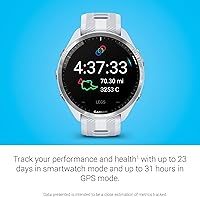
  • Battery — Smartwatch: In standard smartwatch mode with heart rate and notifications active, battery life reaches up to 23 days on a single charge.
  • Battery — GPS Mode: With GPS continuously active, the watch sustains up to 31 hours of runtime, covering ultramarathon distances without a mid-race charge.
  • Battery Type: Internal lithium polymer rechargeable battery is included and non-removable, charged via USB connection.
  • GPS System: Built-in multi-band GPS supports multiple satellite networks for improved positional accuracy, particularly in open outdoor environments.
  • Storage: 32 GB of onboard memory accommodates music, downloaded maps, and app data without relying on a connected smartphone.
  • Connectivity: Supports Bluetooth, Wi-Fi, and USB connectivity for syncing workouts, downloading maps, and transferring music to the device.
  • Compatibility: Fully compatible with both Android and iOS smartphones through the Garmin Connect mobile application.
  • Health Sensors: Wrist-based continuous heart rate monitor tracks HRV status, Body Battery energy levels, SpO2, sleep stages, and supports VO2 Max estimation.
  • Navigation: Full-color preloaded maps with turn-by-turn directions allow route navigation without a paired phone or external device.
  • Sport Profiles: Includes dedicated profiles for triathlon, duathlon, swimrun, and brick workouts, with the option to create custom multisport sequences.
  • Training Tools: Features Training Readiness scoring, adaptive daily suggested workouts, race predictor, performance condition, and wrist-based running power and dynamics.
  • Water Resistance: Rated to 5 ATM water resistance, making it suitable for swimming, open-water triathlon legs, and use in heavy rain.
  • Operating System: Compatible with both Android and iOS operating systems for full Garmin Connect app functionality and third-party Connect IQ app support.
  • Model Number: Official Garmin model number is 010-02809-01, corresponding to the Whitestone and Powder Gray color configuration.
  • Date Available: The product was first made available for purchase on May 30, 2023, positioning it as a current-generation flagship within the Forerunner lineup.

Related Reviews

Garmin Forerunner 265S Running Smartwatch
87%
94%
Battery Life
91%
GPS Accuracy
89%
Display Quality
87%
Comfort & Fit
90%
Health Tracking Features
More
Garmin Forerunner 245 GPS Running Smartwatch
75%
92%
GPS Accuracy
89%
Battery Life
88%
Training Plan Quality
71%
Running Dynamics
91%
Comfort and Wearability
More
Garmin Forerunner 955 GPS Running Smartwatch
88%
93%
GPS Accuracy
91%
Battery Life
88%
Build Quality
90%
Training Metrics
87%
Health Tracking Features
More
Garmin Forerunner 945 GPS Running/Triathlon Smartwatch
87%
95%
GPS Accuracy
92%
Battery Life
88%
Build Quality
90%
Comfort for Long Runs
85%
Music Storage & Playback
More
Garmin Forerunner 55 GPS Running Watch
79%
91%
GPS Accuracy
88%
Battery Life
78%
Heart Rate Monitoring
93%
Ease of Setup & Use
84%
Training Features
More
Garmin Forerunner 745 GPS Running Watch
85%
91%
GPS Accuracy
88%
Battery Life
85%
Sports Tracking Versatility
84%
Music Storage & Streaming
89%
Build Quality
More
Garmin Forerunner 735XT Multisport GPS Watch
79%
91%
GPS Accuracy
73%
Heart Rate Accuracy
88%
Battery Life
86%
Multisport Mode Functionality
84%
Build Quality & Durability
More
Garmin Forerunner 165 Running Smartwatch
81%
93%
Display Quality
76%
GPS Accuracy
91%
Training & Coaching Features
71%
Battery Life
68%
Heart Rate Monitoring
More
Garmin Forerunner 255 GPS Running Smartwatch
83%
93%
Battery Life
88%
GPS Accuracy
91%
Training Intelligence
79%
Sleep & Recovery Tracking
92%
Comfort & Wearability
More
Garmin Bounce Kids Smartwatch
85%
87%
Value for Money
92%
Ease of Use
90%
Messaging Features
88%
Durability
85%
Location Tracking
More

FAQ

The Garmin Forerunner 965 Running Smartwatch works with both iPhone and Android devices through the free Garmin Connect app. You get full feature access regardless of which platform you are on, including workout sync, health data, and map downloads.
If you are running with GPS active daily but spending the rest of the time in standard smartwatch mode, most users realistically get between five and seven days before needing to charge. The 31-hour GPS ceiling is accurate for continuous GPS use, but mixed daily use will bring that weekly number down depending on how much screen time and heart rate monitoring you have enabled.

Yes, and this is one of the areas where the AMOLED display genuinely stands out compared to older GPS watches. Glancing at your pace or heart rate in direct midday sun is clear without needing to angle your wrist or shade the screen. It is a meaningful real-world upgrade if you are coming from a transflective display.

Honestly, plan for a learning curve. The Forerunner 965 has an enormous number of settings, data fields, and training features, and first-time Garmin users regularly report spending a week or more just getting comfortable with the menu structure. The basics — starting a run, checking heart rate, viewing notifications — are easy. Getting the most out of Training Readiness, adaptive plans, and map downloads takes more time and patience.

Yes, the watch is water resistant to 5 ATM, so swimming with it is fine. It tracks both pool swims and open-water swims. Pool mode tends to be more accurate for distance since it uses stroke counting and lane length. Open-water mode relies on GPS, which is generally solid but can vary depending on conditions and body position in the water.

It works fully standalone for navigation. Full-color maps are stored directly on the watch, and turn-by-turn directions function without a phone present. You do need to download the relevant regional maps via Wi-Fi or USB before heading out — they are not preloaded globally by default — but once downloaded, you are completely phone-free on the trail.

In open environments — roads, parks, trails with clear sky visibility — multi-band GPS is very accurate and typically matches or beats phone GPS for distance consistency. In dense urban areas with tall buildings creating satellite signal interference, you may notice occasional brief drift that can affect pace data for short stretches. For most training purposes, the accuracy is more than sufficient.

Yes. The watch has 32 GB of onboard storage and supports music playback through connected Bluetooth headphones. You can sync music from streaming services that Garmin supports, or transfer files manually via USB. It is a useful feature for long runs when you want to leave your phone at home.

Most users find it comfortable enough, but it is worth noting that the watch is slightly on the larger side for overnight wear. People with smaller wrists in particular sometimes find it feels bulky during sleep. The sleep tracking data — sleep stages, HRV, and the morning Body Battery reading — is useful if you commit to wearing it overnight, but it is entirely optional.

The watch pulls together several data points — your HRV status, recent sleep quality, accumulated training load over the past days, and recovery time remaining from previous workouts — and combines them into a single score that tells you how prepared your body is for hard effort. A high score means your body is primed for a quality workout. A low score is a signal to keep things easy or rest. It becomes more useful over time as the watch builds a baseline for your individual patterns.

Where to Buy