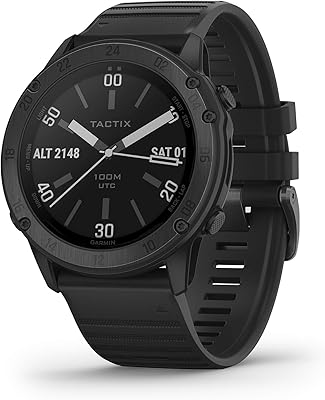
Garmin Forerunner 255 GPS Running Smartwatch
Overview
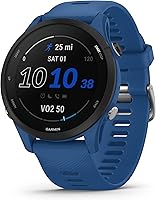
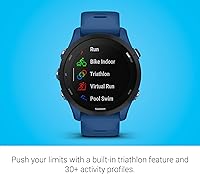
The Garmin Forerunner 255 GPS Running Smartwatch sits in a compelling spot — serious enough for dedicated runners, approachable enough that you won't feel like you're piloting an aircraft. At just 1.7 ounces, it barely registers on the wrist, and the always-on color display holds up well in direct sunlight without forcing you to shade the screen mid-run. Two case sizes — 46mm and 41mm — make it a practical fit across different wrist proportions. The Tidal Blue finish has a clean, unisex look. Where it really pulls ahead of many rivals in this price range is battery endurance, which is harder to fake in daily use than any spec sheet suggests.
Features & Benefits
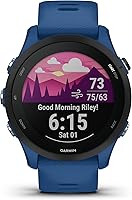
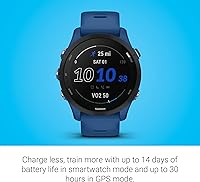
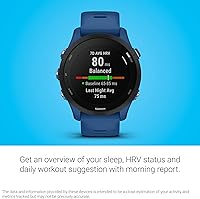
Charging anxiety is largely off the table here — up to 14 days in smartwatch mode and 30 hours with GPS running means most people will plug in once every couple of weeks. Each morning, the watch surfaces a concise report covering your previous night's sleep, HRV status, and a suggested workout for the day, so you're not digging through menus before your first coffee. The HRV tracking happens passively during sleep, giving a rough picture of recovery — Garmin is clear that these are estimates, not clinical readings. Suggested workouts adapt after each run, and if you're building toward a 5K or half-marathon, the built-in Garmin Coach plans adjust as your fitness progresses.
Best For
This GPS training watch makes the most sense for runners who are past the beginner stage but not yet chasing podium finishes. If you train consistently and want data that actually influences how you structure your week — not just step counts — the Forerunner 255 delivers that without the premium price of Garmin's flagship lineup. It's particularly well-suited to people already using Garmin Connect, where the historical data compounds in usefulness over months. Athletes who hate stopping mid-trip to charge will appreciate the multi-day battery, and those preparing for their first or second race will find the adaptive coaching plans genuinely useful rather than generic.
User Feedback
Battery life is consistently the most praised aspect — owners report that real-world performance tracks closely with Garmin's stated figures, which isn't always the case with wearables. Runners also tend to notice that suggested workouts feel less like algorithm outputs and more like something a coach might actually prescribe after a few weeks of data. On the critical side, the 1.3-inch screen is workable but can feel cramped when you want multiple data fields visible at once. Wrist-based HRV readings draw some skepticism from users who cross-reference with chest straps. The Garmin Connect app earns praise for depth, though new users often describe a noticeable learning curve before it clicks.
Pros
- Real-world battery life consistently matches Garmin's stated figures — a rarity in wearable tech.
- At 1.7 ounces, the Forerunner 255 is light enough that most runners genuinely forget it is there on long efforts.
- Adaptive daily workout suggestions grow more accurate and personalized the longer you train with the watch.
- Two case sizes — 46mm and 41mm — ensure a practical fit across a wide range of wrist proportions.
- The always-on color display remains readable in direct sunlight without requiring a button press mid-run.
- Free Garmin Coach training plans for 5K, 10K, and half-marathon distances add real coaching value at no extra cost.
- Race finish time predictions factor in course elevation and weather, making them more useful than flat averages.
- The morning report consolidates sleep data, HRV status, and a workout suggestion in one quick glance.
- GPS route accuracy is reliable across urban, trail, and road environments without significant drift.
- Garmin Connect rewards long-term users with one of the deepest training history archives in the consumer wearable space.
Cons
- The 1.3-inch screen becomes cramped when displaying four or more simultaneous data fields at running pace.
- Garmin Connect has a steep onboarding curve that discourages less tech-savvy users in the first few weeks.
- Wrist-based HRV readings can diverge noticeably from chest-strap measurements, limiting their reliability for precision training.
- Bluetooth syncing with Android devices is inconsistently reported, occasionally requiring manual intervention to complete uploads.
- The silicone band traps sweat during humid conditions and can irritate sensitive skin over extended wear.
- Training plan suggestions take several weeks to calibrate after a fitness break, defaulting to outdated peak data in the interim.
- Third-party app support through Connect IQ is narrower than open-platform competitors offer at a similar price point.
- Optical heart rate tracking lags noticeably during rapid-intensity changes, making it unreliable for sprint-focused interval sessions.
- The plastic case construction feels utilitarian rather than premium, especially next to metal-cased rivals in the same category.
- Changing data fields on active training screens requires more menu navigation than should be necessary for a watch at this level.
Ratings
The scores below are generated by AI after analyzing thousands of verified global user reviews for the Garmin Forerunner 255 GPS Running Smartwatch, with spam, bot-submitted, and incentivized feedback actively filtered out. This synthesis reflects what real runners consistently praised and where they ran into friction — no sugarcoating, no manufactured enthusiasm. Both the standout strengths and the genuine pain points are represented transparently in each category.
Battery Life
GPS Accuracy
Training Intelligence
Sleep & Recovery Tracking
Comfort & Wearability
Display Quality
App & Ecosystem
Race Prediction & Planning
Build Quality & Durability
Heart Rate Monitoring
Value for Money
Connectivity & Syncing
Customization & Profiles
Suitable for:
The Garmin Forerunner 255 GPS Running Smartwatch is built for runners who have moved past casual jogging and want their watch to actively participate in their training — not just record it. If you are targeting a first or second race, the adaptive Garmin Coach plans and daily workout suggestions give you a structured path without requiring a human coach. Runners who despise the charging ritual will find the multi-day battery genuinely liberating, especially during heavy training weeks when plugging in every night feels like one more chore. It also rewards consistency: the longer you wear it, the more the suggested workouts and HRV trends reflect your actual fitness trajectory rather than generic benchmarks. Athletes already embedded in the Garmin Connect ecosystem will get the most out of it, since years of historical data make the platform substantially more useful over time. Those who want a single device that covers both training depth and everyday wellness tracking — sleep, recovery, morning readiness — without carrying two devices will find this GPS training watch a practical fit.
Not suitable for:
The Garmin Forerunner 255 GPS Running Smartwatch is a harder sell for buyers whose primary interest is smartwatch features — music storage, contactless payments, rich third-party apps — rather than run-focused training analytics. If you rely on precise heart rate data for high-intensity interval sessions and refuse to use an external chest strap, the optical wrist sensor's known lag at peak efforts will frustrate you. Casual walkers or fitness beginners who just want step counts and basic sleep data will find the platform unnecessarily complex and may feel overwhelmed by the Garmin Connect learning curve before they see any payoff. Runners who prefer an AMOLED display with vibrant, always-bright visuals for indoor use will find the screen functional but underwhelming compared to newer alternatives at adjacent price points. Anyone expecting clinical-grade HRV readings should look elsewhere — Garmin is transparent that these are estimates, and users who cross-reference with medical-grade equipment regularly find meaningful gaps. Finally, buyers heavily invested in Apple or Google fitness ecosystems may find the data portability and third-party app integration less fluid than they would like.
Specifications
- Case Sizes: Available in two case diameters — 46mm and 41mm — to accommodate a range of wrist sizes without compromising functionality.
- Display: Always-on full-color round display measuring 1.3″ diagonally, designed for clear readability in direct sunlight.
- Weight: The 46mm model weighs 1.7 ounces, making it one of the lighter options in the serious running watch category.
- Battery (Smartwatch): Delivers up to 14 days of battery life in standard smartwatch mode with always-on display and health monitoring active.
- Battery (GPS Mode): Provides up to 30 hours of continuous GPS tracking, suitable for ultramarathon distances and multi-day adventure events.
- Storage: Equipped with 4 GB of onboard storage for workout data, custom training plans, and Garmin Connect synced content.
- Connectivity: Connects via Bluetooth for smartphone pairing and app syncing, with USB included for direct charging and data transfer.
- GPS System: Built-in GPS enables standalone route tracking, real-time pace, distance measurement, and course-based race predictions.
- Operating System: Runs Garmin OS, a proprietary platform optimized for training analytics, health monitoring, and Connect IQ app compatibility.
- Band Compatibility: Uses Garmin's standard quick-release band system, allowing easy swapping with any compatible third-party or Garmin replacement band.
- Heart Rate Monitor: Wrist-based optical heart rate sensor operates continuously, including during sleep for passive HRV status monitoring overnight.
- HRV Tracking: Records heart rate variability during sleep and surfaces a daily HRV status estimate as part of the morning report feature.
- Training Plans: Includes free access to Garmin Coach adaptive training plans covering 5K, 10K, and half-marathon goal races.
- Workout Suggestions: Generates personalized daily suggested workouts that automatically adjust based on recent run performance and logged recovery data.
- Morning Report: Delivers a consolidated morning summary covering overnight sleep quality, HRV status, and a recommended workout for the day.
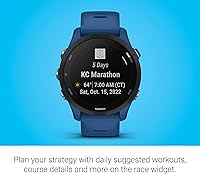
- Race Predictions: Estimates finish times for target race distances using accumulated training data, course elevation profiles, and current weather conditions.
- Water Resistance: Rated to 5 ATM, meaning the watch is safe for swimming, rain exposure, and sweaty training sessions without water damage.
- Battery Type: Powered by a built-in rechargeable lithium-ion battery included in the box, with no replaceable cells required.
Related Reviews
Garmin Forerunner 245 GPS Running Smartwatch
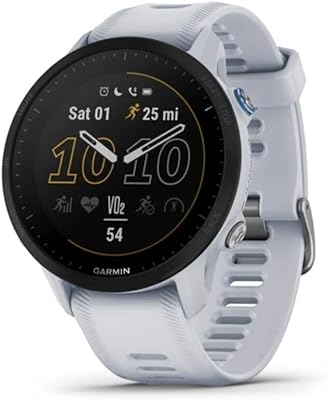
Garmin Forerunner 955 GPS Running Smartwatch
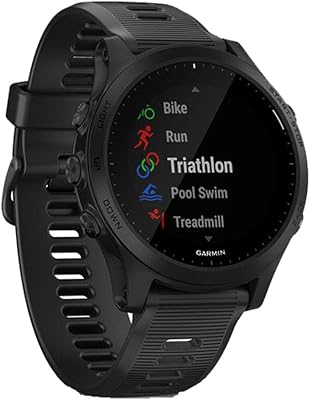
Garmin Forerunner 945 GPS Running Triathlon Smartwatch
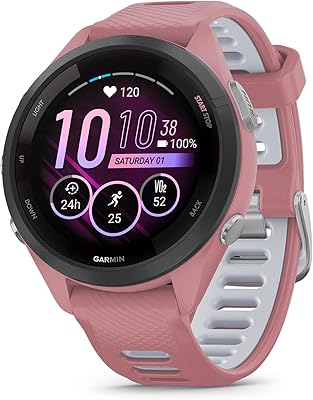
Garmin Forerunner 265S Running Smartwatch
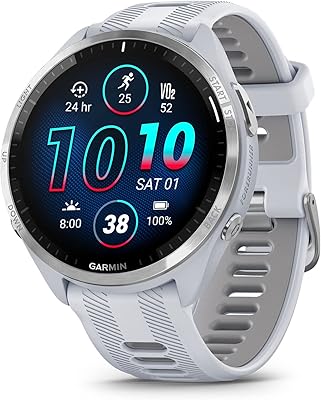
Garmin Forerunner 965 Running Smartwatch
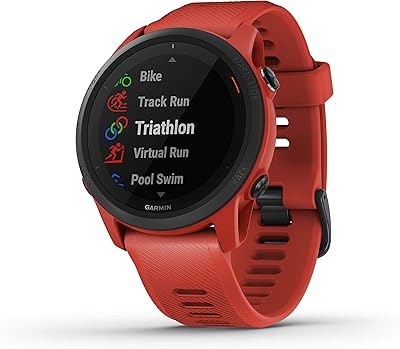
Garmin Forerunner 745 GPS Running Watch
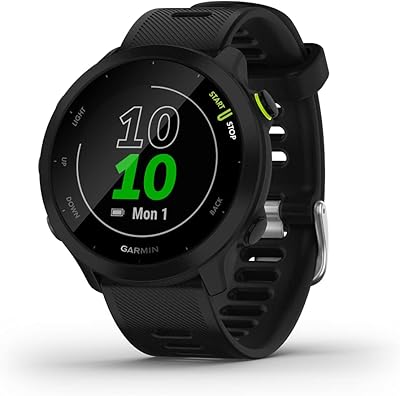
Garmin Forerunner 55 GPS Running Watch
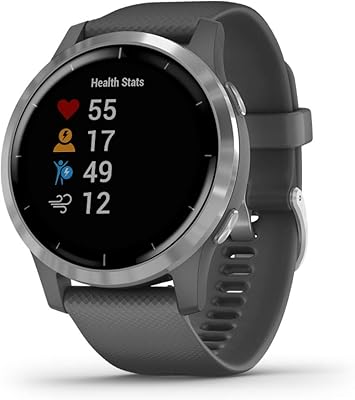
Garmin vivoactive 4 GPS Smartwatch
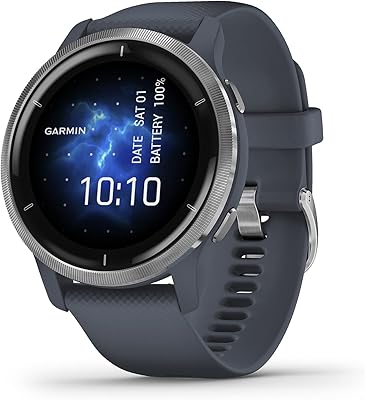
Garmin Venu 2 GPS Smartwatch