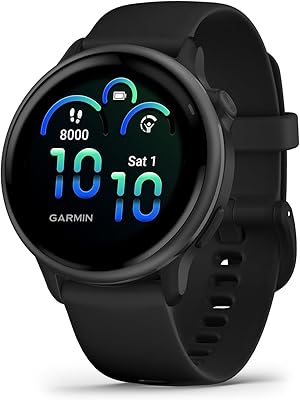
Garmin Forerunner 165 Running Smartwatch
Overview
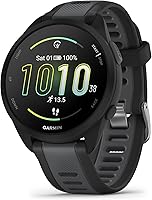
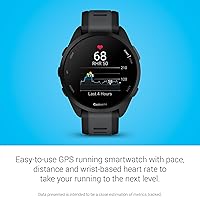
The Garmin Forerunner 165 Running Smartwatch arrived in February 2024 as Garmin's first step toward bringing a vivid AMOLED screen to a more accessible price point, sitting comfortably between the no-frills Forerunner 55 and the more capable Forerunner 255. At 43mm and just 1.38 ounces, it wears lightly enough that you genuinely stop noticing it on long runs. That lightweight, low-profile build matters more than most buyers expect — wrist fatigue on a multi-hour effort is real. For the money, you get a proper GPS training tool with recovery-aware coaching, something that used to require spending considerably more in the Garmin lineup.
Features & Benefits
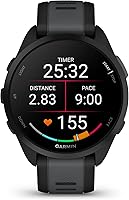
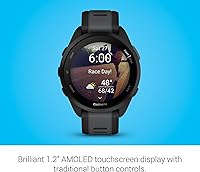
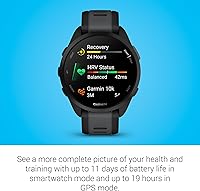
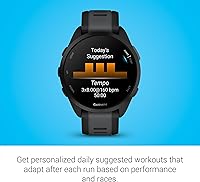
The AMOLED display is the feature that immediately sets this Garmin running watch apart from older LCD-based models — colors pop, text is crisp, and it is genuinely easier to glance at mid-run. Leave the always-on option enabled and battery life drops noticeably, but with it off you realistically get close to 11 days of normal use. GPS tracking is reliable for road running; in dense city corridors or heavy tree cover, occasional drift can occur, as it does on most wrist-based devices. The daily suggested workouts are where the Forerunner 165 earns its keep — they adapt based on recent training load and recovery, not a rigid calendar. The morning report adds real context: HRV status, sleep quality, and a readiness score before you have even laced up.
Best For
This mid-range GPS watch makes the most sense for runners who want structured, data-driven training without climbing to flagship pricing. Beginners stepping up from a basic band will find the learning curve manageable — Garmin's interface is logical, and the Garmin Coach plans offer real guidance for working toward a first 5K, 10K, or half marathon. Intermediate runners who already track their mileage will appreciate how quickly the adaptive training suggestions start to feel personalized. The bright display also makes it a natural fit for anyone who has ever squinted at a washed-out screen mid-race. Solo runners — especially those logging early-morning or trail miles — will find the incident detection and live location sharing worth having, even if they hope to never need it.
User Feedback
Owners consistently praise the display — it is the most common highlight in reviews, with many noting how readable it is outdoors compared to previous watches they have owned. The training suggestions also earn genuine appreciation; users describe them as feeling adaptive rather than generic after a couple of weeks of use. On the flip side, some buyers report GPS inconsistencies in urban canyons or dense forest trails, which is worth knowing if that is your primary running environment. A handful of users mention that wrist heart rate can lag or misread during intense intervals, a known limitation of optical sensors at high effort. Comfort during sleep tracking gets high marks given the watch's light weight. Those comparing it to the Forerunner 255 note that the Forerunner 165 trades multisport depth for a simpler, more focused running experience.
Pros
- The vivid AMOLED display is far more readable mid-run than the LCD screens found on most competing watches at this price.
- Adaptive daily workout suggestions genuinely respond to recent training load and recovery, not just a fixed calendar.
- At 1.38 oz, this mid-range GPS watch is light enough to wear all day and overnight without discomfort.
- Built-in GPS means you can leave your phone at home on any run.
- The morning report gives you a practical daily snapshot of HRV status, sleep quality, and training readiness before you head out.
- Garmin Coach race plans offer structured, event-specific training guidance for 5K through half marathon goals.
- Incident detection and live location sharing add meaningful safety coverage for solo runners on trails or quiet roads.
- Battery life in standard smartwatch mode handles most users comfortably through a full week between charges.
- The touchscreen and physical button combo gives you reliable control during runs without needing to look at the watch.
- With 25-plus activity profiles, the Forerunner 165 covers gym sessions and cycling in addition to its core running strengths.
Cons
- Enabling always-on display mode meaningfully reduces battery endurance — you will need to charge more frequently.
- GPS reliability drops noticeably in dense city centers and under heavy tree cover, which affects pace and distance accuracy.
- The optical heart rate sensor can lag by 15 to 30 seconds during hard interval efforts, making real-time zone tracking less reliable.
- At 19 hours of GPS runtime, runners targeting full marathons or ultras may find the battery ceiling uncomfortably close.
- The Garmin Connect app is information-dense and can feel overwhelming for users new to the platform.
- HRV and recovery scores are estimations that take several weeks of consistent wear to become meaningfully accurate.
- The display surface picks up fine scratches over time without a screen protector applied from day one.
- The silicone band draws complaints about breathability during hot-weather runs, prompting many users to swap it out.
- Deeper training analytics and multisport data fields available on the Forerunner 255 are absent here, which matters for sport-diverse athletes.
- False incident detection alerts have been reported during aggressive trail descents, requiring manual cancellation mid-run.
Ratings
The Garmin Forerunner 165 Running Smartwatch has been evaluated by our AI rating system after processing thousands of verified global buyer reviews, with spam, bot-generated, and incentivized submissions actively filtered out. Scores reflect the honest consensus of real runners — from first-time GPS watch buyers to seasoned half-marathon trainers — capturing both what this mid-range GPS watch genuinely excels at and where it leaves some users wanting more. Strengths and frustrations are weighted equally, so the numbers you see here tell the full story.
Display Quality
GPS Accuracy
Training & Coaching Features
Battery Life
Heart Rate Monitoring
Comfort & Wearability
Ease of Use
Morning Report & Recovery Insights
Safety Features
App & Ecosystem Integration
Value for Money
Build Quality & Durability
Activity Profile Variety
Sleep Tracking
Suitable for:
The Garmin Forerunner 165 Running Smartwatch is an excellent fit for runners who are ready to graduate from a basic fitness band or a phone-only tracking setup and want real, structured coaching without the complexity or cost of a flagship device. If you are working toward your first 5K, building up to a half marathon, or simply trying to run more consistently with guidance that adapts to how your body is actually recovering, this watch delivers that in a package that is light enough to forget you are wearing it. The Garmin Coach integration makes it particularly useful for goal-oriented beginner and intermediate runners who want a plan that adjusts week to week rather than following a rigid spreadsheet. Solo runners — especially those who train early in the morning, on trails, or in less populated areas — will appreciate having incident detection and live location sharing available, even as a background safety net. Anyone who has ever squinted at a washed-out fitness watch screen in bright sunlight will also find the AMOLED display a genuine quality-of-life improvement over what most watches in this price range have historically offered.
Not suitable for:
The Garmin Forerunner 165 Running Smartwatch is not the right tool for athletes who compete seriously across multiple disciplines or need deep metrics for cycling, open-water swimming, or triathlon training — the activity profiles for non-running sports are functional but thin compared to what Garmin's multisport-focused lineup provides. Runners targeting full marathons or ultramarathons should think carefully about the 19-hour GPS ceiling; a long training block day combined with regular daily use can push the battery harder than expected, and that ceiling shrinks further if you use the always-on display setting. If optical heart rate precision during high-intensity interval work is critical to your training — say, you are tracking zone data religiously during sprint sessions — you will likely want a chest strap to supplement the wrist sensor, which adds friction. Buyers who want the deepest possible training analytics, including running power, multi-band GPS, or advanced VO2 max modeling, will find that the Forerunner 255 offers a meaningful step up in those areas for a moderate additional investment. Finally, anyone who runs primarily through dense urban corridors or under heavy forest canopy and needs pinpoint GPS accuracy should be aware that the watch, like most single-band GPS devices, can drift in those specific conditions.
Specifications
- Display: 1.2-inch AMOLED touchscreen with an optional always-on mode and traditional physical button controls alongside touch input.
- Case Size: 43mm round case measuring 1.69 x 0.46 x 1.69 inches, designed to suit a wide range of wrist sizes comfortably.
- Weight: The watch weighs 1.38 oz (39g), making it one of the lighter GPS running watches available at this feature level.
- Battery — Smartwatch: Up to 11 days of battery life in standard smartwatch mode with always-on display disabled.
- Battery — GPS Mode: Up to 19 hours of continuous GPS tracking, sufficient for most training runs but worth monitoring for full marathon events.
- GPS: Built-in multi-GNSS GPS system for standalone pace and distance tracking without requiring a paired smartphone.
- Heart Rate: Continuous wrist-based optical heart rate monitoring with HRV tracking used for recovery and readiness calculations.
- Connectivity: Supports Bluetooth, Wi-Fi, and USB connectivity for syncing with Garmin Connect and charging.
- Storage: 4 GB of onboard storage for music (via compatible streaming services) and activity data.
- Water Resistance: Rated to 5 ATM, meaning it can withstand rain, splashing, and shallow swimming without damage.
- Operating System: Runs GarminOS, Garmin's proprietary watch platform with access to the Connect IQ app ecosystem.
- Activity Profiles: Includes 25-plus built-in activity profiles covering running, cycling, HIIT, strength training, yoga, and more.
- Safety Features: Incident detection and Assistance features can send a live GPS location to designated emergency contacts when paired with a smartphone.
- Health Metrics: Tracks HRV status, sleep stages, Body Battery energy levels, stress, and SpO2 for a comprehensive daily health picture.
- Training Tools: Provides personalized daily suggested workouts, Garmin Coach training plans, training effect labels, and recovery time estimates.
- Dimensions: Physical dimensions are 1.69 x 0.46 x 1.69 inches with a 43mm case diameter and a standard 20mm band width.
- Battery Composition: Powered by a built-in lithium polymer battery rated at 30 mAh, included and non-removable.
- Band Compatibility: Uses a standard 20mm quick-release band, making it easy to swap in third-party or spare Garmin bands.
- Compatibility: Pairs with iOS and Android smartphones via Bluetooth for notifications, safety features, and Garmin Connect syncing.
- In the Box: Includes the watch unit with pre-installed band and a proprietary USB charging cable; no AC adapter is included.
Related Reviews
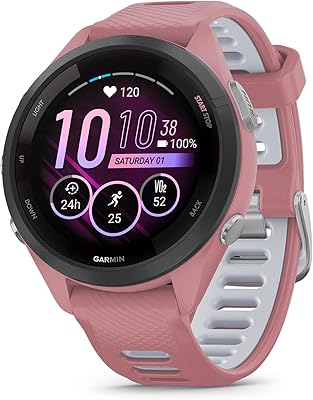
Garmin Forerunner 265S Running Smartwatch
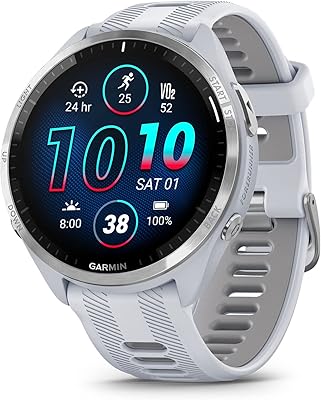
Garmin Forerunner 965 Running Smartwatch
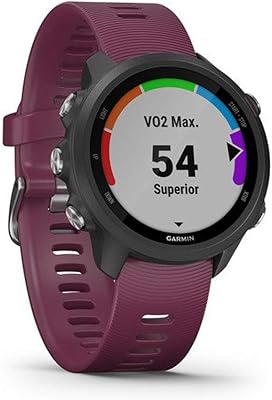
Garmin Forerunner 245 GPS Running Smartwatch
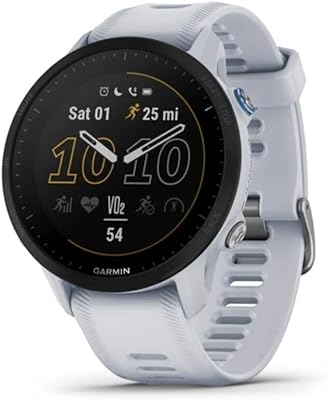
Garmin Forerunner 955 GPS Running Smartwatch
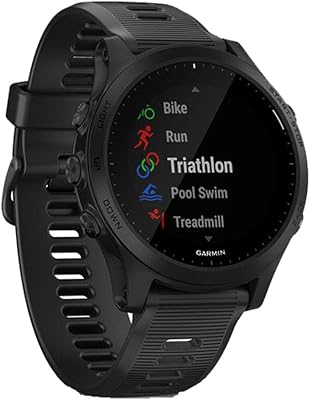
Garmin Forerunner 945 GPS Running Triathlon Smartwatch
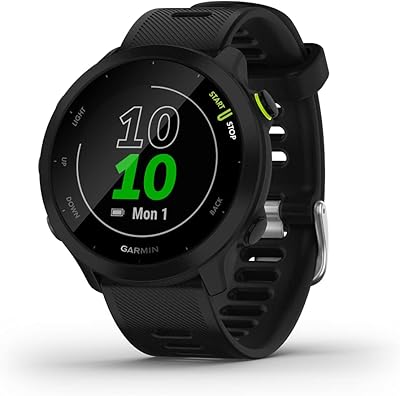
Garmin Forerunner 55 GPS Running Watch
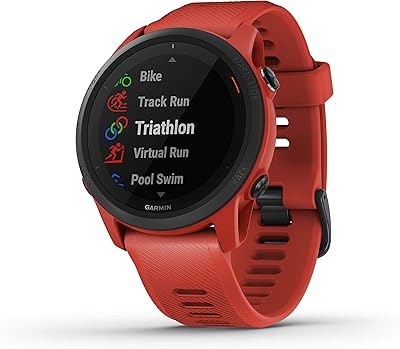
Garmin Forerunner 745 GPS Running Watch
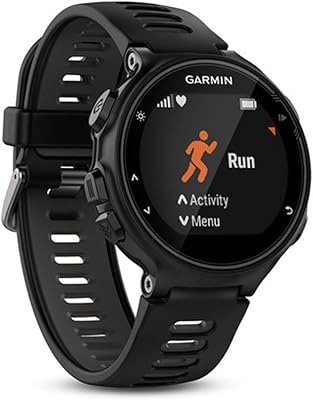
Garmin Forerunner 735XT Multisport GPS Watch
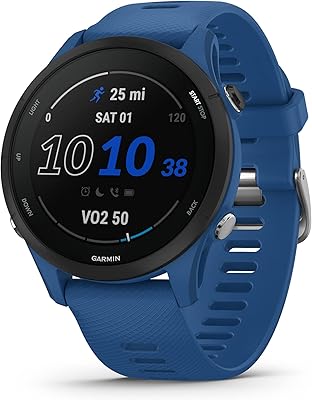
Garmin Forerunner 255 GPS Running Smartwatch