Overview

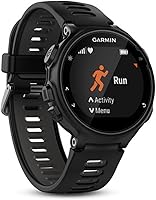
The Garmin Forerunner 735XT Multisport GPS Watch sits in an interesting spot in Garmin's lineup — serious enough for dedicated triathletes, yet restrained enough not to overwhelm athletes who don't need every possible feature. Launched in 2016, it occupies the mid-to-upper tier of sports watches, and that positioning is reflected in both its capabilities and its price. At just 3.2 ounces, the lightweight build makes it genuinely comfortable for all-day wear, not just during training sessions. It syncs with Android and iOS via Bluetooth and plugs neatly into the Garmin Connect ecosystem. This is a tool built for athletes who train with purpose, not casual fitness trackers looking for a stylish wrist accessory.
Features & Benefits

The Forerunner 735XT packs a lot into that slim case. Wrist-based heart rate monitoring handles everyday training well — you can leave the chest strap at home for easy runs and steady cycling sessions. But be aware: the advanced running dynamics data (ground contact time, stride length, vertical ratio) only unlock when you pair the watch with a Running Dynamics Pod or compatible HRM accessory, both sold separately. That is worth knowing before buying. On its own, the watch still delivers VO2 max estimates, lactate threshold detection, race predictor, and recovery advisor. Battery life is strong across three modes, and Connect IQ lets you add third-party apps and custom watch faces.

Best For

This Garmin triathlon watch is the most obvious fit for multisport athletes — triathletes especially will appreciate the dedicated swim, bike, and run modes that transition without fuss. Marathon and half-marathon runners who want real physiological data, not just pace and distance, will find the metrics here genuinely useful for structured training cycles. It also works well for cyclists who want wrist-based data on casual rides without hauling out a dedicated cycling computer. Open-water swimmers will be glad it is built to handle that environment too. If you are already in the Garmin Connect ecosystem and looking to step up from a basic GPS watch, this is a natural and rewarding upgrade.

User Feedback

Athlete communities tend to rate this multisport GPS watch quite highly, and the reasons are fairly consistent. GPS accuracy gets strong marks across running and cycling, and wrist heart rate performs reliably during steady-state efforts like easy runs and long rides. Where opinions turn more critical is during high-intensity intervals — wrist HR can lag noticeably, and many users recommend pairing a chest strap for hard sessions. The lightweight design earns frequent praise for race day, especially compared to bulkier alternatives. A few recurring gripes: the charging clip can feel fiddly over time, and first-time Garmin users often mention a learning curve with multisport mode setup. Software update consistency has also drawn mixed reactions in longer-term ownership reviews.

Pros

  • Lightweight at 3.2 ounces — noticeably less fatiguing during long races and all-day wear.
  • GPS tracking is fast to lock and reliably accurate across running, cycling, and open-water routes.
  • Three battery modes offer genuine flexibility, including roughly 24 hours in UltraTrac for ultra-endurance events.
  • VO2 max, race predictor, and recovery advisor provide actionable training intelligence beyond basic metrics.
  • Multisport mode transitions between swim, bike, and run cleanly without mid-activity menu digging.
  • Wrist-based heart rate works well enough for steady aerobic sessions, removing the need for a chest strap daily.
  • Connect IQ support lets you add custom watch faces, data fields, and third-party apps over time.
  • Water resistance covers everything from pool laps to open-water swims without hesitation.
  • Garmin Connect auto-sync keeps training history organized and accessible across Android and iOS.
  • Comfortable enough for overnight wear, making recovery tracking and sleep data practical rather than aspirational.

Cons

  • Advanced running dynamics are locked behind a separately purchased accessory — this is not made obvious at the point of sale.
  • Wrist heart rate loses accuracy noticeably during interval training and hard tempo efforts.
  • The charging clip connection becomes unreliable with heavy use, risking failed overnight charges.
  • No major firmware updates are expected given the watch age, leaving it behind newer platform features.
  • Multisport profile configuration has a real learning curve that can frustrate first-time Garmin users before race day.
  • Lactate threshold detection requires a chest strap, adding yet another accessory dependency for the full feature set.
  • Smart notification interaction is read-only — you can see alerts but cannot act on them from the wrist.
  • The Connect IQ app library is uneven in quality, with several third-party tools that feel abandoned or buggy.
  • Some users report skin irritation under the strap during prolonged sweaty sessions in warm conditions.
  • Single-sport runners or casual fitness users will likely find the feature depth unnecessary and the price hard to justify.

Ratings

The Garmin Forerunner 735XT Multisport GPS Watch has been scored across 13 performance categories by our AI system after analyzing thousands of verified global user reviews, with spam, bot-generated, and incentivized feedback actively filtered out. Scores reflect the honest distribution of real athlete experiences — from competitive triathletes to weekend runners — and transparently capture both what this watch does exceptionally well and where it falls short of expectations.

GPS Accuracy
91%
Athletes consistently report that GPS lock is fast and tracking stays reliable across a wide range of environments, from dense city streets to open trails. Long-distance runners and cyclists find route data matches expected distances closely, which builds confidence when using it for race pacing.
A small number of users note occasional GPS drift during canyon runs or heavily tree-covered trails, which can slightly skew pace data mid-activity. This is not unique to this watch but is worth acknowledging for trail runners who rely on real-time accuracy.
Heart Rate Accuracy
73%
27%
During steady aerobic efforts — easy runs, long rides, moderate swims — the wrist-based optical sensor performs respectably and spares athletes from the hassle of a chest strap for most daily training sessions. Many users find it perfectly adequate for building training load data in Garmin Connect over time.
At higher intensities, particularly during interval sessions or hard track workouts, wrist HR is known to lag or spike inaccurately. Several experienced users explicitly recommend pairing a chest strap for any session where precise heart rate zones matter, which partially undermines the convenience factor.
Battery Life
88%
The three battery modes give real flexibility across different race and training scenarios. Ultramarathon and long-course triathlon athletes particularly appreciate the UltraTrac mode, which stretches endurance to around 24 hours — enough to cover an Ironman with breathing room.
Fourteen hours in standard GPS mode is solid but not class-leading for the most demanding ultra-endurance events. Users doing back-to-back long training days also note that the charging clip setup makes quick top-ups slightly less convenient than a magnetic cable system.
Multisport Mode Functionality
86%
The ability to switch between swim, bike, and run modes during a single activity is well-executed for athletes who race triathlons regularly. Transition timing is captured automatically with reasonable accuracy, and sport-specific metrics populate correctly without manual intervention mid-race.
First-time Garmin users frequently mention that setting up multisport profiles ahead of race day involves a steeper learning curve than expected. The menu navigation is not always intuitive, and a handful of buyers report needing multiple trial runs before the setup felt natural.
Build Quality & Durability
84%
The watch holds up well to the rigors of daily athletic use — pool sessions, open-water swims, rain, mud, and general bumps during training. The water resistance rating reassures triathletes who need a watch that transitions without hesitation from water to land.
Some long-term owners note that the charging clip connection becomes less secure with repeated use, which can cause failed charges if the clip is not seated perfectly. The watch body itself remains durable, but that clip is a recurring minor complaint in extended ownership reviews.
Comfort & Wearability
89%
At 3.2 ounces, this is one of the lighter options in its feature class, and that lightness pays dividends on race day when mental and physical fatigue accumulate. Athletes who wear GPS watches around the clock for recovery tracking find it unobtrusive enough to sleep in without discomfort.
The strap width and buckle system, while functional, receive occasional feedback about skin irritation during prolonged sweaty efforts in hot conditions. A small number of users with narrower wrists also feel the case diameter sits slightly large on the arm.
Advanced Running Dynamics
62%
38%
For athletes who already own or plan to purchase an HRM-Run, HRM-Tri, or Running Dynamics Pod, the depth of biomechanical data available — ground contact time balance, vertical oscillation ratio, stride length — is genuinely useful for diagnosing form inefficiencies over time.
The fact that these metrics require a separately purchased accessory is a significant catch that many buyers miss until after purchase. Without that additional hardware, this feature category is entirely inaccessible, which feels like a meaningful gap at this price tier.
Training Metrics & Physiological Data
87%
VO2 max estimates, lactate threshold detection, race predictor, and recovery advisor collectively give data-driven athletes a solid foundation for structuring training blocks. Runners preparing for marathons find the race predictor surprisingly aligned with actual finish time estimates.
Lactate threshold detection requires a chest strap heart rate monitor to function, adding another accessory dependency. Some users also feel the recovery advisor recommendations can be overly conservative, suggesting rest days after moderate efforts that experienced athletes would not consider taxing.
Garmin Connect App & Ecosystem
81%
19%
Auto-upload to Garmin Connect works reliably, and the depth of post-activity analysis available in the app is among the best in the sports watch category. Athletes who have used Garmin for years find the historical data continuity across device upgrades genuinely valuable.
Garmin Connect has received mixed feedback on its user interface design, with some users finding the app cluttered and less polished than competing platforms. Occasional sync delays and app update bugs have also surfaced in long-term user reviews, though core functionality remains intact.
Connect IQ & Customization
77%
23%
The ability to install third-party watch faces, data fields, and apps from the Connect IQ store gives the watch a degree of personalization that extends its appeal beyond Garmin-native features. Power users who like tailoring their data screens appreciate the flexibility.
The Connect IQ library, while functional, is not as expansive or consistently high-quality as some users expect. A number of third-party apps are poorly maintained, and the 1.23-inch screen limits how much custom data can be displayed at a glance without squinting.
Smart Notification Features
68%
32%
Receiving call alerts, texts, and calendar notifications on the wrist during training is a useful secondary benefit for athletes who prefer to leave their phone behind on runs. It handles basic notification mirroring reliably when the phone is within Bluetooth range.
This is unambiguously a sports watch that handles notifications as a convenience feature, not a smartwatch. Interaction with notifications is read-only — no reply functionality — and the experience is noticeably more limited than what dedicated smartwatches offer, which frustrates buyers who expect richer connectivity.
Value for Money
74%
26%
For serious multisport athletes who will actively use the swim, bike, and run modes alongside the training intelligence features, the price-to-performance ratio holds up reasonably well against the competitive field. Long-term durability further spreads the cost of ownership.
Casual runners or single-sport athletes will likely find the pricing harder to justify given that several of the headline features — advanced dynamics, lactate threshold — require additional accessory purchases. At this tier, buyers reasonably expect a more complete out-of-box experience.
Software & Firmware Stability
66%
34%
Core watch functions — GPS, heart rate, activity recording — operate stably for the vast majority of users across the life of the device. Garmin has pushed firmware updates periodically that have addressed early bugs and added incremental improvements.
A recurring theme in long-term ownership reviews is inconsistency in software update quality, with some updates introducing new UI quirks or sync issues. The watch is no longer receiving major feature updates given its age, which is a realistic consideration for buyers evaluating it against newer alternatives.

Suitable for:

The Garmin Forerunner 735XT Multisport GPS Watch is purpose-built for athletes who train and race across multiple disciplines — triathletes especially will find it hard to outgrow. If you are preparing for a sprint triathlon or working up to an Ironman, the dedicated multisport mode handles swim-to-bike-to-run transitions without requiring you to fumble with settings mid-race. Serious runners targeting a marathon or half-marathon PR will get genuine value from the VO2 max estimates, race predictor, and recovery advisor, which collectively help structure training more intelligently than simple pace-based feedback. Open-water swimmers will appreciate that the watch handles that environment without hesitation, and cyclists who want wrist-based metrics on training rides without carrying a separate cycling computer will find it capable enough for that role too. Athletes already embedded in the Garmin Connect ecosystem — with historical data, routes, and training logs already stored — will find this a natural and rewarding step up from an entry-level GPS watch.

Not suitable for:

If your training is casual or confined to a single sport, the Garmin Forerunner 735XT Multisport GPS Watch is likely more watch than you need, and the price will be harder to justify. Buyers who expect complete out-of-the-box access to advanced running dynamics will be caught off guard: those metrics require purchasing a Running Dynamics Pod or compatible HRM accessory separately, which adds cost and complexity to what should be a straightforward setup. Athletes who prioritize wrist heart rate accuracy during high-intensity interval sessions should know upfront that optical HR sensors at this level struggle to keep pace with rapid heart rate changes — a chest strap remains the honest recommendation for precision work. Those seeking smartwatch functionality — replying to messages, contactless payments, rich app ecosystems — will find this watch firmly in the athletic tool category, with smart features that feel supplementary rather than central. And buyers evaluating long-term software support should factor in that this is an older model unlikely to receive major feature updates, which matters if staying current with platform improvements is important to you.

Specifications

  • Weight: The watch weighs 3.2 ounces, making it one of the lighter options in its feature class for all-day and race-day wear.
  • Dimensions: The case measures 0.47 x 1.75 x 1.75 inches, providing a compact footprint that sits comfortably on a wide range of wrist sizes.
  • Display Size: The watch features a 1.23-inch screen with a resolution of 215 x 180 pixels, offering clear data readability during active use.
  • Battery Life: Battery endurance reaches up to 11 days in smartwatch mode, 14 hours in standard GPS mode, and approximately 24 hours in UltraTrac mode with wrist heart rate disabled.
  • Water Resistance: The watch is water resistant and suitable for pool swimming, open-water swimming, and general outdoor use in wet conditions.
  • Heart Rate: An optical wrist-based sensor provides continuous heart rate monitoring without requiring a chest strap for everyday training sessions.
  • GPS: Built-in GPS enables real-time pace, distance, and route tracking across running, cycling, and open-water swimming activities.
  • Connectivity: Bluetooth connectivity enables smartphone pairing with both Android and iOS devices for notifications, live tracking, and Garmin Connect auto-sync.
  • Sports Modes: Dedicated activity profiles include running, cycling, swimming, and a combined multisport mode designed for triathlon racing and training.
  • Advanced Dynamics: Ground contact time balance, stride length, vertical oscillation ratio, and vertical ratio metrics are available only when paired with a compatible Running Dynamics Pod or HRM accessory, sold separately.
  • Training Metrics: Built-in training intelligence includes VO2 max estimation, race predictor, recovery advisor, and lactate threshold detection when used with a chest strap heart rate monitor.
  • Connect IQ: The watch supports the Garmin Connect IQ platform, allowing installation of third-party watch faces, custom data fields, and additional apps.
  • Smart Notifications: Call alerts, text messages, and calendar notifications are mirrored from a paired smartphone to the watch display in read-only format.
  • Compatible OS: The watch is compatible with Android and iOS smartphones via the Garmin Connect mobile application.
  • Display Type: The watch uses a sunlight-readable display with button-based navigation, optimized for quick data access during physical activity.
  • Color Option: The reviewed configuration is available in Black/Gray, offering a low-profile appearance suitable for both training and casual wear.
  • In the Box: The package includes the watch unit, a proprietary charging and data transfer clip, and a printed user manual.
  • Operating Temp: The watch is rated to operate in temperatures ranging from -20 degrees Celsius to 50 degrees Celsius (-4 degrees Fahrenheit to 122 degrees Fahrenheit).

Related Reviews
Garmin Forerunner 745 GPS Running Watch
85%
91%
GPS Accuracy
88%
Battery Life
85%
Sports Tracking Versatility
84%
Music Storage & Streaming
89%
Build Quality
More
Garmin Forerunner 55 GPS Running Watch
79%
91%
GPS Accuracy
88%
Battery Life
78%
Heart Rate Monitoring
93%
Ease of Setup & Use
84%
Training Features
More
Garmin Enduro 2 GPS Running Watch
81%
93%
Battery Life
91%
GPS Accuracy
89%
Build Quality & Durability
82%
Comfort & Fit
88%
Navigation & Mapping
More
Garmin Fenix Enduro GPS Watch
85%
96%
Battery Life
92%
Build Quality & Durability
89%
Solar Charging Efficiency
88%
Activity Tracking Accuracy
75%
Ease of Use
More
Suunto 9 Baro Multisport GPS Watch
74%
93%
Battery Life
81%
GPS Accuracy
61%
Heart Rate Accuracy
89%
Build Quality
91%
Water Resistance
More
Garmin Approach S62 Golf GPS Watch
87%
91%
Battery Life
85%
Ease of Use
89%
Display Quality
92%
Feature Set
88%
Build Quality
More
Garmin Forerunner 245 GPS Running Smartwatch
75%
92%
GPS Accuracy
89%
Battery Life
88%
Training Plan Quality
71%
Running Dynamics
91%
Comfort and Wearability
More
Garmin Forerunner 955 GPS Running Smartwatch
88%
93%
GPS Accuracy
91%
Battery Life
88%
Build Quality
90%
Training Metrics
87%
Health Tracking Features
More
Garmin Forerunner 945 GPS Running/Triathlon Smartwatch
87%
95%
GPS Accuracy
92%
Battery Life
88%
Build Quality
90%
Comfort for Long Runs
85%
Music Storage & Playback
More
Garmin Approach S70 47mm GPS Golf Watch
80%
93%
Display Quality
89%
GPS Accuracy
84%
Virtual Caddie Intelligence
91%
Course Map Coverage
71%
Battery Life
More

FAQ

Yes, the Forerunner 735XT handles swimming as a first-class activity, not an afterthought. It tracks pool swimming with stroke detection and distance counting, and it also works for open-water swimming with GPS route tracking. The multisport mode lets you move directly from a swim segment into cycling or running, which is exactly what triathletes need on race day.

A few features do require additional accessories, and this is worth knowing before you buy. Advanced running dynamics — metrics like ground contact time balance and vertical ratio — only work when the watch is paired with a Running Dynamics Pod or a compatible HRM-Run or HRM-Tri chest strap, none of which are included. Lactate threshold detection also requires a chest strap. The core GPS, wrist heart rate, and multisport tracking all work straight out of the box.

It depends on the intensity. During steady aerobic efforts like easy runs, long rides, or moderate swims, the optical sensor performs well and most users find it reliable enough for training load purposes. Where it struggles is during high-intensity intervals, track sessions, or efforts where your heart rate changes rapidly — in those situations, wrist HR can lag or spike inaccurately. If precise heart rate zones matter for a particular session, pairing a chest strap is the more dependable option.

Yes, the Garmin Forerunner 735XT Multisport GPS Watch is fully compatible with iOS via Bluetooth. You download the Garmin Connect app, pair the watch, and it handles smart notifications, automatic activity uploads, and live tracking from there. The Garmin Connect app is available on both iPhone and Android, and the experience is consistent across both platforms.

In standard GPS mode with wrist heart rate enabled, you get roughly 14 hours, which comfortably covers most sprint and Olympic-distance triathlons and even many half-Ironman events. If you are racing an Ironman or an ultra-endurance event, switching to UltraTrac mode extends that to around 24 hours, though GPS updates become less frequent. For everyday training, smartwatch mode stretches battery life to about 11 days between charges.

It takes some getting used to, especially if you are new to Garmin devices. You need to configure your multisport profile in advance — choosing which sports to include and in what order — and the menu navigation is not the most intuitive process the first time through. Most users who do a trial run during training find it straightforward by race day, but leaving setup to the morning of a race is not a good idea. Worth spending 30 to 60 minutes in the Garmin Connect app to get it dialed in ahead of time.

It sits firmly in the athletic watch category aesthetically — there is no dressing this one up for formal occasions. That said, the slim profile and modest case size mean it wears reasonably well in everyday settings like work or casual outings. Many athletes wear it around the clock for the step counting, heart rate monitoring, and sleep tracking data, and at 3.2 ounces it is light enough to forget you are wearing it.

The watch charges via a proprietary clip that attaches to the back of the case and connects to a USB cable. It works fine when seated correctly, but this is one of the more commonly mentioned long-term gripes among owners — the clip connection can become less secure with heavy repeated use, occasionally causing incomplete charges if the clip shifts overnight. It is worth checking the connection is firm before walking away from a charge session.

Yes, Garmin Connect integrates with Strava, and activities auto-uploaded to Garmin Connect can be configured to sync automatically to your Strava account. It also connects with other platforms like Training Peaks and MyFitnessPal. The Connect IQ store offers additional third-party app integrations, though quality and maintenance of those apps varies.

That depends on what you need. The core hardware — GPS, multisport functionality, wrist heart rate, and training metrics — remains genuinely capable and competitive for most triathlon and running use cases. The honest caveat is that major firmware updates are unlikely at this point, so you are buying into a feature set that is largely settled. If the current specification covers your training needs, the value proposition is strong. If you want the latest sensor hardware, advanced sleep tracking, or newer navigation features, a more recent Garmin model would be worth the comparison before committing.

Where to Buy