Overview

The Garmin Forerunner 245 GPS Running Smartwatch sits comfortably in the middle of Garmin's Forerunner lineup — more capable than the entry-level options, yet less complex than the top-tier multisport models. It launched in 2019 and quickly became a go-to choice for dedicated recreational runners and semi-competitive athletes who needed more than basic tracking without drowning in features they'd never use. The Berry color variant is one of several available options, though color is honestly the last thing most buyers think about. What draws people to this watch is the balance of training intelligence and wearable practicality — it works on the track and holds its own as a daily watch.
Features & Benefits

The Forerunner 245 packs a lot into a small package. Built-in GPS holds signal reliably for up to 24 hours, which covers even the longest efforts most runners will attempt. The Garmin Coach integration is a standout feature — free adaptive training plans that actually update based on your recent performance, not a static schedule you downloaded once. Training load and recovery monitoring help flag when you are pushing too hard or coasting, which proves genuinely useful across a long training cycle. One important caveat: advanced running dynamics only unlock when paired with a separately sold HRM or Running Dynamics Pod. That added accessory cost is real and worth factoring into your decision.

Best For

This GPS training watch makes the most sense for runners who have outgrown a basic fitness tracker and want data that actually shapes how they train. If you are building toward a half or full marathon and want a structured plan that adapts to your fitness — not someone else's generic schedule — the Forerunner 245 is worth a serious look. It also suits solo runners on early morning routes or remote trails who value the added security of incident detection. That said, if you want offline music, turn-by-turn navigation, or full running dynamics without buying extra gear, this watch has clear limits. It is best treated as a dedicated training tool, not a do-everything device.

User Feedback

Most owners of this Garmin running watch consistently praise GPS accuracy and how light the watch feels on the wrist — at just over an ounce, it genuinely stops being noticeable after a few miles. Garmin Coach plans earn steady compliments for feeling responsive rather than generic. Battery life is another high point; many users report real-world longevity that matches or exceeds the stated specs. The criticisms tend to be specific: no onboard music frustrates runners who prefer leaving their phone behind. Touchscreen performance draws mixed reactions as well — reliable in dry conditions, but noticeably less so mid-run in rain or heavy sweat. Worth knowing before committing.

Pros

  • Built-in GPS locks on quickly and holds signal reliably across urban, trail, and open-road environments.
  • Battery life meets or exceeds stated specs in real-world use, even during heavy training weeks.
  • Garmin Coach adaptive plans adjust based on your actual fitness, not just a calendar.
  • Training load monitoring genuinely flags overtraining before your body does.
  • At just over an ounce, the Forerunner 245 barely registers on the wrist during long runs.
  • Incident detection adds meaningful safety for solo runners without any manual activation required.
  • Garmin Connect ecosystem integration is mature, deep, and reliable for long-term training trend analysis.
  • The watch reads cleanly in bright daylight, making mid-run data checks fast and low-effort.
  • Compatible with Strava, Training Peaks, and other major platforms runners already use.
  • Proportionate sizing works well for smaller wrists where bulkier watches feel unwieldy.

Cons

  • No onboard music storage — you cannot leave your phone behind if audio is part of your routine.
  • Advanced running dynamics require a separately purchased accessory, adding hidden cost to the total price.
  • No maps or turn-by-turn navigation, making it unsuitable for trail exploration or unfamiliar routes.
  • Touchscreen becomes unreliable when wet, forcing full reliance on physical buttons in rain or heavy sweat.
  • Wrist-based heart rate tracking lags noticeably during high-intensity intervals and tempo efforts.
  • The Garmin Connect app has a steep learning curve for users new to the Garmin ecosystem.
  • Optical HR performance in demanding conditions often pushes serious runners to buy a chest strap anyway.
  • The display resolution looks dated against newer competitors entering the same price category.
  • Band attachment points and port covers show wear faster than the casing itself over extended daily use.
  • Value proposition has weakened since launch as newer alternatives have entered the market at comparable prices.

Ratings

The Garmin Forerunner 245 GPS Running Smartwatch earned its ratings through AI analysis of thousands of verified global buyer reviews, with spam, bot activity, and incentivized feedback actively filtered out before scoring. What you see here reflects the honest distribution of real runner experiences — the genuine strengths that keep this watch highly recommended, alongside the friction points that consistently surface in long-term ownership. Every score is calibrated to represent where this GPS training watch actually lands, not where its marketing suggests it should.

GPS Accuracy
92%
Runners consistently report that the Forerunner 245 locks onto satellite signal quickly and holds it reliably through dense urban canyons, tree-covered trails, and open roads alike. Split data and route traces align closely with mapped courses, which matters when you are chasing a pace target or reviewing your form on a specific segment.
A small but recurring subset of users note occasional drift during tunnel entries or when the watch is first activated in heavily shaded areas. These instances are infrequent, but they do show up enough in feedback to be worth noting for runners who rely on precise per-kilometer splits.
Battery Life
89%
Real-world battery performance consistently meets or slightly exceeds the stated figures, which is not always the case in this category. Runners doing back-to-back long training days appreciate that a single charge comfortably handles a full week of daily tracking plus several GPS-active sessions without anxiety.
Heavy GPS usage with continuous heart rate monitoring active does draw the battery down faster than the headline number implies. Runners logging 70-plus miles per week with always-on display enabled may find themselves charging more frequently than expected mid-training block.
Training Plan Quality
88%
The Garmin Coach adaptive plans receive consistently strong praise from runners at all experience levels. The plans adjust meaningfully based on completed workout data rather than just calendar progression, which makes them feel responsive to real fitness changes rather than a static schedule printed months in advance.
The adaptation logic can feel conservative at times — some experienced runners find the plans hesitant to increase intensity even after a string of strong performances. Customization beyond the provided templates also requires jumping into the Garmin Connect app, which adds friction for users who prefer to manage everything from the wrist.
Running Dynamics
71%
29%
When paired with a compatible HRM or Running Dynamics Pod, the ground contact time balance and vertical ratio data give dedicated runners genuine insight into form inefficiencies that are otherwise invisible. Coaches and self-coached athletes training for sub-four-hour marathons find this data particularly actionable over a full training cycle.
The core limitation here is impossible to ignore: the full running dynamics suite requires purchasing a separate accessory, which adds meaningful cost on top of an already premium-priced watch. Buyers who discover this post-purchase tend to express frustration, and those metrics simply do not appear at all without that extra hardware.
Comfort and Wearability
91%
At just over an ounce, this GPS training watch practically disappears on the wrist after a few miles, which is exactly what you want during a long run. Users with smaller wrists specifically call out how proportionate the 1.7-inch casing feels compared to bulkier competitors at similar price points.
The silicone band, while functional and sweat-resistant, attracts lint and shows scuff marks fairly quickly with daily wear. A small number of users with particularly narrow wrists also report that the default band sizing sits slightly loose even on the tightest setting.
Heart Rate Monitoring
74%
26%
For steady-state runs and easy training days, the optical heart rate sensor tracks consistently enough that most runners trust it for zone-based training without reaching for a chest strap. It performs well during warm-ups and cooldowns where pace is stable and wrist movement is predictable.
During high-intensity intervals or tempo work where heart rate spikes rapidly, the wrist-based sensor lags noticeably behind actual effort. Runners who train seriously by heart rate zones tend to pair the watch with an external chest strap anyway, which partly undermines the convenience of having built-in optical HR.
Display Clarity
78%
22%
The 240x240 display reads cleanly in most outdoor conditions, and the round face shows enough data fields simultaneously to avoid constant button-pressing mid-run. Bright daylight legibility is a recurring positive in user feedback, particularly among trail runners who need a quick glance without breaking stride.
In low-light morning or evening runs, the backlight requires a deliberate wrist flick or button press to activate, which some runners find disruptive at race pace. The resolution also looks noticeably dated compared to more recent competitors in the same price bracket.
Touchscreen Responsiveness
63%
37%
In dry, controlled conditions the touchscreen is responsive enough for menu navigation and workout confirmation, and many users prefer it for scrolling through post-run data summaries back at home or the gym.
Sweaty or rain-soaked runs expose a real reliability gap — inputs frequently misfire or go unregistered when the screen is wet, pushing users to rely entirely on the physical buttons. This is a consistent theme in user feedback and feels like a genuine design shortcoming for a watch built specifically for outdoor running.
Incident Detection and Safety
84%
Solo runners — particularly those who train on remote trails or before dawn — repeatedly cite incident detection as a meaningful reason they chose this watch over comparable alternatives. The real-time location sharing to emergency contacts via paired phone provides genuine reassurance without requiring any manual activation.
The feature depends entirely on a paired smartphone being within Bluetooth range, which limits its usefulness on backcountry runs where many athletes specifically leave their phone behind. Users in areas with inconsistent mobile coverage also note that location sharing can be unreliable even when the phone is present.
App and Ecosystem Integration
86%
The Garmin Connect platform is mature, data-rich, and genuinely useful for reviewing training trends over weeks and months rather than just individual sessions. Runners already using Garmin devices find the transition effortless, and third-party integrations with platforms like Strava and Training Peaks work reliably.
New users without prior Garmin experience often find the Connect app's depth overwhelming at first, with a learning curve steeper than competing platforms. The Connect IQ store for additional watch faces and apps is functional but noticeably less polished than the ecosystems offered by some rivals.
Onboard Storage and Music
41%
59%
The 4 GB of onboard storage is adequate for saving training history, workout data, and downloaded course files, which covers the core needs of most runners who rely on their phone for audio.
There is no onboard music storage on this watch — a flat-out missing feature that runners upgrading from certain competitors will immediately feel. If leaving your phone at home during long runs is a priority and you want music, this watch simply cannot help you, and no software update will change that.
Navigation and Mapping
38%
62%
The Forerunner 245 tracks your route via GPS and can display breadcrumb trail data in basic form, which is marginally useful for retracing a path on familiar terrain.
There are no maps, no turn-by-turn navigation, and no course preview capabilities — a genuine limitation for trail runners or anyone exploring unfamiliar routes. Buyers expecting navigation features comparable to Garmin's Fenix or Forerunner 945 lines will be disappointed, and this gap is frequently raised in critical user reviews.
Value for Money
73%
27%
For runners who will actively use Garmin Coach, training load monitoring, and incident detection, the feature-to-price ratio holds up reasonably well against the broader market. The watch does deliver on its core promise as a capable, lightweight training partner for road runners.
The price sits at a level where the missing features — no music, no maps, and the accessory requirement for full running dynamics — start to feel like meaningful omissions rather than reasonable trade-offs. Buyers weighing this against newer competitors at similar or lower prices will find the value proposition less clear-cut than it was at launch.
Build Quality and Durability
82%
18%
The watch body holds up well to daily training abuse — scratches on the bezel are minimal even after months of regular use, and the water resistance performs as expected through rain runs and post-run rinses without issue.
The charging port cover, where present, shows wear with frequent cable swapping, and the band attachment points can develop minor creaking over time. Nothing catastrophic, but the physical construction does not quite match the premium feel suggested by the price point.

Suitable for:

The Garmin Forerunner 245 GPS Running Smartwatch is built for the kind of runner who has outgrown a basic fitness tracker but does not need the full complexity of a multisport or navigation-focused device. If you are training seriously for distances ranging from a 5K to a full marathon and want a watch that actively helps you structure that training — rather than just recording it — the Forerunner 245 is genuinely well-matched to that goal. Garmin Coach plans adapt based on your actual performance outputs, which makes a meaningful difference over a 16 or 20-week training cycle compared to a static plan you print out once. Runners who log solo miles on early morning routes or remote paths will also find real value in the incident detection feature, which quietly adds a layer of safety without requiring any extra setup. Those already embedded in the Garmin Connect ecosystem — perhaps upgrading from an older Forerunner model — will transition effortlessly and immediately have years of historical data in one place. Lighter wrists benefit particularly here, as the sub-1.5-ounce build sits proportionately and stops being noticeable after the first mile.

Not suitable for:

The Garmin Forerunner 245 GPS Running Smartwatch has a set of limitations that are clear enough to be dealbreakers for certain buyers, and it is worth being direct about them before committing. If you want to leave your phone at home and run to music, this watch cannot help you — there is no onboard music storage, full stop, and that is not something a firmware update will address. Trail runners and adventure athletes who depend on turn-by-turn navigation or topographic maps will quickly find this watch insufficient; the GPS tracking is solid, but there are no maps and no routing capabilities whatsoever. Runners hoping to unlock the full advanced running dynamics suite should also know upfront that those metrics — ground contact time balance, vertical ratio, stride length — require purchasing a compatible chest strap or Running Dynamics Pod separately, which adds cost that is easy to miss when reading the product listing. The touchscreen, while functional in dry conditions, becomes unreliable mid-run in rain or heavy sweat, which is a frustrating limitation for a device designed for exactly those conditions. Finally, buyers comparing this watch against newer competitors at similar price points may find that the value case has softened since launch, particularly given how much the smartwatch market has evolved since 2019.

Specifications

  • Display Size: The watch features a 1.2-inch round display with a resolution of 240x240 pixels, readable in direct sunlight during outdoor runs.
  • Dimensions: The case measures 1.7 x 1.7 x 0.5 inches, keeping the profile slim enough to fit comfortably under a jacket sleeve.
  • Weight: The watch weighs 1.28 ounces (approximately 38 grams) with the band, making it one of the lighter options in its performance tier.
  • Battery Life: Battery lasts up to 7 days in smartwatch mode and up to 24 hours in continuous GPS mode on a single charge.
  • Battery Type: Powered by a built-in Lithium Polymer rechargeable battery, which is included and non-removable.
  • GPS: Equipped with true built-in GPS (no phone tethering required) for accurate real-time location tracking and distance measurement during outdoor activities.
  • Storage: Onboard storage capacity is 4 GB, used for activity history, downloaded workouts, and Connect IQ apps and watch faces.
  • Operating System: Runs on Garmin OS, a proprietary platform optimized for fitness tracking, training analytics, and low power consumption.
  • Connectivity: Connects to smartphones and accessories via Bluetooth; no Wi-Fi connectivity is included on this model.
  • Input Method: Supports both gesture-based input and a touchscreen interface, supplemented by physical buttons for reliable operation during runs.
  • Running Dynamics: Tracks stride length, ground contact time balance, and vertical ratio when paired with a compatible HRM-Run, HRM-Tri, or Running Dynamics Pod (each sold separately).
  • Safety Feature: Incident detection monitors for impacts during select activities and automatically shares the wearer's real-time GPS location with designated emergency contacts via a paired smartphone.
  • Training Platform: Integrates with Garmin Coach to provide free adaptive training plans for 5K, 10K, and half-marathon distances, adjusting based on completed workout results.
  • App Ecosystem: Compatible with the Connect IQ store, allowing users to download additional watch faces, widgets, data fields, and third-party apps.
  • Water Resistance: Rated to 5 ATM, meaning the watch can withstand rain, splashing, and submersion in shallow water up to 50 meters.
  • Heart Rate: Includes a built-in optical wrist-based heart rate monitor for continuous heart rate tracking throughout the day and during activities.
  • Smartphone Compatibility: Compatible with iOS and Android smartphones for notifications, Garmin Connect syncing, and incident detection location sharing.
  • Color Variant: The Berry colorway reviewed here features a reddish-purple case accent; additional color options are available in the same model line.
  • In the Box: Package includes the Forerunner 245 watch, a proprietary charge and data cable, and basic documentation; no external sensors or HRM accessories are included.
  • Manufacturer: Designed and manufactured by Garmin, a company with over three decades of GPS and fitness technology development experience.

Related Reviews
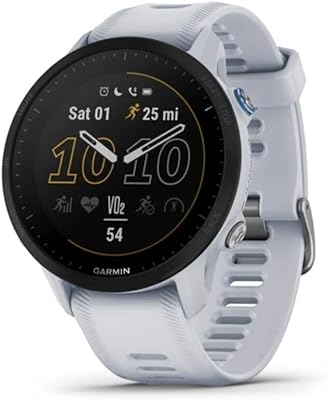
Garmin Forerunner 955 GPS Running Smartwatch
88%
93%
GPS Accuracy
91%
Battery Life
88%
Build Quality
90%
Training Metrics
87%
Health Tracking Features
More
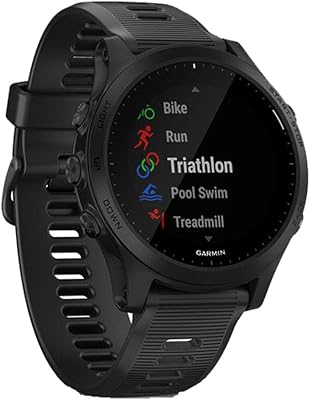
Garmin Forerunner 945 GPS Running/Triathlon Smartwatch
87%
95%
GPS Accuracy
92%
Battery Life
88%
Build Quality
90%
Comfort for Long Runs
85%
Music Storage & Playback
More
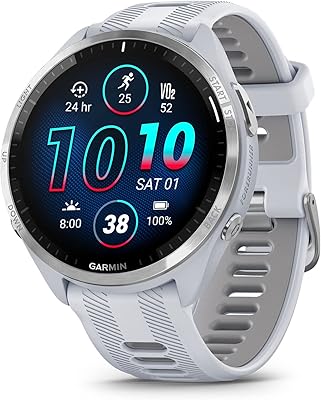
Garmin Forerunner 265S Running Smartwatch
87%
94%
Battery Life
91%
GPS Accuracy
89%
Display Quality
87%
Comfort & Fit
90%
Health Tracking Features
More
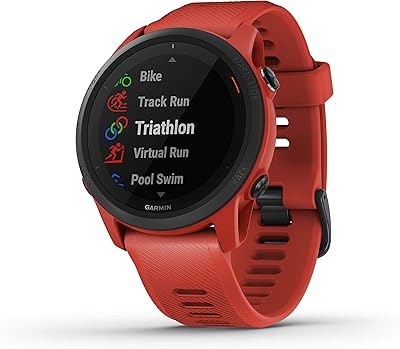
Garmin Forerunner 965 Running Smartwatch
81%
93%
Display Quality
88%
GPS Accuracy
91%
Training & Recovery Insights
78%
Battery Life
89%
Build Quality & Design
More
Garmin Forerunner 55 GPS Running Watch
79%
91%
GPS Accuracy
88%
Battery Life
78%
Heart Rate Monitoring
93%
Ease of Setup & Use
84%
Training Features
More
Garmin Forerunner 745 GPS Running Watch
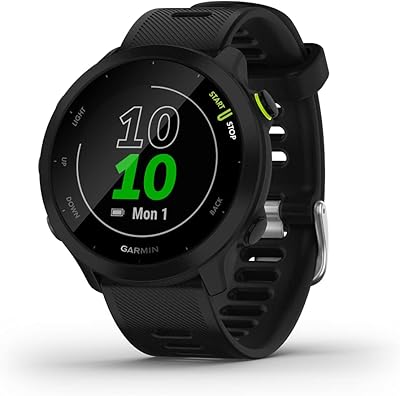
85%
91%
GPS Accuracy
88%
Battery Life
85%
Sports Tracking Versatility
84%
Music Storage & Streaming
89%
Build Quality
More
Garmin Venu 2 GPS Smartwatch
87%
94%
Battery Life
88%
Health Tracking Accuracy
91%
Display Quality
80%
Ease of Use
86%
Fitness Features
More
Garmin Instinct Solar Rugged Smartwatch
78%
88%
Battery Life
93%
Build Quality
91%
GPS Accuracy
89%
Navigation Features
74%
Solar Charging
More
Garmin vivoactive 4 GPS Smartwatch
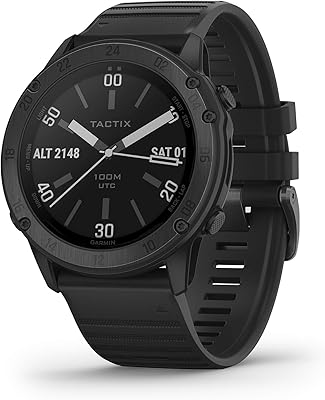
88%
90%
Battery Life
94%
Fitness & Health Tracking
86%
Music Storage & Playback
88%
Build Quality
85%
Ease of Use
More
Garmin tactix Delta Tactical GPS Smartwatch
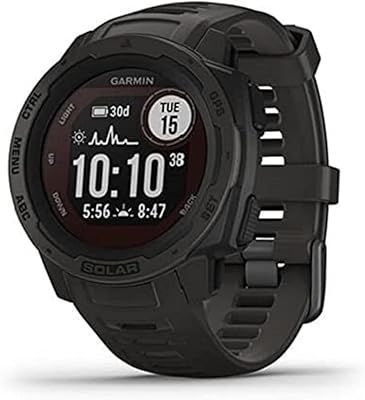
78%
93%
Battery Life
91%
Durability & Build
89%
GPS & Navigation Accuracy
88%
Tactical Features
84%
Sports & Fitness Tracking
More

FAQ

No, the Forerunner 245 has a true built-in GPS chip, so it tracks your route and distance completely independently. Your phone only becomes relevant if you want smart notifications pushed to your wrist or if you rely on incident detection to share your location with emergency contacts.

Unfortunately, no. This GPS training watch does not have onboard music storage, so you cannot sync or play tracks directly from the watch. If music is part of your runs, you will still need to carry your phone or a separate device.

No, it does not. The Garmin Forerunner 245 GPS Running Smartwatch records your GPS track and can show a basic breadcrumb trail of where you have been, but there are no maps loaded on the device and no navigation or routing features. If you need maps, you would need to look at a higher-tier Garmin model like the Forerunner 945 or the Fenix series.

To see metrics like ground contact time balance, stride length, and vertical ratio, you need either a Garmin HRM-Run, HRM-Tri chest strap, or a Running Dynamics Pod — all of which are sold separately. The watch alone will not generate those specific form metrics, so factor that extra cost in if running dynamics are a key reason you are considering this watch.

When the watch detects a hard impact — such as a fall — during a supported activity, it starts a countdown and displays a prompt on screen. If you do not dismiss it, it automatically sends your GPS location to up to three emergency contacts via your paired smartphone. It requires your phone to be within Bluetooth range and the contacts to be configured in the Garmin Connect app beforehand.

For steady aerobic efforts and easy runs, the wrist-based optical sensor is accurate enough for most runners. Where it starts to fall short is during rapid heart rate changes — hard intervals, hill repeats, or race-pace efforts — where it can lag behind your actual exertion level. Serious zone-based trainers often pair this watch with an external chest strap for more precise readings during those sessions.

Most users find the real-world battery life closely matches or even slightly exceeds the stated specs. Running with GPS active for an hour a day, you can comfortably get through a full training week without charging. If you leave the display always-on or pair it with Bluetooth accessories throughout your run, expect the drain to be a bit faster.

Yes, Garmin Connect syncs reliably with Strava, Training Peaks, and several other popular fitness platforms. Once you set up the connection in Garmin Connect, activities sync automatically after each run, so your data flows through without manual uploads.

Quite a few users with narrower or smaller wrists specifically call out how well-proportioned this watch feels compared to bulkier training watches in the same category. At just over an ounce, it does not feel heavy or unbalanced. That said, the default band has limited adjustment range on the very smallest settings, so extremely narrow wrists may want to check fit before committing.

This is genuinely one of the more consistent criticisms from real users — the touchscreen can misfire or become unresponsive when the screen is wet, whether from rain or heavy perspiration. In those conditions, most runners end up relying entirely on the physical buttons, which work perfectly fine but require some familiarity with the button layout to navigate quickly mid-run.

Where to Buy