
Overview

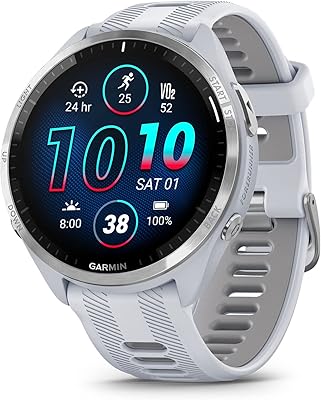
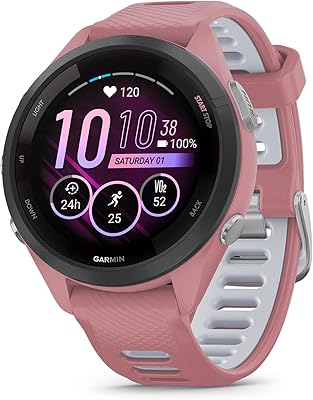
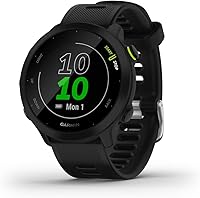
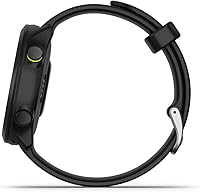
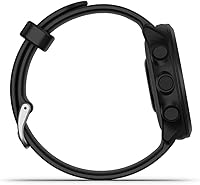
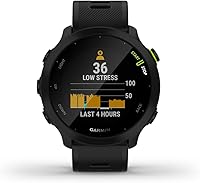
The Garmin Forerunner 55 GPS Running Watch is Garmin's answer to runners who want real training tools without the complexity — or cost — of a higher-tier device. Launched in mid-2021, it has held its ground as one of the more sensible choices in the entry-level GPS watch space. At just 1.31 ounces, it sits on your wrist without announcing itself, and the compact unisex design works just as well during a Monday morning commute as it does on a Saturday long run. Honest caveat: this is not built for triathletes or data obsessives. It does one thing really well — help everyday runners train smarter.

Features & Benefits

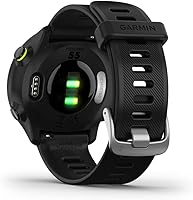
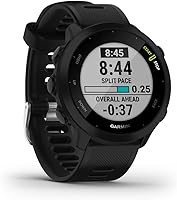
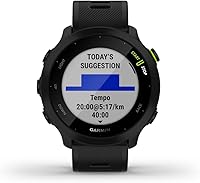
The built-in GPS is the core of the experience — leave your phone at home and still get accurate split times, distance, and a route map waiting for you in the Garmin Connect app afterward. The wrist-based heart rate sensor handles all-day monitoring and tracks intensity minutes, giving you a fuller picture of how hard you are actually working. What genuinely stands out is the daily suggested workout feature. Rather than following a rigid plan, this entry-level GPS watch looks at your recent activity, recovery, and fitness level to recommend what kind of run makes sense today. PacePro adds a practical layer on top, offering GPS-based pace guidance when you are targeting a specific race distance or effort.

Best For

The Forerunner 55 is particularly well-suited for beginner to intermediate runners who are ready to move beyond a basic step counter but do not need a watch that costs more than their running shoes. If you are training for your first 5K, building toward a half-marathon, or simply trying to run more consistently, the training tools here genuinely support that journey. It also works well for fitness-minded people who want wellness data — respiration tracking, fitness age estimates — alongside their workouts. One thing worth noting: if you regularly swim open water, cycle long distances, or juggle multiple sports seriously, this Garmin running watch will eventually feel limiting.

User Feedback

Most owners point to GPS accuracy as a genuine strength — splits tend to match course distances reliably, and the watch locks on quickly even in busy urban areas. Setup is straightforward, and the learning curve is mild compared to higher-end Garmin models. The band gets decent marks for all-day comfort, though a small number of users mention minor wrist irritation on longer efforts. The Garmin Connect app is feature-rich but takes some getting used to for newcomers. Battery life in real-world conditions generally tracks close to the advertised figures. The most consistent criticism centers on limited smartwatch functionality — no contactless payments, no music storage — which rivals at similar prices sometimes offer.

Pros

  • Built-in GPS locks on fast and tracks distance accurately, even in busy city environments.
  • Daily suggested workouts genuinely adapt over time based on your actual fitness and recovery.
  • At just over an ounce, the Forerunner 55 is light enough to forget you are wearing it.
  • Real-world GPS battery life closely matches the advertised 20 hours — rare in this category.
  • PacePro helps runners stay disciplined on race day without constant manual pace checks.
  • Setup is quick and intuitive, even for first-time GPS watch owners with no technical background.
  • All-day heart rate and respiration tracking add meaningful wellness context beyond just workouts.
  • Multiple activity profiles make this entry-level GPS watch versatile enough for mixed fitness routines.
  • Garmin Connect provides deep post-run analysis and long-term trend data for motivated self-coaches.
  • Competitive pricing gives access to Garmin's trusted ecosystem without the premium model price tag.

Cons

  • No music storage means you still need your phone or a separate device for audio on runs.
  • The stock silicone band causes wrist irritation for some users during sweaty long-run efforts.
  • Garmin Connect has a steep learning curve that overwhelms beginners expecting a simple app experience.
  • Heart rate readings lag noticeably during high-intensity intervals and sprint-based workouts.
  • No contactless payment support, which rivals at a similar price point increasingly offer.
  • Elevation data relies on GPS estimates rather than a built-in altimeter, reducing trail run accuracy.
  • The display looks dim indoors and lacks the visual appeal of color touchscreen competitors.
  • No sleep score or Body Battery readiness metric, features now standard on newer Garmin models.
  • Occasional Bluetooth sync issues require re-pairing, a recurring minor frustration across user reports.
  • Non-running activity profiles are thin — useful for casual cross-training but lacking depth for serious cyclists or swimmers.

Ratings

The Garmin Forerunner 55 GPS Running Watch has been rated across 12 performance categories by our AI system after processing thousands of verified global buyer reviews, with algorithmic filtering applied to remove incentivized, bot-generated, and duplicate submissions. Scores reflect the honest consensus of real runners — from first-timers lacing up for a 5K to regulars logging weekly half-marathon mileage. Both the standout strengths and the recurring frustrations are weighted equally so you get a clear picture before buying.

GPS Accuracy
91%
Runners consistently report that distance readings match course markers closely, even in urban canyons with tall buildings on either side. Satellite lock is fast — most users note the watch is ready to go within 30 to 45 seconds of stepping outside, which matters when you are already warmed up and eager to start.
A small but vocal group notes minor drift during dense tree cover or tunnel-heavy routes, where the track line in Garmin Connect wanders slightly off the actual path. It is not frequent enough to be a dealbreaker, but it does surface occasionally on trail runs.
Battery Life
88%
Real-world GPS usage tends to land between 18 and 20 hours for most runners, which closely matches the advertised figure — a rarity in this category. For casual runners doing three or four sessions a week, a weekly charge is usually sufficient, making it genuinely low-maintenance.
Runners who leave Bluetooth and heart rate monitoring running continuously in smartwatch mode report dropping below the two-week estimate, landing closer to 10 days. It is still competitive, but the headline number assumes more conservative settings than most people actually use.
Heart Rate Monitoring
78%
22%
During steady-state runs and moderate-intensity workouts, the optical wrist sensor tracks reliably enough for most recreational runners to trust their training zones. All-day resting heart rate data is a appreciated feature for those monitoring recovery trends over time.
During high-intensity intervals or rapid pace changes, readings can lag or spike briefly before settling. Users who do a lot of sprint work note that the sensor struggles to keep up, and those wanting clinical-grade accuracy during HIIT sessions may find the data less dependable than a chest strap.
Ease of Setup & Use
93%
Setup takes under 15 minutes for the vast majority of users — pair it via Bluetooth, sync to Garmin Connect, and you are logging runs the same day. The button-based navigation is intuitive enough that most people figure it out without touching the manual, which matters for first-time GPS watch owners.
A portion of users find the Garmin Connect app overwhelming at first, with more menus and data views than they expected. The watch itself is simple, but making the most of features like suggested workouts or PacePro requires a bit of time spent learning the app ecosystem.
Training Features
84%
The daily suggested workout feature genuinely adapts over time — after a few weeks of consistent logging, the recommendations start to reflect your actual fitness and recovery patterns rather than generic defaults. PacePro is a practical tool on race day, keeping you honest on pacing during a 10K or half-marathon effort.
Advanced athletes will find the training ecosystem thin compared to Garmin's higher-tier watches. There is no training load tracking, no VO2 max trend analysis beyond basic estimates, and no recovery advisor — limitations that matter more the fitter and more structured a runner becomes.
Comfort & Wearability
81%
19%
At just over an ounce, the Forerunner 55 barely registers on the wrist during long runs. The compact dimensions mean it does not snag on jacket sleeves or feel bulky during daily wear, and plenty of users wear it all day without thinking about it.
A recurring complaint involves the stock silicone band causing irritation after extended sweaty efforts, particularly for users with sensitive skin. The band is replaceable, but the issue comes up often enough in long-run and summer-weather reviews to be worth flagging.
Display Readability
76%
24%
The screen is legible in bright outdoor sunlight — a legitimate priority for a running watch — and the data fields are large enough to read at a glance mid-stride without slowing down. The resolution handles basic metrics cleanly.
The display is not a color touchscreen, and indoors or in low light it can look dim compared to smartwatch rivals at a similar price. Users who have come from an Apple Watch or Galaxy Watch sometimes find the visual experience a step backward.
Smartwatch Functionality
53%
47%
Basic smartphone notifications come through reliably — calls, texts, and app alerts all appear on the wrist. For runners who just want to stay connected without pulling out their phone mid-run, that covers the essentials.
There is no music storage, no contactless payment support, and no voice assistant integration. Competing devices at a similar price point offer at least one of these, and for buyers who expect a watch to replace their phone for commutes or gym sessions, this Garmin running watch will disappoint.
App & Ecosystem
79%
21%
Garmin Connect is one of the more data-rich platforms in the running world, with detailed post-run analysis, long-term fitness trend tracking, and a solid library of free watch faces and apps via Connect IQ. Runners who invest time in the ecosystem tend to find it genuinely useful.
The app has a steep learning curve and an interface that feels more functional than intuitive. Beginners often report feeling lost in the volume of data, and syncing occasionally requires re-pairing the watch — a minor but recurring frustration mentioned across multiple markets.
Value for Money
86%
For runners who want reliable GPS, adaptive training suggestions, and access to the Garmin ecosystem without stretching to a Forerunner 245 or 265, the price-to-feature ratio is genuinely strong. It delivers on the core promise without unnecessary extras inflating the cost.
Buyers who compare it against certain competitors at nearly the same price — some of which include music playback or more polished smartwatch interfaces — may feel the trade-off tips slightly against the Forerunner 55. It is excellent value for a dedicated runner, less so for someone wanting a hybrid fitness and smart device.
Activity Profile Range
72%
28%
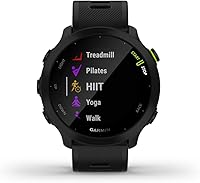
Having pool swim, cycling, HIIT, and Pilates profiles on an entry-level GPS watch is a genuine bonus for users with varied fitness routines. It means this entry-level GPS watch covers most weekly workouts without needing a second device.
The non-running profiles are functional rather than deep. Cyclists do not get cycling dynamics, swimmers get basic lap counts without advanced stroke metrics, and there is no open-water swim mode. For anyone who takes these sports seriously, the profiles scratch the surface but do not go much further.
Wellness & Recovery Tracking
69%
31%
All-day respiration tracking, fitness age estimates, and intensity minute accumulation give everyday users a meaningful snapshot of health trends without requiring any manual input. These features work quietly in the background and add context to training data over time.
Compared to newer Garmin models and some rivals, the recovery and readiness insights are limited. There is no Body Battery feature, no sleep score, and no morning readiness metric — data points that have become expected in wellness-focused wearables and that regular users often wish were present here.

Suitable for:

The Garmin Forerunner 55 GPS Running Watch is built for the kind of runner who is serious enough to want real data but not yet ready — or willing — to pay for a feature set they will never fully use. If you are training for your first 5K, working up to a half-marathon, or simply trying to run more consistently with some structure behind your efforts, this watch covers everything you genuinely need. Recreational runners who want to leave their phone at home and still capture accurate splits, pace, and heart rate will find the experience straightforward and reliable. The adaptive suggested workouts are a particular draw for self-coached runners who want guidance without hiring a coach or following a rigid app-based plan. Fitness-conscious individuals who mix running with pool swims, HIIT sessions, or cycling will also appreciate having one device that handles all of it at a price that does not require much deliberation.

Not suitable for:

The Garmin Forerunner 55 GPS Running Watch is not the right choice for runners who have outgrown entry-level tools and need deeper performance insights. If you are chasing marathon PRs and rely on training load metrics, recovery advisors, or VO2 max trend analysis to structure your season, this watch will leave gaps you will notice regularly. Multisport athletes — especially triathletes who need open-water swim tracking, cycling dynamics, or transition modes — should look further up the Garmin lineup. Anyone who wants their watch to double as a capable smartwatch — storing music for runs, tapping to pay at the coffee shop, or navigating turn-by-turn on trails — will find this device frustrating, as none of those features exist here. It also lacks an altimeter, which means elevation data is GPS-estimated rather than measured, a meaningful trade-off for trail runners and hill-focused training.

Specifications

  • Display Size: The watch features a 1.04″ sunlight-readable display with a resolution of 208 x 208 pixels.
  • Dimensions: The case measures 1.65 x 1.65 x 0.46 inches, keeping the profile slim and unobtrusive on the wrist.
  • Weight: The watch weighs just 1.31 oz, making it one of the lighter options in the entry-level GPS category.
  • Battery Life: In smartwatch mode, battery lasts up to 2 weeks; in active GPS mode, up to 20 hours per charge.
  • GPS: Built-in GPS enables standalone route, pace, and distance tracking without requiring a paired smartphone.
  • Heart Rate: A wrist-based optical sensor provides continuous all-day heart rate monitoring and intensity minute tracking.
  • Connectivity: Bluetooth is the sole wireless protocol, used for syncing with the Garmin Connect app and receiving smartphone notifications.
  • Water Resistance: The watch is rated for pool swimming, making it safe for submersion during swim workouts and in the rain.
  • Activity Profiles: Supported activity modes include running, track run, virtual run, cycling, pool swim, HIIT, Pilates, and breathwork.
  • Training Tools: Key training features include daily suggested workouts, PacePro GPS-based pacing, and race time predictions.
  • Wellness Features: All-day respiration tracking, fitness age estimation, and intensity minute accumulation are included wellness metrics.
  • Input Method: The watch is controlled entirely via physical buttons; there is no touchscreen.
  • Battery Type: The device is powered by a built-in rechargeable lithium polymer battery, included in the box.
  • Compatibility: Full functionality requires the Garmin Connect app on a compatible Android or iOS smartphone; Connect IQ expands customization options.
  • In the Box: Each unit ships with the Forerunner 55 watch, a proprietary power and data cable, and basic documentation.
  • Color Options: The watch is available in multiple colorways, including the Black variant covered in this review.
  • Target User: Designed as a unisex device for adult recreational and beginner runners across all fitness levels.
  • Release Date: The Forerunner 55 was first made available in June 2021 and remains an active product in Garmin's lineup.

Related Reviews
Garmin Forerunner 745 GPS Running Watch
85%
91%
GPS Accuracy
88%
Battery Life
85%
Sports Tracking Versatility
84%
Music Storage & Streaming
89%
Build Quality
More
Garmin Forerunner 955 GPS Running Smartwatch
88%
93%
GPS Accuracy
91%
Battery Life
88%
Build Quality
90%
Training Metrics
87%
Health Tracking Features
More
Garmin Forerunner 245 GPS Running Smartwatch
75%
92%
GPS Accuracy
89%
Battery Life
88%
Training Plan Quality
71%
Running Dynamics
91%
Comfort and Wearability
More
Garmin Forerunner 945 GPS Running/Triathlon Smartwatch
87%
95%
GPS Accuracy
92%
Battery Life
88%
Build Quality
90%
Comfort for Long Runs
85%
Music Storage & Playback
More
Garmin Fenix Enduro GPS Watch
85%
96%
Battery Life
92%
Build Quality & Durability
89%
Solar Charging Efficiency
88%
Activity Tracking Accuracy
75%
Ease of Use
More
Garmin Enduro 2 GPS Running Watch
81%
93%
Battery Life
91%
GPS Accuracy
89%
Build Quality & Durability
82%
Comfort & Fit
88%
Navigation & Mapping
More
Garmin DriveSmart 55 GPS Navigator
74%
88%
Screen Readability
83%
Routing Accuracy
79%
Live Traffic Updates
91%
Ease of Use
57%
Voice Recognition
More
Garmin Forerunner 265S Running Smartwatch
87%
94%
Battery Life
91%
GPS Accuracy
89%
Display Quality
87%
Comfort & Fit
90%
Health Tracking Features
More
Garmin Forerunner 965 Running Smartwatch
81%
93%
Display Quality
88%
GPS Accuracy
91%
Training & Recovery Insights
78%
Battery Life
89%
Build Quality & Design
More
Garmin Approach S62 Golf GPS Watch
87%
91%
Battery Life
85%
Ease of Use
89%
Display Quality
92%
Feature Set
88%
Build Quality
More

FAQ

No — the Forerunner 55 has built-in GPS, so it tracks your pace, distance, and route entirely on its own. Your phone only comes into play when you want to sync your data to the Garmin Connect app after the run.

Most runners find the GPS battery holds up close to the advertised 20 hours, which is better than many competing devices at this price. In smartwatch mode, expect somewhere between 10 and 14 days depending on how often Bluetooth is actively syncing — the full two-week figure assumes relatively conservative usage.

Unfortunately, no. The Garmin Forerunner 55 GPS Running Watch does not have onboard music storage or the ability to stream audio directly. You will still need your phone or a separate music player if you like listening to something while you run.

For steady runs and moderate-effort workouts, yes — the optical sensor is reliable enough to guide zone-based training for most recreational runners. However, during high-intensity intervals or sprint efforts, it can lag briefly before settling on an accurate reading. If you do a lot of threshold or speed work, a chest strap paired via Bluetooth will give you more precise data.

PacePro generates a pacing strategy for a target distance or course, then gives you real-time guidance on whether you are running ahead of or behind that plan. In practice, it works like a smart pacer on your wrist — it accounts for GPS-tracked terrain and nudges you to slow down early if you are burning through your reserves too fast.

It analyzes your recent activity history, current fitness level, and recovery status logged in Garmin Connect to suggest a workout type and intensity that makes sense for that day. After a few weeks of consistent use, the recommendations become noticeably more personalized and less generic.

Yes, the Forerunner 55 is suitable for pool swimming and has a dedicated pool swim activity profile that tracks laps and basic swim metrics. It is not rated for open-water swimming, so keep that in mind if you do open-water or triathlon training.

Yes, it is compatible with both iOS and Android devices via the Garmin Connect app. The pairing process is straightforward — connect over Bluetooth, download the app, and you are set up within a few minutes.

Yes — the Forerunner 55 uses a standard 20mm quick-release band, so swapping it out for a different material or style is easy and inexpensive. If the stock silicone band bothers your skin during longer efforts, there are plenty of aftermarket options available.

The Forerunner 245 adds onboard music storage, more advanced training load and recovery metrics, and a more refined performance analytics suite. If you run five or more times a week and follow a structured training plan seriously, the extra investment in the 245 is likely worth it. For runners doing three or fewer sessions weekly without a coach or formal plan, the Forerunner 55 covers the essentials at a more approachable price.

Where to Buy