Overview

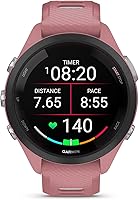
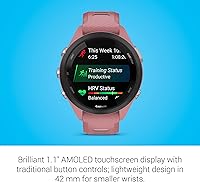
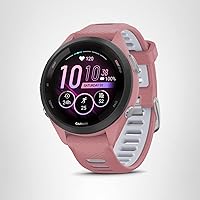
The Garmin Forerunner 265S Running Smartwatch is Garmin's answer to serious runners who want serious training data without lugging around a watch that feels oversized on their wrist. The 42mm case and AMOLED touchscreen mark a real step up from older E-ink Forerunner displays — colors are vivid, sunlight readability is strong, and the interface feels genuinely current. This watch sits in Garmin's mid-to-upper tier, below the flagship Fenix and Epix lines but well above entry-level options. At this price point, buyers are paying for training intelligence, not just hardware. If you want a fashion-forward smartwatch, look elsewhere — this one is built around performance data first and aesthetics second.

Features & Benefits

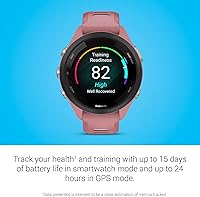
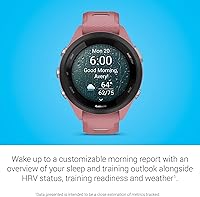
Wake up, glance at your wrist, and the Morning Report is already waiting — sleep quality, HRV status, training readiness, and the day's weather, all before you've made coffee. That kind of contextual awareness is where this compact training smartwatch earns its keep. Daily Suggested Workouts adapt based on how your body is actually recovering, not just a fixed plan you loaded months ago. Heading into a race? The race widget lets you build a personalized pacing strategy through Garmin Connect. Battery life reaches up to 15 days in regular use and around 24 hours with GPS active — impressive for a screen this bright. Physical buttons stay accessible in wet conditions when touch alone would frustrate.

Best For

This Garmin running watch is genuinely well-suited to smaller-wristed athletes — the 42mm case and 39-gram weight mean you barely notice it during long runs or overnight sleep tracking. It appeals most to runners in the recreational-to-competitive range who want smart training guidance without needing a sports science degree to interpret it. Multi-sport athletes will appreciate the 30-plus activity profiles, including open-water swimming and cycling. If you're already embedded in the Garmin Connect ecosystem with months of training history logged, the adaptive suggestions get noticeably smarter over time. Those upgrading from an older Forerunner will feel the difference immediately, both in display clarity and in the depth of recovery data now available.

User Feedback

Buyers consistently praise the display quality and how light the Forerunner 265S feels during all-day wear — those two points surface repeatedly in long-term owner reviews. The training data depth earns strong marks from runners who have moved well past basic pace and distance tracking. On the critical side, some users report a learning curve navigating Garmin's layered menus if they are coming from a simpler device, and occasional Bluetooth sync hiccups with the companion app have been flagged more than once. Real-world GPS battery life tends to land slightly under the advertised ceiling in mixed-use conditions. Most owners feel the investment holds up at this tier, though a handful mention the stock strap could offer better long-run comfort straight out of the box.

Pros

  • The AMOLED display is vivid and genuinely readable in direct sunlight, a clear upgrade over older Forerunner screens.
  • At 39 grams, this compact training smartwatch is light enough to forget you are wearing it on long runs.
  • The Morning Report pulls sleep, HRV, and training readiness into one glanceable dashboard before you start your day.
  • Daily Suggested Workouts adapt based on actual recovery data, not just a generic training plan.
  • Battery life holds up well for the display type, reaching close to two weeks in regular smartwatch use.
  • The race widget and personalized pacing tools give competitive runners a structured edge on race day.
  • Physical buttons remain fully usable with wet hands or gloves, which touchscreens alone cannot reliably offer.
  • The 30-plus activity profiles make the Forerunner 265S a credible multi-sport companion, not just a running watch.
  • HRV status and Body Battery give a more complete picture of readiness than heart rate alone.
  • Built-in multi-band GPS delivers solid positional accuracy for outdoor training sessions.

Cons

  • Third-party app selection is thin compared to Apple Watch, limiting everyday smartwatch versatility significantly.
  • New Garmin users often report a steep learning curve getting comfortable with the layered menu system.
  • Bluetooth sync with the Garmin Connect app can be inconsistent, occasionally requiring manual reconnection.
  • Real-world GPS battery life tends to fall a few hours short of the advertised ceiling in mixed-use conditions.
  • The stock silicone strap receives repeated complaints about comfort during long runs or in warm weather.
  • No offline music storage from major streaming platforms without a premium subscription on the connected service.
  • The 42mm case, while ideal for smaller wrists, may feel undersized to athletes used to larger sport watches.
  • Garmin Connect app interface feels cluttered and less intuitive than competing platforms for newer users.
  • Pulse Ox and sleep tracking accuracy, while useful for trends, should not be treated as clinical-grade data.
  • At this price tier, the absence of a more durable default strap feels like an oversight for a serious training tool.

Ratings

The Garmin Forerunner 265S Running Smartwatch earns its scores from a rigorous AI-driven analysis of verified global buyer reviews, with spam, bot-generated, and incentivized feedback actively filtered out before any scoring takes place. The result is an honest, balanced picture that captures what real runners love about this watch and where it falls short of expectations. Both standout strengths and persistent frustrations are reflected openly in the scores below.

Display Quality
93%
Owners consistently describe the AMOLED screen as one of the clearest they have used on a running watch, with colors that remain sharp and readable even under harsh midday sun. The always-on mode is bright enough to catch a quick glance during intervals without breaking stride.
A small number of users report that the always-on brightness drains battery faster than expected in warmer climates, and a few note minor glare issues at extreme low angles. These are edge cases rather than widespread complaints, but worth noting for outdoor use in bright conditions.
Training Intelligence
91%
The combination of Daily Suggested Workouts, Training Readiness, and HRV Status gives runners a genuinely adaptive coaching experience that updates after every session. Athletes preparing for half marathons and triathlons specifically praised how the suggestions shifted in response to harder training blocks.
New users often need two to three weeks of consistent wear before the metrics stabilize and start feeling accurate and personalized. Some buyers coming from simpler devices found the volume of data initially overwhelming rather than motivating.
Comfort and Fit
88%
At 39 grams, the Forerunner 265S practically disappears on the wrist during long runs, and wearers with smaller wrists repeatedly note how well-proportioned the 42mm case feels compared to bulkier sport watches. Overnight sleep tracking becomes effortless when the watch is this unobtrusive.
The stock silicone strap is the most consistent gripe in long-term reviews, with a notable number of buyers replacing it within the first few months due to irritation or stiffness during extended wear in heat. The band material feels functional rather than premium for the price tier.
Battery Performance
79%
21%
For a watch with a vivid AMOLED display, the battery life is genuinely competitive. Runners logging five to six GPS hours per week typically get seven to ten days of total use, which is enough to avoid the daily charging anxiety that plagues many smartwatches in this class.
The advertised 15-day smartwatch figure assumes minimal GPS use and reduced display activity, which does not reflect how most active users actually wear the watch. Real-world GPS endurance tends to fall a few hours short of the 24-hour ceiling, particularly with heart rate and Pulse Ox running continuously.
GPS Accuracy
82%
18%
Multi-band GPS delivers noticeably tighter track mapping in city environments with tall buildings and on wooded trail routes where single-band watches tend to drift. Distance and pace data holds up well across a variety of terrain types according to the majority of owner reports.
GPS lock time receives occasional criticism, particularly on cold early morning starts where the satellite acquisition can stretch to a frustrating two minutes or more. Keeping the watch synced with the Garmin Connect app regularly helps, but it remains an inconsistent experience for some users.
App and Ecosystem
72%
28%
For runners already inside the Garmin Connect ecosystem, the integration is genuinely strong — years of historical data carry over instantly, and the Connect app provides deep analytics that casual fitness apps simply do not offer. Race planning through the app and then viewing the strategy on the watch works smoothly once set up correctly.
New Garmin users frequently describe the Connect app as cluttered and less intuitive than competing platforms. Bluetooth sync failures that require force-quitting the app or restarting the watch appear more often than they should at this price level, and this remains one of the more persistent complaints in recent reviews.
Health Monitoring
84%
The breadth of passive health tracking — Body Battery, stress score, Pulse Ox, sleep stages, and HRV trends — gives users a genuinely holistic view of how daily life and training interact over weeks and months. Many owners say this long-term trend visibility changed how they approached rest days.
Pulse Ox and sleep accuracy readings occasionally diverge from clinical devices enough to cause confusion for users who track these metrics closely for health reasons. Garmin's own disclaimers acknowledge these are estimations, but buyers expecting precision comparable to medical-grade tools may be disappointed.
Smartwatch Features
61%
39%
Notification mirroring, contactless payments via Garmin Pay, and music control through Bluetooth headphones cover the basics well enough for most daily use scenarios. Runners who primarily want a great training watch and light smart features will find nothing to complain about here.
Third-party app selection through Garmin's Connect IQ platform is modest compared to Apple Watch or Wear OS devices, and buyers expecting a full smartwatch experience will feel the limitations quickly. This watch is built around training first, and the smart features reflect that priority clearly.
Value for Money
74%
26%
For dedicated runners who will actively use the training intelligence features, the price aligns reasonably with what is delivered — the AMOLED display, adaptive training tools, and multi-sport profiles together represent a meaningful upgrade over mid-range alternatives in the same category.
Casual fitness trackers or buyers who simply want step counts and sleep data will find the price difficult to justify against simpler, more affordable competitors. A handful of long-term owners also feel the stock strap quality does not match what is expected from a premium-tier device, adding an early extra cost.
Ease of Setup
67%
33%
For anyone who has owned a Garmin device before, initial setup is familiar and relatively fast. Pairing over Bluetooth, creating a Garmin Connect profile, and getting a first run tracked can all be done within about 20 minutes in straightforward conditions.
First-time Garmin users report that the initial configuration feels more involved than competing devices, with multiple app permissions, data syncs, and settings to navigate before the watch starts delivering personalized insights. The learning investment is real, and some buyers underestimated it at purchase.
Durability
83%
The watch body itself holds up well through daily training use, with owners reporting minimal scratching on the display and solid build quality after a year or more of regular wear. Water resistance performs as expected across open-water swims and heavy rain without any reported seal failures.
The silicone strap shows wear faster than the watch body, with discoloration and minor tearing appearing in some owner reports after six to twelve months of daily use. Replacing it is easy given the quick-release system, but it is an additional cost that should be factored in.
Wrist-Based Heart Rate
77%
23%
During steady-state runs and moderate-intensity workouts, the optical heart rate sensor tracks consistently and correlates closely with chest strap data in the majority of user comparisons. The continuous all-day monitoring is smooth and does not noticeably impact battery in typical usage patterns.
Accuracy drops during high-intensity intervals and strength training where wrist movement introduces optical noise, a known limitation of wrist-based sensors across brands. Users training seriously for racing events may still prefer pairing an external chest strap for session-critical data.
Activity Profile Depth
86%
Triathletes specifically called out the breadth and accuracy of multi-sport transitions, and open-water swim tracking received consistent praise for holding pace and distance estimates reasonably well without GPS underwater. The variety of profiles means most athletes find their primary sport well represented.
Some niche activity profiles feel shallower in metric depth compared to the running and cycling modes, which have clearly received more development attention. Strength training and yoga profiles in particular offer limited auto-set detection and post-workout analytics relative to what dedicated fitness apps provide.

Suitable for:

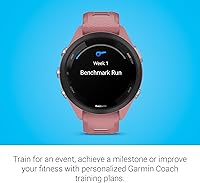
The Garmin Forerunner 265S Running Smartwatch was clearly designed with a specific runner in mind: someone who trains consistently, cares about recovery as much as performance, and has a wrist that standard 45mm sport watches simply overwhelm. At 39 grams and 42mm, it sits comfortably through long runs, overnight sleep tracking, and everything in between without ever feeling intrusive. Recreational runners preparing for their first half marathon will find the Daily Suggested Workouts and Training Readiness score genuinely useful for avoiding the trap of overtraining, while more competitive athletes can lean into the HRV tracking, VO2 Max estimates, and race-day pacing tools to fine-tune their preparation. Multi-sport athletes — triathletes especially — get real value from the breadth of activity profiles, including open-water swimming and cycling. If you are already invested in the Garmin Connect ecosystem and have months of training history logged, the adaptive suggestions become meaningfully smarter over time, making this watch a strong long-term training partner rather than just a data collector.

Not suitable for:

The Garmin Forerunner 265S Running Smartwatch is not the right choice if your priority is everyday smartwatch functionality over athletic performance — third-party app support is limited compared to Apple Watch or Wear OS devices, and the interface reflects Garmin's training-first philosophy rather than a general-purpose smart device experience. Buyers who rarely run or who just want basic step counting and notification mirroring will find the price difficult to justify against far simpler and more affordable alternatives. If you have larger wrists, the 42mm case may feel proportionally small and the 265 in its standard 46mm sizing would suit you better. New-to-Garmin users should also be prepared for a real learning curve — navigating menus, setting up Garmin Connect, and understanding metrics like Body Battery or Training Status takes time and patience. Finally, anyone expecting a fully polished, frustration-free companion app experience on day one may encounter occasional sync hiccups that require some tolerance.

Specifications

  • Display: The watch features a 1.1-inch AMOLED touchscreen with always-on capability and strong sunlight visibility.
  • Case Size: The round case measures 42mm in diameter, designed specifically for smaller or narrower wrists.
  • Weight: The watch body weighs 39 grams, making it one of the lighter options in its feature class.
  • Dimensions: Overall case dimensions are 1.64 x 1.64 x 0.51 inches, keeping the profile slim on the wrist.
  • Battery Life: In standard smartwatch mode, battery lasts up to 15 days on a single charge under typical conditions.
  • GPS Battery: With continuous GPS active, the watch provides up to 24 hours of tracking before requiring a recharge.
  • Storage: 8 GB of onboard storage is available for music, maps, and activity data.
  • Connectivity: The watch connects via Bluetooth, Wi-Fi, and USB for syncing, charging, and data transfer.
  • GPS Type: Built-in multi-band GPS delivers improved positional accuracy, particularly in dense urban or tree-covered environments.
  • Heart Rate: Wrist-based optical heart rate monitoring runs continuously throughout the day and during all tracked activities.
  • Sensors: Onboard sensors include Pulse Ox, HRV monitor, stress tracker, and hardware supporting VO2 Max estimation.
  • Activity Profiles: More than 30 built-in activity profiles are available, covering running, cycling, triathlon, open-water swimming, and more.
  • Key Metrics: Core training intelligence metrics include Training Readiness, Body Battery, Training Status, HRV Status, and Sleep Coach.
  • Band Type: The watch ships with an interchangeable silicone strap compatible with standard Garmin quick-release band systems.
  • Battery Type: A rechargeable lithium polymer battery powers the device and is included factory-installed at purchase.
  • OS Compatibility: The Garmin Connect companion app is compatible with Android devices for syncing training data and configuring the watch.
  • Water Rating: The Forerunner 265S is rated for swimming and water exposure, supporting open-water swim activity tracking.
  • Controls: The watch combines a responsive touchscreen with five physical buttons for reliable input in all weather conditions.
  • Platform: Training plans, race strategy, and workout suggestions are managed and customized through the Garmin Connect mobile app.
  • Manufacturer: The watch is designed and manufactured by Garmin, a company with an established history in GPS and fitness wearables.

Related Reviews
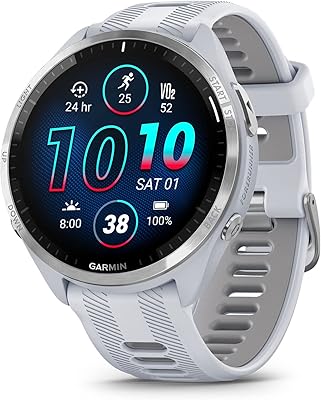
Garmin Forerunner 965 Running Smartwatch
81%
93%
Display Quality
88%
GPS Accuracy
91%
Training & Recovery Insights
78%
Battery Life
89%
Build Quality & Design
More
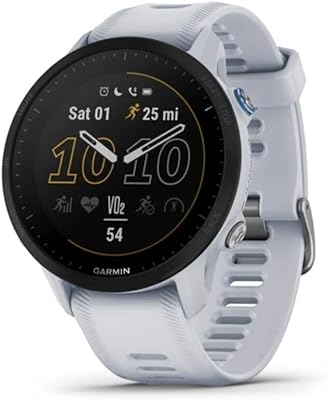
Garmin Forerunner 955 GPS Running Smartwatch
83%
94%
Battery Life
91%
GPS Accuracy
68%
Touchscreen Responsiveness
86%
Display Quality
88%
Training Readiness & Recovery
More
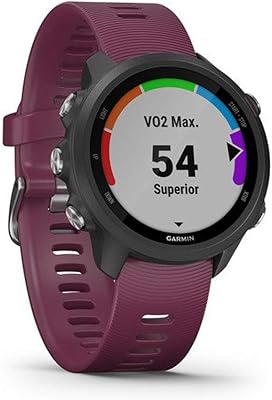
Garmin Forerunner 245 GPS Running Smartwatch
75%
92%
GPS Accuracy
89%
Battery Life
88%
Training Plan Quality
71%
Running Dynamics
91%
Comfort and Wearability
More
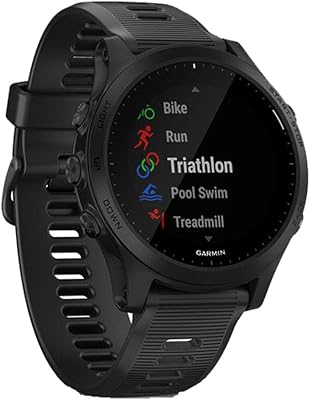
Garmin Forerunner 945 GPS Running Triathlon Smartwatch
79%
92%
GPS Accuracy
94%
Training Analytics
76%
Battery Life
91%
Multisport Tracking
62%
Display Quality
More
Garmin Forerunner 745 GPS Running Watch
85%
91%
GPS Accuracy
88%
Battery Life
85%
Sports Tracking Versatility
84%
Music Storage & Streaming
89%
Build Quality
More
Garmin Forerunner 55 GPS Running Watch
79%
91%
GPS Accuracy
88%
Battery Life
78%
Heart Rate Monitoring
93%
Ease of Setup & Use
84%
Training Features
More
Garmin Forerunner 165 Running Smartwatch
81%
93%
Display Quality
76%
GPS Accuracy
91%
Training & Coaching Features
71%
Battery Life
68%
Heart Rate Monitoring
More
Garmin Forerunner 735XT Multisport GPS Watch
79%
91%
GPS Accuracy
73%
Heart Rate Accuracy
88%
Battery Life
86%
Multisport Mode Functionality
84%
Build Quality & Durability
More
Garmin Forerunner 255 GPS Running Smartwatch
83%
93%
Battery Life
88%
GPS Accuracy
91%
Training Intelligence
79%
Sleep & Recovery Tracking
92%
Comfort & Wearability
More
Garmin Bounce Kids Smartwatch
76%
88%
GPS Accuracy
82%
Two-Way Messaging
61%
Battery Life
91%
Durability
53%
Subscription Value
More

FAQ

Daily GPS use will bring you well below the advertised 15-day smartwatch figure, as expected. Most runners using GPS for an hour each day report getting somewhere between 6 and 9 days before needing a charge, which is still solid for a watch with a bright AMOLED screen. If you run less frequently or use lower-accuracy GPS modes, you will get closer to the upper end of that range.

Honestly, it does look proportionally compact on larger wrists. The Forerunner 265S was built with smaller wrists in mind, and if your wrist circumference is on the larger side, you may prefer the standard 265 in its bigger case. It is fully functional either way, but the fit and visual balance will feel more natural on slimmer wrists.

You can use the watch for basic tracking without a Garmin Connect account, but you will be missing most of what makes it worth the price. Features like Daily Suggested Workouts, race planning, Training Readiness, and historical trend analysis all depend on syncing with Garmin Connect. Setting up an account is free and straightforward, so it is worth doing from day one.

Yes, it works with iPhone as well — the Android label in the product listing refers to the watch's own operating system, not a restriction on phone compatibility. The Garmin Connect app is available on both iOS and Android, and the watch pairs via Bluetooth with either platform without any meaningful difference in functionality.

It is a genuinely useful guideline rather than an exact science. The score pulls together your sleep quality, HRV trends, recent training load, and recovery data to give you a picture of how prepared your body is for hard effort. Most users find it correlates well with how they actually feel, though it can lag slightly after poor sleep or unusual stress. Treat it as informed guidance, not a prescription.

Your Garmin Connect history stays fully intact in the cloud, so switching devices does not mean losing your data. Once you pair the Forerunner 265S with your existing Garmin Connect account, it picks up where your previous watch left off and the adaptive suggestions begin incorporating your historical training load. It is a relatively smooth transition for existing Garmin users.

The watch has 8 GB of storage, but music playback from the watch itself depends on the specific app and subscription you use. Spotify, Deezer, and Amazon Music can sync playlists to the watch for offline listening, though each typically requires a premium subscription on that platform. Once synced, you can leave your phone behind and pair Bluetooth headphones directly to the watch.

Touch sensitivity can be inconsistent when the screen is very wet, which is exactly why Garmin kept the five physical buttons on this model. During rainy runs or sweaty intervals, the buttons handle navigation reliably while the touchscreen is better suited for calmer moments like reviewing your stats after a workout. It is a practical design choice rather than a limitation.

Under open sky, GPS lock typically happens within 30 to 60 seconds once the watch has been recently synced. Some users report slower lock times in areas with tall buildings or heavy tree cover, and a handful note that early morning locks can occasionally take longer if the satellite cache is outdated. Syncing with the app regularly through Wi-Fi helps keep the GPS almanac current and speeds things up.

They are related but distinct. HRV Status reflects trends in your heart rate variability over several weeks, indicating whether your autonomic nervous system is balanced or under strain. Training Readiness is a broader composite score that uses HRV Status as one input alongside sleep quality, recovery time, and recent training load. Think of HRV Status as one ingredient and Training Readiness as the final summary score that helps you decide how hard to push on a given day.