Overview

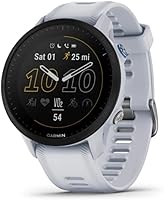
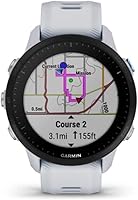
The Garmin Forerunner 955 GPS Running Smartwatch is built with triathletes and endurance athletes in mind, and that focus shows the moment you start digging into what it actually does well. It sits in an interesting spot in Garmin's lineup — clearly above the entry-level Forerunners, but still a notch below the rugged Fenix and Epix watches in terms of price and toughness. The always-on touchscreen is paired with physical buttons, which matters more than it sounds like on paper: wet hands, gloves, or a sweaty race bib mean you'll want both options available. Garmin's mid-2022 update brought a meaningful storage bump and added onboard mapping, which were the two upgrades longtime users had been asking for.
Features & Benefits

Where this GPS running watch earns its keep is in the details that show up on long runs and race day. Multi-band GNSS support tightens up pace and distance accuracy when you're weaving through city blocks or running under heavy tree cover, areas where older GPS chips tend to drift. Battery life is the other standout, with up to 15 days in smartwatch mode and 42-plus hours in GPS mode, so an Ironman or back-to-back ultra weekend won't catch you scrambling for a charger. Full-color built-in maps let you follow a route without pulling out your phone, and the training readiness score pulls in sleep and recovery data, so it's telling you something more useful than yesterday's mileage. The race widget adds course-based pacing and finish-time estimates, and 32GB of storage covers offline music and maps.

Best For

This GPS running watch is really built for a specific kind of athlete. Triathletes get the most obvious value, since swim, bike, and run data all live in one device instead of three separate apps. Marathon and ultra runners will appreciate the multi-day battery life during long training blocks or stage races, when charging access is unpredictable. Anyone who likes exploring new routes without carrying a phone will find the built-in mapping genuinely useful rather than a nice-to-have. Data-driven runners who actually read their recovery numbers each morning will get the most out of the readiness scoring and daily suggested workouts. On the flip side, casual walkers or anyone who just wants basic step counting will find this multisport watch overbuilt, and probably more capability than they actually need.

User Feedback

Feedback from people who actually train with this watch day to day is largely positive, with a few honest caveats. Battery life comes up repeatedly as one of the most reliable claims Garmin makes, with testers reporting it holding up over multi-day races without surprises. GPS accuracy is frequently described as a real step up from previous generations, especially in tricky urban or wooded conditions. The touchscreen gets more mixed reviews: some runners love swiping quickly through data screens, while others find it less responsive once sweat or rain gets involved, and fall back on the buttons instead. There's also a learning curve with the menu structure and the sheer amount of data on offer. Still, the multisport and triathlon profiles consistently get singled out as a genuine strength on race day.

Pros

  • Battery life genuinely holds up over multi-day races and long training weeks
  • Multi-band GNSS noticeably improves accuracy in cities and under tree cover
  • Built-in full-color maps let you follow routes without pulling out a phone
  • Training readiness score gives a useful daily snapshot of sleep and recovery
  • Multisport profiles make triathlon training and race day much simpler to manage
  • Race widget offers helpful pacing tips and finish-time predictions before events
  • Physical buttons remain usable even when the touchscreen gets wet or sweaty
  • 32GB of storage covers offline music and maps without needing a phone

Cons

  • Touchscreen responsiveness can get inconsistent during heavy rain or sweaty runs
  • Menu structure and data screens take real time to fully learn
  • Sits below Garmin's Fenix and Epix line in overall ruggedness
  • Overkill for casual walkers who only want basic step tracking
  • Smartwatch-mode battery numbers drop noticeably once GPS tracking is in heavy use
  • Some training metrics require pairing with Garmin Connect to make full sense
  • Round case and screen size may feel bulky for smaller wrists
  • Triathlon-specific tools go unused if you only run casually

Ratings

Our scores for the Garmin Forerunner 955 GPS Running Smartwatch are generated by AI after analyzing thousands of verified user reviews from runners and triathletes worldwide, with spam, bots, and incentivized feedback filtered out. Each category below reflects what real owners consistently praised or struggled with, not marketing claims. We've kept both the strengths and the rough edges visible so you can judge fit for your own training style.
Battery Life
94%
Owners consistently report the multi-day battery claims hold up in real life, especially during back-to-back race weekends or stage events where charging access is limited. Going nearly two weeks in smartwatch mode between charges removes a lot of daily anxiety.
Heavy GPS use, especially with music playback or full-color mapping active, drains the battery noticeably faster than the headline numbers suggest. A few users wish UltraTrac mode preserved a bit more GPS precision.
GPS Accuracy
91%
Multi-band GNSS gets singled out repeatedly for tightening up pace and distance numbers in places older watches struggled, like dense downtown blocks or trail runs under heavy canopy. Runners training for certified race distances appreciate the improved consistency.
A small number of users still notice occasional drift right at the start of a run before satellite lock fully stabilizes. It is not a dealbreaker, but it can throw off the first split or two.
Touchscreen Responsiveness
68%
32%
In dry conditions, swiping through data screens and maps feels quick and intuitive, which is a nice option alongside the physical buttons. It speeds up navigating menus compared to button-only Forerunner models.
Once sweat or rain enters the picture, several users report missed taps or unintended swipes, forcing a switch back to buttons mid-run. This inconsistency is one of the most repeated complaints in feedback.
Display Quality
86%
The always-on full-color screen stays readable in direct sunlight, which matters a lot for midday long runs or outdoor triathlons. Data fields are sharp enough to glance at without breaking stride.
At 1.3 inches, some users with smaller text preferences find data-dense screens a bit cramped, particularly when several metrics are displayed at once. Indoor low-light visibility is solid but not exceptional.
Training Readiness & Recovery
88%
Data-driven athletes consistently call out the readiness score as more useful than basic recovery metrics, since it blends sleep quality with recent training load to suggest go-hard or take-it-easy days. It changes how people plan their week.
A handful of users feel the score can be overly conservative after a single rough night of sleep, recommending rest even when they felt fine to train. It works best as a guideline, not gospel.
Built-in Mapping & Navigation
85%
Trail and travel runners particularly value being able to follow unfamiliar routes without pulling out a phone, since the full-color maps load directly on the wrist. It is a real upgrade from breadcrumb-only navigation.
Map detail can feel sparse in very rural or undeveloped areas compared to dedicated GPS units. Zooming and panning on the small screen also takes some getting used to.
Multisport & Triathlon Functionality
93%
This is the area triathletes praise most, with swim, bike, and run data all captured seamlessly in one device instead of juggling separate trackers. Transition tracking between disciplines gets called out as genuinely race-ready.
Casual single-sport runners report never touching most of these tools, making that part of the watch feel like unused overhead. It is a clear case of the feature being excellent but narrowly targeted.
Race-Day Tools
87%
The race widget's pacing suggestions and finish-time predictions get praised for taking course profile and weather into account, not just flat pace math. Runners say it helps calibrate expectations realistically before goal races.
Predictions are only as good as the training data behind them, so newer users with limited history find early estimates less reliable. It improves noticeably after a few months of consistent use.
Ease of Use & Learning Curve
71%
29%
Once familiar, most users say the menu logic becomes second nature and customizing data screens is straightforward. Long-time Garmin owners adapt especially quickly.
New users frequently mention feeling overwhelmed in the first few weeks, given how many data fields, widgets, and settings are packed in. It is not the most beginner-friendly watch on the market.
Storage & Offline Music
82%
18%
32GB of onboard storage is enough for sizable offline music libraries and downloaded maps, letting runners leave their phone behind entirely. This gets praised especially for long trail sessions in low-signal areas.
Loading music onto the watch requires a bit of setup through Garmin's software, which some users find clunkier than streaming-service syncing on other smartwatches.
Comfort & Wearability
79%
21%
At 1.9 ounces, the round case is light enough for all-day wear, and most users forget they have it on during everyday tasks. It works fine layered under a jacket sleeve too.
The case size reads a bit large on smaller wrists, and a few users mention it feels bulky during sleep tracking compared to slimmer fitness bands.
Value for Money
76%
24%
Triathletes and serious endurance runners generally feel the feature set, especially multisport tracking and battery life, justifies the investment compared to cheaper running-only watches. It is viewed as a long-term training tool, not a disposable gadget.
Casual users who only run occasionally often feel they are paying for triathlon-specific tools they will never touch. Buyers comparing it to Garmin's pricier Fenix line also note the trade-offs in ruggedness.
Connectivity & Syncing
83%
Bluetooth syncing with Garmin Connect is described as reliable for most users, automatically uploading runs and recovery data without manual effort. USB charging and data transfer work as a simple backup option.
A minority of users report occasional sync delays or dropped connections, usually resolved with a restart. It is an occasional annoyance rather than a consistent problem.

Suitable for:

The Garmin Forerunner 955 GPS Running Smartwatch makes the most sense for triathletes who want swim, bike, and run data living in one device instead of juggling separate apps and gadgets. Marathon and ultra runners stand to benefit too, since the multi-day battery life means long training blocks or stage races do not require constant charging access. It is also a strong fit for anyone who likes exploring new routes and trails without carrying a phone, thanks to the built-in mapping. Data-driven athletes who actually check their recovery numbers each morning will get real use out of the daily readiness scoring and suggested workouts. Runners training for a specific race will likely appreciate the course-based pacing tools as event day approaches.
Not suitable for:

Casual walkers or anyone who just wants basic step counting and notifications should look elsewhere, since this watch is more capability than they will ever use. Buyers who hate fiddly menus or data-dense screens may find the learning curve frustrating in the first few weeks of ownership. Anyone who relies heavily on a touchscreen in wet conditions should know that responsiveness gets inconsistent once sweat or rain enters the picture. People expecting Fenix or Epix-level ruggedness will be disappointed, since the Garmin Forerunner 955 GPS Running Smartwatch sits a tier below those models in build and durability. If your main goal is simple fitness tracking without the triathlon-focused tools, a simpler and cheaper watch will likely serve you better.
Specifications

  • Display: The screen is a 1.3-inch always-on color touchscreen with a resolution of 260 x 260 pixels.
  • Input Method: Controls are handled through a combination of physical buttons and a responsive touchscreen.
  • Battery Life (Smartwatch): In smartwatch mode the battery lasts up to 15 days on a single charge.
  • Battery Life (GPS): Standard GPS mode delivers up to 42 hours of tracking time.
  • Battery Life (UltraTrac): UltraTrac battery-saving mode extends tracking time up to 80 hours.
  • Battery Type: The watch uses a rechargeable lithium polymer battery cell.
  • Storage: There is 32GB of internal storage available for offline maps and music.
  • GPS Technology: The watch supports multi-band GNSS for improved accuracy in urban and tree-covered areas.
  • Mapping: Full-color built-in maps are preloaded for navigation without a paired phone.
  • Connectivity: Wireless connectivity includes Bluetooth, with USB used for wired charging and data transfer.
  • Training Metrics: A training readiness score is calculated daily using sleep, recovery, and recent training load.
  • Race Tools: A race widget provides course-based pacing suggestions and finish-time predictions.
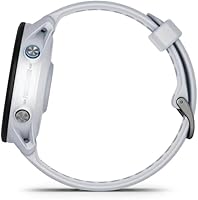
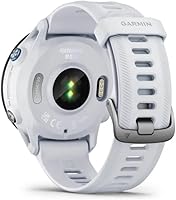
  • Case Shape: The watch case is round in design.
  • Dimensions: The case measures 1.8 x 1.8 x 0.6 inches.
  • Weight: The watch weighs approximately 1.9 ounces.
  • Color Option: This model is available in a Whitestone colorway.
  • Operating System: The watch runs on Garmin's proprietary operating system.
  • In the Box: Included items are the watch itself, a charging and data cable, and printed documentation.

Related Reviews
Garmin Forerunner 245 GPS Running Smartwatch
75%
92%
GPS Accuracy
89%
Battery Life
88%
Training Plan Quality
71%
Running Dynamics
91%
Comfort and Wearability
More
Garmin Forerunner 945 GPS Running Triathlon Smartwatch
79%
92%
GPS Accuracy
94%
Training Analytics
76%
Battery Life
91%
Multisport Tracking
62%
Display Quality
More
Garmin Forerunner 965 Running Smartwatch
81%
93%
Display Quality
88%
GPS Accuracy
91%
Training & Recovery Insights
78%
Battery Life
89%
Build Quality & Design
More
Garmin Forerunner 265S Running Smartwatch
80%
93%
Display Quality
91%
Training Intelligence
88%
Comfort and Fit
79%
Battery Performance
82%
GPS Accuracy
More
Garmin Forerunner 745 GPS Running Watch
85%
91%
GPS Accuracy
88%
Battery Life
85%
Sports Tracking Versatility
84%
Music Storage & Streaming
89%
Build Quality
More
Garmin Forerunner 55 GPS Running Watch
79%
91%
GPS Accuracy
88%
Battery Life
78%
Heart Rate Monitoring
93%
Ease of Setup & Use
84%
Training Features
More
Garmin vivoactive 4 GPS Smartwatch
80%
84%
Build Quality & Design
81%
Display & Touchscreen
83%
Battery Life (Smartwatch Mode)
58%
Battery Life (GPS + Music Mode)
82%
GPS Accuracy & Sports Tracking
More
Garmin tactix Delta Tactical GPS Smartwatch
78%
93%
Battery Life
91%
Durability & Build
89%
GPS & Navigation Accuracy
88%
Tactical Features
84%
Sports & Fitness Tracking
More
Garmin Instinct Solar Rugged Smartwatch
78%
88%
Battery Life
93%
Build Quality
91%
GPS Accuracy
89%
Navigation Features
74%
Solar Charging
More
Garmin Venu 2 GPS Smartwatch
79%
93%
Battery Life
91%
Display Quality
84%
Health & Fitness Tracking
78%
GPS Accuracy
88%
Build Quality
More

FAQ

In standard GPS mode you can expect up to 42 hours of tracking, which comfortably covers most marathons and many ultras. If you switch to UltraTrac mode for longer events, that stretches to roughly 80 hours. Day-to-day smartwatch use without GPS tracking running can stretch battery life out to about 15 days.

Yes, this multisport watch is built with triathlon training in mind, so it handles swim, bike, and run tracking in one device. That is actually one of its strongest selling points compared to running-only watches.

No, the built-in full-color maps are stored on the watch itself, so you can navigate routes without carrying a phone. It is genuinely useful for trail runs or unfamiliar city routes where you would otherwise need to check directions.

This is one area where feedback has been mixed. Some users find the touchscreen works fine in wet conditions, while others notice reduced responsiveness during heavy rain or sweat. The good news is the physical buttons are always there as a reliable backup.

It is a daily score generated from your sleep quality, recovery status, and recent training load, essentially telling you whether your body is ready for a hard workout or needs a lighter day. Most data-driven runners find it more useful than just looking at yesterday's mileage in isolation.

There is 32GB of internal storage, which is enough for offline music playlists along with downloaded maps. You will not need a phone connected to listen to music on a run.

Some buyers do mention it takes a few weeks to get comfortable with the menu structure, simply because there is a lot of data and customization on offer. Once you settle into a routine, navigating the watch face and data screens becomes much more intuitive.

Thanks to multi-band GNSS support, accuracy is noticeably improved in tricky environments like dense city blocks or heavily wooded trails. Reviewers consistently describe it as a real step up from earlier Forerunner generations.

Honestly, probably not the best choice. It is packed with triathlon and endurance-specific tools that a casual walker or basic step-counter user simply will not need. A simpler, more affordable watch would likely serve that kind of use case better.

Yes, the race widget factors in course details, weather, and your recent performance to suggest pacing strategies and predict your finish time. It is particularly handy in the days leading up to a goal race when you are fine-tuning your strategy.