Overview

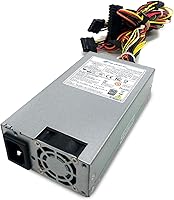
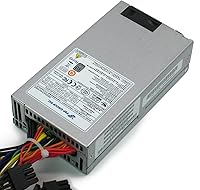
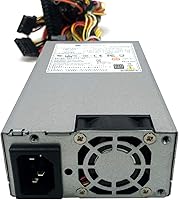
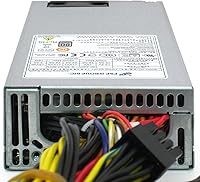
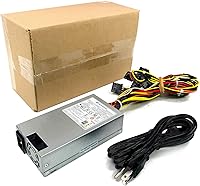
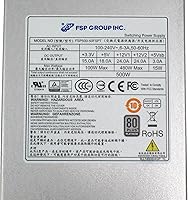
The FSP FSP500-50FSPT Flex ATX 500W Power Supply occupies a narrow but important corner of the PC building market — it exists specifically for builders who have run out of options in standard ATX territory. If your chassis demands a Flex ATX form factor, the shortlist of quality units is short, and this compact power supply sits near the top of it. Rated at 80 Plus Platinum, it punches above what you might expect from a specialty unit, delivering genuine efficiency rather than just ticking a certification box. That said, if you are not already shopping for Flex ATX, this is not the unit for you.

Features & Benefits

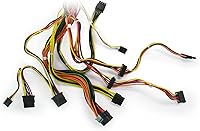
What makes this Flex ATX unit worth a closer look is not just the platinum rating — it is how FSP has engineered reliability into a genuinely constrained space. The 100K hour MTBF rating, backed by a vacuum-impregnated transformer and full burn-in testing under high-temperature conditions, speaks to a unit built to run continuously without complaint. Protection coverage is thorough: over-voltage and short circuit protection on every output, plus a resettable shutdown rather than a one-and-done fuse. The connector set is surprisingly complete, with dual 8-pin CPU headers, SATA, IDE, and even a floppy header. PMBus v1.2 support rounds things out for anyone running monitoring software in a compact workstation or server context.

Best For

The FSP500-50FSPT is a natural fit for compact workstation builders and anyone putting together a home server in a chassis that physically cannot accommodate a standard or SFX supply. It also makes sense as an upgrade path for pre-built SFF machines that shipped with an underpowered or aging OEM unit. The platinum efficiency matters more than usual here, because small enclosures trap heat and every wasted watt compounds. Where this compact power supply earns its premium is in always-on scenarios — NAS boxes, light servers, or workstations that run through the night. If you need something cheaper and only run it occasionally, the calculus changes.

User Feedback

Across 122 ratings, the FSP500-50FSPT lands at 3.9 stars — honest, not glowing, and about right for a niche product at a premium price. Buyers consistently praise its reliable, stable output and the simple fact that it fits where almost nothing else will. The criticisms are equally consistent: the 40 mm fan runs audibly under load, which is a physics problem as much as a design one — there is only so much airflow a 4 cm fan can move quietly. Price also comes up regularly. Most buyers accept it given how few Flex ATX alternatives exist, but some note chassis compatibility quirks worth verifying before purchase.

Pros

  • 80 Plus Platinum efficiency is rare at this form factor and meaningfully reduces heat buildup in cramped enclosures.
  • Dual 8-pin CPU connectors give builders flexibility that many competing Flex ATX units simply do not offer.
  • The 100,000-hour MTBF rating and vacuum-impregnated transformer point to a unit designed for long, continuous operation.
  • Comprehensive protection on every output — over-voltage, short circuit, and resettable shutdown — adds real peace of mind for valuable components.
  • The FSP FSP500-50FSPT ships with a complete connector set, including SATA, IDE, and a floppy header for legacy storage devices.
  • PMBus v1.2 support lets advanced users monitor power delivery, which is genuinely useful in server or workstation contexts.
  • 100% hi-pot and burn-in tested before leaving the factory, which shows in the consistent reliability users report.
  • At 5.9 x 3.2 x 1.6 inches, this compact power supply fits chassis where almost no other quality unit will.
  • Users consistently report stable, clean output with no voltage fluctuation issues over extended periods.

Cons

  • The 40 mm fan runs audibly under load — unavoidable physics at this size, but a real issue in quiet environments.
  • Pricing sits at a notable premium, and buyers who do not strictly need Flex ATX are overpaying for the form factor constraint.
  • The Flex ATX segment has so few competitors that comparing value objectively before buying is genuinely difficult.
  • Some users have reported chassis and cable compatibility surprises, making pre-purchase research more important than usual.
  • 500W headroom is tight for systems with power-hungry discrete GPUs; sustained loads near the ceiling are not advisable.
  • The small fan means the unit runs warmer than larger PSUs, which can be a concern in already poorly ventilated cases.
  • No modular cabling, so managing the full harness inside a compact chassis requires extra patience and planning.
  • Availability can be inconsistent, and finding a replacement unit quickly if something goes wrong is not guaranteed.

Ratings

Our AI rating system analyzed verified buyer reviews for the FSP FSP500-50FSPT Flex ATX 500W Power Supply from multiple global sources, actively filtering out incentivized, bot-generated, and low-signal feedback to surface what real builders actually experience. The scores below reflect both the genuine strengths that keep this unit on short lists and the friction points that cause hesitation — nothing has been softened or inflated. If you are in the Flex ATX market, this is the most honest summary of community sentiment you will find in one place.

Form Factor Fit
93%
For builders locked into a Flex ATX chassis, this compact power supply fits with minimal fuss where almost nothing else will. Reviewers assembling tight workstations and home servers consistently call it one of the few quality options that actually meets the physical spec without modification.
That same precision fit becomes a liability if your chassis dimensions are even slightly non-standard. A handful of users reported clearance issues with specific enclosures, which reinforces how important it is to verify measurements before purchasing.
Output Stability
88%
Measured voltage output is consistently praised for staying clean and steady under sustained load. Users running always-on workstations and home servers report no voltage fluctuation issues over extended periods, which matters a great deal when sensitive components are involved.
A small number of buyers reported instability under peak loads close to the 500W ceiling, suggesting the unit performs best when not pushed to its absolute limit for prolonged periods.
Efficiency Rating
91%
The 80 Plus Platinum certification is not just a marketing badge here — users running this compact power supply in 24/7 environments notice the reduced heat output compared to lower-rated alternatives. In a sealed or semi-sealed Flex ATX chassis, that thermal difference is meaningful.
Efficiency advantages are harder to appreciate in intermittent-use scenarios, and some buyers feel the premium paid for platinum certification is only justified if the system runs continuously. Occasional-use builds may not recoup that cost difference in any practical timeframe.
Build Quality
86%
The vacuum-impregnated transformer, 100% burn-in testing, and hi-pot verification give buyers confidence that the unit leaving the factory has been properly stressed. Long-term owners report consistent performance with no degradation in output quality after years of operation.
The external finish and cable jacket quality feel functional rather than premium, which creates a slight mismatch with the price point. This is a minor gripe, but buyers expecting a visually polished product alongside the engineering quality may notice the gap.
Acoustic Performance
54%
46%
In louder environments or well-ventilated cases where ambient noise masks fan spin-up, a meaningful share of users report the unit as acceptable for daily use. Those running it in server closets or utility rooms largely do not consider noise a factor at all.
The 40 mm fan is the single most common complaint across reviews. At sustained loads it becomes clearly audible, and there is no way around the physics of a small fan spinning fast enough to cool a 500W load. Noise-sensitive builds in quiet rooms will feel this acutely.
Connector Coverage
84%
Dual 8-pin CPU headers are uncommon at this form factor and give builders genuine flexibility for dual-CPU boards or future upgrades. The inclusion of SATA, IDE, and a floppy header means most compact builds can be completed without hunting for adapters.
The fixed cabling harness means unused connectors have to be managed and tucked inside an already tight enclosure. Several users flagged cable management as frustrating, particularly when multiple unused leads need to be routed without obstructing airflow.
Thermal Management
71%
29%
Factory burn-in testing under high ambient temperatures means the unit has already demonstrated it can handle heat before it ships. In chassis with reasonable airflow, operating temperatures stay within acceptable ranges during normal workstation workloads.
In poorly ventilated enclosures or during summer months in warm climates, some users report the unit running noticeably hot. The small fan has limited headroom to compensate, and chassis airflow quality has an outsized effect on thermal performance for this unit.
Protection Suite
89%
Over-voltage and short circuit protection on every output rail, combined with a resettable shutdown mechanism, gives builders a meaningful safety net. The resettable design is particularly appreciated — tripping a protection event does not mean replacing a fuse or the unit.
While the protection features are well-implemented, documentation on how the resettable shutdown behaves in practice is sparse. A few users were initially confused when the unit shut down and did not understand they needed to power-cycle to reset it.
Value for Money
62%
38%
For buyers who genuinely need Flex ATX with platinum efficiency and dual 8-pin CPU support, the price is defensible given how few alternatives exist. The engineering investment is real, and long-term reliability data supports the cost for always-on applications.
For anyone who could technically fit an SFX unit, the price premium is hard to justify. The thin competitive landscape makes it difficult to know if you are paying a fair market rate or a scarcity premium, and that uncertainty leaves a meaningful share of buyers feeling unsettled.
Installation Experience
74%
26%
Straightforward for experienced builders who know what they are getting into. The standard ATX connector pinout means no surprises on the motherboard side, and the cable lengths are generally adequate for Flex ATX chassis depths.
First-time SFF builders have reported that routing fixed cables in such a confined space is more involved than expected. Pre-planning cable paths before seating the unit saves significant frustration, and the manual offers limited guidance on this.
Longevity and Reliability
87%
The 100,000-hour MTBF rating is backed by real-world reports from users who have run this unit continuously for multiple years without issue. For home server and NAS use cases, long-term stability is the primary purchase driver and the FSP500-50FSPT delivers on it.
The relatively small review pool for a product in this category makes it harder to draw statistical conclusions about failure rates over time. A few isolated reports of early failure exist, though it is unclear whether these reflect unit defects or installation errors.
PMBus Monitoring
76%
24%
PMBus v1.2 is a genuinely useful addition for users building compact servers or monitored workstations. Seeing real-time voltage and load data through compatible software adds a layer of operational awareness that most Flex ATX units simply do not offer.
The feature goes entirely unused in the majority of desktop builds, and setup requires compatible monitoring software and some technical familiarity. For buyers who will never configure it, it adds perceived complexity without practical benefit.
Availability and Sourcing
58%
42%
The unit is sold through established channels and has been available since late 2016, giving it a longer market presence than many Flex ATX competitors. Buyers who plan ahead can usually source it without difficulty.
Stock levels fluctuate and the unit is not always immediately available from preferred retailers. Given how niche the Flex ATX segment is, a supply disruption can leave builders without a comparable fallback option, which creates real project timeline risk.

Suitable for:

The FSP FSP500-50FSPT Flex ATX 500W Power Supply is built for a specific kind of builder — one who has already ruled out standard ATX and SFX options because the chassis simply will not allow them. It fits best in compact workstations, always-on home servers, and NAS boxes where the Flex ATX slot is the only option and downtime is not acceptable. The 80 Plus Platinum efficiency rating makes it especially practical for systems that run continuously, where even modest efficiency gains translate into real savings on heat and electricity over months of operation. Enthusiasts upgrading aging or underpowered OEM units in pre-built SFF machines will also find this compact power supply a reliable step up, assuming the form factor matches. Anyone who values long-term build quality over the lowest possible upfront cost, and who needs dual 8-pin CPU connectivity in a sub-2-inch height envelope, will find the FSP500-50FSPT hard to beat in its category.

Not suitable for:

The FSP FSP500-50FSPT Flex ATX 500W Power Supply is a poor fit for anyone building a standard desktop or even a typical Mini-ITX system that can accommodate SFX or SFX-L units, since those alternatives often offer better acoustics and broader availability at comparable or lower prices. If your build is noise-sensitive — a living room HTPC or a bedroom workstation where silence matters — the 40 mm fan in this compact power supply will likely frustrate you, particularly under sustained load. Builders on a tight budget should also pause here; the price reflects the scarcity and engineering demands of the Flex ATX segment, and if your use case does not genuinely require that form factor, you are paying a premium for a constraint rather than a feature. Those running very high-wattage GPUs or overclocked CPUs pushing close to or beyond 500W total system draw should look at higher-capacity options rather than running this unit near its ceiling. Finally, buyers who have not verified chassis and cable compatibility ahead of time have reported fit issues, so this is not a plug-and-play purchase without some homework.

Specifications

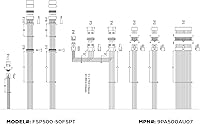
  • Form Factor: This unit follows the Flex ATX standard, measuring 5.9 x 3.2 x 1.6 inches — small enough to fit chassis where standard ATX and SFX supplies cannot.
  • Output Wattage: Continuous output is rated at 500W, suitable for compact workstations and home servers with moderate CPU and GPU loads.
  • Efficiency Rating: Holds an 80 Plus Platinum certification, meaning it operates at or above 92% efficiency at 50% load under typical conditions.
  • Internal Fan: Cooling is handled by a single 40 mm (4 cm) fan, which is the standard size constraint for Flex ATX designs.
  • MTBF: Mean time between failures is rated at 100,000 hours at 25 degrees Celsius, indicating a design intended for long-term or always-on operation.
  • PMBus Support: The unit supports PMBus v1.2, allowing compatible systems to monitor power delivery parameters through software.
  • CPU Connectors: Two 8-pin CPU power connectors are included, providing flexibility for single or dual-CPU motherboard configurations.
  • Storage Connectors: The harness includes multiple SATA power connectors alongside IDE 4-pin connectors for legacy drive compatibility.
  • Legacy Support: A floppy power header is included, accommodating older hardware or specialty devices that still rely on that connector type.
  • Total Connectors: The full connector count is 24 across all header types, covering most compact build scenarios without adapters.
  • Protection Suite: Active protections include over-voltage protection and short circuit protection on all outputs, plus a resettable power shutdown rather than a single-use fuse.
  • Input Protection: A line input fuse is built in to guard against upstream power anomalies before they reach internal components.
  • Transformer: The internal transformer is vacuum-impregnated, a process that improves moisture resistance and contributes to long-term electrical stability.
  • Burn-In Testing: Every unit undergoes 100% burn-in testing under elevated ambient temperatures before shipping, verifying stability under real thermal stress.
  • Hi-Pot Testing: All units are 100% hi-pot tested at the factory to verify dielectric integrity and confirm there are no insulation failures.
  • Weight: The unit weighs approximately 3 pounds, which is typical for a fully shielded Flex ATX supply with passive and active filtering components.
  • Brand: Manufactured by FSP Group U.S.A. Corporation, a company with a long track record in OEM and retail power supply production.
  • Model Number: The official model designation is FSP500-50FSPT, which is the identifier to use when checking chassis compatibility lists or sourcing replacements.

Related Reviews
SilverStone FX500-G 500W Flex ATX Power Supply
78%
88%
Build Quality
91%
Efficiency & Power Delivery
61%
Noise Level
72%
Value for Money
84%
Thermal Performance
More
Apevia ITX-PFC500W 500W Flex ATX Power Supply
77%
88%
Cable Management
91%
Form Factor Compatibility
79%
Power Delivery & Rail Stability
54%
Fan Noise & Acoustics
72%
Build & Component Quality
More
Apevia Raptor 500W ATX Power Supply
72%
83%
Value for Money
88%
Ease of Installation
74%
Connector Availability
58%
Reliability & Longevity
79%
Fan Noise
More
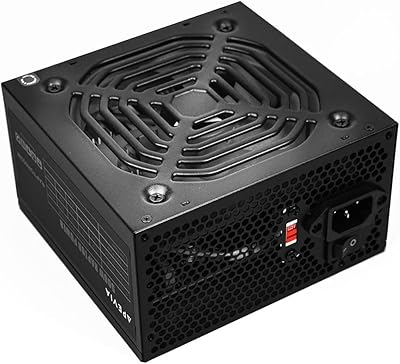
Apevia Venus 500W ATX Power Supply
86%
92%
Value for Money
88%
Cooling Efficiency
91%
Protection Features
84%
Build Quality
85%
Compatibility with Components
More
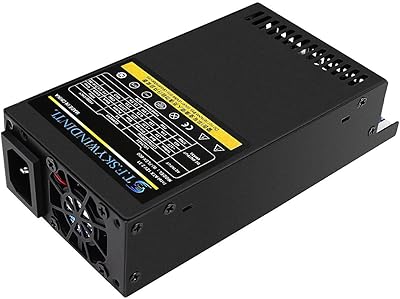
Apevia TFX-AP300W 300W Flex ATX Power Supply
80%
83%
Performance
89%
Value for Money
78%
Build Quality
75%
Cooling Efficiency
60%
Noise Level
More
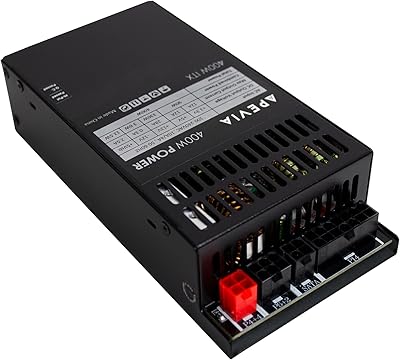
T.F.SKYWINDINTL TF600 600W Flex ATX Power Supply
70%
71%
Value for Money
74%
Build Quality
44%
Noise Level
83%
Cable Management
78%
Power Stability
More
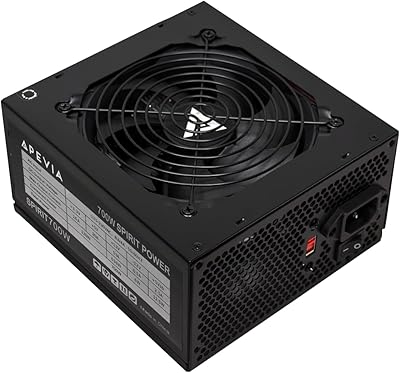
Apevia ITX-PFC400W 400W Flex ATX Power Supply
73%
88%
Modular Design
83%
Value for Money
91%
Form Factor Fit
54%
Fan Noise
63%
Cable Length
More
Apevia ATX-SP700 700W ATX Power Supply
71%
83%
Value for Money
88%
Installation Ease
54%
Long-Term Reliability
71%
Noise Level
79%
Connector Variety
More
Apevia Essence 600W Semi-Modular ATX Power Supply
72%
78%
Value for Money
81%
Cable Management
74%
Noise Level
86%
Ease of Installation
62%
Build Quality
More
Apevia Essence 700W ATX Power Supply
71%
81%
Value for Money
78%
Cable Management
74%
Power Stability
49%
Efficiency
63%
Build Quality
More

FAQ

It depends entirely on whether your chassis has a dedicated Flex ATX bay. The unit measures 5.9 x 3.2 x 1.6 inches, which matches the Flex ATX standard. Check your case manual or manufacturer spec sheet for the PSU form factor requirement before ordering — do not assume a Mini-ITX case automatically takes Flex ATX.

For integrated graphics or entry-level discrete GPUs paired with a power-efficient CPU, 500W is comfortable. If you are planning to drop in a mid-range or high-end gaming GPU, calculate your total system draw first using a tool like PCPartPicker. Running this compact power supply consistently near its ceiling is not advisable for long-term reliability.

Noticeable, especially under sustained load. A 40 mm fan simply cannot move enough air quietly — it has to spin faster than a larger fan would to push the same volume. In a noisy environment or a case with decent airflow, most people do not find it distracting. In a quiet room or an open-air setup, it is audible.

Yes, and this is actually one of the best use cases for this unit. The 100,000-hour MTBF rating and platinum efficiency make it well suited for systems that run continuously. The efficiency advantage is especially meaningful over months of 24/7 operation.

Yes, the 24-pin ATX motherboard connector and 8-pin CPU connector are standard. The FSP FSP500-50FSPT Flex ATX 500W Power Supply is compatible with any motherboard that uses those connectors, regardless of whether it is Mini-ITX, Micro-ATX, or another format — assuming the chassis physically accepts the PSU.

If you are building a straightforward desktop or home server, you will likely never use it. PMBus is a communication protocol that lets software query the PSU for voltage, current, and temperature data. It is most useful in server environments or advanced monitoring setups where you want real-time power telemetry.

The cabling is fixed, meaning all harnesses come attached and cannot be removed. In a tight Flex ATX chassis, managing unused cables can be a challenge — plan your cable routing before you close the case.

It covers the important bases: over-voltage protection, short circuit protection on every output, and a resettable shutdown that does not require replacing a fuse if tripped. There is also a line input fuse on the AC side for upstream protection. It is a solid safety net for the components connected to it.

The honest answer is that the Flex ATX market is thin, which makes direct comparison difficult. Most alternatives are either lower efficiency ratings, lower wattage, or from less established brands. The platinum rating and dual 8-pin CPU connectors are genuinely uncommon at this form factor, which partly explains the price.

FSP Group is an established manufacturer with a track record in both OEM and retail markets. Warranty terms can vary by retailer and region, so confirm coverage at the point of purchase. User feedback on support experiences is mixed, as is typical for specialty hardware — checking current reviews for recent support interactions is worth a few minutes of research.