Overview

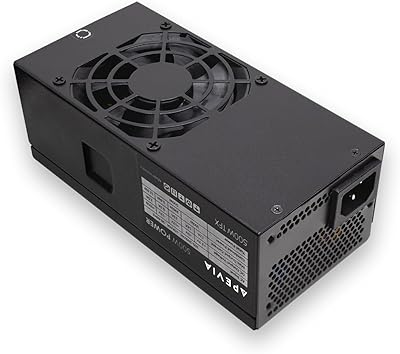
The Apevia TFX-AP300W 300W Flex ATX Power Supply is built for a very specific kind of build: the small, tight-spaced cases that a standard ATX unit simply won't fit into. This is a TFX-sized power supply, meaning it's noticeably more compact than what you'd find in a typical mid-tower, and that smaller footprint is really the whole point of owning one. At 300W, it's not designed to push a gaming rig or multiple drives; it's meant for basic office machines, media center boxes, and similar light-duty setups. One nice touch is the universal voltage input, which covers 115-230V AC, so it works without modification in most countries. Given its price point, this sits firmly in the budget category, and it's worth keeping that context in mind as you read through the rest of this review.

Features & Benefits

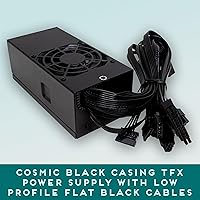
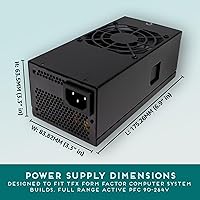
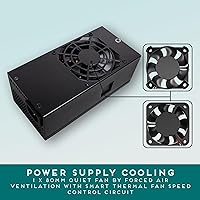
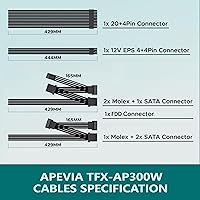
Inside this TFX unit, a single 80mm fan handles cooling, and in a chassis this small, airflow design actually matters more than the fan size suggests. The connector lineup covers the essentials: one 20/24-pin main connector, a 12V P4 for the CPU, three peripheral connectors, three SATA connectors, and even a floppy connector for older drives or legacy hardware. Voltage regulation stays within a 5% tolerance across the 3.3V, 5V, and 12V rails, which is respectable for a unit at this price. It also supports both 50Hz and 60Hz input frequencies, so it adapts to different regional power standards without extra hardware. Measuring just 6.75 x 3.23 x 2.5 inches, this power supply slides into compact cases that flatly reject a standard ATX unit, which is really its biggest selling point.

Best For

This PSU makes the most sense for slim desktop builds and HTPC setups where case clearance is tight and a full-size ATX power supply simply won't physically fit. It's also a solid match for light office computers running everyday productivity tasks, browsing, and document work rather than anything demanding sustained high power draw. If you're doing a budget rebuild of an older small form factor system and need a direct TFX replacement, this is the kind of unit you'd reach for instead of paying more for features you won't use. The target buyer here values case compatibility above raw wattage headroom; if you're chasing extra power for a dedicated graphics card or a multi-drive storage build, you'll want to look at a higher-output unit instead.

User Feedback

Real-world impressions of this TFX unit are mixed in the way you'd expect from an entry-level component, but mostly positive given what it's designed to do. Plenty of buyers describe it as a no-frills solution that simply does its job in cases where options are limited, and several specifically mention it solved compatibility headaches that a standard ATX supply couldn't. On the downside, a number of users note the fan becomes audibly noticeable once the system is under sustained load, which matters if you're building something for a quiet room. Long-term durability opinions vary, which is fairly typical for budget-tier power supplies in general. The general consensus seems to be that it performs well paired with low-power components, but isn't the right choice if you're planning to add a dedicated graphics card down the line.

Pros

  • Fits TFX-sized cases that flatly reject standard ATX power supplies
  • Universal 115-230V input means no manual voltage switching required
  • Reasonably priced option for low-power builds on a tight budget
  • Full connector set includes SATA, peripheral, and even floppy support
  • Voltage stays within a tight 5% tolerance across major rails
  • Solves real compatibility headaches for slim desktop and HTPC builds
  • Dual-frequency support adapts easily across different regional power grids
  • Compact 6.75 x 3.23 x 2.5 inch footprint saves valuable case space

Cons

  • 300W ceiling rules out gaming rigs or dedicated graphics cards
  • Fan noise becomes noticeable once the system is under sustained load
  • Long-term durability feedback is mixed, typical of entry-level units
  • Not a fit for multi-drive storage builds needing extra connectors
  • Limited wattage headroom leaves little room for future upgrades
  • Single fan design offers less cooling redundancy than dual-fan models
  • Floppy connector feels outdated for most modern build needs
  • No modular cabling, so unused connectors add clutter in tight cases

Ratings

Our AI scoring engine analyzed verified owner reviews from around the world for the Apevia TFX-AP300W 300W Flex ATX Power Supply, filtering out spam, bot activity, and incentivized feedback to surface authentic buyer experiences. The scores below reflect a transparent mix of real strengths and genuine pain points, not a polished marketing summary. Use these category breakdowns to see exactly where this PSU shines and where it falls short.

Form Factor Compatibility
92%
Owners consistently praise this PSU for solving a real headache: fitting power into cases that flatly reject standard ATX units. For slim desktops and HTPC builds, the compact TFX footprint is described as a near-perfect fit without modification.
A handful of buyers admit they didn't double-check their case's TFX compatibility before ordering and had to return it. It's not a universal fit, so the smaller dimensions can still trip up first-time small form factor builders.
Value for Money
84%
For the price, users feel they're getting a functional, no-frills unit that does exactly what's needed for office or media center builds. Budget rebuilders especially appreciate not overpaying for wattage they'll never use.
Some reviewers note that the savings come with trade-offs in long-term durability and noise, making it feel like a fair deal rather than a standout bargain. It's value within a narrow use case, not broad value.
Voltage Stability
81%
19%
The 5% tolerance across the 3.3V, 5V, and 12V rails delivers steady, predictable power for light desktop tasks, which users running basic office systems report as consistently reliable day to day.
It's not engineered for tighter tolerances that enthusiast builders might expect from higher-end units, and a few reviewers mention minor fluctuations under heavier transient loads, though this rarely affects basic use cases.
Connector Variety
78%
22%
Buyers like having SATA, peripheral, and even floppy connectors covered in one unit, which simplifies powering both modern drives and older legacy hardware in a single small-case build without extra adapters.
Because cables are non-modular, some users find the connector bundle feels a bit dated, particularly the floppy connector, which goes unused in most contemporary builds and just adds clutter inside a tight case.
Noise Level
61%
39%
At idle and light load, most users describe the single 80mm fan as unobtrusive, blending into typical office background noise without drawing attention during everyday document work or browsing sessions.
Multiple reviewers specifically flag that fan noise becomes noticeable once the system is pushed under sustained load, making this a real consideration for anyone building a quiet home theater or bedroom setup.
Cooling Performance
72%
28%
The forced-air design from the single fan keeps internal temperatures in check for the low-power loads this unit is intended for, which users running light office systems report as adequate and worry-free.
With only one fan and a compact chassis, thermal headroom is limited compared to larger ATX units, and a few owners note they wouldn't trust it under prolonged heavier workloads.
Long-Term Reliability
58%
42%
Many users report this PSU running trouble-free for months in light-duty builds, with no failures reported during normal office or media center use, which lines up with its intended low-stress application.
Opinions diverge noticeably here, with a meaningful share of reviewers reporting shorter-than-expected lifespans, a common pattern across entry-level power supplies that buyers should factor into their long-term reliability expectations.
Wattage Headroom
54%
46%
For its intended audience, the 300W rating is described as sufficient and even comfortable for basic desktops running integrated graphics, light multitasking, and standard productivity software without ever feeling strained.
Anyone hoping to add a dedicated GPU or extra drives down the line will quickly hit a ceiling, and several reviewers explicitly warn against attempting any power-hungry upgrades with this unit installed.
International Voltage Support
88%
The universal 115-230V AC input combined with 50/60Hz frequency support gets consistent praise from international buyers who can use the unit straight out of the box without a voltage converter or switch.
A small number of users in regions with less stable grid power note they'd still prefer a surge protector as a precaution, though this isn't really specific to this unit alone.
Ease of Installation
83%
Reviewers building in small form factor cases describe installation as straightforward once the TFX mounting points are confirmed, with connectors reaching common motherboard and drive locations without excessive cable strain.
The non-modular cable bundle can feel crowded in already-tight TFX cases, and a few first-time builders mention needing extra patience to route unused cables cleanly out of the airflow path.
Build Construction
69%
31%
For a budget-tier unit, the overall construction feels solid enough for its intended light-duty role, with users reporting no rattling, loose components, or obvious manufacturing defects out of the box.
It doesn't carry the premium component feel of higher-end PSUs, and a few long-term owners speculate that internal components may be a contributing factor in the mixed durability reports seen across reviews.
Overall Satisfaction
76%
24%
Most buyers walk away satisfied, especially those who needed a specific TFX solution and found few other options, describing it as a dependable fix for a narrow but real compatibility problem.
Satisfaction dips among buyers who expected ATX-level reliability or quieter operation, reinforcing that this PSU rewards realistic expectations around its budget positioning and limited power scope rather than broad excitement.

Suitable for:

The Apevia TFX-AP300W 300W Flex ATX Power Supply makes the most sense for anyone building or repairing a small form factor PC where physical space, not raw power, is the limiting factor. That includes HTPC enthusiasts assembling a slim media center for the living room, home office users who just need a reliable machine for documents and browsing, and anyone doing a budget rebuild of an aging slim-case system that originally shipped with a TFX unit. It's also a practical pick for hobbyists who inherited or bought a compact case secondhand and discovered, often the hard way, that standard ATX supplies don't fit. Because it accepts both 115V and 230V input, it travels well for international builds too. If your priority list starts with case compatibility and ends with cost, this PSU checks the right boxes without overcomplicating the decision.

Not suitable for:

This isn't the right choice for gamers, content creators, or anyone running a dedicated graphics card, since 300W simply doesn't leave enough headroom for that kind of load. Builders working in standard mid-tower or full-tower cases should also skip it, as the compact TFX form factor is a specialty fit rather than a universal one, and the Apevia TFX-AP300W 300W Flex ATX Power Supply won't offer any advantage there. Anyone particularly sensitive to fan noise should think twice as well, since several users report the cooling fan gets noticeable once the system is under real load. If long-term reliability backed by a strong warranty track record is non-negotiable for your build, this budget-tier unit may leave you wanting more assurance. Multi-drive storage setups or systems with several power-hungry components are also better served elsewhere.

Specifications

  • Form Factor: This unit uses the TFX Flex ATX form factor, which is significantly smaller than a standard ATX power supply.
  • Rated Wattage: Output is rated at 300 watts, suited for light-duty desktop and HTPC builds.
  • Input Voltage: It accepts 115-230V AC input, allowing use across most regional power standards without a manual switch.
  • Input Frequency: The unit supports both 50Hz and 60Hz input frequencies.
  • Main Connector: A single 20/24-pin connector supplies main power to the motherboard.
  • CPU Connector: One 12V P4 connector is included for CPU power.
  • Peripheral Connectors: Three peripheral connectors are provided for fans, older drives, and accessories.
  • SATA Connectors: Three SATA connectors are included for powering modern hard drives and SSDs.
  • Floppy Connector: One floppy connector is included for legacy floppy drives or certain fan controllers.
  • Voltage Tolerance: The 3.3V, 5V, and 12V rails are rated within a 5% tolerance for output stability.
  • Cooling System: A single 80mm fan provides forced-air cooling within the compact chassis.
  • Cooling Method: The unit relies on air cooling rather than liquid or passive cooling designs.
  • Dimensions: The power supply measures 6.75 x 3.23 x 2.5 inches.
  • Weight: The unit weighs 2.1 lb.
  • Compatible Devices: It is designed for use in personal computers with TFX-compatible cases.
  • Cable Type: Cables are non-modular and fixed directly to the unit.

Related Reviews
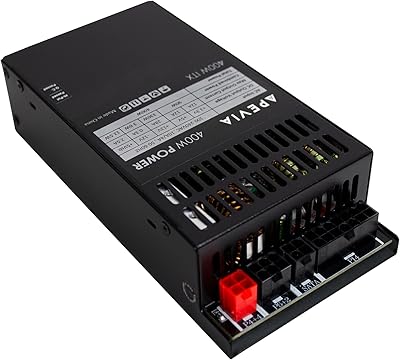
Apevia ITX-PFC500W 500W Flex ATX Power Supply
77%
88%
Cable Management
91%
Form Factor Compatibility
79%
Power Delivery & Rail Stability
54%
Fan Noise & Acoustics
72%
Build & Component Quality
More
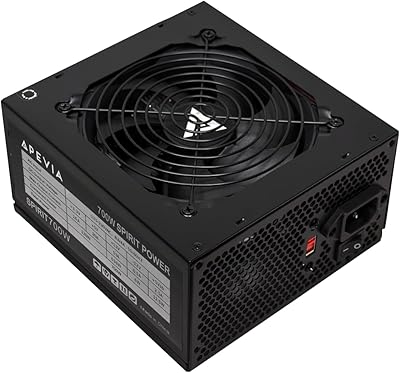
Apevia ITX-PFC400W 400W Flex ATX Power Supply
73%
88%
Modular Design
83%
Value for Money
91%
Form Factor Fit
54%
Fan Noise
63%
Cable Length
More
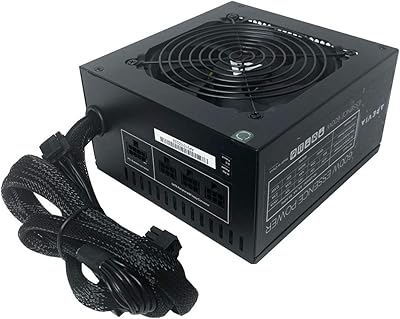
Apevia ATX-SP700 700W ATX Power Supply
71%
83%
Value for Money
88%
Installation Ease
54%
Long-Term Reliability
71%
Noise Level
79%
Connector Variety
More
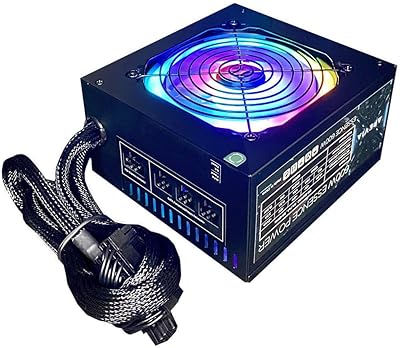
Apevia Essence 600W Semi-Modular ATX Power Supply
72%
78%
Value for Money
81%
Cable Management
74%
Noise Level
86%
Ease of Installation
62%
Build Quality
More
Apevia Essence 700W ATX Power Supply
71%
81%
Value for Money
78%
Cable Management
74%
Power Stability
49%
Efficiency
63%
Build Quality
More
Apevia CAPTAIN550 550W ATX Power Supply
70%
78%
Value for Money
54%
Reliability
83%
Cable Quality & Aesthetics
81%
Connector Compatibility
84%
Ease of Installation
More
Apevia Venus 500W ATX Power Supply
86%
92%
Value for Money
88%
Cooling Efficiency
91%
Protection Features
84%
Build Quality
85%
Compatibility with Components
More
Apevia Venus 450W ATX Power Supply
70%
83%
Value for Money
88%
Installation Ease
81%
Noise Level
74%
Connector Availability
62%
Build Quality
More
Apevia TFX-PFC500W 500W TFX Power Supply
67%
91%
Form Factor Fit
78%
Value for Money
83%
Connector Coverage
61%
Reliability
58%
Noise Level
More
Apevia Raptor 500W ATX Power Supply
72%
83%
Value for Money
88%
Ease of Installation
74%
Connector Availability
58%
Reliability & Longevity
79%
Fan Noise
More

FAQ

Not directly, since this is a TFX-sized unit built specifically for slim and small form factor cases. A standard mid-tower or full-tower case is designed around regular ATX dimensions, so the mounting points likely won't line up. Always check your case manufacturer's specs for TFX compatibility before ordering.

Generally, no. At 300W, there just isn't enough headroom for most dedicated GPUs once you factor in the rest of the system's power draw. This PSU is really built for integrated graphics setups doing office work, browsing, or media playback.

At idle or light load it's fairly quiet, but several users mention it becomes more noticeable once the system is under sustained load. If you're building something for a silent home theater setup, it's worth factoring that into your decision.

Yes, the universal 115-230V AC input and 50/60Hz frequency support mean it adapts automatically to most regional power grids. You shouldn't need a voltage converter, just a standard plug adapter if the physical outlet shape differs.

This unit includes three SATA connectors, so you can power up to three SATA drives directly. If you need more, you'd have to use a SATA splitter, though that adds extra load to the existing rail.

It's mostly a legacy holdover at this point, useful if you're running older hardware or certain specialty fan controllers that still use that connector type. Most modern builds won't need it, but it doesn't hurt to have the option.

It's noticeably smaller, measuring just 6.75 x 3.23 x 2.5 inches compared to a standard ATX unit. That reduced footprint is the entire reason to choose a TFX power supply in the first place.

Reviews on durability are mixed, which is pretty typical for budget-tier power supplies in this category. It tends to perform well for light, low-power use cases, but it's not marketed as a premium long-life component, so set expectations accordingly.

The Apevia TFX-AP300W 300W Flex ATX Power Supply is best suited for slim desktops, HTPCs, and light office machines where case size matters more than raw power. It's a practical, budget-friendly pick if you just need stable power for everyday computing rather than gaming or heavy workloads.

No, this unit uses fixed, non-modular cabling. In a small TFX case that usually isn't a huge issue since there's less excess cable to manage compared to a larger build.