Overview

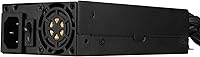
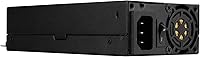
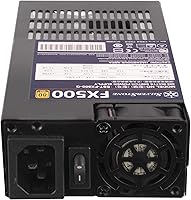
The SilverStone FX500-G 500W Flex ATX Power Supply occupies a genuinely niche corner of the PC hardware market, one where very few manufacturers bother to compete seriously. Flex ATX is a form factor most builders never think about until they absolutely have to, and that constraint is exactly where this compact power supply earns its keep. It launched in late 2020 and has quietly built a solid reputation among the small form factor community since. Yes, it costs noticeably more than a standard ATX unit of comparable wattage, but that premium reflects the reality of sourcing a reliable, efficient PSU in this constrained format. Expect capable performance with real-world trade-offs around fan noise and cable reach.
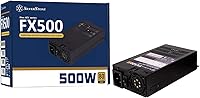
Features & Benefits

What sets this Flex ATX unit apart from budget alternatives starts with its 80 Plus Gold certification. In a compact chassis where airflow is already restricted, running a less efficient PSU means pumping more waste heat into an already tight space. Gold efficiency changes that math meaningfully. The single +12V rail keeps power delivery clean and predictable, which matters for modern CPUs and GPUs that draw in heavy bursts. Underneath the shell, Japanese primary capacitors handle the load, a detail that directly affects long-term reliability and is worth paying attention to when comparing against cheaper Flex ATX options. The 500W continuous rating holds at 40 degrees Celsius, so that number isn't marketing padding.

Best For

This compact power supply was built for one job: fitting where standard ATX and SFX units simply won't go. If you're building in a Mini-ITX or 1U rackmount chassis, your PSU options are already limited, and the SilverStone FX500-G is one of the few choices that doesn't force you to compromise on quality just to fit the bill. HTPC builders will appreciate the efficient operation keeping temperatures manageable in low-ventilation enclosures. It's also well-suited for always-on home servers and NAS builds, given its 24/7 duty rating and stable internals. That said, if your build draws over 400W under sustained load or runs a high-end discrete GPU, this unit's headroom may leave you wanting more.

User Feedback

Across roughly 89 ratings, this Flex ATX unit holds a 4.2 out of 5 average, and reading through the feedback gives a pretty clear picture of who loves it and who has reservations. Buyers consistently praise the build quality and the fact that voltage regulation stays stable under real load conditions, which is not always a given at this form factor. The recurring complaint worth taking seriously is fan noise. Under sustained load, the internal fan becomes audible, and if you're building a whisper-quiet HTPC this matters. A few buyers also found the cable length restrictive depending on chassis layout. Long-term users in NAS and HTPC roles report it running reliably for years, which goes a long way toward justifying the cost.

Pros

  • 80 Plus Gold efficiency reduces wasted energy and keeps heat output low inside cramped enclosures.
  • The single +12V rail delivers clean, predictable power that modern CPUs and GPUs handle well.
  • Japanese primary capacitors give this compact power supply a longevity edge over budget Flex ATX alternatives.
  • The 500W continuous rating is validated at 40 degrees Celsius, so it genuinely holds up under real thermal stress.
  • Rated for 24/7 continuous operation, making it a dependable backbone for always-on NAS or home server builds.
  • A 4.2 out of 5 average across nearly 90 ratings reflects strong long-term buyer satisfaction.
  • Stable voltage regulation under load is a consistent highlight in user feedback, even after years of continuous use.
  • Compact dimensions of 5.91 x 3.21 x 1.59 inches ensure compatibility with the tightest 1U and Flex ATX chassis on the market.

Cons

  • The internal fan becomes clearly audible under sustained load, which is a real problem for silent HTPC builds.
  • Cable lengths can be restrictive in certain chassis configurations, sometimes requiring extensions or creative routing.
  • The price premium is steep compared to standard ATX or SFX units delivering similar wattage.
  • A 500W ceiling means any system pairing a high-end GPU with a modern CPU is likely to run short on headroom.
  • No zero-RPM or semi-passive fan mode means the fan spins continuously, even under light loads.
  • The Flex ATX accessory market is extremely limited, making compatible extension cables or add-on connectors hard to source.
  • Connector variety is narrow, and builds with multiple SATA drives or older peripherals may need adapters.
  • Warranty service and long-term parts availability are less straightforward than with widely distributed mainstream PSU brands.

Ratings

The scores below reflect AI-driven analysis of verified buyer reviews for the SilverStone FX500-G 500W Flex ATX Power Supply, sourced globally and processed to actively filter out spam, bot-generated feedback, and incentivized submissions before any scoring takes place. Each category captures both what real users genuinely value about this compact power supply and the frustrations they encountered across diverse build types and long-term use cases. The goal is an honest, complete picture — not a promotional summary.

Build Quality
88%
Users consistently note how solid this unit feels compared to budget Flex ATX alternatives — the metal housing carries a reassuring heft for its compact size. Build consistency holds up well after extended continuous operation, which buyers running always-on NAS systems particularly appreciate over multi-year deployments.
A small number of buyers reported cosmetic blemishes or minor fit-and-finish inconsistencies out of the box, suggesting quality control is not perfectly uniform across every unit. At this price tier, even minor cosmetic issues tend to leave a stronger negative impression than they would on a more modestly priced alternative.
Efficiency & Power Delivery
91%
The 80 Plus Gold certification reflects what buyers actually see in real usage — stable, efficient power draw that keeps temperatures measurably lower inside cramped enclosures. Users pairing this unit with mid-range CPUs and GPUs report consistently clean voltage readings, and the single +12V rail design removes any ambiguity around load balancing between components.
Buyers running high-end GPUs at sustained loads sometimes find the efficiency curve less favorable near the top of the 500W ceiling, where thermal stress on the unit increases noticeably. This is less a product flaw than a structural limitation of the form factor, but it does define a real upper boundary for demanding configurations.
Noise Level
61%
39%
At idle and light loads, most users find the fan inaudible or barely perceptible, which is adequate for desktop workstations where ambient room noise provides natural cover. Buyers deploying this unit inside a dedicated server closet or equipment rack report that fan noise is entirely negligible in those contexts.
Under sustained heavy load, the internal fan spins up audibly — a recurring complaint from HTPC builders expecting near-silence in living room environments. There is no passive or zero-RPM mode, meaning the fan is always spinning to some degree, which becomes a meaningful drawback for noise-sensitive builds even under moderate loads.
Value for Money
72%
28%
For buyers who genuinely need a Flex ATX PSU, the market is thin enough that quality options are nearly nonexistent at lower price points, and most long-term owners conclude the premium is justified. Users who have run this unit continuously for over a year without issues tend to view the upfront cost as a sound investment in reliability.
Compared to standard ATX or SFX power supplies of similar wattage, the price gap is significant — buyers who do not strictly require the Flex ATX form factor will feel this acutely. First-time small form factor builders sometimes realize only after purchasing that their chassis accepts an SFX unit, making the premium feel entirely avoidable in hindsight.
Thermal Performance
84%
The Gold efficiency rating directly benefits thermal performance inside compact enclosures — less wasted energy means less heat generated, which matters enormously in chassis where airflow paths are minimal. Buyers in HTPC and NAS builds consistently report that other components run cooler than they did with less efficient predecessor units.
At sustained high load, heat buildup inside the PSU housing becomes more noticeable, and the small internal fan has to work harder to compensate in the absence of deliberate chassis airflow planning. Builders who do not account for ventilation in their case layout may find thermal performance degrades faster than expected under prolonged heavy use.
Voltage Stability
89%
Stable voltage regulation under real load conditions is one of the most consistently praised aspects across long-term user reviews — buyers running this in production workstations and media servers report rock-solid readings even during continuous operation. The single +12V rail architecture contributes meaningfully to this stability by eliminating multi-rail load balancing uncertainty.
A small subset of users reported minor voltage fluctuations during sudden load spikes, particularly when a discrete GPU ramps sharply from idle to full load. These occurrences appear infrequent based on overall feedback patterns, but buyers running latency-sensitive or precision workloads may want to verify stability in their specific configuration before committing.
Cable Flexibility
58%
42%
For the chassis this unit is designed to fit, the included cables typically reach their intended destinations without requiring extensions in most standard Flex ATX enclosure layouts. Builders working with common 1U rackmount cases that have predictable, well-defined internal geometries report the cable reach is adequate for the intended configuration.
Cable length becomes a real frustration in non-standard or deeper chassis where components sit further from the PSU bay, and aftermarket Flex ATX cable extensions are genuinely hard to source. The non-modular design compounds this by forcing unused cable runs to be physically tucked away inside an already cramped enclosure, which some builders find difficult to manage cleanly.
Long-term Reliability
87%
This is where the Japanese primary capacitors pay real dividends — long-term buyers running this unit continuously in NAS and HTPC setups for one to two or more years report consistent, stable performance with no apparent degradation. The 24/7 duty cycle rating reflects actual engineering intent, not marketing language.
The verified long-term review pool is relatively small given the niche market size, making it statistically harder to draw firm conclusions about failure rates beyond the two-year mark. A minority of buyers also note that warranty service and support can be slower to navigate than with mainstream PSU brands that have broader global distribution networks.
Compatibility & Fit
83%
Buyers who verify chassis compatibility before purchasing report a smooth, precise fit with no modifications needed — the unit slots into supported Flex ATX bays cleanly, which is especially reassuring given how inconvenient returns and exchanges can be in this niche. Compatibility across 1U industrial rack enclosures is particularly well-reviewed in user feedback.
The Flex ATX standard has subtle dimensional variations across manufacturers and production eras, and a small number of buyers have encountered marginal clearance issues in older or non-standard chassis that nominally claim Flex ATX support. Always verify exact dimensional tolerances — particularly the 1.59-inch height — against your specific case before purchasing.
Connector Selection
63%
37%
For straightforward builds with a standard motherboard and a single modern storage device, the included connector set covers the essentials without requiring adapters. Buyers running HTPC or NAS configurations built around M.2 storage — which eliminates the need for multiple SATA power connectors entirely — find the included selection perfectly adequate.
Builders populating multiple 3.5-inch hard drives or needing several simultaneous SATA power connections will find the connector count limiting, often requiring splitters that add their own cable management complexity inside a tight enclosure. Buyers with specific or non-standard peripheral power requirements should verify the full connector list against their build needs before purchasing.
Installation Ease
76%
24%
The physical installation process is straightforward for anyone with basic PC building experience — the unit slides into the chassis bay, secures with standard screws, and connects to the motherboard without surprises. Buyers swapping out a failed generic Flex ATX unit report the replacement process is quick and uncomplicated once cable routing is accounted for.
Post-installation cable management can be genuinely tedious in tighter chassis, particularly for first-time Flex ATX builders unfamiliar with how little room for error exists in these compact enclosures. The fixed cable design also makes it harder to mentally plan a clean interior layout before committing to the final assembly sequence.
Power Headroom
74%
26%
At 500W continuous — verified at 40 degrees Celsius ambient — this unit offers more usable headroom than most Flex ATX alternatives, many of which derate significantly under real thermal conditions. For NAS builds, compact workstations, and HTPC configurations using mid-range discrete GPUs, 500W provides a comfortable operating margin.
Builders targeting gaming-oriented small form factor PCs with power-hungry flagship GPUs will find 500W uncomfortably restrictive, as modern high-performance cards can approach or exceed that threshold under sustained load on their own. This is a form factor ceiling rather than a product deficiency, but it firmly defines which build types this unit can and cannot realistically support.
Protection Features
86%
Standard protections — including over-voltage, under-voltage, over-current, and short-circuit safeguards — give builders meaningful peace of mind that a failure elsewhere in the system is unlikely to cascade into PSU damage. Long-term users running always-on builds cite these protections as a genuine reassurance for deployments that run unattended for extended periods.
Documentation around protection circuit behavior is minimal, and users who have experienced unexpected shutdowns report difficulty determining which threshold was triggered without external diagnostic equipment. While the protections themselves appear to function reliably based on aggregate feedback, the absence of diagnostic feedback can make troubleshooting unexplained shutdowns more time-consuming than it needs to be.

Suitable for:

The SilverStone FX500-G 500W Flex ATX Power Supply was designed for a very specific kind of builder, and if you fall into that category, it is genuinely hard to beat. Anyone working with a Mini-ITX or 1U rackmount chassis that physically cannot fit a standard ATX or SFX unit will find this one of the very few quality options available in the Flex ATX format. HTPC enthusiasts who need a low-profile PSU running efficiently inside a ventilation-constrained living room cabinet will benefit from the Gold-rated efficiency keeping waste heat minimal. It is also an excellent fit for always-on builds like home NAS boxes or small media servers, where the 24/7 continuous duty rating and quality Japanese capacitors translate directly into long-term peace of mind. Builders upgrading from a generic or unbranded Flex ATX unit who want verified efficiency, stable voltage regulation, and a reputable manufacturer behind the hardware will find this compact power supply a meaningful step up.
Not suitable for:

If your build does not specifically require a Flex ATX form factor, the SilverStone FX500-G 500W Flex ATX Power Supply is probably not the right purchase for you. Builders using standard mid-tower, full-tower, or even most Mini-ITX cases that support SFX or ATX PSUs will find significantly more options at lower price points with comparable or better efficiency. Anyone running a high-end GPU that pushes sustained system power draw above 400W should look elsewhere, as the 500W ceiling leaves very little headroom for demanding gaming workloads or future component upgrades. This unit is also a poor fit for builders who prioritize dead-silent operation, since the internal fan becomes noticeably audible under sustained load and there is no passive or zero-RPM mode. Finally, buyers who need a wide variety of connectors or longer cable runs may find the selection limiting enough to require frustrating workarounds depending on their specific chassis.
Specifications

  • Form Factor: Follows the Flex ATX standard, enabling use in ultra-compact desktop and 1U rackmount chassis that physically cannot accept standard ATX or SFX power supplies.
  • Output Wattage: Provides 500W of continuous power output, a rating verified at 40 degrees Celsius ambient rather than under artificially cooled laboratory conditions.
  • Efficiency Rating: Carries 80 Plus Gold certification, indicating efficiency between approximately 87% and 92% across typical load ranges, which reduces waste heat generated inside tight enclosures.
  • Rail Design: Uses a single +12V rail configuration, simplifying power distribution and delivering stable, predictable current to modern CPUs and GPUs without multi-rail balancing concerns.
  • Capacitors: Primary capacitors are Japanese-manufactured, a specification associated with greater longevity and thermal stability compared to the off-brand capacitors commonly found in budget Flex ATX units.
  • Dimensions: Measures 5.91 x 3.21 x 1.59 inches (L x W x H), conforming precisely to the Flex ATX form factor standard for compatibility with supported chassis.
  • Weight: Weighs approximately 2.86 pounds, consistent with a fully constructed Flex ATX unit featuring a metal housing and internal fan assembly.
  • Cooling Method: Uses active air cooling via an internal fan that runs continuously at all load levels to manage thermal output within the compact, enclosed housing.
  • Operating Temp: Full continuous output is rated at 40 degrees Celsius ambient, confirming the 500W specification holds under realistic thermal conditions rather than only in ideal test environments.
  • Duty Cycle: Rated for 24/7 continuous operation, making it appropriate for always-on deployments such as home NAS systems, media servers, and compact industrial workstations.
  • Cable Design: Features a fixed, non-modular cable layout, meaning all cables are permanently attached to the unit and cannot be removed for cable management purposes.
  • Connector Type: Ships with standard ATX connectors including a 24-pin motherboard header and CPU power connector, along with peripheral connectors for storage devices and auxiliary components.
  • Compatibility: Designed for desktop PC use and compatible with any chassis that officially supports the Flex ATX form factor, including Mini-ITX and 1U rackmount enclosures.
  • Brand: Manufactured by SilverStone Technology, a company with a long-standing focus on small form factor PC hardware for enthusiast and professional markets.
  • Model Number: Official model designation is FX500-G, also identified by the full part number SST-FX500-G across SilverStone product listings and documentation.

Related Reviews

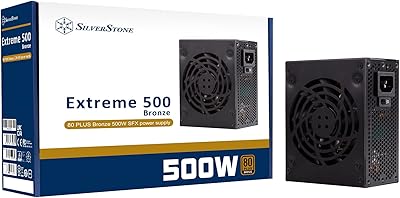
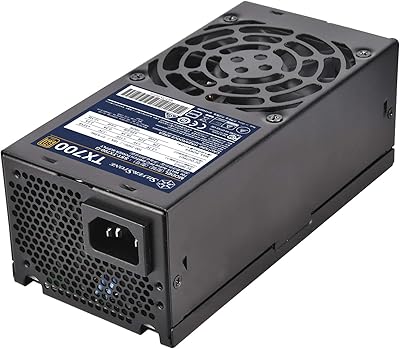
SilverStone TX500-G 500W TFX Power Supply 80 PLUS Gold
87%
87%
Performance
92%
Efficiency
90%
Build Quality
94%
Noise Level
88%
Thermals
More
Apevia ITX-PFC500W 500W Flex ATX Power Supply
77%
88%
Cable Management
91%
Form Factor Compatibility
79%
Power Delivery & Rail Stability
54%
Fan Noise & Acoustics
72%
Build & Component Quality
More
SilverStone SX500-G 500W SFX Fully Modular 80 Plus Gold Power Supply
88%
94%
Quiet Performance
92%
Energy Efficiency
89%
Build Quality
85%
Ease of Installation
88%
Cable Management
More
Apevia Raptor 500W ATX Power Supply
72%
83%
Value for Money
88%
Ease of Installation
74%
Connector Availability
58%
Reliability & Longevity
79%
Fan Noise
More
Apevia Venus 500W ATX Power Supply
86%
92%
Value for Money
88%
Cooling Efficiency
91%
Protection Features
84%
Build Quality
85%
Compatibility with Components
More
SilverStone EX500-B 500W SFX Power Supply
78%
88%
Noise Level
83%
Build Quality
76%
Value for Money
86%
Installation & Setup
59%
Wattage Headroom
More
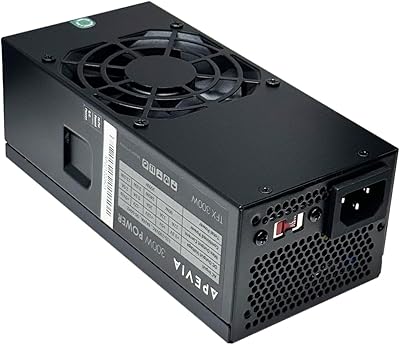
Apevia TFX-AP300W 300W Flex ATX Power Supply
80%
83%
Performance
89%
Value for Money
78%
Build Quality
75%
Cooling Efficiency
60%
Noise Level
More
SilverStone TX700-G 700W TFX Power Supply
81%
93%
Power Output Reliability
91%
Noise Level
88%
Thermal Performance
89%
Build Quality
87%
Efficiency (80 Plus Gold)
More
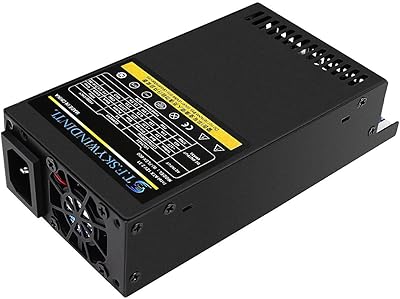
T.F.SKYWINDINTL TF600 600W Flex ATX Power Supply
70%
71%
Value for Money
74%
Build Quality
44%
Noise Level
83%
Cable Management
78%
Power Stability
More
Apevia ITX-PFC400W 400W Flex ATX Power Supply
73%
88%
Modular Design
83%
Value for Money
91%
Form Factor Fit
54%
Fan Noise
63%
Cable Length
More

FAQ

This compact power supply fits any chassis that explicitly lists Flex ATX PSU support, which includes a wide range of Mini-ITX builds and nearly all 1U rackmount enclosures designed for desktop components. Before ordering, always cross-reference the exact dimensions — 5.91 x 3.21 x 1.59 inches — against your case specifications, since some older or non-standard compact chassis have slightly different clearances that can cause fitment issues.

At idle and light loads, the fan is quiet enough that most people will not notice it in a typical room. Under sustained heavy load, it does spin up and becomes clearly audible. If a completely silent HTPC is your goal, that is worth knowing before you commit. For a NAS or server tucked into a closet or equipment rack, the noise level is genuinely a non-issue.

A mid-range GPU paired with a reasonably efficient modern CPU fits comfortably within 500W — something like an RTX 4060 or an RX 6600 is a reasonable pairing. Step up to a power-hungry flagship card, though, and headroom disappears quickly. The SilverStone FX500-G is engineered for efficient, space-constrained systems rather than high-draw gaming builds, so matching component selection accordingly matters.

If your build requires 24/7 uptime, consistent voltage stability, or a long service life in a thermally stressed environment, the SilverStone FX500-G 500W Flex ATX Power Supply is genuinely worth the premium. Cheaper Flex ATX alternatives frequently use lower-grade capacitors and lack independently verified efficiency ratings, which becomes a real problem when a PSU runs continuously in a hot, cramped enclosure. For light or occasional-use builds where long-term reliability is less critical, a budget option may suffice, but for anything always-on, the quality difference is meaningful.
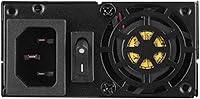
The cables are fixed and permanently attached to the unit — there is no modular connector option. In a chassis as compact as a Flex ATX enclosure, this is standard for the form factor, but it does mean unused cables need to be tucked away inside an already tight space. Some builders find cable management a bit fiddly depending on their specific chassis layout.

It is genuinely one of the stronger use cases for this unit. The 24/7 duty cycle rating means it is designed for continuous operation, not intermittent desktop use, and the Japanese primary capacitors and Gold-rated efficiency contribute to stable, long-term performance. Real-world users report running it in NAS and server roles for over a year without issues. Just keep your total system power draw comfortably below 450W to stay in an efficient and thermally safe operating range.

In a compact chassis, every watt of wasted energy converts directly into heat with very little room to escape. A Gold-rated unit converts a higher percentage of input power into usable output, meaning less excess heat is dumped into an already restricted space. The practical result is lower internal temperatures for all components, which matters especially in builds running around the clock where heat accumulation over time shortens hardware lifespan.

The unit includes a 24-pin ATX motherboard connector, a CPU power connector, and a selection of peripheral connectors for storage and auxiliary devices. The connector variety and cable lengths are more limited than what you would find on a full-size PSU, which some buyers find restrictive depending on their chassis layout and component configuration. If you have specific connector requirements, verifying them against the product listing before purchasing is a smart step.

With Japanese primary capacitors, an 80 Plus Gold efficiency rating, and a 24/7 duty cycle specification, this Flex ATX unit is built with longevity in mind. Long-term buyers running it continuously in NAS and HTPC setups report consistent performance after one to two or more years of operation. Actual lifespan depends on operating conditions — sustained high loads and poor ventilation accelerate wear, while lighter loads and adequate airflow extend it considerably.

The quality Flex ATX market is genuinely small, which is part of why this unit commands the price it does. Cheaper alternatives exist, but most of them involve compromises on capacitor quality, efficiency verification, or thermal performance that surface over time. If budget is your primary concern and the use case is light, some alternatives are worth researching. For buyers who need a dependable, well-documented unit backed by a reputable manufacturer, this is consistently one of the top recommendations in the small form factor community.

Where to Buy