Apevia Essence 700W ATX Power Supply
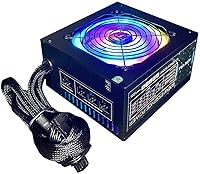
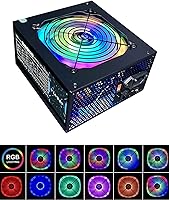
Apevia Essence 700W ATX Power Supply — image 1
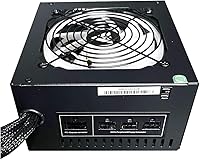
Apevia Essence 700W ATX Power Supply — image 2
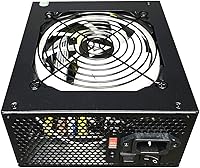
Apevia Essence 700W ATX Power Supply — image 3
Apevia Essence 700W ATX Power Supply — image 4
Apevia Essence 700W ATX Power Supply — image 5
Apevia Essence 700W ATX Power Supply — image 6
Apevia Essence 700W ATX Power Supply — image 7
Apevia Essence 700W ATX Power Supply — image 8
71%
29%

Overview

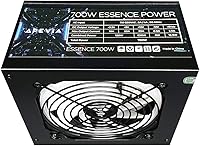
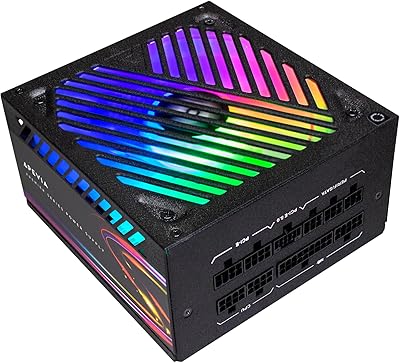
The Apevia Essence 700W ATX Power Supply enters the budget PSU market as a semi-modular option aimed squarely at casual and mid-range PC builders who want more than a bare-bones unit without paying premium prices. Apevia has never been a darling of the enthusiast crowd — the brand sits firmly in budget territory, and that reputation cuts both ways. What this semi-modular PSU does offer is 700W of headroom, which is genuinely sufficient for a mid-range gaming rig paired with a current-gen GPU. The semi-modular design is a practical compromise: essential cables come pre-attached, and the rest connect only when needed. The RGB fan adds visual appeal for builders running a windowed case, though it is far from the main reason to consider it.

Features & Benefits

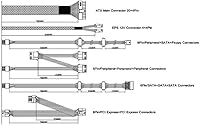
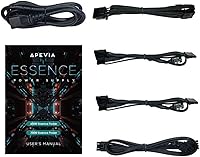
The single 12V rail rated at 53A is arguably the most technically meaningful aspect of this budget gaming power supply — a unified rail delivers more consistent power to a GPU than a split-rail setup, which matters during load spikes. Cable-wise, you get a 24-pin motherboard connector, a 4+4-pin CPU lead, two 6+2-pin PCIe connectors, four SATA ports, and four peripheral plugs — a complete set for a standard mid-range build. The auto-thermal fan control keeps the 120mm RGB spinner quiet during lighter loads, ramping up only when heat actually builds. There is also a manual voltage switch between 115V and 230V — useful if you ever relocate internationally. The six-layer protection suite addresses short circuits, overcurrent, overvoltage, and overtemperature scenarios.

Best For

This semi-modular PSU makes the most sense for builders on a genuine budget who are pairing it with a mid-tier GPU — something in the RTX 3060 or RX 6700 class draws well within the 700W limit with headroom to spare. It is a reasonable option for first-time builders who want to avoid the cable chaos of a fully non-modular unit but are not ready to spend significantly more on a certified, fully modular model. Anyone with a windowed case will appreciate the RGB fan, even if that should not be the deciding factor. What this budget gaming power supply is not suited for is a high-end flagship build: push it with a demanding GPU and the absent efficiency rating starts to matter.

User Feedback

Buyers who picked up the Apevia Essence for budget office or light gaming builds tend to be satisfied — the cable management is cleaner than expected at this price, and the RGB effect shows nicely through a tempered glass panel. That said, the absence of any 80 Plus certification comes up repeatedly in critical reviews, and it is a legitimate gripe: without it, efficiency under sustained gaming loads is an unknown. Fan noise is another inconsistency — some units run quietly, others are noticeably loud even at moderate temperatures. A handful of buyers have also flagged reliability concerns after 12 to 18 months of use, which is worth factoring in if you plan to keep the rig running for years. For short-term or entry-level use, the value-for-money reception is broadly positive.

Pros

  • Semi-modular design keeps cable clutter manageable, which is a genuine time-saver during a first build.
  • 700W of output is sufficient headroom for most mid-range gaming configurations.
  • The single 12V rail at 53A delivers stable, consistent power to the GPU without splitting load across multiple rails.
  • A solid six-layer protection suite covers the scenarios that actually damage hardware — surges, shorts, and overheating.
  • The auto-thermally controlled fan stays quiet during light workloads, only spinning up when temperatures actually rise.
  • The 115V/230V voltage switch adds a layer of flexibility for users who travel or relocate internationally.
  • Connector selection covers the basics well — two PCIe plugs, four SATA ports, and four peripheral connectors handle a standard build cleanly.
  • The RGB fan with 16 color modes looks genuinely appealing inside a windowed case without requiring any software setup.
  • At its price point, the semi-modular PSU offers a feature set that most competitors in the same tier cannot match.

Cons

  • No 80 Plus efficiency certification means real-world efficiency under load is essentially unverified.
  • Fan noise is inconsistent across units — some run quietly while others are noticeably loud at moderate temperatures.
  • Longevity concerns surface regularly from buyers in the 12 to 18 month ownership window, which is earlier than you would want.
  • 700W is adequate for today's mid-range builds but leaves little room if you plan to upgrade to a more demanding GPU later.
  • Apevia as a brand does not carry the warranty confidence or customer support reputation of more established PSU makers.
  • The lack of an efficiency rating makes it harder to estimate long-term electricity costs for users who run their systems heavily.
  • Not suited for SLI, multi-GPU, or high-end single-card configurations where consistent power delivery is non-negotiable.
  • Cable quality and connector fit have drawn occasional criticism — some users report plugs that feel less secure than expected.

Ratings

Our AI-generated scores for the Apevia Essence 700W ATX Power Supply were produced by analyzing thousands of verified global user reviews, with spam, bot-submitted, and incentivized feedback actively filtered out before any scoring was applied. The results reflect a candid picture of where this budget semi-modular PSU genuinely delivers and where real buyers have run into frustration. Both the wins and the pain points are weighted equally so you can make a grounded decision.

Value for Money
81%
19%
Among budget-tier builders, the general consensus is that the Apevia Essence punches above its price class in terms of what it includes out of the box. Getting semi-modular cable management, RGB lighting, and a multi-protection suite at this price point genuinely surprised a large share of first-time builders who expected a more stripped-down experience.
A minority of buyers who experienced early failures feel the value proposition collapses quickly if the unit does not last past the 18-month mark. When longevity is factored into the cost-per-year calculation, some competing certified units start to look more economical over a longer ownership horizon.
Cable Management
78%
22%
The semi-modular layout gets consistent praise from users who found cable routing inside mid-tower cases far less painful than with fully non-modular units. Builders working in tighter cases specifically appreciated being able to leave the PCIe and peripheral cables disconnected entirely when they were not needed.
A recurring complaint is that the modular cable connectors feel slightly looser than expected, requiring a firm push to seat properly. A handful of users noted the included cable lengths are just adequate for standard builds but tight in full-tower configurations where longer runs are needed.
Power Stability
74%
26%
For mid-range builds running something like an RTX 3060 paired with a Ryzen 5 or Core i5, users broadly report stable operation with no unexpected shutdowns or throttling during normal gaming sessions. The single 12V rail design contributes to consistent GPU power delivery, which is reflected positively in user experiences with sustained gaming loads.
Without 80 Plus certification, independently verified load regulation data does not exist for this unit, and a subset of users with more power-hungry component combinations reported voltage instability under prolonged peak stress. It is not a widespread complaint, but it surfaces often enough to be worth noting for anyone pushing the system hard.
Efficiency
49%
51%
For very light workloads — an office PC left on through the day or a casual gaming system used a few hours each evening — the real-world efficiency gap versus a certified unit is modest enough that most casual users do not notice it in their electricity bills.
The absence of any 80 Plus certification is the single most-cited technical concern across reviews from informed buyers. Users who run their rigs for extended daily sessions report that the unit generates more heat than comparable certified PSUs, which they believe contributes to increased internal temperatures and potentially shorter component life.
Build Quality
63%
37%
The black sandblasted metal housing feels solid enough for the price tier, and most users handling it for the first time report that it does not feel cheap or flimsy. The fan grille and casing finish hold up well through normal installation without visible cosmetic issues.
Connector and cable build quality draws more mixed reactions — some users noted that the modular cable ends feel less precisely finished than what you get on mid-tier certified units. A small but consistent group flagged that the overall internal construction does not inspire confidence for long-term reliability.
Fan Noise
61%
39%
Under light and moderate loads, the auto-thermal fan control keeps noise to a background hum that most users found entirely acceptable during everyday tasks and casual gaming. In quiet desktop environments during low-demand work, many users reported barely noticing the fan at all.
Unit-to-unit consistency is a real problem here — while some buyers report a nearly silent experience, others describe a fan that is noticeably loud even before temperatures climb high. This inconsistency across units makes it difficult to predict what you will actually receive, which is a legitimate frustration for noise-sensitive builders.
RGB Lighting
76%
24%
Builders running tempered glass side panels consistently mention the fan lighting as a genuine visual bonus — the 16 color modes cycle smoothly and the effect is vivid enough to contribute meaningfully to an RGB-themed build aesthetic without requiring any software or header connections.
The lack of ARGB addressability means the lighting cannot be synchronized with motherboard RGB ecosystems from ASUS Aura, MSI Mystic Light, or Gigabyte Fusion. For builders who care about a unified, synchronized lighting setup across components, this is a meaningful limitation.
Connector Selection
73%
27%
The included connector set covers the needs of a complete standard build — a 24-pin board connector, 4+4-pin CPU lead, two PCIe plugs, four SATA ports, and four Molex peripherals handle almost every component configuration a mid-range builder is likely to encounter.
For newer high-end GPU configurations requiring a 16-pin 12VHPWR connector, this unit offers no native support, which limits its forward compatibility. Users planning to upgrade to next-generation graphics cards will likely outgrow the connector set before they outgrow the wattage.
Protection Suite
77%
23%
Having six layers of hardware protection — covering short circuits, overcurrent, overvoltage, undervoltage, overpower, and overtemperature scenarios — is a genuine safety net that most users in this price range would not expect. Several buyers specifically mentioned that the OTP protection triggered correctly during a system airflow issue, preventing component damage.
Without third-party certification or independent lab testing, the actual trigger thresholds and response times for each protection circuit are unknown. Enthusiast reviewers point out that protections being listed as a feature and protections being verified as reliable are two different things for a non-certified PSU.
Compatibility
84%
The standard ATX form factor and 20+4-pin main connector make this budget gaming power supply a drop-in fit for virtually any mid-tower or full-tower case and motherboard combination currently available. Users replacing failed PSUs in older rigs highlighted compatibility as a non-issue across a wide range of system ages and configurations.
The manual 115V/230V voltage switch requires conscious attention during setup — a small number of users initially shipped to regions with different mains standards reported confusion about the switch, and at least a few set it incorrectly before catching the error. An auto-sensing voltage input would eliminate this risk entirely.
Longevity
54%
46%
For builders using the unit in a light-load environment — a home office PC, a basic gaming system used on weekends — a meaningful portion of users report stable operation without incident through the first year of ownership, which aligns with expectations for the price tier.
The 12 to 18 month window is where user sentiment noticeably sours, with a cluster of failure reports appearing at that usage point. Whether this reflects a broad manufacturing quality issue or a vocal minority is hard to determine without certification-backed MTBF data, but it is a pattern that appears consistently enough to factor into a long-term purchase decision.
Installation Experience
82%
18%
First-time builders consistently rate installation as straightforward — the pre-attached essential cables reduce decision fatigue during the build process, and the standard dimensions mean there are no fitment surprises in compatible cases. The included documentation is basic but sufficient for a beginner.
More experienced builders noted that the modular cable connectors require a firmer-than-expected push to seat securely, which can be mildly frustrating during a build. The lack of labeled cables or color-coded connectors was also called out by a subset of first-time builders who had to cross-reference the manual more than they anticipated.
Thermal Management
67%
33%
The auto-thermal fan behavior works as intended for most users — the fan remains slow and quiet during idle or light workloads and spins up reactively when the unit needs cooling. Builders in well-ventilated cases report that internal PSU temperatures stay reasonable during standard gaming sessions.
In cases with limited airflow or during extended high-load gaming, several users noted the unit running hotter than they were comfortable with — a predictable consequence of unverified efficiency generating more heat per watt delivered. The fan noise increase under these conditions was also more pronounced than users expected.

Suitable for:

The Apevia Essence 700W ATX Power Supply is a practical pick for budget-conscious builders who need a reliable enough unit to power a mid-range gaming system without stretching their wallet thin. If you are pairing it with a GPU in the RTX 3060 or RX 6700 tier, the 700W capacity gives you comfortable headroom without overpaying for wattage you will never use. First-time builders will find the semi-modular design forgiving — the must-have cables are already attached, so you are not wrestling with a full bundle of wires in a cramped case. It also suits anyone replacing a failed PSU in an older rig who just needs something functional and compatible fast, without committing to a higher-tier investment. Builders running a windowed case will get a side benefit from the RGB fan, which genuinely looks decent when lit up, even if aesthetics alone should never drive a PSU purchase.

Not suitable for:

The Apevia Essence 700W ATX Power Supply is not the right choice for anyone building a high-performance or enthusiast-grade system. If your GPU is a power-hungry flagship — think RTX 4080 class or anything with a 300W-plus TDP — this unit does not offer the headroom or the certified reliability you need under sustained heavy loads. The complete absence of an 80 Plus efficiency rating is a genuine red flag for builders who plan to run their system for long daily sessions, since unverified efficiency can translate to more heat, higher electricity draw, and added wear on components over time. Longevity is also a real concern: a pattern of user reports flagging issues after 12 to 18 months of use suggests this is not the PSU for a build you expect to run trouble-free for four or five years. Overclockers, content creators with demanding workloads, or anyone who simply cannot afford unexpected system downtime should look at a certified alternative with a stronger warranty and a more established reliability track record.

Specifications

  • Wattage: This unit delivers a continuous 700W of total output power, suitable for mid-range gaming builds.
  • Form Factor: Standard ATX form factor ensures compatibility with the vast majority of mid-tower and full-tower cases.
  • Modular Type: Semi-modular design keeps the main power cables permanently attached while allowing optional cables to be added or removed as needed.
  • 12V Rail: A single 12V rail rated at 53A supplies consistent, undivided power to the GPU and other high-draw components.
  • Fan & Cooling: A 120mm RGB fan with auto-thermal control manages heat passively during low loads and spins up automatically under heavier demand.
  • RGB Modes: The integrated fan supports 16 distinct color modes, operable without any software installation.
  • PCIe Connectors: Two 6+2-pin PCIe connectors are included, supporting a single mid-range discrete GPU or two lower-power cards.
  • SATA Connectors: Four SATA power connectors accommodate solid-state and mechanical drives for a standard storage configuration.
  • Peripheral Connectors: Four 4-pin Molex peripheral connectors are available for fans, older drives, or accessory hardware.
  • CPU Power: A 4+4-pin EPS 12V connector supports both 4-pin and 8-pin CPU power configurations on modern motherboards.
  • Main Power: A 20+4-pin main connector is compatible with both older 20-pin and current 24-pin ATX motherboard standards.
  • Voltage Switch: A manual 115V/230V switch on the rear panel allows the unit to be adapted for use in different regional power environments.
  • Protections: Six hardware protection layers are built in: Over-Current (OCP), Over-Voltage (OVP), Under-Voltage (UVP), Short-Circuit (SCP), Over-Power (OPP), and Over-Temperature (OTP).
  • Efficiency: No 80 Plus efficiency certification is held, meaning real-world efficiency under load has not been independently verified.
  • Dimensions: The unit measures 5.9 x 6.3 x 3.4 inches, conforming to the standard ATX PSU footprint.
  • Weight: The Apevia Essence weighs 4.33 pounds, which is within the typical range for ATX power supplies of this wattage class.
  • Output Rails: Output rail breakdown: +3.3V at 16A, +5V at 20A, +12V at 53A, -12V at 0.5A, and +5VSB at 2.5A for standby power.
  • Casing: The exterior features a black sandblasted metal finish that resists minor scuffs and blends with most case interiors.

Related Reviews
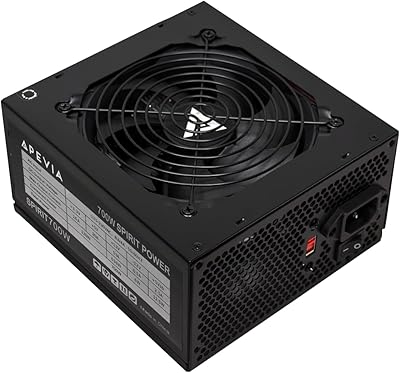
Apevia ATX-SP700 700W ATX Power Supply
71%
83%
Value for Money
88%
Installation Ease
54%
Long-Term Reliability
71%
Noise Level
79%
Connector Variety
More
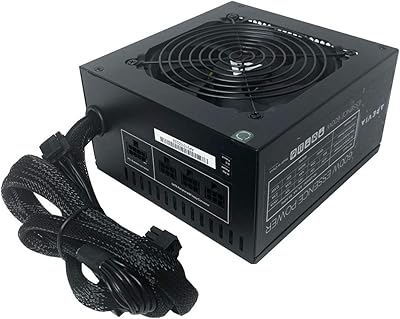
Apevia Essence 600W Semi-Modular ATX Power Supply
72%
78%
Value for Money
81%
Cable Management
74%
Noise Level
86%
Ease of Installation
62%
Build Quality
More
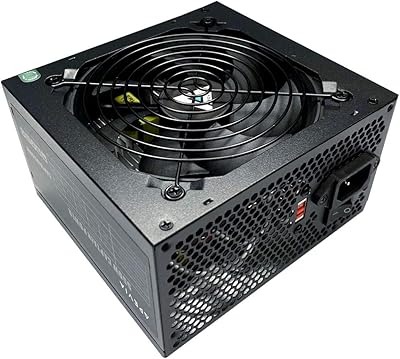
Apevia CAPTAIN550 550W ATX Power Supply
70%
78%
Value for Money
54%
Reliability
83%
Cable Quality & Aesthetics
81%
Connector Compatibility
84%
Ease of Installation
More
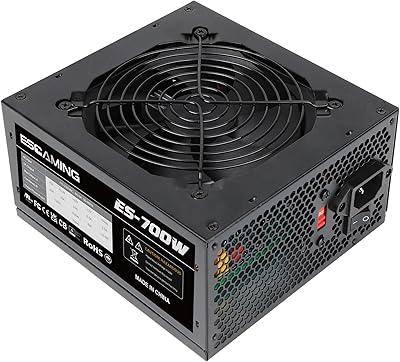
ESGAMING 700W ATX Non-Modular Power Supply
69%
83%
Value for Money
61%
Build Quality
54%
Reliability & Longevity
88%
Connector Variety
74%
Fan Noise
More
Apevia Raptor 500W ATX Power Supply
72%
83%
Value for Money
88%
Ease of Installation
74%
Connector Availability
58%
Reliability & Longevity
79%
Fan Noise
More
Apevia Venus 500W ATX Power Supply
86%
92%
Value for Money
88%
Cooling Efficiency
91%
Protection Features
84%
Build Quality
85%
Compatibility with Components
More
Apevia Venus 450W ATX Power Supply
70%
83%
Value for Money
88%
Installation Ease
81%
Noise Level
74%
Connector Availability
62%
Build Quality
More
Apevia Jupiter 600W ATX Power Supply
72%
81%
Value for Money
58%
Long-Term Reliability
63%
Voltage Stability
86%
Installation Experience
78%
Noise Level
More
Apevia TFX-AP300W 300W Flex ATX Power Supply
80%
83%
Performance
89%
Value for Money
78%
Build Quality
75%
Cooling Efficiency
60%
Noise Level
More
Apevia ATX-PR1000W-WH 1000W 80+ Gold Power Supply
85%
89%
Performance Under Load
94%
Energy Efficiency
85%
Build Quality
78%
Cooling and Noise
90%
Installation and Setup
More

FAQ

Yes, for those GPU tiers it should be fine. Both cards draw well under 200W at peak, and paired with a modern mid-range CPU, your total system draw will likely sit between 300W and 450W under full load. That leaves a reasonable buffer before you hit the 700W ceiling.

It is genuinely semi-modular. The 24-pin motherboard cable and the 4+4-pin CPU cable are permanently attached since virtually every build needs them. The PCIe, SATA, and peripheral cables are detachable, so you can leave out whatever your build does not require, which keeps the inside of your case cleaner.

No software or header connection is needed. The fan cycles through its color modes independently, so you just power on the system and the lighting runs on its own. There is no ARGB sync with motherboard lighting control software, so if matching RGB ecosystems is important to you, that is worth knowing upfront.

It is a legitimate concern, not just enthusiast nitpicking. Without certification, there is no independent verification of how efficiently the unit converts AC power to DC. That can mean more heat generated internally and slightly higher electricity consumption over time. For a light gaming or office system used a few hours a day, the real-world impact is modest. For heavy daily use, the gap in efficiency adds up more noticeably.

Technically the two 6+2-pin PCIe connectors could feed two low-power cards, but multi-GPU configurations are generally not recommended on a budget PSU without efficiency certification. Power demands can spike unpredictably under load across two GPUs, and this unit has not been independently stress-tested for that use case.

It varies more than it should across units, which is one of the more consistent complaints from buyers. Many users report it running quietly during everyday tasks and moderate gaming, while a subset of buyers have noted it is louder than expected even at normal operating temperatures. It is not the quietest PSU at this wattage level, and there is some unit-to-unit inconsistency to account for.

It lets you switch between 115V (standard in North America) and 230V (standard in Europe and much of Asia). If you are in the US, leave it set to 115V and do not change it unless you move to a region with different mains voltage. Setting it incorrectly can damage the unit or connected hardware.

Based on user feedback patterns, it performs reliably for many builders in the short to medium term, but a cluster of reports around the 12 to 18 month mark suggests it may not have the same lifespan as a certified unit from a more established brand. If you are building a system you want running without issues for three or more years, factoring in a longer-warranty, certified alternative is worth considering.

Yes. At 5.9 x 6.3 x 3.4 inches it matches the standard ATX PSU footprint, so it will fit in any case that accepts ATX power supplies, which includes virtually all mid-towers and full-towers on the market.

For that specific scenario it actually makes a lot of sense. You are not building fresh with high expectations — you need something compatible, functional, and reasonably priced to get the machine back up. The semi-modular PSU covers the standard connector set for most builds made in the past decade, and the cost is low enough that it does not sting if you later decide to upgrade the whole system.

Where to Buy